Home Blog Page 658

Four Paws team rescues severely-wounded Asian bear, shifts animal from Jauharabad to Islamabad

Four Paws team rescues severely-wounded Asian bear

Staff Reporter

ISLAMABAD, MAR 3 /DNA/ – The first day of the holy month of Ramazan brought much-awaited relief for a 7-year-old Asian bear who was kept in illegal captivity and used for baiting (for fighting with trained dogs) in Punjab’s city Jauharabad (Khushab).

The nonstop rescue operation—from Vienna to Lahore; from Lahore to Jauharabad and then from Jauharabad to Islamabad—ended with safe landing of the poor creature at the animal rescue & rehabilitation centre (previously Murghazar Zoo) of Islamabad.

According to details, the rapid response team from global animal welfare organization Four Paws, under the lead of Dr Amir Khalil (a well-known name now in Pakistan in animal rescue) launched a prompt rescue and relocation mission on the request of the Islamabad Wildlife Management Board (IWMB) and the Punjab Wildlife Department and relocated the poor creature to Islamabad’s animal rescue centre.

The male bear named ‘Rocky’ by the team was earlier confiscated by the authorities from illegal private custody after he had been subjected to severe abuse as a baiting bear. He was abused in 35 fights so far it was informed and his condition was pretty bad—severely injured with several bleeding wounds on his face and back. Giving a background of the mission, the Four Paws spokesperson said they were requested by the IMWB to support with the relocation of the bear after he had been confiscated by the authorities on 27 February, 2025.

His relocation was ordered by the Magistrate’s Court and supported by the Assistant Director Wildlife for Punjab Region since the facility he was confiscated to could not provide the care he needed. Video material provided to Four Paws highlighted the abusive nature of bear fighting, as it showed the visibly weakened bear being attacked aggressively by dogs during a recent fight.

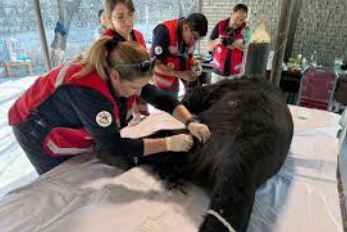
At the animal rescue centre, Dr Amir Khalil and Dr Marina Ivanova removed the nose pin, washed Rocky’s wounds and dis-infected him. It took more than two hours to complete the operation. “We are happy Rocky is now safe and all set for a peaceful retired life. We shall keep him in a separate cage and observe its behaviour before integrating it with other rescued bears within the rescue centre,” said Dr Amir.

According to Dr Khalil, since Rocky has been mistreated and he knew nothing except fighting it would not be wise to let the animal socialize with other rescue bears. It will take some time to normalize and calm down the bear and then at an appropriate time, we shall allow it to mix with other bears, he said.

Amir Khalil was all praise for the Punjab Wildlife Department and the IWMB for taking up the issue promptly as soon as it came to their notice.

Four Paws’ team members Pia Einheimler, Hristo Vladeve and their local associate Owais Awan Advocate were all visibly relieved at having the task accomplished. They also praised In Charge Resscure Centre, of the IWMB Sana Raja and her team for extending all support to make this mission successful.

As mark of gratitude to the Four Paws team, Coordinator to PM on Climate Change, Ms Romina Khurshid Alam accompanied by Chairperson of the IWMB, Ms Aisha Humaira also visited the team of the Four Paws at the IWMB Animal Rescue Centre and thanked the international vets for promptly responding to their call. She also invited them to dinner at the Islamabad Club later in the day.  Rocky is the third bear that has been rescued within one year.
Israel blocks Gaza aid, risks catastrophe during Ramadan

Gaza

RAMALLAH, MAR 2 /DNA/ – The Ministry of Foreign Affairs and Expatriates expresses strong condemnation over the Israeli government’s decision to block the entry of humanitarian aid into the Gaza Strip. It warns of the grave risks and catastrophic consequences of this decision, particularly amid the dire humanitarian situation in Gaza, exacerbated further during the holy month of Ramadan.

The ministry unequivocally rejects the politicization of humanitarian aid and its exploitation as a tool of blackmail, a tactic that would only deepen the suffering of more than two million Palestinians, who are already enduring immense hardship due to a campaign of devastation and forced displacement.

The ministry calls upon the international community and all relevant parties to uphold their responsibilities and take decisive action to compel the Israeli government to allow the unconditional entry of humanitarian aid into Gaza.

It further demands an end to the exploitation of Palestinian suffering and the weaponization of starvation for political gain.

Champions Trophy: India top Group A standings with thumping victory over New Zealand

India

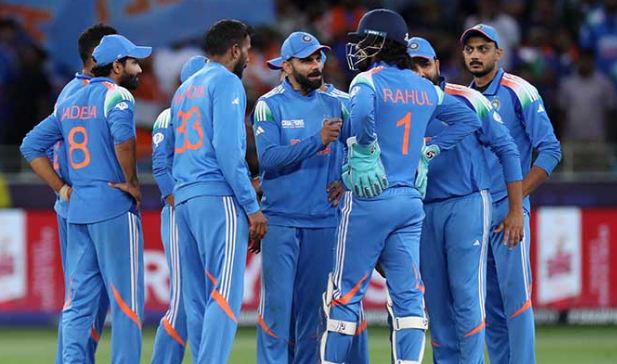
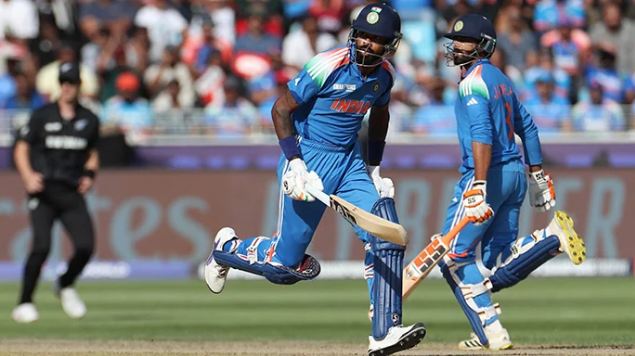
KARACHI: India capped off their ICC Champions Trophy 2025 group stage campaign in style, clinching the top spot with a 44-run victory over New Zealand at Dubai International Stadium on Sunday.

With a clinical performance, the Men in Blue extended their unbeaten streak, heading into the semi-finals with momentum on their side.

Chasing a modest 250-run target, New Zealand’s batting unit unfolded on a meagre 205 despite Kane Williamson’s anchoring half-century.

The experienced batter waged a lone battle against India’s spin-laden bowling attack with a gutsy 81 off 120 deliveries, laced with seven boundaries.

Skipper Mitchell Santner (28) and opening batter Will Young (22) were the other notable run-getters for the Blackcaps, while the rest fell cheaply.

Chakravarthy was the standout bowler for India, taking five wickets for just 42 runs in his 10 overs, followed by Kuldeep Yadav with two scalps.

Earlier, Matt Henry’s five-wicket haul helped New Zealand restrict India to 249.

New Zealand captain Mitchell Santner’s decision to bowl first paid dividends as their bowling unit dominated the strong Indian batting unit and restricted them to 249/9 in the allotted 50 overs.

The 2013 champions got off to a shaky start to their innings as Kyle Jamieson and Henry decimated their top order – Shubman Gill (two), Rohit Sharma (15) and Virat Kohli (11) – to reduce them to 30/3 in 6.4 overs.

Following the early debacle, Shreyas Iyer and Axar Patel joined forces to launch recovery as they added a crucial 98 runs for the fourth wicket until the latter fell victim to Rachin Ravindra in the 30th over.

Patel scored 42 off 61 deliveries with the help of three fours and a six.

Iyer was then involved in a brief 44-run partnership for the fifth wicket with KL Rahul before Will O’Rourke drew curtains on his valiant knock.

He remained the top-scorer for India with a 98-ball 79, comprised of four fours and two sixes.

Following his dismissal, India lost two more wickets in quick succession and as a result, were slipped to 223/7 in 45.5 overs.

But, a brisk 45-run cameo by Hardik Pandya down the order bolstered India to a competitive total.

Matt Henry led the bowling charge for New Zealand with 5/42 in his eight overs, while Kyle Jamieson, O’Rourke, Mitchell Santner and Ravindra made one scalp apiece.

Gaza humanitarian crisis worsens as blockade halts vital aid

Gaza

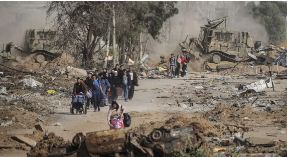
RAMALLAH, MAR 2 /DNA/ – The Government Operations Room for Emergency Interventions in the Southern Governorates (Gaza Strip) warns of the rapidly worsening humanitarian catastrophe in Gaza, driven by the continued closure of border crossings and the ongoing blockade on the entry of life-saving aid imposed by the Israeli occupation. The prolonged restrictions are exacerbating the suffering of over two million Palestinians and accelerating the collapse of essential services and basic living conditions.

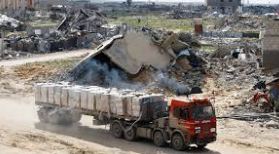
The severe blockade has cut off access to critical supplies, including food, medicine, and fuel—further endangering the lives of thousands of patients, particularly those in intensive care units and neonatal incubators. The fuel shortage has crippled the operation of hospitals, water pumps, and emergency medical services, leaving ambulance systems paralyzed and severely hindering humanitarian response efforts. In parallel, restrictions on relief shipments have triggered a dire housing and shelter crisis, with hundreds of thousands of displaced individuals left without adequate housing after losing their homes due to widespread destruction. The unavailability of tents and temporary shelters has compounded their suffering, exposing them to worsening conditions.

Beyond the immediate humanitarian toll, the blockade has obstructed vital debris removal and reconstruction efforts, prolonging displacement and deepening the crisis. Thousands of families remain homeless amid extreme weather conditions, deprived of the basic necessities for a dignified life. This systematic deprivation of shelter, fuel, food, and medicine constitutes a flagrant violation of all international laws, conventions, and fundamental human rights, including the right to life and human dignity.

In light of this deepening catastrophe, the Government Operations Room for Emergency Interventions in the Southern Governorates calls upon the United Nations, the International Committee of the Red Cross, and all relevant human rights and humanitarian organizations to break their silence and take urgent and decisive action. The immediate and unimpeded entry of humanitarian aid must be ensured, and concerted international pressure is required to immediately open all border crossings and bring an end to the policy of collective punishment that disproportionately harms innocent civilians, particularly children, women, and the elderly.

Gaza stands on the precipice of famine and total collapse, and our people will not accept being held hostage to oppressive policies that target their very existence and seek to deprive them of their most basic rights, including their right to live in dignity. We reaffirm our unwavering commitment to mobilizing all efforts to confront this catastrophe, holding the international community fully responsible for any failure to act swiftly to save civilian lives.

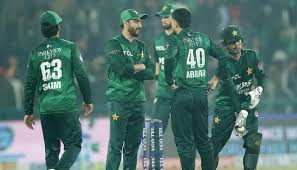
Champions Trophy: New Zealand restrict India to 249/9 as Henry bags five-fer

Champions Trophy: New Zealand restrict India to 249/9 as Henry bags five-fer

DUBAI: New Zealand have won the toss and chosen to field first against India in the final group-stage match of the ongoing ICC Champions Trophy 2025.

India were 244/7 by the end of 49th over.

the Black Caps’ lethal bowling attack dismissed both the openers, Rohit Sharma (15) and Shubhman Gill (2), early into the innings, while star batter Virat Kohli also fell cheaply for just 11 runs.

Although the match, taking place at Dubai International Cricket Stadium, is a dead-rubber as both the sides have qualified for the semis, but it is likely to be a thriller as it will decide the Group A topper.

The Men in Blue and Kiwis have clashed in 118 ODI matches, with India securing 60 victories and New Zealand winning 50. Seven matches had no result, while one ended in a tie.

Meanwhile, in the ICC Champions Trophy history, the two sides have faced each other just once, with New Zealand emerging victorious.

Squads
India: Rohit Sharma (c), Shubman Gill, Virat Kohli, Shreyas Iyer, KL Rahul, Rishabh Pant, Hardik Pandya, Axar Patel, Washington Sundar, Kuldeep Yadav, Harshit Rana, Mohd. Shami, Arshdeep Singh, Ravindra Jadeja, Varun Chakaravarthy.

New Zealand: Mitchell Santner (c), Michael Bracewell, Mark Chapman, Devon Conway, Lockie Ferguson, Matt Henry, Tom Latham, Daryl Mitchell, Will O’Rourke, Glenn Phillips, Rachin Ravindra, Nathan Smith, Kane Williamson, Will Young, Jacob Duffy.

Emotions in Diplomacy: A Dangerous Shift in Global Politics?

Emotions in Diplomacy: A Dangerous Shift in Global Politics?

by Muhammad Mohsin Iqbal

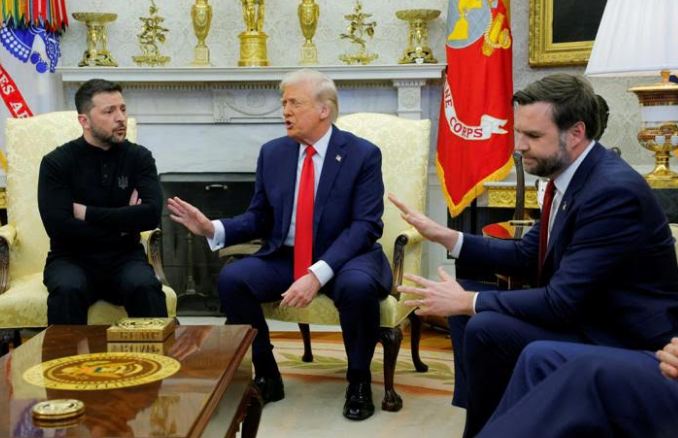
The conduct of diplomatic meetings between heads of state is governed by established norms of foreign relations, ensuring that discussions adhere to a level of decorum that reflects both national dignity and international expectations. These protocols are not just formalities but essential components of diplomacy that help maintain mutual respect, even between adversaries. The recent meeting between the President of the United States Donald Trump and the President of Ukraine Volodymyr Zelensk in the Oval Office of the White House, however, broke many of these conventional barriers. The language, tone, and emotions displayed during the conversation were extraordinary, raising the question: do heads of state really talk like this?

Diplomatic meetings between world leaders, whether in private or public, follow certain specific unwritten rules. These include maintaining a respectful tone, ensuring that grievances or concerns are expressed in a manner that does not undermine either party, and avoiding personal confrontations that could escalate tensions. The essence of diplomacy lies in controlled dialogue, where even the most serious matters are addressed with calculated words. Traditionally, even during high-stakes discussions between rival nations, leaders are expected to engage in a composed and restrained manner. Heated exchanges, emotional outbursts, or open expressions of frustration in front of the media are highly uncommon.

While it is true that heads of state sometimes engage in direct and blunt conversations, such moments are usually reserved for behind closed doors. The public display of strong emotions by the leaders of the United States and Ukraine during their recent meeting challenges the conventional wisdom of diplomatic interactions. In the past, there have been instances where leaders have used strong rhetoric, but these were often strategic rather than impulsive. For example, Soviet and American leaders during the Cold War exchanged harsh words, yet they did so within the framework of controlled diplomacy, ensuring that no side was publicly humiliated in a way that could escalate tensions.

Protocol dictates that such meetings are carefully choreographed. Before any head of state visits another country, a detailed agenda is set, and diplomats ensure that both parties understand the tone and structure of the conversation. Official statements, body language, and gestures are all considered in advance. Even the seating arrangements, the order in which leaders speak, and the level of media access are decided to maintain decorum. When deviations from these protocols occur, they are often the result of deliberate political strategy rather than spontaneous emotions.

However, there have been instances in history where heads of state deviated from traditional diplomatic conduct. One of the most notable examples is the interaction between former U.S. President Donald Trump and North Korean leader Kim Jong Un. Their exchanges, at times, involved direct insults and threats, something rarely seen in modern diplomacy. However, despite their verbal clashes, their eventual meetings followed diplomatic protocols. Similarly, former British Prime Minister Boris Johnson often displayed a casual and unconventional approach in international forums, sometimes using humor or blunt remarks that were outside the usual diplomatic tone, but even then, he adhered to the basic tenets of statecraft.

In contrast, the conversation between the American and Ukrainian presidents in the Oval Office appeared to break multiple diplomatic norms. The openness of their emotions, the lack of restraint in their words, and the visible display of frustration were unusual. This raises concerns about whether personal sentiments are overtaking strategic considerations in global diplomacy. Leaders are not expected to be emotionless, but their words carry weight beyond personal feelings. Every statement made in such high-level meetings can impact international relations, shape alliances, and even influence conflicts.

The question that arises from this event is whether such behavior sets a new precedent or is merely an exception. If world leaders begin to conduct diplomacy based on emotions rather than calculated words, it could have unpredictable consequences. The balance of power, especially in conflicts where multiple nations are involved, depends on controlled and strategic communication. Public displays of emotions, particularly between allies in a sensitive conflict like the Ukraine-Russia war, can create confusion and signal instability in decision-making.

Diplomacy has survived for centuries because it operates on established principles, regardless of personal relationships between leaders. Even during moments of extreme crisis, such as the Cuban Missile Crisis of 1962, U.S. President John F. Kennedy and Soviet Premier Nikita Khrushchev maintained careful diplomatic channels to avoid war. Their messages, though firm, were carefully worded to prevent escalation. This highlights the importance of measured language in high-stakes international discussions.

It remains to be seen whether the recent conversation between the American and Ukrainian presidents was an isolated incident or a sign of shifting norms in global diplomacy. While emotional appeals can have political benefits, they should not come at the cost of diplomatic stability. The world watches closely when major leaders speak, and every word they utter carries implications far beyond the room they are in. The rules of diplomacy exist for a reason—to ensure that even in moments of tension, dialogue remains a tool for resolution rather than division.

Prime Minister Shehbaz Sharif’s visit to Uzbekistan

Prime Minister Shehbaz Sharif’s visit to Uzbekistan

By capitalizing on the opportunities for cooperation in trade, investment, connectivity, and tourism, both countries can work towards a more prosperous and interconnected region.

Opinion

Ansar Mahmood Bhatti

Prime Minister of Pakistan Shehbaz Sharif has recently concluded a highly successful visit to Uzbekistan, marking a significant step towards strengthening bilateral relations between the two countries. Upon his arrival in Tashkent, the Pakistani prime minister was accorded a red-carpet welcome, reflecting the warmth and importance of the ties between Pakistan and Uzbekistan.

During the visit, both countries reaffirmed their commitment to enhance the volume of bilateral trade, setting an ambitious target to increase trade from the current $404 million to $2 billion in the near future. The two sides also agreed to explore the vast potential for cooperation in the fields of investment, connectivity, and tourism. This mutual commitment is expected to unlock new opportunities for both nations, fostering economic growth and regional stability.

The strengthening of bilateral ties was a key focus of the one-on-one meeting between Prime Minister Shehbaz Sharif and the President of Uzbekistan, Shavkat Mirziyoyev, followed by delegation-level talks. One of the most promising agreements reached during these discussions was the commitment to expedite efforts to realize the Trans-Afghan Railway project. This ambitious project aims to connect Central Asia with South Asia, offering a game-changing trade corridor that could significantly boost economic integration in the region.

Uzbekistan, the largest of the Central Asian states, holds immense business and cultural potential. The country’s agriculture sector is one of the most developed in the region, particularly in cotton production. Pakistan stands to benefit greatly from Uzbekistan’s expertise and technology in cotton cultivation. With Uzbek technology, Pakistan could potentially double its cotton production at half the current cost, which would have a transformative impact on its textile industry and overall economy. At the same time, Pakistan’s potential in the pharmaceutical, textile, construction materials, and information technology sectors is also of great importance for the Uzbek market.

In recent years, bilateral trade between Pakistan and Uzbekistan has grown significantly, reflecting the dedicated efforts of diplomats on both sides. A noteworthy development in this regard was the commencement of direct flights by Uzbek Air from Pakistan, providing easier access to Uzbek markets and other Central Asian states. The resumption of direct Lahore-Tashkent flights in November 2024 is expected to strengthen business ties and bring the peoples of both countries closer.

To further bolster connectivity, Pakistan should encourage its national flag carrier and private airlines to launch direct flights to Tashkent and other Central Asian destinations. Improved air connectivity will not only facilitate the movement of people but also boost business and tourism activities, ultimately contributing to stronger economic ties and greater regional integration.

There are plans to develop transit trade through the port of Karachi, as well as to create joint investment funds, which of course is a step in the right direction. This will strengthen trade relations between the two countries.

The energy sector is also one of the promising areas. Both countries can cooperate on projects to develop renewable energy sources, including solar and wind power plants, hydropower, and gas infrastructure. These joint initiatives will ensure energy security and accelerate the transition to sustainable energy sources.

Additionally, in September 2024, Uzbekistan introduced a simplified visa procedure for Pakistani citizens. This gave impetus to an increase in the number of tourists, students and entrepreneurs wishing to visit Uzbekistan. Simplification of visas has opened up new opportunities for cultural exchange, acquaintance with historical monuments and cultural traditions, as well as for establishing business ties. The simplification of visas and the establishment of direct flights will have a significant impact on the growth of tourist flows between the two brotherly countries, and strengthening of cultural and humanitarian relations.

The visit of Prime Minister Shehbaz Sharif to Uzbekistan has set a positive trajectory for the future of Pakistan-Uzbekistan relations. By capitalizing on the opportunities for cooperation in trade, investment, connectivity, and tourism, both countries can work towards a more prosperous and interconnected region.

It is anticipated that officials from both sides will leverage all available resources and channels to swiftly translate the commitments made by the Prime Minister of Pakistan and the President of Uzbekistan into reality. Sustained, result-oriented engagements will undoubtedly play a pivotal role in helping both countries achieve the targets set during the leaders’ meeting.

Situated at a highly strategic geographic location, Central Asia serves as a vital bridge connecting South Asia, Europe, and Russia. The region offers immense connectivity opportunities not only among the Central Asian republics but also with Russia, making it a crucial hub for regional trade, economic cooperation, and energy collaboration.

For Pakistan, forging stronger ties with Central Asian countries holds significant economic and strategic importance. While Uzbekistan has already emerged as a key partner in various sectors, Pakistan can further benefit from the expertise and resources of Kazakhstan, Kyrgyzstan, and Tajikistan in fields such as agriculture, mining, tourism, education, technology, and energy infrastructure development. In return, these countries can benefit from Pakistan’s ports, manpower, and expertise in various industrial sectors, creating a mutually beneficial partnership.

One of the most promising aspects of Central Asia is its huge energy potential. The region is blessed with vast reserves of natural gas, oil, hydroelectric power, and renewable energy resources, making it an energy-rich region. On the other hand, Pakistan, being an energy-deficient country, has long been grappling with an energy crisis that has adversely impacted its economy and the daily lives of its people. The ever-increasing burden of expensive energy tariffs has not only strained household incomes but also hampered industrial growth.

In conclusion, strengthening diplomatic, economic, and energy ties with Central Asian countries can not only help Pakistan diversify its energy sources but also boost regional trade and connectivity. By capitalizing on the untapped potential of Central Asia, Pakistan can pave the way for long-term economic stability, regional cooperation, and mutual prosperity.

Ambassador highlights business opportunities in Oman

Ambassador highlights business opportunities in Oman

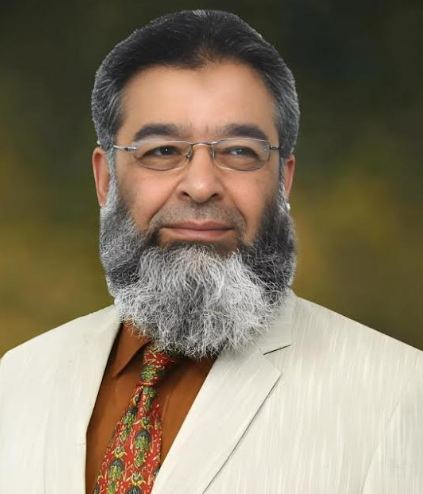
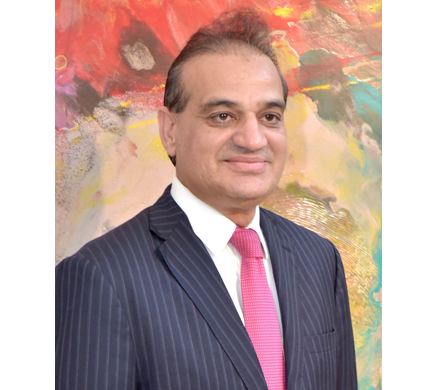
LAHORE, MAR 02 (DNA): Pakistan’s Ambassador to Oman Naveed Safdar Bokhari revealed on Sunday that numerous opportunities were available for Pakistani businessmen to engage in collaboration, joint ventures, investment, and enhance exports to Oman.

Speaking here to Chief Executive Officer Pakistan Furniture Council (PFC) Mian Kashif Ashfaq, he emphasized the strong bilateral relations between Pakistan and Oman, highlighting the potential for enhanced economic cooperation. He said that Oman’s strategic location and business-friendly environment make it an ideal partner for Pakistani entrepreneurs looking to expand their reach in the Gulf region and beyond. He urged Pakistani businessmen to explore sectors of agriculture, information technology, construction, and energy, where both countries could benefit from mutual expertise and resources.

He also stressed the importance of leveraging Oman’s ports and logistics infrastructure to increase Pakistan’s exports to regional and international markets. The ambassador assured full support from the Pakistani embassy in facilitating business delegations, organizing trade fairs, and providing necessary guidance to investors.

Naveed Safdar Bokhari said that this initiative aligns with Pakistan’s broader goal of strengthening economic ties with Gulf countries and diversifying its export markets.

He emphasized the untapped potential for collaboration between the two nations, urging Pakistani businesses to seize these opportunities and contribute to the economic growth of both countries.

Pakistan’s trade with Central Asia gains importance

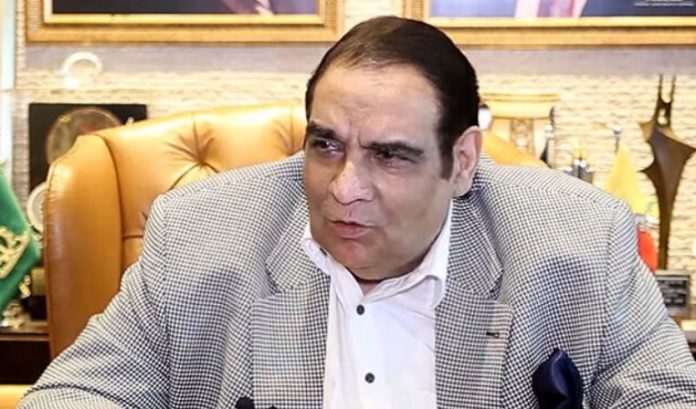
LAHORE, Mar 02 (DNA): SAARC Chamber of Commerce and Industry former President Iftikhar Ali Malik said on Sunday that Pakistan’s trade relations with Central Asian states had become increasingly importantdue to shifting geopolitical dynamics and economic challenges in the current global scenario.

In a press statement, he said Central Asia, rich in natural resources and strategically located, offers immense opportunities for Pakistan to enhance its economic footprint. The recent visits of Prime Minister Shehbaz Sharif to the region underscore Pakistan’s commitment to strengthening ties and unlocking mutual economic benefits.

He said Central Asian states of Kazakhstan, Uzbekistan, Turkmenistan, Kyrgyzstan, and Tajikistan, were key players in energy, agriculture, and mineral sectors, adding that Pakistan, with its growing

population and strategic location as a gateway to South Asia, could serve as a vital trade and transit hub for these landlocked nations. Enhanced connectivity through initiatives like the China-Pakistan Economic Corridor (CPEC) and the Trans-Afghan Railway project could facilitate trade and energy exports, benefiting both regions, he added.

In the current global context, where economic diversification and regional integration are crucial, Pakistan’s proactive approach towards Central Asia was a strategic move. By fostering stronger trade relations, Pakistan could mitigate economic challenges, reduce dependency on traditional markets, and create new avenues for growth, he said. The recent Pak diplomatic efforts were a step in the right direction, promising better economic prospects and a stronger partnership with

Central Asia in the years to come, he added.

Tracksuits for Diplomats

Tracksuits for Diplomats

ISLAMABAD: On behalf of the team and management of Rising Stars Hockey Club — including Mehmood Ahmed, Sohail Janjua, Asif Bhatti, and Ansar Bhatti — tracksuits were presented to Neil Hawkins, the Australian High Commissioner, Kamal Ahmed, High Commissioner of Brunei, and Eduard Preda, Deputy Head of Mission at the Romanian Embassy. Secretary of Islamabad Hockey Association, Ziaullah Shah, was also present on the occasion.=DNA

Stay Connected

64FansLike
60FollowersFollow

Latest Reviews

Exchange Rates

USD - United States Dollar
EUR
1.17
GBP
1.35
AUD
0.72
CAD
0.73