Home Blog Page 657

Pre-launch of book “Reputation Management and Crisis Communication”

book

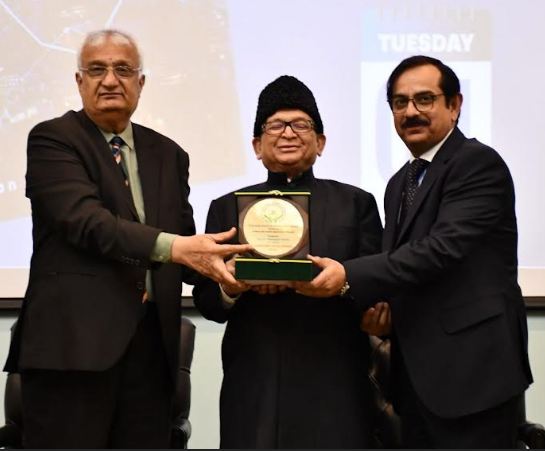
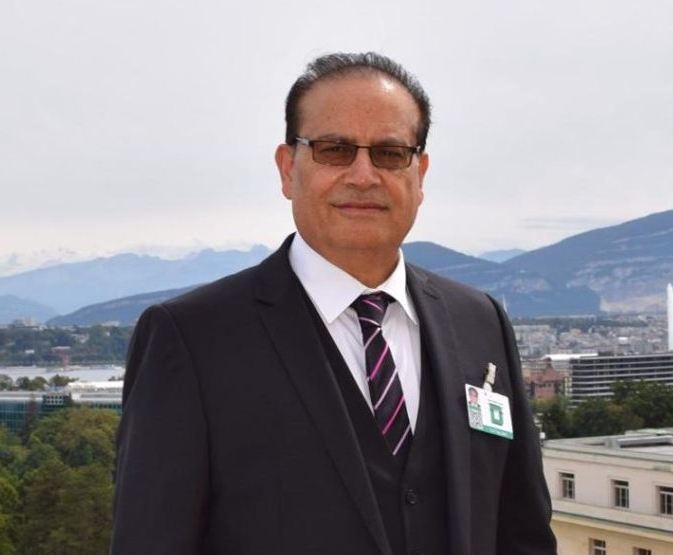
ISLAMABAD, MAR 4 /DNA/ – The pre-launch of the highly anticipated book “Reputation Management and Crisis Communication – A Study of the Corporate Sector” by Imran Ghaznavi was held at National Skills University (NSU) Islamabad. The event was chaired by Prof. Dr. Zafar Uddin Ahmed, a renowned American scholar and Professor of Marketing and International Business at King Fahd University, Saudi Arabia.

The gathering was graced by Vice-Chancellor NSU Dr. Muhammad Mukhtar, faculty members, distinguished guests, and students. A lively and insightful Q&A session was held, during which Prof. Dr. Zafar encouraged Pakistani scholars to actively contribute to global knowledge by writing books in their respective fields. He emphasized the importance of producing high-quality content that can benefit international academia and industry alike.

Prof. Dr. Zafar lauded Imran Ghaznavi’s in-depth expertise in reputation management and crisis communication, recognizing the book as a significant contribution to the field. He also extended an invitation to Imran Ghaznavi to launch the book at an international conference in Bangkok later this year, where 250 global scholars will be in attendance.

The event marked a significant milestone in fostering academic excellence and promoting research-driven insights in corporate reputation management.

Pak-Japan parliamentary dialogue exploring avenues of cooperation

Japan

Akamatsu Shuichi expressed his gratitude for the warm welcome and recalled his previous meeting with the Chairman of the Senate last month as a privilege. He emphasized his mutual commitment to strengthening bilateral ties with Pakistan

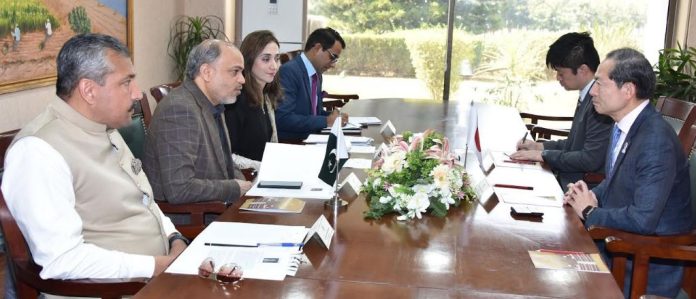
ISLAMABAD, MAR 4 /DNA/ – A meeting of the Pak-Japan Parliamentary Group, convened by Senator Nadeem Ahmed Bhutto and organized by Ms. Misbah Khar, Secretary of the group, was held today at Parliament House to strengthen bilateral relations between the two countries. Senator Bhutto, along with senior officials from the Senate Secretariat, warmly welcomed His Excellency Mr. Akamatsu Shuichi, Ambassador of Japan.

Senator Bhutto emphasized the importance of Pakistan-Japan relations and highlighted  the mutual benefits with strong bilateral ties between the two countries. During the dialogue, he noted Pakistan’s beautiful landscapes, particularly in the northern regions, and suggested that Pakistan could capitalize on this to boost its tourism sector.

He also mentioned Pakistan’s travel advisory and Japan’s strong ties with the World Bank and the economic sector, which have supported Pakistan. Currently, the bilateral economic trade stands at $1.72 billion, and Senator Bhutto stressed the need to further enhance it. He pointed out that platforms such as JICA and FISC can facilitate foreign investments, and Pakistan seeks Japan’s assistance through these channels.

Pakistan has been a reliable partner of Japan in various sectors, and Senator Bhutto expressed a desire for increased investment from Japanese companies. He cited the 2023 Tokyo Investment Board, which saw participation from over 127 major investment groups, as an example of successful initiatives. He reiterated that Pakistan is keen to pursue more opportunities to boost trade and enhance bilateral relations.

Regarding the skills sector, Senator Bhutto highlighted the signing of a memorandum on technical internship programs and special skill work programs. He also acknowledged the significant contributions of the approximately 25,000-strong Pakistani diaspora in Japan.

His Excellency Mr. Akamatsu Shuichi expressed his gratitude for the warm welcome and recalled his previous meeting with the Chairman of the Senate last month as a privilege. He emphasized his mutual commitment to strengthening bilateral ties with Pakistan. The Ambassador underscored that diplomatic relations between Pakistan and Japan have existed for over 73 years, and Japan has provided economic cooperation to Pakistan for more than 70 years. He assured that Japan would continue to expand this assistance. The Ambassador also highlighted the role of over 80 Japanese companies operating in Pakistan, contributing to both economic and social development. He mentioned that around 1,000 Japanese tourists visit Pakistan annually, and as security concerns stabilize, this number is expected to rise. Additionally, he pointed out the 2025 Osaka Conference as a significant opportunity for Pakistan. The Ambassador also commended the mutual cooperation and parliamentary exchanges between the two countries and expressed eagerness for more dialogue following Japan’s upcoming elections.

Both sides expressed optimism for continued bilateral dialogue and cooperation, with plans for further engagement in the next meeting, which will involve broader participation from the Parliamentary Group.=DNA

=========

Pakistan condemns Israeli action to block humanitarian aid from entering Gaza

ISLAMABAD, MAR 3: /DNA/ – The Government of Pakistan condemns in the strongest possible terms Israeli decision to block critical humanitarian aid from entering Gaza, during the Holy month of Ramadan.

This latest action is part of Israel’s systematic campaign to deny much needed humanitarian aid to millions of Palestinians in dire need. This constitutes yet another blatant violation of international law by the occupying power, and could imperil the ceasefire agreement.

We call on the international community to ensure unrestricted humanitarian access to Gaza, and to hold Israel accountable for imposition of collective punishment through denial of humanitarian aid to millions of civilians.

We also reiterate our call for the full implementation of the agreement to secure a permanent ceasefire in the Gaza as well as the revival of a political process to achieve the two-state solution, with a viable, sovereign State of Palestine based on pre-1967 borders, with Al-Quds Al-Sharif as its capital.

Bilawal, PM meeting delayed

Bilawal

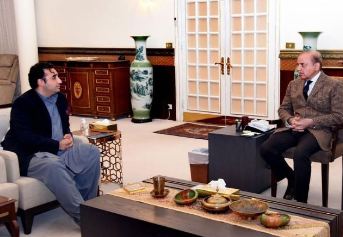
PPP Chairman Bilawal Bhutto-Zardari was scheduled to meet Prime Minister Shehbaz Sharif yesterday

Saifullah Ansar

ISLAMABAD: A scheduled meeting between Prime Minister Shehbaz Sharif and Pakistan Peoples Party (PPP) Chairman Bilawal Bhutto-Zardari on Monday has been delayed.

Bilawal, who was expected to arrive in Islamabad yesterday, postponed his visit due to “preoccupation with some important matters,” according to party insiders.

The two leaders are now expected to meet within the next few days.

Bilawal Bhutto-Zardari was scheduled to meet PM Shehbaz Sharif today.

The PPP chairman was to attend a high level meeting of coalition parties to be chaired by the PM in the federal capital.

During the meeting of the coalition parties in which key leaders of the parties would participate, Bilawal would communicate his party’s concerns about violation of an agreement that the PPP and the PM’s party, the PML-N, signed for power sharing after the February 8, 2024 general elections.

The meeting was set to address several pressing concerns, including governance matters and PPP’s dissatisfaction over the allocation of funds to its lawmakers in Punjab.

The PPP has been increasingly vocal about its reservations regarding the PML-N-led administration.

Last week, PPP lawmakers in Punjab conveyed their grievances to President Asif Ali Zardari in Lahore, complaining that the PML-N had sidelined them in decision-making.

President Zardari is also expected to engage with PML-N leadership in an attempt to resolve the issues.

UK High Commissioner meets PM Shehbaz

UK High Commissioner meets PM Shehbaz

ISLAMABAD, MAR 3 /DNA/ – High Commissioner of the United Kingdom, Jane Marriott, paid a courtesy call on the Prime Minister at Prime Minister House earlier today.

The Prime Minister conveyed his greetings to His Majesty King Charles III and wished him a quick recovery to full health. He also reiterated his invitation to His Majesty for undertaking a Royal visit to Pakistan at his earliest convenience.

The Prime Minister also expressed satisfaction at the progress made in bilateral ties between the two countries.

While discussing the global situation, the Prime Minister emphasized the need for collective efforts to build lasting peace in Gaza and Ukraine.

The High Commissioner said that the U.K. was committed to strengthening its ties with Pakistan and to continue partnering in the country’s national progress and development.

Embassy of Romania, PNCA Organize Opera Singing Courses in Islamabad

DNA

ISLAMABAD — The Embassy of Romania and the Pakistan National Council of the Arts (PNCA) are pleased to announce the commencement of opera singing courses at PNCA, starting Wednesday, April 9, 2025. These sessions will be conducted twice a week by the esteemed Romanian soprano and opera singer, Georgiana Costea-Glugă.

Course Details:

                • Schedule: Wednesdays and Fridays, 2:30 PM – 4:30 PM;

                • Location: Pakistan National Council of the Arts (PNCA), F-5/1, Islamabad;

                • Age Limit: 14 years and above (Participants under 14 will focus on basic technique elements).

Opera, an art form that combines classical singing techniques with grand theatrical productions, offers a unique platform for vocalists to explore the depths of musical expression. Under the guidance of Ms. Costea-Glugă, participants will delve into the fundamentals of opera, enhancing their vocal abilities and stage presence.

This initiative aligns with PNCA’s mission to promote artistic activities across various forms, including visual and performing arts. Established in 1973, PNCA continues to serve as a premier institution fostering cultural enrichment in Pakistan.  The Embassy of Romania in Pakistan has launched this new initiative to promote Romanian culture through canto classes, introducing Pakistani students to Romania’s rich musical heritage. This program fosters artistic exchange and strengthens cultural ties between the two nations.

The courses are open to all individuals with a passion for singing, regardless of prior experience. Whether you’re new to opera or an enthusiast seeking deeper understanding, this program offers valuable insights into the operatic world.

British High Commission’s Chevening Climate Mentorship Group celebrate their success

British High Commission’s Chevening Climate Mentorship Group celebrate their success

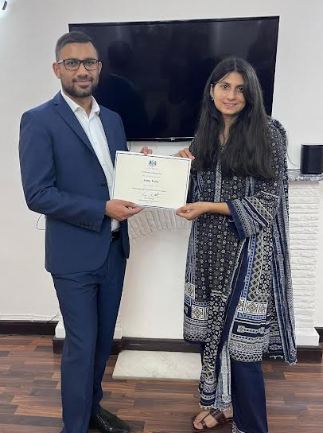
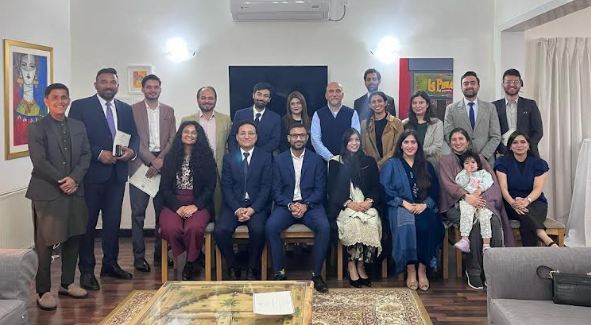
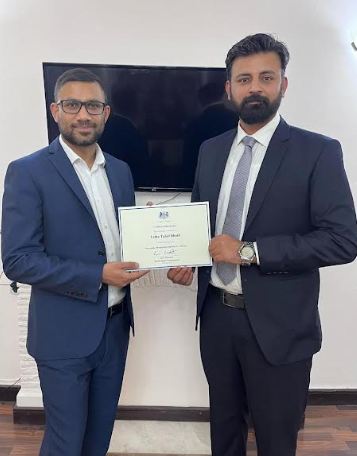
ISLAMABAD, MAR 1 /DNA/ – The British High Commission in Pakistan held a closing ceremony to celebrate the achievements of the Chevening Climate Mentorship Scheme participants. Through the scheme, 25 young climate activists, journalists and professionals were connected with 11 Chevening alumni who are actively working in the climate sector.

With support from their mentors and the wider group, mentees have developed podcasts, documentaries and articles on the impacts of climate change for major channels and publications. They have organised youth climate conferences and events on climate negotiations and climate finance. They have established social media platforms for women in remote communities to share their climate stories.

Further, they have been supported in submitting key policy proposals to government departments like the Ministry of Climate Change. They have been coached through presenting at COP 29. And they have set up new climate fellowships and internships to foster the new talent on climate.

Alongside this, participants benefited from attending Chevening’s series of climate debates, where the British High Commission bought together prominent Chevening alumni in Karachi, Lahore and Islamabad to debate key themes like green finance, urbanisation and COP29.

British High Commissioner, Jane Marriott CMG OBE said:

“Climate change such is a huge challenge that it can be difficult to know how to engage and make a difference. Linking young climate professionals with more experienced experts is a win-win situation: expertise, enthusiasm and idealism are shared to try and make a difference to help humanity. I’m confident that the connections forged this year will grow and inspire others beyond this beginning.”

Ahmed Kamal, university student and climate mentee, established a toolkit with simple actions children can take to meet the UN’s Sustainable Development Goals. This is now being rolled out to Beaconhouse schools across the country.

Reflecting on his work, Ahmed Kamal said:

‘I wanted to create something that motivated young people to take action on climate change, just as the Chevening Climate Mentorship programme was for me.’

Sana Munir, Chevening alumni, freelance journalist and director of local government audit, Lahore, said:

‘Participating in the Chevening Climate Change mentorship scheme as a mentor was a transformative experience. Witnessing the passion and dedication of the group was truly inspiring.’

Saudi envoy, Ishaq Dar pledge to boost bilateral ties

Saudi envoy

ISLAMABAD, MAR 3 /DNA/ – Ambassador of Saudi Arabia to Pakistan, Nawaf bin Saeed Ahmad Al-Malkiy called on Deputy Prime Minister/Foreign Minister, Senator Mohammad Ishaq Dar @MIshaqDar50 today. Both expressed their commitment to further strengthen the existing deep-rooted ties between the two countries, particularly in the areas of trade & investment. The Ambassador conveyed Ramadan greetings for DPM and people of Pakistan. DPM reciprocated the same for the leadership and people of Saudi Arabia.

Champions Trophy: New Zealand in confident mood for semi against ‘strong’ South Africa

New Zealand

LAHORE, MAR 3: New Zealand go into their Champions Trophy semi-final against South Africa in Lahore on Wednesday buoyed by beating the Proteas at the same venue in a tri-series last month.

The Black Caps lost to India in their final Group A match on Sunday in Dubai but Tom Latham said it would have no bearing on the encounter for a place in the final.

More relevant is that New Zealand chased down 305 against South Africa in Lahore after Kane Williamson scored 133 and also beat hosts Pakistan in the tri-series.

“We’re fortunate that we had a tri-series in Pakistan and against South Africa,” said the wicketkeeper Latham.

“We’ve got a chance to look back on those experiences and give our best in a semi-final, which is pretty cool,” he added.

New Zealand’s Tom Latham addressing the press conference in Dubai on March 2. — © ICC 2023

New Zealand were already into the last four of the Champions Trophy prior to Sunday’s loss to India in Dubai.

https://www.dawn.com/news/card/1894048

They also already knew they would have to head back to Pakistan for their semi-final.

“It is something that’s out of our control,” Latham said of the travelling, with India playing all their games in Dubai after refusing to go to hosts Pakistan.

“We don’t decide the schedule and for us it’s about turning up at each game regardless of where it is and trying to play our best brand of cricket as best we can.

“Obviously it’s a chance at making an ICC final,” said Latham. “We know there’s a lot of hard work to do to get to that point.”

South Africa topped Group B ahead of Australia with two impressive wins and one washed-out match.

“We know how strong South Africa are,” said Latham.

“They’ve got all bases covered in terms of batting, bowling and in the field. As you look at it, I’m sure it’ll be a fantastic game.”

New Zealand’s fielding has been outstanding on their way to the semi-finals – Glenn Phillips took a spectacular one-handed flying catch at backward point to dismiss Virat Kohli on Sunday.

“I think we’ve seen throughout the tournament some of the catches that the guys have been taking,” said Latham. “For us it’s an attitude thing.”

India face Australia in the first semi-final, in Dubai on Tuesday.

EU Founded for Peace, Now Engaged in War

Qamar Bashir

By: Qamar Bashir

Ursula von der Leyen recently announced, following the London summit, that the European Union would unveil a “comprehensive rearmament plan for Europe on March 6.” She emphasized the urgency of increasing military investments in order to “prepare for the worst.” However, this announcement has sparked significant skepticism and criticism. Many Europeans question the source of the funding for such a militarization effort, wondering if their remaining resources will be stripped away.

For years, the European Union has been portrayed as a beacon of prosperity and peace. Yet, critics argue that fear has consistently been used as a tool to push citizens into supporting harmful policies. Increasingly, Europeans perceive that the real threat does not come from Moscow, Ukraine, the USA, or China, but as the vice president of the United States, J.D. Vance, recently echoed the true threat comes from within Western institutions, not from external adversaries, specifically from Brussels, where leaders like Ursula von der Leyen, Emmanuel Macron, and Olaf Scholz are accused of manipulating narratives to sustain the war in Ukraine.

European project, originally built on the promise of peace, now seems to be leading the continent toward war. The European Union, rather than securing the future, seems to be digging the grave of Europe itself. Klaus Schwab’s infamous quote, “You will own nothing and be happy,” is now being interpreted as a grim prophecy rather than a utopian vision.

The skepticism extends to concerns about political rhetoric. Many see the discourse surrounding figures like Ukrainian President Volodymyr Zelensky as exaggerated, questioning the credibility of those who label him a “hero.” Detractors argue that European leaders could have just as easily fabricated a threat from extraterrestrials, highlighting what they see as the absurdity of the current narrative. The focus, they claim, should not be on an external aggressor but rather on the internal decisions that have led to economic hardship and political instability across the continent.

A significant segment of European public opinion believes that Russia has not provoked the EU, NATO, or France, but rather that European leaders are pushing for a prolonged confrontation with a nuclear power that possesses 5,000 warheads. Critics warn that such reckless policies could lead Europe into another catastrophic conflict—just as the continent was at the center of two world wars in the past century. Calls for rearmament are met with sarcasm, as some Europeans express mock enthusiasm about facing Russia alongside Sweden, questioning the feasibility and necessity of such a move.

Public concern is growing over Ursula von der Leyen’s authority and the legitimacy of the decisions she is making on behalf of European nations. Detractors argue that these actions undermine national sovereignty and democracy, concentrating power in Brussels while stripping individual nations of their ability to determine their own paths. The criticism does not stop at von der Leyen; Macron, Scholz, and other European leaders are also being accused of leading the continent down a destructive path.

The argument is that the push for increased military spending diverts crucial funds away from essential public services, environmental sustainability, and social welfare programs. Instead, these resources are being funneled into a “cannon fodder project” that benefits the wealthy elite at the expense of the general population. The war means according to them, raising taxes, which could lead to public outrage, cutting social benefits, further impoverishing struggling families and printing more money, causing hyperinflation and economic collapse.

Analysts who have studied European opinion trends note a significant shift in public sentiment. Many now believe that the war is unwinnable and that Russia holds the key to both prolonging and ending the conflict at its discretion. There is a growing recognition that continuing down the current path will only lead to further instability, economic hardship, and a potential escalation that could have devastating consequences for Europe.

With Europe already facing challenges from extremist threats and economic struggles, adding a military confrontation with Russia and increasing dependence on U.S. foreign policy could spell disaster for the continent. Critics argue that unless European citizens wake up and demand accountability from their leaders, they will be dragged into a war with catastrophic consequences.

Ultimately, the core of the argument is that European leaders are not safeguarding the interests of their people. Instead, they are prioritizing a militaristic agenda that serves political and financial elites. As tensions continue to rise, the question remains: Will European citizens take control of their future, or will they allow themselves to be led into another devastating conflict?

There is growing resentment toward European leadership, with some comparing the current EU to a “Fourth Reich” that seeks to impose its will on member nations. Rather than serving the interests of its people, the EU’s current trajectory appears to be one of decay, defeat, and disintegration. Instead of focusing on the prosperity and well-being of its citizens, the Union is investing in military escalation. But this time, the people will not be deceived. The resistance against this war is growing.

After nine years, European public, analysts and thinkers seem to have reached the same conclusion that former U.S. President Donald Trump did regarding military preparedness. However, financing a military expansion while already supporting a costly war is problematic. Money does not fall from the sky, and diverting funds means making painful cuts elsewhere. The challenge now is whether European leaders will dare to increase taxes without triggering a backlash from an already frustrated population.

This growing frustration among European citizens mirrors sentiments expressed by former U.S. President Donald Trump, who has repeatedly criticized NATO and questioned its role in global conflicts. Many Europeans now share Trump’s perspective that NATO initiated the war under false pretenses, framing it as an act of aggression. As public discourse shifts, more people in Europe are aligning with the idea that the conflict is not in their best interests but rather serves as a means to further impoverish ordinary citizens while enriching the powerful.

By: Qamar Bashir

 Press Secretary to the President (Rtd)

 Former Press Minister at Embassy of Pakistan to France

 Former MD, SRBC

 Macomb, Detroit

Stay Connected

64FansLike
60FollowersFollow

Latest Reviews

Exchange Rates

USD - United States Dollar
EUR
1.17
GBP
1.35
AUD
0.72
CAD
0.73