Home Blog Page 656

UNDP, China launch climate resilience project

UNDP

DNA

ISLAMABAD, Mar 7: In a significant step to combat the growing threats of climate change, UNDP Pakistan and the Government of China has launched the ‘Tailored Intelligence for Actionable Early Warning Systems’ (TIAEWS) project.

This initiative aims to strengthen the resilience of vulnerable communities in Pakistan, particularly in disaster-prone regions like Gilgit-Baltistan, which faces frequent glacial lake outburst floods (GLOFs).

Funded by the Global Development and South-South Cooperation Fund (GDF) and supported by the China International Development Cooperation Agency (CIDCA), the TIAEWS project focuses on four key areas.

Strengthening early warning systems to better anticipate and prepare for climate-induced disasters, building integrated real-time data management for precise disaster tracking and response, enhancing community engagement to ensure local populations are informed and equipped to stay safe and improving governance and coordination among stakeholders for faster, more unified disaster responses.

Pakistan, ranked among the most vulnerable countries to climate change, faces increasing risks from natural hazards such as floods, GLOFs, and extreme weather events.

The TIAEWS project is set to play a critical role in improving disaster preparedness, safeguarding millions of lives, and building long-term resilience in at-risk communities.

By leveraging advanced technology and fostering international collaboration, this initiative marks a vital step toward a safer, more sustainable future for Pakistan.

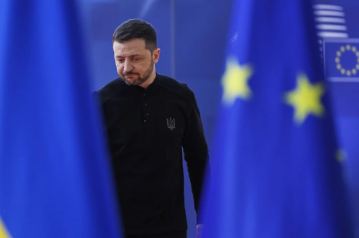
EU leaders agree on backing Zelensky

EU leaders agree on backing Zelensky

European Union’s defence summit in Brussels take place amid fears that Russia may attack an EU country next

Centreline Report

BRUSSELS: European leaders on Thursday backed plans to spend more on defence and continue to stand by Ukraine in a world upended by Donald Trump’s reversal of US policies.

The European Union’s defence summit in Brussels took place amid fears that Russia, emboldened by its war in Ukraine, may attack an EU country next and that Europe can no longer rely on the US to come to its aid

“Today we have shown that the European Union is rising to the challenge, building the Europe of defence and standing with Ukraine shoulder to shoulder,” the chairman of the meeting Antonio Costa told reporters.

EU leaders hailed the European Commission’s proposals this week to give them fiscal flexibility on defence spending, and to jointly borrow up to 150 billion euros ($160 billion) to lend to EU governments to spend on their militaries.

In a joint statement agreed by all 27 member states, the leaders called on their ministers to examine these proposals in detail urgently.

“Europe must take up this challenge, this arms race. And it must win it,” Polish Prime Minister Donald Tusk said at a special defence summit in Brussels.

“Europe as a whole is truly capable of winning any military, financial, economic confrontation with Russia – we are simply stronger,” Tusk said.

French President Emmanuel Macron, who on Wednesday had told French voters that Russia was a threat to France and Europe, said all this was just a first step.

“Whatever happens in Ukraine, we need to build autonomous defence capacities in Europe,” he said after the EU summit.

The EU leaders also voiced support for Ukraine, but that statement was agreed without Hungary’s nationalist leader Viktor Orban, a Trump ally, who is also cultivating ties with Moscow.

Palestinian embassy honours Pak siblings for Gaza support

Palestinian embassy honours Pak siblings for Gaza support

Palestinian Ambassador to Pakistan, Dr. Zuhair Zaid expressed profound gratitude to the siblings for their unwavering solidarity with the Palestinian cause

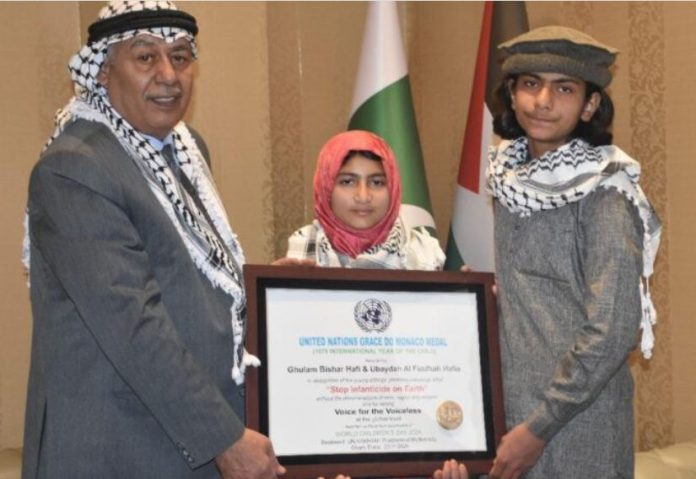
ISLAMABAD, Mar 07 (DNA): The Embassy of Palestine hosted a special reception to honor two young Pakistani siblings, Ubaydah Al Fiddhah Hafiah (11) and Ghulam Bishar Hafi (13), for their steadfast advocacy for the children of Gaza.

Palestinian Ambassador to Pakistan, Dr. Zuhair Zaid expressed profound gratitude to the siblings for their unwavering solidarity with the Palestinian cause. In an official letter of appreciation, he praised their courageous efforts, calling them a symbol of justice and humanity.

“I find myself at a loss for words, overwhelmed by the depth of your courage, the purity of your love, and the boundless compassion you have shown,” Dr. Zaid wrote, emphasizing that their message was a powerful reminder that “humanity is still alive in its purest form.”

He lauded the impact of their sacrifice, noting that “though small in action, it is immeasurable in meaning,” and described their advocacy as an “unbreakable bond that transcends distance and time” between the people of Pakistan and Palestine.

The ambassador further commended their ability to turn “pain into power, grief into hope, and silence into a voice that echoes across borders.” He acknowledged the depth of their advocacy, stating that their words, “written with hands so young yet hearts so vast,” held profound significance.

Dr. Zaid also recognized their non-violent approach, praising their commitment to justice through love and truth rather than violence. “Your blood has mingled with the cries of the innocent,” he wrote, adding that their actions served as “a beacon of humanity amidst the darkest times.”

In his concluding remarks, the ambassador assured the siblings that their message of sacrifice would never fade. “From the depths of my heart, I thank you. I honor you. And I promise that your message will continue to inspire millions,” he stated.

During the reception, Dr. Zaid, accompanied by his young daughter, made an emotional declaration, stating that from now on, Ubaydah Al Fiddhah and Ghulam Bishar would be considered his own children, alongside his five biological children.

Prof. Dr. Aurangzeb Hafi, the father and mentor of the siblings, quoted the ambassador as saying that Palestine “owned” these two children, their petitions, resolutions, and protest notes issued as part of their campaign against the atrocities committed against Gazan children.

Dr. Zaid also discussed with Prof. Hafi the pressing need to protect and resettle orphaned children from Gaza, particularly those left amputees due to the ongoing violence.

The Palestinian ambassador extended the invitation to the siblings following a recent ceremony in Karachi, where a special documentary showcased their unique form of protest – blood-written notes highlighting the plight of Gazan children. The event recognized them as the youngest-ever activists to take a frontline role in advocating for the cause.

Their protest campaign, featuring blood-written notes and open letters to global authorities, was ranked among the most impactful advocacy efforts, earning official recognition from Palestinian authorities.

A few weeks ago, following the Gaza ceasefire, the siblings revived their ‘Voice for the Voiceless’ campaign, advocating for the rights of Palestinian amputee children. With thousands of children orphaned and many left permanently disabled, they called for urgent global intervention to provide care and rehabilitation for these young victims.

Their activism began in June 2024, coinciding with the International Day of Innocent Children Victims of Aggression on June 4. Their first protest-blood-written notes were presented to international platforms, including the United Nations, urging the world to listen to the ‘voice of the voiceless.’

Their advocacy continues to inspire a global movement, proving that even the youngest voices can resonate across borders in the fight for justice and humanity.

Landmines in Azerbaijan’s Karabakh: Armenia’s Legacy of Destruction

Landmines in Azerbaijan’s Karabakh: Armenia’s Legacy of Destruction

Khalid Taimur Akram

Mines, unexploded devices, and booby traps are among the most menacing and hazardous remnants of Armenia’s nearly three-decade-long occupation of Azerbaijan’s Karabakh region. The nearly three-decade-long occupation has resulted in severe contamination of vast swathes of land, causing numerous casualties and hindering post-war reconstruction efforts. The deliberate placement of landmines by Armenia in civilian areas has led to an ongoing humanitarian crisis, affecting thousands of citizens and disrupting economic and agricultural activities in the region

Scale of Mine Contamination

According to initial estimates, over 1.5 million mines were planted across Azerbaijani lands during the occupation. Many Azerbaijani citizens have been killed by mine explosions since the Second Karabakh War ended in 2020. The sheer scale of mine contamination in Karabakh is alarming. Approximately 12% of Azerbaijan’s land is polluted with landmines and unexploded ordnance (UXOs), making it one of the most mine-infested regions in the world. The placement of these mines was not limited to military zones; they were also laid along roads, cemeteries, and civilian infrastructures, including homes, schools, and water sources. The persistence of these landmines not only endangers human lives but also significantly hampers Azerbaijan’s rehabilitation efforts and economic revival in the liberated territories.

The presence of landmines prevents displaced Azerbaijani citizens from returning to their homes, effectively continuing the terror of occupation even after its official end. Mines were strategically placed along roads, cemeteries, and other civilian installations to maximize their destructive impact. The resulting hazards have delayed reconstruction efforts and disrupted economic recovery. Farmers, shepherds, and villagers who attempt to reclaim their lands face daily risks, as unexploded ordnance remains a hidden menace beneath the soil. Armenia has failed to provide accurate minefield maps. This omission not only endangers lives but also violates fundamental human rights, including the right to life, security, and a healthy environment.

Demining Efforts

Azerbaijan has prioritized humanitarian demining as a national security and development imperative. Since the war’s end, Azerbaijan has launched multiple initiatives to raise awareness and seek international assistance for mine action. In May 2023, Azerbaijan spearheaded an effort to include mine clearance as the 18th Sustainable Development Goal (SDG) on the UN agenda. Moreover, the Mine Action Agency of the Republic of Azerbaijan (ANAMA) has actively engaged in demining operations, collaborating with international partners such as the United Nations Development Programme (UNDP) to establish the ANAMA-UNDP International Centre of Excellence and Training for Mine Action. Despite these obstacles, Azerbaijan has made significant strides in mine clearance. According to ANAMA, as of 2024, approximately 156,000 hectares have been cleared, with over 151,000 landmines and UXOs successfully neutralized. A total of 377 specialized teams are actively engaged in these operations, working tirelessly to reclaim the land for safe civilian use. However, the scale of contamination remains vast. The newly regained villages in the Gazakh district, for example, are heavily infested with landmines. The statistics of cleared mines change daily, reflecting the magnitude of the challenge. Between 2020 and 2024, 379 individuals fell victim to landmines in Eastern Zangezur and Karabakh, with 70 fatalities and 309 severe injuries. The continued presence of Armenian forces in some of these regions further complicates efforts to assess and eliminate the full extent of contamination.

One of the most pressing challenges in Azerbaijan’s demining efforts is the lack of reliable minefield maps. Initially, Armenian officials denied possessing such maps before eventually agreeing to exchange some for detained Armenian soldiers. The lack of comprehensive minefield data significantly increases the cost, difficulty, and danger of clearance operations. Without precise maps, deminers must rely on labor-intensive and risky detection methods, prolonging the threat to civilians and slowing the rehabilitation of the affected regions.

Environmental and Economic Consequences

Beyond the immediate loss of life and injuries, landmine contamination has had a profound impact on the region’s environment and economy. The landmines have rendered vast tracts of agricultural land unusable, directly threatening food security and economic development. The agricultural sector has been suffered immensely due to the inability to safely cultivate the land. Moreover, infrastructure projects essential for economic revitalization have been delayed due to the need for extensive demining operations. Reports from the International Committee of the Red Cross (ICRC) indicate that since the early 1990s, landmines in Karabakh have resulted in huge number of casualties, and more than 50% of whom were civilians. The destruction of farmlands, forests, and water resources due to mine contamination exacerbates the region’s economic challenges, making sustainable development difficult in the liberated areas.

Armenia bears direct responsibility for the extensive mine contamination in Azerbaijan. The systematic and large-scale planting of landmines was a deliberate state policy aimed at hindering Azerbaijan’s post-conflict recovery. This act constitutes a war crime under international humanitarian law, necessitating firm international action.  The international community must hold Armenia accountable for its actions, pressuring it to provide complete and accurate minefield maps. Additionally, global organizations should increase support for Azerbaijan’s demining efforts, recognizing the dire humanitarian and environmental consequences of the mine crisis in Karabakh.

Landmine contamination in Azerbaijan’s Karabakh region remains one of the most severe humanitarian and security challenges facing the country today. The legacy of Armenia’s occupation continues to endanger lives, obstruct economic recovery, and prevent the safe return of displaced Azerbaijani citizens. The Azerbaijani government, ANAMA and international cooperation, is making commendable strides in demining efforts, but the scale of the problem requires sustained global attention and support. Ensuring the safety and well-being of displaced persons necessitates accelerated mine clearance, enhanced international cooperation, and accountability from Armenia. Only through collective efforts can the region overcome the deadly remnants of war and pave the way for a safer and more prosperous future.

British High Commission celebrates young climate storytellers on Commonwealth Day

British High Commission celebrates young climate storytellers on Commonwealth Day

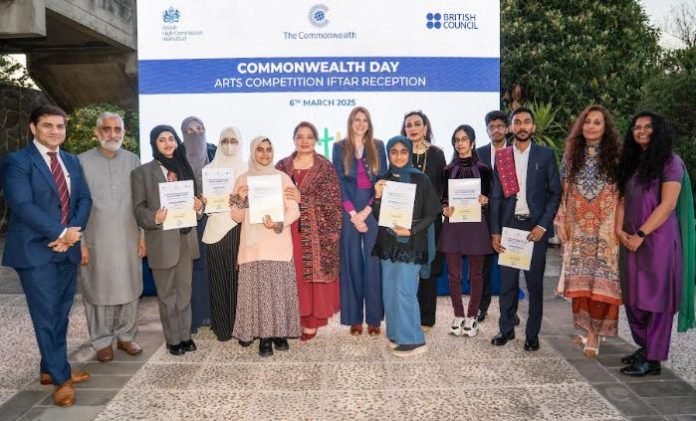
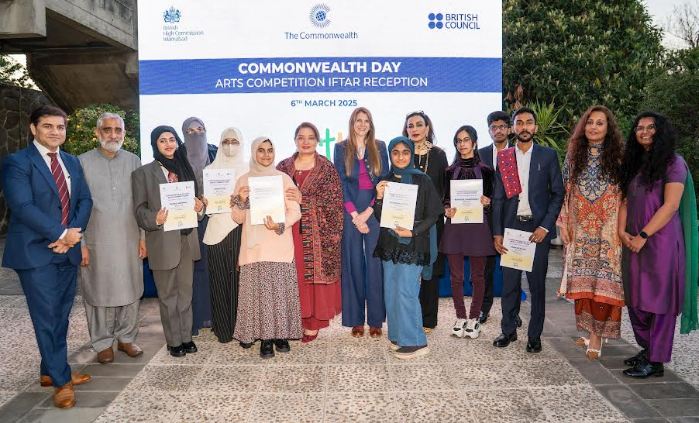
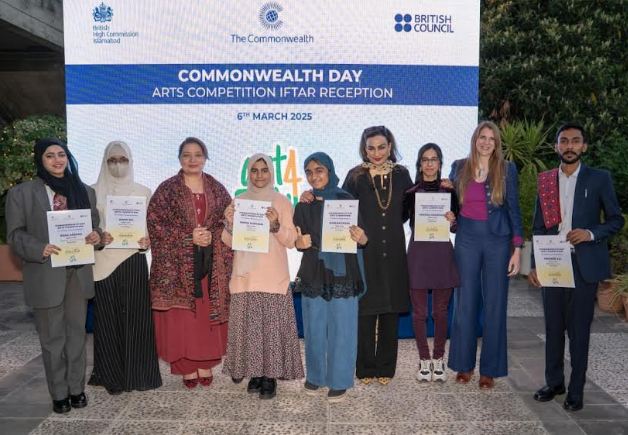
ISLAMABAD, MAR 7 /DNA/ – Winners of the UK’s ‘Climate in My Community’ competition showcased their creative talents through art, film, and storytelling at the British High Commission Islamabad to celebrate Commonwealth Day 2025.

Young Pakistanis from across the country, aged between 13 and 24 were invited to submit pieces of art that represented what climate change means to them, how it is impacting their communities and the steps they are taking to address it. The competition, organised in collaboration with the British Council, had a strong response receiving over 550 entries.

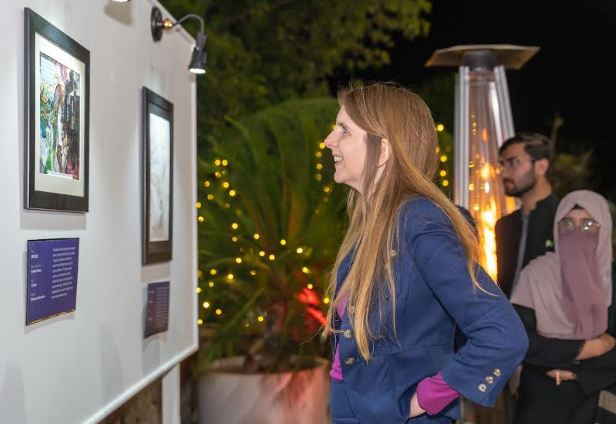
To mark the occasion, the British High Commission hosted an award ceremony, bringing together the winners, climate experts, and key stakeholders. The event featured an exhibition of the winning entries and offered opportunities to discuss youth-led climate action.

British High Commissioner to Pakistan, Jane Marriott CMG OBE, said:

“I’ve been blown away by the exceptional quality of entries to this competition, creatively bringing to life the threat from and solutions to climate change. Pakistan’s young people are full of creativity and energy, and this competition has shown how powerful their voices can be in shaping the climate conversation. Congratulations to the winners and thank you to everyone who took part.”

20-year-old Roha Arshad, winner in the Climate and Innovation category, said:

“It’s easy to hope that some miracle technology will come around and save our planet. But it’s down to us. It’s our responsibility to think about our own actions. And use the miracle we already have: nature. That’s what my video is all about. Using what’s around us to heal the planet.”

The winners, Khadija Chaudary, Rahma Mudassir, Gulshan Fatima, Hayder Ali, Amaim Zia and Roha Arshad are between 13 and 22 years old. Their paintings, drawings, videos, stories and articles were recognised across 3 categories: climate and innovation, climate and gender, and climate in my community. They were celebrated for their creative storytelling on climate challenges and solutions.

Commonwealth Day will be celebrated across 56 member countries on 10 March, reflecting shared values of unity, peace, and sustainability. This year’s theme, ‘Together We Thrive’, highlights the importance of strong, connected communities working together to address global challenges.

Climate change is a key priority for the UK. The UK has helped 1.5 million people improve their resilience to extreme climate events, and aims to support a further 3 million people over the next 4 years. The UK’s innovative climate finance programme is set to mobilise over £420 million in climate investments, mostly from the private sector.

Finance Minister assures APTMA support for growth, long-term viability of sector

Finance Minister assures APTMA support for growth

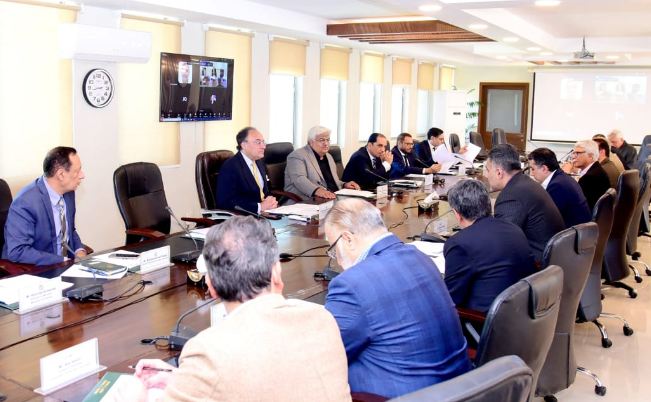
ISLAMABAD, MAR 6 /DNA/ – Federal Minister for Finance and Revenue, Senator Muhammad Aurangzeb, has reiterated the government’s unwavering commitment to resolving critical issues related to taxation, energy, and financing, as part of its efforts to ensure the long-term viability and future growth of Pakistan’s industrial sector.

He made this statement during a meeting held today at the Finance Division with the leadership of the All Pakistan Textile Mills Association (APTMA). The meeting was attended by senior officials, including the Chairman of the Federal Board of Revenue (FBR), the Secretary of the Commerce Division, and other senior officers from the Finance Division and FBR.

Senator Muhammad Aurangzeb and his team welcomed the APTMA office-bearers and expressed the government’s strong commitment to providing all possible support to the textile sector.

The Finance Minister assured the delegation that the government recognizes the critical role of the textile industry in Pakistan’s economy and remains dedicated to addressing its concerns.

He emphasized that addressing the core challenges faced by the industry is key to creating a conducive environment for industrial development, fostering economic stability, and supporting the nation’s overall growth trajectory.

Earlier, the APTMA delegation, led by Chairman Kamran Arshad, provided a detailed presentation on several pressing issues facing the textile sector related to energy, taxation and financing. The presentation also touched on various recommendations and proposals for the long-term viability and growth of the sector.

The Finance Minister assured the APTMA leadership that the government would give a thorough and thoughtful analysis of their recommendations, incorporating viable suggestions into the federal budget. He reiterated the importance of the consultative process and emphasized that any anomalies in the current framework would be addressed.

The APTMA delegation expressed their appreciation for the expedited disbursement of tax refunds and requested further support for the clearance of outstanding dues. The Finance Minister reaffirmed that the government values this consultative approach and would continue to engage with key sectors to ensure their concerns are addressed effectively in the upcoming budget.

New Zealand defeat South Africa to set up Champions Trophy final clash with India

New Zealand

LAHORE, MAR 5 – An all-round performance by New Zealand powered them to a convincing victory over South Africa, securing their place in the ICC Champions Trophy final against India, set to take place in Dubai on March 9.

Chasing a daunting 363-run target, South Africa’s batting unit amassed 312/9 in their allotted overs despite David Miller’s blitz at the backend.

The Proteas got off to a shaky start to their innings as opening batter Ryan Rickelton (17) was dismissed by Matt Henry in just the fifth over with 20 runs on the board.

Following the early hiccup, in-form van der Dussen joined Bavuma in the middle and launched recovery.

The duo shared an important 105-run partnership for the second wicket which saw both of them scoring half-centuries until New Zealand captain Mitchell Santner removed his South African counterpart in the 23rd over.

Bavuma scored 57 off 71 deliveries with the help of four fours and a six.

Rassie van der Dussen was then involved in a brief 36-run partnership with Aiden Markram before he too, fell victim to Santner.

He smashed four fours and two sixes on his way to a 66-ball 69.

Following his dismissal, South Africa began to lose wickets at an alarming and as a result, slipped to 218/8 with experienced David Miller firm at the crease.

The experienced batter offered a notable fightback with an unbeaten century but his efforts were not enough to seal the deal for South Africa.

He smashed 10 fours and four sixes on his way to an unbeaten 100 off 67 deliveries.

Santner was the standout bowler for New Zealand, taking three wickets for 43 runs in his 10 overs, followed by Glenn Phillips and Matt Henry with two each, while Michael Bracewell and Ravindra chipped in with one scalp apiece.

Earlier, Rachin Ravindra and Kane Williamson’s tons propelled New Zealand to a massive total of 362/5.

New Zealand captain Mitchell Santner’s decision to bat first brought fortune as his batting unit yielded 362/6 in the allotted 50 overs.

The Blackcaps got off to a decent start to their innings as openers Will Young and Ravindra shared a brisk 48-run partnership until the former fell victim to Lungi Ngidi in the eighth over after scoring 21 off 23 deliveries.

Following the early hiccup, Williamson joined Ravindra in the middle and put New Zealand in a commanding position with a marathon partnership, which yielded 164 runs off 154 deliveries.

The second-wicket partnership eventually concluded with the opener’s dismissal in the 34th over and walked back after top-scoring with 108 off 101 deliveries, studded with 13 fours and a six.

Williamson was then involved in a brief 39-run partnership for the third wicket with Daryl Mitchell and brought up his 15th ODI century in the process.

The right-handed batter, however, soon perished after amassing the landmark. He scored 102 off 94 deliveries, laced with 10 fours and two sixes.

Following his dismissal, Mitchell and Glenn Phillips gave a late push to New Zealand’s total with brisk knocks.

Mitchell and Phillips scored 49 each from 37 and 27 balls respectively, while Michael Bracewell made 12-ball 16.

Ngidi was the standout bowler for South Africa, taking three wickets for 72 runs in his 10 overs, while Rabada bagged two.

Playing XIs
South Africa: Ryan Rickelton, Temba Bavuma(c), Rassie van der Dussen, Heinrich Klaasen(w), David Miller, Aiden Markram, Wiaan Mulder, Marco Jansen, Keshav Maharaj, Kagiso Rabada, Lungi Ngidi

New Zealand: Will Young, Rachin Ravindra, Kane Williamson, Daryl Mitchell, Tom Latham(w), Glenn Phillips, Michael Bracewell, Mitchell Santner(c), Matt Henry, Kyle Jamieson, William O’Rourke

PM thanks Trump for praising Pak role against terrorism

PM thanks Trump for praising Pak role against terrorism

“We remain steadfast in our resolve and unwavering commitment to combating terrorism,” says Premier Shehbaz

Ansar M Bhatti/DNA

ISLAMABAD: Prime Minister Shehbaz Sharif has thanked US President Donald Trump for acknowledging and appreciating Pakistan’s role and support in counter-terrorism efforts in Afghanistan.

In a post on his X handle on Wednesday, he said Pakistan would continue to partner closely with the United States in securing regional peace and stability.

His remarks came hours after the US president thanked the Pakistani government for apprehending the “top terrorist” involved in the 2021 Kabul airport bombing.

The attack marked a tragic end to America’s longest war in Afghanistan, claiming the lives of 13 US service members and around 170 Afghans who were desperately trying to escape Kabul after the Taliban takeover.

Identifying the terrorist as Shareefullah, a top-tier operational commander of Daesh, the prime minister mentioned that the militant was an Afghanistan National and was apprehended in a successful operation conducted in the Pakistan-Afghan border region.

As is well-known, the premier said, Pakistan has always played a critical role in counter-terrorism efforts aimed at denying safe havens to terrorists and militant groups the space to operate against any other country.

“We remain steadfast in our resolve and unwavering commitment to combating terrorism, in all its forms and manifestations,” the prime minister added.

In this effort, he said, Pakistan has rendered great sacrifices, including the lives of over 80,000 of our brave soldiers and citizens.

“The resolve of our leadership and our people remains unflinching, to eradicate the menace of terrorism from our country. We will continue to partner closely with the United States in securing regional peace and stability.”

President Trump, in his speech during his speech to a joint session of Congress, said: “Tonight, I am pleased to announce that we have just apprehended the top terrorist responsible for that atrocity. And he is right now on his way here to face the swift sword of American justice.”

After a brief pause and a round of applause, he thanked the government of Pakistan for helping apprehend the “monster” and added that it was “a very huge day for the affected families.

“This was a very momentous day for those 13 families, whom I actually got to know very well, whose children were murdered. What a horrible day,” Trump, who became the 47th president in January, said.

Trump turned his guns onto his predecessor, Joe Biden, and mentioned that the attack occurred during the “disastrous and incompetent” withdrawal from Afghanistan.

Noting that he isn’t criticising the withdrawal, but rather the manner in which it was carried out. “Perhaps the most embarrassing moment in the history of our country […] such incompetence was shown.”

US releases $397m for Pak F-16s fleet

US releases $397m for Pak F-16s fleet

The waivers meant those funds should have been allowed to be spent

Foreign Desk

WASHINGTON: The Trump administration released $5.3 billion in previously frozen foreign aid, mostly for security and counternarcotic programs, according to a list of exemptions reviewed by Reuters that included only limited humanitarian relief.

The Bureau of International Security and Nonproliferation, focused on preventing the spread of nuclear weapons and other weapons of mass destruction, received 17 exemptions worth more than $30.4 million, the list showed.

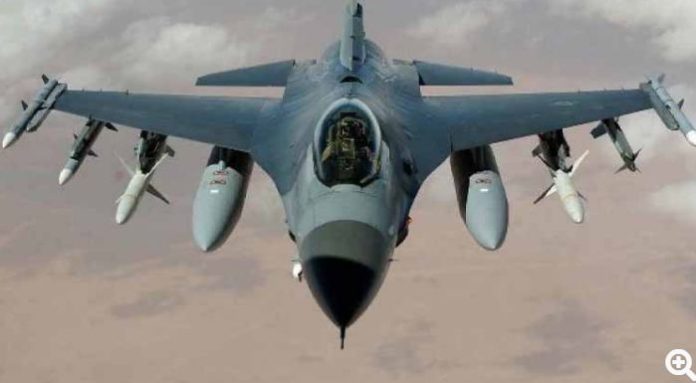
Also released was $397 million for a US-backed program in nuclear-armed Pakistan that a congressional aide said monitored Islamabad’s use of US-made F-16 fighter jets to ensure they are employed for counterterrorism operations and not against rival India.

President Donald Trump ordered a 90-day pause on foreign aid shortly after taking office on January 20, halting funding for everything from programs that fight starvation and deadly diseases to providing shelters for millions of displaced people across the globe.

The freeze sparked a scramble by US officials and humanitarian organizations for exemptions to keep programs going.

Secretary of State Marco Rubio, who has said all foreign assistance must align with Trump’s “America First” priorities, issued waivers in late January on military aid to Israel and Egypt, the top US allies in the Middle East, and for life-saving humanitarian aid, including food.

The waivers meant those funds should have been allowed to be spent.

Current and former US officials and aid organizations, however, say few humanitarian aid waivers have been approved.
Reuters obtained a list of 243 further exceptions approved as of February 13 totaling $5.3 billion. The list provides the most comprehensive accounting of exempted funds since Trump ordered the aid freeze and reflects the White House’s desire to cut aid for programs it doesn’t consider vital to US national security.

The list identifies programs that will be funded and the US government office managing them. The vast majority of released funds—more than $4.1 billion—were for programs administered by the US State Department’s Bureau of Political-Military affairs, which oversees arms sales and military assistance to other countries and groups.

Other exemptions were in line with Trump’s immigration crackdown and efforts to halt the flow of illicit narcotics into the US, including the deadly opioid fentanyl.

More than half of the programs that will be allowed to go forward are run by the State Department’s Bureau of International Narcotics and Law Enforcement Affairs, or INL, and
are aimed at helping fight drug trafficking and illicit migration to the US, according to the list. Those exemptions were worth $293 million and included funds for databases to track migrants, identify possible terrorists and share biometric information. A State Department spokesperson did not respond to a request for comment.

Reuters could not determine if some exemptions had been granted but were not on the list. Trump has long railed against foreign aid, which has averaged less than 2% of total federal spending for the past 20 years, according to the nonpartisan Committee for a Responsible Federal Budget.

16 terrorists killed, five soldiers martyred as security forces foil Bannu attack

five soldiers martyred

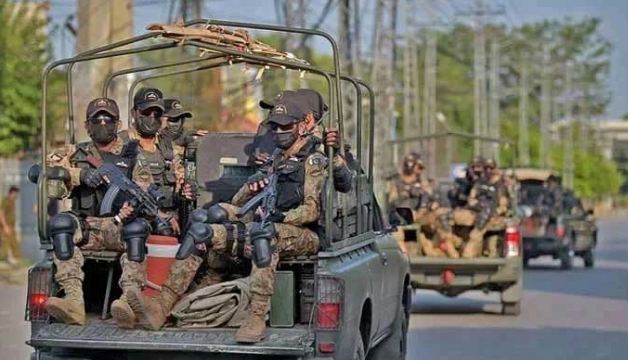
RAWALPINDI, MAR 5: Security forces successfully thwarted a cowardly terrorist attack on Bannu Cantonment, Khyber Pakhtunkhwa, killing all 16 militants who attempted to intrude into the facility on March 4, according to a statement issued by the Inter-Services Public Relations (ISPR) on Wednesday.

“In this intense exchange of fire, five brave soldiers, after putting up a heroic resistance, embraced martyrdom in the line of duty,” the military’s media wing added.

However, in the exchange of fire, five soldiers were also martyred while putting up a heroic resistance, the military’s media wing said.

As many as thirteen civilians were also martyred and 32 others were injured as a result of destruction caused by suicide blasts during the clash.

“On 4 March 2025, a cowardly terrorist attack was attempted on Bannu Cantonment by Khwarij elements. The assailants sought to breach the cantonment’s security; however, their nefarious designs were swiftly and decisively foiled by the vigilant and resolute response of Pakistan’s security forces,” the ISPR said.

It said that the attackers, in their desperation, rammed two explosive-laden vehicles into the perimeter wall.

However, the valiant troops engaged the intruders with precision, eliminating all sixteen terrorists, including four suicide bombers in a display of unwavering courage and professional excellence.

The military’s media wing said that multiple suicide blasts resulted in the partial collapse of the perimeter wall, causing damage to the adjacent infrastructure.

Tragically, a mosque and a civilian residential building in close proximity also suffered severe destruction, leading to the martyrdom of thirteen civilians and injuries to thirty-two others, it added.

The ISPR further stated that the physical involvement of Afghan nationals in this heinous act was unequivocally confirmed in intelligence reports, with evidence also pointing to the fact that the attack was orchestrated and directed by Khwarij ring leaders operating from Afghanistan.

It said that Pakistan expected the interim Afghan government to uphold its responsibilities and deny its soil for terrorist activities against Pakistan.

Pakistan reserves the right to take necessary measures in response to these threats emanating from across the border.

“The security forces of Pakistan remain steadfast in their resolve to eradicate terrorism in all its forms. The sacrifices of our brave soldiers and innocent civilians further reinforce our unwavering commitment to safeguarding our nation at all costs,” the military’s media wing concluded.

PM lauds security forces
Prime Minister Shehbaz Sharif lauded the security forces for their successful operation against “Fitna-tul-Khawarij” at the Bannu Cantonment, commending their bravery and dedication.

He paid tribute to the five soldiers who embraced martyrdom in the operation, offering prayers for their elevated ranks in the afterlife and extending heartfelt condolences to their families.

The premier also praised the forces for eliminating all 16 terrorists, acknowledging their swift action in thwarting the enemy’s malicious intentions. He emphasised that the courageous soldiers had prevented a major national loss, ensuring the safety of the country.

Reaffirming Pakistan’s resolve against terrorism, PM Shehbaz stated that the armed forces stand as an unyielding shield against terror, with the entire nation standing in solidarity with them. He reiterated the commitment to eradicating terrorism in all its forms for a peaceful and secure Pakistan.

The attack comes days after a suicide bomber killed six people at a religious school in Pakistan, attended by key Taliban leaders in the same province. Similar attacks have increased in Pakistan since the Taliban authorities returned to power in Afghanistan in August 2021.

Islamabad has time again urged Kabul to not allow its territory to be used by terrorist groups to carry out attacks against Pakistan — vehemently denied by the Afghan Taliban-led administration.

The two nations share a porous border spanning around 2,500 kilometres with several crossing points which hold significance as a key element of regional trade and relations between the people across both sides of the fence.

The diplomatic effort is coupled with ongoing kinetic action against terrorists by security forces who continue to engage in operations, eliminating a number of militants and thwarting multiple infiltration attempts.

However, the issue of terrorism remains a key issue for Pakistan which has urged Afghanistan to prevent its soil from being used by groups such as the Tehreek-e-Taliban Pakistan (TTP) to carry out attacks inside the former’s territory.

Islamabad’s reservations have also been confirmed by a report submitted to the United Nations Security Council (UNSC) by the Analytical Support and Sanctions Monitoring Team which has revealed a nexus between Kabul and the TTP with the forming providing logistical, operational and financial support to the latter.

Stay Connected

64FansLike
60FollowersFollow

Latest Reviews

Exchange Rates

USD - United States Dollar
EUR
1.17
GBP
1.35
AUD
0.72
CAD
0.73