Home Blog Page 655

Minister lauds KBM CARE humanitarian endeavors 

Minister lauds KBM CARE humanitarian endeavors 

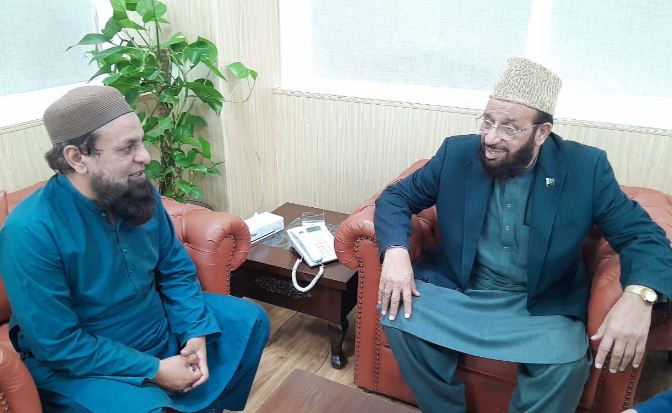
ISLAMABAD, MAR 10 /DNA/ – Federal Minister for Religious Affairs & Interfaith Harmony Sardar Muhammad Yousaf on Monday admired the humanitarian and noble work of KBM CARE FOUNDATION in the country and hoped that the organization will use all its resources to serve those who need the most.

The Minister was talking to KBM CARE delegation headed by Founder of KBM CARE Mr Khalid bin Majeed that called on him at the minister office, said a press release.

The delegation comprised Secretary of the Foundation Amjad Saqlain Awan and Senior Advisor Niaz Muhammad.

The Minister was briefed about the KBM CARE relief activities across Pakistan in relief distribution, Health Care and Water & Sanitation. The minister was told that despite limited resources the organization is striving hard to reach the people of the underserved areas and fill the gaps in the provision of services.

The minister was apprised the efforts of the organization in provision of cash assistance to the deserving families for treatment purposes.

 The delegation also briefed the minister about the KBM CARE RAMAZAN RATION DRIVE/IFTAR DINNER for the deserving people during the holy month of Ramazan and also invited the minister to attend the ration distribution ceremony and Iftar dinner as chief guest which he kindly accepted.

On the occasion, the minister was also apprised about their ongoing welfare activities in and future initiatives. The minister assured his fullest cooperation to KBM CARE in its welfare activities and stressed the need for close coordination among all the stakeholders to achieve maximum results especially in the areas that are still lagging basic facilities.

Chairman PPP constitutes Election Board for holding Intra-Party elections

Chairman PPP constitutes Election Board for holding Intra-Party elections

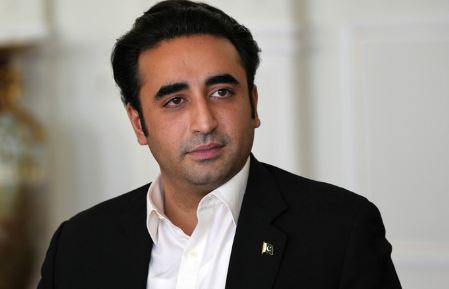
ISLAMABAD, MAR 10 /DNA/ – Chairman Pakistan Peoples Party, Bilawal Bhutto Zardari has constituted Party’s Election Board for holding the Intra-Party elections.

Fauzia Habib has been appointed as the convener of the Election Board. Amir Fida Paracha and Syed Sibtul Haider Bukhari have been appointed as members of the Board.

Chairman Bilawal Bhutto Zardari has instructed the Election Board to hold the Intra-Party elections in five weeks.

President Zardari addresses joint session of parliament amid noisy opposition protests

President Zardari

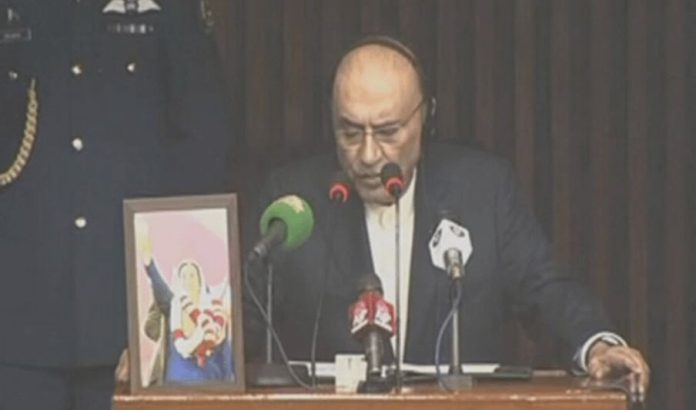
ISLAMABAD, MAR 10: Presi­dent Asif Ali Zardari is addressing a joint session of parliament attended by MNAs and senators. “It is my singular privilege as your president to address for the eighth time the beginning of the parliamentary year,” Zardari said amid noisy sloganeering from opposition members.

“This moment marks not only the continuation of our democratic journey but also provides us with an opportunity to review our progress and reaffirm our commitment to building a better future for Pakistan.”

“As we embark on this new parliamentary year, I urge this house in promoting good governance and political economic stability.

“Our people have pinned their hope on parliament and we must rise to the occasion,” he said.

“It is my first duty to remind you we need to work harder to strengthen our democratic system, restore public confidence in the rule of law, and put Pakistan on the road to prosperity.”

As protests by opposition members continued, President Zardari said: “I would like to appreciate the government’s efforts of putting the country on a positive path through economic growth. Our foreign exchange reserves have experienced a surge, there was a substantial increase in FDI and and the stock market also surged to a record high.”

The government has also reduced the policy rate from 22 to 12 per cent, and all other economic indicators have shown a healthy sign of improvement, he said.

“You are aware that the population dynamics of our country have changed. A combination of factors presents challenges we must address. The high rate of our population growth along with strategic drift in our administrative machinery has increased governance issues manifold.

“It is my considered opinion that this House should take its responsibilities seriously, and play its role in a real re-set of our governance and service delivery outcomes,” the president said.

“As far as the government is concerned, ministries too need to redefine their vision and objectives, and understand that pressing issues faced by the people of Pakistan have to be resolved within a certain time frame,” he said. “We need to deliver tangible benefits to restore the trust of the people in democratic institutions.”

The president went on to say: “Democracy needs give and take, and what better place to work on collective goals than this Parliament?”

“As elected representatives, you function as role models for the nation. As you go about your parliamentary business think beyond narrow goals. Think of the unity and consensus our country so desperately needs.”

“I would urge all of you to empower our people, make decisions of national importance with consensus, encourage domestic and international investments for economic growth and job creation, foster social and economic justice, and ensure fairness and transparency in our system,” he said.

Zardari, who is serving as the country’s president for the second time, has already addre­ssed the joint sitting of parliament seven times, including once during the present regime last year.

It was expected that the PTI-led opposition will stage a noisy protest during his speech as it had done last year when President Zardari addre­ssed the joint sitting.

In his address last year, Presi­dent Zardari had highlighted the need for shunning political hatred and establishing political harmony to overcome the crisis confronting Pakistan toge­ther.

He had also underlined the need for eradicating terrorism, ens­u­ring ease of doing business, focusing on health and education, poverty etc.

As per Article 56 of the Constitution, the president addresses both houses of parliament at the start of the first session of each parliamentary year. The NA secretariat has made strict security measures for the joint session.

Sources in the Presidency told Dawn that in his today’s address, President Zardari would outline the federal government’s performance and governance issues.

The address comes at a time when differences between the ruling coalition partners, PML-N and Mr Zardari’s PPP, have started becoming more visible. While the PPP has no ministers in the federal cabinet, its votes are integral to the survival of the ruling coalition.

Several leaders including PPP chairman Bilawal Bhutto-Zardari recently expressed displeasure over what they called the “indifferent attitude” of the PML-N with its ally. PPP leaders complained of being sidelined particularly in Punjab, where the PML-N is in power.

Also, the PPP-led Sindh government has strongly opposed the PML-N government’s move to carve out new canals from the Indus River to irrigate barren land in Punjab’s Cholistan area. The Sindh government claims the new canals would reduce the province’s share of water and may turn the cultivable land barren.

Pakistani students in Shanghai’s Lin-gang see broad business prospects in China 

Pakistani students in Shanghai's Lin-gang see broad business prospects in China 


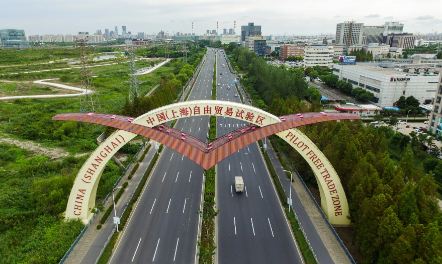
SHANGHAI, Mar. 10 (DNA): Pakistani students in Shanghai’s Lin-gang Free Trade zone see broad business prospects in China, China Economic Net reported on Monday.

Along other Pakistanis here 27-year-old Zhou Zihan, an entrepreneur from Pakistan, is also preparing to launch his business. 

“Starting a business in Lin-gang provides easier access to both domestic and international markets, as well as greater efficiency in cross-border operations,” Zhou stated.

Currently pursuing a master’s degree in International Relations at East China Normal University, Zhou hails from a family with a rich history in Pakistan’s textile industry. 

“Since 2001, we have collaborated with several Chinese companies to supply textile machinery, digital printing machines, and related solutions to Pakistan’s textile sector,” he shared. 

In pursuit of further expansion, Zhou aims to establish a trading company in Shanghai to connect Chinese products with Pakistani clients.

“Lin-gang is home to numerous high-tech enterprises, abundant innovation resources, and comprehensive international legal and financial services—all of which provide robust support for my company’s global growth. 

The openness and favorable policies in this region were key factors in my decision to establish my business,” Zhou explained.

Although he had long contemplated starting a business in Shanghai, Zhou hesitated due to the complexities of establishing a company in a foreign country. 

As an international student, he faced additional uncertainties, particularly regarding visa regulations. To navigate the process, he consulted the relevant authorities and discovered that he could transition from a student visa to an entrepreneurship visa, making his business aspirations achievable.

A pivotal moment occurred in November 2023 when Zhou attended the “Connecting the World, Embracing Lin-gang” event, an initiative designed to invite international students from Shanghai universities to explore the Lin-gang New Area. 

This was his first visit to Lin-gang, and the comprehensive policy briefings provided by officials unveiled new opportunities. 

Additionally, he had the chance to engage with government representatives who specialize in entrepreneurship support.

“Lin-gang not only provides a secure and convenient environment for foreign entrepreneurs but also distinguishes itself as a key development area supported by both national and municipal governments. I was truly impressed,” Zhou stated.

According to an official from the Lin-gang New Area Administrative Committee, a variety of policies have been implemented to support international students in innovation and entrepreneurship. 

Initiatives such as the Lin-gang Overseas Students Entrepreneurship Park provide assistance with business registration, policy consultation, operational support, and financial and tax services. 

Foreign entrepreneurs can also take advantage of a five-year residence permit, a fast-track pathway to permanent residency, and an expedited process for domestic professional qualification exams.

Lin-gang Special Area has emerged as an ideal launchpad for foreign entrepreneurs. To date, over 300 startups founded by international students have established themselves in the area. 

Lin-gang Blue Bay Park and the Marine High-tech Industrial Base serve as key hubs for overseas returnee entrepreneurship, hosting nearly 100 enterprises. 

Notably, 75% of these companies operate in advanced industries such as biomedicine, artificial intelligence, and integrated circuits.

With its forward-thinking policies, global connectivity, and innovation-driven ecosystem, Lin-gang is emerging as a premier destination for international entrepreneurs seeking to expand their businesses on a global scale.

Finance Minister reaffirms government’s commitment to supporting insurance sector

Finance Minister reaffirms government’s commitment to supporting insurance sector

ISLAMABAD, MAR 10 /DNA/ – Federal Minister for Finance and Revenue, Senator Muhammad Aurangzeb has reaffirmed the government’s commitment to supporting the insurance sector, recognizing its potential for significant private sector investment.

He further noted that the government seeks to diversify beyond the banking sector for lending purposes, urging the insurance industry to step up and meet the growing demand. This includes expanding the sector by focusing on innovation, enhancing productivity, and driving further growth.

The Minister expressed these views during a meeting held today with a delegation of chief executive officers from Pakistan’s leading insurance companies. The discussion focused on the growth of the insurance sector and its contributions to the national economy, with a particular emphasis on its impact on the health system, investments in Pakistan Investment Bonds (PIBs), capital markets, and long-term investment opportunities.

The Minister assured the delegation that the government would continue to work closely with industry leaders and stakeholders to ensure the long-term prosperity of the insurance sector, which is a vital component of Pakistan’s economic landscape.

Earlier, the delegation presented to the Minister and his team key proposals and suggestions aimed at boosting the growth and productivity of the insurance sector. The presentation also highlighted the current statistics of the industry, which boasts assets worth Rs 2,900 billion, alongside 20,000 direct and 234,000 indirect employments. The sector’s contributions were underscored, with Rs 613 billion in gross written premiums and Rs 373 billion in claims paid to date.

Senator Muhammad Aurangzeb welcomed the delegation’s presentation and expressed his appreciation for the valuable insights provided. He assured the group that the government would carefully consider their proposals, particularly regarding taxation and policy measures necessary for the future growth of the industry. He highlighted that the consultative process for the upcoming federal budget had been deliberately advanced this year. Over 90% of the process has already been completed, with recommendations, proposals, and suggestions received from various stakeholders, including the insurance sector.

The Finance Minister emphasized that a team of experts at the Federal Board of Revenue (FBR) is diligently reviewing each proposal submitted by different sectors, ensuring that the impact on the economy and revenue is thoroughly evaluated. This process aims to develop realistic and actionable policy interventions that will foster the growth of the industry and critical sectors of the economy.

The Role of Syeda Ghulam Fatima  in Supporting Armenian Terrorism

By Diplomatic News Agency (DNA)

ISLAMABAD: The upcoming trial of Ruben Vardanyan, a notorious figure involved in financing separatist and terrorist activities, has attracted international attention. Reports suggest that Pakistani human rights activist Syeda Ghulam Fatima, who received $100,000 in 2016 from Vardanyan under the pretext of the so-called Aurora Prize, intends to participate in his trial in Baku. However, a deeper analysis reveals that her involvement is not merely a legal or humanitarian interest but part of a broader network that has historically supported anti-Azerbaijani terrorism, money laundering, and human rights violations.

For decades, Armenians have conducted ethnic cleansing campaigns against Azerbaijanis, leading to the forced displacement of thousands of ethnic Azerbaijanis from Western Azerbaijan (present-day Armenia). The Armenian government systematically violated their rights, demolishing cultural heritage sites and preventing their rightful return. Yet, so-called human rights activists like Syeda Ghulam Fatima have remained silent on these atrocities while conveniently aligning themselves with individuals like Ruben Vardanyan, whose financial operations have played a role in funding separatism and ethnic cleansing.

One of the most heinous crimes in modern history, the Khojaly Genocide, was perpetrated by Armenian forces on February 26, 1992, resulting in the brutal massacre of hundreds of Azerbaijani civilians, including women and children. The crime, recognized by numerous international bodies and states, remains a dark stain on Armenia’s history.

Despite this, Syeda Ghulam Fatima, instead of advocating for the victims, has chosen to associate with figures like Ruben Vardanyan, who has historically played a role in supporting separatist regimes responsible for such atrocities. This raises serious ethical concerns about her true motives and whether her so-called activism serves genuine humanitarian purposes or if she is merely another pawn in a larger scheme of political and financial corruption.

Armenian militant organizations, including ASALA (Armenian Secret Army for the Liberation of Armenia) and other extremist groups, have carried out terrorist attacks against Azerbaijani civilians and officials. Over the years, these organizations have been responsible for bombings, assassinations, and military aggressions that have devastated Azerbaijani communities. Ruben Vardanyan has been linked to financial networks that provided direct and indirect support to such militant operations.

Syeda Ghulam Fatima’s connection to these entities through her financial dealings raises significant concerns. If her work was genuinely based on human rights, she would have condemned these terrorist activities instead of accepting laundered money from individuals involved in such crimes.

One of the most devastating consequences of the Armenian occupation of Azerbaijani territories was the deliberate placement of landmines, a tactic that continues to kill and maim innocent civilians years after the war ended. After Azerbaijan liberated its lands in 2020, the extent of this mine pollution became evident, with thousands of hidden explosives scattered across formerly occupied areas.

This has severely affected the safe return of internally displaced Azerbaijanis to their ancestral lands, a clear violation of human rights. Yet, Syeda Ghulam Fatima has never spoken against this form of mine terrorism, proving once again that her so-called activism is selective and politically motivated.

The involvement of Syeda Ghulam Fatima in the Aurora Prize network, which allegedly has been linked to money laundering activities benefiting Armenian separatists and terrorists, is deeply troubling. Her silence on Armenian terrorism, ethnic cleansing, mine pollution, and the Khojaly Genocide, while actively participating in platforms that glorify figures like Ruben Vardanyan, exposes her as an enabler rather than a genuine human rights defender.

As the Western Azerbaijani community and victims of Armenian aggression continue their fight for justice, it is crucial to expose individuals who manipulate human rights discourse to shield criminals and promote biased narratives. The upcoming trial in Baku will not only serve as a legal reckoning for Ruben Vardanyan but also highlight the broader network of individuals who have enabled his illicit activities for personal and political gain.

India clinch Champions Trophy for record 3rd time after thumping New Zealand in Pakistan-hosted mega event

India clinch Champions Trophy for record 3rd time after thumping New Zealand in Pakistan-hosted mega event

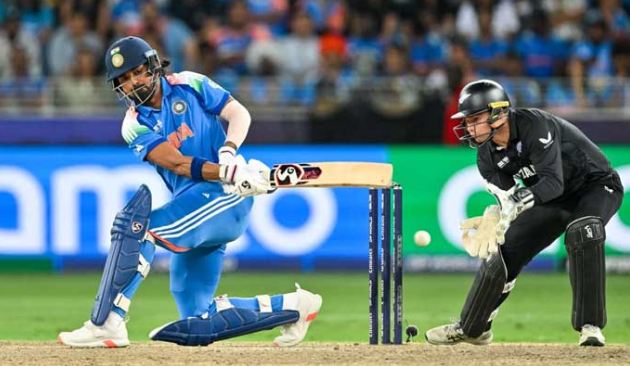
DUBAI: India scripted history by securing their third ICC Champions Trophy title with a thrilling victory over New Zealand in the final of the Pakistan-hosted tournament on Sunday.

Dominating the high-stakes clash at Dubai International Stadium, India showcased their prowess with both bat and ball to outclass their opponents, adding another prestigious trophy to their cabinet.

India have played all their matches in Dubai after they refused to tour hosts Pakistan due to political tensions and have been unbeaten at the venue in four matches.

India: Rohit Sharma(c), Shubman Gill, Virat Kohli, Shreyas Iyer, Axar Patel, KL Rahul(w), Hardik Pandya, Ravindra Jadeja, Mohammed Shami, Kuldeep Yadav, Varun Chakaravarthy

New Zealand: Will Young, Rachin Ravindra, Kane Williamson, Daryl Mitchell, Tom Latham(w), Glenn Phillips, Michael Bracewell, Mitchell Santner(c), Kyle Jamieson, William O’Rourke, Nathan Smith

Malaysia-Pakistan iftar celebrates “Two Nations, One Ummah” in Islamabad

Malaysia-Pakistan iftar celebrates “Two Nations, One Ummah” in Islamabad

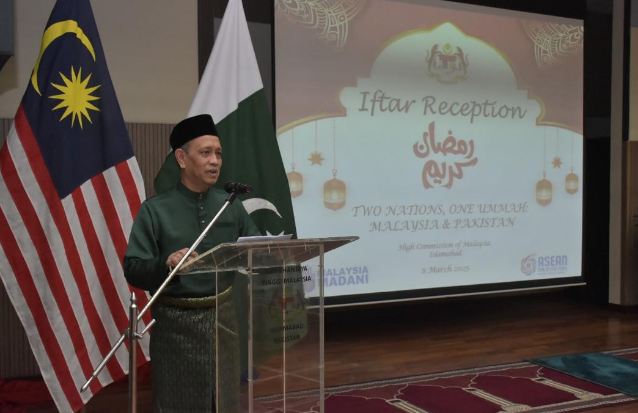
ISLAMABAD, MAR 9 /DNA/ – Ambassador Dato’ Mohammad Azhar Mazlan, High Commissioner of Malaysia to Pakistan and To’ Puan Amelia Amani Lee Abdullah hosted the Iftar Reception themed “Two Nations, One Ummah: Malaysia & Pakistan”. Dr. Mufti Akeel-Ur-Rehman Pirzada, Grand Mufti of Islamabad/Chairman Ulama Aman (Peace) Committee of Pakistan graced the occasion as a Guest Speaker.

Distinguished guests present were senior officials of the Ministry of Foreign Affairs Pakistan, Islamabad-based ASEAN Heads of Mission, heads of think tank, members of the media, Malaysian diaspora, Friends of Malaysia, and staff members of the High Commission with families.

Apart from celebrating the blessed month of Ramadan, the gathering was a testimony of the strong fraternal ties between Malaysia and Pakistan bonded by one faith, shared traditions, and a commitment to upholding Islamic values. In his welcoming remarks, the High Commissioner underscored the excellent ties between Malaysia and Pakistan. He stated that Malaysia placed high regard to its strong brotherly relationship with Pakistan. Going forward, he was confident that with the ongoing collaborative efforts, the relationship would soar to a higher level.

During the event, the guests enjoyed an array of specially curated Malaysian cuisines such as beef rendang, bubur lambuk, fried chicken, fried spaghetti, mutton curry, scented rice, as well as traditional Malaysian savoury and desserts.

Europe between the War and Peace

Europe between the War and Peace

Dr Muhammad Akram Zaheer

The meeting between Ukrainian President Volodymyr Zelensky, U.S. President Donald Trump, and Vice President JD Vance at the White House on February 28 resulted in a profound moment of reckoning for the Western alliance. In European political circles, anxiety has intensified, with some policymakers and analysts expressing concerns over the potential dissolution of NATO or the broader decline of the Western alliance. Uncertainty regarding U.S. strategic intentions has fueled apprehension about whether Washington seeks to undermine Ukraine’s sovereignty or if the Trump administration aims to execute a diplomatic realignment by engaging Russian President Vladimir Putin in a manner reminiscent of a reversal of Henry Kissinger’s Cold War strategy. This crisis of confidence has widened the rift in transatlantic trust, posing significant risks to Washington’s global influence, its credibility as a stabilizing hegemon, and the cohesion of NATO.

Despite the gravity of the present crisis, historical precedents suggest that the Western alliance has withstood profound challenges in the past. NATO’s endurance, particularly following Russia’s revisionist actions over the past two decades, exemplifies the alliance’s resilience. Since the annexation of Crimea and the intervention in Donbas in 2014, NATO has not only persisted but has expanded in both membership and deterrence capacity. However, the Trump administration’s policies have introduced an unprecedented trust deficit, with European leaders now uncertain about the United States’ commitment to NATO and its leadership role within the alliance.The complexity of the situation necessitates a nuanced assessment of Trump’s contributions to Ukraine’s defense. During his first term, the provision of lethal military assistance, including Javelin anti-tank missiles, played a crucial role in enabling Ukraine to resist Russia’s full-scale invasion in 2022. The survival of Kyiv in the critical early days of the war can, in part, be attributed to this prior U.S. support. Given this precedent, it remains unclear why Washington would now choose to abandon a successful strategic partnership that demonstrated mutual resolve in defending Ukraine’s sovereignty.

The current Trump administration has now taken an active role in seeking an end to the protracted conflict. However, for this initiative to succeed, the United States and its European allies must bridge the widening trust deficit. European engagement is critical not only for ensuring a viable and for just resolution for Ukraine but also for preventing a broader strategic shift in U.S. foreign policy focus away from Europe toward China. Rebuilding trust will require prompt diplomatic reconciliation with Zelensky and Ukrainian leadership following the February 28 White House confrontation.The broader security equation also necessitates a reevaluation of Europe’s role in collective defense. Although the U.S. military presence in Europe has been reinforced in recent years, it remains insufficient relative to Russia’s force posture in Ukraine and its western military districts. Given Washington’s firm stance against deploying ground forces in Ukraine, European states must assume a more proactive role in securing any prospective peace arrangement. The Trump administration’s request for European forces to enforce a settlement must be met with a reciprocal European demand for meaningful participation in the negotiation process, ensuring that any agreement aligns with Europe’s long-term security interests.

An equally significant challenge lies in engaging Russia in a sustainable peace process. Moscow has yet to signal substantive concessions, instead articulating maximalist demands that complicate negotiations. A durable settlement cannot be achieved merely by solidifying the existing lines of conflict in eastern Ukraine, as Russia is likely to introduce additional strategic conditions, including limitations on U.S. military deployments in Eastern Europe. The United States and Europe must prepare for a prolonged and arduous diplomatic engagement to address these security concerns comprehensively.A fundamental recalibration of European leadership in security affairs is imperative. To reinforce their strategic autonomy and strengthen alliance cohesion, European states—particularly France, Germany, and Poland—must spearhead a major defense initiative. A proposed European Defense Union (EDU) could serve as the institutional framework for such efforts, emphasizing joint defense procurement, military training, and collective deterrence. Furthermore, the participation of nuclear-armed European states, notably France and the United Kingdom, could enhance the EDU’s strategic deterrence capabilities.

From a diplomatic perspective, the most effective mechanism for integrating Europe, Ukraine, and other key stakeholders into the peace process would be the reestablishment of a multilateral contact group under U.S. leadership. The historical precedent of such diplomatic frameworks, successfully employed in past conflict resolution efforts, underscores their utility in fostering unity and purpose within the alliance. Washington should recognize the efficacy of this approach in ensuring a sustainable resolution to the Ukraine conflict.The reflections of diplomat Richard Holbrooke remain relevant in this context. In his seminal work “America, a European Power,” Holbrooke emphasized that sustained American engagement remains a critical component of European stability. The contemporary geopolitical landscape reinforces the validity of this assertion: while Europe requires U.S. leadership to secure a lasting peace in Ukraine, the United States equally depends on a strong transatlantic partnership to achieve this objective. Whether the Trump administration acknowledges this interdependence will be a defining factor in shaping the future of the Western alliance.

Pakistan’s Power Sector Overhaul: PIDE study calls for smart meters to improve efficiency

Pakistan’s Power Sector Overhaul: PIDE study calls for smart meters to improve efficiency

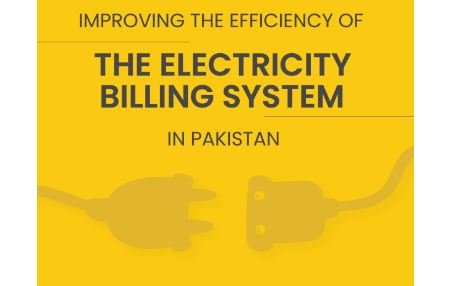
ISLAMABAD, MAR 9 /DNA/ – Pakistan’s electricity sector stands at a crucial juncture as a recent study by the Pakistan Institute of Development Economics (PIDE), conducted under the Research for Social Transformation & Advancement (RASTA) program, underscores the pressing need to modernize the country’s electricity billing system. The study advocates for the adoption of smart meters as a solution to address financial losses, billing inaccuracies, and inefficiencies in the power grid.

For nearly two decades, Pakistan’s reliance on a manual billing system has led to significant financial deficits, exacerbated by outdated infrastructure and rampant electricity theft. Power distribution companies (DISCOs) struggle with revenue recovery, while consumers frequently encounter billing discrepancies. A transition to Automated Metering Infrastructure (AMI) offers a transparent, data-driven approach to electricity management, ensuring efficiency and accuracy.

Dr. Nadeem Javaid, Vice Chancellor of PIDE, emphasized the urgency of this transition, stating, “Our electricity billing system’s inefficiencies are a major cause of financial losses and consumer frustration. Smart meters provide a modern solution that reduces theft, enhances billing accuracy, and empowers consumers to manage electricity consumption more effectively. The transition is necessary for a more sustainable and efficient power sector.”

The study, authored by Afia Malik, Tehmina Asad, and Ghulam Mustafa, highlights the benefits of shifting to smart meters. A survey conducted across major cities, including Rawalpindi, Islamabad, Lahore, Multan, Faisalabad, and Sukkur, revealed that 79% of respondents were willing to adopt smart meters, even if they had to bear the initial cost. The findings suggest that households using smart meters could reduce their electricity bills by up to 17%, while DISCOs could significantly improve revenue collection. Case studies demonstrate the potential impact, with LESCO estimated to save PKR 960 million from FY2016-17 to FY2023-24 on three high-loss feeders, and MEPCO generating an additional PKR 2.2 billion in revenue within 11 months of installing 150,000 smart meters. International examples further reinforce the effectiveness of smart meters, with Ghana witnessing a 13.2% increase in reported electricity consumption following the installation of smart prepaid meters, exposing previously undetected electricity theft.

While the advantages of smart meters are clear, the study stresses that successful implementation requires strategic execution. A survey of 800 consumers from LESCO and MEPCO indicated that consumer awareness and engagement are critical to adoption. To ensure a smooth transition, the report recommends initiatives such as consumer education programs to build trust, flexible payment plans that allow consumers to pay in installments through their electricity bills, and the development of a competitive smart meter market to drive down costs through increased competition.

Beyond financial efficiency, smart meters can facilitate Pakistan’s transition to a more sustainable energy system. Their integration with mobile applications and smart grids can optimize energy distribution and promote the adoption of renewable energy. However, achieving these benefits requires strong government support and policy alignment.

As countries worldwide embrace digital advancements in utility management, Pakistan must not delay in modernizing its power sector. Smart meters offer a pathway to transparency, efficiency, and financial sustainability, but their success depends on a collective effort from policymakers, DISCOs, and consumers. PIDE’s research underscores a crucial message: empowering consumers with technology is key to building a reliable, efficient, and future-ready electricity system in Pakistan.

Stay Connected

64FansLike
60FollowersFollow

Latest Reviews

Exchange Rates

USD - United States Dollar
EUR
1.17
GBP
1.35
AUD
0.72
CAD
0.73