Home Blog Page 654

Gunmen open fire on Jaffar Express in Balochistan

Gunmen open fire on Jaffar Express in Balochistan

QUETTA: Train driver sustained injuries after a group of armed men opened fire on Quetta-Peshawar Jaffar Express in Balochistan’s Bolan on Tuesday.

QUETTA: Train driver sustained injuries after a group of armed men opened fire on Quetta-Peshawar Jaffar Express in Balochistan’s Bolan on Tuesday.

The firing incident took place in Peru Kanri area of Kach district, according to Levies officials.

Sources told Geo News that the assailants blew up a railway track and later opened fire on the train carrying more than 400 passengers.Play Video

They added that security officials on the train and attackers exchanged heavy firing following the attack.

Railway officials stated that the Jaffar Express consists of nine bogies and has over 400 passengers on board. The train departed from Quetta at 9am today, they said.

Speaking on the matter, Balochistan government spokesperson Shahid Rind said that there were reports of heavy firing on the Quetta-Peshawar Jaffar Express.

He added that several ambulances, a relief train and contingents of security forces were on their way to the site. 

The country witnessed a sharp increase in terror attacks in January 2025, surging by 42% compared to the previous month, according to data released by the Pakistan Institute for Conflict and Security Studies (PICSS), a think tank.

The data revealed that at least 74 militant attacks were recorded nationwide, resulting in 91 fatalities, including 35 security personnel, 20 civilians, and 36 militants. Another 117 individuals sustained injuries, including 53 security forces personnel, 54 civilians, and 10 militants.

Balochistan also experienced a surge in militant activity, with at least 24 attacks, which claimed 26 lives, including 11 security personnel, six civilians, and nine militants.

China and India: Ready for Economic Global Dominance

Qamar Bashir

By: Qamar Bashir

The most stunning challenges to both the USA under Trump and to Europe under threat of a third world war are two Asian giants, China and India. Both China and India are rapidly challenging the West’s dominance in the fields of economy, defense, technology, and space exploration. Over the last ten years, according to the IMF, the Chinese economy grew by about 74%, whereas the Indian economy grew by 77%. Comparatively, the USA’s economy grew by about 28%, while European economies grew between 7% to 17%, and Japan grew at just 6%.

Now that the reins of the world’s most formidable economy are in the hands of one of the most unpredictable leaders, Donald Trump, the future of the U.S. economy remains uncertain. Trump, being in the driving seat, can either cause the economy to nosedive or lift it to unprecedented levels, depending on whether his out-of-the-box policies and his promise to obliterate the deep state succeed or fail.

In these two scenarios, one may lead to the USA retaining its first place, while the other, if the economy cannot sustain Trump’s shock therapy, could result in China emerging as the world’s top economy within the next ten years.

With the recently available data, these trajectories are not difficult to predict. If China continues to grow at 74% per decade (or about 7.4% per year) and the U.S. grows at 28% per decade (or about 2.8% per year), it would take approximately 11 years for China to surpass the U.S. in GDP. This means China could overtake the U.S. around the year 2036.

Despite the world’s focus on China’s growth and efforts to slow down its rise, another Asian giant has been making significant progress and is on track to surpass the European and Japanese economies within the next three years.

This prediction is based on the IMF’s recently released fact sheet. According to this data, if India continues to grow at 7.7% per year, while Germany (1% per year), Japan (0.6% per year), the UK (1.4% per year), and France (1.2% per year) maintain their current growth rates, India would surpass both Germany and Japan to become the third-largest economy in the world in approximately three years, by 2028. However, if we factor in the Russia-Ukraine war, which is likely to slow down European economies and impact their prosperity, this period could be shorter. In such a scenario, India—continuing at 7.7% per year—would surpass both Germany and Japan to become the third-largest economy in just two years, by 2027, instead of 2028.

While the USA faces an imminent threat from China in maintaining its top position, Europe and Japan—both of which have dominated global economic power for centuries—are showing signs of yielding their dominance to other growing economies. Not only is India poised to overtake them, but other rapidly growing economies, such as Turkey and Indonesia, are also set to challenge their positions. Under Erdogan, Turkey has grown at a rate of 59% over the last decade, while Indonesia has grown at 51% in the same period.

Even after factoring in the Russia-Ukraine war, which is expected to slow down European economies with Germany and Japan growing at just 0.5% per year, the timeline for Turkey and Indonesia to rise in global economic rankings remains unchanged. If Turkey continues to grow at 5.9% per year, it would take 29 years to surpass Germany, making it the fourth-largest economy by 2054. Similarly, Indonesia, growing at 5.1% per year, would take 20 years to surpass Japan, securing the fifth position by 2045. While Europe’s economic slowdown makes it easier for these emerging economies to catch up, the overall timeline remains the same due to the significant gap they still need to close.

As of 2025, Pakistan’s nominal Gross Domestic Product (GDP) is projected to be $357.0 billion, up from an estimated $345.9 billion in 2024, reflecting a modest growth rate. The International Monetary Fund (IMF) has recently revised Pakistan’s GDP growth outlook for 2025, downgrading it from 3.2% to 3.0%, indicating ongoing economic challenges.

In an ambitious bid to transform its economic landscape, Pakistan has unveiled the “Uraan Pakistan” initiative, aiming to elevate the nation’s economy to $1 trillion by 2035. This comprehensive plan focuses on the “5Es Framework,” targeting key sectors such as exports, equity, empowerment, environment, and energy to drive sustainable growth. However, achieving this ambitious target requires a significant acceleration in economic growth. According to projections, without substantial reforms, Pakistan’s economy is expected to reach only $573 billion by 2035. To realize the $1 trillion goal, the country would need to implement transformative policies that substantially boost economic performance.

Given its current nominal GDP projections and growth rates, Pakistan is unlikely to ascend to the top five global economies within the next decade. While Pakistan’s economic position may improve slightly over the decade, it is unlikely to break into the top 10 global economies unless substantial reforms and accelerated growth strategies are implemented.

The world geo-economics landscape is changing at a rapid pace. Traditional powers like the USA and Europe are fast yielding to emerging powers. Both the USA and Europe must introduce creative and out-of-the-box policies and initiatives to remain relevant on the global power chessboard in the upcoming decade. However, implementing deep-rooted reforms in the well-informed, educated, and empowered communities of the USA and Europe is a challenging task, unlike in economies where the population is disciplined, still subservient to state authorities, and not very vocal or demanding. Nonetheless, both the USA and Europe have no choice but to break their economic and social inertia and undertake fundamental reforms to remain relevant in geo-economics; otherwise, they risk being relegated to a lower rung in the global community.

By: Qamar Bashir

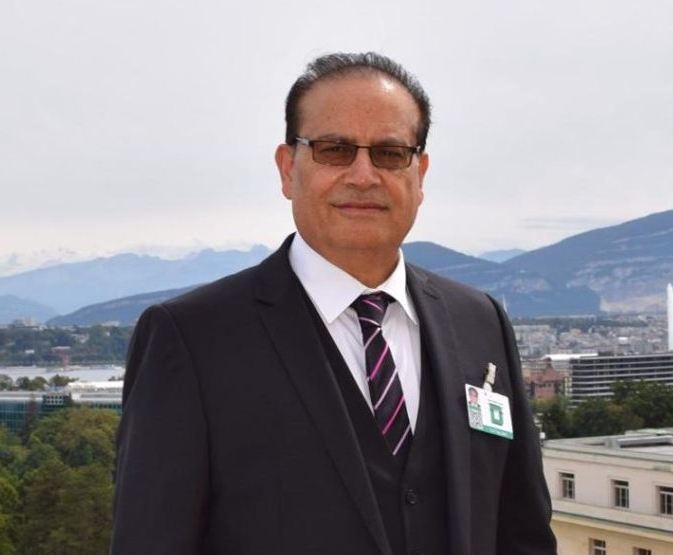
 Press Secretary to the President (Rtd)

 Former Press Minister at Embassy of Pakistan to France

 Former MD, SRBC

 Macomb, Detroit

Riphah University sponsors Asian mini football 2025, cheers Pakistan’s triumph against India

Riphah University sponsors Asian mini football 2025, cheers Pakistan's triumph against India

ISLAMABAD, MAR 11 /DNA/ – Riphah International University is proud to announce its sponsorship of the prestigious Asian Minifootball Nations Cup 2025, a premier sporting event that unites teams from across Asia in a celebration of sportsmanship, teamwork, and excellence.

As a committed advocate of education, leadership, and community engagement, Riphah International University is honored to support this international platform that fosters unity, cultural exchange, and a shared passion for the beautiful game. This sponsorship reflects Riphah’s vision of empowering youth through sports, promoting healthy competition, and strengthening bonds among nations.

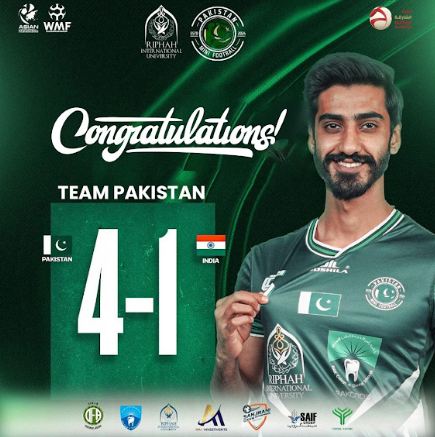
Adding to the excitement of this prestigious event, Team Pakistan secured a historic and emphatic 4-1 victory against India in the Asian Minifootball Nations Cup 2025. Riphah International University extends its heartfelt congratulations to the team for this outstanding achievement, a testament to their dedication, perseverance, and exceptional talent.

This remarkable triumph not only showcases Pakistan’s rising excellence in minifootball but also serves as an inspiration to young athletes across the country. We commend Team Pakistan for their unwavering commitment and sportsmanship, and we look forward to witnessing their continued success on the international stage.

At Riphah International University, we strongly believe in the transformative power of sports in uniting communities, inspiring future generations, and fostering national pride. As we celebrate this extraordinary milestone, we reaffirm our commitment to supporting initiatives that promote excellence in both academics and athletics.

Uzbek products exhibition to be held in Islamabad

Uzbek products exhibition to be held in Islamabad

ISLAMABAD, MAR 11 /DNA/ – The Embassy of Uzbekistan in Pakistan is organizing a trade mission to Pakistan in cooperation with the Plant Quarantine and Protection Agency and the Association of Exporters of Uzbekistan on March 14-17 of this year.

A trade fair of Uzbek products will be held at the Centaurus Mall in Islamabad, Pakistan. Enterprises exporting fresh and dried fruits and vegetables, food, and processed products grown in Uzbekistan will participate in this event. Long-term, large-scale orders from supermarket chains and other potential importing enterprises in Pakistan are expected for the products successfully sold at the trade fair.

The Embassy of Uzbekistan invites Pakistani entrepreneurs engaged in agriculture and food product trade to participate in this visit!=DNA

============

NUML students depart for Turkiye under student exchange program

NUML

This exchange program is a direct outcome of the Rector NUML’s recent visit to Turkiye, during which he visited top universities and signed Memorandums of Understanding (MoUs) to establish collaborative opportunities for student and faculty exchanges

Mahnoor Ansar

ISLAMABAD, MAR 11 /DNA/ – The first batch of students from the National University of Modern Languages (NUML) is set to leave for Duzce University, Turkiye this week under the Student Exchange Program, a milestone initiative aimed at providing students with international academic exposure.

These students were selected through a competitive process, emerging successful from among hundreds of applicants. They will now have the opportunity to pursue their studies in Türkiye, gaining invaluable cross-cultural learning experiences.

This exchange program is a direct outcome of the Rector NUML’s recent visit to Turkiye, during which he visited top universities and signed Memorandums of Understanding (MoUs) to establish collaborative opportunities for student and faculty exchanges. This initiative underscores NUML’s commitment to expanding global academic partnerships and enhancing the learning experiences of its students.

Rector NUML expressed his gratitude to the Government of Turkiye and Duzce University for their support in facilitating this academic exchange. He emphasized that such collaborations strengthen educational ties between Pakistan and Turkiye, providing students with access to world-class learning environments and fostering long-term academic cooperation.

In a candid interaction with the departing students, Director General NUML extended his best wishes and prayers, encouraging them to make the most of this opportunity. He urged them to act as ambassadors of Pakistan, showcasing the country’s rich culture, values, and academic excellence on the international stage.

NUML continues to play a pivotal role in facilitating its students’ access to international study programs, equipping them with the skills and perspectives needed to thrive in a globally connected world.

Pakistan launches first ‘Dematerialised Digital Identity Card’

Pakistan launches first 'Dematerialised Digital Identity Card'

ISLAMABAD, MAR 10: The National Database and Registration Authority (Nadra) on Monday announced the launch of Pakistan’s first “dematerialised digital identity card” during its silver jubilee ceremony.

This development marks a revolutionary milestone in the national identity system.

The ceremony featured the unveiling of a commemorative coin by the State Bank of Pakistan (SBP), a special postage stamp by Pakistan Post, and a book chronicling Nadra’s 25-year journey.

A special event was held at Nadra headquarters, with Nadra founding chairman Major General Retd Zahid Ihsan as the chief guest.

Other attendees included Nadra Chairman Lieutenant General Retd Asif Munir, the special secretary of interior, Pakistan Bureau of Statistics (PBS) chief statistician, Immigration and Passport’s director-general, former chairpersons, board members, and senior officials.

In his written message, Federal Minister for Interior and Narcotics Control Mohsin Naqvi termed the launch of Pakistan’s first dematerialised digital identity card as a significant step toward digital identity transformation.

He announced that after integrating this feature into the Pak ID mobile app, citizens will be able to store their identity cards on their smartphones.

Additionally, a digital verification system will be introduced soon, facilitating secure and instant verification for various services under the World Bank-backed Digital Economy Project. The pilot phase of this initiative will begin on Independence Day 2025.

The minister also highlighted that Nadra extends identity services to remote areas within the country and Pakistanis living abroad, while also assisting law enforcement agencies in national security matters.

A documentary on Nadra’s achievements was also screened, and a commemorative book was unveiled, receiving great appreciation from the attendees.

Speaking on the occasion, Ihsan reflected on the organisation’s establishment and early journey, stating that the Nadra has continuously evolved to turn its vision into reality and is steadily achieving new milestones in its development.

PM Mustafa urges global pressure to end Israeli aggression, lift Gaza blockade

PM Mustafa urges global pressure to end Israeli aggression

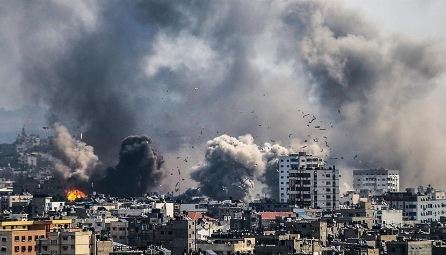
RAMALLAH, MAR 10 /DNA/ – Prime Minister and Minister of Foreign Affairs Dr. Mohammad Mustafa called for increased international pressure, particularly from the European Union, on Israel to end its aggression against the Palestinian people, open all border crossings with the Gaza Strip, and allow the unimpeded entry of humanitarian aid, temporary shelter supplies, and reconstruction materials.

The Prime Minister made his remarks during a meeting with Luxembourg’s Deputy Prime Minister and Minister of Foreign Affairs, Xavier Bettel, on Monday at his office in Ramallah, joined by Minister of Health Majed Abu Ramadan.

Mustafa emphasized the urgent need to halt the Israeli occupation’s military incursions into northern West Bank areas, which result in the destruction of infrastructure, homes, and facilities, as well as the forced displacement of citizens.

The Prime Minister also welcomed the European Union’s support for the Gaza reconstruction plan, which was endorsed by both the Cairo Emergency Arab Summit and the Ministerial Meeting of the Organization of Islamic Cooperation.

For his part, Bettel stressed the need to alleviate the suffering of the Palestinian people, particularly in Gaza, and underscored the importance of securing a lasting ceasefire. He reaffirmed Luxembourg’s continued support for the Palestinian Government’s efforts in humanitarian relief, reconstruction preparations, and institutional reform and development.

President for national decisions with consensus, encouraging investment, fostering social, economic justice

President

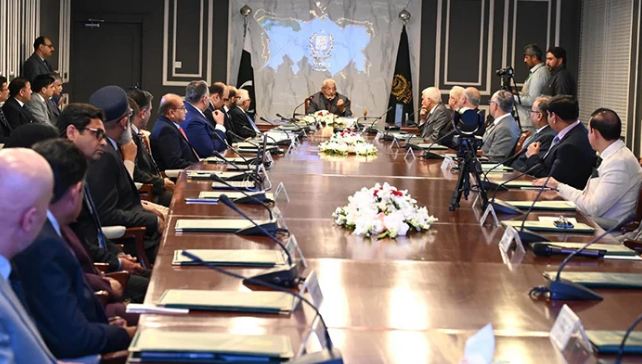
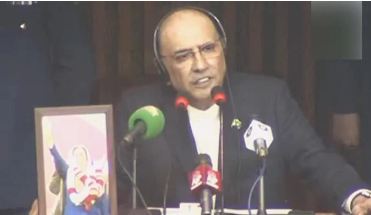
ISLAMABAD, Mar 10 (APP/DNA): President Asif Ali Zardari on Monday urged the parliament to empower the people, make decisions of national importance with consensus, encourage domestic and international investments for economic growth and job creation, foster social and economic justice, and ensure fairness and transparency in the system.

“As we embark on this new parliamentary year, I urge this House to focus on promoting good governance, and political and economic stability. Our people have pinned their hopes on parliament, and we must rise to meet their expectations. It is my first duty to remind you we need to work harder to strengthen our democratic system, restore public confidence in the rule of law, and put Pakistan on the road to prosperity,” the president said in his address to the joint session of Parliament at the beginning of the 2nd parliamentary year.

As a civilian president to address the joint session of parliament for the 8th time at the beginning of the new parliamentary year, the president stressed that the House should fulfill the responsibility entrusted to it and play its role in nation-building, strengthening institutions and improving governance.

In this regard, he said improving the taxation system was essential to moving forward as a country and called for reforming and expanding the tax net—not by overburdening those who already contribute, but by ensuring that every eligible taxpayer participated in nation-building. 

“The government should take measures in the forthcoming budget to increase salaries and pensions, reduce income taxes on salaried classes and lower energy costs, which would help reduce the financial burden on them. At the same time, we should avoid downsizing and job cuts. Instead, our focus should be on creating jobs and utilizing trained manpower productively,” he added.

The session jointly chaired by Speaker of the National Assembly Sardar Ayaz Sadiq and Chairman Senate Syed Yousaf Raza Gilani, was attended by Prime Minister Muhammad Shehbaz Sharif and members of both houses of parliament, besides, governors, chief ministers, members of diplomatic corps and media witnessed the proceedings from the galleries.

The president spelled out guidelines for the parliament and the incumbent government for the economic and social growth ensuring political stability.

The president observed that the population dynamics of the country had changed. A combination of factors presented challenges they must address.

“The high rate of our population growth along with strategic drift in our administrative machinery has increased governance issues manifold. It is my considered opinion that this House should take its responsibilities seriously, and play its role in a real re-set of our governance and service delivery outcomes,” he added.

He said that they should work actively to promote inclusive and uniform development, ensuring that no province, no district, and no village was left behind. This House should ensure that development was not limited to a few selected areas but reached every nook and corner of the country. The ignored and neglected areas demanded urgent attention from the federal government.

The president said that they also needed investments in infrastructure, education, healthcare, and economic opportunities to address their sense of deprivation. Parliament was the one forum where any sense of deprivation could not just be aired constructively but also addressed with political empathy by the executive branch that was the test of real statecraft.

President Zardari observed that Pakistan should also diversify its exports, focusing on value-added goods and services.

To explore new markets and build a competitive export-oriented economy, they needed to make our IT Industry the key driver of economic growth.

“We should focus on building digital and information highways, investing in IT parks, enhancing internet accessibility and speed, and supporting the growth of our technology-driven economy,” he added.

The president also underlined the need of sustained support for small and medium enterprises, highlighting ensuring of easier access to credit, address procedural and bureaucratic hurdles, and creating of policies that promoted youth-led businesses.

The young people should be encouraged to enter the business world through SME-focused programs, skill development initiatives, and accessible loan schemes, he suggested.

He further urged the House to play its role in improving the ease of doing business. Investors, small businesses, and international companies must find Pakistan an attractive destination for investment.  

“Today the common man, the labourers, and the salaried class are facing serious economic hardships. Our citizens are burdened by inflation, high prices of essential items, and rising energy costs,” he said, urging the parliament and the government to provide real relief to the people.

The president noted that women constituted almost 50 per cent of the country’s population but they were under-represented in every aspect of life. It was essential to empower them by enhancing their representation in various sectors.

The most important intervention was to make women at the bottom of the social pyramid financially independent in accordance with the vision of Shaheed Mohtarma Benazir Bhutto. The Benazir Income Support Programme (BISP) remained a crucial lifeline for millions of families. Its reach must be expanded, and cash transfers should be further enhanced, he added.

About country’s youth that make up a huge proportion of current demographic, the president said that they needed hope and inspiration.

“We should ensure that the children are not outside schools in Pakistan. Promoting higher education and enhancing research in universities should be our fundamental priority for creating a knowledge-based economy,” he added.

                The president, in his address, also urged the federal and provincial governments to increase allocations for the education sector in the upcoming budget on the macro level and to also provide more opportunities through scholarships and financial assistance programs.

“This is also the moment for us to reflect on how we can enhance access to quality healthcare for all of our citizens, reduce the worrying incidence of mal-nutrition and polio vaccination in many children. Emphasis should be laid on primary health care,” he added.

As far as the government was concerned, he said the ministries too need to redefine their vision and objectives, and understand that pressing issues faced by the people of Pakistan have to be resolved within a certain time frame.

“We need to deliver tangible benefits to restore the trust of the people in democratic institutions,” he opined.

About democratic system, President Zardari said “Democracy needs give and take, and what better place to work on collective goals than this Parliament? As elected representatives, you function as role models for the nation. As you go about your parliamentary business think beyond narrow goals. Think of the unity and consensus our country so desperately needs.”

As we embark on this new parliamentary year, president further urged the House to focus on promoting good governance, and political and economic stability.

“Our people have pinned their hopes on parliament, and we must rise to meet their expectations. It is my first duty to remind you we need to work harder to strengthen our democratic system, restore public confidence in the rule of law, and put Pakistan on the road to prosperity,” he added.

He said the moment marked not only the continuation of their democratic journey but also provided them with an opportunity to review their progress and reaffirm their commitment to building a better future for Pakistan.

The president emphasized upon striving to build a Pakistan that ‘is just, prosperous, and inclusive and make the best use of this parliamentary year.’

He also appreciated the government’s efforts for putting the country on a positive path to economic growth. The foreign exchange reserves witnessed a  surge. There was a substantial increase in Foreign Direct Investment and the stock market also surged to a historic high. The government also reduced the policy rate from 22% to 12%, and all other economic indicators have shown a healthy sign of improvement.

For any country to prosper, it must build equitably, he said, adding the century would have new global challenges, and to weather such transitions, they needed to ensure that all of their peoples, with their different regions and resources, were on board for national development.

It was his firm belief that a strong Pakistan was one where the fruits of progress and development were equally shared by all its provinces and citizens, he added.

The president said that he believed that domestic and regional connectivity was fundamental to a prosperous Pakistan.

They needed a strong and efficient transport infrastructure, road networks, and modernized railways.  Gilgit-Baltistan and Balochistan required special attention in terms of connectivity and development, as these regions were Pakistan’s strategic frontiers and were vital to their national economy, he said, adding this would not only lower poverty but also kick-start the economy with new jobs, skills and markets.

“The China-Pakistan Economic Corridor (CPEC) and Gwadar Port remain central to our vision of connectivity. These projects must be fully realized so that Pakistan can serve as a gateway for international trade, linking Central Asia, South Asia, and the Middle East,” he observed.

President Zardari also stressed upon the federal and provincial governments to strengthen the agriculture sector, ensure sustainable water management, and bring coordination and agency to the urgent task of managing the growing threats of climate change.

“I say this because agriculture is a key pillar of our economy, and it is imperative that we modernize this sector by adopting new farming techniques, developing better seeds, investing in agricultural research and development, and creating more jobs by making land more productive,” he added.

In order to improve farm productivity, increase livestock yield, and expand food exports, he said their farmers must be equipped with modern tools.

“We must aim for stability and self-sufficiency in food production. We need to focus on greater water availability and its efficient use. We must work toward innovative solutions such as bringing water from Tajikistan to Balochistan, upgrading irrigation systems, and utilising new technologies to conserve and distribute water,” he added.

The president opined that their fisheries and livestock sectors had immense potential. Pakistan’s rivers, lakes, and coastal areas held untapped opportunities for fisheries.

Commercial cattle farming could open new avenues for employment and exports, he said and suggested to the government to play its role in providing incentives, training, and support to the youth to make these industries a vital part of their economic future.

He also urged the government to seek greater cooperation and exchanges with China in this regard.

About climate change, the president said Pakistan was one of the countries most impacted by climate change. They should focus on restoring biodiversity, adaptive strategies on the food and water security nexus, and the preservation of eco-systems.

“We must invest in the promotion of renewable energy and electric vehicles. We must also focus on recharging our wetlands and rivers, so they emerge pollution-free and become once again the lifeline for livelihoods and rich marine eco-systems. The Mangroves of Sindh stand as a shining example of what can be achieved through conservation efforts,” he added.

The president said that in Sindh, they had planted 2 billion mangroves, which also earned the Sindh government substantial finances through carbon credits and called for replicating this model proactively and benefit from the international carbon credit market.

With regard to current internal and external security challenges, the president said that they needed to further strengthen their security capabilities and enhance the capacity of their law enforcement agencies to effectively deal with the menace of terrorism. Parliament needed to play a role in rebuilding a consensus to tackle extremist ideologies as well as the militancy that supported such violence.

“We are all aware of the external support and funding that terrorists are getting today, causing human and financial losses to the nation. We must unite to ensure that challenges don’t gather more momentum, because already thousands of our security forces have sacrificed their lives in the fight against terrorism, and we cannot allow resurgence again,” he added.

The president further assured that they were committed to eradicating this menace with the support of our nation and brave armed forces. Successful intelligence-based operations had led to the dismantling of terrorist networks that sought to destabilize the nation.

“The entire nation is proud of its security forces and pays rich tribute to their bravery, dedication, and the countless sacrifices they have made in service to the country. At the same time, we should not forget that militancy finds roots in deprivation and inequity, so we must focus on the development of regions most affected by terrorism and create employment,” he opined.

Outside the borders, President Zardari said the world was in different stages of transition. Pakistan remained committed to regional peace, stability, and economic integration.

“Our foreign policy will always be guided by national interests, international cooperation, and the principles of sovereignty and mutual respect. We should enhance our cooperation with friendly regional countries in the areas of trade, economy, and climate and culture exchanges. We will continue to play our role as a responsible and peace-loving nation,” he added.               

Our time-tested relationship with China remained a cornerstone of their diplomacy, and they would continue to further strengthen economic and strategic ties with Beijing.

“We will further cement our All-Weather Strategic Cooperative Partnership with China and continue to support the One-China Policy. During my recent visit to China, I held fruitful discussions with the Chinese leadership while inviting them to make more investments in CPEC to improve regional and economic integration,” he reaffirmed.

Through their recent engagements with the Chinese leadership, both nations had reaffirmed their commitment to further strengthening economic cooperation. The benefits of CPEC would reach every corner of Pakistan through different projects, he added.

President Zardari also appreciated the support of trusted friends—Saudi Arabia, the United Arab Emirates, Turkiye, and others—who had stood by us in times of economic challenges and reiterated to further strengthening their longstanding historical, cultural, and economic ties with the friendly nations of the Gulf and Central Asia as well as the European Union, the United Kingdom, and the United States of America.

“The recent successful counterterrorism cooperation between the US and Pakistan is encouraging. The two countries should build on these successes to renew and enhance cooperation for joint goals,” he added.  

The president said the plight of their brothers and sisters in Indian Illegally Occupied Jammu and Kashmir remained a grave concern for the entire nation. The people of Kashmir had been suffering for decades under the unjust occupation, oppression, and brutal human rights violations by the successive Indian regimes.

Pakistan would always stand by them in their struggle for self-determination, he added.

“We reaffirm our unwavering moral, political and diplomatic support for the Kashmiri people and call upon the international community to take decisive action against the atrocities being committed by the Indian Occupation Forces. The voice of the oppressed will not be silenced, and Pakistan will continue to raise this issue at every international forum,” he reiterated.

The president further said the serial devastation in Palestine demanded the urgent attention of the world. The Palestinian people continued to endure violence, displacement, ethnic cleansing, and oppression at the hands of Israeli security forces.

“Pakistan is actively committed to the Palestinian cause and is consistent in calling for a just and lasting solution based on international law and the aspirations of the Palestinian people. Our position is clear and unwavering: that the establishment of an independent, sovereign Palestinian state with Al-Quds Al-Sharif as its capital is essential for lasting peace in the region,” he added.

He said that as President of Pakistan, he had been elected by all four provincial assemblies, the National Assembly and the Senate of Pakistan. In the constitutional framework, it was his duty to represent the Federation.

In the most challenging of circumstances, when his wife Shaheed Mohtarma Benazir Bhutto was assassinated, he was the one who chanted “Pakistan Khappay” as for him, Pakistan always came first, he added.

“It is therefore my constitutional duty as your President, my personal obligation as a patriotic Pakistani, to caution this House and the government, that some of your unilateral policies are causing grave strain on the federation. In particular, the Government’s unilateral decision to carve out more canals from the Indus River System, despite strong opposition from federating units,” he said, adding as their president he could not support the proposal.

The president urged the government to abandon this current proposal and work together with all stakeholders to come up with viable, sustainable solutions based on unanimous consensus among the federating units.

Pakistan Navy promotes Commodores Kamran Ahmed, Kashif Munir to Rear Admiral

Pakistan Navy

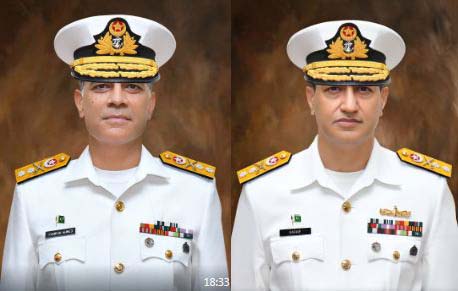
KARACHI, MAR 10 /DNA/ – Commodore Kamran Ahmed and Commodore Kashif Munir of Pakistan Navy have been promoted to the rank of Rear Admiral.

Rear Admiral Kamran Ahmed was commissioned in Construction Branch of Pakistan Navy in 1993. The Flag Officer is a graduate of Pakistan Navy War College, Lahore and National Defence University, Islamabad. He has also done Masters in Naval Architecture from United Kingdom. The Admiral has an illustrious career covering vast experience of various Command and Staff appointments including Commandant Pakistan Navy Engineering College, Chief Naval Overseer (Pakistan) HANGOR project, Deputy General Manager (Ship Design) at Karachi Shipyard & Engineering Works, Manager Hull Engineering at PN Dockyard, Director Naval Construction and Assistant Chief of the Naval Staff (Projects) at Naval Headquarters, Islamabad.

Rear Admiral Kashif Munir was commissioned in Marine Engineering Branch of Pakistan Navy in 1993. The Flag Officer is a graduate of Pakistan Navy War College, Lahore, and National Defence University, Islamabad. The Admiral has an illustrious career covering vast experience of various Command and Staff appointments including Commandant PNS KARSAZ, Marine Engineering Officer Ex-PNS SHAHJAHAN, Manager (Marine Engineering) at PN Dockyard, Director Ships Maintenance and Repair at Naval Headquarters, Chief Inspector of Naval Stores, Chief Staff Officer to Commander Logistics and Assistant Chief of the Naval Staff (Maintenance) at Naval Headquarters, Islamabad.

In recognition of their meritorious services, both Flag Officers have been awarded Sitara-i-Imtiaz (Military).

NTDC regularizes 19 athletes, promotes 25 players across multiple sports

NTDC regularizes 19 athletes, promotes 25 players across multiple sports

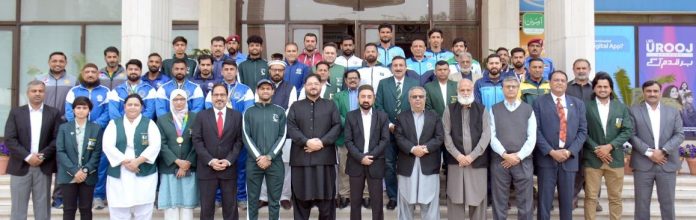
LAHORE, MAR 10 /DNA/ – The National Transmission & Despatch Company (NTDC) has regularized the services for 19 national and international athletes of grade 7 to grade 16. Along-with, 25 players have also been promoted to the next grades. These athletes have represented NTDC and Pakistan in a variety of sports, including hockey, cricket, football, volleyball, badminton, athletics, javelin throw, weightlifting, bodybuilding, boxing, judo, karate, swimming, wrestling, martial arts, table tennis, netball and cycling.

Managing Director NTDC, Engr. Muhammad Waseem Younas met with the players at WAPDA House, Lahore, today. While congratulating the players, MD NTDC said that the players have proven their abilities at national and international level and have brought pride to the company & the country and we are proud of all of you. He said that the players should work hard to further improve their performance and NTDC management is taking all steps to provide coaching and other facilities to its players. He hoped that the players will continue to show such excellent performance in future competitions as well.

President NTDC Sports Association, General Manager (D&E) Engr. Dr. Khawaja Riffat Hassan, expressing his views on this occasion, said that success comes only through hard work, the players should undergo intensive training to achieve success in the upcoming National Games.

The players whose jobs were made permanent on the recommendations of WAPDA Sports Board and NTDC Regularization Board include, Muhammad Yasir Sultan (Javelin Throw), Shoaib Khan (Athletics), Jahanzeb Khan (Boxing), Hanzala Dastgir Butt (Weightlifting), Waqas Maqsood, Adnan Raees, Bismillah and Muhammad Saad (Cricket), Mahsam Nazakat (Martial Arts), Danish Rashid and Mohsin Ali (Wrestling), Murad Khan, Jan Muhammad and Usman Faryad Ali (Volleyball), Niamat ullah (Karate), Muhammad Ali Larosh (Badminton), Ali Sher (Swimming) and Muhammad Tariq (Bodybuilding).

The players who have been promoted to next grade include, Muhammad Khalid and Hamra Latif (Hockey), Ali Ahmed, Hayat ullah and Naqeeb ullah (Boxing), Farhan Rashid (Softball), Muzaffar Ali (Bodybuilding), Muhammad Ashfaq (Powerlifting), Haider Ali and Razia Parveen (Weightlifting), Syed Ali Mehdi, Bilal Jafri and Haroon Javed (Badminton), Muhammad Yasin Siddique, Muhammad Bashir and Muhammad Idris (Volleyball), Muhammad Yasir Sultan (Javelin Throw), Sadia Falak sher (Table Tennis), Ali Mahmood, Baz Muhammad and Kulsoom (Karate), Muhammad Zahid Arif and Salman Butt (Netball), Prince Muhammad Zahid Gulfam and Najeeb ullah (Cycling) and Naseer Ahmed (Swimming).

The ceremony was also attended by Patron-in-Chief NTDC Sports Association, Deputy Managing Director (Planning and Engineering) Engr. Qaiser Khan, General Manager (Asset Management) Engr. Muhammad Mustafa, General Manager (HR) Engr. Sohail Mumtaz Bajwa, General Manager (Media and Public Relations) Muhammad Ibrahim, sports officer Imran Zafar, coaches and other NTDC officers.

Stay Connected

64FansLike
60FollowersFollow

Latest Reviews

Exchange Rates

USD - United States Dollar
EUR
1.17
GBP
1.35
AUD
0.72
CAD
0.73