Home Blog Page 653

Bars across the Borders

Bars across the Borders

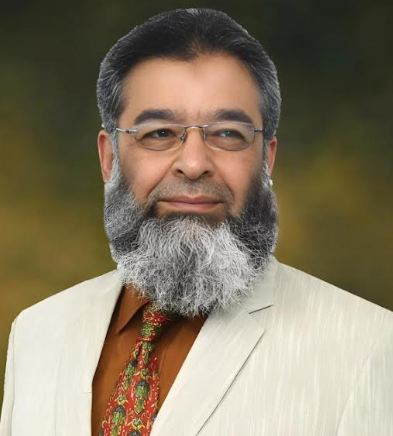
Dr. Muhammad Akram Zaheer

Migration has long been a defining feature of human civilization, shaped by economic, political, and environmental factors. However, in recent decades, states across the Global North and South have increasingly adopted stringent policies aimed at restricting migration. These measures include stricter visa regimes, militarized borders, and the systematic erosion of asylum protections. Such policies have not only failed to deter migration but have also exacerbated border-related fatalities and humanitarian crises. The criminalization of migration is a deliberate strategy rooted in anti-immigrant sentiments, reinforcing narratives of disorderly and uncontrolled mobility. This phenomenon is particularly evident in the treatment of migrants from Latin America, the Caribbean, Asia, and Africa, who face systemic exclusion and stigmatization.The criminalization of migration is not a recent development; rather, it has deep historical roots. In the early 20th century, colonial legacies and racial exclusion laws shaped migration control policies. Notably, migration restrictions in countries such as the United States and European states were designed to privilege certain racial and ethnic groups while excluding others. Historical parallels can be drawn between contemporary migration control mechanisms and past systems of forced displacement, including the transatlantic slave trade. The construction of illegality where certain groups are labeled as “illegal” migrants is a political tool used to marginalize specific populations while reinforcing state sovereignty over mobility.The systematic labeling of migrants as criminals is an extension of exclusionary practices seen throughout history. Xenophobic and racist attitudes have shaped policies that seek to privilege some migrants while criminalizing others. This global apartheid system ensures that mobility remains highly controlled, often in service of economic exploitation. Migrants from the Global South, in particular, are subject to restrictive mobility regimes, whereas skilled professionals from the Global North encounter fewer barriers.

The 21st century has witnessed an escalation in migration control strategies, driven by political narratives that associate migration with security threats. Governments have increasingly framed migration as a crisis requiring strict enforcement measures. This securitization of migration has led to an expansion of law enforcement powers, where unauthorized entry or overstaying a visa is treated as a criminal offense rather than an administrative violation. Additionally, those who provide humanitarian assistance to migrants, including NGOs and individuals, have also been targeted under these criminalization policies.The consequences of these policies are dire. Border deaths have risen dramatically as migrants are forced to take increasingly dangerous routes to avoid detection. The U.S.-Mexico border and the Mediterranean Sea have become particularly deadly corridors, with thousands of migrants perishing annually. Despite the risks, migration persists, demonstrating that criminalization strategies are ineffective in stopping human mobility. Instead, such policies push migrants into exploitative underground networks, increasing their vulnerability to human smuggling and trafficking.

Criminalizing migration involves a three-step process. First, a specific act—such as unauthorized border crossing—is legally defined as criminal. Second, individuals who engage in these acts are labeled as criminals, reinforcing negative stereotypes. Finally, punitive measures such as detention, deportation, and prolonged legal battles are imposed. These measures not only target migrants themselves but also extend to communities and organizations that provide them with support.Migration criminalization also manifests through policy shifts that restrict access to legal pathways. Governments have curtailed asylum rights, implemented restrictive visa policies, and expanded detention facilities. These measures disproportionately affect migrants from marginalized backgrounds, further entrenching global inequalities. The widespread use of detention centers exemplifies how migrants are subjected to carceral control, often under harsh and inhumane conditions. The criminalization of migration has profound social and personal implications. By framing migrants as criminals, states justify policies that strip individuals of fundamental rights, including access to healthcare, education, and employment. Many undocumented migrants live in constant fear of deportation, leading to economic precarity and social marginalization. This environment fosters conditions where migrants are vulnerable to exploitation, including labor abuses and human trafficking.Moreover, the stigma associated with being labeled “illegal” extends beyond legal consequences. Migrants are often scapegoated for economic downturns and crime, despite evidence that migration contributes positively to host economies. The portrayal of migrants as a security threat fuels xenophobic sentiments and justifies restrictive policies. This cycle of criminalization perpetuates systemic discrimination and erodes social cohesion.

While migrants are frequently depicted as passive victims of state policies, research indicates that they actively navigate and shape their experiences. Migrants develop networks, engage in political activism, and exercise agency even in hostile environments. For example, migrant-led organizations advocate for policy changes and provide support to undocumented individuals. Religious and cultural practices also serve as sources of resilience, enabling migrants to maintain a sense of identity and belonging.However, it is essential to recognize the complexity of migrant agency. Not all actions taken by migrants necessarily challenge oppressive systems; in some cases, they may inadvertently reinforce existing power structures. For instance, participation in exploitative labor markets can sustain economic systems that depend on cheap, undocumented labor. Understanding the nuanced ways in which migrants navigate criminalization requires a holistic approach that considers both agency and structural constraints.The failure of criminalization policies to deter migration necessitates a re-evaluation of existing frameworks. A more humane and effective approach to migration management should prioritize human rights, legal pathways, and economic integration. Key policy recommendations include:

  1. Expanding Legal Migration Pathways: Providing more opportunities for legal migration can reduce the reliance on dangerous and irregular routes. This includes increasing work visas, family reunification programs, and humanitarian protections.
  2. Ending the Detention of Migrants: Alternatives to detention, such as community-based support programs, have been shown to be more effective and humane. Ending the mass incarceration of migrants is crucial to upholding human rights.
  3. Challenging Xenophobic Narratives: Public discourse around migration must shift away from fear-based narratives. Promoting accurate information about migration’s benefits can counteract misinformation and reduce anti-immigrant sentiment.
  4. Strengthening International Cooperation: Addressing migration requires a coordinated effort between countries of origin, transit, and destination. Policies should focus on addressing root causes, such as economic disparities and conflict, rather than punitive border controls.

The criminalization of migration reflects broader trends of exclusion and securitization that disproportionately affect marginalized populations. By framing migration as a criminal act, states justify harsh enforcement measures that have failed to deter movement while exacerbating human suffering. A historical perspective reveals that these practices are not new but are rooted in long-standing systems of racial and economic exclusion. Moving forward, policy reforms should prioritize human rights and address the structural causes of migration rather than resorting to punitive measures. Recognizing the agency of migrants and shifting public discourse towards more inclusive narratives are essential steps in creating a fair and just migration system.
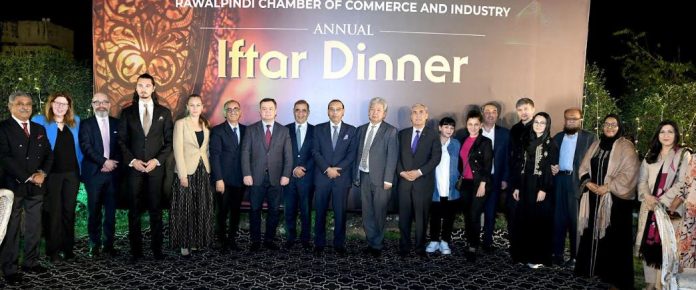
RCCI hosts annual iftar dinner honoring ambassadors

RCCI hosts grand iftar dinner for diplomats

RAWALPINDI, MAR 12 /DNA/ – The Rawalpindi Chamber of Commerce and Industry (RCCI) hosted a Grand Iftar Dinner to honor ambassadors, high commissioners, diplomats, and commercial counsellors. The prestigious event served as a platform to strengthen diplomatic and economic ties between Pakistan and the international community.

Among the distinguished guests were H.E Mr. Atadjan Movlamov Ambassador of Turkmenistan, Dean of the Diplomatic Corps in Islamabad, along with ambassadors from Uzbekistan, Tajikistan, Kazakhstan, Iraq, Malaysia, Romania, Myanmar, Nepal, Ireland, Kyrgyzstan, Brunei, Zimbabwe, as well as Charge d’Affaires from Indonesia, Cyprus, and Finland. Other notable attendees included Mr. Charles J. Perego and Brooke de Montluzon, Economic Counselors at the US Embassy, along with representatives from Portugal, Azerbaijan, Syria, and high commissioners from Sri Lanka and Rwanda.

RCCI President Usman Shaukat, accompanied by Group Leader Sohail Altaf, Senior Vice President Khalid Farooq Qazi, Vice President Fahad Barlas, and Zahid Latif Khan, Chairman of the Standing Committee on International Affairs, warmly welcomed the esteemed guests and expressed gratitude for their presence.

Federal Minister for Climate Change, Musaddiq Malik, CEO of DRAP Dr. Obaidullah, Patron-in-Chief of Sweet Homes Zamarud Khan, former RCCI presidents, executive committee members, district officials, trade association representatives, and a large number of traders were also in attendance.

Dean of Ambassadors Atadjan Movlamov commended RCCI’s role in fostering strong relationships with the diplomatic community and enhancing trade collaborations. In his welcome address, RCCI President Usman Shaukat expressed his appreciation for the attendees and emphasized that the annual Iftar Dinner is a longstanding tradition aimed at uniting esteemed members of the diplomatic corps with key figures from the business sector.

The event successfully reinforced RCCI’s commitment to strengthening economic diplomacy and fostering meaningful connections between Pakistan and global partners.

Terror on the Tracks: The Jaffar Express Hijacking and Pakistan’s Response

Terror on the Tracks: The Jaffar Express Hijacking and Pakistan’s Response

by Muhammad Mohsin Iqbal

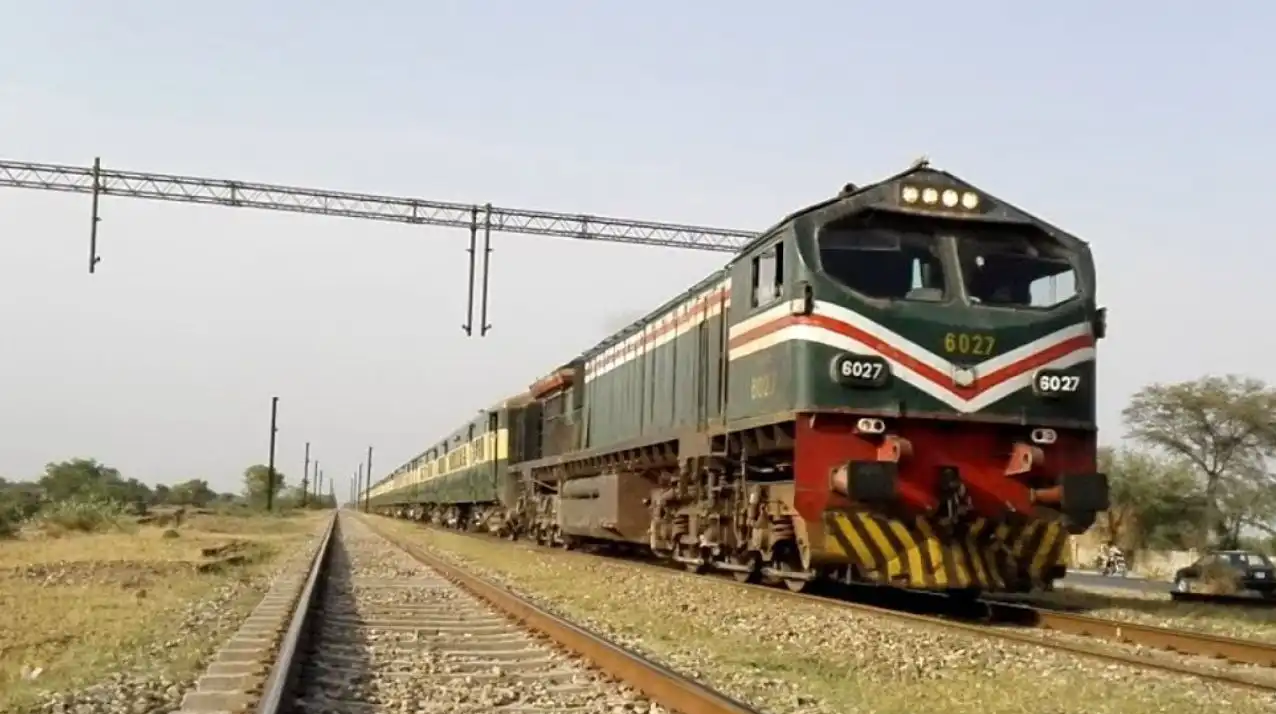
The recent attempt by terrorists and extremists to hijack the Jaffar Express train in Balochistan is yet another reminder of the persistent threats facing Pakistan. Their aim was clear to spread chaos and fear while using innocent human lives as a shield to fulfill their nefarious ambitions. However, the swift and decisive action of Pakistan’s security forces foiled this cowardly plan, reaffirming the nation’s resolve against terrorism. The incident underscores the importance of continued vigilance and strategic countermeasures to eliminate elements that seek to destabilize the region.

On March 11, 2025, terrorists intercepted the Jaffar Express, which was enroute from Quetta to Peshawar. Armed with sophisticated weapons, they forced the train to stop near Mach, a town known for its rugged terrain and historical vulnerabilities to militant activities. Their objective was not just to take hostages but also to create an international spectacle that would undermine Pakistan’s security apparatus. Passengers, including women and children, were left terrified as the attackers attempted to use them as human shields to negotiate their demands. However, security forces, displaying remarkable courage and tactical brilliance, launched a swift operation. After intense hours of combat, the terrorists were neutralized, and the hostages were rescued unharmed.

This incident is not an isolated one. Balochistan, Pakistan’s largest province by area, has long been a focal point of insurgency, terrorism, and foreign interference. The region’s strategic importance due to its vast mineral resources and its proximity to major trade routes, including the China-Pakistan Economic Corridor (CPEC), has made it a target for both internal and external actors. Separatist groups, funded and supported by hostile foreign intelligence agencies, continue to stoke unrest, aiming to weaken Pakistan’s sovereignty over the province. These elements exploit ethnic grievances and socio-economic disparities, recruiting locals into their violent campaigns.

Externally, hostile forces have long sought to destabilize Balochistan by providing financial and logistical support to extremist factions. The involvement of Indian intelligence agencies in fomenting terrorism in the region has been well-documented, with high-profile cases such as that of Commander Kulbhushan Jadhav, an Indian spy caught in Balochistan on March 3, 2016, serving as a glaring example. Additionally, the presence of international terrorist organizations attempting to establish their foothold in the region remains a security concern. Their ultimate goal is to disrupt Pakistan’s progress, particularly the strategic projects linked to Gwadar port, which holds immense economic and geopolitical significance.

Internally, the lack of economic opportunities and underdevelopment in Balochistan has contributed to feelings of alienation among certain segments of the population. While successive governments have initiated development programs, the slow pace of implementation has allowed anti-state elements to exploit these grievances. However, the state’s ongoing efforts, such as increased infrastructure projects, investment in education, and military-led rehabilitation programs for former insurgents, signal a commitment to addressing these challenges. The government’s recent measures to improve security, enhance border management, and increase local representation in decision-making bodies are crucial steps toward long-term stability.

In Pakistan, train-related terror attacks have been carried out multiple times in the past, particularly in Balochistan and Sindh. The targeting of railway infrastructure aims to disrupt connectivity, inflict economic losses, and spread panic. However, the resilience of Pakistan’s law enforcement agencies has ensured that such attempts are thwarted with increasing efficiency.

As far as this incident is concerned, Islam strictly forbids the use of innocent lives, especially non-combatants, as shields or bargaining tools for personal or political gains. The Holy Quran states: “Whoever kills a person [unjustly]… it is as if he has killed all of humanity” (Surah Al-Ma’idah 5:32). This verse clearly emphasizes the sanctity of human life and categorically condemns the unjust killing or harming of innocent individuals.

Furthermore, the teachings of Prophet Muhammad (peace be upon him) provide explicit guidelines on warfare and the treatment of non-combatants. The Prophet (PBUH) strictly prohibited the killing of women, children, elderly people, and those who are not engaged in combat. In a hadith narrated by Abdullah bin Umar (RA), the Prophet (PBUH) saw a woman killed during a battle and said: “She was not fighting! How could she be killed?” (Sahih Bukhari, Sahih Muslim). This demonstrates Islam’s firm stance against harming innocent people, even during conflict.

Using innocent lives as a shield is not only a betrayal of Islamic teachings but also an act of cowardice. Islam promotes justice, righteousness, and the protection of human dignity. Terrorists who hijack trains, take hostages, or use civilians as shields are not only violating international laws but also committing grave sins in the eyes of Islam. Their actions are driven by personal and political motives, not by the principles of Islam, which categorically forbids oppression and the unjust spilling of blood.

Moving forward, a multi-faceted approach is required to prevent such incidents. Strengthening intelligence networks, deploying advanced surveillance systems, and ensuring real-time coordination between security agencies can significantly reduce the risk of future attacks. Equally important is addressing the root causes of extremism by accelerating economic development, improving governance, and countering hostile propaganda that seeks to mislead vulnerable populations. International cooperation in intelligence-sharing and counterterrorism efforts will also play a vital role in mitigating threats. Despite continuous challenges, Pakistan remains steadfast in its fight against terrorism, ensuring that no extremist agenda can prevail against the resilience and unity of its people.

Trump Inflicts Wounds on the U.S. Economy

Qamar Bashir

By: Qamar Bashir

There was a significant plunge on Wall Street on Monday, driven by investor nervousness over the economic impact of President Trump’s trade policies. Stocks in Japan, Australia, South Korea, and China all followed suit, tracking losses from the U.S. Wall Street suffered major declines as fears over the trade war escalated. The S&P 500, which tracks the largest American companies, dropped by 2%, while the Dow Jones slipped just over 2%. The tech-heavy NASDAQ took the hardest hit, plunging by 4%. These losses were sparked by concerns that tariffs would lead to higher prices for consumers and complicate the Federal Reserve’s efforts to control inflation and reduce borrowing costs.

Investor sentiment was further shaken by President Trump’s comments in a Sunday Fox News interview, where he refused to rule out the possibility of a U.S. recession. Instead, he described the economy as being in a “period of transition” and stated that bringing wealth back to America was a significant undertaking that would take time. His remarks failed to reassure investors, triggering an 800-point drop in the Dow, a six-month low for the S&P 500, and steep declines in major tech stocks.

Technology companies, which had been a source of optimism in the stock market, also suffered significant losses. Tesla’s stock dropped by 15%, Nvidia fell by 5%, while Alphabet (Google) and Meta (Facebook) both lost over 4%. These sharp declines indicate growing concerns about the stability of the technology sector amid ongoing trade uncertainties.

Kathleen Brooks, a research director at XTB, noted that President Trump claimed he does not closely monitor the stock market, but he may be paying more attention now after Monday’s dramatic sell-off. He is scheduled to meet with top U.S. CEOs in a business roundtable discussion, which was likely requested by business leaders concerned about the stock market downturn and increasing recession risks.

The situation is expected to become even more volatile as April 2 approaches, the date when the full suite of tariffs is set to be imposed. White House officials have urged the public to remain calm, arguing that the current market fluctuations are based on emotions rather than economic fundamentals. However, Trump’s policies are raising serious concerns about the future of the U.S. economy.

One of the biggest fears is that the U.S. is trying to isolate itself in an increasingly interconnected global economy. Supply chains are deeply globalized, and while America is a powerful economic force, it still relies on international trade and strong global economic conditions. Disrupting these relationships with tariffs could have long-term negative effects.

There are already signs that the U.S. economy was naturally slowing down after years of growth. Now, the added pressure from tariffs and trade disruptions is amplifying recession fears.

Trump’s aggressive economic approach includes not only broad-based tariffs but also efforts to cut government spending. However, government spending has played a significant role in driving economic growth in recent years. Reducing its role while simultaneously implementing tariffs may be an overly aggressive strategy that could push the economy into a downturn.

Trump’s tariff policy includes China and Canada, which could significantly impact the US economy. The stocks that tumbled this week are going to take a second hit once the Chinese tariff takes effect, which includes 15% levies on key U.S. agricultural products such as chicken, wheat, corn, soybeans, pork, beef, and fruit.

China has the advantage in this situation because Americans heavily rely on Chinese goods, while China relies less on U.S. imports. This trade standoff is reminiscent of the first Trump administration, during which U.S. farmers suffered the most. Beijing seems to be taking its time to negotiate, opting to engage from a stance of strength.

But unlike China, Canada has reacted angrily to Trump’s uncalculated tirade of tariffs. The Canadian Prime Minister and Ontario Prime Minister both angrily reacted to Trump and hurled counter and practical threats to Trump while sparing the American people. In their fiery speeches both Canadian leaders said that Canada is though unwillingly and with great regard to the American people who will suffer from Canadian Tarrifs, levied unprecedented  25% surcharge on electricity exports for the 1.5 million American homes and businesses that Ontario powers—homes and businesses in Minnesota, Michigan, and New York. This surcharge will cost families and businesses in these states up to $400,000 every single day. On average, this will add around $100 per month to the bills of hardworking Americans.

They further threatened that they would not hesitate to increase this charge if necessary. If the United States escalates, they will not hesitate to shut the electricity off completely. They reiterated that their number one job is to protect the people of Canada; they would fight like they have never fought before to protect Canada. They took a swipe on Trump and said his unprudent policies are resulting to losses worth trillions in value. Companies are second-guessing investments in the American economy. American workers’ jobs are at risk and the costs for hardworking American families will only go up.

As a result of these tariffs, markets are down, and inflation is set to rise dramatically across the United States. Thousands of American jobs are now at risk, particularly in industries that rely on Canadian materials or consumers. The U.S. government’s actions will increase costs for American families on essential items like groceries, gas, cars, and homes. Additionally, these tariffs threaten American national security by restricting access to critical minerals, energy, building materials, and fertilizers from Canada.

With Anti-American sentiment in Canada is at an all-time high, economists and security experts argue that the move does not make economic or strategic sense, as it weakens the U.S.’s position globally while strengthening adversaries like Russia and China.

Trump’s policies serve as a classic example of how a leader, driven by false assumptions, can make uncalculated sweeping decisions that not only negatively impact key partners but also have lasting consequences for the stability, economy, and security of North America and the rest of the world.

By: Qamar Bashir

 Press Secretary to the President (Rtd)

 Former Press Minister at Embassy of Pakistan to France

 Former MD, SRBC

 Macomb, Detroit, Michigan

HEC, Accreditation Councils meet to deliberate strengthening higher education standards

HEC

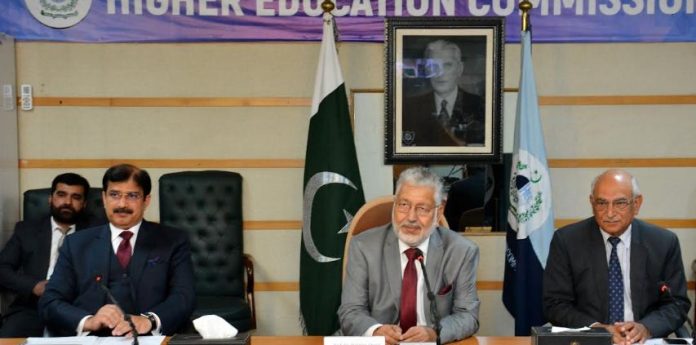
ISLAMABAD, MAR 12 /DNA/ – The Higher Education Commission (HEC) of Pakistan convened a high-level meeting with national accreditation councils at the HEC Secretariat, Islamabad, to address key challenges in maintaining and enhancing the quality of higher education across the country.

The meeting brought together chairpersons, presidents, and representatives from leading accreditation councils, including Pakistan Medical & Dental Council (PMDC), National Council for Tibb (NCT), National Council for Homeopathy, Pharmacy Council of Pakistan (PCP), Pakistan Nursing and Midwifery Council (PN&MC), Allied Health Professional Council, Pakistan Bar Council (PBC), Pakistan Engineering Council (PEC), Pakistan Council for Architects and Town Planners (PCATP), Pakistan Veterinary Medical Council (PVMC), National Computing Education Accreditation Council (NCEAC), National Accreditation Council for Teachers Education (NACTE), National Business Education Accreditation Council (NBEAC), National Agricultural Education Accreditation Council (NAEAC), and National Technology Council (NTC).

The primary objective of the meeting was to foster collaboration among accreditation bodies, streamline accreditation processes, and implement best practices to enhance academic standards. The agenda covered critical areas, including programme accreditation, faculty appointment criteria, standardization of accreditation processes, curriculum development, capacity building, international collaboration, and the role of accreditation in ensuring academic excellence.

Chairman HEC, Prof. Dr. Mukhtar Ahmad emphasized the importance of modernizing accreditation frameworks and aligning them with international best practices. “To ensure quality education, we must continuously evolve our accreditation processes by adopting global standards, enhancing capacity, and updating outdated regulations,” he stated.

He further stressed the need for a more dynamic, transparent, and technology-driven accreditation system that ensures higher education institutions in Pakistan meet both national and international quality benchmarks. “In an era where higher education is rapidly transforming, we cannot afford to rely on outdated accreditation models. We must foster innovation, integrate digital solutions, and establish mechanisms that not only maintain but also enhance the credibility of our academic programmes,” he added.

Executive Director HEC, Prof. Dr. Zia Ul-Qayyum being chair of the meeting reiterated the Commission’s dedication to supporting accreditation councils, saying, “Accreditation is the backbone of higher education quality assurance. HEC is committed to providing a platform for collaboration and dialogue to strengthen these processes and address challenges collectively.”

He also highlighted the role of accreditation in shaping the future of education in Pakistan. He urged accreditation councils to work collaboratively with industries and global accreditation bodies to ensure that graduates are equipped with the skills required to compete in the international job market. He noted that improving accreditation standards would strengthen Pakistan’s higher education system, making Pakistani universities globally competitive and producing graduates who are research-oriented, innovative, and capable of driving economic progress.

The meeting highlighted several pressing challenges faced by accreditation councils, including limited resources, the need for regulatory updates, gaps in international collaboration, and the necessity of regular curriculum reviews to keep pace with industry advancements.

The participants proposed multiple strategic solutions, including review and modernization of accreditation laws and policies, capacity-building and training programmes for accreditation personnel, adoption of international accreditation benchmarks, enhanced collaboration between accreditation councils and HEC, and frequent curriculum updates to align with industry trends.

Prof. Dr. Anwar-ul-Hassan Gillani, Consultant (Quality AssuranceAgency and Quality Assurance Division) HEC expressed his appreciation to the participants for their valuable insights and active engagement. He assured them that future meetings would be held regularly to ensure continuous progress on key issues.

The accreditation councils welcomed the initiative and pledged to work closely with HEC to develop a more robust accreditation ecosystem for higher education in Pakistan. The meeting concluded with a unanimous commitment to holding periodic discussions, fostering collaboration, and ensuring excellence in higher education nationwide.

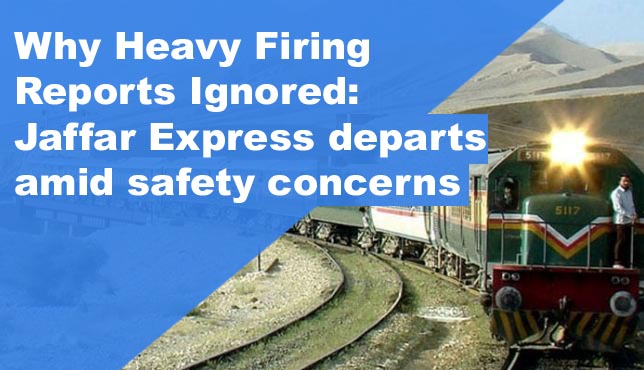
At least 13 terrorists killed, 80 train passengers rescued as operation continues in Bolan

Gunmen open fire on Jaffar Express in Balochistan

QUETTA: At least 80 hostages, including women and children, were freed by security forces on Tuesday after an unknown number of terrorists took passengers of the Jaffar Express hostage in Balochistan’s Bolan area, said security sources.

The train, with over 400 passengers on board in nine bogies, was on its way from Quetta to Peshawar in Khyber Pakhtunkhwa when it came under attack, according to security sources.

Among those rescued are 53 men, 26 women and 11 children. Security sources added forces are continuing the operation to rescue the other hostages, and the circle around the terrorists is being tightened.

Soon after the attack started, security forces cordoned off and surrounded the train, and a heavy exchange of fire was reported.

Security sources said that the terrorists behind the attack are in contact with their mastermind in Afghanistan and are using women and children as human shields.

The operation is being carried out with extreme caution due to the presence of civilians onboard.

Security sources elaborated that the operation is further complicated by the difficult terrain of the area.

The attackers bombed the railway track before storming aboard the train, said security forces, adding that they also opened fire on the locomotive, injuring the driver.

Security officials present on the train and the terrorists also reportedly exchanged fire.

The locomotive was stopped just before a tunnel, and terrorists took control of the train in a remote, mountainous area of the province which borders Afghanistan and Iran.

Play Video
“Over 450 passengers onboard are being held hostage by gunmen,” Muhammad Kashif, a senior railway government official in Quetta, the capital of the province, told AFP.

“Passengers include women and children,” he added.

Security sources added that despite the challenging route, forces reached the scene in the Mushqaf area of the Bolan district of Balochistan to initiate the operation.

Emergency measures
The Balochistan government has imposed emergency measures, and all institutions have been mobilised to deal with the situation, spokesperson Shahid Rind said.

A relief train and contingents of security forces were also dispatched to the site.

Meanwhile, an emergency has been imposed in Sibi and Civil Hospital Quetta.

According to the provincial health department, all medical and paramedical staff have been summoned to Civil Hospital and several wards were vacated to deal with the situation.

Following the incident, an emergency information desk has been established at Quetta Railway Station.

A railway official was appointed to share relevant developments regarding the Jaffar Express incident.

Condemnations pour in
Interior Minister Mohsin Naqvi condemned the attack and prayed for the early recovery of the injured people. He added: “Beasts who opened fire on innocent passengers deserve no leniency.”

“Terrorists are the biggest threat to Pakistan,” said Pakistan Peoples Party (PPP) Chairman Bilawal Bhutto Zardari while condemning the attack on the passenger train.

“Targeting innocent citizens by terrorists is a coward act,” he added.

Khyber Pakhtunkhwa Chief Minister Ali Amin Gandapur also condemned the Jaffar Express incident and expressed concern for the safety of the train passengers taken hostage in Balochistan. He expressed wishes for their safe recovery.

Awami National Party (ANP) President Aimal Wali Khan said that attacks on innocent citizens are unacceptable and demanded strict action against the terrorists.

The country witnessed a sharp increase in terror attacks in January 2025, surging by 42% compared to the previous month, according to data released by the Pakistan Institute for Conflict and Security Studies (PICSS), a think tank.

The data revealed that at least 74 militant attacks were recorded nationwide, resulting in 91 fatalities, including 35 security personnel, 20 civilians, and 36 militants. Another 117 individuals sustained injuries, including 53 security forces personnel, 54 civilians, and 10 militants.

Balochistan also experienced a surge in militant activity, with at least 24 attacks, which claimed 26 lives, including 11 security personnel, six civilians, and nine militants.

Report reveals ADB’s aid ‘misuse’

Report reveals ADB’s aid ‘misuse’

Dogar questioned whether NDMA is authorized to allocate foreign aid to other countries

Khayam Abbasi

ISLAMABAD: The $30 million aid provided by the Asian Development Bank (ADB) for Pakistan’s flood victims was allegedly diverted to assist disaster-affected regions in Turkey and Syria, an audit report revealed on Tuesday.

According to the audit report presented before the Public Accounts Committee (PAC) of the National Assembly, the ADB’s aid was granted for flood relief, but it was ‘used’ to assist Turkey and Syria disaster regions.

During today’s meeting of PAC, Parliamentary leader Aamir Dogar questioned whether NDMA is authorized to allocate foreign aid to other countries.

In response, NDMA chairman stated that relief aid for brotherly nations is sourced from Pakistan’s own emergency stockpiles, which were later replenished.

PPP leader Shazia Mari criticized the move, stating that the grant was meant for Pakistan’s flood victims but was instead used abroad. PTI leader Riaz Fatyana highlighted that even after two years, clearance from ADB has not been secured.

Opposition Leader in NA Umar Ayub warned that improper utilization of grants and loans damages donor confidence and affects future aid.

He further demanded that the Secretary of Economic Affairs Division be held accountable for the mismanagement of ADB funds.

Audit officials also disclosed that ADB’s Country Director had inquired about fund utilization in 2023, seeking a detailed report, which remains pending.

Islamabad to get state-of-the-art food street in blue area: Chairman CDA

Islamabad to get state-of-the-art food street in blue area: Chairman CDA

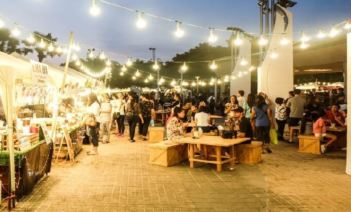
ISLAMABAD, MAR 11 /DNA/ – A meeting was held under the chairmanship of Muhammad Ali Randhawa Chairman CDA/ Chief Commissioner Islamabad regarding establishment of state of the art Food Street at Blue Area besides initiating other projects. The meeting was attended by Member Planning, Member Engineering, Member Finance, DG Environment, DG Building Control Section (BCS) and other senior officers of CDA.

During the meeting, Muhammad Ali Randhawa Chairman CDA said that all out efforts should be made for making Federal Capital Islamabad, more beautiful, environment friendly as well as to improve modern travel facilities for the public, as well as tourists visiting from Pakistan but abroad. Establishment of a state-of-the-art Food Street in Blue Area with high-quality Food Street at the centre of city which is Blue Area will not only provide citizens with access to delicious and tasty food of high-quality local and international brands at a one place but will also be ensured adequate parking facilities so that people should not only enjoy quality and delicious food but they will be provided ample place for parking which is very rare as compared to other food outlets in Islamabad.

The Food Street in Blue Area will feature beautifully designed pathways. Electric carts will also be provided for the convenience of the elderly and children. Chairman CDA directed that the Food Street be completed and made operational in the shortest possible time. He also instructed that the Food Street be designed with modern and attractive layouts to ensure it meets international standards.

All transactions at the Food Street will be cashless. The Food Street will be adorned with modern and beautiful lighting. Common seating areas will be constructed, keeping in mind the convenience of visitors. The best arrangements will be made to ensure food is prepared in accordance with health and hygiene standards.

Chairman CDA directed the relevant Wings to expedite work on the Food Street and pedestrian tracks according to the estimated timelines.

The meeting also discussed the cable car project for Islamabad. Chairman CDA instructed that the feasibility report for the cable car be prepared promptly.

Chairman CDA also directed the initiation of work to introduce a zip line in Islamabad. During the meeting, instructions were given to take all necessary steps to make the Art and Craft Village operational.

Chairman CDA stated that work should be carried out on projects such as the Safari Park and the establishment of a Cultural Center to promote tourism in Islamabad. He directed that feasibility reports for all tourism ana recreational projects be prepared and work commenced at the earliest.

Chairman CDA Muhammad Ali Randhawa emphasized that these initiatives and projects will not only provide the best facilities for citizens but will also position Islamabad as a significant hub for tourism and recreational activities. He instructed all officers to intensify their efforts to complete these projects on time.

The CDA administration is committed to the betterment of citizens and the development of the city. Efforts are underway to make Islamabad a modern and attractive city through the Food Street and other recreational projects and initiatives.

ISSI hosts round table commemorating International Women’s Day

ISSI hosts round table commemorating International Women’s Day

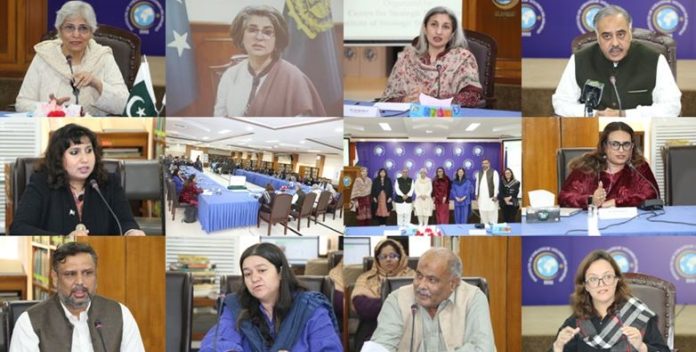
ISLAMABAD, MAR 11 /DNA/ – The Centre for Strategic Perspectives (CSP) at the Institute of Strategic Studies Islamabad (ISSI), organized a round table discussion titled “Accelerate Action: Strategic Imperatives for Advancing Gender Equality” to commemorate International Women’s Day 2025. The keynote speaker at the event was Dr. Najeeba Arif, Chairperson, Pakistan Academy of Letters. Foreign Secretary Ambassador Amna Baloch participated through a special video message for the occasion. 

In his welcome remarks, DG ISSI Ambassador Sohail Mahmood highlighted both the progress and challenges in advancing gender equality. Citing UN Secretary-General Antonio Guterres, he acknowledged that while women and girls have broken barriers and defied stereotypes, their rights remain under attack due to violence, discrimination, economic inequality, and emerging threats like algorithmic bias. He reaffirmed Pakistan’s historical commitment to women’s empowerment, inspired by Quaid-e-Azam Mohammad Ali Jinnah’s vision, and recognized the contributions of trailblazers like Mohtarma Fatima Jinnah, Raa’na Liaquat Ali Khan, and Begum Shaista Ikramullah. Pakistan has achieved significant milestones, including electing the first female Prime Minister in the Islamic world and appointing women to key positions in diplomacy, government, judiciary, and international organizations. Ambassador Sohail Mahmood highlighted the gaps and deficits in the way of gender parity in Pakistan and worldwide and stressed the need for accelerated action to bridge the gaps. He also underscored the importance of the government, Parliament, civil society, media, academia and think-tanks working synergistically and stated that the ISSI would continue to serve as a platform ensuring that women’s voices are heard and their rights are protected. 

In her message, Foreign Secretary Amna Baloch underscored the vital role of Pakistani women in global peace and cooperation, noting that over 500 Pakistani women peacekeepers have served in UN missions. She also recognized the achievements of women entrepreneurs and artists who continue to inspire. However, she acknowledged persistent challenges, often compounded by economic instability, climate change, and conflict, with women in occupied Jammu and Kashmir and Palestine facing severe hardships and human rights violations. She emphasized the need for urgent action, calling for the enactment and enforcement of laws protecting women’s rights, increased women’s leadership representation, bridging the gender pay gap, and ensuring access to quality education. She reaffirmed Pakistan’s unwavering commitment to equality, justice, and empowerment for all.

In her keynote address, Dr. Najeeba Arif emphasized that gender equality is an urgent necessity requiring thoughtful action. However, equality should not be mistaken for uniformity. Rather than expecting women to conform to traditionally male-defined roles, their distinct contributions across all spheres must be valued. She stressed that a nuanced approach must recognize the economic and social worth of women’s work, both within and beyond the household. Institutional recognition and fair compensation for domestic labor can empower women and shift societal perceptions. Future strategies should critically assess norms to avoid reinforcing outdated models. A stable family unit is vital for nurturing well-rounded individuals and fostering social cohesion. Drawing from welfare states that support full-time caregivers, policies must adopt a balanced approach that values diversity while promoting equitable opportunities for all.

Dr. Salma Malik, Professor at QAU, emphasized that while Pakistan has robust legal frameworks for women’s protection, their implementation remains weak, often turning the justice-seeking process into an ordeal due to societal stigma. Deep-rooted stereotypes further marginalize women, discouraging them from asserting their rights. She underscored the need for gender equity as a foundation for gender equality and highlighted the lack of structured mentorship as a major barrier to women’s professional growth and leadership. Similarly, Mr. Rashid Chaudhary, National Coordinator FAFEN, highlighted the limitations of a tokenistic approach to women’s political representation, stressing the need for genuine empowerment. He pointed out that electoral politics remains a patriarchal space, where systemic and cultural barriers limit women’s participation at all levels.

Reem Sharif, Deputy Director at the Transgender Protection Centre, called for informed discourse on gender diversity, emphasizing that gender is not binary. While Pakistan’s 2018 transgender rights law was a milestone, significant gaps remain in ensuring full social and economic inclusion. Ms. Alishba Khan, Member of ACCA’s ESG & Climate Action Committee, stressed the importance of strategic investments in education, economic opportunities, and legal protections to dismantle systemic barriers. Ms. Kosar Bano, a Gender Expert hailing from Gilgit-Baltistan, highlighted the stark gender disparities in mountainous regions, where women face extreme hardships, including limited access to clean water and education. She warned that AI-driven changes and external influences are disrupting traditional roles, further marginalizing women in these remote areas.

The event concluded with a vote of thanks by Dr. Neelum Nigar, Director Centre for Strategic Perspectives (CSP), who also moderated the deliberations.

Stay Connected

64FansLike
60FollowersFollow

Latest Reviews

Exchange Rates

USD - United States Dollar
EUR
1.17
GBP
1.35
AUD
0.72
CAD
0.73