Home Blog Page 650

Gillani underscores respect for all religions, legislation against hate speech to combat Islamophobia

Gillani underscores respect for all religions, legislation against hate speech to combat Islamophobia

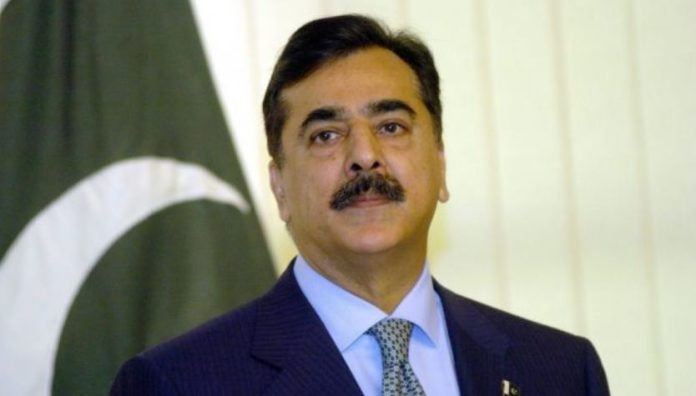
ISLAMABAD, MAR 15 (APP/DNA): President Syed Yousuf Raza Gillani on Saturday underscored the need of collective efforts to effectively combat Islamophobia and said it was essential to ensure respect for all religions globally and implement effective legislation against hate speech. 

Promoting interfaith harmony and dialogue could help eliminate misunderstandings and foster brotherhood among different religious communities, he said in a message on the observance of International Day to Combat Islamophobia.

Today, the president said Pakistan and Muslims around the world were observing the International Day to Combat Islamophobia. 

“This day served as a reminder that it was imperative to raise a united voice against the global prejudice, hatred, and discrimination faced by Muslims. The purpose of observing this day is also to raise awareness about the dangerous consequences of Islamophobia,” President Secretariat Press Wing, in a press release on Saturday, quoted the president as saying. 

Gillani further said that the Muslims across the world encountered numerous challenges due to the misconceptions and negative propaganda spread against them and their religion.

In many Western countries, he observed Islamophobia led to violent incidents in which different innocent Muslims had lost their lives, adding on this day, they also remembered those Muslims who lost their lives as a result of Islamophobic-related violence.

The president said Pakistan took pride in its leading role in getting the international day recognized by the United Nations to combat Islamophobia. 

“Pakistan has consistently highlighted this issue at every fora and has played a key role in urging the international community to take practical steps for its eradication,” he added. 

At times, he regretted that the Western media associated Islam and Muslims with terrorism or extremism, creating a misleading perception among the general public. 

Moreover, false information and fake news on social media portrayed Islam as a violent religion, he noted. 

The president said additionally, in some countries, political groups and extremist individuals ran hate campaigns against the Muslims and exploit Islamophobia for political purposes, further exacerbating discrimination against Muslims.

Gillani urged the Muslims to use various media platforms to promote the true, peaceful, and human rights-based teachings of Islam. 

Furthermore, he opined the Muslims living in Western countries should maintain their identity while playing a positive and constructive role in their societies.

The president reiterated that Pakistan would continue its struggle against Islamophobia at the global level and defend the rights of Muslims at every platform. 

“Pakistan reaffirms its commitment to working with the international community to end Islamophobia through diplomatic, political, and social efforts,” he added.

He further urged the global leaders, media and civil society to take practical steps to eliminate hatred against Islam and the Muslims. 

“Let us all come together to promote tolerance, brotherhood, and peace and create a world where every human being is treated with dignity, respect, and equal rights,” he stressed.=DNA

==============

President Gilani for greater cooperation with Czech Republic

President Gilani for greater cooperation with Czech Republic

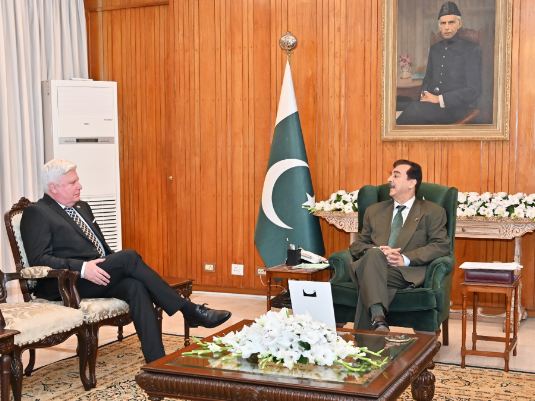
ISLAMABAD, MAR 15 /DNA/ – President Syed Yousaf Raza Gilani has affirmed Pakistan’s commitment to further boosting bilateral cooperation with the Czech Republic in areas of mutual interest. He said that both countries needed to explore greater cooperation in the areas of trade, renewable energy, business and investment, health, parliamentary cooperation, education and people-to-people linkages.

The President expressed these views while talking to the Ambassador of the Czech Republic to Pakistan, Mr Ladislav Steinhubel, who called on him, at Aiwan-e-Sadr today.

Welcoming the Ambassador, the President said that Pakistan attached great importance to its relations with the Czech Republic, and both countries enjoyed long-standing bilateral ties and held common views at various international fora. He stated that Czech businesses should visit Pakistan to explore investment opportunities, adding that bilateral trade between Pakistan and the Czech Republic needed to be increased to its fullest potential.

President Gilani emphasised the need to further deepen bilateral engagement in the areas of economy, culture, and people-to-people contacts. He also urged the need for easing the visa regime for Pakistani students wanting to study in Czech universities to enhance educational cooperation between the two countries. He also appreciated the support of the Czech Republic for Pakistan’s candidature for the non-permanent seat at the UN Security Council for 2025-26.

The Ambassador of the Czech Republic to Pakistan said that his country wanted to expand cooperation with Pakistan in trade, business, health and energy sectors. He expressed interest in exporting Pakistani mangoes to the Czech Republic.

The Ambassador informed that the Prime Minister of the Czech Republic would visit Islamabad in May 2025. The President said that Pakistan looked forward to welcoming the Czech Prime Minister and expressed confidence that the visit would help in further enhancing bilateral cooperation between the two countries.

The Ambassador also offered condolences over the loss of lives in the recent terrorist attack on Jaffar Express.

U.S. Tariff Policies: A Historical Perspective

Qamar Bashir

By: Qamar Bashir

Since its inception, the United States has oscillated between protectionist tariffs and free trade policies, shaping its economic and industrial landscape. Initially, tariffs were a primary revenue source for the federal government and a tool to protect fledgling industries from foreign competition. Over time, shifting economic priorities, political ideologies, and evolving global trade relations influenced U.S. tariff policies, each shift bringing both advantages and drawbacks. Protectionist tariffs have historically strengthened domestic industries but also led to trade disputes and higher consumer costs, while free trade policies have fostered global economic integration but often resulted in job losses in vulnerable sectors.

In the late 18th and 19th centuries, the U.S. relied on high tariffs to shield its developing industries from European competitors. The Tariff of 1816 and the Tariff of Abominations (1828) promoted Northern manufacturing by making foreign imports more expensive. However, these same policies harmed Southern agricultural exporters, who relied on overseas markets for cotton and tobacco sales. The Morrill Tariff (1861), introduced during the Civil War, reinforced protectionism, helping Northern industries but exacerbating regional tensions.

During this period, the United Kingdom, France, and Germany were America’s key trading partners. The UK, dependent on U.S. cotton for its textile industry, suffered the most from these tariffs. European manufacturers faced steep restrictions on their goods entering the U.S. market, leading to retaliatory tariffs that restricted American agricultural exports. This resulted in economic polarization, with industrialists in the North benefitting from tariff protections while Southern farmers and exporters suffered from declining international demand. Industries such as steel (Carnegie Steel), railroads (Union Pacific, Central Pacific), and manufacturing (Singer Sewing Machines, Colt Firearms, McCormick Harvesting Machines) thrived under these protectionist policies. However, Southern agriculture and the shipping industry struggled due to the loss of foreign markets. While tariffs fostered domestic industrial growth, they also deepened economic disparities and intensified sectional tensions that contributed to the Civil War.

The early 20th century saw fluctuations between free trade and protectionism, reflecting changing economic conditions. The Underwood Tariff (1913) under President Woodrow Wilson lowered tariffs significantly, improving trade relations with the UK, Germany, and France but reducing government revenue. However, the Fordney-McCumber Tariff (1922) reversed this trend, reinstating protectionist measures to support U.S. industries like steel, chemicals, and automobiles. While these tariffs strengthened domestic production, they provoked retaliatory tariffs from European nations, limiting U.S. exports and creating economic inefficiencies.

The Smoot-Hawley Tariff (1930) under President Herbert Hoover significantly worsened the Great Depression by imposing some of the highest tariffs in U.S. history. This move triggered retaliatory measures from America’s key trading partners, collapsing global trade and accelerating the economic downturn. The U.S. economy shrank as agricultural and industrial exports plummeted, exacerbating the financial struggles of businesses and workers.

In response to the failures of extreme protectionism, the Reciprocal Trade Agreements Act (1934) under Franklin D. Roosevelt marked a decisive shift toward free trade. This act allowed the U.S. government to negotiate mutual tariff reductions with other countries, laying the groundwork for global economic cooperation. After World War II, this approach culminated in the General Agreement on Tariffs and Trade (GATT, 1947), promoting trade liberalization worldwide. Industries such as automobiles (Ford, General Motors), consumer goods (General Electric, RCA), and aircraft manufacturing (Boeing, Lockheed Martin) flourished due to expanding export markets and international cooperation. However, textiles and small-scale manufacturing struggled to compete with lower-cost imports, leading to job losses in some traditional American industries.

The impact on GDP was significant. While protectionist policies like Smoot-Hawley led to economic contraction, the shift toward free trade agreements fueled post-war prosperity, with U.S. GDP growing at an annual rate of 4%–5% in the 1950s and 1960s. However, as globalization accelerated, certain domestic industries faced intense foreign competition, leading to deindustrialization in some sectors.

The 21st century initially embraced globalization and free trade, with agreements like NAFTA (1994) and China’s WTO entry (2001) under Presidents Clinton and Bush expanding trade with Canada, Mexico, China, and the European Union. These agreements led to a surge in U.S. exports, particularly in technology (Apple, Intel, Microsoft), aerospace (Boeing), and agriculture (soybeans, corn, wheat). However, they also contributed to manufacturing job losses, as companies moved production to countries with lower labor costs. Domestic steel, textiles, and small manufacturing industries suffered as cheaper imports flooded the U.S. market, fueling political and economic discontent.

Under President Trump (2017–2021), the U.S. imposed tariffs on Chinese imports, steel, aluminum, and European goods, triggering a trade war aimed at protecting domestic industries. While these tariffs boosted U.S. steel and semiconductor production, they also raised costs for businesses dependent on foreign materials, such as automotive (General Motors, Ford), construction, and consumer electronics (Apple, Dell, HP). China retaliated with tariffs on American agricultural products, significantly impacting soybean and pork producers. The Biden administration (2021–2025) maintained most of these tariffs while focusing on domestic supply chains, semiconductor manufacturing (Intel, TSMC in Arizona), and renewable energy, benefiting defense and steel industries while hurting retail and agriculture due to higher import costs.

The impact on GDP was mixed. While globalization drove U.S. economic growth in the 1990s and early 2000s, with GDP expanding at 2%–3% annually, the U.S.-China trade war under Trump slowed investment and disrupted supply chains, causing GDP growth to drop to around 2% in 2019. Under Biden, continued tariffs contributed to inflation but also encouraged domestic industrial investment in semiconductors and clean energy.

In recent weeks, global stock markets have suffered sharp declines, largely due to escalating trade tensions and the impact of new tariffs. Major indices like the Dow Jones Industrial Average and the S&P 500 have experienced substantial losses, reflecting investor fears of an economic slowdown and the potential onset of a global recession. The energy sector has been particularly affected, with natural gas prices rising due to geopolitical instability and increased demand, leading to higher operational costs for industries reliant on energy.

However, there is potential for market recovery if specific conditions are met. A reduction in energy prices could lower production costs for businesses, improving corporate earnings and boosting investor confidence. Additionally, if protectionist trade policies successfully revitalize domestic manufacturing, the economy could see long-term benefits, reducing reliance on foreign imports and strengthening key industries. This could help stabilize financial markets and support economic growth.

While the short-term outlook remains uncertain, strategic policy adjustments—such as lowering energy prices, improving supply chain efficiency, and negotiating trade agreements that balance protectionism with economic openness—could pave the way for a more stable and prosperous market environment. If domestic industries adapt successfully, the U.S. economy may regain momentum, mitigating the negative effects of tariffs and restoring confidence in global markets.

By: Qamar Bashir

 Press Secretary to the President (Rtd)

 Former Press Minister at Embassy of Pakistan to France

 Former MD, SRBC

 Macomb, Detroit, Michigan

From Kulbhushan to Jaffar Express: India’s Terror Network Exposed

by Muhammad Mohsin Iqbal

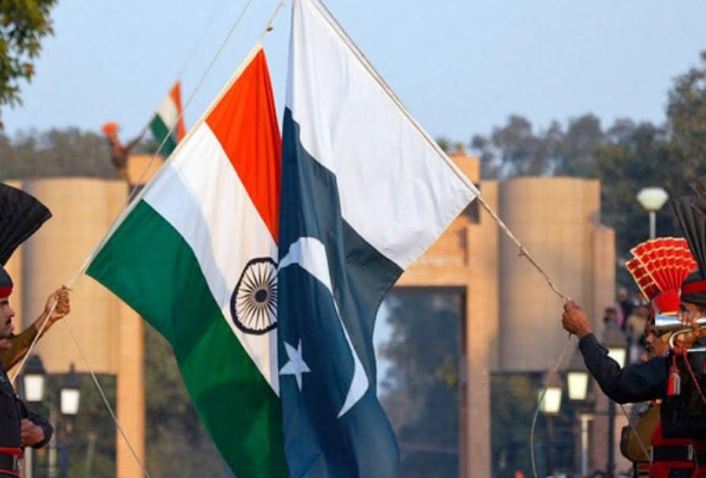
Pakistan and India share a complex and troubled history, shaped by deep-seated animosities and unresolved conflicts. While geographical proximity makes them neighbors, India’s attitude towards Pakistan since Partition in 1947 has been anything but like intolerable enemy. From direct military confrontations to covert operations aimed at destabilizing Pakistan, India has consistently demonstrated hostility. Despite numerous peace overtures by Pakistan, India has maintained an aggressive stance, engaging in activities that range from waterborne terrorism to extremism in sports, and direct involvement in terrorist incidents within Pakistan.

From Kulbhushan to Jaffar Express: India’s Terror Network Exposed

One of the most glaring examples of Indian subversion was the arrest of Kulbhushan Jadhav, an Indian spy who was caught in Balochistan in 2016. A serving officer of the Indian Navy, Jadhav was operating under a false identity and admitted to orchestrating terrorist activities in Pakistan. His confession before Pakistani authorities provided undeniable evidence of India’s involvement in fomenting unrest in Balochistan and Karachi. The Indian government, instead of disowning him, rushed to the International Court of Justice (ICJ) to defend him, further exposing their deep engagement in espionage and terrorism against Pakistan.

Similarly, the case of Indian Air Force pilot Abhinandan Varthaman in 2019 highlighted India’s reckless aggression. Following the Pulwama attack, India launched an airstrike in Balakot on February 26, 2019, claiming to have targeted terrorist camps—a claim that was widely debunked. The very next day, Pakistan’s Air Force successfully intercepted Indian fighter jets violating Pakistani airspace, leading to the capture of Abhinandan. This incident not only exposed India’s false narratives but also showcased Pakistan’s military preparedness. The fact that Abhinandan was returned as a goodwill gesture did not soften India’s hostility, proving once again that peace initiatives are often met with suspicion and aggression.

India’s involvement in supporting separatist elements in Balochistan is another area where its anti-Pakistan agenda is evident. Pakistani security agencies have repeatedly provided evidence of Indian funding and training of Baloch insurgents. In 2020, Pakistan’s Foreign Minister presented a dossier containing irrefutable evidence of India’s state-sponsored terrorism, including financing anti-Pakistan groups such as BLA (Balochistan Liberation Army) and BRA (Baloch Republican Army). These groups have been responsible for attacks on security forces and vital infrastructure, including the Chinese consulate in Karachi and the Gwadar Port, which is a key component of the China-Pakistan Economic Corridor (CPEC).

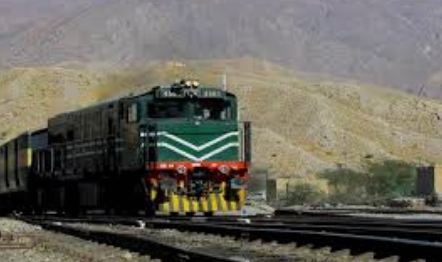
Another recent example is the sabotage of the Jaafar Express, a passenger train targeted by terrorists in Balochistan. Investigations pointed towards Indian-backed elements attempting to create chaos within Pakistan. The international community, including the United Nations, has condemned the kidnapping and terrorism linked to the Jaafar Express attack in clear terms, yet decisive actions against those directly and indirectly responsible remain pending. This reflects the broader issue of global inaction when it comes to India’s subversive activities in Pakistan. The reality is simple: unless the dead dog is pulled out of the well, the water will not be clean, no matter how many buckets are taken out. Half-hearted responses and mere condemnations will not curb Indian-backed terrorism; it requires firm, actionable measures to dismantle the networks orchestrating such attacks.

Beyond direct acts of terrorism, India has also weaponized water against Pakistan. As an upper riparian state, India has frequently violated the Indus Waters Treaty of 1960 by constructing dams and altering water flows, thereby impacting Pakistan’s agricultural sector. Projects like the Kishanganga and Ratle hydroelectric plants on the Jhelum and Chenab rivers have raised serious concerns about India’s attempts to control Pakistan’s water resources. This form of water aggression threatens Pakistan’s economy and food security, making it an existential issue.

Even in the realm of sports, India has displayed hostility towards Pakistan. A glaring example of India’s politically motivated stance in sports is its refusal to play matches in Pakistan during the ICC Champions Trophy 2025. Despite Pakistan being the official host of the tournament, India has insisted on playing its matches at a neutral venue, which has reportedly been agreed upon as Dubai. This move comes despite the fact that top cricketing nations, including England, Australia, and New Zealand, have recently played in Pakistan without security concerns. India’s decision is clearly a political maneuver rather than a genuine concern for security. A similar scenario unfolded during the 2023 Asia Cup when India refused to play in Pakistan, resulting in a hybrid model where its matches were held in Sri Lanka. By constantly avoiding playing in Pakistan, India is not only undermining the integrity of international sports but also attempting to isolate Pakistan on the global stage.These actions highlight that even in the sphere of sports, where politics should ideally take a backseat, India continues its antagonistic approach.

Given this historical and contemporary reality, Pakistan must abandon any illusions about India’s intentions. It is naïve to expect goodwill or fair treatment from a country that has persistently sought to undermine Pakistan at every opportunity. While diplomatic channels and regional cooperation must remain open, Pakistan’s policymakers must adopt a pragmatic approach, reinforcing national security and strengthening alliances that counterbalance Indian aggression.

A strong and self-reliant Pakistan, capable of thwarting enemy designs, is the best way to counter Indian hostility. Strengthening internal stability, bolstering defense capabilities, and continuing to expose India’s malicious activities on international platforms should remain key priorities. The sooner we recognize that India is not just an unfriendly neighbor but a long-term adversary with expansionist ambitions, the better prepared we will be to safeguard Pakistan’s sovereignty and national interests.

Celebrating culture and spirituality at Serena Hotels Ramadan Qawwali Night

Ramadan

DNA

ISLAMABAD: Serena Hotels, under its Cultural Diplomacy Initiative, hosted a mesmerizing Qawwali Night during the holy month of Ramadan. The soulful evening featured the legendary Abida Parveen, whose powerful performance of famous Sufi kalams captivated the audience, creating a deep sense of spiritual reflection and cultural appreciation.

The event brought together a distinguished gathering, including government officials, members of the Armed Forces, diplomats, heads of international agencies, corporate executives, and media personnel. Guests were captivated by the heartfelt performance, which honored the rich tradition of Sufi music and its timeless messages of love, unity, and devotion. Abida Parveen’s performance of renowned kalams such as Mai Nara-e-Mastana, Man Kuntu Maula, Tu Nay Dewana banaya , Dama Dam Mast Qalandar and many more resonated deeply with the audience, who enjoyed the spiritual ambiance to the fullest.

Following the musical experience, attendees were treated to an exquisite Sehri, thoughtfully curated to reflect the essence of Ramadan’s traditions. The evening showed Serena Hotels dedication to bringing different cultures together and encouraging meaningful conversations through the arts.

Serena Hotels continues to create memorable experiences that highlight cultural diversity and support artistic expression and togetherness. The Qawwali Night with Abida Parveen was yet another evidence to this vision, leaving an unforgettable mark on the attendees of the event.

Mushahid calls for Palestine & Kashmir solution via UN resolutions

Mushahid calls for Palestine & Kashmir solution via UN resolutions

DNA

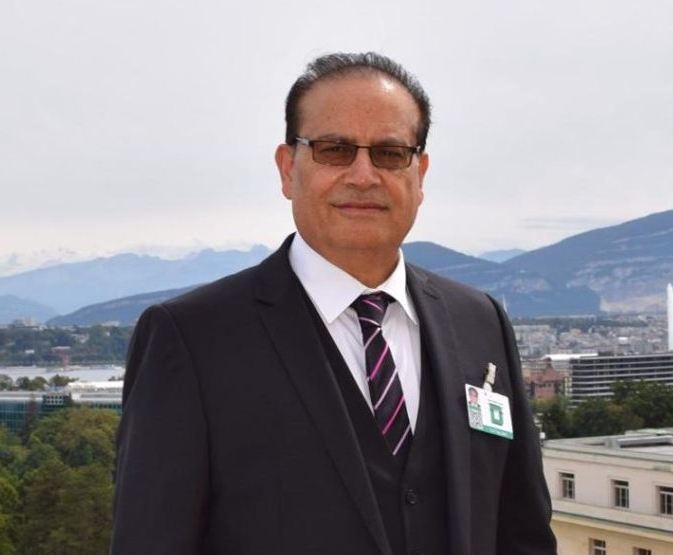
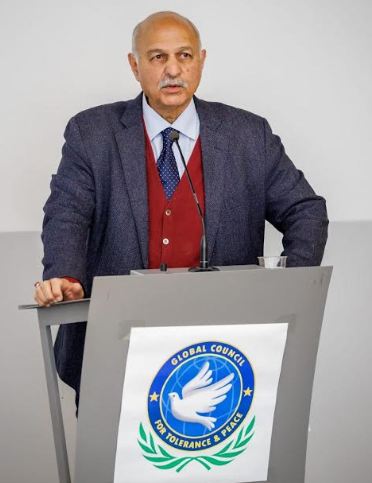
Geneva, 15 Mar: Participating as Special Guest in the conference of International Parliament for Tolerance & Peace (ITPT), hosted by former Speaker of Arab Parliament, Ahmed bin Mohammed Al-Jaswan of the United Arab Emirates, Senator Mushahid Hussain Sayed said prerequisite for Tolerance and Peace was resolving longstanding conflicts like Palestine and Kashmir on the basis of United Nations resolutions seeking their right of self-determination. He also called for lifting of blockade to provide uninterrupted flow of humanitarian assistance and enforcement of ceasefire in current conflict situations in Gaza and the Sudan, where he urged for a civilian-led and civilian-owned peace process to initiate end to the Civil War which has resulted in food insecurity for majority of Sudan’s population as well as a third of its population is now homeless or displaced, resulting in a serious refugee crisis.

Senator Mushahid Hussain also welcomed the election of President Trump as a plus for world peace, as President Trump is neither a warmonger nor an exponent of any new Cold War.  He welcomed President Trump’s efforts for peace in Ukraine as well as his initiative for diplomatic negotiations with Iran on the nuclear issue, adding all these issues can only be resolved through direct talks, not use or threat of force.

Senator Mushahid Hussain also acclaimed the role of UAE for promoting peace and terming under the enlightened leadership of President Mohammed bin Zayed, who is a close friend of Pakistan, adding over 100 nationalities reside in harmony and security in the UAE.

He concluded his speech by recalling that 2025 is the 70th Anniversary of the Bandung Conference in 1955, hosted by Indonesia, which for the first time brought together Asian & African countries on one platform, an initiative in which Pakistan was a founding member. He said the seeds of the resurgence of Global South were laid at Bandung and the world is witnessing an historic shift in the global balance of economic and political power, from the West to the East.

Parliamentarians and political and opinion leaders from 40 countries from four continents (Asia, Africa, Latin America and Europe) took part in this conference, where keynote speeches were delivered by the Speaker of Tajikistan Parliament, Mohammed Zakirzade, and Secretary General of Inter Parliamentary Union (IPU), Martin Chungong.

The IPTP is the parliamentary arm of the Global Council for Tolerance & Peace, whose President, Ahmed Mohammed Al Jaswan, last month visited Pakistan to deliver a keynote address at the International Conference on ‘Regional Connectivity & Pakistan’ hosted by the Pakistan-China Institute, which is headed by Senator Mushahid Hussain.

UN Security Council condemns Jaffar Express terror attack

UN Security Council condemns Jaffar Express terror attack

ISLAMABAD, MAR 14 /DNA/ – Members of the UN Security Council  through a Press Statement today have condemned in the strongest terms the terrorist attack on Jaffar Express Passenger Train. Members of the UNSC:

•             Expressed their deepest sympathy and condolences to the families of the victims and to the Government and the people of Pakistan;

•             Wished a speedy and full recovery for the injured;

•             Reaffirmed that terrorism in all its forms and manifestations constitutes one of the most serious threats to international peace and security;

•             Underlined the need to hold perpetrators, organizers, financiers and sponsors of these reprehensible acts of terrorism accountable and bring them to justice;

•             Urged all States, in accordance with their obligations under international law and relevant Security Council resolutions, to cooperate actively with the Government of Pakistan in this regard;

•             Reiterated that any acts of terrorism are criminal and unjustifiable, regardless of their motivation, wherever, whenever and by whomsoever committed;

•             Reaffirmed the need for all States to combat by all means, in accordance with the Charter of the United Nations and other obligations under international law, including international human rights law, international refugee law and international humanitarian law, threats to international peace and security caused by terrorist acts.

Jail authorities fail to present Imran in court

Jail authorities fail to present Imran in court

IHC directs Adiala jail SP, Islamabad IG to submit their affidavits in this regard

Court Reporter

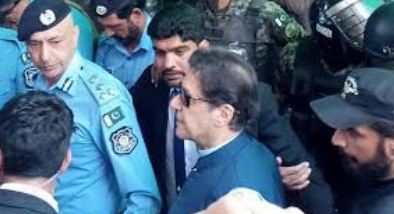
ISLAMABAD: Despite the Islamabad High Court (IHC) order, the jail authorities failed to produce Pakistan Tehreek-e-Insaf (PTI) founder Imran Khan before the court in personal capacity on Friday.

The IHC had directed the authorities in this regard during the hearing of Mashal Yousafzai’s petition against the denial of permission to meet the PTI leader, who is incarcerated at Rawalpindi’s Adiala Jail.

Initially during today’s hearing, the court remarked that if the Islamabad advocate general (AG) intends to proceed with the video link appearance, they must inform the it. However, if the PTI founder is not presented via video link by 2pm, he must be brought before the court in person at 3pm.

After the 2pm deadline expired, the former prime minister was due to be presented in court in person, as per the court orders.

However, the Islamabad advocate general (AG) informed the court that bringing the PTI founder from jail was not possible due to security concerns and that presenting him via video link was also not feasible.

The court directed the Adiala jail superintendent and Islamabad AG to submit their affidavits in this regard.

The court also formed a commission to send law clerk Sakina Bangash to visit Adiala Jail and confirm from the PTI founder whether Yousafzai was his lawyer or not. The commission that includes the law clerk has been directed to meet Khan tomorrow (Saturday), and the jail superintendent has been instructed to make arrangements for the meeting.

At this, Yousafzai said that formation of the commission was a golden opportunity for them. She also requested that the commission ask whether the PTI founder is being allowed to meet his friends.

The Islamabad AG then said that the court order was related to meetings with lawyers, not friends.

Justice Sardar Ejaz Khan remarked that Yousafzai was appearing before the court as a lawyer, and the court was hearing the petition accordingly.

Earlier, the court remarked that failing to comply with a prior court order, which was issued with the consent of all parties, amounts to contempt of court. In the previous hearing, the court had ordered that the petitioner be allowed to meet the PTI founder.

Expressing disappointment, the judge said that the jail authorities were expected to follow the court’s directive. “Prima facie, the court is convinced that the jail authorities have committed contempt,” it remarked.

The court also noted that a list was submitted, purportedly provided by the PTI founder. However, if the court is not satisfied with its authenticity, it will directly verify it from him.

Expressing frustration with the jail authorities, the court rebuked the jail superintendent, saying that they had turned the matter into a mockery.

During the hearing, Advocate Shoaib Shaheen informed the court that the political leadership had been unable to meet for the past five months. Justice Sardar questioned the Adiala Jail superintendent, asking whether he had been informed why he was summoned.

India main sponsor of terror incidents in Balochistan, says DG ISPR on Jaffar Express attack

India main sponsor of terror incidents in Balochistan

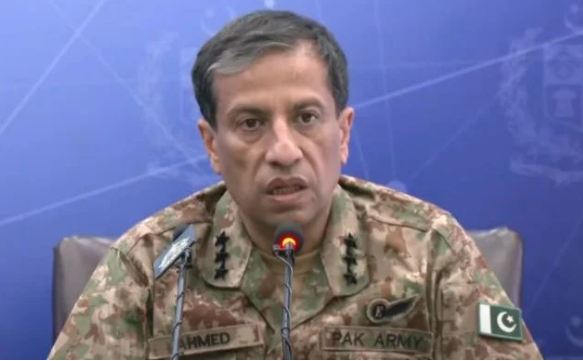
RAWALPINDI, MAR 14: Director General of Inter-Services Public Relations (DG ISPR) Lieutenant General Ahmed Sharif Chaudhry on Friday termed India main sponsor of terrorism in Balochistan, saying the latest attack on Jaffar Express is the continuation of the same policy.

Addressing a media briefing flanked by Balochistan Chief Minister Sarfraz Bugti, the DG ISPR said: “The latest attack in Balochistan and other terrorist incidents that took place in the past…we understand that the main sponsor of these [attacks] is your eastern neighbor.”

The outlawed Baloch Liberation Army (BLA), during Tuesday’s attack on the Jaffar Express, blew up train tracks and held over 440 passengers hostage in a day-long standoff with security services in a remote mountain pass in Bolan district.

Play Video
The military, after clearing the train and rescuing hostages, said it killed 33 attackers. Before the operation began, terrorists had martyred 26 passengers, while four security personnel were martyred during the operation.

In today’s presser, Lt Gen Chaudhry confirmed that three FC soldiers embraced martyrdom when the terrorists attacked Frontier Corps picket before the train was ambushed.

Army, FC personnel among martyred hostages
Giving a breakdown of the casualties in the incident, the DG ISPR revealed that 26 martyred train passengers included 18 security personnel from the army and the FC, three officials from Pakistan Railways and other departments and five civilians.

He further said that the death toll from the terror attack could rise further as 37 out of the 354 passengers were injured.

The military spokesperson said that they had five operation causalities.

The DG ISPR said that the terrorists stopped the Jaffar Express via an IED blast in hilly terrain area where accessibility is difficult.

Meanwhile, a media warfare led by India media began in support of the terrorists, said the DG ISPR.

Lt Gen Chaudhry said the incident of Jaffar Express is continuity of the India policy to sponsor terrorism in Pakistan.

“The incident of Jaffar Express is continuity of the same policy, the same sponsorship from where is it was engineered and from it was being pushed..,” he remarked.

Slamming the Indian media, the DG ISPR said that fake videos were created by using artificial intelligence (AI) to spread malicious propaganda regarding Jaffar Express attack on the social media platforms.

“Indian media spread propaganda by using the fake videos to exaggerate the situation,” he said.

“India media tried to create a narrative [against Pakistan] by airing fake videos,” he said, adding that the Indian media also played terrorists’ old videos taken from the social media.

“A [terrorists] activity was underway in [Balochistan] and the other activity was being run by Indian media,” the military spokesperson said.

Briefing about the hijacking incident with the help of maps, Lt Gen Chaudhry said that the terrorists were in different groups, adding that one of the militant groups kept the women and children inside the train.

“Rest of the passengers were brought outside the train by terrorists and divided into groups,” he added.

In a bid to create a “false impression” of humanitarian values, the militants released a group of hostages in the evening, he added.

However, some of the hostages managed to escape when they got the chance, he revealed, adding that the terrorists also opened fire on the fleeing passengers.

The Lt Gen said that the terrorists were in contact with their handlers in Afghanistan.

“From the terrorists’ communication, we came to know that there were suicide bombers among them,” he added.

All terrorists were eliminated during a successful and complex operation with 36 hours, Lt Gen Chaudhry said adding that terrorists could not harm anyone during the final clearance operation.

‘Terrorists commanders released from Afghan jails’
During his interaction with the journalists, Balochistan CM condemned the terrorist attack on the Jaffar Express and paid tribute to the security forces for releasing the hostages during a successful operation against the militants. He also thanked the international community for condemning the terror incident.

“We’re in an intelligence-driven war waged against Pakistan by Research and Analysis Wing (RAW) and other hostile agencies through Afghanistan,” he added.

“Terrorists commanders were released from Afghan jails,” he revealed.

The chief minister said that there were divisions among the terrorist groups, however, RAW united them.

RAW brokered an alliance between TTP, BLA and other terrorist groups in the province, he added.

“Terrorists commanders were released from Afghan jails,” he said, adding that Afghan soil is being used to launch terror attacks inside Pakistani territory.

Lambasting PTI, Balochistan’s chief executive said that the terrorist elements were released during the tenure of former prime minister Imran Khan.

Moving on to the issue of missing persons, the chief minister said that the issue was being used as a propaganda tool.

“There are missing persons in the US, UK and other countries in the region,” he added.

CM Bugti said they were not disgruntled Baloch but “terrorists”.

Pakistan Crypto Council officially launched to shape the future of digital finance

Pakistan Crypto Council officially launched to shape the future of digital finance

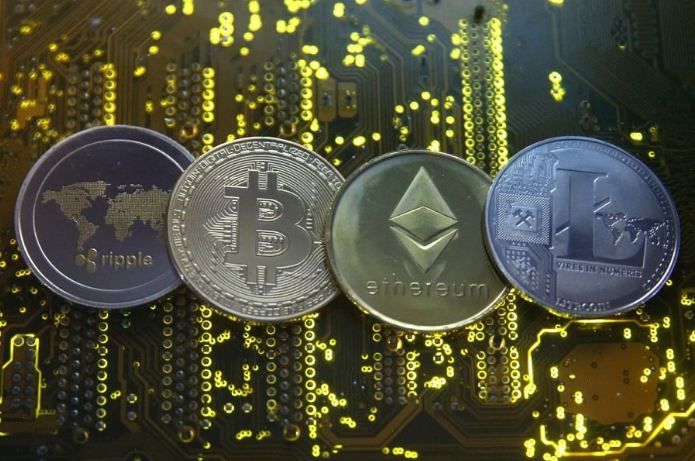
ISLAMABAD, MAR 14 /DNA/ – The Pakistan Crypto Council (PCC) has officially been launched, marking a significant step in the country’s efforts to regulate and integrate blockchain technology and digital assets into its financial landscape. The council is set to play a pivotal role in formulating policies, fostering innovation, and ensuring a secure and forward-thinking approach to crypto adoption in Pakistan.

The Finance Minister of Pakistan, Muhammad Aurangzeb will serve as the Chair of the Pakistan Crypto Council, demonstrating the government’s commitment to the evolving digital economy. Bilal Bin Saqib, the Chief Advisor to the Finance Minister on the Pakistan Crypto Council, has been appointed as the CEO of the Council, bringing his expertise in blockchain technology, investment strategy, and digital innovation to spearhead the initiative.

The Pakistan Crypto Council’s immediate board members include Governor of the State Bank of Pakistan, Chairman of the Securities and Exchange Commission of Pakistan (SECP), Federal Law Secretary and Federal IT Secretary. This diverse leadership structure ensures that regulatory oversight, financial stability, legal frameworks, and technological advancements are brought together to support Pakistan’s crypto ecosystem.

A New Era for Digital Finance in Pakistan

The formation of the Pakistan Crypto Council signifies the government’s proactive stance in moving Pakistan to the forefront of the global shift towards blockchain technology and digital assets. With regulatory clarity and a structured approach, Pakistan aims to foster a safe and compliant environment for investors, businesses, and innovators in the crypto space.

Speaking on the launch of the Council, Finance Minister Muhammad Aurangzeb stated: “The world is moving rapidly toward digital finance, and Pakistan wishes to be a leader in the space. The establishment of the Pakistan Crypto Council is a step towards embracing innovation while ensuring that we create a regulatory framework that protects investors and the financial system. We are committed to fostering a responsible and progressive crypto ecosystem that can contribute to Pakistan’s economic growth.”

Bilal Bin Saqib, CEO of the Pakistan Crypto Council, emphasized the significance of this initiative, stating: “This council is not just about regulations—it’s about creating an ecosystem where blockchain and digital finance can thrive. Our goal is to ensure that Pakistan becomes a competitive player in the global digital economy while prioritizing security, transparency, and innovation. By bringing together key stakeholders, we aim to strike a balance between progressive policymaking and fostering an environment where entrepreneurs and businesses can confidently explore the potential of blockchain technology.”

The Pakistan Crypto Council will focus on developing clear regulatory policies, engaging stakeholders from both the public and private sectors, and positioning Pakistan as a key player in the global digital asset landscape.

Next Steps

As the council kicks off its operations, it will prioritize:
• Establishing clear regulatory guidelines to facilitate crypto adoption.
• Engaging with international crypto and blockchain organizations to ensure best practices.
• Encouraging responsible innovation by working closely with key players in the industry, including fintech startups, investors, and blockchain developers.
• Protecting consumers and ensuring financial security through robust legal and compliance frameworks.

The launch of the Pakistan Crypto Council signals a new chapter in Pakistan’s financial and technological evolution, reinforcing the country’s stance that Pakistan is open for business and a leader in innovation in the digital finance sector.

Stay Connected

64FansLike
60FollowersFollow

Latest Reviews

Exchange Rates

USD - United States Dollar
EUR
1.17
GBP
1.35
AUD
0.72
CAD
0.73