Home Blog Page 65

Arts Council head presents Sindhi Ajrak to Portuguese Ambassador

Arts Council head presents Sindhi Ajrak to Portuguese Ambassador

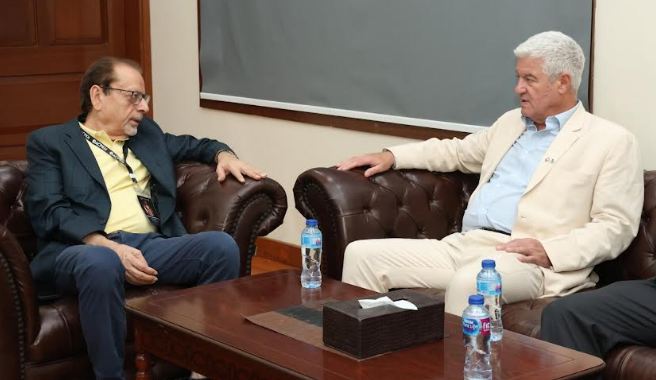
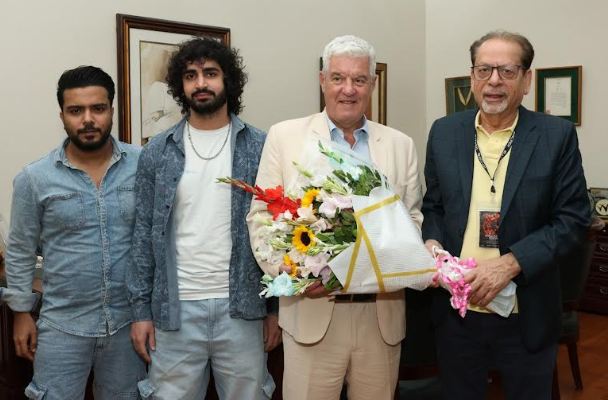
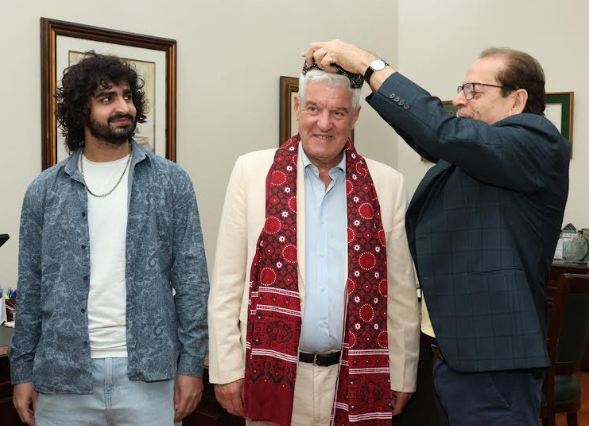
KARACHI, NOV 22 /DNA/ – On the 23rd day of the World Culture Festival 2025, the Ambassador of Portugal  , Manuel Frederico Pinheiro da Silva, visited the Arts Council of Pakistan Karachi and met with  President, Arts Council   Mohammad Ahmed Shah. Political and Economic Officer of the Portuguese Embassy David Arcao, Representative of Embassy, Syed Ameen Ud Din Faqeer, and Portuguese musician  Ricardo Passos, were also present on the occasion.

President Arts Council Mohammad Ahmed Shah presented the Ambassador with a traditional Sindhi Ajrak, Sindhi cap, and a bouquet as a gesture of Sindh’s cultural heritage. To mark 75 years of diplomatic relations between Pakistan and Portugal, Ambassador Manuel Frederico Pinheiro da Silva presented a  medal chain  to Ahmed Shah.

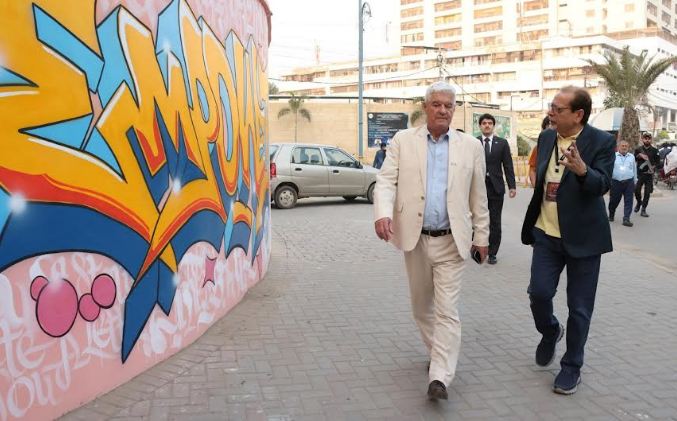
The Ambassador visited the Ahmed Pervez Art Gallery, where he viewed the international art exhibition, film screenings, workshops, and the mural art created on the outer walls of the Arts Council, along with various cultural activities being held as part of the festival.

Manuel Frederico Pinheiro da Silva, during the discussion, said that the Arts Council of Pakistan Karachi is playing a vital role in promoting fine arts. “Ahmed Shah is doing tremendous work in creating a better world; his cultural efforts have deeply inspired me. Portuguese artists are also participating in this year’s World Culture Festival. The workshops being conducted here offer great learning opportunities for students of the Arts Council academies, allowing them to benefit from international artists,” he added.

He further said that the Arts Council of Pakistan Karachi is an excellent institution for art and culture, and more Portuguese artists will perform at the Council in the future. “We will continue to strengthen the cultural ties between Pakistan and Portugal.”

President Mohammad Ahmed Shah stated that the Arts Council organizes cultural programs not only in Karachi but across Pakistan. “My passion has always been to promote culture. We are a democratic institution, and it is the trust of our members that enabled me to be elected as President. I have a team of 300 young individuals working alongside me. Our six academies, including the art school, offer training in painting, music, dance, theatre, and textile design. Last year, we hosted 44 countries, while this year, 142 countries are participating in the World Culture Festival.” He added that students of the Arts Council Academy are greatly benefiting from the creative expertise of international artists participating in the festival.

Attacker of New Delhi CM claims bizarre motive behind assault

Attacker of New Delhi CM claims bizarre motive behind assault

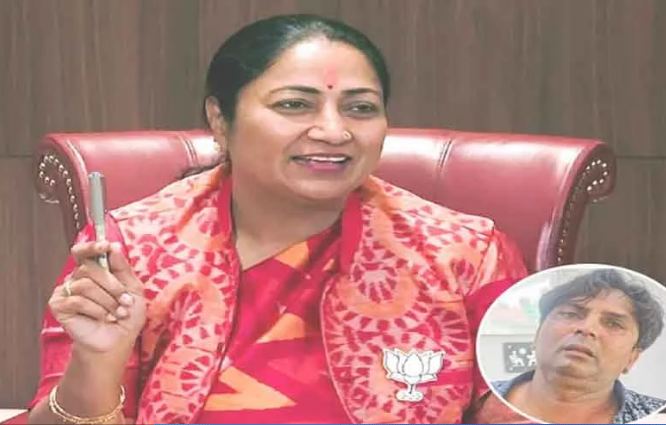
New Delhi, NOV 22: The man who attacked New Delhi Chief Minister Rekha Gupta has given a bizarre reason for his actions. According to Indian media reports, the accused, Rajesh Khumji, told police in his statement that he had seen a dream in which a dog was sitting beside an idol of a deity and told him that dogs in Delhi were in distress.

The report added that Additional Sessions Judge Ekta Gopaman will hear the case on November 22 in the Tis Hazari Sessions Court, where police have already submitted their charge sheet.

The charge sheet states that Rajesh Khumji had watched several videos on Facebook in which people were protesting and blaming Chief Minister Rekha Gupta for issues related to stray dogs.

Police also revealed that in May this year, Khumji had held a hunger strike in Ayodhya over the issue of monkeys. Delhi Police submitted a 400-page charge sheet on October 18, 2025.

Delhi Police have charged Rajesh Khumji and co-accused Tahseen Syed under various sections of the Bharatiya Nyaya Sanhita, including attempted murder, obstruction of public duty, and criminal conspiracy.

According to the report, charges against Khumji were based on his anger over the Chief Minister’s stance on a Supreme Court ruling regarding stray dogs.

It is worth noting that on August 11, the Supreme Court ordered stray dogs to be moved to shelters, a decision supported by Chief Minister Rekha Gupta.

Police allege that Khumji was upset with her support for the ruling and attacked Chief Minister Rekha Gupta during a public hearing on August 20.

Pakistan, Japan commit to strengthen ties in Brussels meeting

Pakistan, Japan commit to strengthen ties in Brussels meeting

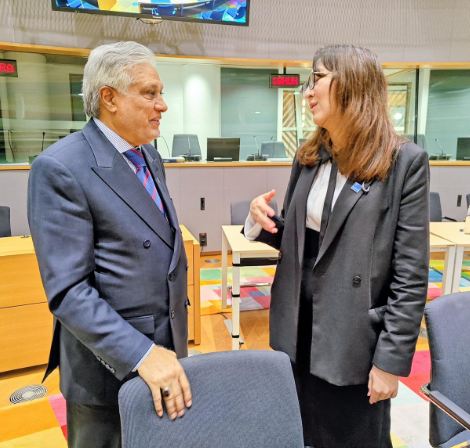
BRUSSELS, NOV 22 /DNA/ – Deputy Prime Minister and Foreign Minister Senator Mohammad Ishaq Dar met with Japan’s Vice Minister for Foreign Affairs, Eri Arfiya, on the sidelines of the 4th EU Indo-Pacific Ministerial Forum on Friday.

During the informal interaction, the two officials discussed the longstanding bilateral relations between their countries. Senator Dar underscored Pakistan’s commitment to strengthening cooperation with Japan across diverse and mutually beneficial areas.

The meeting provided an opportunity to reinforce diplomatic ties and explore avenues for enhanced collaboration, reflecting the positive momentum in Pakistan-Japan relations.

A New History of Bird Habitats: The First Front Against Climate Change

A New History of Bird Habitats: The First Front Against Climate Change

By: Aysal Elham

 “Where humans build walls, birds build nests and that’s the difference that lets the earth breathe.”

In the scorching sun of Jacobabad, Sindh, stands a silent structure known locally as the “House of Pigeons.” More than a relic of the British colonial era, it is a living symbol of ecological harmony. Built in the late 19th century, the building remains intact and continues to serve as a sanctuary for birds. Its upper floor contains seven rows, each with thirty-six rectangular openings totaling 252 nesting spaces designed specifically for pigeons.

This structure is not only a testament to architectural skill but also to an environmentally conscious mindset. Made of baked bricks and mud mortar, it still offers protection to birds in ways modern urban planning often neglects. Although partially restored in 1990–91, it remains without legal protection like nature’s silent plea, waiting for ears willing to listen.

In a similar spirit, a recent development has emerged in Dera Ismail Khan, Khyber Pakhtunkhwa, where the Forest Department has constructed a unique “Bird Minaret” near Qureshi Mor in the heart of the city. Built using traditional methods with mud and wood, this zero-carbon structure provides nesting, shelter, and food for local birds such as sparrows, parrots, pigeons, and doves.

According to Member of National Assembly Faisal Amin Gandapur, the idea for this minaret was inspired by Iran’s historic pigeon towers structures built during the Safavid era to collect pigeon droppings for use as natural fertilizer in agriculture. These towers were first mentioned by Moroccan traveler Ibn Battuta, and later by historians who noted that Timur ordered similar constructions in Bukhara. French writer Jean Chardin also documented them in the 16th century, and today, Isfahan remains renowned for its rich heritage of pigeon towers.

The D.I. Khan Bird Minaret stands 32 feet tall. Forest Officer Amin-ul-Islam explains that birds will be attracted using wheat and millet, and if successful, similar towers will be built in other cities to provide habitat and food for birds displaced by urban deforestation.

In an era of climate disruption rising temperatures, erratic rainfall, and widespread habitat loss such initiatives are vital. Birds play a crucial role in maintaining ecological balance: they disperse seeds, control pests, and serve as indicators of environmental health. Yet urban sprawl, pollution, and the concrete jungle have severely impacted their natural habitats.

It is time to learn from the silent structures of our past and raise our voices for the future. Federal and provincial governments, forest departments, climate ministries, and municipal bodies must collaborate to expand these models. Bird towers and platforms should be built using local materials, designed with ecological sensitivity, and tailored to the needs of native bird species.

Building nesting spaces for birds may seem like a small step, but it is our first promise of reconnection with nature. These nests are not just for birds they are vessels of collective memory, ecological insight, and our hope for survival. If we choose to, living in harmony with nature need not remain a dream it can be the beginning of a new history.

By: Aysal Elham

Climate Governance Analyst 

MPhil Media Studies 

[email protected] 

PM Shehbaz seeks experts to boost regional connectivity, int’l train links

PM Shehbaz seeks experts to boost regional connectivity, int'l train links

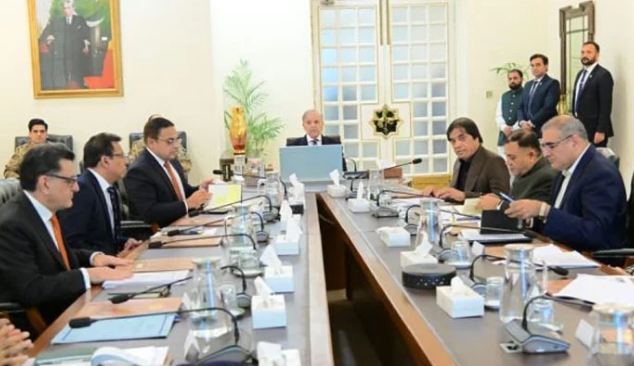
ISLAMABAD, NOV 22: Prime Minister Shehbaz Sharif on Saturday called for the engagement of legal and economic experts of international caliber, particularly for projects related to regional connectivity and Pakistan Railways’ international train routes.

During a high-level meeting at the PM House, he emphasised that a modern and efficient rail network is the backbone of any nation’s economy and communication system.

He highlighted the need for Pakistan to adopt global best practices to enhance its railway infrastructure and expand its role in regional transport corridors.

PM Shehbaz urged officials to accelerate reforms, improve operational efficiency, and ensure that upcoming mega projects are executed with professional oversight to meet international benchmarks.

He further stressed that a public-private partnership model should be adopted for matters related to railway property and land.

The prime minister also appreciated the steps taken towards the restoration of the railway system and commended Minister for Railways Hanif Abbasi and his team for their work on the revival and upgradation of Pakistan Railways.

The meeting was attended by Minister for Railways Hanif Abbasi, Minister for Economic Affairs Ahad Khan Cheema, and other senior government officials, the PM Office Media Wing said in a press release.

The meeting was given a detailed briefing on the measures being taken to improve Pakistan Railways.

It was informed that seven digital portals under the ‘Rabta’ initiative were operational for the digitalisation of Pakistan Railways, 56 trains had been shifted onto it, and 54 railway stations had been digitised.

The participants were informed that a free Wi-Fi facility was provided at Karachi, Lahore, Rawalpindi, and Faisalabad railway stations, while an additional 48 stations would get free Wi-Fi service by 31 December this year.

It was further informed that an online freight booking system had been introduced. A pilot project for a digital weighing bridge was launched at Karachi City Railway Station, whereas in the next phase, this facility would be extended to Pipri, Karachi Cantonment, Port Qasim, Lahore, and Rawalpindi stations.

It was added that at Rawalpindi Railway Station, 148 AI-powered surveillance cameras had been installed. ATM machines of various banks were being installed at the railway stations.

To improve cleanliness standards, outsourcing was done while high-quality waiting areas were established at major railway stations for passengers, it was added.

The meeting was told that information desks at the railway stations had also been set up for passengers’ convenience.

“To improve the quality of food and beverages provided at railway stations, relevant food authorities from all four provinces had been given access and oversight. Forty luggage and brake vans had also been outsourced, which was expected to provide an additional revenue of Rs820 million. Outsourcing of two cargo express trains was also underway, expected to generate Rs6.3bn in additional revenue, the briefing added.

The meeting was informed that four trains had been outsourced, and advertisements were floated for outsourcing eleven more trains soon, which was expected to generate an additional revenue of Rs8.5 billion.

The meeting was apprised that work is underway on outsourcing railway hospitals in Lahore, Karachi, Multan, Peshawar, Quetta, and Sukkur, while the outsourcing of railway schools, colleges, and rest houses is also continuing. The dry ports in Lahore, Islamabad, and Azakhail were also being outsourced. A total of 155 railway stations had been shifted to solar energy.

It was reported that Railway Constructions Pakistan Limited, Pakistan Railway Freight Transportation Company, and Pakistan Railway Advisory & Consultancy Services had been closed.

The participants were briefed that a plan is being formulated for the upgradation of the Karachi–Kotri section of Main Line-1-K and Main Line-3.

The meeting was briefed that work would be carried out with the Sindh government on the Thar Rail Connectivity project, and the Islamabad-Tehran-Istanbul train would also begin operations soon. Preliminary work is also underway on the Kazakhstan–Uzbekistan–Afghanistan–Pakistan railroad project.

FM Dar, Maldives FM agree to further strengthen bilateral cooperation

FM Dar, Maldives FM agree to further strengthen bilateral cooperation

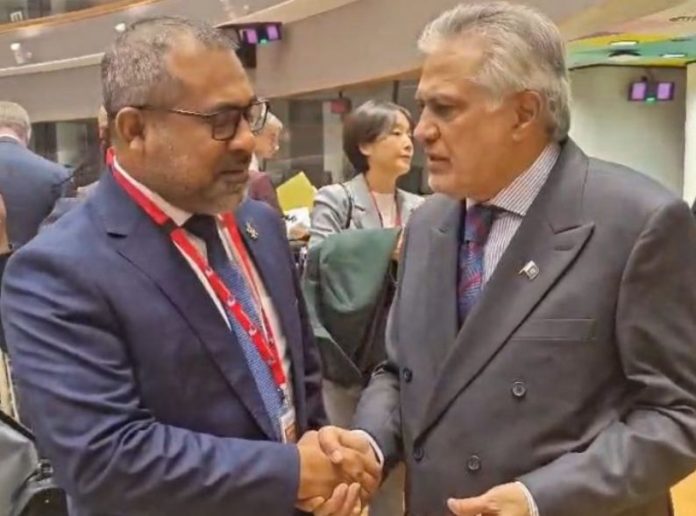
ISLAMABAD, Nov 22 (APP/DNA): Deputy Prime Minister/Foreign Minister Senator Mohammad Ishaq Dar and Foreign Minister of Maldives Abdulla Khaleel, Saturday, agreed to deepen bilateral cooperation partnership in trade, connectivity and climate resilience.

The DPM/FM met with FM Maldives on the margins of the EU Indo-Pacific Ministerial Forum, Foreign Office Spokesperson said in a press release

They underscored the importance of staying in regular contact, including through multilateral platforms to further advance shared priorities.

Pakistan, EU vow to boost trade, investment ties via GSP Plus scheme

Pakistan, EU vow to boost trade, investment ties via GSP Plus scheme

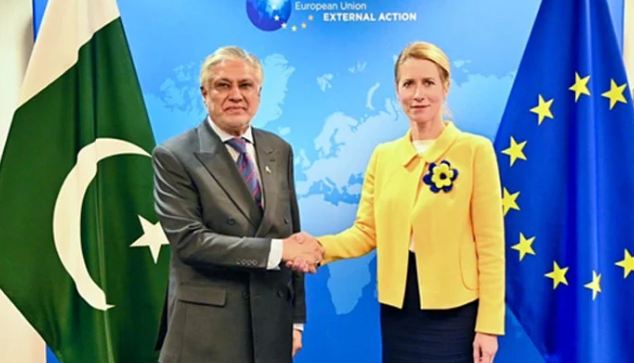
ISLAMABAD, NOV 22: Pakistan and the European Union reaffirmed their commitment to a broad-based, multidimensional, and forward-looking partnership anchored in shared values, the UN Charter, multilateralism, and the principles of mutual respect and cooperation, the Foreign Office said in a statement on Saturday.

The resolve came as Pakistan and the EU convened the seventh Strategic Dialogue co-chaired by Deputy Prime Minister Ishaq Dar and EU High Representative and Vice President Kaja Kallas in Brussels.

According to a statement issued by the FO, the meeting provided a comprehensive review of the full spectrum of Pakistan–EU relations, building on the positive momentum of recent high-level engagements and sustained institutional interactions.

Both sides, the FO said, underlined the importance of further deepening trade and investment ties, including through the EU’s GSP+ arrangement, as a driver for sustainable growth, export diversification, job creation and mutually beneficial economic opportunity.

“The Dialogue also offered an opportunity to exchange views on regional and global developments, including South Asia, Afghanistan, the Middle East, and broader geopolitical developments,” the statement read.

The FO said that Pakistan and the EU sides underlined the importance of coordinated approaches to peace, stability, sustainable development, and global challenges such as climate change and connectivity.

“They agreed to strengthen cooperation under the Strategic Engagement Plan (SEP 2019), advance work on ongoing dialogues, and identify concrete avenues to expand collaboration in the years ahead.”

According to the FO,  Dar also held interaction with different leaders on the margins of the 4th EU Indo-Pacific Ministerial Forum in Brussels.

He held “constructive” exchange with the foreign minister of Somalia, Abdusalam Abdi Ali and reaffirmed Pakistan’s commitment to deepening cooperation and supporting regional stability, a Foreign Office spokesperson said in a separate statement.

Dar also had an interaction with Ambassador Andrea Orizio, Head of Delegation for Italy, as the discussion covered strengthening Pakistan-Italy ties, enhancing economic engagement, and collaborating under broader Pakistan-EU frameworks.

He also met Maldives Foreign Minister Abdulla Khaleel as they agreed to deepen bilateral cooperation in trade, connectivity, and climate resilience.

They underscored the importance of staying in regular contact, including through multilateral platforms, to further advance shared priorities, the FO said.

8 Indian-backed militants killed in Bannu operation: ISPR

8 Indian-backed militants killed in Bannu operation: ISPR

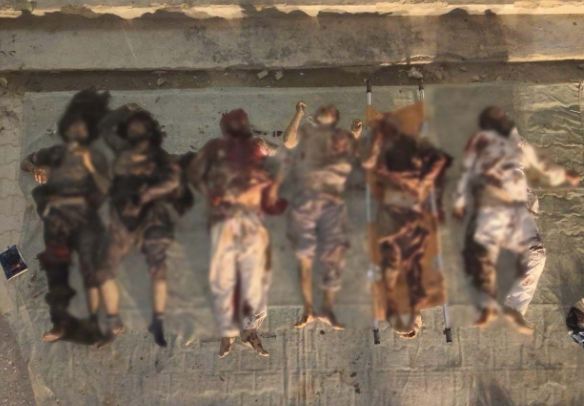
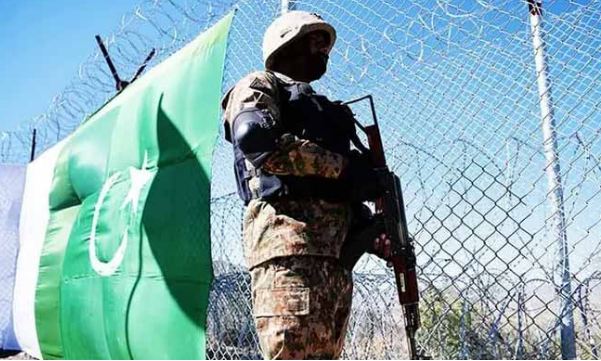
RAWALPINDI, NOV 22 /DNA/ – On reported presence of khwarij, a joint intelligence based operation was conducted by the Security Forces and Law Enforcement Agencies in Bannu District.

During the conduct of operation, own troops effectively engaged the khwarij location and after an intense fire exchange, eight khwarij belonging to Indian Proxy Fitna Al Khwarij were sent to hell.

Weapons and ammunition were also recovered from killed Indian sponsored Khwarij, who remained actively involved in numerous terrorist activities against the Security Forces, Law Enforcement agencies and target killing of innocent civilians.

The operation underscores the strengthened collaborative efforts between Law Enforcement Agencies and Security Forces, who have significantly intensified intelligence-driven operations in the region. These meticulously coordinated and synchronized security measures are designed to constrict the operational mobility of Khwarij elements, systematically dismantle their facilitation networks, and curtail their capacity to reorganize. Operations are producing substantial and measurable success with continuous efforts to achieve more peace and stability.

Sanitization operation is being conducted to eliminate any other Indian-sponsored Kharji found in the area, as the relentless Counter Terrorism campaign under vision “Azm-e-Istehkam” (as approved by the Federal Apex Committee on National Action Plan) by Security Forces and Law Enforcement Agencies of Pakistan will continue at full pace to wipe out the menace of foreign-sponsored and supported terrorism from the country.

How a one-night conflict reshaped airspace politics

How a one-night conflict reshaped airspace politics

by Muhammad Mohsin Iqbal

For years, Pakistan had longed for the day when a Pakistan–India cricket match would once again take place on Pakistani soil. The desire was not merely for a sporting contest, but for the symbolic easing of tension that such a match could represent. The region’s circumstances had begun to shift in Pakistan’s favour; the memory of past cricket diplomacy still echoed in the collective consciousness. Teams from across the world had resumed touring Pakistan without hesitation, acknowledging the country’s stability and hospitality. Yet, in sharp contrast, India stood unmoved—unyielding in its refusal to send its team, clinging stubbornly to a narrative that no longer matched the ground reality.

But then, quite unexpectedly, something happened in early May—a move so abrupt that even seasoned observers of the Sub Continent were left astonished. India, which had refused to come for cricket, suddenly appeared in Pakistan not for a match played with bat and ball, but for one played with fire and steel. It arrived not to compete on a pitch, but in the dark of night, without invitation, without prior notice, and certainly without adherence to the rules of civility that neighbours are expected to uphold.

For a day or two, Pakistan was taken aback. It seemed as though India had arrived to play a match it had denied for so long, though of a far more dangerous kind. Yet, being a responsible neighbour, Pakistan chose to treat the situation with composure and clarity. If India insisted on playing a one-day contest, then Pakistan would face it with the calm confidence of a team that trusts its bowlers, its fielders, and its collective discipline. Thus began, in the intervening night between May 5 and 6, a brief but decisive engagement—one that would be remembered not for the noise it produced, but for the clarity with which it ended.

India, which had strutted into the arena with misplaced bravado, could not sustain even a fraction of the contest. Before twenty overs of the metaphorical match had passed, the matter was settled. In six hours, Pakistan’s armed forces dismantled India’s aggression with the precision of yorkers crashing into unsteady wickets. What followed were the kind of bouncers that leave the opposing side rattled and confused. When faced with the accuracy, preparedness, and resolve of Pakistan’s defenders, India abruptly insisted on ending the match altogether. The scoreboard was no longer in its favour, and the misadventure collapsed under the weight of its own miscalculation.

The matter could have ended there, but international politics rarely allows things to rest in silence. Soon after the brief confrontation, the President of the United States made remarks that shook India’s political leadership. With a casual tone that carried the subtlety of a seasoned satirist, he repeatedly teased India about the number of its aircraft shot down during the encounter. At times he said five, then moments later six, and occasionally seven. The shifting number became a source of widespread amusement.

For India’s Prime Minister, however, it became a lingering embarrassment. Wherever he went during the election campaign that followed, crowds echoed the question mockingly: “How many planes were there?” The scene recalled the classic dialogue from the iconic Indian film Sholay, where the villain Gabbar Singh asks in a menacing voice, “How many men were there?” Life, it seemed, had staged its own version of the script, with global politics taking on the flavour of cinematic irony.

From May 6 onwards, the U.S. President continued to make fresh disclosures about the downed aircraft, each statement renewing the sting of humiliation for New Delhi. And each time the topic of aircraft resurfaced, another memory presented itself—one that had unfolded recently on an entirely different stage.

At the Dubai Air Show recently as reported, where aircraft from around the world displayed their technological finesse, an Indian warplane became the subject of viral ridicule. As global audiences watched, the aircraft began leaking oil, and the footage spread across social media with remarkable speed. In the video, Indian mechanics and technicianscould be seen scrambling with makeshift measures—holding plastic shopping bags to catch the leaking oil, collecting it in a box as though repairing a machine in a roadside workshop. The display reflected not the sophistication of a modern air force, but the alarming negligence and poor maintenance that have become increasingly visible in India’s military assets.

Just as this mishap was sinking in, tragedy struck again. An Indian Tejas fighter jet crashed during the show, killing its pilot, Wing Commander Vikram Singh. These consecutive failures reinforced the troubling truth; Indian warplanes, whether on display or in combat, had repeatedly become symbols of mishap rather than mastery. The incidents, comical to some and tragic to others, compounded the perception of recklessness and unpreparedness in India’s aerial ambitions.And the chain of such events only lengthened after the May skirmish.

Additionally, following India’s unprovoked intrusion, Pakistan suspended the use of its airspace for Indian passenger flights. The decision was strategic, proportionate, and in accordance with Pakistan’s sovereign rights. Since then, Indian airlines have had to take longer and more expensive routes, accumulating losses as they skirt around Pakistan’s air corridor. In this way, even commercial aviation became a reminder of the consequences of reckless adventurism.

Thus, from warplanes to passenger jets, the month of May marked a turning point—a moment when India’s aircraft, whether meant for battle or for transportation, became sources of inconvenience, embarrassment, and financial strain.

The lessons, however, remain clear. Pakistan seeks peace, dignity, and stability in the region. It has shown patience in cricket, restraint in diplomacy, and responsibility in defence. But peace cannot be safeguarded by one side alone. India must recognize that its actions do not merely disrupt the immediate calm; they unsettle the broader equilibrium of South Asia. At a time when the world looks toward cooperation and shared progress, adventurism serves no purpose—least of all for a nation that repeatedly finds itself on the losing end of its own misjudgments.

The region deserves tranquillity, not theatrics. The people of both countries deserve development, not destruction. India would therefore be wise to tread with caution, to value peace over provocation, and to ensure that no further miscalculation turns the skies—or the borders—into another dangerous arena.

Turkiye spymaster in delegation visiting Islamabad amid Pak-Afghan tensions

Turkiye spymaster in delegation visiting Islamabad amid Pak-Afghan tensions

ISLAMABAD, NOV 22: A high-level delegation from Turkiye is set to arrive in Islamabad next week to discuss rising tensions between Pakistan and the Taliban regime and to explore a peaceful way forward, The News reported on Saturday.

This was stated by the Turkiye Ambassador to Pakistan, Dr Irfan Neziroglu, while talking to The News on Friday at a reception to celebrate Oman’s National Day, hosted by Ambassador Fahad Sulaiman Khalaf Al-Kharusi.

The planned visit was first disclosed earlier this month by Turkiye President Recep Tayyip Erdogan during his meeting with Prime Minister Shehbaz Sharif in Baku.

Talks between Pakistan and Afghanistan in Istanbul ended this month without any agreement amid the Kabul government’s reluctance to act against terrorist groups operating from its soil.

Dr Neziroglu, who had played an active role in facilitating the Istanbul trilateral talks on Afghanistan, said the delegation visiting Pakistan will also be accompanied by the Turkish intelligence chief and important ministers. Turkish Minister for Energy Alparslan Bayraktar will also be visiting Islamabad next week as part of the delegation.

Neziroglu said that Istanbul was keen to see that no one should come from Afghan soil for terrorism and bloodshed on the soil of Pakistan. “Both countries should live like brothers. Turkiye is determined to make it possible.”

Islamabad-Kabul tensions

The tensions between the two neighbouring nations escalated when the Taliban forces and India-backed Tehreek-e-Taliban Pakistan (TTP), also known as Fitna al-Khawarij, resorted to an unprovoked attack on Pakistan on October 12.

The Pakistan Armed Forces gave a befitting response to the aggression, killing over 200 Afghan Taliban and affiliated militants in a self-defence action.

The military’s media wing, the Inter-Services Public Relations (ISPR), said that 23 soldiers embraced martyrdom in the clashes with the Taliban forces and the terrorists.

Furthermore, the security forces also conducted “precision strikes” in Afghanistan’s Kandahar province and the capital Kabul, as well as in the border areas of North and South Waziristan districts, successfully destroying multiple strongholds in response to the aggression.

The two sides had agreed on a temporary ceasefire during the Doha talks on October 19 and later held several meetings in Istanbul, with Pakistan aiming to devise a mechanism to stop cross-border terrorism emanating from Afghan soil.

The Istanbul talks could not deliver the desired results due to stubbornness from the Afghan side, as Kabul used the Istanbul talks to malign Pakistan rather than address Islamabad’s core concern of terrorism emanating from Afghan soil.

Stay Connected

64FansLike
60FollowersFollow

Latest Reviews

Exchange Rates

USD - United States Dollar
EUR
1.17
GBP
1.35
AUD
0.67
CAD
0.73