Home Blog Page 65

Saudi Arabia condemns Israeli incursions into Syria

Saudi Arabia condemns Israeli incursions into Syria

RIYADH, JUN 29: Saudi Arabia strongly denounced on Monday the Israeli occupation’s continued violations in the region, the latest of which included incursions into the Syrian territory and artillery shelling targeting the provinces of Quneitra and Daraa.

“The Kingdom expresses its categorical rejection of the Israeli occupation forces’ intimidation of innocent civilians and their violation of international laws and norms”, the Saudi Ministry of Foreign Affairs said in a statement.

Saudi Arabia reiterated the importance of halting Israel’s violations against Syria’s territory and adhering to the 1974 Disengagement Agreement in order to preserve the region’s security and stability. It also reaffirmed its support for Syria’s sovereignty and territorial integrity.

In Sudan’s Kordofan, a key city reels as paramilitary offensive looms

In Sudan’s Kordofan, a key city reels as paramilitary offensive looms

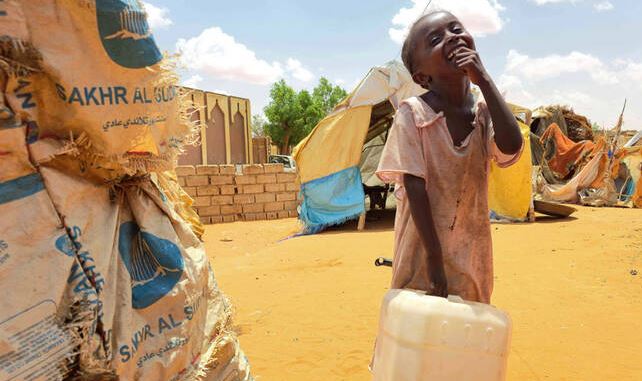
EL-OBEID, Sudan: In a displacement camp near El-Obeid in Sudan’s southern Kordofan region, Agsam Hamad trudges through searing heat to fetch murky water from a distant well, as paramilitary forces unleash their fiercest assault yet on the strategic city.

“We walk long distances for this water and it is undrinkable,” the 35-year-old mother of seven told AFP from the camp on the edge of El-Obeid, a key prize in the three-year war between the army and the paramilitary Rapid Support Forces (RSF).

“Our situation is very difficult. We need food and water.”

El-Obeid, a city of half a million people that hosts nearly 100,000 refugees displaced by violence elsewhere, has, in recent weeks, faced its most intense RSF attacks yet.

After breaking a prolonged siege in February last year, the army has struggled to stop the RSF from reimposing a blockade through repeated drone strikes targeting the city, its infrastructure and the main highway out.

Recent attacks have hit the main power station and fuel depots, plunged neighborhoods into darkness and shut down water pumps.

With taps dry, residents now depend on tanker trucks, wells and a handful of distribution points, they told AFP.

The UN has warned of “substantial” RSF troop movements around the city ahead of a possible ground assault, raising fears of a repeat of the atrocities seen in El-Fasher, the Darfur city which fell to the RSF last October in an attack the UN said bore “the hallmarks of genocide.”

Nohad Eltayeb of the Armed Conflict Location and Event Data Project (ACLED), a US-based non-profit, said that over the past month troop movements have been observed roughly 60 kilometers north, south and west of El-Obeid.

The eastern route to Kosti, about 300 kilometers from the capital Khartoum, remains under army control but is extremely dangerous, she told AFP.

El-Obeid sits at a key crossroads linking army-held areas in central and eastern Sudan, including Khartoum, with RSF-controlled Darfur to the west.

Analysts say capturing it would consolidate RSF control over western Sudan and potentially open the way for a push toward the capital.

El-Obeid hosts an infantry division, an air base, a key oil pipeline and a major tree gum market.

“Controlling it is about power, land and money,” said analyst Kholood Khair.

‘Surrounded’

Fighting and tight restrictions have all but cut off access to the city, making independent reporting increasingly difficult.

An AFP journalist captured rare footage at Al-Rahmaniyah camp showing exhausted women shuffling under a punishing sun, jerrycans swaying on their heads after hours spent waiting for water at a distant well.

At the camp, nearly 200 families are crammed into fragile shelters stitched together from straw, torn fabric and sheets of plastic.

Children linger in the narrow shade cast by the huts, some too tired to play, others trailing silently after their mothers.

“We have nothing. No water, food or mattresses,” Waseela Mohamed, a 70-year-old grandmother of seven, told AFP.

Aid deliveries that reached the camp weeks ago have dwindled as services across the city are repeatedly hit.

“Humanitarian groups are doing what they can, but the needs are far greater,” said a volunteer, who asked not to be named.

Inside El-Obeid, drones buzz almost constantly, said Adam Hussein, using a pseudonym for fear of reprisals.

“We don’t know what is really happening.

“Everything is in crisis. Civilians and infrastructure are constantly targeted,” he told AFP.

As he spoke, a drone crashed nearby, causing no casualties.

With water prices doubling, food costs rising by up to 300 percent and transport fares also surging, many residents are now effectively “surrounded,” said Khair.

“Many haven’t left because they can’t afford to or don’t know where to go,” she told AFP.

Total siege

Mohamed Refaat of the International Organization for Migration warned the city is nearing a total siege, with civilians “soon unable to leave or return.”

UN agencies have suspended access as security deteriorates while needs are outpacing pre-positioned supplies, he told AFP.

Without immediate aid, Refaat said conditions could “within weeks” mirror those seen in El-Fasher, where civilians survived on animal feed during 18 months under siege.

The UN says more than 6,000 people were killed in the first three days of its fall.

Western countries have warned of the risk of similar atrocities if El-Obeid falls.

A government source told AFP the army has tried to slow the RSF advance, destroying equipment en route last week.

A source close to the RSF accused the army of using civilians as “human shields,” arguing they should be evacuated.

While the city’s demographics differ from El-Fasher, where violence fell on ethnic lines, ACLED’s Eltayeb said civilians “could still face looting, sexual violence and attacks on those accused of supporting the army.”

Iran, US to work on negotiating peace deal in Doha after de-escalating weekend strikes

Iran, US to work on negotiating peace deal in Doha after de-escalating weekend strikes

TEHRNA, JUN 29: Iranian and US technical teams working on the implementation of an interim peace deal are expected to meet in Doha in the coming days, a source told Reuters on Monday, after tit-for-tat weekend strikes threatened to derail the fragile accord.

Mediators have established communications channels to de-escalate any incidents, and technical talks are set to continue, the source, with knowledge of the discussions, added. However, a senior Iranian official was reported as saying technical meetings were not confirmed.

The US and Iran signed a 14-point Memorandum of Understanding aimed at ending four months of conflict on June 17, under which both sides agreed to cease hostilities and reopen the Strait of Hormuz, through which a fifth of the world’s oil and liquefied natural gas typically transits.

Closure of the waterway sent oil prices soaring to above $100 a barrel, triggering a renewed spike in global inflation and causing a political headache for US President Donald Trump by pushing up prices at the pump months before midterm elections.

The accord paves the way for 60 days of more in-depth talks on thornier issues such as Iran’s nuclear program, although both sides have given conflicting accounts as to what was agreed.


Agreement will lift sanctions on Iran oil, Pezeshkian claims
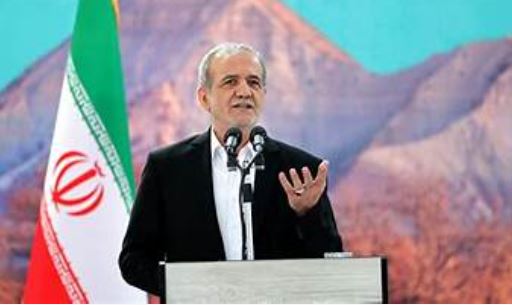
Iranian President Masoud Pezeshkian said on Monday that $6 billion out of $12 billion of assets frozen in Qatar would be released following the accord and returned to Iran, Iranian state media reported.

He added that the recent agreement had lifted sanctions on Iran’s oil and petrochemical sectors, describing it as “a great victory for the Iranian people.”

A US official also told Reuters on Sunday that the two sides had agreed to stop the hostilities.

“Technical talks are slated to continue on all areas of the MoU. Both sides will stand down for now and vessels can move freely,” the official said.

Iran’s Deputy Foreign Minister Kazem Gharibabadi said on Monday that technical working group meetings were not scheduled for this week and that talks in Qatar were not confirmed, according to Iran’s Tasnim news agency.

Consultations with Qatar, including on following up on the implementation of the other side’s commitments, were continuing as usual, he said.

Oil prices steady with return to US-Iran diplomacy
Oil prices steadied at around $72 a barrel for Brent crude on Monday on news of a return to diplomacy.

Analysts at ING said “this complacency is odd,” given the high risks still facing the oil market.

A return to talks would follow several days of strikes and counterstrikes since an Iranian projectile hit a cargo vessel in the Strait of Hormuz on Thursday, with both the US and Iran accusing the other of breaking the interim ceasefire.

Iran launched missiles and drones at US military sites in Kuwait and Bahrain early on Sunday, shortly after Trump issued his latest threat against Iran.

“There may come a point when we are no longer able to be reasonable, and will be forced to militarily complete the job that we very successfully started,” Trump said on social media.


“If that happens, the Islamic Republic of Iran will no longer exist!” he added.

Iran strikes Kuwait, Bahrain
About an hour after Trump’s post, Kuwait’s army said its air defenses were responding to missile and drone attacks, while Bahrain said sirens had sounded there.

Iran’s Islamic Revolutionary Guard Corps said its navy and air forces had launched missile and drone operations targeting US military sites in Kuwait and Bahrain.

The Guards said US strikes had violated the ceasefire and said American bases in the region would “experience hell in the coming days.”

Hours later, alarms sounded for a second time in Bahrain, where authorities said an Iranian attack damaged a residential building. Bahrain urged the UN Security Council to hold an urgent session to hold Iran accountable.

The Kuwaiti army said it had intercepted two ballistic missiles with no damage or casualties.

Meanwhile, Lebanon’s Parliament Speaker Nabih Berri, a key ally of Iran-backed Hezbollah, attacked a US-brokered agreement between Lebanon and Israel, aimed at halting a parallel war there.

Berri warned on Monday that the deal could lead to attempts to divide Lebanese and said it would not be implemented.

The latest round of conflict in Lebanon began after Hezbollah struck Israel early in the war, in what it said was support of its backer Iran. Israel’s response has led to mass displacement and more than 4,000 deaths in Lebanon.

Tehran has said ending that conflict and withdrawing Israeli troops from the south of Lebanon are an integral part of any deal struck with the US to end the wider war that began with US-Israeli strikes on Iran on February 28.

Israel said on Sunday it had struck Hezbollah, destroying underground infrastructure. That came after another strike on Saturday, which closely followed its most recent ceasefire deal with Lebanon on Friday.

Iran’s President says $6bn of Iranian assets in Qatar to be released: state media

Iran's President says $6bn of Iranian assets in Qatar to be released: state media

The release comes under the Islamabad Memorandum of Understanding signed on June 17, 2026, between US President Donald Trump and President Pezeshkian, with Pakistan and Qatar acting as mediators and guarantors

DNA

TEHRAN: Iranian President Masoud Pezeshkian announced that $6 billion in frozen Iranian assets held in Qatar will be released, according to state media.

The funds, originally tied to oil exports and transferred to Qatar in 2023 after a prisoner exchange deal, had been inaccessible since the October 7 Hamas attacks and subsequent regional tensions.

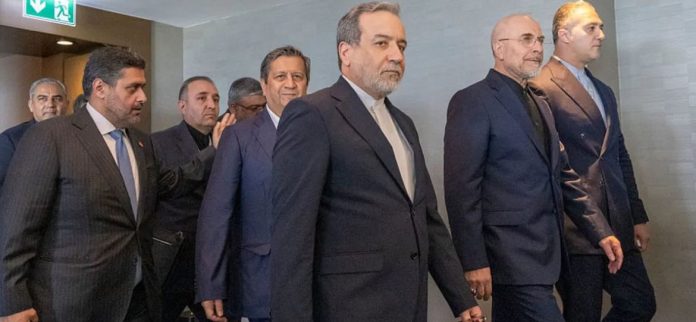
The release comes under the Islamabad Memorandum of Understanding signed on June 17, 2026, between US President Donald Trump and President Pezeshkian, with Pakistan and Qatar acting as mediators and guarantors. Negotiations are currently taking place in Bürgenstock, Switzerland, led by US Vice President JD Vance and Iranian Parliament Speaker Mohammad Bagher Ghalibaf.

Pezeshkian stressed that the agreement favors Iran, reaffirming Tehran’s right to enrich uranium while clarifying that Iran does not seek nuclear weapons. He added that the funds will be used strictly for humanitarian goods and non-sanctioned items, primarily sourced from the United States.

The deal also includes a 60-day ceasefire window during which talks will continue, signaling a potential step toward easing tensions in the Middle East and advancing US–Iran relations.

Pakistani business delegation meets Ambassador Mumtaz Zahra in Paris

Pakistani business delegation meets Ambassador Mumtaz Zahra in Paris

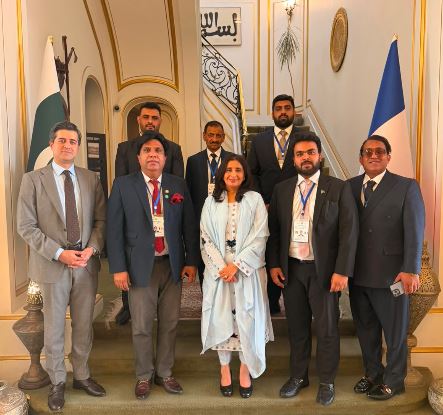
PARIS, JUN 29 /DNA/ – Mazhar Hussain Thathal, Chairman & CEO of Global Trade Expo Centre (GTEC) Pakistan, successfully led the 6th Pakistan-France Trade and Business Delegation 2026 to Paris with the objective of strengthening bilateral trade, investment, and business cooperation between Pakistan and France.

During the official visit, the delegation held a high-level meeting at the Embassy of Pakistan in Paris with Her Excellency Ambassador Mumtaz Zahra Baloch, Ambassador of Pakistan to France, along with the Embassy’s Trade Counsellor Mr. Salman Ahmed Raja. The meeting focused on enhancing economic collaboration and identifying new business opportunities in key sectors, including agriculture, information technology (IT), textiles, and food processing.

Her Excellency appreciated the continuous efforts of Mr. Mazhar Hussain Thathal and the Global Trade Expo Centre in promoting Pakistan’s business community through international trade exhibitions, business delegations, and B2B networking initiatives across the European market. She reaffirmed the Embassy’s commitment to supporting initiatives that enhance Pakistan’s exports and strengthen commercial ties with France.

The prestigious delegation comprised senior representatives from leading business organizations, including the Sialkot Chamber of Commerce & Industry, Haripur Chamber of Commerce & Industry, Rawalpindi Chamber of Commerce & Industry, Islamabad Chamber of Commerce & Industry, and other prominent trade bodies and business enterprises.

During the meeting, Mr. Liaqat Ali Thathal, Director International Trade & Relationship at Global Trade Expo Centre Pakistan, delivered a comprehensive briefing on the significant trade and investment potential between Pakistan and France. He highlighted promising opportunities in various productive sectors and emphasized the need for stronger institutional collaboration, increased business exchanges, and strategic initiatives to promote economic growth in both countries. He stated that the primary objective of the Pakistan-France Trade and Business Delegation is to connect the business communities of both nations, facilitate bilateral partnerships, and create sustainable opportunities for trade, investment, and industrial cooperation.

The visit concluded with a shared commitment from both sides to further strengthen Pakistan-France economic relations by encouraging greater private-sector engagement, trade promotion activities, and long-term business partnerships.

Saudi Arabia and Pakistan: A real test of brotherhood

Saudi Arabia and Pakistan: A real test of brotherhood

Dr. Ali Awadh Asseri

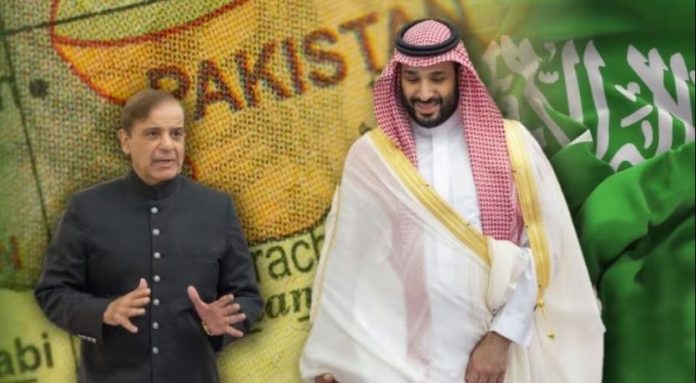
When Saudi Arabia and Pakistan signed the Strategic Mutual Defense Agreement last year, the security pact was widely welcomed as the natural next step in a partnership that has evolved over many decades. Yet the true value of such arrangements is revealed only during moments of crisis.

The recent Iran conflict provided the first major test of the defense pact and of the broader Saudi-Pakistani strategic relationship. The manner in which both countries responded demonstrated not only the strength of their bilateral ties but also the extent to which their approaches to regional security have increasingly converged.

The conflict created one of the most dangerous moments the Middle East has faced in recent years. As military exchanges intensified and fears of wider escalation grew, concerns emerged that Gulf energy infrastructure, maritime routes and regional economies could once again become direct targets.

Given the scale of the confrontation, the possibility that the conflict could spread beyond its initial participants appeared real. Those concerns were understandable. Saudi Arabia’s strategic importance, its leadership role in the Arab and Islamic worlds, and its close partnership with the US made the Kingdom a potential target if the conflict widened.

Yet, despite the intensity of the confrontation, especially the unwarranted Iranian attacks, Saudi Arabia did not become a battlefield. Gulf energy infrastructure remained operational, maritime commerce continued to flow through alternative routes, and the wider regional war that many feared never materialized.

That outcome reflected a combination of deterrence, restraint and effective coordination among regional partners. The defense pact played an important role in shaping that outcome. As tensions escalated and concerns mounted that the conflict could spread toward Gulf states, attention naturally turned to how the agreement would function under real-world conditions.

For many observers, the central question was whether it would remain a symbolic expression of solidarity or demonstrate practical value during a major security challenge. The answer emerged before the ceasefire was reached. Pakistan publicly reaffirmed its commitment to the security of Saudi Arabia, consultations between the two countries intensified and defense coordination became increasingly visible.

Following the ceasefire, the Saudi Ministry of Defense disclosed that a Pakistan Air Force squadron, together with supporting personnel, had been deployed to the Kingdom during the crisis as part of ongoing defense cooperation arrangements. These measures were not intended to widen the conflict. Their purpose was to reinforce deterrence, reassure the Kingdom and remove any ambiguity regarding the consequences of expanding the war toward the Gulf.

The first major test of the defense pact demonstrated its value in precisely the manner successful security arrangements are intended to function

The significance of these measures became evident in what followed. Despite the intensity of the conflict, Saudi Arabia remained secure, critical infrastructure was protected and the confrontation did not spread into a broader regional war. The first major test of the defense pact therefore demonstrated its value in precisely the manner successful security arrangements are intended to function. It strengthened deterrence, reinforced strategic clarity and helped convince potential adversaries that escalation would carry unacceptable risks.

Saudi Arabia’s conduct throughout the crisis reflected a clear strategic calculation. Crown Prince Mohammed bin Salman understood that a wider regional war would threaten not only Gulf security but also the economic transformation underway across the Kingdom and the wider region. Rather than allowing the crisis to expand, Saudi Arabia focused on preserving stability, protecting international commerce and supporting diplomatic efforts aimed at ending the conflict. At a time when emotions were running high across the region, Riyadh consistently chose restraint over escalation.

Pakistan played an equally important diplomatic role. Prime Minister Shehbaz Sharif and Field Marshal Asim Munir remained engaged with regional and international leaders throughout the crisis. Pakistan maintained communication with all relevant parties and utilized relationships developed over many years to support efforts aimed at preventing further escalation. Few countries possess the ability to engage credibly with Riyadh, Tehran, Washington and Doha simultaneously. Pakistan employed that position responsibly at a moment when diplomatic channels were urgently needed.

At the same time, Pakistan’s military and political leadership consistently encouraged a return to diplomacy, while cautioning all parties, including the hard-line elements in Iran, about the benefits of restraint and costs of escalation. Messages conveyed through multiple channels emphasized that further expansion of the conflict would impose severe economic and security consequences on the region and risk outcomes that none of the principal actors desired. This combination of deterrence and diplomacy ultimately became one of Pakistan’s most important contributions to preventing a wider war.

These efforts eventually contributed to an outcome that would have appeared highly unlikely only months earlier. After decades of hostility between the US and Iran, a diplomatic process has emerged, with Pakistan creating the political conditions necessary for dialogue. The Islamabad Memorandum of Understanding, followed by the agreement on a roadmap for implementation, has transformed a dangerous military crisis into a diplomatic process that continues to evolve.

The reopening of the Strait of Hormuz, the continuation of negotiations, the beginning of sanctions relief and the visit of Iranian President Masoud Pezeshkian to Islamabad all reflect how significantly the regional environment has changed. Public recognition of Pakistan’s role by senior American officials further underlines the importance of the diplomatic efforts that helped prevent a wider war and created space for negotiations.

The conflict demonstrated not only the resilience of Saudi-Pakistani relations but also the extent to which Riyadh and Islamabad increasingly view regional challenges through a similar lens. Both countries support secure maritime routes, the protection of energy infrastructure and the uninterrupted flow of international commerce. Both support dialogue as the preferred mechanism for resolving disputes and view economic development as the foundation of long-term stability. Both have concluded that the era of proxy warfare has imposed enormous costs on the region and that stable, sovereign states must form the foundation of any durable regional order.

Both countries also share a common assessment of what must happen next. Neither Saudi Arabia nor Pakistan seeks a weakened or isolated Iran. Both would welcome an Iran that is integrated into the regional economy, focused on development and engaged constructively with its neighbors. The current diplomatic process offers Tehran opportunities that previous generations of Iranian leaders rarely enjoyed, including sanctions relief, expanded trade and improved regional relations.

The defense pact strengthened deterrence, reinforced strategic clarity and helped convince potential adversaries that escalation would carry unacceptable risks

Those opportunities, however, carry responsibilities. The attacks on Gulf states, threats to maritime security and reliance on proxy networks that characterized earlier periods of regional tension cannot become recurring features of the regional landscape. The success of the current diplomatic process will ultimately depend on confidence-building measures that reassure neighboring states and demonstrate a sustained commitment to peaceful coexistence.

One of the clearest lessons of recent decades is that proxy conflicts have weakened states, prolonged instability and diverted resources away from development. From Iraq and Syria to Yemen and Lebanon, state institutions have frequently paid the price. Saudi Arabia and Pakistan therefore share a common interest in strengthening sovereign states, rather than parallel military structures operating outside state authority. Both countries view strong national institutions as essential to lasting peace and development.

Lebanon illustrates the same principle. Iran rightly expects its sovereignty to be respected. The same standard must apply elsewhere. Lebanon cannot achieve lasting stability while decisions relating to war and peace remain outside the authority of the Lebanese state. The long-term objective must be a sovereign Lebanon in which national institutions exercise sole responsibility for security and national defense.

The Iran conflict also demonstrated how Hezbollah and Israel have repeatedly reinforced cycles of confrontation that undermine Lebanon’s stability, just as decades of Iran-Israel confrontation have jeopardized Gulf security and regional development. Saudi Arabia and Pakistan share a common interest in ending these recurring cycles of escalation and strengthening sovereign states as the foundation of a more stable regional order.

If progress continues on the Iran file, opportunities may emerge to address other long-standing regional challenges. Among these, none is more important than Palestine. Saudi Arabia has consistently maintained that lasting regional peace requires a just resolution of the Palestinian question based on the Arab Peace Initiative and a two-state solution. Pakistan has long supported that position. Reduced tensions elsewhere in the region would create greater political space for renewed diplomatic efforts toward that objective and could open the door to a broader regional peace process.

The significance of recent months therefore extends beyond the successful management of a single crisis. The conflict demonstrated that credible deterrence, responsible leadership and sustained diplomacy can prevent regional wars. It also demonstrated that Saudi Arabia and Pakistan increasingly share a common understanding of the challenges facing the Middle East and of the principles required to address them.

The Iran conflict was the first major test of the defense pact. It validated the logic behind the agreement, reinforced the importance of Saudi-Pakistani strategic cooperation and helped preserve Gulf security during one of the most dangerous periods the region has faced in recent years. More broadly, it demonstrated that the partnership between Riyadh and Islamabad now rests not only on decades of friendship and cooperation but also on a shared vision for regional stability, sovereign statehood and peaceful development.

For decades, Saudi Arabia and Pakistan have described one another as brotherly nations. During the Iran conflict, that brotherhood was demonstrated not through rhetoric but through action. Together, both countries helped prevent a wider war, supported a return to diplomacy and contributed to a more stable regional environment. In doing so, they reaffirmed that their partnership remains one of the most important pillars of stability in the Muslim world and that it will continue to play an important role in shaping the region’s future.

• Dr. Ali Awadh Asseri is deputy chairman of the International Institute for Iranian Studies in Riyadh and a former Saudi ambassador to Pakistan.

Iran, US ‘agree’ to halt attacks and renew talks

Iran, US 'agree' to halt attacks and renew talks

“Technical talks are slated to continue on all areas of the MOU,” says US official

DNA

TERAN: Iran and the United States agreed to halt recent hostilities in the Gulf and renew talks regarding their dispute over the Strait of Hormuz, a US official said on Sunday, raising hopes of saving an interim peace deal that was under pressure from days of tit-for-tat strikes.

“Technical talks are slated to continue on all areas of the MOU. Both sides will stand down for now and vessels can move freely,’ the official said, referring to the 14-point memorandum of understanding that was agreed on June 17 under which the strait would be re-opened for traffic.

Axios, which first reported the cessation of hostilities, citing a senior US official, said talks would resume Tuesday in Qatar.

A return to diplomacy would follow several days of strikes and counterstrikes since an Iranian projectile hit a cargo vessel in the Strait of Hormuz on Thursday, with both the US and Iran accusing the other of breaking an interim ceasefire that was agreed to on June 17.

Iran launched missiles and drones at US military sites in Kuwait and Bahrain early on Sunday, shortly after President Donald Trump threatened that the Islamic Republic would cease to exist if it did not honor the agreement to end the war.

Meanwhile, Israel said on Sunday it had once again struck Iran-backed armed Hezbollah militants in Lebanon, destroying underground infrastructure used by the group in a village in southern Lebanon. That came after another strike on Saturday, which closely followed its latest ceasefire deal with Lebanon on Friday. Iran says the fighting in Lebanon must end if the wider agreement is to stick.

The US military said earlier it had struck Iran again, hours after a tanker was hit in the Strait of Hormuz, the world’s most important energy shipping route, which Tehran has largely closed for most of the conflict.

“There may come a point when we are no longer able to be reasonable, and will be forced to militarily complete the job that we very successfully started,” Trump said on social media, before the Axios report.

“If that happens, the Islamic Republic of Iran will no longer exist!” he added.

The 14-point interim peace accord was meant to halt the fighting, which the US and Israel started on February 28, and reopen the strait while talks proceeded on issues such as Iran’s nuclear program.

One round of mediated talks, led by Vice President JD Vance and Iran’s parliamentary speaker, Mohammad Baqer Qalibaf, was held in Switzerland a week ago and Washington waived sanctions on Tehran, but fighting has since resumed and intensified.

About an hour after Trump’s post, Kuwait’s army said its air defences were responding to missile and drone attacks, while Bahrain said sirens had sounded there.

Iran’s Islamic Revolutionary Guard Corps said in a statement its navy and air forces had launched missile and drone operations targeting US military sites in Kuwait and Bahrain.

The Guards said US strikes had violated the ceasefire and “will result in the complete halt of all diplomatic processes”, state-run Press TV said. The IRGC navy command said American bases in the region “will experience hell in the coming days”.

A US official, confirming Iran had targeted US facilities, told Reuters there were no reported US casualties or major damage to US sites in the Middle East but the situation was still unfolding.

Canada reach World Cup last 16 as late strike sinks South Africa

Canada reach World Cup last 16 as late strike sinks South Africa

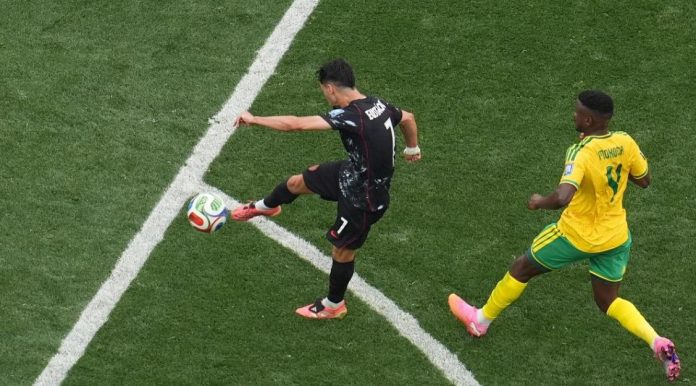
LOS ANGELES, United States: Stephen Eustaquio’s stoppage-time winner fired Canada to a 1-0 win over South Africa on Sunday in the first match of the World Cup knockout rounds, as the co-hosts advance to the last 16 for the first time in their history.

With both sides making their first-ever appearance in the knockout phase, the game appeared to be heading for extra time, before Eustaquio broke South African hearts with a clinical hit from just outside the area.

Canada — playing in Los Angeles despite being co-hosts, after failing to win their group — will now face the Netherlands or Morocco in Houston in the last 16 on July 4, as South Africa’s World Cup adventure comes to an end.

Before the game, coach Jesse Marsch had talked up the “X-factor” of Canada’s star Alphonso Davies, available again after a hamstring injury.

But the Bayern Munich wing-back, who was yet to appear at this World Cup, remained glaringly absent from the starting line-up.

Still, Canada began on the front foot, racking up chances against South Africa’s low block.

In the 22nd minute, a pinpoint Eustaquio free-kick found Derek Cornelius wide open on the six-yard line. The Canada center-back utterly mistimed his headed effort.

South Africa threatened sporadically on the counter. But in a frenetic period just before half-time Canada came agonizingly close.

From a corner, Moise Bombito’s header was cleared off the line, before Tajon Buchanan’s follow-up shot was blocked by goalkeeper Ronwen Williams.

Moments later Khuliso Mudau crashed into the dangerous Richie Laryea, but his penalty appeals were waved away.

That enraged a heavily Canadian crowd, and the jeers grew louder after half-time as South Africa were content to exchange deep passes under little pressure while the clock ticked down.

Just past the hour mark, Canada came close again.

Substitute Niko Sigur slid a through ball to Tani Oluwaseyi whose shot was well-saved by the goalkeeper and looped up toward Jonathan David — but defender Mbekezeli Mbokazi just got there first and cleared brilliantly.

In the 75th minute Davies finally appeared, to a huge roar, and made an immediate impact.

From the left wing, Davies found Jonathan David who laid the ball to fellow striker — and no relation — Promise David, but his shot went wide.

Moments later Davies found Jonathan David again. This time he shot from a tight angle, but was denied by Williams.

In the second minute of stoppage time, Canada finally broke through, from the other flank.

Jacob Shaffelburg raced down the right wing and pinged in a cross which was headed clear to Eustaquio.

The Porto midfielder — on loan at Los Angeles FC — chested the ball down and slammed it first-time into the bottom-left corner.

Canada’s bench streamed onto the pitch as the stadium erupted, celebrating a historic victory.

Saudi Arabia football federation chief resigns

Saudi Arabia football federation chief resigns

RIYADH: Yasser Al-Misehal resigned as president of the Board of Directors of the Saudi Arabian Football Federation (SAFF) on Monday, taking responsibility for the national team’s early exit from the FIFA World Cup 2026 and bringing an end to his seven-year tenure at the helm of Saudi football.

In a statement posted on X, Al-Misehal said the Green Falcons’ failure to reach the knockout stage had fallen far short of the ambitions of Saudi football and its supporters, and that he accepted full responsibility for the disappointing campaign.

He said stepping aside would allow for a new phase for Saudi football and confirmed that procedures would begin to open nominations for the election of a new board of directors in accordance with federation regulations.

Al-Misehal also expressed gratitude to King Salman and Crown Prince Mohammed bin Salman for their continued support of Saudi football, as well as to Sports Minister Prince Abdulaziz bin Turki Al-Faisal and members of the federation’s board.

The resignation follows mounting criticism of the federation after Saudi Arabia’s third consecutive group-stage exit at a World Cup.

The Green Falcons were eliminated after drawing 0-0 with tournament debutants Cabo Verde, capping a disappointing campaign in which they failed to win a match. A 1-1 draw against Uruguay had briefly raised hopes of qualification, but a heavy 4-0 defeat to European champions Spain left Saudi Arabia needing a victory in their final group game to advance.

Instead, the team produced a lackluster performance against Cabo Verde and exited in the opening round, extending a long-standing pattern of underachievement at football’s biggest tournament.

The Kingdom has now appeared in seven World Cups but has progressed beyond the group stage only once, reaching the last 16 on its debut appearance in the United States in 1994.

The latest elimination triggered a wave of criticism from supporters, former players and media figures, many of whom called for sweeping changes within Saudi football ahead of the AFC Asian Cup next year and the Kingdom’s hosting of the 2034 FIFA World Cup.

Former Al-Hilal president Prince Abdul Rahman bin Musaid described the team’s displays as deeply frustrating and said a new national team should begin to be built with an eye toward 2034.

Saudi coach and television analyst Ibrahim Al-Angari said the problems extended far beyond the results in the United States, citing shortcomings in player development, squad selection, technical decisions and long-term planning.

Sports journalist Battal Al-Qoos had also sharply criticized the federation’s record, saying Saudi national teams had suffered repeated failures during the current board’s seven-year tenure and calling for the leadership to step down.

Stay Connected

64FansLike
60FollowersFollow

Latest Reviews

Exchange Rates

USD - United States Dollar
EUR
1.16
GBP
1.35
AUD
0.70
CAD
0.71