Home Blog Page 649

Bow Your Head: Before the State or the Almighty Allah?

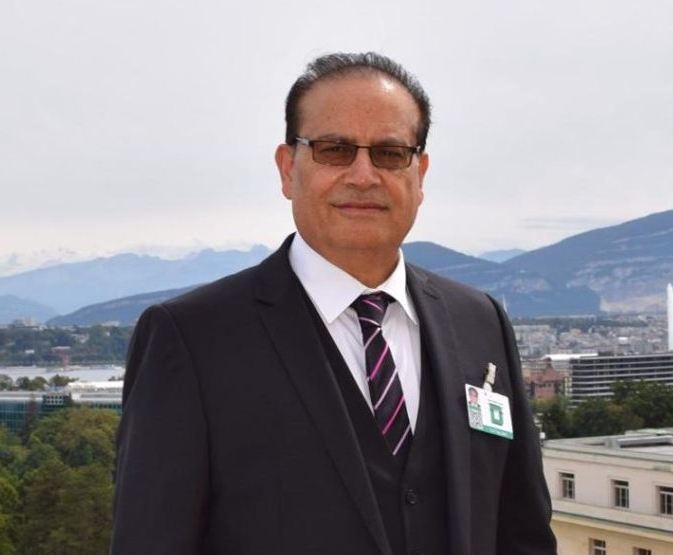
Qamar Bashir

By: Qamar Bashir

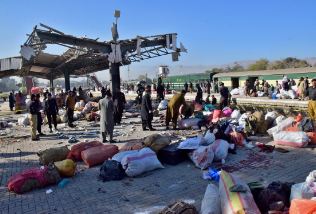
Unlike many countries that are making progress by leaps and bounds, Pakistan, unfortunately, finds itself on a regressive path. This is not only disheartening for its citizens but also deeply disappointing for overseas Pakistanis, whose hearts and souls remain tied to their homeland despite living abroad. The recent news emerging from Pakistan is alarming, particularly the horrifying incident where an entire train was looted, its passengers abducted and killed while traveling through Bolan, Balochistan.

This event starkly contradicts the claims of our law enforcement agencies that they have “broken the back of terrorists and criminals.” Instead, separatist and secessionist groups are gaining strength, their narratives taking deeper root both inside Pakistan and abroad, turning our security forces into mere objects of ridicule.

It has long been acknowledged that while the reins of government, parliament, and judiciary are theoretically in civilian hands, real power rests with the establishment. Yet, whenever failures emerge, the blame is swiftly unloaded onto civilian governments. Now, following this recent wave of terrorist attacks, the establishment has conveniently placed the burden of responsibility on the PPP-led government in Balochistan. This was expected, as such tactics have been used since the inception of Pakistan.

Meanwhile, our law enforcement agencies take pride in their dominance over the agricultural sector through corporate farming, monopolizing the housing market, assuming anti-smuggling and anti-drug trafficking duties, manipulating exchange rates, controlling elections, conquering the judiciary, parliament, media, and businesses—all enforced through the power of the gun. Yet, when it comes to their core responsibility—law enforcement, counterterrorism, and national security—they have delegated these duties to civilian puppets, washing their hands of accountability.

Instead of fulfilling their constitutional duty to safeguard Pakistan’s borders and internal security, the state’s powerful institutions are more focused on diverting scarce water resources from civilian farmers in Sindh to the Cholistan desert—an effort primarily aimed at irrigating land for their corporate agricultural projects under military ownership.

This is the defining irony of Pakistan’s trajectory: civilians have been deemed incapable of navigating the civilian affairs and while our security institutions, which failed to protect the nation’s frontiers, continue expanding their grip over non-military domains. Pakistan has lost four wars, permanently ceded occupied Kashmir to India, and now appears to lack the will or capacity to defend even the Pakistani side of Kashmir.

A new narrative has now been injected into the national discourse—one that demands all citizens to bow their heads before the mighty state. Those who refuse to comply are branded as threats, facing the heavy arm of the state until they submit. Yet, the true role of the state is not to instill fear in its citizens but to serve and protect them, ensuring justice, security, and societal well-being.

A welfare state functions as a guardian of public interests, providing essential services such as healthcare, education, and social security while upholding fundamental rights. Laws should be designed to protect citizens, not control them. However, when a state begins to demand absolute loyalty and unquestioned obedience, it ceases to be a servant of the people and transforms into an authoritarian force that suppresses dissent and compromises personal freedoms.

From a religious and philosophical perspective, particularly in Islam, submission belongs solely to Allah, the ultimate source of justice and morality. No earthly authority, including the state, has the right to demand obedience that contradicts divine principles.

Historically, oppressive rulers have sought to position themselves as supreme entities, enforcing allegiance through fear. This contradicts the Islamic principle that leaders are only legitimate if they govern with justice and protect the rights of their people. A recognizes that authority is a trust given by the people and should be exercised with humility, fairness, and a commitment to service rather than domination.

Had this foundational principle been upheld in Pakistan, the Baloch issue would never have escalated into a crisis. The land of Balochistan has historically belonged to the Baloch people for centuries, even during the rule of the Mughals and the British. The natural resources, wealth, and opportunities above and beneath this land rightfully belong to its people. Yet, instead of treating the Baloch with dignity, respect, and as equal citizens, successive governments and military interventions have only deepened their alienation.

The Baloch people do not demand extravagant wealth—they demand basic rights: water, infrastructure, education, economic opportunities, and most importantly, respect and honor. A state that attempts to subjugate its citizens through brute force and propaganda fails to learn from history. The same approach failed in Bangladesh, has failed in occupied Kashmir, and will never succeed in Balochistan.

To correct course, the state must begin by withdrawing excessive military presence in Balochistan and handing over governance to genuine Baloch leaders at the grassroots level. Using brute force to silence dissent will not bring peace; only justice and empowerment can. The security establishment must recognize that its duty is to serve, not to rule, and that its authority comes under the higher sovereignty of Allah, not unchecked worldly power. The transformation of the state must begin by shifting away from coercion toward governance that listens to its people rather than suppressing them.

The people of Balochistan, tired of oppression, are looking for leadership that has the courage, determination, and integrity to stand tall against state brutality. They seek leaders who will not bow before oppressive power structures and who will champion the cause of transforming the state into a true servant of the people.

In an unprecedented turn, Imran Khan has emerged as the only leader in Pakistan’s history who has demonstrated unwavering resolve to bow only before Almighty Allah—not before the forces that seek to impose their will on the nation. His struggle has set an example for all those seeking emancipation from state tyranny.

This is a critical moment for Pakistan. The state must retreat from interfering in civilian affairs, reset the National Assembly based on the true election results (Form-45), drop all politically motivated cases against opposition leaders, and release Imran Khan. He has, against all odds, earned the respect of the Baloch people as a fearless, upright, and loyal leader. If Pakistan is to heal and move forward, it must reintegrate Balochistan into the national fold through justice, inclusion, and genuine leadership rather than through guns and coercion. This is the only path forward—one that allows the country and its citizens to finally take a much-needed sigh of relief.

By: Qamar Bashir

 Press Secretary to the President (Rtd)

 Former Press Minister at Embassy of Pakistan to France

 Former MD, SRBC

 Macomb, Detroit, Michigan

‘Bandala hiking trail’ emerges as Pakistan’s latest tourism sensation

'Bandala hiking trail' emerges as Pakistan's latest tourism sensation

ISLAMABAD, MAR 16 (DNA): Nestled in the heart of Pakistan’s majestic mountains, the ‘Bandala hiking trail’ has emerged as a prized destination for thrill-seekers and nature lovers, its recent makeover propelling it to centre stage in the country’s burgeoning tourism landscape.

      Talking to PTV news channel, PML-N leader &  former Director General of the Azad Jammu and Kashmir (AJK) Public Relations Department Raja Azhar Iqbal described that the trail, which was once a rugged and challenging path has been upgraded and expanded to cater to a wide range of visitors.

                 The transformation is part of a larger effort to promote sustainable tourism in the region and provide economic opportunities for local communities, he added.

      The trail offers breathtaking views of the surrounding mountains and valleys, as well as opportunities to experience the local culture and wildlife. Visitors can hike, trek, or simply take in the stunning scenery, making it an ideal destination for nature lovers and adventure-seekers.

         As Pakistan continues to develop its tourism industry, the Bandala hiking trail is an excellent example of how sustainable tourism can benefit local communities and promote the country’s natural beauty, he added.

  According to Azhar Iqbal, the region is home to a diverse range of flora and fauna, including several endangered

species.

          “The Bandala trail offers a unique opportunity for nature enthusiasts to spot rare species such as the Himalayan brown bear, snow leopard, and Kashmir markhor,” he said.

     To further enhance the region’s biodiversity, Azhar Iqbal announced plans to establish a wildlife park and launch a large-scale tree plantation drive.

         “The wildlife park will provide a safe habitat for endangered species, while the tree plantation drive will help restore the region’s natural beauty and mitigate the effects of climate change,” he said.

            “We envision the Bandala trail as a model for sustainable tourism and conservation, and we are committed to making it a reality.” 

       According to officials, the project has not only improved the infrastructure of the trail but also created jobs and stimulated local economic growth.

                  “The response from tourists has been overwhelming,” said an official.

        “We are seeing a significant increase in the number of visitors, which is not only benefiting the local economy but also helping to promote Pakistan’s natural beauty.”

           Locals also have expressed admiration for the government’s focus on developing the region’s tourism infrastructure, citing the transformative impact it has had on their community.

               “We are thrilled to see our beloved trail getting the attention it deserves,” said a local resident.

        “The government’s efforts have not only improved the trail itself but also brought in new economic opportunities for our people,” residents say.

HEC must halt NIHCR’s Progression to Mediocrity

HEC must halt NIHCR’s Progression to Mediocrity

Kehkashan Tabbasum

Higher Education Commission has, besides others, also been mandated with allocating annual budgets to public sector higher educational institutions of the country. With the passage of time, annual budget allocations and grants are getting decreased for the universities in general and its recognised Centres of Excellence in particular.

Over the years, particularly since 2018, Centres of Excellence have become beggars demanding bail out packages, grant in aid and supplementary grants to overcome their financial pendency but in vain.

Nowadays universities and Centres of Excellence are routinely facing financial crisis; some of higher education institutions do not have funds to pay salaries, arrears of house rent ceilings/allowances, medical reimbursements and yearly adhoc reliefs to their staff and pensioners besides granting higher scales upon completion of ten years’ service in the same scale or implementation of the Special Dispensation for the Civil Servants in the Federal Government for the Employees in BPS-01 to BPS-16 effective 01-01-2023 for want of funds from the HEC.

One such academic research institution is the National Institute of Historical and Cultural Research, Centre of Excellence of the prestigious Quaid-i-Azam University, Islamabad, which has been facing financial crunch since 2020-21 due to which the staff has not been paid House Rent Ceiling since July 2021 at the pretext that the Higher Education Commission had not released funds to the NIHCR, reliable sources confided to this reporter.

Likewise, the sources claimed, the Institute has not been paid 35 percent Adhoc Relief announced in the Budget 2023-24, Medical Allowance, Medical Reimbursement and Pending grant and arrears of scales upgradation/increments from BPS-1 to 16 under the Special Dispensation for the Civil Servants in the Federal Government w.e.f. 1-1-2023 owing to non-release of funds by the HEC to the NIHCR.

Collectively, the payment of pending amount of the above mentioned to all the serving and retired staff has not been made besides payment of gratuity to all pensioners for over three years now. In order to cross-check my claim, complete details of pending payments yet to be made to the retired and the serving staff may be furnished from the NIHCR.

In spite of huge financial pendency owing to gross financial mismanagement, rumours are rife in the NIHCR that some high ups have been granted house building and motor car advances instead of clearing the pending house rent ceilings of lower staff or making payments to the retired staff.

The recurring financial constraints of universities and their allied Centres of Excellence are because of mismanagement, lack of funds and resources. It is indeed unfortunate that rather than increasing the NIHCR budget, the HEC has been providing decreased budget to the NIHCR thus multiplying financial problems for the NIHCR, the sources remarked.

Certainly, it should be the first and foremost responsibility of the governments, education ministry, and the concerned authorities, like the HEC to look into the affairs of the NIHCR and allocate/grant whatever the budget the NIHCR wants.—Kehkashan Tabbasum

Japan views Pakistan as an indispensable country for regional stability

Japan views Pakistan as an indispensable country for regional stability

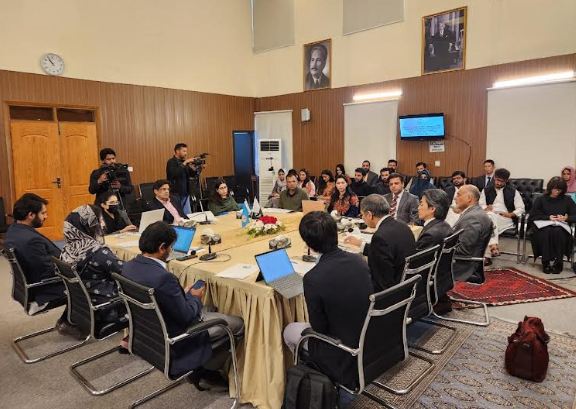
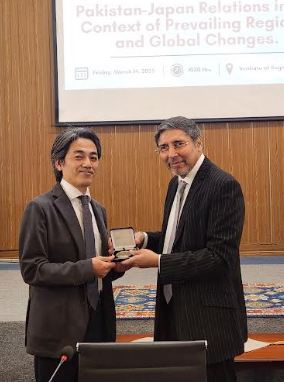
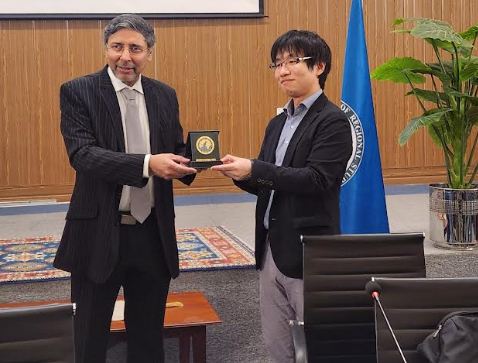
ISLAMABAD, MAR 16 (DNA): At an international seminar organized by the Institute of Regional Studies (IRS), Professor Masayuki Masuda, Division head at the National Institute for Defense Studies (NIDS), stated that Pakistan has played a vital role in regional stability and is seen as committed to promoting peace amidst growing challenges. He suggested that Pakistan and Japan, having both experienced significant human and economic losses due to conflicts and wars, were uniquely positioned to collaborate on promoting peace.  Prof. Masuda also stressed that Japan’s “Free and Open Indo-Pacific” concept aimed to foster regional peace and prosperity, which aligns with Pakistan’s connectivity interests. He called for increased cooperation in areas such as telecom, AI, and climate change, which would benefit both nations.

Speaking on the occasion, NIDS Senior Fellow Masahiro Kurita clarified that Japan’s growing cooperation with India, even within the QUAD framework, was primarily focused on political and economic cooperation, and should not  impact Pakistan’s security concerns. He acknowledged that perceptions of Pakistan were influenced by its deepening relationship with China, but emphasized Pakistan’s balanced approach, demonstrating its commitment to fostering broad international ties for enhanced connectivity.

Amb. Jauhar Saleem, President IRS, stated that Pakistan-Japan cooperation  was a factor of stability at a time when great power competition was intensifying. He emphasized upon the shared values and interests which bound the two countries in cordial and cooperative ties, and called for building on this foundation to further enhance multifaceted cooperation. He also advocated increased political dialogue, cultural exchanges and people-to-people contact to foster yet greater understanding of each other’s perspectives. 

Amb Farukh Amil, Chairman IPO and former Ambassador to Japan, affirmed Pakistan’s long-standing desire to strengthen development partnerships with Japan. He also emphasized Japan’s technological leadership and the critical importance of collaboration in technology and innovation for Pakistan’s future economic and security progress while praising  Japan’s unconditional humanitarian aid during natural disasters.

BLA suicide blast claims five lives

BLA suicide blast claims five lives

ISLAMABAD, MAR 16 (DNA): At least five persons were killed on the spot while other ten injured after a powerful blast occurred near a bus carrying FC men on the Naushki-Dalbandin Highway in Balochistan on Sunday.

     According to police officials, a bus travelling was targeted on the Naushki-Dalbandin Highway, resulting in the killing of five people, and injuries to ten others. The ISPR said the blast was carried out by BLA and the security men were the target.

  The injured and the bodies were moved to the hospital by the rescue teams after getting information, a private news channel reported.

   Meanwhile, the Medical Superintendent of Mir Gul Khan Naseer Teaching Hospital in Noshki has declared an emergency to handle the situation.

PM Shehbaz keeps fuel prices unchanged, shifts relief to power tariff cuts

PM Shehbaz

ISLAMABAD, MAR 15: Prime Minister Shehbaz Sharif has decided to keep petroleum product prices unchanged for the next fortnight and divert the relief from a decrease in petrol prices in the international market towards a notable downward revision in the power tariff for the masses.

The federal government aims to maintain petroleum product prices and transfer the full financial benefit to the masses through power tariff, the PM Office said in a statement on Saturday.

The move will be one of many steps taken by the government to achieve a meaningful reduction in the electricity rates, the premier said.

A package is being prepared under a comprehensive and effective strategy to slash power prices, PM Shehbaz said, adding that the details of the relief measure for the public are being finalised by utilising the financial space created due to fluctuations in global oil prices.

The statement added that the power tariff reduction package would be unveiled in the coming weeks.

The premier said his administration remains committed to prioritising public relief since coming into power.

He expressed his aim to provide further relief for the masses alongside the power tariff reduction.

“The relief will not only reduce electricity prices but will also have a broader impact on inflation, leading to a further decrease,” said the premier.

The PM will address the nation to announce the major relief measure.

Before this development, it was learnt that the country was expected to slash petroleum product prices by up to Rs14 in the upcoming fortnightly review due on March 15.

The price of petrol was likely to be reduced by Rs14 per litre, while high-speed diesel (HSD) may see a cut of Rs8 per litre, oil companies’ sources told Geo News two days ago.

Likewise, the sources said the kerosene and light diesel oil could be slashed by Rs10 and Rs7 per litre, respectively.

However, the final price will be determined based on the fluctuations in the global oil prices over the next three days, they said.

On February 28, the federal government reduced the price of petrol by Re0.50 and that of the HSD by Rs5.31 for the next fortnight ending March 15.

Petrol is mainly used in private transportation, small vehicles, rickshaws, and two-wheelers. Higher fuel prices significantly impact the budgets of the members of the middle and lower-middle classes, who primarily consume petrol for commuting.

On the other hand, a significant portion of the transport sector relies on high-speed diesel.

Its price is considered inflationary since it is predominantly used in heavy goods transport vehicles, trucks, buses, trains, and agricultural machinery such as tractors, tube wells, and threshers. The consumption of high-speed diesel particularly contributes to the increased prices of vegetables and other food items.

Sarmad Ali elected President APNS, Athar Secy General

APNS

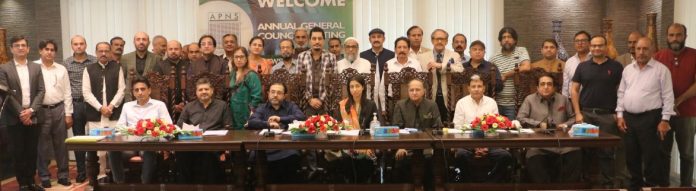
KARACHI, MAR 15 /DNA/ – The Annual Meeting of the APNS General Council held on March 15, 2025 at APNS House, Karachi unanimously elected Sarmad Ali as  President, Nazafreen Saigol Lakhani as Senior Vice President, Shahab Zuberi as Vice President, Muhammad Athar Kazi as Secretary General, Mohsin Bilal as Joint Secretary and Naveed Kashif as Finance Secretary of the Society.

The AGM was held under the chairmanship of Mrs. Nazafreen Saigol Lakhani, President of the Society. The Council unanimously approved the report of the Executive Committee for the year 2024-2025 as well as the Annual Accounts of the Society for the year 2024.

The General Council attended by 107 members from across the country, formed an Election Commission headed by Mr. Mumtaz Ahmed Phulpoto with  Syed Irfan Shah and Mr. Ali Bin Younus as members. The Election Commission conducted the election of the Executive Committee for the year 2025-26.

Following dailies and magazines were elected un-opposed of  the Executive Committee of the APNS for the next tenure:

Daily Jasarat, Daily Jiddat, Karachi, Daily Business Recorder, Daily Aghaz, Daily Dawn, Daily Deyanat, Daily Khabrain, Daily Times, Daily Jang, Daily Dunya, Daily Tijarat, Daily Pakistan, Lahore, Daily Ausaf, Daily Sahafat, Daily Awam (Quetta), Daily Mashriq (Quetta), Daily Wahdat, Daily Mashriq (Peshawar), Daily Kawish, Daily Aftab (Multan), Daily Business Report, Daily Paigham, Daily City42, Daily Pakistan Observer, Daily Halchal, Daily Sayadat on daily seats and Monthly Dastak, Weekly Family,(Nawa-e-Waqt Group), Monthly Naey Ufaq, Monthly Naya Rukh, Monthly Centre Line, and Fortnightly Ibrat elected on periodical seats.

The new Executive Committee elected Mrs. Zahida Abbasi of Daily Nau Sijj, Karachi on woman – publisher seat.

Due to  sad demise of brother of Mr. Javed Mehr Shamsi , he could not attend the AGM. The President  co-opted Daily Kaleem Sukkur as member of the Executive Committee on Sindh Excluding Karachi Dailies Seat.

The newly elected Executive Committee appreciated the performance of the Election Commission for conducting the elections.

The members at the Annual Council meeting strongly condemned the continuous ban on the Government advertisements of Daily Dawn and termed it as a policy of arm-twisting and using advertisements as a tool to dictate editorial policy of the newspaper. The AGM noted that the due quantum of advertisement for a newspaper, is not a privilege but a right as the government releases its advertisements for transparency in its functioning and to ensure “People’s Right to Know”. The payment of the government advertisements is made from the public exchequer hence, the government ads can not be issued or denied as per the choice of any government. The APNS has always asked for just , fair and transparent distribution of government advertisements .

The Council also expressed its concern on the continued stoppage of government advertisements to Daily Sahafat and urged upon the Ministry of Information to withdraw the ban.

The AGM in a resolution, expressed its profound concern on the state of print media due to the present economic situation which has caused severe financial crisis for newspapers, many of them are at the verge of collapse. In this situation, the media expected support from the government to brave the financial crunch. The AGM urged upon the new Federal Government to implement the decision of Mian Shahbaz Sharif approved in his last tenure to increase the government advertisement rates. The members in the AGM, requested the Federal and provincial governments to pay the long outstanding dues of newspaper industry, increase the quantum of advertisements and allocate a separate share of print media in the advertising budget so that the newspaper industry would be able to survive in the present situation.

Easypaisa digital bank posts PBT of Rs. 4.7 Bn, growth of 3.8x

easypaisa

ISLAMABAD, MAR 15 /DNA/- The Board of Directors of easypaisa digital bank (formally Telenor Microfinance Bank Limited), in its meeting dated March 6, 2025, approved the audited financial statements for the year ended December 31, 2024.

easypaisa digital bank demonstrated exceptional growth in 2024, solidifying its position as a leading digital financial services provider in Pakistan. The Bank achieved a pre-tax profit (PBT) of PKR 4.7 billion, a remarkable 3.8x increase compared to PKR 1.2 billion in 2023.

This significant growth was achieved alongside substantial expansion in business volumes and monthly active user base, while simultaneously investing in cloud services, technology, and operational enhancements.  

The Bank’s financial performance showcased robust growth across key metrics. Revenue surged by 50.8% YoY to PKR 38.9 billion, driven by a 59.9% increase in net markup income and a 37.6% rise in non-markup income.

The registered user base surpassed 50 million, with over 16.1 million monthly active users.

Despite increased operating expenses due to business expansion and regulatory compliance, the bank effectively improved its cost-to-income ratio to 80.91% from 93.10% in 2023. Customer deposits grew by 49.5% to PKR 76.2 billion, maintaining strong CASA and CA ratios of 99.9% and 83.0%. The advances book increased by 53.5% YoY to PKR 28.5 billion, with net advances to deposit (ADR) ratio of 33.5%. Credit impairment cost increased to PKR 2.5 billion, primarily due to the adoption of IFRS 9 and higher digital lending disbursements. The Bank’s PAR% and coverage ratio stood at 14.0% and 75.7%.

Talking about the Bank’s performance and future outlook, Jahanzeb Khan, President & CEO, easypaisa digital bank, stated, “easypaisa digital bank will prioritize strategic initiatives to sustain its growth trajectory with the focus on improving trust of our customers as the first Digital Bank operating in Pakistan. These initiatives include the expansion of digital banking services, enhancement of customer experience, strategic partnerships and investments, leveraging data and AI for personalization, operational efficiencies, and ensuring robust regulatory compliance and security. easypaisa digital bank is committed to further strengthening its position as a leader in Pakistan’s digital financial sector”.

Amin Sukhiani, Chief Financial Officer, easypaisa digital bank, commenting on the financial results, said, “Surpassing 50 million registered users and achieving 50% growth in customer deposits reflects the trust placed in the easypaisa brand, while our strategic focus on expanding digital lending, coupled with effective risk management, has driven substantial growth in profitability and maintained a strong capital adequacy ratio.”

In January 2025, easypaisa digital bank received the first Digital Retail Bank License in Pakistan, marking a pivotal moment for the nation’s financial sector. This license allows easypaisa to expand its services, offering deposit accounts, credit cards, digital loans, investment opportunities, and insurance products.

Pakistan Navy launches second Hangor-Class Submarine in China

Pakistan Navy launches second Hangor-Class Submarine in China

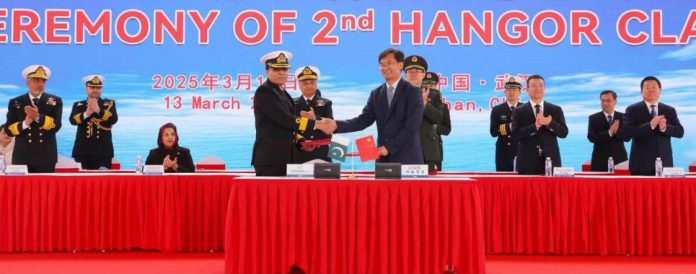
ISLAMABAD, MAR 15 /DNA/ – The launching ceremony of the second Hangor Class submarine, PNS/M SHUSHUK (Desig), was held at Wuchang Shipbuilding Industry Group Company Ltd, Shuangliu Base, Wuhan, China. Vice Chief of the Naval Staff, Vice Admiral Ovais Ahmed Bilgrami, graced the occasion as the Chief Guest.

While addressing the ceremony, Vice Chief of the Naval Staff highlighted the importance of maritime security in prevailing geo-strategic environment of the region, as well as Pakistan Navy’s commitment to safeguarding national interests and ensuring a safe and conducive maritime environment for all. He emphasized that Hangor Class submarines, equipped with state-of-the-art weapons and sensors, will play a pivotal role in maintaining the balance of power and maritime order in the region. Acknowledging the tireless efforts of China Shipbuilding & Offshore International Company Ltd (CSOC), he expressed satisfaction with the project’s progress and underscored that the Hangor Class Submarine Project will add a new dimension to time-tested Pakistan-China friendship.

The Government of Pakistan signed an agreement with CSOC to acquire eight Hangor Class submarines during the visit of Chinese President Xi Jinping to Pakistan. Under this contract, four submarines will be built in China, while the remaining four will be constructed in Pakistan at Karachi Shipyard & Engineering Works Ltd (KS&EW) under the Transfer of Technology (ToT) program. These submarines will be fitted with cutting-edge weapons and sensors, enabling them to engage targets at standoff ranges.

The launching ceremony was attended by high-ranking officials from Pakistan and China, including representatives from Wuchang Shipbuilding Industry Group Company Ltd and China Shipbuilding & Offshore International Company Ltd.=DNA

==========

Day for the protection of the sanctity of Prophethood (PBUH)’ observed with religious fervour across country

Day for the protection of the sanctity of Prophethood (PBUH)’ observed with religious fervour across country

By Rehan Khan

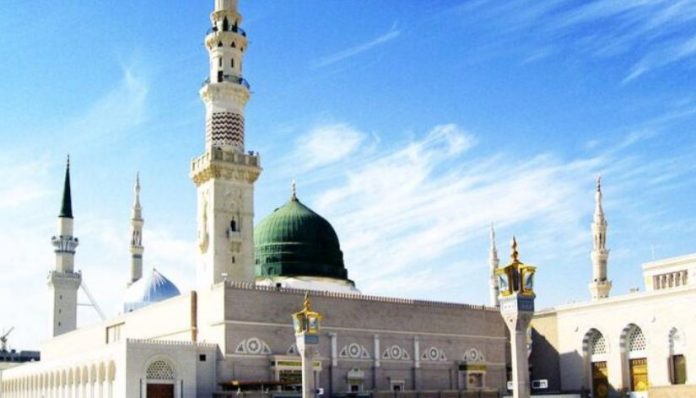
                ISLAMABAD, Mar 15 (APP): The ‘Youm-e-Tahaffuz-e-Namoos-e-Risalat Peace Be Upon Him’ on Saturday was observed with deep religious devotion, passion, and unwavering faith across the country.

In commemoration of the day, a seminar was organized by the Ministry of Religious Affairs and Interfaith Harmony, bringing together prominent scholars and religious leaders to discuss the protection of the sanctity of Prophethood Peace Be Upon Him.

The event was presided over by Federal Minister for Religious Affairs and Interfaith Harmony, Sardar Muhammad Yousaf.

During the seminar, it was unanimously agreed that the honor and dignity of the Last Prophet, Muhammad Mustafa Peace Be Upon Him, are an integral part of every Muslim’s faith.

According to the teachings of the Quran and Sunnah, it is the duty of every Muslim to take all possible legal and social measures to safeguard this sanctity.

The participants acknowledged Pakistan’s significant role in countering Islamophobia on a global scale, which led to the United Nations’ decision to observe March 15 as the International Day to Combat Islamophobia. In this regard, Muslim and non-Muslim countries were urged to enact effective measures to ensure respect for all prophets and Islamic sacred figures. They also called for international legislation to prevent blasphemous actions carried out under the pretext of free speech.

They emphasized the strict enforcement of Pakistan’s existing laws on the protection of the sanctity of Prophethood Peace Be Upon Him while ensuring that these laws are not misused to falsely accuse innocent individuals.

Religious scholars and clerics across the country were urged to highlight the importance of protecting the sanctity of the Prophet Peace Be Upon Him in their Friday sermons, educate the youth on the responsible and constructive use of social media, and discourage the sharing of blasphemous or inflammatory content. Public awareness was encouraged to ensure that any violations are addressed through legal channels, rather than through unlawful actions.

It was announced that the upcoming National Seerat-un-Nabi Peace Be Upon Him Conference will focus on the theme: “State Responsibilities in Educating and Training Youth for Responsible Social Media Use – In Light of the Seerat-un-Nabi Peace Be Upon Him.” The conference will explore effective strategies to guide young people in using social media in alignment with Islamic teachings.

The youth of Pakistan were specifically urged not to share any blasphemous content and instead report such incidents to the relevant authorities. The Ministry of Religious Affairs’ web portal has been designated as a platform for lodging complaints. The country reaffirmed its commitment to taking all possible diplomatic, legal, and social measures to protect the sanctity of Prophet Muhammad Peace Be Upon Him.

The global community was called upon to declare the desecration of religious sanctities as an international crime and to legislate accordingly. The government of Pakistan was requested to ensure the strict implementation of anti-blasphemy laws while also taking measures to prevent their misuse. The effective use of technology to monitor and curb blasphemous content on social media was highlighted, alongside public awareness initiatives regarding relevant laws. The scholars reaffirmed that Pakistan’s blasphemy laws will not be weakened, nor will any relaxation be allowed in their enforcement.

Religious leaders from all schools of thought were urged to unite in fostering national harmony and solidarity.

The event concluded with prayers for Pakistan’s steadfast adherence to Islamic principles, unwavering love for the Prophet Peace Be Upon Him, and the acceptance of efforts made to uphold the sanctity of His name.

Stay Connected

64FansLike
60FollowersFollow

Latest Reviews

Exchange Rates

USD - United States Dollar
EUR
1.17
GBP
1.35
AUD
0.72
CAD
0.73