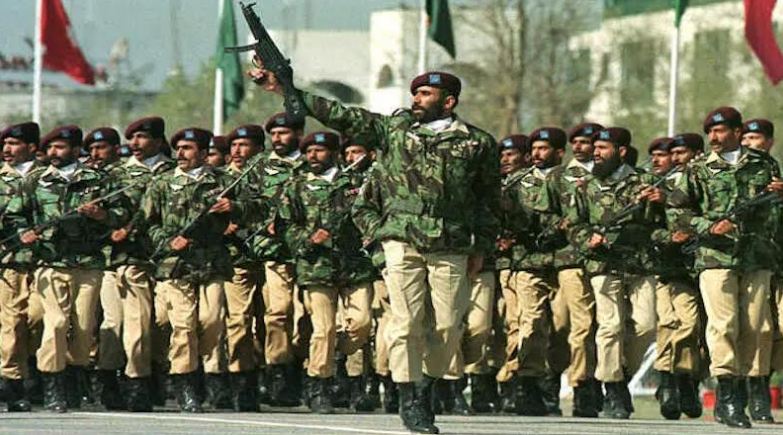
RAWALPINDI, MAR 17 /DNA/ – Security Forces conducted an intelligence based operation in general area Tor Darra, Khyber District, on reported presence of Khwarij.
During the conduct of operation, own troops effectively engaged the khwarij location, as a result of which, three khwarij were sent to hell.
Weapons and ammunition were also recovered from killed khwarij, who remained actively involved in numerous terrorist activities in the area.
Sanitization operation is being conducted to eliminate any other Kharji found in the area as the security forces of Pakistan are determined to wipe out the menace of terrorism from the country.
RAMALLAH, MAR 17 /DNA/ – Government Communication Center – As part of ongoing efforts to advance its reform agenda, and in a significant step towards promoting transparency and public participation, the Palestinian Government continues to welcome feedback from citizens and civil society organizations on the draft Public Budget Law for 2025 before its final approval.
The draft budget for 2025 has been made publicly available on the Ministry of Justice’s digital legislation platform, providing an accessible platform for all concerned parties, including citizens, civil society organizations, and private sector institutions to review the proposed law and submit their invaluable input, comments, and feedback, ensuring broad accessibility and public participation.
This landmark initiative follows an intensive consultative workshop organized by the Ministry of Finance, which brought together key civil society organizations to review budget priorities and align them with national priorities and reform efforts.
The Government underscores its commitment to fostering an open and collaborative process and encourages all stakeholders to contribute their insights, ensuring that diverse perspectives are reflected in the final budget.
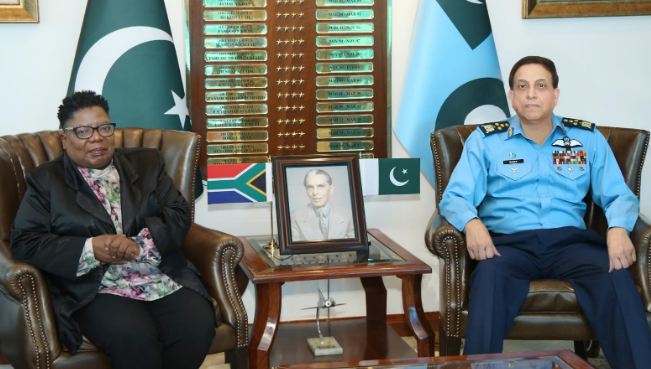
ISLAMABAD, MAR 17 /DNA/ – A high-level defence delegation from the Republic of South Africa, led by Dr Thobekile Gamede, Acting Secretary of Defence, called on Air Chief Marshal Zaheer Ahmed Baber Sidhu, Chief of the Air Staff, Pakistan Air Force, at Air Headquarters, Islamabad. The visit marked a significant step towards strengthening the enduring military ties between the two countries, focusing on areas of mutual interest and exploring new avenues of cooperation in the aviation industry.
During the meeting, Chief of the Air Staff shared insight into various ongoing modernization projects of Pakistan Air Force’s operational construct, force goals and plans for the force structure with a keen focus on future warfare. He emphasized the crucial role of the National Aerospace Science and Technology Park in bolstering self-reliance and driving regional defence innovations. The Air Chief also reiterated PAF’s commitment to collaborating with the South African Air Force in military to military cooperation and the training domain.
Dr Thobekile Gamede commended the professionalism and accomplishments of Pakistan Air Force, highlighting its success in the domains of indigenization and cutting-edge technological advancements. She expressed a strong desire to rebuild South African Air Force, seeking assistance from PAF for its modernization and servicing of critical equipment. The dignitary also conveyed an earnest interest in bolstering the existing cooperation between the Air Forces of both countries. This includes a specific request for increased collaborative efforts to revamp training setups, ranging from basic to tactical levels, across multiple warfare domains. The South African Acting Secretary of Defence was notably impressed by the PAF’s Multi-Domain capabilities showcased during Exercise Indus Shield, which was attended by a South African Air Force delegation as observers. She highlighted that the successful execution of this exercise underscored the professional prowess and versatility of Pakistan Air Force in diverse operational environments. The South African delegation also articulated intentions to re-equip their Air Force and establish an industrial setup aligned with the National Aerospace Science and Technology Park being spearheaded by PAF.
The delegation also visited National ISR & Integrated Air Operations Centre and PAF Cyber Command, where they were given a detailed briefing on PAF’s operational capabilities.
This visit of Acting Secretary of Defence South Africa to Air Headquarters, Islamabad is a testament to the strong commitment of both nations to further enhance their military partnership through continued dialogue and collaboration.
Pakistan’s national security has remained a dynamic concept, evolving with the passage of time in response to both internal and external challenges. In the modern world, a nation’s security is no longer determined solely by its military strength but by the resilience of its institutions, economy, and society. The convening of another National Security meeting under the chairmanship of the Sardar Ayaz Sadiq, Speaker of the National Assembly reflects the gravity of the challenges Pakistan faces today. It is imperative that this session builds upon the insights and resolutions of previous meetings to formulate policies that secure Pakistan’s survival in the current global scenario.
Over the years, Pakistan has sought to institutionalize its approach to national security. Several national security meetings have been convened at critical junctures in the country’s history, shaping policies that have impacted its stability and growth. The establishment of the National Security Council under various governments was an effort to ensure a structured and comprehensive security policy.
The previous policies emphasized the importance of economic security alongside military preparedness, recognizing that economic stability forms the backbone of national resilience. These were the product of extensive consultations with all stakeholders and marked a shift in Pakistan’s approach, moving from a purely defense-oriented security framework to a broader, more inclusive strategy that encompassed human security and economic development.
Despite these measures, security threats have continued to evolve, requiring continuous adaptation. The recent resurgence of terrorism, particularly in Balochistan and Khyber Pakhtunkhwa, poses a grave challenge. The hijacking of the Jaffar Express and the tragic loss of innocent lives underscore the urgency of addressing insurgency with a renewed and strategic counterterrorism approach. The persistence of groups such as the Baloch Liberation Army and the Tehreek-e-Taliban Pakistan demonstrates the necessity of strengthening intelligence networks, deploying modern surveillance technologies, and enhancing inter-agency coordination to neutralize such threats before they materialize into devastating attacks.
Hybrid warfare, too, has emerged as a formidable challenge. Pakistan is increasingly being targeted by misinformation campaigns, cyber threats, and psychological operations aimed at weakening national institutions and sowing discord within the population. The rise of social media as a battleground for perception management necessitates the development of a robust cybersecurity infrastructure. This meeting must address ways to counter misinformation, protect digital assets, and educate the public about hybrid threats that seek to destabilize the country from within.
Economic stability remains a fundamental pillar of national security. The depreciation of the rupee, inflation, and the ongoing energy crisis are not merely financial concerns but also national security imperatives. A weakened economy exposes the nation to external pressures and undermines its ability to maintain strategic independence. Aligning Pakistan’s economic policies with long-term security objectives is essential. Trade partnerships with key allies such as China, Saudi Arabia, and Gulf nations must be strengthened, while economic diplomacy should play a central role in reducing external dependencies. The expansion of industrial and technological sectors can further bolster economic security, reducing reliance on foreign aid and ensuring sustainable development.
Regional stability is another key concern. The situation in Afghanistan remains uncertain, with continued instability along Pakistan’s western border. Effective border management, increased intelligence sharing with regional allies, and diplomatic engagement with Afghanistan’s leadership are essential to prevent the spillover of violence and extremism into Pakistan. Tensions with India, particularly over Kashmir, continue to shape Pakistan’s security policies. While military preparedness remains crucial, diplomatic avenues must also be explored to prevent escalation and ensure that Pakistan’s security interests are safeguarded through regional and international engagement.
Internal political stability plays a critical role in shaping national security. Political polarization and institutional conflicts weaken the state’s ability to respond effectively to security threats. National security should be a non-partisan issue, where collective decision-making takes precedence over political rivalries. Civil-military relations must be based on a model of cooperation, where national interest dictates strategy rather than individual or institutional ambitions. Parliament, security forces, and civil institutions must work in harmony to develop policies that ensure stability and progress.
The success of this national security meeting will depend on the adoption of clear, actionable strategies. A stronger and more empowered National Security Council should be institutionalized, ensuring that security decisions are made within a structured and permanent framework rather than on an ad hoc basis. Counterterrorism measures must be intensified through better coordination among intelligence agencies and the deployment of modern surveillance technologies. The revival of the National Counter Terrorism Authority can play a crucial role in consolidating efforts against insurgent threats.
Diplomatic engagement remains an essential tool in securing Pakistan’s national interests. Active participation in regional peace dialogues, improving relations with neighboring countries, and utilizing forums such as the Organization of Islamic Cooperation to advocate for Pakistan’s security concerns can help build alliances that strengthen national resilience. Strengthening partnerships with China, Turkey, and Gulf nations while maintaining balanced relations with Western powers will ensure that Pakistan remains strategically positioned in an increasingly polarized global environment.
Public engagement and national unity are fundamental to long-term security. A strong and cohesive society acts as the first line of defense against internal and external threats. Promoting interfaith harmony, fostering national integration, and ensuring equitable development across provinces can address socio-economic disparities that often lead to unrest and extremism. Strengthening local governance structures will improve law enforcement, service delivery, and overall governance, reducing the space for elements that seek to exploit governance gaps.
The decisions made in today’s national security meeting will have long-lasting implications. Pakistan stands at a critical crossroads where its survival depends on a well-coordinated approach that integrates military strength, economic resilience, political stability, and diplomatic foresight. National security can no longer be viewed in isolation from economic and social factors. It is the combined strength of these elements that will determine Pakistan’s ability to navigate the complexities of the modern world. The success of this meeting will be measured not just by the policies it proposes but by the commitment of all stakeholders to their effective implementation. If the resolutions of this session lead to decisive actions, Pakistan can emerge stronger, more secure, and better prepared for the challenges that lie ahead.
ISLAMABAD, MAR 17 /DNA/ – Responding to media queries regarding the remarks made by the Indian Prime Minister during a podcast with Lex Fridman, the Spokesperson said, “The remarks are misleading and one-sided. They conveniently omit the Jammu and Kashmir dispute, which remains unresolved for last seven decades despite India’s solemn assurances to the United Nations, Pakistan and the Kashmiri people.
India’s fictitious narrative of victimhood cannot hide its involvement in fomenting terrorism on Pakistan’s soil and the state-sanctioned oppression in Indian Illegally Occupied Jammu & Kashmir (IIOJK). Instead of blaming others, India should reflect on its own record of orchestrating targeted assassinations, subversion and terrorism in foreign territories.
Pakistan has always advocated constructive engagement and result-oriented dialogue to resolve all outstanding issues, including the core dispute of Jammu and Kashmir. However, peace and stability in South Asia have remained hostage to India’s rigid approach and hegemonic ambitions.
The anti-Pakistan narrative, emanating from India, vitiates the bilateral environment and impedes the prospects for peace and cooperation. It must stop.”
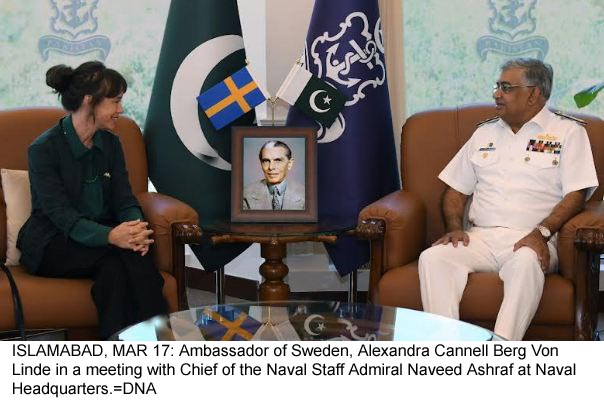
ISLAMABAD, MAR 17: Ambassador of Sweden, Alexandra Cannell Berg Von Linde in a meeting with Chief of the Naval Staff Admiral Naveed Ashraf at Naval Headquarters.=DNA
ISLAMABAD, MAR 17 /DNA/ – Alexandra Cannell Berg Von Linde, Ambassador of Sweden to Pakistan, met with Admiral Naveed Ashraf, Chief of the Naval Staff (CNS) of the Pakistan Navy, at the Naval Headquarters in Islamabad today.
The meeting focused on enhancing bilateral relations and exploring opportunities for collaboration in defense, maritime security, and other areas of mutual interest.
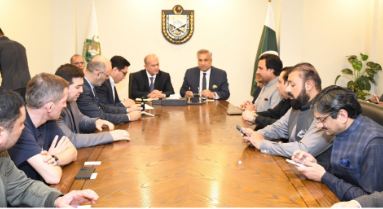
ISLAMABAD, MAR 17 /DNA/ – The Islamabad Chamber of Commerce and Industry (ICCI) hosted a prominent business delegation from Uzbekistan here on Monday, led by Bakhrom Yusupov, Trade and Economic Counsellor at the Embassy of Uzbekistan. The delegation, comprising representatives from Uzbekistan’s fruit, vegetables, beverages, and confectionery sectors, engaged in productive B2B meetings with Islamabad’s business leaders to explore new trade and investment opportunities.
In his welcome address, Nasir Mansoor Qureshi, President of ICCI, highlighted the chamber’s commitment to promoting trade, investment, and industrial growth. He encouraged Uzbek business leaders to explore partnerships in Pakistan’s industrial zones, invest in joint ventures, and participate in trade expos.
Bakhrom Yusupov, Trade and Economic Counsellor at the Embassy of Uzbekistan, commended ICCI’s leadership for its proactive efforts in fostering international business ties. He appreciated ICCI’s ongoing initiatives to create a business-friendly environment that supports both local and foreign investors.
In his concluding remarks, Abdul Rehman Siddiqui, Senior Vice President of ICCI, expressed confidence that the discussions would open new avenues for economic cooperation, business ventures, and enduring partnerships.
Prominent ICCI leaders present at the event included Chairman Founder Group ICCI Tariq Sadiq, Vice President Nasir Mehmood Chaudhry, former President Mian Shaukat Masood, Executive Members Imran Minhas, Najeeb Ellahi Malik, Tahir Ayub, Malik Aqeel Ahmed, former SVP Khalid Chaudhry, and Senior Advisor to ICCI President Naeem Siddiqui.
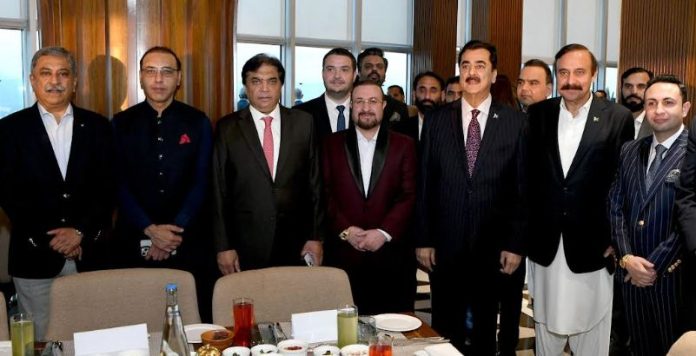
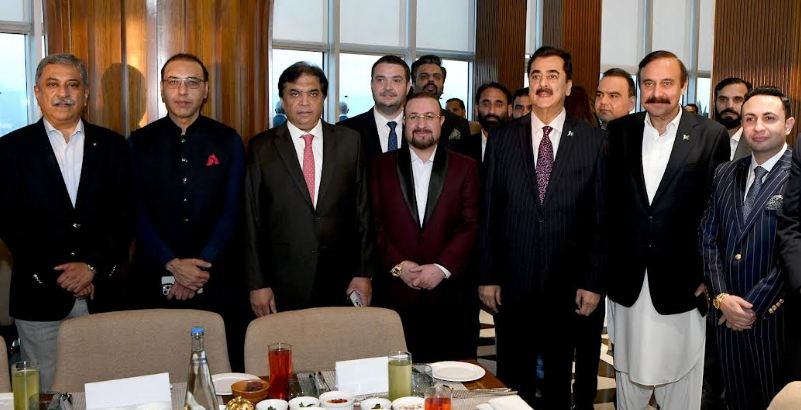
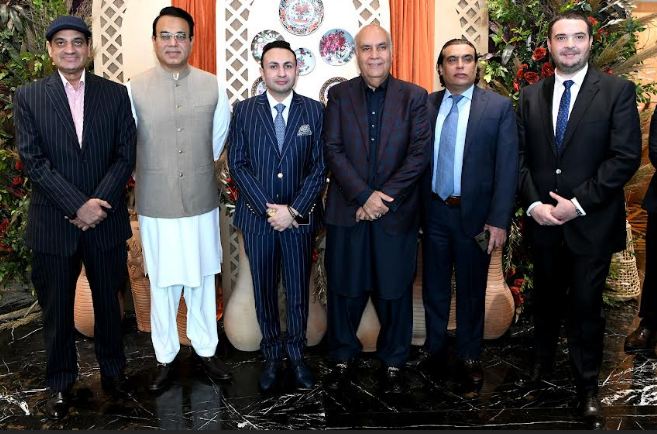
ISLAMABAD, MAR 17 /DNA/ – An exclusive Iftar dinner hosted by Movenpick Management brought together several high-profile dignitaries, business leaders, and government officials in the capital. The event served as a platform for fostering discussions on economic growth, investment opportunities, and business collaborations in Pakistan.
Among the distinguished attendees were Chairman Senate Syed Yousaf Raza Gillani, Federal Ministers Hanif Abbasi and Tariq Fazal Chaudhry, Amir Muqam, and President of The Centaurus Group, Sardar Rashid Ilyas Khan. Also present were CEO of The Centaurus, Sardar Yasir Ilyas, President of the Rawalpindi Chamber of Commerce and Industry (RCCI), Usman Shaukat, and Chairman of REIT, Zahid Latif Khan.
A large number of ambassadors and high commissioners from various countries attended the event. The Charge d Affaires of the US Embassy Nathalie Beker was also in attendance.
The gathering not only provided a festive and spiritual atmosphere during the holy month of Ramadan but also offered an excellent opportunity for networking and strengthening ties between the business community and policymakers. The discussions revolved around investment prospects, real estate development, and economic initiatives, particularly in the commercial and hospitality sectors.
The evening concluded with a group photograph capturing the presence of these influential figures, highlighting their collective commitment to Pakistan’s economic progress and business-friendly environment.
Mr. Nicolas Verdun, the General Manager of the MOVENPICK greeted the guests upon arrival.
Royal Public School Standard Education, Story of Excellent achievements The key role of teachers in maintaining the quality of education in school, Principal Ijaz Saty
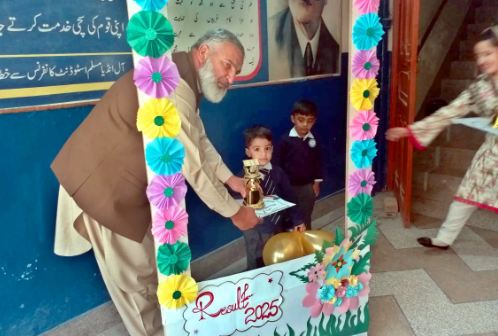
RAWALPINDI, MAR 17: /DNA/ – The Royal Public School has been providing quality education for quality education and excellent achievements, providing quality education for the past 10 years and is considered one of the most important educational institutions in the area thanks to its outstanding academic performance. In the field of education, school students have achieved wonderful results from nursery to matriculation, complimentary certificates, certificates and trophies were distributed among the children. The teachers here not only focus on the completion of the curriculum, but also play an important role in the mental and moral training of children.
Rawalpindi, Royal Public School Principal Ijaz Ahmed Satti is giving a certificate to Mohammad Azlan on receiving significant performance in the annual examination.
“Centre’s policy on Afghan refugees is flawed… approach taken in past violated human rights,” says KP CM
PESHAWAR, MAR 16 – Weeks after the federal government asked “illegal foreigners” and Afghan Citizen Card holders, residing in Pakistan, to leave before March 31, Khyber Pakhtunkhwa Chief Minister Ali Amin Gandapur castigated the Centre’s policy, saying that they should not be expelled from the country forcefully.”The Centre’s policy on Afghan refugees is flawed… The approach taken in the past violated human rights,” the provincial chief executive said while addressing a press conference in Peshawar on Sunday.
Islamabad has in the past blamed militant attacks and crimes on Afghan citizens, who form the largest portion of migrants in the country.
Pakistan launched its repatriation drive of foreign citizens, most of whom are Afghan, in 2023 but had said they were first focusing on foreigners with no legal documentation.
The United Nations says that more than 800,000 Afghans have returned to Afghanistan from Pakistan since the repatriation drive began and that in total Pakistan hosted around 2.8 million Afghan refugees who crossed the border during 40 years of conflict in their homeland.
Pakistan is currently hosting 2.1 million documented Afghans. There are hundreds of thousands of undocumented Afghan nationals also living in Pakistan for decades.
Speaking to journalists today, CM Gandapur noted that Afghan refugees who wish to acquire Pakistani nationality should be granted citizenship. He said he disagrees with the policy of expelling Afghan refugees from Pakistan.
“There should be no issues if Afghans with no criminal record are willing to stay in Pakistan… I have always raised my voice for Afghans who are legally compliant,” he added.
Earlier, The News reported that Khyber Pakhtunkhwa hosts the biggest majority of the Afghan nationals residing in the country.
Peshawar hosts the highest number of Afghan nationals than any other city. Thousands of them are doing their own businesses while others have been doing jobs in the city for the last many decades. They are living in many urban, suburban and rural areas along with the local populace.
Speaking on the rising wave of terrorism, the KP chief minister questioned the increasing incidents, claiming that the security situation was better during PTI founder Imran Khan’s tenure.
“When the state focused on crushing one party, it neglected its own responsibilities, leading to a surge in terrorism,” he said, blaming the deteriorating security situation on the Centre’s incompetence.
Emphasising the need for dialogue, Gandapur lamented that two months have passed, yet the government has failed to approve the terms of reference (ToRs) forwarded by his administration for holding talks with Afghanistan on the issue of cross-border terrorism.
The chief minister also praised the provincial police, stating that they were leaving no stone unturned in repelling terrorists on the borders. However, he criticised the lack of resources, saying, “The police have not been given new weapons in the last 10 years.”