Home Blog Page 645

23 March: The path to Freedom and Sovereignty

23 March: The path to Freedom and Sovereignty

By: Muhammad Mohsin Iqbal

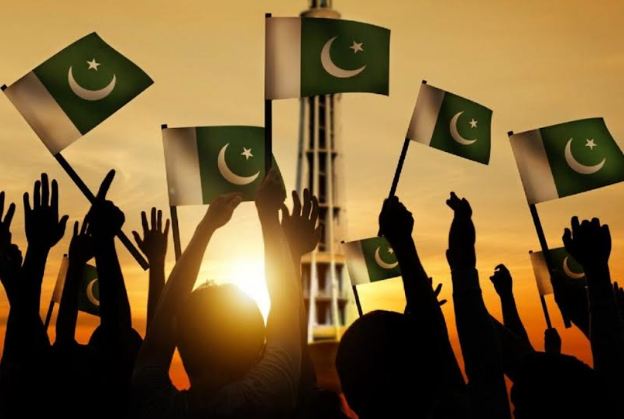
March 23, 1940, stands as a defining moment in the history of the Sub-Continent. It was a ray of light for the Muslims of British India, who yearned for a homeland where they could live according to their religious, cultural, and social values. This day illuminated the path to Pakistan, which became a reality seven years later. The historic gathering at Minto Park, Lahore, from March 22 to 24, 1940, was not just a routine political assembly but a turning point that shaped the destiny of millions. The resolution presented during this session later came to be known as the Pakistan Resolution, setting the course for the creation of an independent Muslim State.
23 March: The path to Freedom and Sovereignty

Interestingly, the name Pakistan was not used in this resolution, and it was called the Lahore Resolution. However, Indian newspapers like Pratap, Bande Mataram, Milap, Tribune, etc. sarcastically accepted it as the Pakistan Resolution. However, Muslims appreciated its name, because today this resolution is more famous than the name Pakistan.

The political environment leading up to this monumental event was extremely tense. The British colonial government had imposed Section 144 in Lahore, restricting public gatherings. Just a few days earlier, on March 19, 1940, a tragic incident occurred when British forces opened fire on the workers of the Khaksar Tehreek, killing a large number of them. The Khaksars, led by Allama Inayatullah Mashriqi, had been advocating for the rights of Muslims and challenging British authority. The bloodshed deeply disturbed the political atmosphere, raising concerns about law and order before the Muslim League’s session.

Despite these turbulent circumstances, the All-India Muslim League, under the dynamic leadership of Quaid-e-Azam Muhammad Ali Jinnah, went ahead with its planned session at Minto Park. On March 23, the resolution was formally presented by A.K. Fazlul Haq, the Chief Minister of Bengal, and was seconded by prominent leaders such as Chaudhry Khaliquzzaman, Sardar Aurangzeb, and Sir Abdullah Haroon. The resolution clearly stated that the Muslims of India were not a minority but a distinct nation with their own culture, religion, customs, and civilization. It demanded that areas where Muslims formed a majority, particularly in the North-Western and Eastern zones of India, be granted independent sovereign states. It also emphasized that constitutional safeguards should be provided to religious minorities to ensure their rights and protection in the new state structure. Furthermore, the resolution rejected the idea of a unitary form of government imposed by a central authority, advocating instead for autonomy in Muslim-majority regions to allow them to govern according to their social, religious, and cultural values. It underscored the need for economic empowerment, political freedom, and equal opportunities for Muslims, recognizing that without these elements, their survival as a separate nation would be jeopardized.

Quaid-e-Azam Muhammad Ali Jinnah, in his historic address, articulated the two-nation theory with clarity and conviction. He emphasized that Hindus and Muslims were two separate nations with different ideologies, traditions, and ways of life. He refuted the idea of a united India, stating that any attempt to impose a single system on both communities would lead to unrest. His speech resonated with the aspirations of millions of Muslims who saw the Pakistan Resolution as the first concrete step towards their dream of a separate homeland.

The significance of this resolution was not immediately realized by many, but it gradually gained momentum. Over the next seven years, the demand for Pakistan became a popular movement, bringing together Muslims from all walks of life under the leadership of the Muslim League. The commitment and determination of leaders like Liaquat Ali Khan, Maulana Shabbir Ahmad Usmani, Raja Sahib of Mahmudabad, and others played a crucial role in translating this resolution into reality.

Looking back after almost 85 years, it is essential to examine how far Pakistan has been able to implement the ideals enshrined in the Pakistan Resolution. The resolution emphasized religious, cultural, and economic independence for Muslims. While Pakistan was established as an independent state in 1947, the journey of fulfilling the vision outlined in the resolution has been complex.

On the religious front, Pakistan was created to provide Muslims the freedom to practice their faith without hindrance. However, the country has faced challenges in maintaining interfaith harmony and ensuring the rights of religious minorities. The social and cultural aspects have evolved, but preserving the original vision of unity and inclusivity remains an ongoing struggle. Economically, Pakistan has made progress in various sectors, yet the disparity between different classes and regions indicates that much work remains to be done. Political instability has often hindered development, and the principles of democracy envisioned by Quaid-e-Azam have faced obstacles.

Despite these challenges, the spirit of March 23, 1940, continues to inspire generations. Pakistan has shown resilience in the face of adversity, and its people remain committed to the ideals of justice, equality, and sovereignty. The day serves as a reminder of the sacrifices made by countless individuals who envisioned a free and prosperous nation. It is a call to reflect on the past, acknowledge the present, and work towards a future where the true essence of the Pakistan Resolution is realized in its fullest sense.

As the nation commemorates this historic day, it is essential to draw lessons from history and strive for a Pakistan that truly embodies the principles laid out on March 23, 1940. The journey is not yet complete, but with determination, unity, and adherence to the founding ideals, Pakistan can continue to progress towards a brighter and more prosperous future.

Palestinian Women Resilience

Palestinian Women Resilience

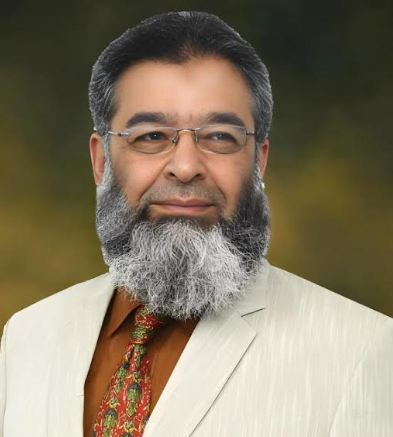
Dr. Muhammad Akram Zaheer

The fluid way in which Palestinian women devise and revise strategies and narratives of resilience reflects a dynamic responsiveness to both local and international events, forces, and discourses. These women navigate a complex socio-political landscape, responding to the shifting political realities of occupation, economic hardship, and the growing influence of international institutions in their daily lives. The contemporary, post-Oslo, neoliberal, fragmented, NGO-ized West Bank presents a unique set of challenges that require Palestinian women to adopt innovative and adaptive resistance strategies. Given this evolving context, Palestinian women have increasingly chosen incrementally transformative tactics as a means of navigating and countering both structural and direct forms of oppression. Their desire to identify a resistance strategy that meets three crucial criteria commanding local legitimacy, possessing the potential to produce radical outcomes, and remaining feasible in a context of gendered violence, patriarchal social norms, and marginalization illustrates the depth of their political engagement and strategic acumen.

Palestinian women’s strategies of resistance, while sometimes appearing vague and limited in scope, resonate deeply within their communities due to their compatibility with local political ethics and the social limitations imposed on their activism. The seemingly modest nature of these tactics does not indicate a lack of ambition or radical potential. Rather, they reflect an understanding of the necessity for sustainable, culturally rooted, and context-sensitive approaches to resistance. In an environment where open confrontation with the Israeli occupation is fraught with danger and where patriarchal norms continue to shape women’s roles in political life, Palestinian women have strategically crafted forms of activism that subtly challenge and erode these constraints over time. This approach, often termed “transformative incrementalism,” allows women to make gradual yet profound contributions to their communities and to the broader project of national liberation. By emphasizing the value of small, cumulative acts of resistance, this strategy offers a means of preserving political agency in an era characterized by fragmentation and disillusionment.A crucial aspect of transformative incrementalism is its function as both a demonstration and a source of resilience for Palestinian women. The process of engaging in resistance even in forms that appear non-confrontational or limited enables women to assert their agency and maintain their connection to the broader struggle for self-determination. Many women repeatedly affirm the significance of feeling that they are contributing to their communities and the larger liberation movement. This contribution is not merely symbolic; it provides a tangible sense of purpose and empowerment that counteracts the disempowering effects of occupation and socio-political marginalization. The meaning derived from participation in transformative resistance serves as a crucial psychological and emotional resource, reinforcing women’s commitment to their struggle despite the obstacles they face.Furthermore, transformative incrementalism presents an important means of subverting the constraints of a ‘resilience’ framework championed by international NGOs. In recent years, the development sector has increasingly co-opted radical concepts, repackaging them in ways that align with neoliberal ideologies and governance models. Resilience, once understood as a collective capacity for resistance and endurance, has been redefined within NGO and development discourse to emphasize individual adaptation and coping mechanisms. By promoting a neoliberalized version of resilience, international organizations present Palestinians with a model of survival that focuses on personal psychological fortitude and medical intervention rather than collective political action. This reframing subtly shifts the responsibility for overcoming political violence from structural change to individual perseverance, undermining the legitimacy of broader resistance efforts.In this context, Palestinian women’s adoption of transformative incrementalism represents a critical intervention. By redefining resilience on their own terms, they challenge the passive, depoliticized version advocated by international organizations and reassert the radical ethos of earlier Palestinian resistance movements. Their approach to resilience is not about mere survival or psychological adjustment; rather, it is about fostering a foundation for sustained resistance that addresses both immediate and long-term challenges. Unlike the resilience framework promoted by NGOs, which encourages Palestinians to ‘bounce back’ by accepting their circumstances as an immutable reality, transformative incrementalism insists on the possibility of change even if that change is slow and difficult to achieve.Despite the radical potential embedded in transformative incrementalism, it remains vulnerable to the creeping effects of NGO-ization. Over the past few decades, international funding and institutional partnerships have played an increasingly significant role in shaping Palestinian activism, often steering movements away from grassroots organizing and toward professionalized, donor-driven initiatives. This shift has, at times, led to a dilution of radical politics and a reliance on frameworks that prioritize bureaucratic compliance over genuine political engagement. Palestinian women’s resistance is not immune to these pressures. While transformative incrementalism offers a promising alternative to co-opted notions of resilience, it must constantly navigate the risks associated with NGO-ization, ensuring that it remains rooted in local political aspirations rather than donor agendas.Nevertheless, Palestinian women’s determination to begin a transformative process that starts from society’s foundations provides greater prospects of sustainability and grassroots legitimacy. By prioritizing community engagement, cultural continuity, and locally driven initiatives, women’s resistance efforts foster a deeper and more enduring form of resilience one that is less susceptible to external manipulation. This grassroots orientation not only enhances the legitimacy of their strategies but also increases the likelihood of their long-term impact. By reclaiming mobilizing concepts and ideas from the development sector’s attempts at depoliticization, Palestinian women assert their right to define their own modes of resistance and resilience.Moreover, transformative incrementalism allows for the construction of alternative social and political structures that challenge both occupation and internal systems of oppression. By engaging in forms of activism that are embedded in everyday life such as community education, economic empowerment projects, and grassroots organizing Palestinian women are able to create spaces of resistance that are both practical and radical. These initiatives contribute to the broader liberation movement by building the capacity for sustained resistance at the societal level, ensuring that political struggle is not confined to moments of crisis but remains an ongoing, lived reality.

Palestinian women’s engagement in transformative incrementalism represents a nuanced and strategic approach to resistance that is both adaptive and deeply rooted in local political ethics. By choosing incrementally transformative tactics, they navigate the complexities of the contemporary Palestinian context, balancing the need for local legitimacy, radical potential, and feasibility. Their approach challenges the depoliticized resilience framework promoted by international NGOs, reclaiming the concept of resilience as a tool for collective empowerment rather than individual adaptation. Despite the challenges posed by NGO-ization and external pressures, Palestinian women’s commitment to grassroots organizing and community-driven change offers a model of resistance that is both sustainable and politically significant. Through transformative incrementalism, they assert their agency, challenge structural injustices, and contribute to the ongoing struggle for national liberation in ways that are both innovative and deeply rooted in historical traditions of resistance.

PM launches countrywide drive to plant 41.7m saplings

PM launches countrywide drive to plant 41.7m saplings

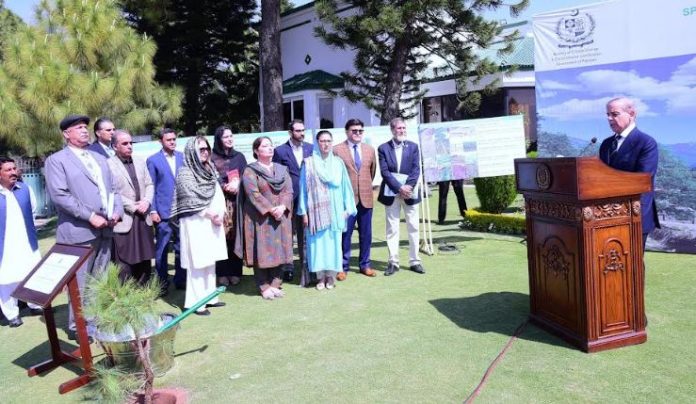
ISLAMABAD, MAR 19 (DNA): Prime Minister Shehbaz Sharif on Wednesday launched the 2025 Spring Tree Plantation Drive here to plant around 41.7 million saplings across the country, urging the entire nation’s participation to avert climate change impacts and address many diseases.

The prime minister, who launched the campaign by planting a Chir Pine sapling on the lawn of the Prime Minister’s House as part of the Up-Scaling of Green Pakistan Program, said that the plantation would be made across four provinces, as well as Gilgit-Baltistan (GB), and Azad Jammu & Kashmir (AJK).

Under the campaign, 12.870 million saplings will be planted in Punjab, 10 million in Sindh, 2.633 million in KP, 2.062 million in Balochistan, 10.147 million in AJK and four million in Gilgit Baltistan. The main species to be planted include Kikar, Jand, Amaltas, Shisham, Sukh Chain, Phulai, Chir, Kail, Deodar, Peepal, Neem, Beri, Jaman, Imli and Chilgoza.

The plantation will be carried out through around 2047 events to be held across the country to plant 41.7 million saplings comparing 40.526 million during the monsoon tree plantation of 2024.

The prime minister said that considering the benefits of the plantation drive in all aspects, the entire nation, especially the youth and farmers, should play their part.

“It will significantly contribute to the betterment of the environment and can help effectively address various diseases,” he remarked.

He said that the impacts of climate change, in recent years, have also necessitated huge efforts for tree plantations.

Referring to the worst climate change-induced floods of 2022 which had caused widespread destruction across the country, he said Pakistan was among the 10 countries in the danger zone considering the impacts of climate change.

Prime Minister Shehbaz said that Pakistan was facing the climate change impacts despite its minimal contributions to greenhouse gases, and urged the people to seek Allah’s blessings during the ongoing holy Ramazan and make efforts for the country’s progress.

According to the official data, the PC-1 of the Revised Upscaling of Green Pakistan Program (2024-28) is in progress which features the plantation of 945 million new plants and maintain 2,221 million existing plants besides improving species and ensuring sustainable forest management, data collection, and scientific forest management.

During the 2019-25 Green Pakistan Program, the plantation was made over an area of 720.916 hectares which also created over 1.42 million man-months of green jobs.

Pakistan must put its house in order

Pakistan must put its house in order


By Shamim Shahid

PESHAWAR: In a bid to address the highly tense and uncertain situation that has prevailed for decades due to terrorism and violence, the National Security meeting in Islamabad has taken a series of critical decisions. Among them is the targeting of what has been termed as “terrorist dens” across the border in Afghanistan. Following this significant parliamentary meeting, Defense Minister Khawaja Asif indicated the possibility of cross-border operations, asserting that Pakistan will act wherever necessary to protect its national security.

No one can deny the universal truth that the resolution of all issues—whether political, economic, or strategic—ultimately rests in dialogue and political means. The longstanding tensions and confrontations with Afghanistan have been inherited, yet instead of handling them with the wisdom of socio-political elders, the military establishment continues to follow the doctrines of its former British colonial rulers, further complicating the situation.

Pakistan has long been considered a security state, but as Imtiaz Alam rightly argues, branding it a “hard state” as a solution to the weaknesses of a “soft state” is highly misleading. He asserts that the crisis within the state stems from the failure of a “garrison-led” approach. Further hardening the state, he warns, will only exacerbate its crises and push it toward the brink of collapse.

Several past leaders recognized the importance of political dialogue for resolving disputes with Afghanistan. Shaheed Zulfikar Ali Bhutto was among the first to take steps in this direction, engaging in talks with Sardar Muhammad Daud Khan in 1976. However, Cold War strategists opposed their reconciliatory efforts, leading to Bhutto’s ouster under the banner of Nizam-i-Mustafa, while Daud Khan was overthrown and assassinated by so-called revolutionaries.

For a long time, the United States, with the support of its trusted allies, has exerted influence over the global order. After the 2009 Afghan presidential elections, the US realized that some coalition partners in the war on terror were playing a double game. While publicly announcing evacuation plans, Washington covertly shifted its strategy by sponsoring and guiding Afghan religious extremists through Qatar instead of Saudi Arabia. The consequences of this shift are now evident, particularly in how Pakistan has been left to navigate its own ironies. The policymakers in Rawalpindi and Islamabad must prioritize putting their own house in order rather than contemplating air and ground strikes in a neighboring country that has already endured external aggression for over four decades.

Pakistan has made enemies of both hegemonic India and the Taliban, who exploit insurgencies to their advantage. If Pakistan is to secure its future, it must address the longstanding grievances of the Baloch people by respecting their national rights and ceasing senseless repression. Genuine political dialogue and reconciliation remain the only viable path to resolving internal and external conflicts, especially terrorism, violence, and armed resistance in Balochistan.

The people of Khyber Pakhtunkhwa (KP) have the resilience to fight Taliban terrorism, even if left to do so alone. However, they have lost faith in state institutions. Before expecting their support, authorities in Islamabad must work to restore their trust. Once that trust is rebuilt, they can be backed sincerely in the fight against the Taliban. Similarly, addressing the root causes of Baloch grievances and finding a pathway to reconciliation is essential. Engaging in conflicts with all three neighbors while alienating one’s own people is a suicidal strategy.

It is time for Pakistan’s leadership to reconsider its approach, prioritize domestic stability, and adopt a diplomatic and reconciliatory path to resolve conflicts. The future of the nation depends on it.

CEO of Waqas Travels hosts Iftar for Aviation Industry Professionals

CEO of Waqas Travels hosts Iftar for Aviation Industry Professionals

The event took place at Sizzling Wok, one of Islamabad’s finest restaurants, known for offering an exquisite selection of authentic Asian cuisine.

ISLAMABAD, MAR 19 /DNA/ – In a gesture of hospitality and camaraderie, Waqas Ahmed, CEO of Waqas Travels, hosted a special Iftar dinner for esteemed friends and professionals from the aviation industry. The gathering brought together key figures from the sector, providing a platform for meaningful discussions and networking in a relaxed and festive setting.

Among the distinguished attendees was the Regional Sales Manager of Turkish Airlines, who joined other aviation professionals to share insights on the industry’s latest developments and future prospects. The event took place at Sizzling Wok, one of Islamabad’s finest restaurants, known for offering an exquisite selection of authentic Asian cuisine.

The Iftar dinner not only celebrated the spirit of Ramadan but also reinforced the strong professional relationships within the aviation industry. Attendees appreciated the opportunity to engage in fruitful conversations while enjoying a delightful culinary experience.

The evening concluded on a warm note, with guests expressing their gratitude to Waqas Ahmed for his generous hospitality and efforts in fostering stronger industry ties.

COAS calls for shunning ‘soft state’ approach, improving governance for lasting stability

COAS

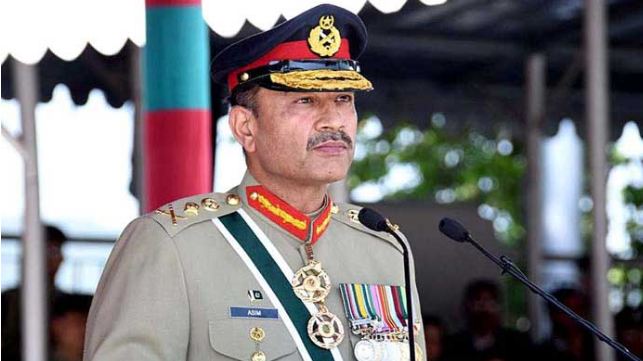
ISLAMABAD, MAR 18: Amid rising terror attacks across the country, particularly in Khyber Pakhtunkhwa and Balochistan, Chief of Army Staff (COAS) General Asim Munir blamed on Tuesday “soft state” for the loss of innocent lives, asking for how long they [armed forces] will fill the “gaps of governance” with martyrs’ blood.

“We need better governance… we should make Pakistan a hard state,” the army chief said while addressing a high-level in-camera meeting of the Parliamentary Committee on National Security, which was skipped by major opposition parties, including the Pakistan Tehreek-e-Insaf (PTI).

The in-camera session came against the backdrop of rising terrorism in Pakistan, including a major terrorist attack on a passenger train in the Mushqaf area of the Bolan district in Balochistan.

Dozens of militants, affiliated with the Balochistan Liberation Army (BLA), blew up a railway track and assaulted Jaffar Express on Tuesday, carrying more than 440 passengers — who were taken hostage.

The security forces, after a complex clearance operation, neutralised 33 attackers and rescued the hostage passengers.

Apart from five operational casualties, as many as 26 passengers were martyred by the terrorists, of which 18 were security personnel belonging to the Pakistan Army and the Frontier Corps (FC), three were officials from Pakistan Railways and other departments, and five were civilians.

The high-level meeting was attended by Prime Minister Shehbaz Sharif, COAS Munir, Director General Inter-Services Intelligence (DG ISI) Lieutenant General Asim Malik, chief ministers of all four provinces, and other top officials.

However, several key figures including Interior Minister Mohsin Naqvi, NA Opposition Leader Omar Ayub and Pakistan Tehreek-e-Insaf (PTI) members skipped the the high-level huddle.

Addressing the crucial session, COAS Munir asserted that no agenda, movement, or individual is greater than national security. “If this country exists, so do we; therefore, nothing is more important to us than its security,” he added.

“All elements of national power must operate in unison to achieve lasting stability,” he emphasised, declaring that it is a fight for the nation’s survival and the future of generations to come.

“To safeguard Pakistan, we must adopt a unified narrative, rising above our political and personal interests,” he stressed.

“Those who believe they can weaken Pakistan through these terrorists — this day sends them a clear message,” he said, adding: “Today is a message that we will not only defeat them [terrorists] but also their facilitators.”

‘Unanimous political will’

The NA security moot strongly condemned the recent incidents of terrorism in KP and Balochistan and expressed solidarity with the affected families, read the declaration issued at the conclusion of the crucial session. The huddle stressed the need for consensus and unified political commitment to combat terrorism with full force.

Lauding the valour and professionalism of the security forces, the meeting reiterated the country’s unwavering resolve to eliminate terrorism in all its forms and manifestations.

The committee stresses strategic and concerted political resolve to counter the menace of terrorism with the full might of the state.

“The committee emphasised strategic and unified political commitment to counter the terror threat with the full might of the state,” added the statement.

In addition to this, the meeting stressed the need for immediate implementation of the National Action Plan (NAP) and strategy of operation Azm-e-Istehkam to dismantle terrorist networks, counter their logistic support, and dismantle the nexus between terrorism and crime.

The participants of the meeting expressed concern over the use of social media platforms by terrorist groups to spread anti-state propaganda and recruit followers.

They called for formulating a mechanism to tackle the digital networks of terrorists.

“Reiterating its unwavering support for Pakistan’s armed forces and law enforcement agencies, the committee acknowledged their sacrifices and commitment to national defence,” it added.

The entire nation stands shoulder to shoulder with the armed forces, police, Frontier Constabulary (FC) and intelligence agencies in the war against terrorism, read the statement.

The meeting reaffirmed the resolve that no institution, individual or group working in collusion with hostile forces will be allowed to harm the peace and stability of the country.

PM Shehbaz Sharif leads national security meeting on counter-terrorism strategy

PM Shehbaz Sharif leads national security meeting on counter-terrorism strategy

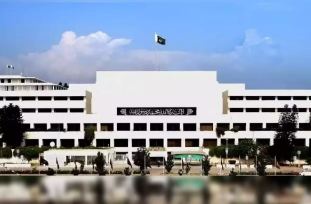
ISLAMABAD, MAR 18 (APP/DNA): Parliamentary Committee on National Security on Tuesday strongly condemning the recent wave of terrorist activities, called for immediate implementation of the National Action Plan and a strategy to eradicate terrorist networks and counter logistical support.

The committee appreciated the bravery, courage, and professional expertise of the security forces and law enforcement agencies in countering terrorism and reiterated Pakistan’s unwavering commitment to eliminating terrorism in all its forms. The committee also expressed solidarity with the families affected by the terrorism activities.

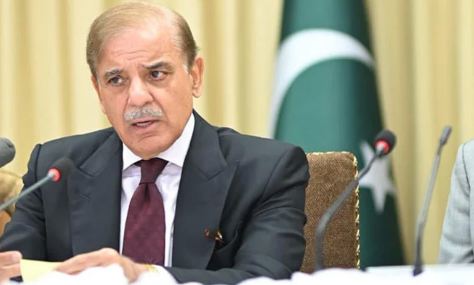
Prime Minister Shehbaz Sharif read out the declaration unanimously adopted by the Parliamentary Committee. The in-camera meeting of the committee was convened here today under the chairmanship of National Assembly Speaker Sardar Ayaz Sadiq.

The committee appreciated the bravery, courage, and professional expertise of the security forces and law enforcement agencies in countering terrorism.

The forum emphasized the need for a strategic and united political resolve to face this threat with the full strength of the state and called for national consensus in the fight against terrorism.

The committee expressed serious concern over the increasing misuse of social media platforms by terrorist groups to spread propaganda, recruit followers, and coordinate attacks, stressing the need for immediate measures to curb this abuse. It also emphasized the need to establish procedures to block digital networks of terrorists.

Reaffirming its unwavering support for the Pakistan Armed Forces and law enforcement agencies, the committee acknowledged their immense sacrifices and the resolve for national defense, stating that the nation stands shoulder to shoulder with the armed forces, police, FC, and intelligence agencies in the war against terrorism.

The committee reiterated that no institution, individual, or group involved in collaboration with the enemy to harm Pakistan’s peace and stability will be allowed to do so.

The committee also expressed regret over the non-participation of certain opposition members and reiterated that the process of consultation will continue in the future.

The session was attended by Prime Minister Shehbaz Sharif, parliamentary committee members, political leaders, Chief of Army Staff General Syed Asim Munir, ministers, and senior officials from the military and intelligence agencies.

Ruet-i-Hilal Committee to meet for Shawwal moon sighting on March 30

Ruet-i-Hilal Committee to meet for Shawwal moon sighting on March 30

LAHORE, MAR 18: The Central Ruet-i-Hilal Committee, along with zonal committees, will convene on March 30 (Sunday evening) to sight the moon of Shawwal, marking the potential end of the holy month of Ramazan.

The Central Ruet-e-Hilal Committee’s meeting will take place at the Ministry of Religious Affairs and Interfaith Harmony where religious scholars, meteorological experts, and other stakeholders will participate in the deliberations to verify moon sighting reports from across the country.

The announcement of the moon sighting will determine the date for Eidul Fitr celebrations across Pakistan.

Ramazan began in Pakistan on March 2 after the Ruet-i-Hilal Committee met on February 28 and said the Ramazan moon had not been sighted in the country.

Last month, the Pakistan Space and Upper Atmosphere Research Commission (Suparco) had forecasted that the holy month of Ramazan would begin on March 2, while Eidul Fitr would be observed on the 31st of the month.

Pakistan Navy Ship ASLAT visits Maldives

Pakistan Navy Ship ASLAT visits Maldives
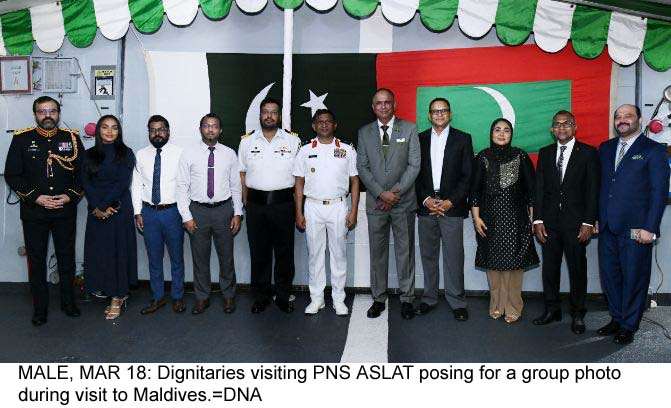
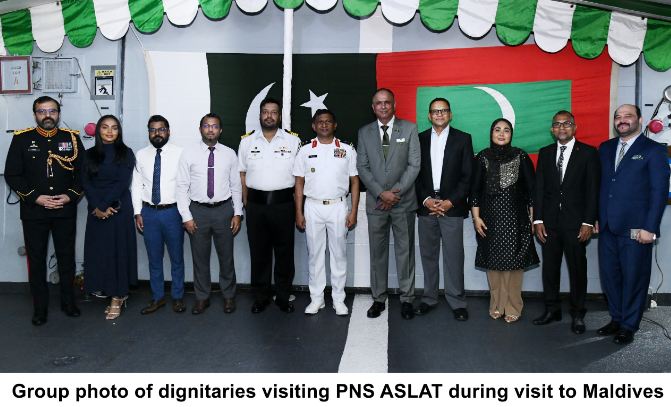
MALE, MAR 18: Dignitaries visiting PNS ASLAT posing for a group photo during visit to Maldives.=DNA

MALÉ, MAR 18 /DNA/ – Pakistan Navy Ship (PNS) ASLAT visited Maldives during Regional Maritime Security Patrol (RMSP) deployment. Upon arrival at Port Malé, the ship was warmly welcomed by officials of Maldives National Defence Force (MNDF) and Coast Guard.

During the port visit, Commanding Officer of PNS ASLAT called on Chief of Defence Force Major General Ibrahim Hilmy and Commandant Coast Guard Brigadier General Mohammad Saleem. During these interactions, matters of mutual interest were discussed. The Commanding Officer also conveyed warm wishes from Chief of the Naval Staff Admiral Naveed Ashraf to the people of Maldives.

During its stay in Maldives, Chief of Defence Force, government officials, High Commissioner of Pakistan, diplomats, and ambassadors/representatives from Australia, Bangladesh, China, Japan, Saudi Arabia, Malaysia, Russia, Sri Lanka, United Kingdom, and United States, along with members of local community, visited the ship.

Pakistan Navy ships are regularly deployed on RMSP missions to fulfill international obligations for maritime security, ensure freedom of navigation on the high seas, and protect global commons.

At the conclusion of the port visit, PNS ASLAT conducted a Passage Exercise (PASSEX) with the Maldives Coast Guard Ship SHAHEED ALI. The exercise aimed to strengthen maritime cooperation and enhance interoperability between the two navies.

Pakistan and Maldives share friendly relations, which have strengthened over time. The visit of PNS ASLAT to Maldives will further contribute to fostering naval collaboration between the two brotherly nations.

Pakistan Navy Ship ASLAT welcomed in Maldives for RMSP mission

Pakistan Navy Ship ASLAT welcomed in Maldives for RMSP mission

ISLAMABAD, MAR 18 /DNA/ – Pakistan Navy Ship (PNS) ASLAT visited Maldives during Regional Maritime Security Patrol (RMSP) deployment. Upon arrival at Port Malé, the ship was warmly welcomed by officials of Maldives National Defence Force (MNDF) and Coast Guard.

During the port visit, Commanding Officer of PNS ASLAT called on Chief of Defence Force Major General Ibrahim Hilmy and Commandant Coast Guard Brigadier General Mohammad Saleem. During these interactions, matters of mutual interest were discussed. The Commanding Officer also conveyed warm wishes from Chief of the Naval Staff Admiral Naveed Ashraf to the people of Maldives.

During its stay in Maldives, Chief of Defence Force, government officials, High Commissioner of Pakistan, diplomats, and ambassadors/representatives from Australia, Bangladesh, China, Japan, Saudi Arabia, Malaysia, Russia, Sri Lanka, United Kingdom, and United States, along with members of local community, visited the ship.

Pakistan Navy ships are regularly deployed on RMSP missions to fulfill international obligations for maritime security, ensure freedom of navigation on the high seas, and protect global commons.

At the conclusion of the port visit, PNS ASLAT conducted a Passage Exercise (PASSEX) with the Maldives Coast Guard Ship SHAHEED ALI. The exercise aimed to strengthen maritime cooperation and enhance interoperability between the two navies.

Pakistan and Maldives share friendly relations, which have strengthened over time. The visit of PNS ASLAT to Maldives will further contribute to fostering naval collaboration between the two brotherly nations.

Stay Connected

64FansLike
60FollowersFollow

Latest Reviews

Exchange Rates

USD - United States Dollar
EUR
1.17
GBP
1.35
AUD
0.72
CAD
0.73