Home Blog Page 644

Torkham border reopens after 25 days

Torkham border reopens after 25 days

Sources say people would be allowed to cross on foot from Friday onwards

DNA

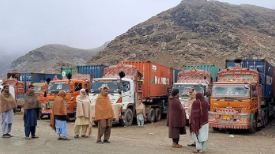
Peshawar: The Torkham border crossing, the main artery for travel and trade between Pakistan and landlocked Afghanistan, has reopened after a 25-day closure following successful negotiations by the authorities of the two countries.

The crossing will be initially opened for trade and people would be allowed to cross on foot from Friday onwards.

Following the reopening of the border crossing, bilateral trade has resumed with trucks carrying commercial goods started entering Afghanistan, sources added.

Earlier, head of Pakistani tribal jirga Syed Jawad Hussain Kazmi said that Afghan officials have agreed to remove the controversial construction that had led to tensions between the two sides.

He said that a ceasefire would remain in place until the Joint Coordination Committee (JCC) meeting takes place, ensuring stability in the region. Pakistani security officials have expressed satisfaction with the Afghan authorities’ decision, Kazmi added.

The closure, triggered by tensions over the construction of a bunker by Afghan forces near Zero-Point, severely impacted cross-border movement, suspending all trade and travel between the two countries.

ACP puts lives of journalists, ministers at risk during Iftar event

ACP

KARACHI, MAR 19 /DNA/ – The Arts Council of Pakistan (ACP) Karachi put the lives of journalists, including ministers, at the high risk during the Iftar dinner.

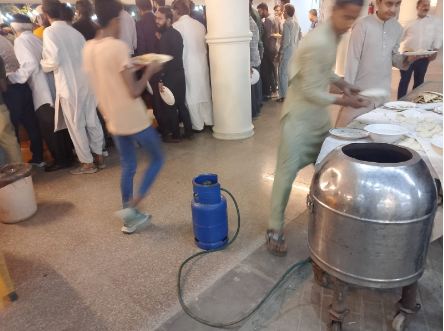
As per reports, seen in the pictures, the institution’s negligence could have endangered the  hundreds of lives of VIPs and Media personal.

On Wednesday, this highly reputable institution hosted an Iftar and dinner in honor of journalists, which was also attended by several  Sindh Ministers on the occasion.

Hundreds of journalists and ministers took part in the Arts Council of Pakistan’s Iftar, while in the midst of the gathering, various gas Gas cylinders and tandoors were placed near open flames, posing a serious hazard.

On this occasion, irresponsible behavior and improper conduct by the institution were observed.

PM Shehbaz embarks on four-day official visit to Saudi Arabia

ISLAMABAD, Mar 19 (APP): Prime Minister Shehbaz Sharif on Wednesday departed here on a four-day official visit to the
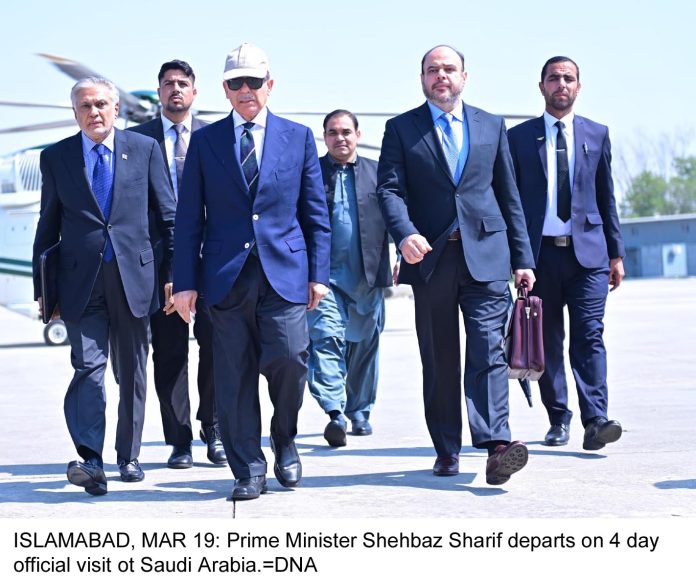
ISLAMABAD, MAR 19: Prime Minister Shehbaz Sharif departs on 4 day official visit ot Saudi Arabia.=DNA

ISLAMABAD, Mar 19 (APP): Prime Minister Shehbaz Sharif on Wednesday departed here on a four-day official visit to the Kingdom of Saudi Arabia from March 19-22, accompanied by a high-level delegation.

The objective of the visit is to strengthen bilateral ties, enhance economic cooperation, and promote investment between the two countries, according to a PM Office press release.

Deputy Prime Minister and Foreign Minister Senator Mohammad Ishaq Dar, key federal ministers and senior officials accompanied the prime minister, according to a PM Office press release.

During the visit, the prime minister is scheduled to meet Saudi Crown Prince and Prime Minister Mohammed bin Salman wherein the two leaders will discuss ways to boost trade, enhance partnership in key sectors and facilitate greater economic collaboration.

he matters of mutual interest and concern, including global and regional developments, particularly the Gaza situation, evolving Middle East dynamics, as well as issues related to the Muslim Ummah, will figure high on the agenda.

The prime minister’s visit underscores the deep-rooted historical relations between Pakistan and Saudi Arabia and will pave way for increased mutual understanding, enhanced cooperation in trade, investment and greater diplomatic coordination on bilateral, regional and global matters.

President Emomali Rahmon briefed on growth of rare plants in “Green Country”

President Emomali Rahmon briefed on growth of rare plants in “Green Country”

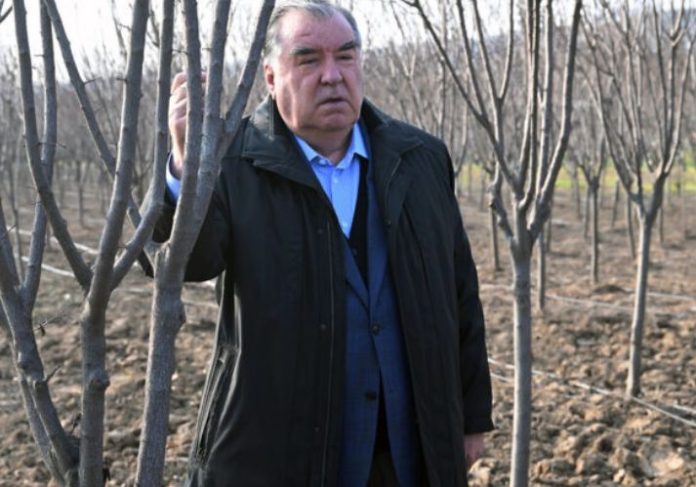
DUSHANBE, MAR 19 (DNA) — The President of the Republic of Tajikistan, Leader of the Nation, Honorable Emomali Rahmon, and the Chairman of the Majlisi milli Majlisi Oli of the Republic of Tajikistan, Mayor of Dushanbe city, Rustam Emomali, visited the nursery of rare plants, flowers and shrubs of the Limited Liability Company “Green Country”.

It was reported that the area of the enterprise is 45 hectares, and more than 100 species of rare flowers and shrubs and 40 species of ornamental tree seedlings, the seeds of which were brought from within the country and abroad, are planted and grown on the recommendation of scientists. The purpose of organizing work on the enterprise is to adapt the varieties and types of flowers, shrubs and tree seedlings to the climate of Tajikistan.

This is why experienced specialists have developed the methods of their planting and growing. The Head of State was informed that a greenhouse has been built on an area of 2 hectares and 20.5 percent of the land in the floriculture farm with the installation of modern technology. In the greenhouse, seedlings of heat-loving trees, flowers and shrubs are grown and adapted to the climate of Tajikistan.

In the greenhouse, more than 100 species of flowers, shrubs and trees, including more than 500 thousand houseplants and 100 thousand perennial flowers, are planted and grown from seeds using modern and advanced world methods. During the tour of the enterprise, the Head of State, Emomali Rahmon, highly appreciated the activities of flower growers and the products of their labor, and directed the workers to expand this instructive experience, increase the number of specialists and floriculture institutions, including in other parts of the country.

President Emomali Rahmon had a cordial conversation with the workers and gave instructions to the officials of the sector to increase the area for growing decorative flowers and shrubs and establish floriculture greenhouses. The Head of State instructed the heads of cultural and entertainment centers and parks of the capital to effectively use the existing opportunities and favorable conditions of such nurseries to improve and green the parks and boulevards, streets and squares of the city of Dushanbe and its surrounding districts.

It should be noted that the adoption of the National Program “Green Country” of the Republic of Tajikistan for 2023-2027” and the “State Program for Greening the Republic of Tajikistan for the period up to 2040” also indicates that this policy is progressing successfully and that Tajikistan is taking solid steps towards using green energy and truly becoming a green country in the future. —DNA

CASS webinar explores AI’s role in shaping the future global economy

CASS webinar explores AI’s role in shaping the future global economy

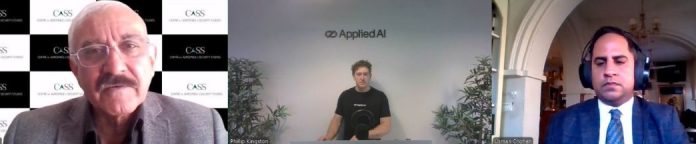
ISLAMABAD, MAR 19 (DNA): The Centre for Aerospace & Security Studies (CASS), Islamabad, organised a webinar on ‘Applied AI for the Future Economy.’ Dr Usman W. Chohan, Advisor on Economic Affairs and National Development at CASS, serving as moderator, set the context for the discussion on the transformative role of Artificial Intelligence (AI) in the economy. He highlighted that while it was widely acknowledged that AI plays a significant role across nearly all economic subsectors, the granular contributions and operational methodologies of strong AI companies, particularly startups, had remained less understood and appreciated. In his brief opening remarks, he pointed to both the conceptual and practical elements of AI applications, pointing to their impact and emerging nature of the field.

Guest Speaker Mr Phillip Kingston, CTO of AppliedAI, delivered a comprehensive presentation on the current state and future prospects of AI in the global market. Mr Kingston noted that while certain AI applications in consumer markets were demonstrating early promise and stability, their widespread institutional adoption was being hindered by the absence of a trusted AI delivery system. He reasoned that AI remained in its early stages, requiring human supervision to ensure accuracy and precision. This oversight, he explained, was critical to facilitating rapid adoption within businesses and across the enterprise.

Addressing concerns over AI’s influence on employment, Mr Kingston argued that current capabilities were often overestimated amid considerable hype. In the short to midterm, AI was unlikely to replace as many workers as speculated; instead, those who could work efficiently alongside AI were expected to outperform their less adaptable counterparts. However, he cautioned that the long-term impacts of AI might be largely underestimated.

The guest speaker also highlighted the potential threat posed by automation and AI to the South Asian region’s thriving Business Process Outsourcing (BPO) sector. He warned that the erosion of cost advantages due to automation could significantly impact the export of knowledge work. He also outlined the diverse regulatory responses to AI around the world wherein some countries had imposed outright bans on certain AI systems, others had introduced licensing requirements, while some regulated AI as a potential risk to national security. Finally, Mr Kingston observed that established AI players were lobbying for regulations that would favour incumbents and create barriers for new entrants and innovators, both foreign and domestic. Mr Kingston’s expert presentation was followed by an interactive question-and-answer session.

The webinar concluded with remarks by President of CASS, Islamabad, Air Marshal Javaid Ahmed (Retd.), who stressed that international consensus was essential for the development of AI. He noted that the disruption caused by DeepSeek had become a reality, and that the recent Paris Summit had failed to achieve consensus following the refusal of two major states to sign the proposed agreement. He also expressed concerns about emerging risks, particularly regarding Generation Beta’s potential use of AI for research.

The discussion provided valuable insights into the complex interplay of AI innovation, regulation, and market dynamics, while also underscoring the emerging labour and research challenges about which emerging economies like Pakistan must remain cognizant.

ICCI President, Kazakhstan Ambassador explore avenues for bilateral trade, investment

ICCI President, Kazakhstan Ambassador explore avenues for bilateral trade, investment

ISLAMABAD, MAR 19 /DNA/ – Ambassador of Kazakhstan to Pakistan, Yerzhan Kistafin, visited the Islamabad Chamber of Commerce and Industry (ICCI) and held a productive meeting with ICCI President Nasir Mansoor Qureshi and the chamber’s executive members to discuss avenues for strengthening bilateral trade and investment.

Ambassador Kistafin emphasized Kazakhstan’s position as Pakistan’s largest trade partner in Central Asia and highlighted the immense potential for expanding economic cooperation. He termed April as a crucial month for bilateral engagements, with key meetings scheduled, including the Joint Working Group sessions on IT, communication, and agriculture, a Regional Connectivity Session, an Online Commerce Ministers’ Meeting, and a Joint Intergovernmental Commission Meeting, all aimed at unlocking trade and investment potential.

Citing research from the Pakistan Business Council, the Ambassador noted that trade volume between the two countries could easily be enhanced up to $14 billion. He identified IT, agriculture, sports goods, textile, and pharmaceuticals as the most promising sectors for collaboration.

 ICCI President Nasir Mansoor Qureshi welcomed the Ambassador’s visit and underscored the ICCI’s commitment to strengthening business-to-business (B2B) connections to boost trade ties. He stressed the importance of easing visa procedures and encouraged frequent interactions between the two countries’ business communities, even through virtual platforms like Zoom, to foster economic prosperity.

He said that the Ambassador’s visit underscores Kazakhstan’s growing interest in expanding its partnership with Pakistan’s business community, with ICCI playing a pivotal role in driving these efforts.

Senior Vice President Abdul Rehman Siddiqui, former President Mian Shaukat Masood, Executive Members Ms. Fatima Azim, Irfan Chaudhry, Naveed Satti, Chaudhry Nadeem, and ICCI President’s senior advisor Naeem Siddiqui were prominent attendees.

The meeting concluded with both sides reaffirming their commitment to strengthening economic cooperation through trade partnerships, investment initiatives, and cultural exchange programs.

Islamabad: Nasir Mansoor Qureshi, President of Islamabad Chamber of Commerce and Industry and Ambassador of Kazakhstan Mr. Yerzhan Kistafin exchanging views on ways to enhance trade and investment ties between Pakistan and Kazakhstan. First Secretary Olzhas Tobyshakov,  ICCI Senior Vice President  Abdul Rehman Siddiqui, former President Mian Shaukat Masood, Executive Members Ms. Fatima Azim, Waseem Chaudhry, Chaudhry Nadeem and  Naveed Satti can also be seen.

Bangladesh High Commissioner calls on Chairman HEC

Bangladesh High Commissioner calls on Chairman HEC

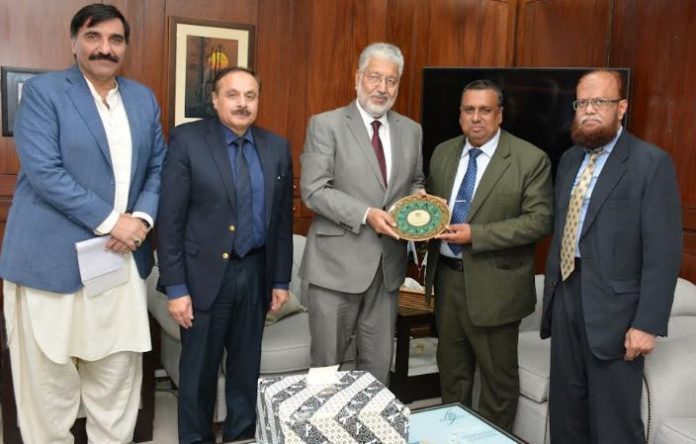
ISLAMABAD, MAR 19 /DNA/ – High Commissioner of Bangladesh to Pakistan Mr. Md. Iqbal Hussain Khan called on Chairman Higher Education Commission (HEC) Dr. Mukhtar Ahmed at HEC Secretariat on Wednesday. The two sides discussed measures for maximum facilitation of Bangladeshi students aspiring to study or enrolled in Pakistani universities.

Adviser Global Engagement HEC Mr. Awais Ahmed and Project Director (HRD) Jehanzeb Ali Khan also attended the meeting.    

Welcoming the High Commissioner to HEC, Dr. Mukhtar Ahmed shed light on the prospects of direct academic and research connections between the higher education institutions of Pakistan and Bangladesh, the avenues of student and faculty exchange initiatives, and scholarship programmes.

The High Commissioner stated that it is high time to strengthen bilateral collaboration in the higher education sector through enhanced facilitation to students. 

The Chairman assured the dignitary of all-out support from HEC with regard to extending maximum facilitation to Bangladeshi students who wish to study in Pakistan or those who are already enrolled in different programmes in Pakistani universities. He underlined that HEC is committed to supporting collaborative initiatives for enhanced academic and research linkages between the universities at both sides. 

On this occasion, the Chairman also extended invitations to the High Commissioner for participation of Chairman University Grants Commission Bangladesh and Vice Chancellors of top Bangladeshi universities in the International Vice Chancellors Forum of Islamic World in May 2025. “This is the 6th meeting of its kind, aiming at having deliberations on possible collaboration among the Islamic countries.”

Govt announces public holidays for Eid-u-Fitr

Govt announces public holidays for Eid-u-Fitr

ISLAMABAD, MAR 19 (DNA): The federal government has officially announced the public holidays on the occasion of Eid-ul-Fitr, granting a three-day break.

According to a notification issued by the Cabinet Division on Wednesday, the holidays will commence from Monday, March 31, to Wednesday, April 2.

Additionally, the decision has taken to enable citizens nationwide to observe the religious occasion with family.

Offices and businesses will remain close from March 31 to April 2 and resuming from April 3.=DNA

============

Pakistan, Russian Navies conduct arabian Monsoon-VI Exercise in North Arabian Sea

Pakistan, Russian Navies conduct Arabian Monsoon-VI Exercise in North Arabian Sea

KARACHI, MAR 19: /DNA/ – Pakistan Navy (PN) and Russian Federation Navy (RFN) conducted bilateral naval exercise Arabian Monsoon-VI in North Arabian Sea.

Various assets of Pakistan Navy, including a Destroyer, an Offshore Patrol Vessel, a Fast Attack Craft (Missile), a Maritime Patrol Aircraft, and a UAV, participated in the exercise alongside RFN ships. A key highlight of the exercise was the participation of Pakistan Air Force (PAF) fighter aircraft in various serials. The exercise featured multi-faceted maritime warfare serials and a coordinated patrol, aimed at enhancing interoperability and demonstrating a joint commitment to countering common maritime security threats.

Prior to the sea phase, RFN ships were hosted at Karachi, where cross-ship visits, harbour drills, and table-top discussions were conducted. RFN delegates also called on senior Pakistan Navy officials and paid tribute to the Founder of Pakistan by laying a wreath at Mazar-e-Quaid.

Joint maritime exercises with key naval forces underscore Pakistan Navy’s commitment to maintaining maritime security and ensuring a stable maritime order in the region.

Trump and Ramadan

Qamar Bashir

By: Qamar Bashir

In his statement issued on March 3, 2025, President Donald Trump greeted the holy month of Ramadan with great respect, reverence, and humility. His message reflected one of the fundamental virtues of the American Constitution, polity, and tradition—emphasizing religious freedom for followers of all faiths, including Islam. He expressed his warmest greetings, recognizing Ramadan as a sacred time of fasting, prayer, and communal gathering. He described it as a time to draw hope, courage, and inspiration to lead lives of holiness and virtue. He further reaffirmed his administration’s commitment to upholding religious liberty as an integral part of the American way of life. Concluding his message, he spoke of the importance of building a future of peace and recognizing the dignity of every human soul. He offered his best wishes for a season of joyous reflection on God’s endless grace and infinite love, extending his blessings to Muslim families across the world.

President Trump, a committed Christian and a man of faith, has demonstrated a deep respect for the Muslim religion, reflecting values of religious tolerance and harmony. His decision to host the Iftar dinner was particularly significant as he was the first U.S. president in 20 years not to host one in 2017, instead issuing a statement to mark Ramadan. This departure broke a two-decade-old tradition upheld by the Clinton, Bush, and Obama administrations.

However, he quickly realized the importance of the Ramadan Iftar dinner and, in 2019, hosted a grand event at the White House, inviting Muslim ambassadors and prominent American Muslims. His address during the dinner emphasized the spirit of Ramadan, highlighting the acts of faith, charity, and community service observed by Muslims. He underscored the importance of mercy, compassion, and goodwill, reaffirming America’s commitment to upholding these values alongside the global Muslim community.

The tradition of hosting an Iftar dinner at the White House dates back to President Thomas Jefferson, who, in 1805, hosted a post-sunset meal to accommodate a visiting Muslim envoy from Tunisia. Nearly two centuries later, in 1996, then-First Lady Hillary Clinton revived the observance by hosting an Eid al-Fitr reception for about 150 guests. The tradition continued under Presidents George W. Bush and Barack Obama, who held annual Iftar dinners throughout their eight years in office. However, in 2017, the State Department also opted out of its customary Ramadan celebration, with Secretary of State Rex Tillerson choosing not to host the event that year.

At the 2025 Iftar dinner, President Trump welcomed ambassadors and members of the diplomatic corps representing countries with large Muslim populations. He spoke warmly about the importance of gathering for such an event, highlighting the strong relationships between the United States and the Muslim world. He described Ramadan as a holy month that brings people together in acts of worship, fasting, and prayer. He acknowledged the significance of charity and service, emphasizing that Ramadan is a time to strengthen families, communities, and faith.

During his address, he also expressed condolences for religious believers who had suffered hardships due to terrorism and violence. He specifically mentioned Muslims killed in New Zealand mosques, as well as Christians, Jews, and other innocent worshippers who lost their lives in attacks in Sri Lanka, California, and Pittsburgh. He stated that in their blessed memory, the United States remains committed to defeating terrorism and religious persecution so that people of all faiths can worship without fear and live freely according to their beliefs.

His speech reassured American Muslims, both citizens and residents, that their religious freedoms remain protected in the United States. Unlike in some Muslim-majority countries, where certain sects and religious groups face persecution, harassment, and even violence, the United States guarantees religious freedom for all Muslims, regardless of sect or school of thought. He affirmed that law-abiding, hardworking Muslims who contribute to the country’s progress and prosperity have nothing to fear. However, he emphasized that those who break the law, engage in terrorism, or threaten the lives of innocent people would face consequences, including deportation and legal action.

The tradition of hosting an Iftar dinner at the White House, respecting worshippers, and facilitating religious observances is a reflection of America’s broader commitment to religious tolerance. The United States embraces all religions and their followers with conviction and thoughtfulness, setting an example for the rest of the world.

This serves as a lesson for many Muslim-majority nations, where sectarian divisions often lead to persecution, violence, and social unrest. Instead of branding followers of different Islamic sects as infidels and spreading hatred, extremism, and division, Muslim countries should practice tolerance, acceptance, and peaceful coexistence. Every Muslim sect, school of thought, and religious group should have the freedom to practice their faith without fear of intimidation or repression. The religious freedoms enjoyed by citizens of the United States reflect the true spirit of Islam, which is based on peace, compassion, and mutual respect.

Religious persecution, unfortunately, remains a critical issue in many parts of the world. Many Muslim-majority countries continue to struggle with sectarian violence, with religious minorities and even minority Muslim sects facing systemic discrimination, exclusion, and sometimes even brutal violence. Extremist elements within these societies manipulate religious narratives to justify acts of intolerance, violating the core principles of Islam. Instead of embracing diversity within Islam, many of these nations suppress differing interpretations and traditions, leading to unrest and suffering for millions of people.

President Trump’s remarks reaffirmed the importance of ensuring religious tolerance and harmony. His message was clear: no individual should have to live in fear because of their faith. His administration’s commitment to religious liberty, as expressed in the Iftar dinner, reinforced the idea that the United States will continue to uphold the rights of people of all faiths, ensuring that no one is persecuted for their beliefs.

What is particularly notable is that the American approach to religious tolerance aligns with the true teachings of Islam. The essence of Islam, as taught by the Prophet Muhammad, revolves around peace, respect, and co-existence with others. The very name “Islam” is derived from the Arabic root word for peace. However, in many parts of the world today, the message of Islam has been hijacked by radical ideologies that seek to divide rather than unite. By contrast, the United States has successfully provided a model where Muslims, Christians, Jews, and people of other faiths can live side by side, respecting each other’s beliefs while contributing to the broader society.

By: Qamar Bashir

 Press Secretary to the President (Rtd)

 Former Press Minister at Embassy of Pakistan to France

 Former MD, SRBC

 Macomb, Detroit, Michigan

Stay Connected

64FansLike
60FollowersFollow

Latest Reviews

Exchange Rates

USD - United States Dollar
EUR
1.17
GBP
1.35
AUD
0.72
CAD
0.73