Home Blog Page 643

Captain martyred, 10 terrorists killed in DIK operation

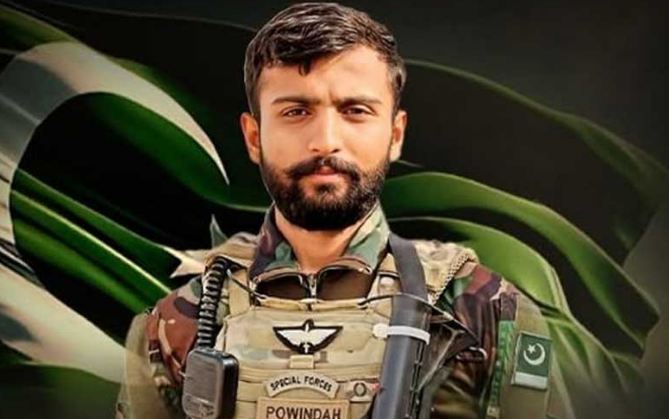
Captain martyred

RAWALPINDI, MAR 21: A Pakistan Army captain was martyred while leading a successful anti-terror operation in Dera Ismail Khan, where security forces eliminated 10 terrorists, the Inter-Services Public Relations (ISPR) confirmed on Thursday.

The operation, based on intelligence, took place on March 20, 2025. During a fierce exchange of gunfire, Captain Hasnain Akhtar, a 24-year-old officer from Jhelum district, embraced martyrdom while fearlessly leading his troops from the front.

The ISPR report stated that the security forces had recovered a significant cache of arms and ammunition during the operation. The slain terrorists were reportedly involved in numerous anti-state activities, including attacks on law enforcement agencies and the targeted killings of innocent civilians.

The military’s media wing paid tribute to Captain Hasnain, describing him as a courageous leader, known for his bold and daring actions. “The sacrifices of such brave young officers strengthen the resolve of our armed forces in their fight against terrorism,” the ISPR statement said.

A sanitisation operation remained underway in the region as security forces continued their commitment to eradicating terrorism from the country.

Democratic vs. Military Decision-Making

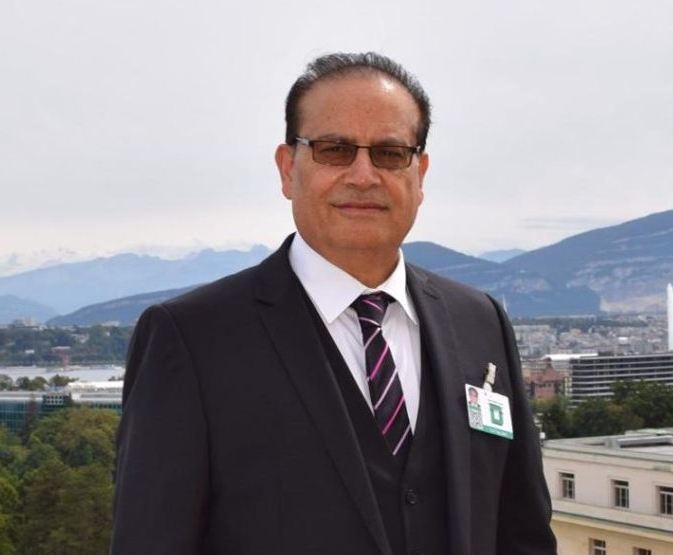
Qamar Bashir

Qamar Bashir

Pakistan’s decision-making process is heavily dominated by military leadership, rendering civilian politicians mere figureheads without real authority. Despite holding official positions, they lack the autonomy to implement policies independently, as the final say rests with the military establishment. This power-centric governance model has plunged the country into political and economic chaos, fueling regional alienation and insurgencies, particularly in Balochistan and Khyber Pakhtunkhwa.

Balochistan, in particular, has faced insurgency for decades, and rather than seeing a decline, the conflict has intensified due to the systemic exclusion of genuine Baloch leadership from decision-making processes. This exclusion, coupled with the province’s chronic deprivation, including a lack of education, widespread unemployment, and entrenched poverty, has further alienated its people. As the state weakens, the military’s grip on Balochistan is loosening, while Khyber Pakhtunkhwa faces a similar trajectory, with increasing instability and growing public dissent.

Faced with this deteriorating situation, politicians have repeatedly urged the military leadership to take corrective measures. They have called for steps to address political alienation, growing separatist sentiments, and widespread resentment toward the armed forces. Rather than proactively taking initiatives to integrate disgruntled elements into the mainstream, even the president, prime minister, federal ministers, and parliamentarians have found themselves publicly appealing to military leadership, reflecting their sense of helplessness.

 However, the military remains fixated on securing national resources rather than focusing on governance reforms or public welfare. This widening gulf between civilian and military decision-making rendered the political leaders, regardless of their intentions, powerless, and their proposals hold no weight making the governance ineffective, with the democratic process reduced to a mere façade.

Civilian decision-making traditionally follows a structured and institutionalized process designed to ensure transparency, inclusivity, and accountability. Initially, issues affecting multiple provinces are identified clearly and subjected to comprehensive feasibility studies to evaluate economic, social, environmental, and political impacts. Extensive consultations with stakeholders—including provincial governments, subject matter experts, civil society organizations, and representatives from affected communities—then take place. These steps help ensure that diverse perspectives inform policy formulation.

Subsequently, identified issues are deliberated within the Council of Common Interests (CCI), where provincial heads strive to achieve consensus-based solutions. Following CCI deliberations, proposed policies or initiatives are opened to public scrutiny through structured hearings or open forums, allowing for direct feedback and community engagement. Once public input is incorporated, detailed policy frameworks are drafted and undergo formal legislative scrutiny, involving parliamentary debate, amendments, and voting. During implementation, continuous monitoring and periodic evaluations ensure policies remain effective and aligned with national welfare, reinforcing governance in a diverse and complex country like Pakistan.

In stark contrast, military decision-making operates on a rigid and centralized model, shrouded in secrecy and primarily driven by hierarchy and discipline, with the primary objective to identify the enemy and neutralize it, whether civilian or military. Once a decision is finalized by the army chief or top military commanders, it is communicated through clear, concise orders, and swiftly executed without extensive deliberation or civilian engagement or caring for consequences.

This contrast between civilian and military governance underscores why democratic nations flourish. Countries with strong democratic institutions prioritize long-term stability, economic progress, and national development. India serves as a prime example. Since independence, it has upheld civilian supremacy, allowing democratic institutions to mature and drive sustained economic growth. Despite facing numerous internal challenges, India has emerged as one of the world’s fastest-growing economies and is poised to become the third-largest global economy in a year or two. This success highlights the effectiveness of democratic governance, where elected representatives prioritize public welfare over institutional control.

Pakistan’s trajectory, however, has been the opposite. The military’s repeated interventions have crippled democratic institutions, rendering governance ineffective. The constitution is frequently bypassed, parliament remains weak, the judiciary is undermined, and the media is suppressed. The military has turned state institutions against the public, leading to widespread resentment. While it justifies its control by branding civilian leadership as corrupt, incompetent, and disloyal, its own policies have pushed the country toward economic collapse and social unrest.

Balochistan, once considered a region of unrest, has now reached a boiling point. The military’s continued repression and exclusion of local leaders have radicalized large segments of the population. The Baloch insurgency, which once operated on the fringes, now enjoys widespread local support, turning the armed forces into the primary adversary in the eyes of many Baloch citizens. Similar trends are emerging in Khyber Pakhtunkhwa, where militant groups have gained ground due to the army’s counterproductive policies.

Now, Punjab—historically the military’s stronghold—is also experiencing disillusionment. The army’s policies, particularly corporate land acquisitions, water mismanagement, and suppression of political voices, have alienated large sections of the Punjabi population. The military’s controversial decision to divert water from the Indus River Basin to irrigate corporate farmland in southern Punjab has further fueled deep resentment in the province of Sindh, which had termed it a stealing of their rightful water share. For the first time, a significant portion of Punjab and Sindh’s populations are beginning to view the army as a self-serving institution rather than a national protector.

Internationally, Pakistan’s foreign policy has also suffered due to the military’s dominance. Unlike its neighbors, which maintain stable and mutually beneficial relationships, Pakistan has strained ties with almost all bordering nations except China. Relations with India remain hostile, ties with Afghanistan are marred by conflict, and even Iran has grown wary of Pakistan’s policies. This diplomatic isolation is largely a result of military-driven foreign policy, which prioritizes security concerns over economic and diplomatic engagement.

True progress can only be achieved when governance is based on civilian supremacy, rule of law, and democratic accountability. Pakistan’s future remains bleak unless genuine democratic reforms are implemented. Free and fair elections, restoration of parliamentary authority, and judicial independence are critical to reversing the country’s downward spiral. If the current trajectory persists, Pakistan will continue to suffer economic stagnation, political instability, and social unrest.

The nation stands at a crossroads: either it embraces democratic governance and paves the way for prosperity, or it remains trapped in a cycle of military dominance and perpetual crisis. The choice will determine whether Pakistan reclaims its potential or continues to dig its own grave.

Qamar Bashir

 Press Secretary to the President (Rtd)

 Former Press Minister at Embassy of Pakistan to France

 Former MD, SRBC

 Macomb, Detroit, Michigan

PIDE, Tsinghua University explore bold economic fix for Pakistan

PIDE

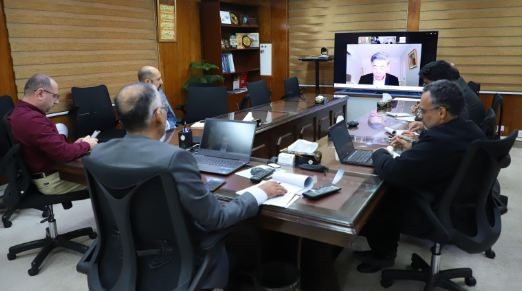
ISLAMABAD, MAR 21: /DNA/ – Pakistan Institute of Development Economics (PIDE) held a high-level meeting with Professor David Daokui Li, Mansfield Freeman Chair Professor at Tsinghua University, China, to deliberate on Pakistan’s economic challenges and explore areas for strategic collaboration. The PIDE delegation was led by Dr. Nasir Iqbal, Registrar and Acting Vice Chancellor, and included Dr. Shujaat Farooq (Chief of Research), Dr. Usman Qadir (Senior Research Economists), Ms. Afia Malik (Senior Research Economists), Dr. Mehmood Khalid (Senior Research Economists), Dr. Muhammad Zeshan (Research Fellows) and Dr. Muhammad Faisal (Research Fellows).

Dr. Nasir Iqbal presented the institute’s flagship initiative, the 5E National Economic Transformation Plan, to Professor Li. The plan focuses on five key pillars: Exports, E-Pakistan (digital transformation), Environment & Climate Change, Energy & Infrastructure, and Equity & Empowerment. These components together outline a roadmap for inclusive and sustainable development in Pakistan.

Professor Li engaged the team in a wide-ranging discussion on Pakistan’s macroeconomic growth trajectory, fiscal imbalances, energy challenges, trade relations, and the ongoing IMF program. The PIDE team emphasized that low productivity remains a critical constraint to Pakistan’s economic development. Dr. Nasir highlighted that addressing this issue through targeted technology transfer and capacity-building is essential for future growth. He further emphasized that engagement with China offers a strategic opportunity to overcome these constraints through mutual cooperation.

In response to Professor Li’s queries regarding short-term collaborative interventions, the PIDE team proposed a sectoral agenda for Pakistan-China cooperation. This included the auto industry (leveraging Chinese expertise to enhance production and technology), renewable energy (particularly solar), industrial development (expanding local manufacturing), agriculture (modern machinery and practices), the power sector (improved infrastructure and distribution), trade and connectivity, and the establishment of joint research and development centers.

A shared vision emerged around developing an indigenous economic model for Pakistan that integrates social capital, equitable development, and digital transformation, especially under the E-Pakistan initiative. Professor Li expressed strong support for this approach and acknowledged the relevance of the 5E framework.

The meeting concluded with Dr. Nasir Iqbal inviting Professor Li to participate in the upcoming PIDE Conference, which aligns with the vision of E-Pakistan. Professor Li showed a keen interest in attending and contributing to the event, recognizing its importance in fostering intellectual and policy-level exchange between the two countries.

“All Political Forces should join hands in the Fight against Violent Extremism”, Faisal Karim Kundi

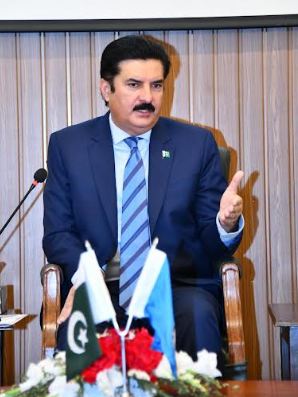
Faisal Karim Kundi

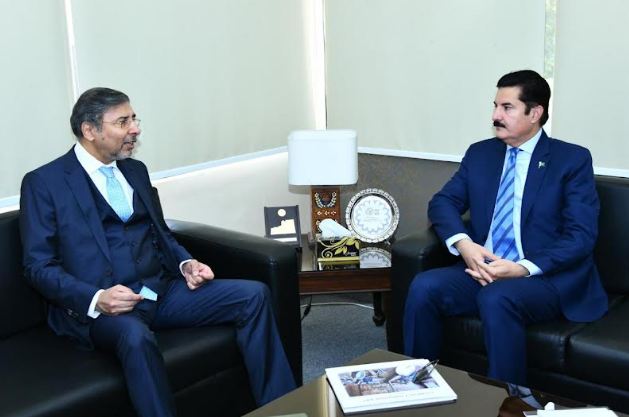
ISLAMABAD, MAR 21: /DNA/ – In his keynote address at the Institute of Regional Studies (IRS) on “Strategies and Way Forward to Address the Security Challenges’, Governor Faisal Karim Kundi reaffirmed the Khyber Pakhtunkhwa (KPK)’S commitment and resolve building peace and stability through strategic reforms and sustainable development. Highlighting the province’s vanguard role in Pakistan’s fight against extremism and terrorism, he lauded the resilience and courage of the people of KPK.

Governor Kundi also emphasized that the instability in Afghanistan directly impacted upon Pakistan’s security, citing cross-border movement of non-state actors leading to increased terrorism, smuggling, and illicit trade.  Border security remained a paramount concern for the provincial government, he added. 

Noting that maintaining stability and security was fundamental to national progress, the Governor emphasized the that equitable economic growth, good governance, and social development are prerequisites for countering subversive ideologies. 

Faisal Karim Kundi also underscored that capitalizing investment opportunities through building special economic zones, and trade corridors, skill development and imparting education coupled with promotion of inter-faith harmony and social cohesion, would be the key to ensuring peace and stability. 

With reference to Pakistan’s geopolitical complexities and security threats emanating from across the borders, the Governor noted that use of propaganda, funding violent extremism, cyberattacks, and attempts to thwart the building of infrastructure were all part of nefarious designs to imperil Pakistan’s internal security and integrity. ‘A robust counter-terror strategy with enhanced intelligence coordination was crucial to mitigate these risks’, he remarked.

Amb. Jauhar Saleem, President IRS, in his remarks on the occasion, underlined the need for adopting a holistic approach, keeping in view domestic as well as multiple foreign factor in play. He felt that policy measures in a range of areas, including economic and human development, improving policing and administration, reforming the criminal justice system and access to justice, rooting out corruption and, upgrading the law enforcement capacity were require on the one hand, and countering of nefarious narratives propagated by the violent radicals was essential on the other hand.  He also underscored the need for a candid and outcome- oriented debate that could be supported by the intelligentsia and think tanks to address the disconnect between the people, especially the youth, and the state.  

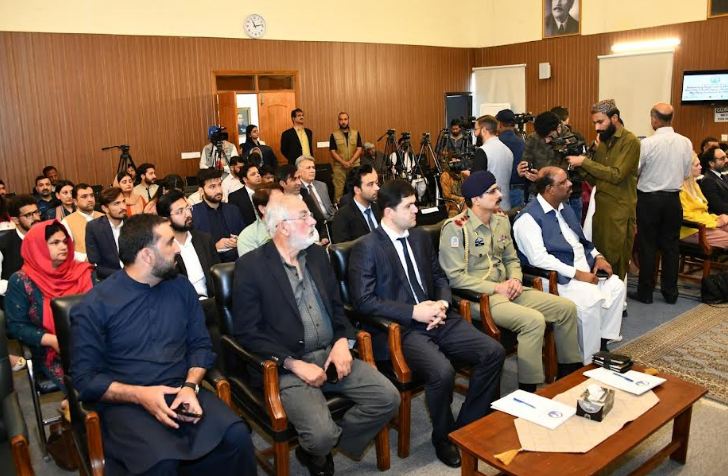
The interactive session was attended by a largen number of diplomats, opinion makers, academics, researchers, students and media representatives.

US-Taliban Re-engagement on Multiple Fronts: A Signal of Prolonged Regional Struggles

US-Taliban Re-engagement on Multiple Fronts: A Signal of Prolonged Regional Struggles

By Shamim Shahid

While the covert engagements between the United States and the Taliban have been ongoing in Doha for the past two years, the recent high-level, direct meeting in Kabul marks a significant shift. This unprecedented encounter between senior U.S. officials and Taliban representatives suggests a new phase in the geopolitical and strategic contest that has shaped the region since the early 1970s.

The evolving U.S.-Afghan relations could create unease within Pakistan’s political and military establishment, particularly regarding engagements in Kabul. The outcomes of these interactions might run counter to Islamabad’s strategic ambitions, especially on matters concerning the Durand Line and Afghanistan’s relations with India. The meeting in Kabul was the first open, direct discussion between Washington and the Taliban since August 15, 2021, when the Taliban took control of Afghanistan following the Doha Agreement.

This highly confidential, day-long visit was led by Ambassador Adam Boehler and culminated in the release and airlifting of George Glezmann, an American airline mechanic, to the United States via Doha. The meeting was a result of high-level negotiations between the two nations, facilitated by Qatar and the UAE, following the return of Donald Trump to power on January 20, 2025. Notably, former U.S. diplomat Zalmay Khalilzad was part of the delegation. Historically, Khalilzad’s presence in diplomatic engagements has often signaled imminent changes in Afghanistan’s political landscape.

The United States has been maneuvering on Afghan fronts independently of Pakistan since Afghanistan’s second presidential elections in 2009. However, Thursday’s engagement in Kabul is particularly significant for Islamabad’s power circles, which have long been monitoring regional shifts, conflicts, and power struggles across the Durand Line. Unlike the post-Vietnam era of the 1960s and 1970s, when the U.S. was reeling from its defeat, the present geopolitical landscape is vastly different. In previous decades, U.S. strategies heavily relied on Pakistan, which then played a critical role in Afghanistan under the influence of the now-defunct USSR. Today, however, Pakistan’s role in Afghanistan has diminished due to what many perceive as flawed policies.

With Donald Trump’s return to the White House after a four-year hiatus, tensions between Washington and Moscow are also undergoing recalibration. Prior to Glezmann’s release, two other Americans—Ryan Corbett and William Wallace McKenty—were freed in exchange for an Afghan national, Khan Muhammad, who was serving a life sentence for drug trafficking and was believed to have financed the Taliban during the War on Terror. U.S. Secretary of State Marco Rubio acknowledged Glezmann’s release while emphasizing that other Americans remain detained in Afghanistan.

Afghanistan’s foreign ministry, in a statement on X (formerly Twitter), highlighted that the deal demonstrated Kabul’s willingness to engage constructively with all parties, particularly the United States, based on mutual respect and interests. The U.S. delegation, alongside its Qatari facilitators, repeatedly expressed gratitude to the Taliban for ordering Glezmann’s release.

Donald Trump’s evolving stance towards former adversaries—such as Russia and the Taliban—could have profound implications on global politics, especially in Asia, where the U.S. continues to employ various strategies to maintain its influence. While Pakistan once played a crucial role in countering socialist and communist threats during the Cold War, the current U.S. focus appears to be on countering China’s economic rise and dominance in global trade markets. Unlike Pakistan, China has largely avoided confrontations, opting instead for diplomatic engagements and economic collaborations.

Pakistan’s predicament is unique. Its military establishment still adheres to the strategic depth policies inherited from the Bhutto-Zia era. Diplomatic relations with its neighbors remain strained, with India and Afghanistan being designated as adversaries, while Iran is regarded with skepticism. Even China, despite its long-standing partnership with Pakistan, has growing reservations about Islamabad’s strategic direction. Western think tanks consistently identify religious extremism and terrorism as serious threats to global security, and both phenomena have deep roots in the border regions between Pakistan and Afghanistan.

Zalmay Khalilzad’s sudden yet brief visit to Kabul raises numerous questions about U.S. intentions. His historical involvement in Afghanistan’s political shifts suggests that significant changes may be on the horizon. As the U.S. and the Taliban navigate this new phase of engagement, the broader geopolitical repercussions will unfold in the coming months.

IMF talks on track, no major hurdles: finance minister

IMF

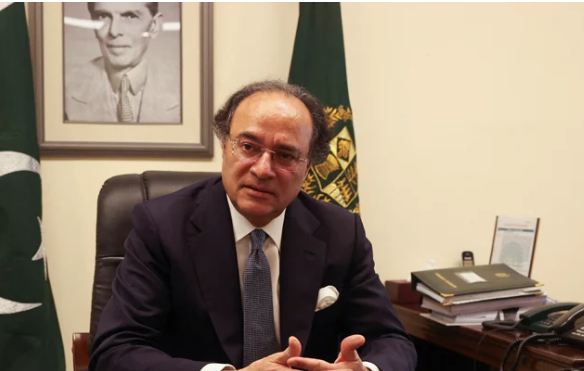
ISLAMABAD: Finance Minister Muhammad Aurangzeb has expressed confidence that Pakistan will soon receive positive news from the International Monetary Fund (IMF), saying that negotiations are in their final stages with no major hurdles in the way.

Speaking to journalists on Friday, the minister reassured that Pakistan is on track to meet the IMF’s economic discipline targets. He emphasised that discussions with the global lender are progressing smoothly and that the ongoing talks will conclude soon.

Aurangzeb underscored the government’s commitment to economic reforms, adding that Pakistan is adhering to the agreed-upon financial framework.

He noted that the country remains focused on fiscal responsibility, which will help secure the next tranche of funding.

Pakistan and the IMF have made significant progress towards reaching a Staff-Level Agreement (SLA) on the first review of the $7 billion loan programme.

Play Video
IMF Mission Chief to Pakistan Nathan Porter, in a statement last week after concluding his visit, said: “The IMF and the Pakistani authorities made significant progress toward reaching a Staff Level Agreement on the first review.”

The IMF team, led by Porter, was in Pakistan from February 24 to March 14 to hold discussions on the first review of Pakistan’s economic programme supported by the EFF and the possibility of a new arrangement under the lender’s Resilience and Sustainability Facility (RSF).

The country’s latest loan programme, secured by the Prime Minister Shehbaz Sharif-led government last year, has played a key role in stabilising Pakistan’s economy and the government has said the country is on course for a long-term recovery.

If the IMF approves the first review of the loan, the country is in line to receive about $1bn as the second instalment of the loan package.

Climate change threats
Separately, while addressing an event, the finance minister spoke about the growing challenges posed by climate change. He highlighted the rapid melting of glaciers, the economic disruptions caused by fog in Lahore, and the country’s overall vulnerability to environmental shifts.

Aurangzeb stressed the need for a structured climate financing system to combat these threats. He revealed that Pakistan had held positive discussions with the IMF over the past two weeks regarding climate financing and disaster recovery.

He further disclosed that international donors have pledged $10 billion for flood rehabilitation projects, but Pakistan has struggled to develop viable implementation plans to fully utilise the assistance. He urged the need for practical and actionable climate projects to secure future funding.

The minister acknowledged that pollution levels are rising and controlling environmental degradation remains a significant challenge. He affirmed that the finance ministry would extend full cooperation to the climate change ministry to address these concerns.

Pakistan’s water cycle has been adversely affected, and insufficient winter rainfall signals a growing environmental crisis, FinMin Aurangzeb warned. The minister stressed that climate change and population growth are two major threats that the country must tackle urgently.

Aurangzeb also noted progress in Pakistan’s partnership with the World Bank, particularly in financing and capacity building for climate resilience. He cited the work done by the Everest K2 Research Centre as a positive step in understanding glacial melt patterns and their impact on water resources.

Emphasising the urgency of the matter, the finance minister called for reducing project timelines to counter environmental risks effectively. He reiterated that failure to address climate challenges would have severe economic consequences for Pakistan.

Pakistan secure impressive win against New Zealand, keeping T20 series hopes alive

Pakistan

Pakistan have finally secured a win against New Zealand to stay alive in the ongoing five-match T20I series, with an impressive 9-wicket victory in the third game on Friday.

Opener Hasan Nawaz struck a record-breaking maiden century to help his side crush the hosts by nine wickets.

After scoring a duck in each of the two opening games — the first innings’ of his international career — Nawaz rebounded with a stunning 105 not out in Auckland as the tourists raced to 207-1 in response to New Zealand’s 204.

The 23-year-old’s ton came off 44 balls, the fastest by any Pakistan player in a T20 international.

It ensured his team reached the target with four full overs to spare, in a stark reversal of form after heavy losses in Christchurch and Dunedin.

Nawaz put his early failures behind him with a sparkling knock featuring shots all around the wicket, including a series of audacious ramp shots.

The right-hander peppered the short Eden Park boundaries with 10 fours and seven sixes, bringing up victory with successive fours off Kyle Jamieson in the 16th over.

The first of those shots took Nawaz to 100, five balls faster than the previous Pakistan record-holder — Babar Azam against South Africa in 2021.

Fellow opener Mohammad Haris scored 41 off 20 while captain Salman Agha was unbeaten on 51 off 31.

Earlier, New Zealand looked well placed after Mark Chapman hit a rapid 94 before they were dismissed in their final over.

Chapman dominated after New Zealand were asked to bat, tallying 11 fours and four sixes from just 44 balls faced.

The rest of the home side’s batsmen struggled to get going, aside from captain Michael Bracewell’s 31.

Experienced seamer Haris Rauf bowled Bracewell and finished with Pakistan’s best figures of 3-29.

Game four of the five-match series is in Mount Maunganui on Sunday.

Well-nourished children learn the best and can change the world

By Hannu Ripatti

Finland used to be one of the poorest European countries at the end of the 19th century. It was not unusual to have children working in the fields and factories, in order to sustain their families. The years 1866-87 carry an unfortunate denomination of years of famine. Due to short crops, people of Finland suffered of malnutrition and 8 per cent of the population died out of famine. As Finland became independent in 1917 and started to build up its institutions, one of the first tasks was to get children to school, instead of forcing them to work in harsh conditions. Soon it became clear that hungry school children are not capable of learning.

Thus, Finland was the first country in the world, in 1943, to enact a law whereby school children were guaranteed free-of- charge meal during the school days. First, food was served for underpriviledged children but since 1948 school meals have been available for all students. Having learned from our history, there was a strong will to develop the country away from unequal, agriculture-based society towards a more modern welfare society. It was understood that the best way to improve our economy, was to educate people and not just the rich ones but the whole population. Education was perceived as an investment in the future.

Over 70 years later, Finland has developed into a modern welfare society, recognized for having one of the best education systems in the world. Free school meals remain an essential part of Finland’s education system to ensure equal access and participation for children, and it plays a role in the country’s development into an information society.

In many parts of the world, the situation is much gloomier. School attendance as such has increased considerably, which is good news. Simultaneously, we are struggling with a persistent learning crisis where the majority of children in low and lower middle-income countries are in school but cannot read or write a simple sentence. Climate change, the COVID-19 pandemic and conflicts around the world, have aggravated the situation. Due to increasingly frequent extreme weather conditions, crops become smaller and uncertain. Children are the ones that are hardest hit by the global food crisis.

There is a simple, yet effective solution for both improving food security and better learning results: free school meals.

Thus, Finland was one of the founders of the global School Meals Coalition that was created in 2021. It now includes over 100 member countries and 108 other partner organizations. The aim is to support and encourage countries to develop their food and education systems, recovery from the pandemic, and promote the achievement of sustainable development goals. The ultimate objective of the Coalition is that every child in the world will receive a school meal on a daily basis by 2030.

We provide financial support for school meal programmes worldwide. In 2024, Finland allocated 5 million euros to WFP’s school meals programmes globally. This also includes support to the School Meal Coalition Secretariat coordinated by WFP. We also provide technical expertise for countries wishing to develop their school meals programmes. Finland has launched a website about the Finnish model and relevant stakeholders: https://www.educationfinland.fi/schoolmeals

For those countries that are currently looking to reform their education, Finland wants to give a gentle hint. Please invest in free school meals! It is a small but significant concrete investment in children’s future, and school meals programs can be started with small steps.

School meals programs can strengthen the overall food security, but they can also contribute to the local economy. When implemented correctly, food programs can help diversify food systems. The use of locally produced products in school meals benefits the consumption of locally produced agricultural products and can promote the diversification of production. This in turn positively impacts the crisis resilience and economy of local communities.

Looking ahead, our mission remains clear. We have to ensure that by 2030, every child, everywhere, has access to a healthy and nutritious school meal. This goal is very ambitious but it can be reached. We only need to intensify our efforts and work together. As an end result, we get an affluent youth that is capable and motivated to build a better and more equal and prosperous world for all. Let us go for it!

The writer is the Ambassador of Finland to Pakistan

FO: Afghan govt must take action against TTP, ISKP

FO: Afghan govt

must take action

against TTP, ISKP

FO spokesman says the foreign ministry had nothing to do with visit of Pakistani individuals to Israel adding the information on the matter was being gathered

Ansar Mahmood Bhatti

ISLAMABAD, Pakistan on Thursday reiterated that India’s fictitious narrative of victimhood could not hide its involvement in fomenting terrorism on Pakistan’s soil and the state-sanctioned oppression in Indian Illegally Occupied Jammu and Kashmir (IIOJK).

Foreign Office spokesperson Shafqat Ali Khan, at his weekly press briefing, said that Indian involvement in fanning terrorism in Pakistan and destabilising Balochistan was clear.

The spokesperson told the media that the deadline for the deportation of illegal foreign nationals was unchanged and reiterated Pakistan’s call for Afghan authorities to act against TTP and ISKP involved in carrying out terrorist activities in Pakistan.

He told the media that the Torkham border had been reopened till April 15 as efforts would continue to seek a permanent solution to the issue in the meantime.

Referring to Indian involvement in global assassination plots, he said that not only in Pakistan, India had been sponsoring such unlawful activities in the entire region.

“Instead of blaming others, India should reflect on its own record of orchestrating targeted assassinations, subversion and terrorism in foreign territories,” he remarked and pointed out that India had not condemned the recent attack on Jaffar Express in Balochistan.

The spokesperson said that Pakistan was alarmed over the increased frequency of Indian leadership’s unwarranted assertions about Jammu and Kashmir.

He said it was India that took Jammu and Kashmir issue to the United Nations in 1948 so it had no right to blame the Security Council and its erstwhile members for the resolutions that were subsequently adopted. 

“Repetition of baseless claims cannot deny the fact that Jammu and Kashmir is an internationally recognized disputed territory whose final status is to be determined by its people through a UN-supervised plebiscite, as stipulated in the relevant UN Security Council resolutions.”

Shafqat Ali Khan said that a peaceful settlement of the Jammu and Kashmir dispute, in accordance with the relevant UN Security Council Resolutions and aspirations of the Kashmiri people, was essential for a lasting peace in South Asia.

Reiterating Pakistan’s advocacy of constructive engagement and result-oriented dialogue to resolve all outstanding issues, including the core dispute of Jammu and Kashmir, he said peace and stability in South Asia had remained hostage to India’s rigid approach and hegemonic ambitions.

“The anti-Pakistan narrative, emanating from India, vitiates the bilateral environment and impedes the prospects for peace and cooperation. It must stop,” he remarked.

Asked to comment on the reports of the visit of some Pakistani individuals to Israel, he said the foreign ministry had nothing to do with that as the information on the matter was being gathered.

However, he categorically explained that Pakistan’s position on the recognition of Israel and the rights of the Palestinian people was unwavering and unchanged.

Regarding the inclusion of Pakistani nationals in certain visa restriction categories, Foreign Office spokesperson said that both the State Department and Foreign Office had refuted the speculative reports on social media.

He condemned Israel’s vicious attacks against the people of West Bank and Gaza, calling it a flagrant violation of the ceasefire agreement; international humanitarian law; the UN Charter; and hampers the confidence and faith in the global community and international law.

“Pakistan strongly calls for an immediate cessation of hostilities in West Bank, and Gaza; protection of civilians; and unrestricted access to humanitarian aid and assistance. We also call on the international community to increase its efforts to end Israel’s genocidal campaign against the innocent people of Palestine. We call for accountability of Israeli crimes committed in this brutal war, as a crucial step towards restoring international legitimacy.”

Apprising the media of Prime Minister Shehbaz Sharif’s meeting with Saudi Crown Prince and Prime Minister Mohammed bin Salman during his four-day official visit to Saudi Arabia, he said that both leaders had productive discussion on ways to further strengthen Pakistan-Saudi Arabia ties in trade, investment, energy & security. Prime Minister thanked His Royal Highness for the Kingdom’s consistent support to Pakistan.

He said that Pakistan welcomed the signing of the treaty on delimitation and demarcation of the Kyrgyz-Tajik border, marking the end of a protracted border dispute. We firmly believe that this significant turn of events will open up new possibilities of cooperation and advancement in the region, he added.

Terrorist elements to be defeated at all costs, President Asif Ali Zardari

President Asif Ali Zardari

President Vows to Defeat Terrorism, Stresses National Unity

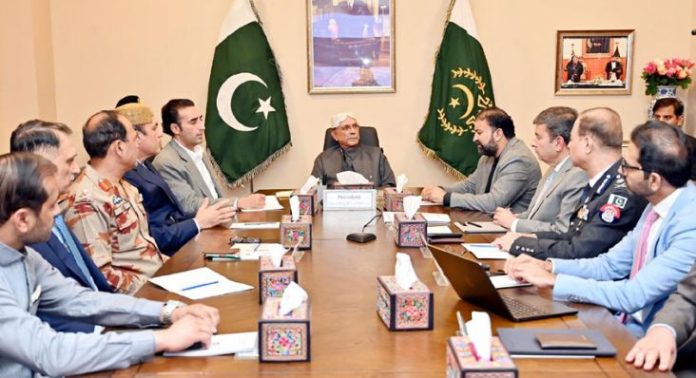
Quetta, 19 Mar: /DNA/ – President Asif Ali Zardari has reiterated that terrorist elements will be defeated at all costs and that every attempt to divide the nation will fail. He emphasized that the state’s stance on terrorism is clear and that winning the war against terrorism is imperative.

The President expressed these views while chairing a high-level meeting on law and order in Quetta today. Chairman of the Pakistan People’s Party (PPP), Bilawal Bhutto Zardari, also attended the meeting. Chief Minister of Balochistan, Mir Sarfraz Bugti, gave a comprehensive briefing on the overall security situation in the province.

The meeting was attended by Acting Governor of Balochistan, Captain (Retd) Abdul Khaliq Achakzai, Chief Secretary of Balochistan, Shakeel Qadir Khan, Inspector General of Police, Moazzam Jah Ansari, and other senior officials.

Addressing the meeting, President Zardari said that Balochistan is close to his heart and its development and sustainable peace remain his top priority. He expressed his desire to see every child in school and stressed the need to equip the youth with modern technology. The president also stated that the Counter-Terrorism Wing will be provided with advanced weaponry to effectively combat criminal elements and terrorists.

Separately, President Zardari met with members of parliamentary parties in Balochistan. Chairman PPP Bilawal Bhutto Zardari was also present during the meeting. Opposition leaders in the Balochistan Assembly and parliamentary leaders of various political parties presented their concerns and proposals regarding public welfare and the challenges facing the province.

During the discussion, President Zardari highlighted that he had a special connection with the people of Balochistan. He emphasized that as Pakistanis, national solidarity must be upheld to take the country forward. He assured that all rights would be granted to the people, stating, “We do not believe in taking away rights but in winning the hearts of the people by granting them their due.” He further stated that all efforts for the welfare and prosperity of Balochistan would yield positive results, with decisions being made that would be remembered in history.

President Zardari also said that he would set up a special camp in Balochistan after Eid to listen to public grievances and suggestions.

During the meeting, Opposition Leader in the Balochistan Assembly, Mir Younas Aziz Zehri, appreciated Chief Minister Sarfraz Bugti’s initiatives and assured complete cooperation. The meeting was also attended by Acting Governor Captain (Retd) Abdul Khaliq Achakzai and Chief Minister Mir Sarfraz Bugti.

Other prominent participants included National Party Chief Dr. Abdul Malik Baloch, Parliamentary Leader of the Pakistan Muslim League, Mir Saleem Khan Khosa, Parliamentary Leader of the Awami National Party, Engineer Zamrak Khan Achakzai, and Jamaat-e-Islami member, Mir Abdul Majeed Badini. Members of the Balochistan Cabinet, provincial ministers, parliamentary secretaries, and assembly members were also present during the meeting.

Stay Connected

64FansLike
60FollowersFollow

Latest Reviews

Exchange Rates

USD - United States Dollar
EUR
1.17
GBP
1.35
AUD
0.72
CAD
0.73