Home Blog Page 641

Thriving Without the IMF

Thriving Without the IMF

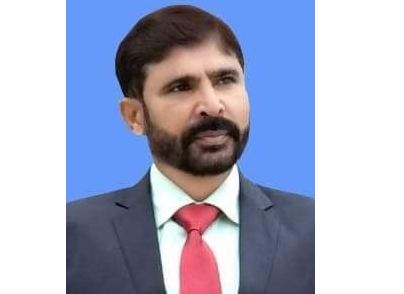
Muhammad Faiq Shah

In the contemporary global economic system, many developing nations, including Pakistan, rely on external financial support to stabilize their economies. The International Monetary Fund (IMF) and other multilateral institutions have often been a lifeline for Pakistan, providing much-needed financial assistance to cope with fiscal deficits, inflation, and external debt crises. However, the reliance on external entities can result in stringent conditions that often lead to domestic policy challenges, increased debt, and economic vulnerability. This raises an important question: Can Pakistan achieve sustainable development and prosperity without the assistance of institutions like the IMF? The answer lies in reshaping economic policies, prioritizing internal resources, and pursuing innovative solutions.

One of Pakistan’s foremost economic challenges is its low tax-to-GDP ratio, which hinders revenue generation and forces the government to rely on external borrowing. As of 2023, Pakistan’s tax-to-GDP ratio was approximately 9.5%, one of the lowest in the region, compared to India’s 17% and Bangladesh’s 9.9%. This inadequate revenue generation pushes the country towards borrowing and external financial support. A significant portion of Pakistan’s economy operates in the informal sector, accounting for 35-40% of GDP, according to the World Bank. By formalizing this sector and improving tax compliance, Pakistan can tap into previously untaxed areas. Formalizing just 20% of this informal economy could increase government revenues by up to 2-3% of GDP. Implementing a progressive tax system that ensures the wealthiest 10% of the population, who control 60% of the nation’s wealth, contribute fairly, could generate an additional PKR 1 trillion annually. Additionally, digital tax collection has already led to a 17% increase in tax returns in 2022 compared to the previous year, showing the potential for further improvement through technological solutions.

Pakistan’s trade deficit remains one of its most pressing economic concerns. In the fiscal year 2023, the country’s exports stood at $31.8 billion, while imports were $58.7 billion, resulting in a trade deficit of $26.9 billion. To move towards sustainable development, Pakistan must focus on an export-led growth strategy. Diversifying its export base is critical, as textiles currently account for 60% of exports. Pakistan’s tech exports were only $2.6 billion in 2022, compared to Vietnam’s $96 billion in 2020, highlighting the need to prioritize tech-based goods. Improving agricultural productivity is another key factor. Currently, Pakistan’s wheat yield is 30-40% lower than countries like Egypt and the United States. Increasing productivity through modern agricultural practices and efficient water management could lead to significant savings. For example, Pakistan’s water scarcity crisis is expected to worsen by 2025, but adopting water-efficient practices such as drip irrigation could mitigate the problem and save the economy billions.

With a median age of 22.8 years, Pakistan has a young population that could be an economic asset. However, 58% of Pakistan’s youth is unskilled, limiting their potential to contribute to economic growth. Pakistan’s education expenditure is currently only 2.8% of GDP, compared to the global average of 4.5%. By increasing this to at least 4%, the country could drastically improve access to quality education, particularly in STEM fields, similar to how South Korea invested in education and saw its GDP grow from $2.7 billion in 1960 to $1.6 trillion in 2020. In addition, Pakistan spends only 1.2% of GDP on healthcare, while the World Health Organization recommends at least 6%. Increased spending on healthcare can lead to a healthier, more productive workforce, potentially increasing economic output by 2-3% annually.

Pakistan’s energy crisis is a major impediment to growth. The country spends $14 billion annually on energy imports, while energy shortages cost the economy an estimated 2-2.5% of GDP each year. Pakistan has vast untapped renewable energy potential, with 50,000 MW in wind energy and over 2.9 million MW in solar energy. However, the country utilizes less than 5% of its renewable energy potential. Scaling up renewable energy could not only reduce the import bill but also create approximately 300,000 green jobs. Additionally, reducing energy wastage by upgrading transmission infrastructure could save up to PKR 200 billion annually, according to the World Bank.

Corruption remains a significant challenge for Pakistan, costing the economy 5% of its GDP annually. Strengthening institutions like the National Accountability Bureau (NAB) and promoting digital governance could reduce corruption and improve economic efficiency. For example, e-governance in Estonia saves the country 2% of GDP annually. Pakistan could potentially save PKR 500 billion annually through the digitalization of public services. Strengthening public institutions to ensure transparency could add an additional $7-8 billion to Pakistan’s economy annually by reducing corruption by just 2%.

Lastly, Pakistan’s national savings rate is just 11-13% of GDP, compared to an average of 30-35% in emerging economies. Encouraging domestic savings and investments could reduce reliance on external loans. Expanding financial inclusion, where currently only 21% of the population has access to formal banking services, could mobilize up to PKR 1 trillion in untapped capital. Strengthening capital markets and improving corporate governance could also attract significant investment, reducing the need for external financial support.

In conclusion, achieving prosperity and development without the IMF or other external support is a challenging yet achievable goal for Pakistan. The statistics indicate that by focusing on domestic reforms, fostering export-led growth, investing in human capital, promoting energy independence, and reducing corruption, Pakistan can significantly enhance its economic performance. By adopting innovative solutions and utilizing its internal resources effectively, Pakistan can chart a path to self-reliant and sustainable economic development.

Muhammad Faiq Shah is a businessman, political figure, and dedicated philanthropist. He can be reached via Email: [email protected]
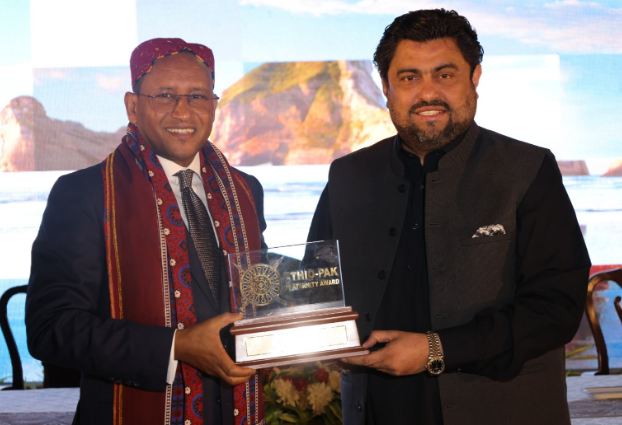
Governor Sindh Kamran Khan Tessori awarded Ethiopia’s highest honor for services

Governor Sindh

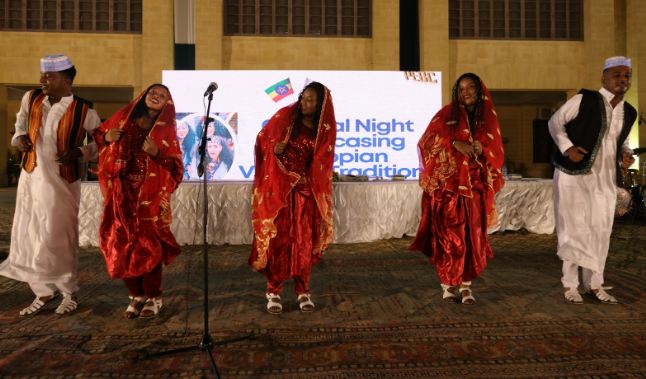
KARACHI, SEPT 10 (DNA) – In a prestigious ceremony held at Governor House, Governor Sindh, Kamran Khan Tessori was awarded Ethiopia’s highest honor, the Ethio-Pakistan Fraternity Award, by Ethiopian Ambassador and Special Envoy, Dr. Jamal Beker.

The award was presented in recognition of Governor Sindh Kamran Khan Tessori’s exceptional contributions to strengthening bilateral relations between Pakistan and Ethiopia.

Governor Sindh Kamran Khan Tessori expressed his gratitude to Ambassador Dr. Jamal Beker for the honor. He emphasized that the bilateral relations between Pakistan and Ethiopia have reached new heights of strength and cooperation.

During the event, which featured an Ethiopian cultural show, Ambassador Dr. Jamal Beker praised the Governor’s role in fostering public ties between the two nations.

He highlighted Governor Sindh Kamran Khan Tessori’s pivotal efforts in promoting bilateral relations, including his significant role in facilitating the launch of Ethiopian Airlines in Pakistan.

H.E. Ambassador Dr. Jemal Beker said efforts of the Ethiopian Embassy Islamabad and support of the Government of the Islamic Republic of Pakistan, business community, civil society and media had helped strengthen the people-to-people relations between the two countries.

He said the start of the Ethiopian Airlines had laid the strong foundation for people-to-people relations between the two countries, who had strengthened the bilateral ties by enhancing the bilateral, regional and multilateral cooperation in diverse areas.

The Ambassador said today Ethiopian cultural night was a testament to the growing people-to-people relations between the two countries.

He also highlighted the diverse culture and rich heritage of Ethiopia which is called as a land of origins, a land of Bilal Habeshi and King Nejashei and the land of coffee.

H.E. Zubair Motiwala, TDAP Chief Executive, also acknowledged the growing bilateral relations between the two countries, but stressed the need to exploit the immense business and trade potential between the two countries.

H.E. Ibrahim Tawab, Honorary Consul of Ethiopia in Karachi, lauded the Ambassador of Ethiopia for his exemplary efforts to promote bilateral relations between the two countries.

The Honorary Consul said Ethiopia and Pakistan shared striking cultural similarities which we had witnessed today in this Ethiopian cultural night. 

A large number of individuals from different walks of life including officials of the Government of Pakistan, Parliamentarians, diplomatic corps, business community, civil society and media attended the cultural night which featured dance and singing performances of the Ethiopian singers and dancers.

Prominent figures included H.E. Zubair Motiwala, Chief Executive of the Trade and Development Authority of Pakistan (TDAP), H.E. Khalid Tawab, Ex-Minister of Sindh for Commerce and Industry, H.E. Ibrahim Tawab, Honorary Consul of the Federal Democratic Republic of Ethiopia in Karachi. 

The cultural night was hosted by the Ethiopian Embassy Islamabad in collaboration with the Sindh Governor House, Pakistan Ethiopia Business Council and Bukhari Groups.

Armenia’s Strategic Realignment in a Changing Geopolitics

The Complex Web of National Security

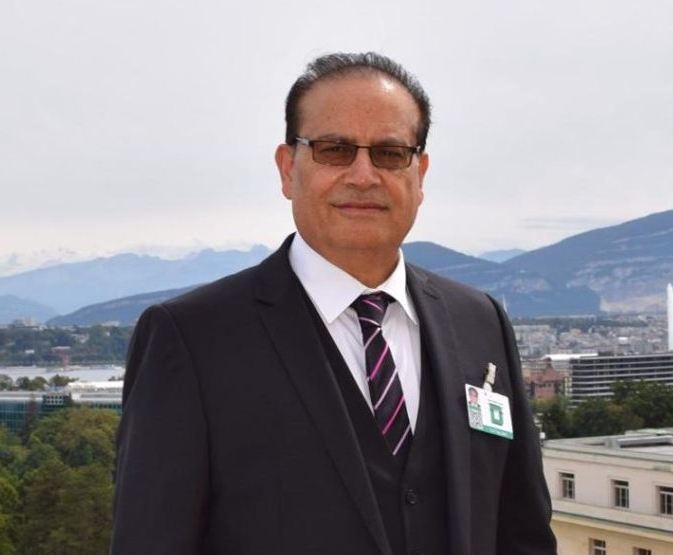
Dr. Muhammad Akram Zaheer

The geopolitical environment of Eastern Europe and the South Caucasus is undergoing significant transformation, with Romania and Armenia emerging as pivotal actors in their respective regions. Both countries are navigating complex security environments shaped by historical alliances, emerging threats and shifting global power dynamics. Romania, a key regional ally of the United States, is actively enhancing its defense capabilities and solidifying its strategic partnership with Washington. Meanwhile, Armenia, historically aligned with Russia, is attempting to reorient its foreign policy towards the West, a move fraught with challenges due to its longstanding dependencies on Russia and its regional isolation.

Romania’s strategic importance in Eastern Europe cannot be overstated. As a member of NATO and the European Union,Romania occupies a crucial position on the southeastern flank of the alliance, bordering the Black Sea, Ukraine and Moldova. In response to growing security concerns, particularly those arising from Russia’s assertive foreign policy and military activities in the region, Romania has significantly increased its defense spending. In recent years, the Romanian government has committed to raising its defense budget to 2.5% of its GDP, surpassing the NATO guideline of 2%. This increase in defense spending reflects Romania’s commitment to bolstering its military capabilities and enhancing its role within NATO.One of the key aspects of Romania’s defense strategy is its focus on acquiring advanced military equipment from the United States. This acquisition process is part of a broader effort to modernize the Romanian Armed Forces and ensure interoperability with NATO allies. Romania has made substantial investments in procuring state-of-the-art military hardware, including Patriot missile defense systems, HIMARS rocket artillery systems and F-16 fighter jets. These acquisitions not only enhance Romania’s defensive capabilities but also reinforce its strategic partnership with the United States, further embedding the country within the Western security architecture.

Romania’s defense strategy is not solely focused on external acquisitions; it also aims to revitalize the domestic military industry. The Romanian government has prioritized the development of its defense sector to reduce dependency on foreign suppliers and to create a sustainable, self-sufficient defense industry. This initiative includes fostering partnerships between domestic defense companies and international firms, promoting research and development in military technology and investing in the production of indigenous defense systems. By strengthening its domestic military industry, Romania seeks to enhance its strategic autonomy while contributing to the broader defense capabilities of the NATO alliance.In addition to bolstering its defense capabilities, Romania is actively expanding its security cooperation with neighboring countries, particularly Ukraine, Moldova and Bulgaria. The security environment in the Black Sea region has become increasingly volatile due to the ongoing conflict in Ukraine and Russia’s military presence in the region. Recognizing the need for a coordinated regional response, Romania has sought to deepen its security ties with Ukraine, which is on the frontlines of the conflict with Russia. This cooperation includes joint military exercises, intelligence sharing and collaboration on cybersecurity and border security. By working closely with Ukraine, Romania aims to enhance regional stability and counter the security threats posed by Russia.

Romania’s security cooperation extends beyond Ukraine to include Moldova and Bulgaria. Moldova, which shares a long border with Romania, is a key focus of Romanian foreign policy. The two countries have deep historical and cultural ties and Romania has been a strong advocate for Moldova’s European integration. In the security domain, Romania has provided assistance to Moldova in areas such as military training, defense reform and border security. Romania’s support for Moldova is part of a broader strategy to promote stability and security in the region, particularly in the face of potential Russian influence in Moldova.Similarly, Romania’s security cooperation with Bulgaria is driven by the shared goal of enhancing regional security in the Black Sea area. Romania and Bulgaria, both NATO members, have participated in joint military exercises and have collaborated on initiatives aimed at strengthening the alliance’s eastern flank. This cooperation is critical in the context of the broader geopolitical challenges facing the Black Sea region, where both countries are working to counterbalance Russian military activities and ensure the security of NATO’s southeastern border.

While Romania is deepening its ties with the West, Armenia is embarking on a challenging journey of foreign policy reorientation. Historically, Armenia has been closely aligned with Russia, both as a member of the Collective Security Treaty Organization (CSTO) and through its reliance on Russian military and economic support. However, recent developments have prompted Yerevan to reconsider its strategic alliances and seek closer ties with the West.Armenia’s reorientation towards the West is driven by several factors. First, the Nagorno-Karabakh conflict, particularly the 2020 war with Azerbaijan, exposed the limitations of Armenia’s reliance on Russia. Despite being a treaty ally, Russia’s response during the conflict was perceived by many in Armenia as inadequate, leading to a loss of confidence in Russia as a reliable security guarantor. This has fueled a growing desire in Armenia to diversify its foreign policy and reduce its dependence on Russia.Second, Armenia’s domestic political scene has shifted in recent years, particularly after the 2018 Velvet Revolution, which brought a new government to power with a reformist agenda. The current Armenian leadership has shown a greater willingness to engage with Western institutions and to pursue closer ties with the European Union and the United States. This includes efforts to strengthen democratic governance, enhance the rule of law and improve human rights, all of which are key areas of cooperation with Western partners.However, Armenia’s foreign policy reorientation is not without significant challenges. The country’s deep-seated dependencies on Russia, particularly in the security and energy sectors, pose substantial obstacles to a full-fledged pivot to the West. Armenia’s membership in the CSTO and its reliance on Russian military bases and arms supplies complicate its efforts to realign its security policy. Moreover, Russia remains a dominant player in the South Caucasus and any shift in Armenia’s foreign policy could provoke a strong reaction from Moscow, potentially jeopardizing Armenia’s security and economic stability.

Another major challenge for Armenia is its regional isolation. For decades, Armenia has been in a state of conflict with Azerbaijan and Turkey, leading to the closure of its borders with both countries. This has limited Armenia’s access to regional markets and trade routes, exacerbating its economic vulnerabilities. To successfully reorient its foreign policy, Armenia must find ways to overcome its regional isolation, which may require difficult compromises, particularly in its relations with Azerbaijan and Turkey.Despite these challenges, Armenia is gradually building new partnerships with Western countries. The European Union has become an increasingly important partner for Armenia, providing financial assistance, technical support and diplomatic backing for Armenia’s reform agenda. The Comprehensive and Enhanced Partnership Agreement (CEPA) between the EU and Armenia, signed in 2017, is a key framework for deepening political and economic ties. Similarly, Armenia has sought to enhance its relationship with the United States, particularly in areas such as defense cooperation, democratic governance and economic development.

 Romania and Armenia represent two distinct but significant cases of regional actors navigating complex security and foreign policy environments. Romania, as a staunch ally of the United States, is focused on strengthening its defense capabilities, expanding its strategic partnership with Washington and enhancing regional security through cooperation with its neighbors. In contrast, Armenia is attempting a delicate foreign policy reorientation towards the West, a move that requires overcoming deep-seated dependencies on Russia and addressing longstanding regional challenges. Both countries’ efforts to adapt to the evolving geopolitical environment underscore the broader shifts occurring in Eastern Europe and the South Caucasus, with implications for regional and global security.

PTI leader Sher Afzal Marwat arrested outside Parliament House

PTI leader Sher Afzal Marwat arrested outside Parliament House

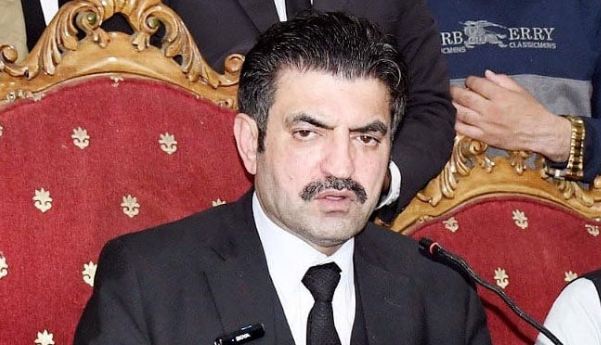
ISLAMABAD, SEPT 9: The Islamabad police on Monday arrested Pakistan Tehreek-e-Insaf (PTI) leader Sher Afzal Marwat outside Parliament House in Islamabad.

The federal capital police said PTI leaders Omar Ayub Khan and Zartaj Gul Wazir would also be taken into custody.

Marwat resisted the arrest and asked the police to show arrest warrant.

Vawda’s Crystal Ball: From Misfires to Miracles”

Qamar Bashir

Qamar Bashir

Before aligning with the establishment, Mr. Vawda made numerous predictions, but the majority of them never materialized, damaging the reputation of PTI’s government and eroding its political capital. I vividly recall one of his most outlandish and illogical predictions, made shortly after PTI assumed power in 2018. He confidently predicted that within a month or two, 20 million unemployed Pakistanis would secure high-profile jobs and that the country would become wealthier than ever before. However, this baseless prediction never came to fruition during PTI’s tenure, and the promise remained unfulfilled until the party was ousted from power.

Vawda consistently promised that the PTI government would reduce Pakistan’s debt through improved governance, minimizing corruption, and boosting exports. He asserted that foreign investments, particularly from Saudi Arabia, China, and the UAE, would play a significant role in stabilizing the economy.  but his prediction proved totally false.

He highlighted that the PTI government would prioritize the development of infrastructure through the China-Pakistan Economic Corridor (CPEC), which would lead to increased trade, industrialization, and economic activity across Pakistan. In fact as the normal perception goes, CPEC was factually slowed down during PTI tenure in power.

Vawda promised that the PTI government would implement comprehensive tax reforms, focusing on expanding the tax net and reducing tax evasion. This would result in increased government revenue and a stronger fiscal position but there was no significant improvement in the revenue collections.

While predicting the future of Nawaz Sharif, Vawda claimed that Sharif’s return to Pakistan would bring significant legal challenges and that his political career would be in jeopardy. Contrary to this prediction, upon Nawaz Sharif’s return, he was received with immense fanfare. He was welcomed as a statesman and was greeted with grand receptions, including being escorted from London to a large public gathering at Minar-e-Pakistan in Lahore, where he was treated like a political icon rather than someone facing a bleak future.

Vawda repeatedly predicted the decline of both PML-N and PPP. He claimed that PML-N would eventually be restricted to Punjab, much like the MQM is limited to Karachi. Similarly, he forecasted that PPP would lose its national influence and be confined to Sindh. Exactly opposite happened.  Against all odds both the parties have shared the power resources of the country and successfully ousted all other parties and established their governments in all three provinces except KP. 

As soon as he changed allegiance and left PTI to become the civilian mouthpiece of the establishment, Vawda’s predictions suddenly gained remarkable accuracy. It was as though he experienced a “spiritual awakening” after aligning himself with new powers. His loyalty to his spiritual and political benefactors was handsomely rewarded. Despite not being part of any major political party, lacking a popular mandate, and even being somewhat unpopular among the public, Vawda was granted a Senate seat. His newfound connections catapulted him to media prominence, allowing him to appear on television channels of his choosing, with his preferred anchors, making predictions that consistently proved accurate. This transformation was seen as a direct result of his loyalty to his new political allies and benefactors.

Vawda had predicted that future governments in Pakistan would be coalition-based due to the lack of a clear majority by any single party. This prediction came true, as recent governments, including are operating as coalitions.

Vawda predicted that PTI might face serious hurdles in contesting future elections, hinting at a possibility of disqualification of Imran Khan. He predicted almost six months ago that  PTI will be deprived of the “Bat” as its electoral symbol and predicted that PTI as a political party will not be allowed to contest elections. His significant predictions which sembled impossible when he made ultimately  proved absolutely accurate.

His prediction that PTI would face increased challenges after the May 9 riots, especially due to the party’s conflict with the military and the establishment and will suffer from political isolation and legal repercussions, including mass arrests and prosecutions of party members proved so true.

Faisal Vawda predicted that Imran Khan would face continuous incarceration despite being granted bail in multiple cases, as the establishment was not willing to forgive him anytime soon. He dismissed rumors of a reconciliation between PTI and the establishment, emphasizing that the rift, especially after the May 9 events, had only deepened. Vawda believed that Khan’s legal troubles would persist due to the establishment’s determination to keep him under pressure, preventing any swift return to political normalcy for the PTI leader.

Among all of Vawda’s controversial predictions, the most critical and dangerous one was regarding the Supreme Court’s majority decision to restore PTI as a political party in the National Assembly. He predicted that, despite the court’s ruling, which also allowed independents who were elected with PTI’s support to formally join the party, the decision would face significant implementation challenges. Vawda warned that external pressures, particularly from influential institutions and political actors, would create obstacles that could delay or prevent the full execution of the Supreme Court’s decision, effectively undermining PTI’s position in the National and provincial assemblies.

The government’s response to the delay in implementing the Supreme Court’s decision regarding PTI’s reserved seats has been multifaceted. Initially, it raised concerns over the ruling, focusing on dissenting opinions from two judges, which questioned the legitimacy of the decision and highlighted potential constitutional conflicts, such as the justification of floor-crossing.

A review petitions were filed by parties like PML-N and PPP, raising concerns about the procedural fairness of the decision. Meanwhile, the Election Commission of Pakistan (ECP) also sought clarification from the court, further delaying the decision’s implementation.

 The objection inter alia included PTI’s organizational structure, particularly whether the party had conducted intra-party elections in compliance with legal requirements, which affected its ability to issue proper affiliation certificates to candidates. Second, the ECP sought clarification on whether independent candidates who had not initially contested under PTI’s banner could be recognized as PTI members for reserved seats, arguing that such affiliations should have been formalized at the time of elections. Lastly, the ECP pointed out procedural challenges in implementing the Supreme Court’s ruling, suggesting that the decision lacked clear guidance on how to certify party affiliations and comply with electoral law, further complicating the implementation process. The parliament, which is a party to the conflict,  passed an amendment to the Election Act 2023, aimed at limiting the Supreme Court’s power to implement its decisions.

When the Supreme Court reviews the Election Act 2023 amendment and related petitions, it will likely focus on maintaining judicial independence, potentially striking down the amendment if it is deemed to undermine the court’s authority to enforce its decisions. The court may also revisit the balance of power between the judiciary and legislature, addressing concerns of legislative overreach while interpreting the constitutional framework. Additionally, the court could provide clarifications on procedural aspects, such as PTI’s organizational structure and the legitimacy of independent candidates joining the party. Given the political and institutional pressures involved, the court may issue a nuanced ruling that balances legal and political considerations, potentially navigating a middle ground to resolve the conflict.

Qamar Bashir

Former Press Secretary to the President

Former Press Minister to the Embassy of Pakistan to France

Former MD, SRBC, CEO, ATV

AI’s role in National Security explored at Islamabad Seminar

AI's role in National Security explored at Islamabad Seminar

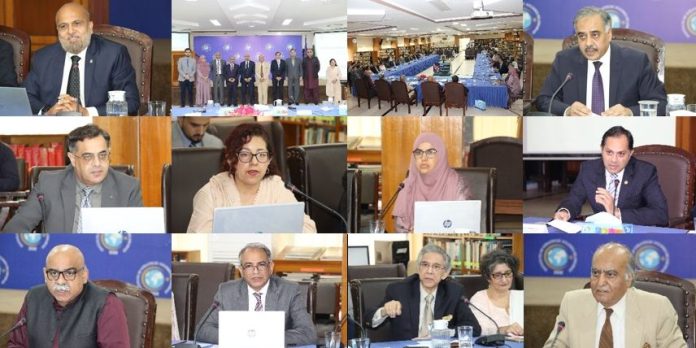
ISLAMABAD, SEPT 9 (DNA) – The Arms Control and Disarmament Centre (ACDC) at the Institute of Strategic Studies Islamabad (ISSI), hosted a seminar on “Artificial Intelligence and National Security” to underscore the paradigm shift driven by AI, highlighting its potential to enhance Pakistan’s national security while addressing emerging risks. Air Vice Marshal Dr. Liaquat Ullah Iqbal, CPD & DG PR National Aerospace Science and Technology Park was the keynote speaker. Other distinguished speakers included: Air Commodore Dr. Irteza Ali Khan, Director PAF Center for Artificial Intelligence and Computing (CENTAIC); Ms. Ghazala Yasmin Jalil, Research Fellow, ACDC-ISSI; Dr. Sumaira Kausar, Professor & Director CoE-AI, Bahria University; Khwaja Mohammad Ali, Global Chief Information & Cybersecurity Officer at National Bank; and Air Commodore Dr. Waseem Qutub, Director, ACDA, SPD.

Air Vice Marshal Dr. Liaquat Ullah Iqbal, in his keynote address, highlighted the increasing reliance on technology and its dual-nature capable of both destruction and saving lives. He drew parallels with the evolution of technology, such as airplanes used for both warfare and humanitarian efforts. He emphasized the importance of staying technologically advanced, reflecting on the historical contributions of forefathers in industrialization and the ongoing efforts by the PAF to maintain cutting-edge capabilities. He discussed the comprehensive indigenization concept, the role of the Pakistan Aeronautical Complex, and the development of Kamra as an aeronautical capital. The collaboration with Turkish firms and the establishment of the National Aerospace Science and Technology Park (NASTP) underscores the commitment to innovation, private sector development, and international partnerships, aiming to leverage technology for national progress and security.

In his welcome remarks, DG ISSI Ambassaddor Sohail Mahmood emphasized the pivotal role of AI in transforming security approaches, offering transformative potential, and significant challenges. He highlighted AI’s potential to enhance predictive analytics, improve intelligence gathering through advanced machine learning, and fortify cybersecurity with real-time threat detection and adaptive responses. AI also revolutionizes border security with advanced surveillance and biometric verification and optimizes defence operations with autonomous vehicles. He further underscored that human agency must have a pivotal role, especially in critical decision-making. Ambassaddor Sohail Mahmood emphasized that in education, AI personalizes learning, adapting to individual student needs and styles. Moreover, he cautioned against AI’s risks, such as exploitation by adversaries and the spread of disinformation. He advocated for a robust, ethical AI framework, strong governance, and international collaboration to address these challenges while leveraging AI’s benefits effectively. He expressed the hope that the national AI strategy would appropriately cater for these needs.

Earlier, in his introductory remarks, Malik Qasim Mustafa, Director ACDC, highlighted the potential benefits of AI and stated that AI had the potential to address challenges to comprehensive national security. It could bring socio-economic development, improve human security conditions, and fulfill the national security needs of a country. It played a substantive role in achieving several UN SDGs. He stressed that Pakistan should fully harness the true potential of AI for its human, and economic needs and achieve its overall national security objectives.

Air Commodore Dr. Irteza Ali Khan, elaborated on “Military Applications of Al and National Security.” He highlighted the role of AI in shaping modern military applications and national security. He explained that AI is essential in cyber operations, autonomous weapons, and data-driven warfare, providing strategic advantages through superior decision-making and real-time precision. He emphasized the need for self-reliance in AI infrastructure to safeguard data integrity, privacy, and security, advocating for indigenous AI development and robust institutions to maintain technological sovereignty and national security.

Ms. Ghazala Yasmin Jalil stated that AI is already being used and its potential future usage in nuclear deterrence architectures internationally will likely increase. It is inherently dangerous and destabilizing as it is likely to cause an AI-Nuclear security dilemma, increase the risk of accidental nuclear conflict, as well as escalation, and would likely lower nuclear thresholds. It is, thus imperative to discuss and agree on limits to AI in nuclear weapons complexes.

Dr. Sumaira Kausar addressed AI and Socio-economic Development, discussing both challenges and opportunities. She highlighted AI’s transformative role in boosting economic growth by enhancing decision-making, optimizing various sectors, and increasing global competitiveness. She noted AI’s benefits, from improving agriculture and healthcare to revolutionizing transportation and education. She also highlighted critical challenges such as ethical concerns, job displacement, and the need for robust governance. To address these, she proposed developing global standards, investing in education and training, and engaging stakeholders in AI policy development to mitigate risks and maximize benefits.

Khwaja Mohammad Ali discussed cybersecurity and AI. He highlighted that AI enhances cybersecurity operations by utilizing real-time data within interconnected cyberspace, allowing for faster and more effective threat detection. Developing states face significant challenges in adopting AI and cybersecurity technologies due to resource constraints, making international cooperation and cyber diplomacy essential. He also emphasized the importance of fostering indigenous innovation in AI and cybersecurity, developing research institutions, and aligning capabilities with global standards to ensure security in the rapidly evolving digital landscape. Cybersecurity, he noted, is now a shared concern globally.

Air Commodore Dr. Waseem Qutub highlighted the ethical considerations and international regulations surrounding AI and Lethal Autonomous Weapon Systems (LAWS), stressing the need for compliance with International Humanitarian Law (IHL) and the UN Charter. He emphasized human accountability in decision-making and warned against anthropomorphizing weapon systems. He discussed AI’s role in cybersecurity, linking AI’s reliance on cyberspace and data with the need for robust cybersecurity measures. He advocated for cyber diplomacy and international collaboration to address challenges posed by rapidly advancing AI and cybersecurity technologies.He also highlighted Pakistan’s contribution to the ongoing discourse at the UN and relevant multilateral fora regarding legal regime on the subject.

The presenattions by the speakers were followed by a Q&A  session. Participant dilated on a range of subjects including AI’s role in bridging gaps in education at school level, importance of human agency, and comparative progress in AI field across developing countries.

Amb. Khalid Mahmood, Chairman BoG ISSI, in his vote of thanks, emphasized the rapid advancements in AI and emerging technologies. He highlighted the potential benefits and dangers of weaponization, calling for global accountability to prevent misuse and promote public welfare.

Israel’s expansionist plans spark Int’l concern, says Palestinian Ministry

Israel’s expansionist plans spark Int’l concern, says Palestinian Ministry

RAMALLAH, SEPT 9: /DNA/ – The Ministry of Foreign Affairs and Expatriates views with great concern the systematic Israeli incitement campaigns to escalate the war of genocide and displacement against our people, including the explosion of the situation in the occupied West Bank and the deepening of settlements and the confiscation of lands to complete the crimes of annexation and the imposition of Israeli sovereignty over them, with the aim of undermining any opportunity to embody the Palestinian state on the ground with East Jerusalem as its capital, the latest of which was what Israeli Finance Minister Smotrich boasted about “My life’s mission is to thwart a Palestinian state”, and the threats issued by Israeli Foreign Minister Katz to dissolve and dismantle the Authority and impose more punitive measures on it, in the clearest comment on the racist colonialist mentality and the culture of “bullying” and political terrorism, under the pretext of the Palestinian quest to issue a resolution from the United Nations General Assembly to adopt the advisory opinion issued by the International Court of Justice and demand practical measures to implement it. The racist threats against the Authority are accompanied by unilateral and illegal punitive measures against our people in targeting all Palestinians to liquidate the cause Palestinian.

The Ministry believes that these threats are an expression of the crises of the Israeli government, its political bankruptcy and international isolation, and an attempt to export them to the Palestinian side, and an attempt to exploit the circumstances of the war of extermination and displacement to implement the largest possible number of Israeli colonial expansionist plans at the expense of the land of the State of Palestine and its people. The Ministry reaffirms that the Palestinian National Authority is the embodiment of the principles of the Palestinian state and derives its legitimacy from the will of the Palestinian people to stand firm, persevere and adhere to freedom and independence, and it is a direct result of international legitimacy and is not a hostage to the occupation and its gangs.

For its part, the Ministry is following this issue with great interest with various countries and components of the international community to explain and expose the dimensions of the current Israeli plans, including the fierce occupation war on the Palestinian National Authority and its leadership, as it is the Palestinian legitimacy and the title of our people’s struggle, steadfastness and just and legitimate national rights, and to demand that the international community deal with the utmost seriousness with these threats and daily, large-scale attacks to which our people and their homeland are exposed, and to take the necessary practical measures that are rejected by international law to protect our people and implement the advisory opinion issued by the International Court of Justice.

Bomb attack on police van in KP’s South Waziristan injures 13

Bomb attack on police van in KP's South Waziristan injures 13

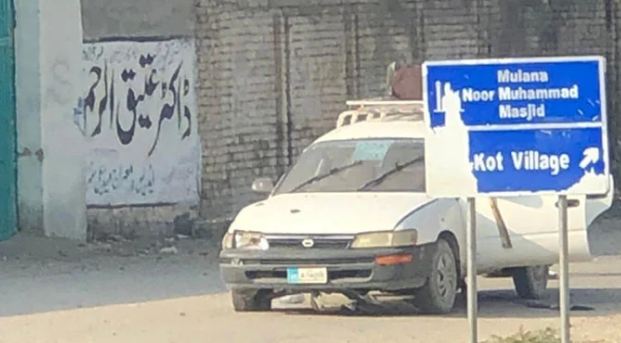
WAZIRISTAN: A remote-controlled bomb attack on a police van in Khyber Pakhtunkhwa’s (KP) South Waziristan injured 13 people which included six police personnel and seven civilians, a hospital official told Geo News on Monday.

According to police officials, the bomb exploded on a police van at Kir kot Road in the Wana Rustam Bazar.

The officials added they reached site of the incident as soon as the blast was reported, while rescue teams arrived there to shifted the injured to the District Headquarters Hospital Wana.

One of the critically injured victims of the attack has been shifted to Dera Ismail Khan.

Meanwhile, Medical Superintendent Dr Hamad Mahmood told Geo News the injured brought to the hospital included both civilians and police personnel.

On the other hand, the police sources mentioned the start of the anti-polio campaign in the region from today.

At least two police vehicles were going towards Krikot Road to provide security to the polio workers in the locality, which is when one of the vehicles was targeted in the attack.

The area, the sources added, has been cordoned off and investigation into the tragic incident has begun.

District Health Officer Dr Inayat Rahman told Geo News that the polio campaign has been started across the district today with at least 70,000 children over the age of five are being vaccinated.

According to the DHO, strict security arrangements have been made throughout the district with 480 police personnel deployed for the security of 297 polio teams.

It should be noted that both security personnel and polio workers remain vulnerable to serious risks of attacks in Pakistan, particularly in its religiously conservative northwestern region.

In many conflict regions, security concerns pose serious risks to polio teams. Over the past decade, dozens of polio workers have been attacked, creating an atmosphere of fear among those tasked with protecting the country’s children.

In July this year, two cops on polio duty were injured in separate attacks in Tank and Dera Ismail Khan districts.

Air Chief Sidhu, Erdogan discuss next-gen defence collaboration

Air Chief Sidhu, Erdogan discuss next-gen defence collaboration

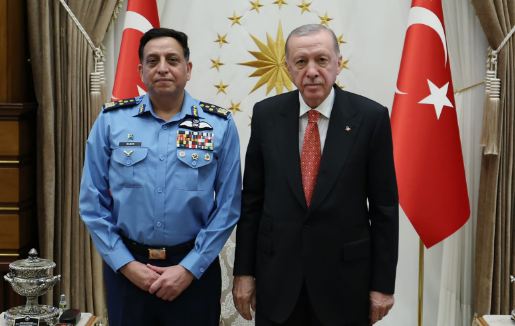
ANKARA, Sept 8 /DNA / – During a recent visit to Turkiye, Air Chief Marshal Zaheer Ahmed Baber Sidhu, Chief of the Air Staff, Pakistan Air Force called on Turkish President Recep Tayyip Erdogan. Upon his arrival, the Air Chief was received by the Turkish President at the Presidential Complex in Ankara. The meeting underscored a mutual commitment to enhance defence collaboration between the two nations.

During the meeting, Chief of the Air Staff emphasized the shared values and aspirations that form the foundation of the deep-rooted brotherhood between Pakistan and Turkiye. He also expressed his unwavering commitment to enhance the existing bilateral ties in Military-to-Military and Air Force-to-Air Force cooperation with Turkiye, especially in the field of defence production and joint development of Next Generation Aerospace technology. The Air Chief reiterated his resolve to further deepen the strong bond of brotherhood that unites the two nations in the face of shared challenges and expressed his desire to explore future avenues of collaboration in the defence and aviation sectors.

President Erdogan praised Pakistan Air Force’s progress in niche technologies such as Cyber, Space, Artificial Intelligence and Electronic Warfare, which aligns with the current PAF leadership’s focus on development of Multi-Domain Capabilities. President Erdogan acknowledged the strides attained by Pakistan’s Aerospace industry in the domains of design, research and software development capabilities over the past couple of years and urged for a more significant workshare in the software integration, design and development of Next Generation Fighter program codenamed KAAN.
He emphasized the importance of sharing niche & disruptive technologies developed in Pakistan in order to bolster multi-domain capabilities of both countries. The Turkish President also expressed his desire that the existing Joint Working Group for Aerospace industry collaboration transitions from quarterly to monthly follow-ups, with a revitalized National Level Framework set to be signed soon.

Earlier, Air Chief Marshal Zaheer Ahmed Baber Sidhu also held separate meetings with Turkish Air Force Commander General Ziya Cemal Kadioglu, Chief of Turkish General Staff General Metin Gurak and Minister of National Defence of Turkiye General Yasar Guler, further solidifying the defence ties between the two nations.

The historic visit of Chief of the Air Staff, Pakistan Air Force to Turkiye not only strengthens the existing ties between the two brotherly countries but also signifies the enduring commitment of both nations to work collaboratively towards a more secure and prosperous region.

Imran Khan won’t come out of jail via power shows, says Punjab info minister

Imran Khan won't come out of jail via power shows, says Punjab info minister

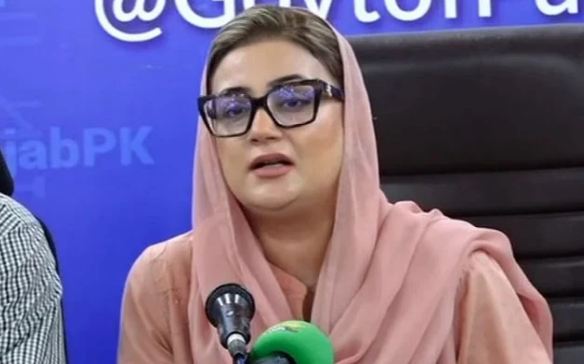
LAHORE: As the Pakistan Tehreek-e-Insaf (PTI) prepares to flex its political muscle in Islamabad today, Punjab Information Minister Azma Bokhari claimed on Sunday that such power shows would bring the party’s founder, Imran Khan, out of jail.

The major opposition party is set to hold a public rally in Sangjani, a locality of the federal capital, today, with convoys of loyalists led by senior PTI leaders arriving from various cities across the country.

“Today, they [PTI] are going to stage a drama in Islamabad,” said Bokhari in a press conference, slamming the Imran-founded party’s power show in the federal capital.

She added that such public gatherings and rallies would do nothing to release the incarcerated ex-premier.

Play Video
She said that the PTI founder could only be released from jail via courts after facing cases against him. “There is neither an NRO for him nor will these power shows change anything,” she added.

The provincial minister said that the government was not afraid of political events, however, “we are concerned about their [PTI] past activities.”

She was referring to the violent protests that erupted after the ex-premier’s arrest on May 9 last year in which government and military installations were attacked by protesters.

She alleged that the former ruling party was “planted to create disturbance in Pakistan”.

Bokhari said that no one would be allowed to disturb the law and order situation at any cost.

Prior to the PTI power show, the federal government passed the “Peaceful Assembly and Public Order Bill, 2024”, aimed at regulating public gatherings. President Asif Ali Zardari signed the bill into law.

The new law empowers the district magistrate to regulate and ban public assemblies in the federal capital, proposing a punishment of up to three years or/and an unspecified fine to the members of an “unlawful assembly”.

It also proposed that repeat offenders will be liable to imprisonment for a term that may extend to 10 years.

To a question related to the Jamiat Ulema-e-Islam-Fazl (JUI-F) supremo, the politico said that she would not respond to Maulana Fazlur Rehman’s criticism against the coalition government as he was a senior politician.

However, she stressed that the cleric’s remarks on the floor of the National Assembly were important in that he said that the country could not bear the dire consequences of toppling the incumbent government.

‘Fake videos to hide low attendance’
Bokhari alleged that the former ruling party “is spreading fake videos and photos to hide low attendance at the federal capital’s rally”.

“[Islamabad] public gathering is being advertised by the party’s leaders via fake videos and photos,” Bokhari said while speaking to Geo News.

She said that the PTI has failed to gather people for its public gathering while its Punjab leadership refused to bring people to the political event.

Play Video
“[Former president] Arif Alvi had shared a video of the August 14 event which was actually from Kashmir. Even a person like Alvi has no option other than sharing old videos to show a large participation in the forthcoming rally. However, the former president deleted these videos [from his social media account].”

She further claimed that Shahbaz Gill and other YouTubers belonging to the PTI were also spreading fake videos in desperate attempts for face-saving.

He said that the local administration issued a no objection certificate (NOC) to the PTI for its public gathering and it is their turn to gather people for it.

Bokhari alleged that the Khyber Pakhtunkhwa government’s resources were being used to bring people to the party’s Islamabad event.

“[KP Chief Minister] Ali Amin Gandapur had distributed Rs5,000 to the PTI workers to attend a power show and we don’t know what is today’s rate?”

She was pointing towards a video that went viral last month which showed CM Gandapur distributing Rs5,000 notes among PTI workers who reached the federal capital for the August 22 rally before it was abruptly cancelled.

The top leadership of the opposition party had faced criticism from party leaders and workers for not being able to hold the public gathering in Islamabad after it called off its previous rally and rescheduled it for September 8 after the local administration revoked the NOC citing security concerns.

PTI Chairman Barrister Gohar Khan had said the rally was deferred till September 8 following the instruction of the PTI founder.

Stay Connected

64FansLike
60FollowersFollow

Latest Reviews

Exchange Rates

USD - United States Dollar
EUR
1.17
GBP
1.35
AUD
0.67
CAD
0.72