Home Blog Page 638

Iran envoy lauds Pakistan support to people of Gaza

Iran envoy lauds Pakistan support to people of Gaza

Iranian Ambassador’s Remarks on International Quds Day: A Call for Unity and Solidarity with Palestine

DNA

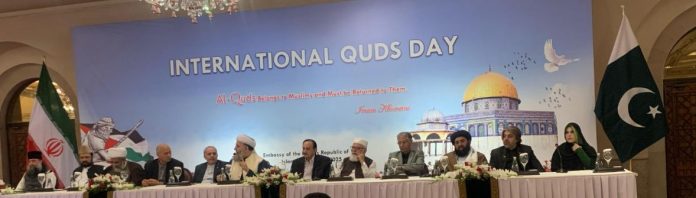
ISLAMABAD: Ambassador of Iran to Pakistan Reza Amiri-Moghaddam has extended special gratitude to the government and people of Pakistan for their strong, courageous stance on Palestine. He emphasized how Pakistan’s vocal support and media coverage have played a pivotal role in raising awareness about the Palestinian plight on the global stage.

He expressed these views while speaking on the occasion of Quds Day.

The Ambassador reminded the audience that International Quds Day, established by the late Imam Khomeini (RA), is observed on the last Friday of the holy month of Ramadan to show solidarity with the Palestinian people. This annual observance, which started decades ago, has grown in significance as it continues to shed light on the ongoing struggle for justice and freedom for Palestine.

The Ambassador pointed out the harsh realities that have unfolded since October 7, 2023, when the world witnessed the dual dynamics of aggression and resistance. On one hand, the Israeli regime, with the support of Western powers, particularly the United States, has continued its brutal actions against Palestinians, committing genocide.

On the other hand, Hamas, the Palestinian resistance group, has displayed remarkable resilience, particularly after the ceasefire and prisoner exchanges. The Israeli regime, which once vowed to eradicate Hamas, has been forced to engage in direct negotiations, recognizing the strength and resolve of the Palestinian resistance.

He expressed immense pride in Iran’s steadfast support for the Palestinian cause. He affirmed Iran’s commitment to stand by the people of Gaza until the complete liberation of Al-Quds Al-Sharif, the revered holy city of Jerusalem. Despite the challenges, including the passivity and silence of some governments and the ongoing censorship and propaganda, the Ambassador noted that global awareness of Israel’s genocidal actions is growing. More people worldwide are holding the perpetrators and their supporters accountable for their crimes against humanity.

At the core of his message was the importance of unity and solidarity within the Muslim world. He called upon Muslims around the globe to unite and raise their voices in support of Palestine and Gaza, underscoring that unity is essential for overcoming the aggression of the Zionist regime. As International Quds Day was observed, the Ambassador urged the audience to join in collective prayer for the liberation of all oppressed Muslims and the freedom of Al-Quds Al-Sharif.

Concluding his remarks, the Ambassador once again thanked everyone for attending and highlighted the sacred nature of this gathering. The Ambassador’s words resonated deeply with the spirit of unity and resistance, urging the Muslim world to stand together for justice, peace, and the liberation of Palestine.
Australian envoy hosts Iftar for Rising Stars Hockey Club

Australian envoy hosts Iftar for Rising Stars Hockey Club

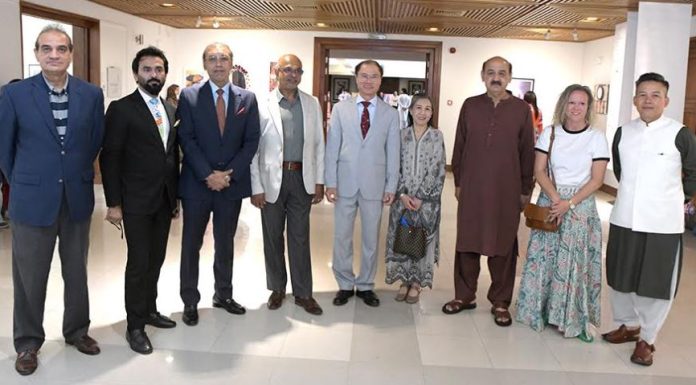
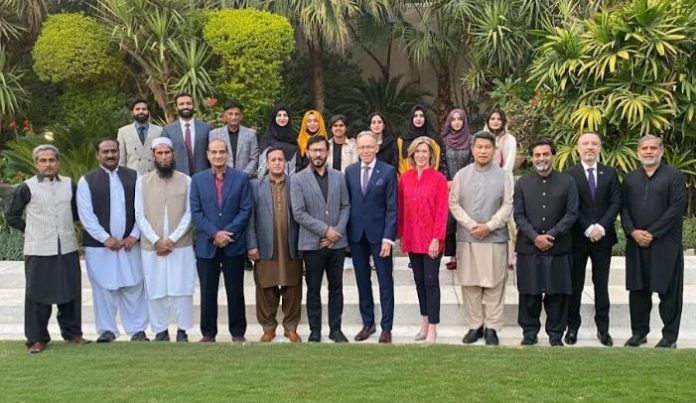
ISLAMABAD, MAR 26 /DNA/ – High Commissioner of Australia Neil Hawkins hosted iftar dinner for players of the Rising Stars Hockey Club (men and women), at his residence. Seen in the picture are High Commissioner of Brunei Kamal Ahmad, DHM Romanian embassy Edaurd Preda, Olympian Khawaja Junaid,  Mehmood Ahmad, Sohail Janjua, Ansar M Bhatti, Imran, Azeem, Nasir, Khyber, Hassan, Awan and others. DNA

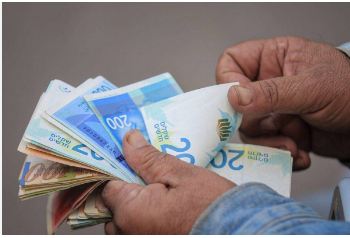
NIS 20.6 billion illegally deducted by Israel since 2012

RAMALLAH, MAR 26 /DNA/ – Government Communication Center – The Palestinian Ministry of Finance has confirmed that the Israeli occupation authorities have blocked the transfer of approximately NIS 7 billion in Palestinian clearance revenues since 2019, deepening the financial crisis facing the Palestinian Government.

In a statement issued Tuesday, the Ministry said that the Israeli occupation authorities justify blocking the transfer of these funds to the Palestinian Government under several false pretexts, including:

▪︎ Allocations for Gaza – NIS 2 billion have been withheld under this allegation.

▪︎ Allocations for the families of Palestinian martyrs and detainees – NIS 3.7 billion has been deducted under this pretext.

▪︎ Border exit tax – NIS 1.2 billion has been deducted as departure tax paid by travellers at the border crossing with Jordan.

Escalation of deductions and delays in transfer since 2023 war

Since the start of Israel’s war on the Palestinian people in the Gaza Strip in October 2023, the Israeli occupation has intensified financial restrictions against the Palestinian Government, including by doubling clearance revenue deductions to 50% of the total monthly amount while deliberately delaying payments in an unprecedented manner.

Clearance revenues, which should be transferred to the Palestinian Government at the beginning of each month (first week), are now withheld beyond the middle of the month, exacerbating the Government’s fiscal crisis.

Additionally, the Ministry asserted that the Israeli occupation authorities are planning further major deductions from the illegally withheld Palestinian tax revenues to compensate families of Israeli casualties, falsely holding Palestinian institutions responsible. The exact amount being confiscated under this scheme remains unknown.

Severe financial consequences on salaries and Government commitments

The Ministry of Finance warns that these delays and deductions directly impact the Palestinian Government’s ability to pay public sector salaries and meet other financial obligations, worsening the economic crisis, increasing financial pressures on the Government, and intensifying hardship for Palestinian citizens.

Israeli deductions of Palestinian funds: A blatant act of political blackmail

Israeli occupation authorities continue to deduct and withhold substantial sums from Palestinian clearance revenues each month, including:

▪︎ NIS 275 million – This amount is equivalent to what the Palestinian Government allocates to the Palestinian people in the Gaza Strip.

▪︎ NIS 52.6 million – Deducted under the pretext that it is the amount allocated to the families of Palestinian martyrs and prisoners.

Total Israeli deductions since 2012: NIS 20.6 billion

The total amount of illegal deductions from Palestinian clearance revenues by the Israeli occupation authorities since 2012 has reached NIS 20.6 billion, broken down as follows:

▪︎ NIS 12.5 billion – Payments for electricity.
▪︎ NIS 4 billion – Payments for water.
▪︎ NIS 1.3 billion – Payments for sanitation services.
▪︎ NIS 3 billion – Payments for medical services.

In light of these concerning and alarming figures, the Ministry of Finance stresses that these actions by the Israeli occupation are flagrant violations of all signed agreements. Such violations also directly impact the Palestinian economy and the livelihood of the Palestinian people, as part of a wider and all-out war against them, their very existence, and their national institutions.

The Palestinian Government, in close collaboration with international partners and actors, continues to press for the immediate release of illegally withheld clearance revenues and an end to Israel’s unlawful policies.

The Ministry stated that it has adopted a policy of rationalization in preparing the 2025 budget, which came as a continuation of the Government of Palestine’s reform efforts. Over the past year, more than 50 reform measures have been carried out as part of the Palestinian Government’s financial and administrative reform agenda since day one in office.

Despite Israel’s intensified war and financial warfare, the Palestinian Government remains committed to safeguarding national institutions and strengthening the steadfastness of the Palestinian people.

PM Shehbaz stresses need to eliminate debt, ensure economic stability

PM Shehbaz

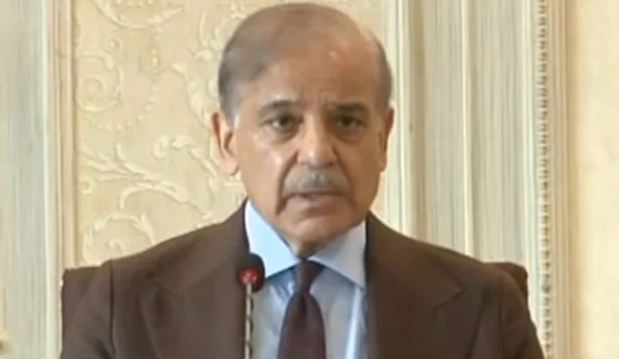
ISLAMABAD: Hailing the successful conclusion of a staff-level agreement with the International Monetary Fund (IMF) for a new $1.3 billion arrangement, Prime Minister Shehbaz Sharif emphasised the need to eliminate debt and pave the way for sustainable economic growth.

Addressing the federal cabinet meeting on Tuesday, the premier acknowledged that achieving economic stability is a long and challenging journey but expressed confidence that Pakistan will progress through relentless hard work and dedication.

The prime minister also commended the collective efforts of the deputy prime minister, finance minister, planning minister, commerce minister, economic affairs minister, FBR chairman and other key members of the economic team for their diligent work in securing the IMF agreement.

He reflected on the skepticism from opponents, who had predicted that a mini-budget would be necessary to secure the deal. However, the premier asserted that the agreement was achieved without the need for additional taxation measures, proving the government’s resolve and planning.

Shehbaz also acknowledged the hardships faced by the common people who bore the burden of the price hike during the process of achieving economic stability. Besides, he paid tribute to the salaried persons who contributed a major portion in tax collection.

The government will receive $1.3 billion from the IMF, which will bolster Pakistan’s foreign reserves to $8.3 billion, the prime minister said, terming it a big achievement to stabilise the county’s economy.

He also highlighted the contributions of all the provincial governments and their relevant chief ministers in supporting the federal government in securing the IMF agreement.

Highlighting the government’s success in surpassing tax collection targets, he said the IMF had aimed for a 10.2% tax-to-GDP ratio, but with strong performance from the economic team, the tax-to-GDP ratio had reached 10.6%, marking the highest achievement in the last four years.

“This performance reflects a 26% increase in tax collection so far”, he added.

“Pakistan’s tax collection target for the year 2024-25 was set at Rs12.9 trillion, and despite the IMF initially suggesting a downward revision of this target, I personally insisted on maintaining the original figure. Following successful negotiations, the target, which was initially revised down to Rs12.1 trillion, was adjusted to Rs12.3 trillion,” he added.

PM Shehbaz underscored that the government had planned to fast-track the cases relating to taxes pending in the tribunals worth billions of rupees and informed that as a result of this decision, the government had recovered Rs34 billion.

Similarly, he said the faceless interaction in Karachi was successfully ongoing while the process of hiring of international corporate lawyers was underway.

Due to the government’s reforms in the sugar sector, the prime minister said Rs12 billion more in taxes were collected this year as compared to last year and hoped that Rs60 billion in total will be collected this year. “This model will be replicated in cement, tobacco and textile sectors soon,” he added.

Regarding the Ramadan Package, the prime minister emphasised that unlike in the past, the government had introduced a new digital wallet system to disburse amounts to the deserving families in a transparent way.

PM Shehbaz emphasised the importance of maintaining peace and eradicating terrorism as key pillars for the country’s development. He underlined that peace was directly linked with economic progress and prosperity.

Decoupling of politics from trade urged to protect Pak-Afghan trade

Decoupling of politics from trade urged to protect Pak-Afghan trade

ISLAMABAD, MAR 26 /DNA/ – Politics and trade should be treated separately to ensure that political tensions do not disrupt bilateral economic activities between Pakistan and Afghanistan. Given the significant complexities involved, achieving this would require exceptional diplomacy from both sides. Despite ongoing political challenges, trade and economic cooperation must continue uninterrupted through a structured approach to enhance competitiveness, address transit trade issues, and improve trade facilitation mechanisms.

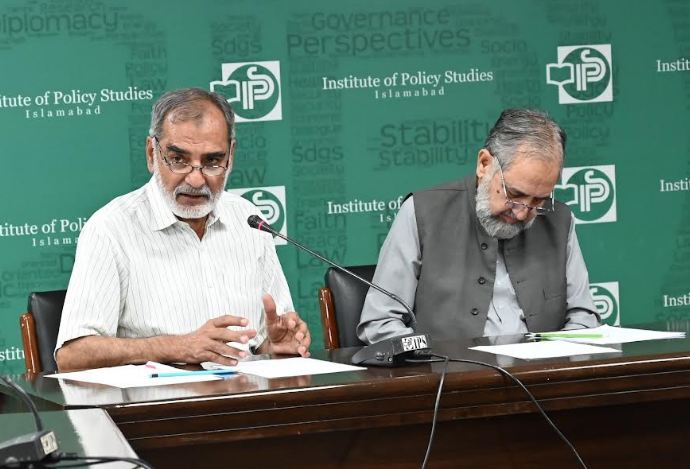
This was conveyed during a session on ‘Pakistan-Afghanistan Economic and Trade Ties’ held at the Institute of Policy Studies (IPS), Islamabad. The session was addressed by Khalid Rahman, chairman, IPS, Ambassador (r) Syed Abrar Hussain, vice chairman IPS and Pakistan’s former ambassador to Afghanistan, Ambassador (r) Ayaz Wazir, Pak-Afghan affairs expert, Brigadier (r) Said Nazir, senior analyst, Junaid Ismail Makda, president, Pakistan Afghanistan Joint Chamber of Commerce and Industry, Syed Jawad Hussain Kazmi, patron-in-chief, Khyber Chamber of Commerce & Industry, Fazal Moqeeem Khan, president, Sarhad Chamber of Commerce & Industry, Sheharyar Khan, executive director, National Dialogue Forum, and Tahir Khan, senior journalist and Afghan affairs analyst.

The speakers noted that challenges in Pakistan-Afghanistan trade relations are longstanding, largely due to political instability and frequent regime changes, which continue to disrupt economic productivity. The key obstacle remains the repeated closure of trade routes, particularly at the Torkham border, which hampers transit trade and affects access to key international markets, including Europe.

In addition, structural issues such as smuggling, limited infrastructure, banking and payment challenges, weak border management, poor implementation of trade agreements, limited digital trade processing, absence of a transparent digital supervision system, and outdated trade regulations also hinder ease of doing business.

These challenges, coupled with an unstable security environment, have led regional players like Central Asian states to explore alternative trade routes. The speakers highlighted that, on the one hand, it might seem to reduce Afghanistan’s reliance on Pakistan, but, on the other hand, geographical limitations of alternative options like Iran’s Chabahar Port would be less feasible, keeping Afghanistan’s interest in trading with Pakistan intact.

To address these challenges, experts emphasized the need to strengthen the Afghanistan-Pakistan Transit Trade Agreement (APTTA) by ensuring the rule of law, improving banking facilities, and revising trade regulations to facilitate smoother business operations. It was also suggested that a dedicated trade development policy should be introduced, along with a stakeholder-led management committee, to resolve minor trade issues promptly and prevent unnecessary disruptions.

Moreover, it was observed that the Torkham border, a key trade gateway, must be managed more effectively, with a focus on maintaining uninterrupted trade flows rather than using border closures as a tool. Engaging external partners and implementing cross-border tariff strategies can also enhance economic cooperation.

To ensure the stability of long-term trade relations, the discussants suggested a comprehensive economic treaty between both countries is necessary, ensuring mutual benefits that remain unaffected by security concerns. Additionally, integrating local communities into trade discussions, strengthening digital supervision, and fostering collaboration with regional and international organizations can help sustain economic ties.

In his concluding remarks, Khalid Rahman pointed out that while Pakistan declared a shift toward a geo-economic strategy in 2018, its implementation has been inconsistent. He underscored the necessity of an integrated regional approach rather than crisis-driven decision-making, advocating for a comprehensive, well-coordinated, and long-term strategy.

The session concluded with the consensus that Pakistan and Afghanistan must work together to strengthen trade agreements and streamline transit trade regulations, establish structured mechanisms to address trade issues proactively, promote digitalization in trade processing and improve banking channels, engage international stakeholders for broader economic collaboration, and avoid trade disruptions due to political tensions, ensuring economic stability.

IMF, Pakistan reach 1st staff level agreement under EFF

IMF

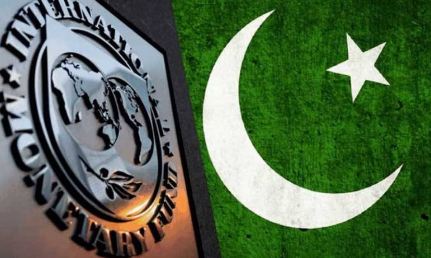
ISLAMABAD, Mar 26 (APP):The International Monetary Fund (IMF) Staff and the Pakistani authorities have reached a staff-level agreement on the first review under Pakistan’s 37-month $7bn Extended Fund Facility (EFF) and on a new 28-month $1.3bn arrangement under the Resilience and Sustainability Facility (RSF), Advisor to Finance Minister, Khurram Schehzad said here on Wednesday.

Upon Board approval, Pakistan will have access to about $1bn under the EFF, bringing total disbursements under the EFF to about $2bn, Advisor to Finance Minister, Khurram Schehzad on X.

He said, Pakistan was making significant strides in economic reforms, focusing on tax equity, monetary stability, energy sector transformation, and climate resilience. Supported by the IMF, these efforts are laying the foundation for a sustainable and prosperous future.

He also highlighted certain key developments under the staff-level agreement as follows: Pakistan’s Reform Agenda: Tax & Fiscal Strengthening – Provinces amend Agriculture Income Tax to broaden the base & enhance fairness, strengthening fiscal transparency and setting the stage for long-term economic stability.

Monetary Stability & Energy Sector Transformation: Tight monetary policy keeps inflation within target (5–7%) and ensures FX market stability. Energy sector reforms reduce circular debt, lower tariffs, and accelerate renewable energy.

Governance, Private Sector & Climate Resilience: Advancing SOE governance, fighting corruption & driving climate resilience with smart water use and green mobility initiatives to ensure a sustainable and thriving future for Pakistan.

Positive Outlook Ahead: With continued reforms and dedication to sustainability, Pakistan is poised for inclusive growth, a stronger economy, and a resilient environment. The journey towards a prosperous future continues.

This iconic train route through the Rockies is being extended

iconic train

One of the United States‘ most iconic train routes – which takes in sights like the Rocky Mountains and Ruby Canyon across Colorado and Utah – is being extended.

Rocky Mountaineer’s Rockies to the Red Rocks route, which currently runs between Denver in Colorado and Moab in Utah, will now terminate in Salt Lake City.

The original route lasts two days, with an overnight stop in Glenwood Springs, CO. The new route, which lasts three days and has an additional overnight stop in Moab, UT, will be available alongside the shorter journey from April 2026.

That’s not the only change, either – from next year, the luxury train will operate under a new brand name, Canyon Spirit. Rocky Mountaineer will continue to operate three routes across the Canadian Rockies: First Passage to the West, between Vancouver, Lake Louise and Banff; Journey Through The Clouds, between Vancouver and Jasper; and Rainforest to Gold Rush, between Vancouver, Whistler and Jasper.Train passing through Red Canyon

The route passes through the iconic Ruby Canyon (Canyon Spirit)

Tristan Armstrong, CEO, Armstrong Collective, Canyon Spirit’s parent company, said, “We could not be more excited to bring our Canyon Spirit train to Salt Lake City, and to expand our Rockies to the Red Rocks route further into the beautiful state of Utah.

“Although the name of our train is changing, our world-class service and onboard experience will remain the same, and we look forward to sharing the beauty of the American Southwest with even more guests from across the United States and around the world.”

Canyon Spirit’s trains feature glass dome coaches to maximise your view throughout the journey, and all journeys include meals as well as soft drinks and alcoholic beverages. Along the way, you’ll learn stories about the historic sites, scenery and wildlife you are passing by.

The new journey will begin operations on 21 April, 2026, with one westbound departure from Denver and one eastbound departure from Salt Lake City each week.

Senior journalist Waheed Murad ‘abducted’ from Islamabad residence

Senior journalist Waheed Murad 'abducted' from Islamabad residence

ISLAMABAD, MAR 26: Senior journalist Waheed Murad was allegedly abducted from his home in Islamabad early on Wednesday morning. According to his wife, masked men in black uniforms forcibly entered the house at around 2am and whisked him away in a black “dala”.

Speaking to Geo News, Murad’s wife said that the men knocked on the door and accused her husband of being an Afghan. When Murad denied the claim and slid his identity card under the door as proof, they forcibly broke in. She added that the men, dressed in black uniforms, seized both Murad and her mother’s phones before taking him away in a black vehicle.

Murad’s wife, who is currently abroad, said that her mother was at home at the time of alleged abduction. She had requested the intruders to send female police officers, but they refused and forcibly took Murad away.

Family sources confirmed that the abduction took place on Chaman Road in Sector G-8.

Later, Murad’s mother-in-law filed a petition for the missing journalist’s recovery via Advocates Imaan Mazari and Hadi Ali Chattha. The interior secretary, defence secretary, Islamabad inspector general of police, and the station house officer (SHO) of Karachi Company police station have been named as respondents in the plea.

According to the petition, individuals dressed in black uniforms arrived at their home in Sector G-8 at 2am, while two police vehicles were also seen accompanying them.

The petition alleges that the men in black uniforms forcibly took Murad away. It also states that those who entered the house misbehaved with the family.

A complaint was lodged at Karachi Company police station, but no FIR was registered. The petition requests an immediate order for the recovery of Murad and legal action against those involved in his unlawful abduction.

Pakistan face humiliating 4-1 T20I series defeat against New Zealand

New Zealand

WELLINGTON: New Zealand secured a dominant eight-wicket win in the final T20I of the five-match series against Pakistan at Sky Stadium on Wednesday, delivering a commanding performance.

The home side comfortably chased down a modest score of 128 given by the visitors, knocking winning runs for the loss of just two wickets and 60 balls to spare, courtesy of a blazing opening stand between Tim Seifert and Finn Allen.

The duo added a quickfire 93 runs until Allen was dismissed by Sufiyan Muqeem in the seventh over. He scored 27 off 12 deliveries with the help of five fours and a six.

Muqeem caused a stir in New Zealand’s run chase by getting in-form Mark Chapman stumped in his next over.

However, Seifert continued his onslaught and steered New Zealand over the line with an unbeaten 87 off 38 deliveries, studded with six fours and 10 sixes.

He was also involved in a one-side 28-run partnership with Daryl Mitchell, who scored two not out.

For Pakistan, Sufiyan Muqeem was the solitary wicket-taker, making two scalps for just six runs in his two overs.

New Zealand captain Michael Bracewell’s decision to put Pakistan into bat paid dividends as the touring side could register a modest total on the board despite Salman Ali Agha’s half-century.

The visitors got off to an unwanted start as they lost hard-hitting opener Hasan Nawaz (0) in the second over with just five runs on the board.

Following the early hiccup, Omair Bin Yousuf joined Mohammad Haris in the middle for a brief 18-run stand, which was followed by their back-to-back dismissals.

Haris scored 11 off 17 deliveries with the help of two boundaries, while Yousuf made seven.

The green shirts then lost two more wickets in quick succession as Usman Khan (seven) and Abdul Samad (four) perished cheaply.

Their dismissals had reduced Pakistan to 52/5 in 10.2 overs until skipper Agha and experienced all-rounder Shadab recorded an anchoring partnership.

The duo added an important 54 runs for the sixth wicket until Shadab was removed by James Neesham on the first delivery of the 17th over.

The all-rounder scored 28 off 20 deliveries with the help of five boundaries.

Neesham inflicted another blow on the visitors as he sent Jahandad Khan back in the same over as Pakistan slipped further to 108/7 in 16.4 overs.

Agha also fell victim to Neesham in the penultimate over and walked back after top-scoring for Pakistan with a 39-ball 51, comprised of six fours and a six.

Neesham was the standout bowler for New Zealand, taking five wickets for just 22 runs in his four overs, followed by Duffy with two, while Ish Sodhi and Ben Sears chipped in with one scalp apiece.

Playing XIs

Pakistan: Mohammad Haris (w), Hasan Nawaz, Omair Bin Yousuf, Salman Agha (c), Usman Khan, Shadab Khan, Abdul Samad, Jahandad Khan, Haris Rauf, Sufiyan Muqeem, Mohammad Ali.

New Zealand: Tim Seifert, Finn Allen, Mark Chapman, Daryl Mitchell, Jimmy Neesham, Mitch Hay (wk), Michael Bracewell (c), Ish Sodhi, Jacob Duffy, Ben Sears, Will O’Rourke.

Uzbekistan’s Termez hub joins UNHCR global supply network

Uzbekistan’s Termez hub joins UNHCR global supply network

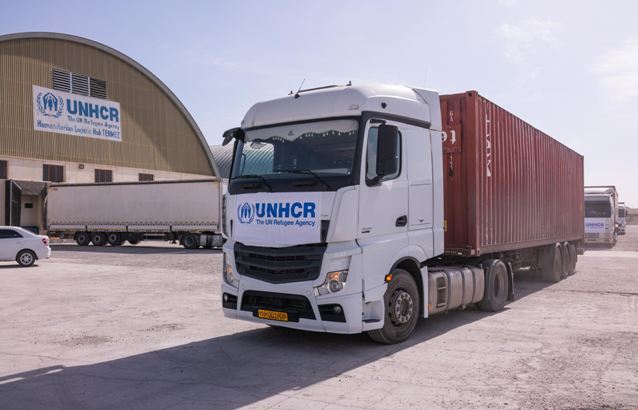
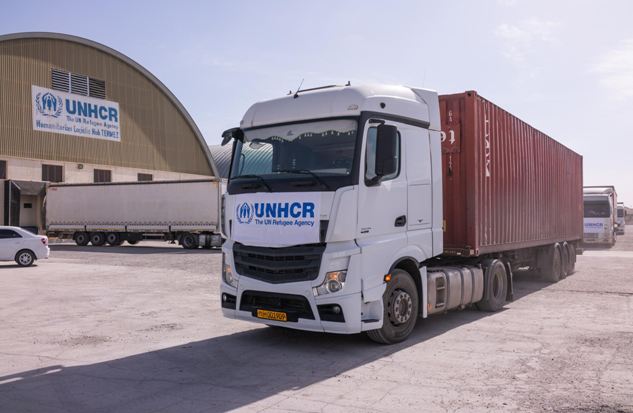
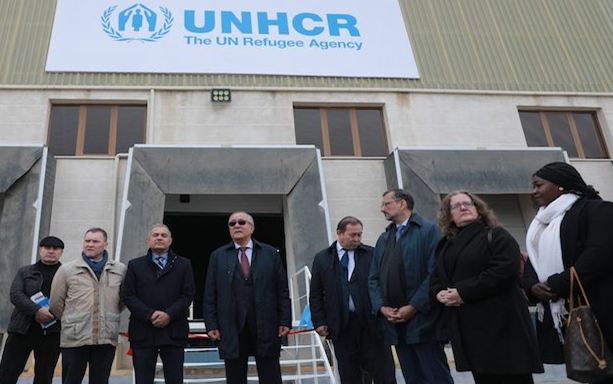
TASHKENT, MAR 26: /DNA/ – The International Multifunctional Transport and Logistics Hub in Termez has officially been granted the status of a warehouse within the Global Supply Network United Nations High Commissioner for Refugees (UNHCR).

Last month, a ceremony marking this achievement was held at this Center in Termez, attended by key officials, including the Special Representative of the President of Uzbekistan for Afghanistan Mr. Ismatulla Irgashev; Deputy Special Representative of the UN Secretary-General for Afghanistan Mr. Indrika Ratwatte; UN Resident Coordinator in Uzbekistan Ms. Sabine Machl; Acting Regional Representative of UNHCR Mr. Dumitru Lipcanu; Head of UNHCR in Afghanistan Mr. Arafat Jamal; as well as representatives of the Surkhandarya regional administration, the Ministry of Foreign Affairs, and Uzbekistan’s Customs and Border Services.

The hub was established in 2022 on the initiative of the President of the Republic of Uzbekistan to ensure the centralized and targeted delivery of humanitarian aid by the UN, international organizations and foreign countries to Afghanistan and other countries on the basis of Termez Cargo Center LLC.

Addressing the 78th Session of the UN General Assembly, President of the Republic of Uzbekistan Shavkat Mirziyoyev called on the world community to unite in solving the problem of Afghanistan, stressing that humanitarian assistance to the Afghan people should not wane. UNHCR’s Global Supply Network includes seven warehouse complexes located in Amman (Jordan), Dubai (UAE), Nairobi (Kenya), Accra (Ghana), Douala (Cameroon), Copenhagen (Denmark) and Panama City (Panama). More than $500 million worth of key life-support items – tents, blankets, kitchen sets, medical supplies and others – are processed through this infrastructure annually for rapid response to humanitarian crises.

Given the complex international situation and the increasing number of people in need of support, the UN and its agencies endeavour to maintain adequate stocks of essential resources to assist vulnerable populations. In this context, Termez’s strategic location at the crossroads of Central and South Asia, its well-developed transport and energy infrastructure, and the availability of qualified personnel were key factors in the decision to integrate the Hub into the global community.

Thus, the Termez hub became UNHCR’s eighth international warehouse, reaffirming its significance and effectiveness for the prompt distribution of humanitarian goods on a global scale.

Ismatulla Irgashev, Special Representative of the President of the Republic of Uzbekistan for Afghanistan:

“The Termez hub symbolizes international cooperation, reliability, and efficiency. It not only serves to strengthen the humanitarian supply chain, but also contributes to the development of the region by creating new opportunities and jobs”.

Indrika Ratwatte, Deputy Special Representative of the UN Secretary General for Afghanistan, expressed gratitude to the Uzbek side for its active efforts to provide humanitarian support to Afghanistan and other countries, as well as for close cooperation with UN agencies. He highly praised the infrastructure created in Termez, which enhances the UN’s emergency preparedness by reducing operational costs and risks. “We are ready to continue cooperation with Uzbekistan for the sake of achieving the Sustainable Development Goals based on the principle of ‘Leaving No One Behind”.

Sabine Machl, UN Resident Coordinator in Uzbekistan:

“Joining of International Transport and Logistics Hub in Termez to the UNHCR’s Global Supply Network demonstrates Uzbekistan’s commitment to the principles of multilateral cooperation and strengthens its role as an active participant in international humanitarian initiatives. Thanks to the opportunities provided by the Uzbek side, millions of people affected by emergencies will receive vital assistance”.

Dumitru Lipcanu, Acting Regional Representative of UNHCR for Central Asia, highlighted that the Organisation has repeatedly been convinced of the strategic advantages of the Termez Hub for humanitarian operations at the international level.

“The integration of the Center into our Global Network will allow even more efficient use of its infrastructure and logistical capabilities to support people forced to flee their homes”, – D.Lipcanu said.

According Mr. Arafat Jamal, UNHCR’s representative in Afghanistan, Afghanistan would significantly benefit from the expansion of UNHCR’s emergency supply management system through the Termez Logistics Center.

“However, the significance of this hub extends far beyond Afghanistan. It will strengthen emergency response measures at the global level, enhance regional cooperation, and intensify the fight against climate change through the use of environmentally friendly technologies”, said A.Jamal.

Stay Connected

64FansLike
60FollowersFollow

Latest Reviews

Exchange Rates

USD - United States Dollar
EUR
1.17
GBP
1.35
AUD
0.72
CAD
0.73