Home Blog Page 636

Pakistan to celebrate Eid ul Fitr tomorrow as Shawwal moon sighted

Pakistan to celebrate Eid ul Fitr tomorrow as Shawwal moon sighted

ISLAMABAD, MAR 30: The Central Ruet-e-Hilal Committee on Tuesday announced that Eid ul Fitr would fall on Monday (March 31) as the Shawwal moon was sighted in Pakistan.

The announcement came after a meeting of the Central Ruet-e-Hilal Committee at the Ministry of Religious Affairs and Interfaith Harmony in Islamabad, while meetings of zonal and district Ruet-e-Hilal committees were held at their respective headquarters concurrently.

The meeting was chaired by Maulana Abdul Khabir Azad, and attended by the members of the Ruet-e-Hilal Commit­tee, as well as officials from the Pakistan Meteorological Department (PMD), Suparco, and the Ministry of Science and Technology.

Addressing a press conference after the meeting, Maulana Azad said testimonies of moon sightings were received from majority of the country, hence, Eid would be celebrated tomorrow.

He said the sky was generally clear in most regions, enabling the moon to be easily sighted. He confirmed receiving credible moon-sighting testimonies from multiple locations, including Lahore, Bahawalpur, Islamabad, Sheikhupura, Kasur, and other areas.

After thorough verification and consensus, Maulana Azad said the committee has declared that the first of Shawwal-ul-Mukarram.

The announcement was met with joy and celebration across the country as Muslims prepare to observe the festival, which marks the culmination of a month of fasting, prayer, and reflection.

Muslims celebrate Eid ul Fitr after the completion of the fasting month of Ramadan, the ninth month in the Islamic calendar.

Saudi Arabia, UAE celebrating Eid today

Saudi Arabia and the United Arab Emirates (UAE) and several other countries are celebrating Eid ul Fitr today, according to Arab media reports.

An official statement from the Saudi Royal Court confirmed that today, Saturday, is the last day of Ramadan, and today will be celebrated as Eidul Ftir across the Kingdom.

Meanwhile, the UAE also made the same announcement.

Similarly, other Middle Eastern countries, including Kuwait, Qatar, and Iran, have also announced sighting of the Shawwal moon and will celebrate Eid today.

Countries where moon not sighted
Meanwhile, several countries officially announced that Eid ul Fitr will fall on Monday, March 31, 2025, as the Shawwal crescent moon was not sighted on Saturday evening.

Oman has officially announced that the Shawwal moon was not sighted, and Eid ul Fitr will be celebrated on Monday, March 31.

Bangladesh, India, Indonesia, Malaysia, Brunei, and Australia confirmed the Eid date based on astronomical data and local moon sighting efforts.

In Bangladesh, the National Moon Sighting Committee stated that the crescent moon was not sighted, making Sunday the 30th day of Ramadan.

Indonesia also declared Monday as the first day of Eid after failing to observe the Shawwal crescent.

In India, where Muslims have completed 28 days of fasting, the Shawwal moon is expected to be sighted today. If confirmed, Eid ul Fitr will be celebrated on Monday.

Malaysia’s International Astronomy Centre (IAC) confirmed that the crescent will be visible to the naked eye today. Hence, the country will celebrate Eid on Monday.

Brunei followed suit, with the IAC also confirming that the moon will be visible there today.

The Australian Fatwa Council declared Eid ul Fitr on March 31 as well, noting that the Shawwal moon will be born after sunset on Saturday in both eastern and western parts of the country.
PM Shehbaz, Azerbaijan President share Eid wishes in phone conversation

PM Shehbaz

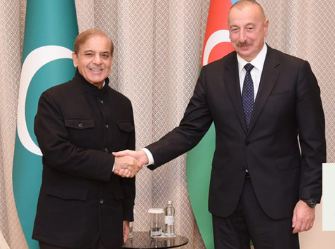
ISLAMABAD, MAR 30 /DNA/ – Prime Minister Shehbaz Sharif held a telephone conversation today with the President of the Republic of Azerbaijan, Ilham Aliyev on the occasion of Eid-ul-Fitr.

The Prime Minister conveyed his heartfelt greetings and warm wishes to the President, his family, and the brotherly people of Azerbaijan, while praying for their continued peace and prosperity.

The two leaders reaffirmed their shared resolve to further strengthen the deep-rooted fraternal ties between the two countries. Building upon the Prime Minister’s visit to Baku last month, the two leaders agreed that the Minister of Economy of Azerbaijan would visit Islamabad in the first week of April to hold discussions with the Deputy Prime Minister/Foreign Minister and also pay a courtesy call on the Prime Minister. This visit would ensure finalization of the key investment agreements between both sides thus setting the stage for President Ilham Aliyev’s expected visit to Islamabad in the month of April.

The Prime Minister said that the upcoming visit of President Ilham Aliyev would be a landmark in Pakistan-Azerbaijan relations as both sides would be signing mutually beneficial investment agreements to the tune of USD 2 billion, thus marking a new chapter in the strategic partnership between the two countries.

Slow internet, digital payment challenges for SMEs to tap global market: BMP

digital payment challenges

ISLAMABAD, MAR 30 /DNA/ – The Federation of Pakistan Chambers of Commerce & Industry’ Businessmen Panel (BMP) has said that unreliable internet and digital payment barriers have slowed down the growth of the small and medium-sized enterprises (SMEs), as they have been facing serious challenges in their attempt to tap growing global market.

The FPCCI former president and BMP Chairman Mian Anjum Nisar, observed that despite having an annual growth rate of 17%, with non-textile exports and online businesses slowly gaining traction, fundamental obstacles like disruption in internet and lack of consumer trust are slowing progress.

Referring to a report, Mian Anjum Nisar said that Pakistan’s digital payment adoption has improved, with figures showing 84% of in-store mobile payments in FY24, but online transactions remain a challenge. Most Pakistani online shoppers, especially those in urban areas, continue to prefer cash-on-delivery, reflecting deep-rooted skepticism about online shopping. This has been compounded by several high-profile cases of undelivered products, which further erode customer confidence.

Experts argue that the absence of secure, user-friendly payment systems and proper infrastructure is holding Pakistan’s e-commerce potential back. Countries like India and Bangladesh, with strong mobile payment systems such as UPI and bKash, have seen substantial growth in their digital markets.

The BMP Chairman said that Pakistan’s e-commerce sector was valued at $7.7 billion in 2024, with retail e-commerce accounting for $5.4 billion, according to a report of PCMI.

Anjum Nisar said that in addition to payment system issues, Pakistan’s internet infrastructure is another major hurdle. Ranking 97th globally in mobile internet speed, Pakistan’s connectivity is far behind its regional counterparts, with rural areas suffering from even worse connectivity issues. This not only affects website access but also delays product uploads leads to lost sales and cancelled orders.

Despite government initiatives like the Digital Pakistan Policy and the National E-Commerce Council, which are aimed at bridging these gaps, progress remains slow. The country’s tax incentives for IT exports and new conversations with global payment platforms like Google Pay have seen limited success. The lack of access to digital marketing workshops and e-commerce tools outside major urban centers further limits growth for rural entrepreneurs.

Experts agree that, for Pakistan to capitalize on the global e-commerce boom, basic infrastructure improvements such as reliable internet access and affordable logistics must be prioritized. Without these foundational changes, SMEs will continue to struggle in an increasingly digital world, risking their position in the growing global market.

This growth is driven by a young, tech-savvy population and the rise of business-to-consumer (B2C) and business-to-business (B2B) platforms such as Daraz, Alibaba and Shopify. For SMEs, which make up over 90% of Pakistan’s businesses and contribute 40% to its GDP, going digital is not just an option, it is now becoming a survival strategy. Yet, many business owners say the path to success is far from smooth.

Today, 60% of our sales come from overseas Pakistanis in the Middle East and Europe. “However, customers abroad want to pay through PayPal, which is not available here. SMEs have to use bank transfers, which take days in process or opt for cash-on-delivery, which sometimes leads to order cancellations,” they added.

According to PCMI, in Pakistan 75% of online shoppers prefer cash-on-delivery. This phenomenon is still common as it was 10 years ago. While the digital payment volume, according to figures quoted by the State Bank of Pakistan (SBP), jumped to 84% in FY24, most of those were in-store mobile payments and not online sales.

Economists argue that without secure, user-friendly payment systems, e-commerce growth will stay limited. “Pakistan’s Raast system is a good start, but it needs to scale faster,” they added.

The internet itself is another stumbling block. Pakistan ranked 97th globally in mobile internet speed in February 2025, with an average speed of 25.39 Mbps, far behind India, ranked 20th with 144.33 Mbps and Bangladesh, at 87th place with 37.98 Mbps, according to Ookla’s Speedtest Index. In rural areas, the problem is even worse.

Such decade-old issues put Pakistan’s SMEs and their online presence at a disadvantage compared to regional neighbours. India’s e-commerce market, worth $123 billion, thrives on cheap data and widespread digital literacy, while Bangladesh’s $7.5 billion sector benefits from tax breaks for online exporters and a robust mobile money ecosystem.

Government initiatives, like the 2019 Digital Pakistan Policy and the National E-Commerce Council, are aimed at bridging these gaps. Recent moves include tax incentives for IT exports and talks with global payment platforms. Google Pay has initiated its services from Pakistan recently but it is a one-way method.

Nevertheless, SME owners say progress is too slow. “We hear about workshops on digital marketing and B2B methodologies, but they are only held in big cities. How will a craftswoman in Swat or a farmer in Sindh learn these skills,” they asked.

Others demand better infrastructure. “The government should treat internet access like electricity or water, it’s a basic need for businesses now,” they said, neglecting the fact that electricity and water are still not available in far-flung areas.

They added that logistics and shipping costs are also key issues both for domestic and global shipments. Apart from that, with low consumer spending due to hyperinflation, there is a need for SMEs and online businesses to find new markets to survive.

There is a huge young population spending most of their time on smartphones. Many like to buy online in every part of the world.

GDA starts construction of Gwadar Wastewater Treatment Plant 

GDA starts construction of Gwadar Wastewater Treatment Plant 

ISLAMABAD, MAR 30 /DNA/ – The Gwadar Development Authority (GDA) started constructing a state-of-the-art wastewater treatment plant near the central part of the city, Gwadar Pro reported.

The project was undertaken amid a steady increase in business activities and local population growth under the Gwadar Smart Port City Master Plan 2025.

With the capacity to treat 400,000 gallons of sewage and contaminated water, the wastewater treatment plant is a major environmental and infrastructure project. 

It will make wastewater reusable for agricultural purposes, gardening, parks, grounds, and other green spaces in the city.

A GDA official told Gwadar Pro that the wastewater treatment plant will collect and treat wastewater from various sources before discharging it into water bodies. 

The facility plays a crucial role in removing pollutants and contaminants to protect the environment.

According to a senior hydrologist Abdul Ghani,  without adequate treatment, waste or sewage can leach into the environment and contaminate ecosystems. 

“Wastewater treatment is an intricate and vital process consisting of multiple stages, each performing specific functions to ensure the effective removal of contaminants. 

From the initial screening of large solids to advanced processes that remove microscopic pollutants, each stage is a critical component in protecting human health and preserving the environment,” he explained.

On March 27, the Director General of the Gwadar Development Authority (GDA), Saifullah Khetran, visited the wastewater treatment plant under construction and conducted a detailed review of the ongoing work. On this occasion, Chief Engineer Haji Syed Muhammad and Project Director Mirjan Baloch provided him with a comprehensive briefing on the progress and technical aspects of the project.

Earlier, another plant with a capacity of 400,000 gallons had already been installed near Senator Ishaq Cricket Ground. This facility collects wastewater from different areas of the city through a sewer line and treats it using modern systems.

During his visit, Khetran also reviewed the pace of construction work and directed the relevant authorities to accelerate the project’s completion ahead of the stipulated timeline. 

Last year, the sewage treatment plant at Gwadar Port Complex was inaugurated by Shams Ul Haq Kalmati, then President of the Gwadar Chamber of Commerce and Industry (GCCI), and Pasand Khan Bulidi, Chairman of the Gwadar Port Authority.

Meanwhile, Balochistan environmentalist Muhammad Rahim Baloch, in an interview with Gwadar Pro, emphasized that reclaiming water for reuse instead of relying on freshwater supplies is a key water-saving measure. 

“When treated water is discharged back into natural water sources, it benefits ecosystems by improving streamflow, nourishing plant life, and recharging aquifers as part of the natural water cycle. 

Wastewater reuse is a long-established practice, particularly for irrigation in arid countries. Incorporating wastewater reuse into sustainable water management allows it to serve as an alternative water source for human activities, reducing water scarcity and alleviating pressure on groundwater and other natural water bodies. 

Another potential benefit is the nutrient content in wastewater, which may reduce the need for additional fertilizers,” he added.

Discourse of UK National Security

Discourse of UK National Security

Dr. Muhammad Akram Zaheer

The discourse surrounding diversity of thought within UK national security policymaking has emerged as a significant area of inquiry, particularly in light of its implications for identity politics, knowledge production and the broader structures of power that underpin national security institutions. This perspective challenges the traditional notion of the bureaucrat as a disembodied thinker who provides a “view from nowhere”, an ideal rooted in Enlightenment-era conceptions of objectivity and rationality. In theory, this shift could lead to more inclusive and equitable security practices that analyze militarism and prioritize the needs of historically excluded groups. However, its power-evasive framing often undermines the potential for emancipatory politics within this discourse. While some officials advocate for a critical approach that centers the lives of marginalized subjects, the diversity of thought agenda is more frequently co-opted to reinforce the illusion of objective, apolitical knowledge production. This tendency is particularly evident in the ways Conservative ministers have used the discourse to enforce a narrow version of Civil Service impartiality. By framing diversity of thought as a means to achieve bureaucratic objectivity, these ministers paradoxically stifle critiques of structural inequality and obscure the gendered, racialized and classed power relations that shape national security practices. The codified requirement for bureaucratic objectivity, coupled with the power-evasive character of the diversity of thought discourse, renders it susceptible to being used in ways that legitimize hegemonic approaches to security. Rather than exposing how militaristic and colonial logics arise from and uphold systems of patriarchy, capitalism and white supremacy, the discourse often frames these practices as apolitical and banal. This dynamic is evident in the UK’s participation in the invasion of Iraq, where colonial and militaristic logics prevailed despite the availability of alternative perspectives. The failure of diversity initiatives to prevent such policy outcomes raises questions about their capacity to address the root causes of security practices that perpetuate violence and inequality. Moreover, the inclusion of historically excluded groups, while a necessary step, is insufficient to overcome national security institutions’ deep-seated commitment to militarism. Policymakers’ uptake of the diversity of thought discourse primarily reflects their institutions’ material and ideological investment in a militaristic and colonial notion of national security. This investment renders hegemonic approaches to security invisible and beyond critique, positioning them as natural and inevitable rather than as products of specific historical and social conditions. As a result, efforts to embrace challenge and reform following events such as the Chilcot Inquiry are often limited in scope and impact. The case of the diversity of thought discourse exemplifies a broader pattern in which critical discursive interventions are stripped of their radical content when adopted by powerful institutions. This phenomenon invites us to consider the interests that such institutions serve and the material structures that necessitate particular security practices. If, as scholars of racial capitalism and colonialist argue, the primary function of security is to maintain racialized, gendered and classed processes of capital accumulation and resource distribution, then it is unsurprising that diversity initiatives have failed to produce emancipatory approaches to security. Institutions designed to uphold these systems are unlikely to embrace reforms that fundamentally challenge their raison d’être. The increasing taboo surrounding structural power analysis within UK policymaking circles further complicates efforts to address these issues. By highlighting how government policies maintain violent inequalities, such analysis threatens the legitimacy of national security institutions and the power relations they preserve. Alternative approaches, drawing on literatures such as racial capitalism and post-, de- and anti-colonial traditions, offer promising avenues for rethinking security. For example, abolitionist scholarship argues that reforms to security institutions often serve to legitimize their role in protecting racial capitalism, advocating instead for the construction of alternative institutions that address the root causes of social inequalities. Taking seriously the concept of situated knowledge requires a fundamental rethinking of how knowledge is produced and utilized in policymaking. This involves not only expanding who is included in decision-making processes but also reconsidering the purpose of knowledge production itself. Alternative knowledge claims, while often ignored or marginalized within existing paradigms, pose a significant challenge to the processes used by the powerful to legitimate their rule. Accepting that objectivity is illusory and that all knowledge is political undermines the liberal conception of a neutral bureaucracy and the power relations it sustains. This shift raises important questions for further investigation: What would it mean for decision-makers to replace objectivity with a conceptualization of knowledge as situated and imbued with power relations? How might policymaking processes premised on justice rather than impartiality function and who would participate in them? Alternative institutions require alternative epistemologies ones that do not deny the entanglement of knowledge with power relations but instead treat knowledge production as a central component of liberator political praxis.

Six terrorists killed in Intelligence-based operation in Kalat: ISPR

Security forces kill four terrorists in D.I.Khan

RAWALPINDI, MAR 29: /DNA/ – Security forces conducted an intelligence based operation in Kalat District of Balochistan, on reported presence of terrorists.

During the conduct of operation, own troops effectively engaged the terrorists location and after an intense fire exchange, six terrorists were successfully neutralized.

The killed terrorists remained actively involved in recent terrorist activities in the area against the law enforcement agencies as well as the innocent civilians.

Sanitization operation is being conducted in the area to eliminate any other terrorist found in the area, as the security forces of Pakistan, in step with the nation, remain determined to thwart attempts at sabotaging peace, stability and progress of Balochistan.

Pakistan launches Africa economic council to boost trade, investment ties

Pakistan launches Africa economic council to boost trade, investment ties

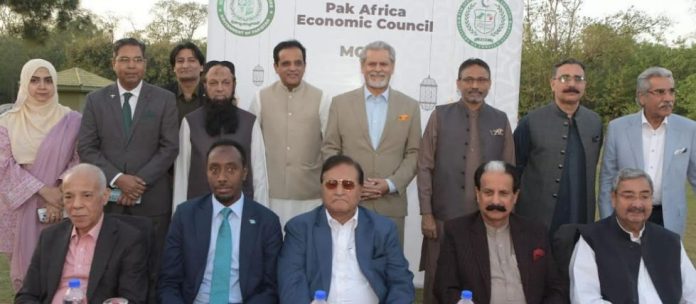
ISLAMABAD, MAR 29 /DNA/ – The Ministry of Foreign Affairs marked a significant step toward enhancing Pakistan’s economic engagement with Africa by formally announcing the establishment of the Pakistan-African Economic Council (PAEC) during a high-profile iftar dinner hosted by Additional Secretary (Africa) Hamid Asghar Khan on Friday.

The event brought together key diplomats, including Dean of the African Group and Ambassador of Morocco Mohammad Karmoune, the Ambassador of Somalia, and prominent Pakistani business leaders such as Zafar Bakhtawari and Ch. Tanvir, alongside members of the newly formed council.

In his remarks, Additional Secretary Hamid Asghar Khan emphasized Pakistan’s commitment to deepening economic collaboration with African nations. “The Pak-Africa Economic Council will serve as a vital platform to boost trade, investment, and business partnerships between Pakistan and African countries,” he stated.

The council aims to facilitate bilateral trade, joint ventures, and knowledge exchange while addressing market access challenges for Pakistani exporters. The initiative aligns with Pakistan’s broader foreign policy objective of expanding economic diplomacy in Africa.

The Dean of the African Group, Ambassador Karmoune, welcomed the initiative, expressing optimism about stronger economic ties. “Africa offers immense opportunities, and this council will help bridge businesses and foster mutual growth,” he remarked.

The iftar dinner provided an opportunity for networking and discussions on priority sectors, including agriculture, textiles, pharmaceuticals, and infrastructure development.

The Pakistan-African Economic Council (PAEC) is expected to hold its inaugural meeting in the coming weeks to outline its strategic roadmap.

Civil society pens open letter to PM seeking release of Mahrang, Sammi, other BYC leaders

Civil society

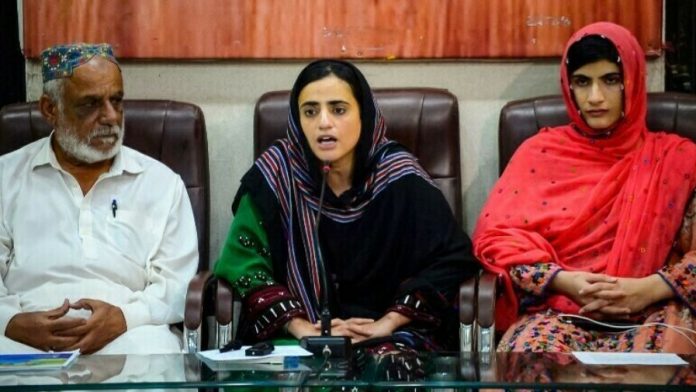
QUETTA, MAR 29: Over 100 prominent academics and civil society leaders have written an open letter to Prime Minister Shehbaz Sharif seeking the release of incarcerated Baloch Yakjehti Committee (BYC) leaders Dr Mahrang Baloch, Sammi Deen Baloch and others.

Last Friday, the police used tear gas and water cannons and fired blank shots to disperse BYC protesters, who had staged a sit-in on the Sariab Road near the University of Balochistan, against alleged enforced disappearances, including its leader Bebarg Baloch. The provincial government and the BYC had reported casualties on their respective sides as a result of each other’s actions.

The situation further escalated when BYC chief organiser Mahrang was arrested in the early hours of Saturday and was booked under terror charges along with 150 others. Responding to BYC’s call, shutter-down strikes were staged over the weekend in various cities of Balochistan — including Quetta, Panjgur, Kalat, Turbat, Mastung, Kharan, Chaghi, Dalbandin and Dhadar.

Police also detained BYC leader Sammi under the Maintenance of Public Order (MPO) ordinance in Karachi on Tuesday, shortly after a judicial magistrate ordered her release, along with four other activists in a case related to the violation of Section 144.

“We, the undersigned citizens of Pakistan, urge you to take immediate action to release leader Mahrang Baloch, Sammi Baloch, and other detained leaders of the Baloch Yakjehti Committee (BYC) before Eid so they can spend it with their loved ones,” read the letter, a copy of which is available with Dawn.com.

“Their arrests are a blatant attempt to silence voices advocating for an end to enforced disappearances and for fundamental rights and justice for the people of Balochistan,” the letter continued.

The letter expressed alarm at the treatment of women activists at the hands of law enforcement agencies and denounces the deployment of “excessive force” against peaceful protesters.

The signatories are prominent educationists, politicians, journalists and human rights activists including senior journalist Hamid Mir, former senator Afrasiab Khattak, Human Rights Watch Senior Counsel Asia Division Saroop Ijaz and president of the human rights cell of PPP Farhatullah Babar.

The demands of the signatories include the immediate release of detained BYC leaders, an end to enforced disappearances, the initiation of a meaningful political dialogue with the Baloch people, and to investigate into the alleged police brutality against the activists by conducting an independent investigation.

The letter also condemned the “unconstitutional re-arrest of BYC leaders”, including women activists, adding that “the MPO is being abused in clear violation of due process to detain activists after courts have granted them bail”.

“The ongoing crackdown on peaceful protests, enforced disappearances, and extrajudicial killings in Balochistan have created a climate of fear and repression,” the letter read.

“The situation in Balochistan is dire, and denying a political dialogue will only deepen the crisis.”

The letter alleged that the actions of the government’s security agencies in Balochistan are raising serious concerns about human rights violations, adding that “by denying people the right to protest freely, the government is violating the UN’s International Covenant on Civil and Political Rights, which guarantees the right to freedom of assembly and association”.

Speaking to Dawn.com regarding the letter, journalist and one of the signatories Munizae Jahangir said, “We are writing this letter just before Eid as these women would like to spend time with their children. Some humanity has to prevail in this situation.

“We also believe that this crisis can escalate, and steps need to be taken to avert this possibility,” she said, adding that the state should be seen to be siding with marginalised communities.

“We appeal to the prime minister for sanity to prevail and since he is a political leader and not a military dictator, [he should] use the political good will that he has to initiate a dialogue not only with the provincial assembly members but the leaders outside the assembly as well like Akhtar Mengal and Dr Abdul Malik Baloch,” she concluded.

As Balochistan grapples with a relentless wave of deadly attacks on security forces and civilians, the provincial government on Friday indicated its readiness to work with the opposition to confront the spiraling violence and address the province’s mounting security challenges.

“Our doors are always open for dialogue in the interest of Balochistan, as the government is committed to resolving the issue through meaningful talks,” spokesman for the Balochistan government Shahid Rind said while speaking at a press conference alongside provincial ministers.

He said the chief minister is committed to resolving issues through dialogue and has extended an offer to the opposition to work together in addressing the province’s challenges. “The provincial government is in contact with opposition parties and their leaders in this regard,” he added.

On Thursday, the Human Rights Commission of Pakistan in collaboration with the civil society, including human rights defenders, labour rights activists, political activists, the academia and lawyers, also demanded an unconditional release of Mahrang, Sammi and all those detained after the recent protests.

On the same day, international human rights organisation Amnesty International observed in a statement that the “relentless crackdown on Baloch activists over the last week and continued detention of several protesters — including Mahrang, Sammi, and Bebarg — signified a “systematic attack” on the rights of the Baloch community and should be stopped.

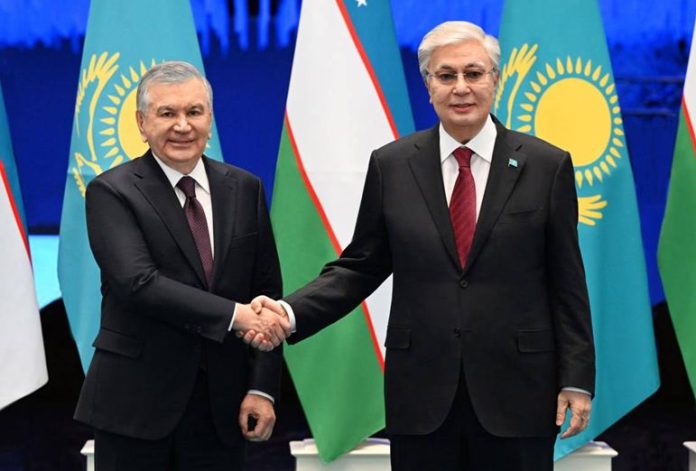
Uzbek, Kazakh Presidents meet in Almaty to strengthen strategic ties

Uzbek, Kazakh Presidents meet in Almaty to strengthen strategic ties

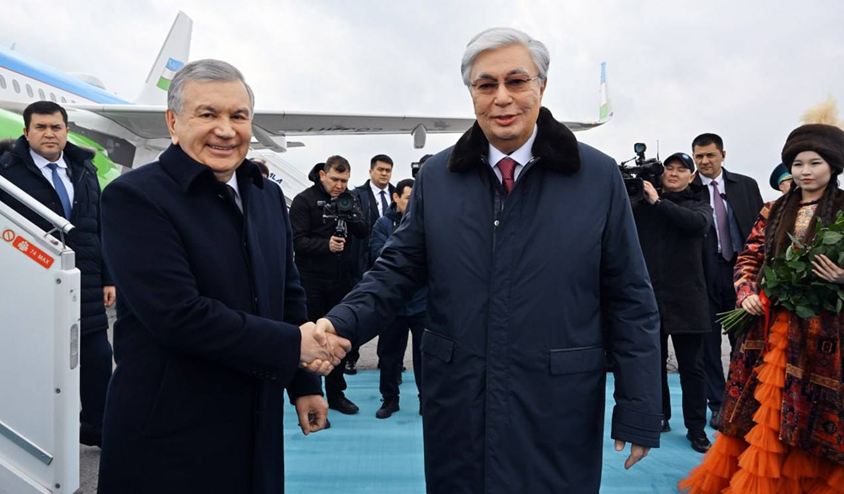
ALMATY, MAR 29 /DNA/ – The President of the Republic of Uzbekistan Shavkat Mirziyoyev arrived in Almaty City for a working visit.

At the airport, the President of Uzbekistan was welcomed by the President of the Republic of Kazakhstan Kassym-Jomart Tokayev. In honor of the Uzbek Leader’s arrival, a guard of honor was lined up, and the national flags were raised.

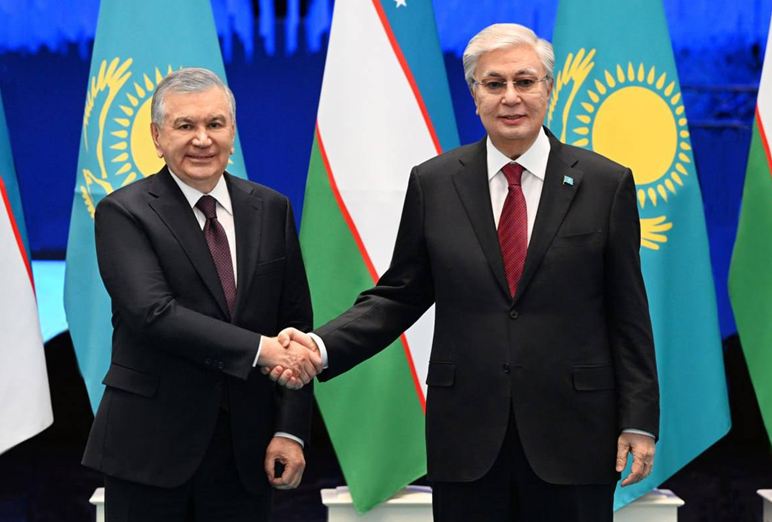
President of the Republic of Uzbekistan Shavkat Mirziyoyev and President of the Republic of Kazakhstan Kassym-Jomart Tokayev held an informal meeting in Almaty.

Leaders of two countries conducted in-depth discussions on further strengthening Uzbek-Kazakh relations in the spirit of good neighborliness, strategic partnership, and alliance at the delegation-level meeting.

At the beginning of the Summit, the Heads of states sincerely congratulated each other and the fraternal peoples of Uzbekistan and Kazakhstan on the spring holiday of Navruz and the upcoming Eid al-Fitr.

They expressed particular satisfaction with the current highest level of multifaceted cooperation between Uzbekistan and Kazakhstan. Active contacts are being maintained at all levels. Trade turnover has increased by 14% since the beginning of the year, and an investment project portfolio worth over $4 billion has been formed. Additionally, close interregional ties and cultural-humanitarian exchanges are developing.

Two Presidents listened to reports from the Deputy Prime Ministers of Uzbekistan and Kazakhstan on measures being taken to expand mutual trade and promote cooperative projects in key industries such as mechanical engineering, electrical engineering, oil and gas, textiles, agriculture, and other priority sectors.

The Presidents gave specific instructions to develop a long-term industrial cooperation program and accelerate the implementation of regional infrastructure projects.

They emphasized the importance of launching practical work on the International Center for Industrial Cooperation this year and expanding the activities of the joint foreign trade company.

The Leaders also exchanged views on regional issues, including preparations for the upcoming Central Asian Summits, which will be held in Uzbekistan in the coming months.Additionally, the schedule of upcoming bilateral and multilateral events was reviewed.

The meeting took place in a traditionally friendly and businesslike atmosphere.

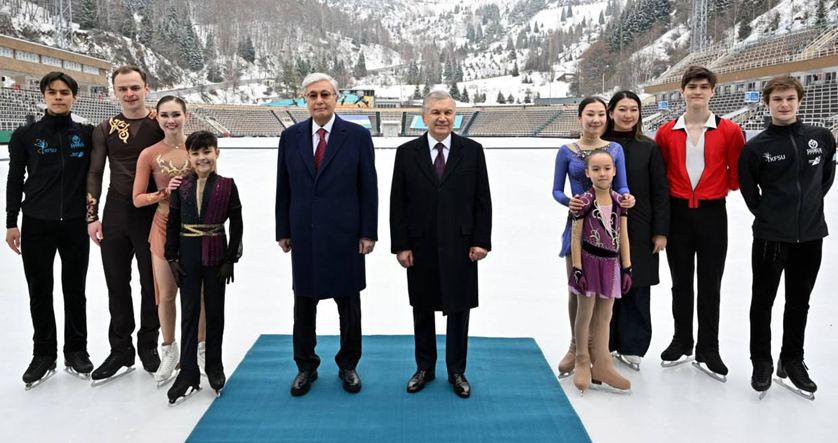
Presidents of Uzbekistan and Kazakhstan visited the high-mountain cluster “Medeu.”

The Uzbek Leader was introduced to the history and architectural features of the Medeu dam, built at an altitude of 1,750 meters above sea level to protect against mudslides.

A “Stairway to Health,” consisting of 842 steps, leads to the top of the Medeu dam. In 2011, a 4.5-kilometer-long cable car was constructed near the dam, connecting it to the Shymbulak Ski Resort.

The Medeu Sports Complex, built in 1972, is located at an altitude of 1,700 meters above sea level. Its ice field covers an area of 10,500 square meters and can accommodate up to 3,000 people. Annually, more than 400,000 residents and guests of Almaty visit the complex.

Currently, the complex functions as a sports, tourism, and cultural hub. It regularly hosts sports competitions, mass ice-skating events, cultural activities, and festivals.

In 2011, it hosted competitions of the 7th Asian Winter Games, and in 2017 – events of the World Winter Universiade.

The Presidents of Uzbekistan and Kazakhstan jointly watched exhibition performances by young figure skaters.

PM Shehbaz, Oman Sultan exchange Eid greetings in phone call

PM Shehbaz

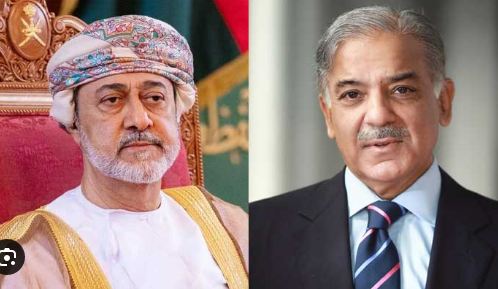
LAHORE, MAR 29 /DNA/ – Prime Minister Shehbaz Sharif held a telephone call with Haitham bin Tarik, Sultan of the Sultanate of Oman today, to convey his warm greetings and best wishes to the Sultan as well as the brotherly people of Oman on the auspicious occasion of Eid-ul-Fitr.

Recalling the close fraternal relations between the two countries, the Prime Minister reaffirmed Pakistan’s strong desire to further strengthen bilateral cooperation with the Sultanate of Oman across all spheres.

In this regard, the Prime Minister expressed his satisfaction on the recent successful visit of Pakistan’s Commerce Minister to Muscat, which would pave the way for the two sides to explore mutually beneficial avenues for cooperation. The Prime Minister also reiterated his invitation to the Sultan of Oman and requested him to undertake an official visit to Pakistan at his earliest convenience.

Sultan Haitham bin Tarik warmly reciprocated the Prime Minister’s Eid greetings and conveyed his best wishes for the people of Pakistan.=DNA

Stay Connected

64FansLike
60FollowersFollow

Latest Reviews

Exchange Rates

USD - United States Dollar
EUR
1.17
GBP
1.35
AUD
0.72
CAD
0.73