Home Blog Page 635

Gas cylinder explosion in Gujranwala claims six lives

Gas cylinder explosion in Gujranwala claims six lives

GUJRANWALA, APR 3: The death toll from a gas cylinder explosion in the Mafi Wala area of Gujranwala has risen to six, as two more victims succumbed to their injuries, family members confirmed. The tragic incident, which occurred seven days ago, was caused by a gas leak, leading to a powerful explosion and a fire that engulfed the house.

According to rescue officials, nine members of the same family suffered severe burns in the incident. Among the deceased are three children and three women, identified as Javeria (6), Meerab (3), Owais (2), Amber (27), Insa (26), and Fahmida (50). All injured individuals were undergoing treatment at a hospital in Lahore, but despite medical efforts, six have lost their lives.

Punjab Chief Minister Maryam Nawaz has expressed deep condolences and sympathy with the bereaved family, assuring them of government support during this difficult time.

The explosion has left the community in shock and mourning. Authorities have urged citizens to take strict safety measures to prevent similar accidents, emphasizing the dangers of gas leaks and cylinder mishandling.

AI disrupts before it delivers: study reveals

AI disrupts before it delivers: study reveals

If a company can survive the upheaval caused by the adoption of artificial intelligence, AI will help it thrive in the longer run, a study presented.

Its authors, who used data from the US Census Bureau and surveys covering the period between 2017 and 2021, found early adopters of AI in the manufacturing sector saw their productivity drop as they replaced human workers with robots.

Their findings go against prevailing narrative suggesting that AI makes work more productive and “augments” jobs in many cases rather than automating them away.

“In the short term, we see a lot of pain,” Kristina McElheran, one of the authors of the paper, told the conference.

She explained the drop in productivity as a side-effect of AI interfering with manufacturers’ established practices, such as keeping low inventories.

Over time, however, these firms began outperforming on all counts – sales growth, productivity and employment – provided that they managed to make it through the upheaval.

“Surviving this seems like part of the problem,” McElheran, a researcher at the University of Toronto, said.

She said this rebound did not generally happen at older companies, which also tend to be larger, and “struggle to get this done”.

McElheran and colleagues worked on a sample of 30,000 firms among which AI adoption rose from 7.5% to 9.1% over the course of the study period.

Introducing the conference earlier, ECB President Christine Lagarde had said between 23% and 29% of workers in Europe were highly exposed to AI but this need not herald a “job apocalypse” because new roles were likely to be created while old ones are destroyed.

The Erosion of Civilian Supremacy

Qamar Bashir

Qamar Bashir

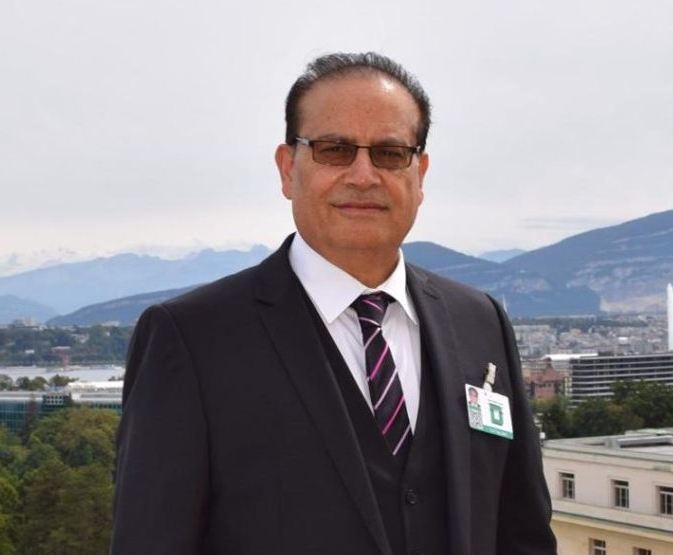
In recent days, a highly controversial and unprecedented development has taken place involving a top-ranking official of Pakistan’s premier intelligence agency, the Inter-Services Intelligence (ISI), holding a political meeting with influential members of the Pakistani diaspora in Washington, D.C. The event, arranged officially through the Pakistani Embassy’s military wing, has sparked intense debate both within the Pakistani community in the United States and across social media platforms.

What makes this meeting particularly concerning is not only its political nature but also the fact that it was led by an ISI official—a role that, by constitutional design, has no mandate in civilian governance or politics. Attendees included prominent Pakistani Americans—businesspeople, academics, community leaders—who were assured that the grievances of overseas Pakistanis, particularly regarding the political turmoil in Pakistan and the incarceration of Imran Khan, the former Prime Minister and founder of Pakistan Tehreek-e-Insaf (PTI), would be addressed. However, this assurance came not from elected representatives or diplomatic officials, but from a figure whose domain is intelligence and national security, not political arbitration.

Following the Washington meeting, a delegation of Pakistani Americans reportedly traveled to Pakistan, where they met senior military leadership, including a high-ranking general. Instead of constructive dialogue, they were met with harsh admonitions. They were criticized for what the military viewed as their inappropriate and damaging criticism of the armed forces abroad. They were accused of maligning the image of the state and acting against the “greater national interest.” The delegation returned empty-handed, with no progress made on their core demands—most notably, the release of Imran Khan.

This entire episode reveals an alarming shift in civil-military dynamics in Pakistan. Historically, the military has maintained significant influence over national policy, but efforts were made—at least superficially—to preserve a civilian face. In this case, the pretense of civilian oversight has been abandoned altogether. What should have been a diplomatic engagement led by elected officials or consular authorities turned into a direct political interaction spearheaded by the military intelligence apparatus.

The ISI has no legal or constitutional mandate to conduct political meetings, particularly abroad, with civilian populations. Matters concerning political grievances, democratic representation, and the justice system should lie exclusively within the purview of the elected civilian government. The ISI has no authority over judicial matters, prison administration, or legislative affairs—yet it is now evidently dictating or at least influencing all these domains.

This development raises profound questions about the legitimacy of the current civilian setup. It reinforces the perception that the government in Islamabad functions merely as a facade for the decisions made by Rawalpindi. The very spirit of democracy and constitutional governance is being undermined. It is not only a betrayal of Pakistan’s constitutional framework but also an insult to the intelligence of the Pakistani public, both at home and abroad.

Worse still is the military’s attempt to suppress overseas criticism. The diaspora, often considered Pakistan’s soft power and economic lifeline due to the billions in annual remittances, is now being warned against speaking out. Diaspora voices, especially in democratic societies like the U.S., have every right to engage in advocacy, raise concerns, and demand justice. To label such engagement as “unpatriotic” or “against national interest” is an authoritarian tactic that contradicts the values of democratic freedom.

This pattern of the military engaging directly with various sectors—students, businesspeople, religious leaders, now even the overseas community—without the involvement of elected officials, reflects a dangerous expansion of its political footprint. If this trend continues unchecked, the distinction between state and government, between military and civilian authority, will be completely obliterated.

It must be emphasized that Pakistan is a constitutional republic. The military, while an essential and respected pillar of the state, must maintain civilian face. Article 243 of the Constitution clearly outlines the role of the armed forces: to defend Pakistan against external threats and ensure its territorial integrity. Nowhere does it suggest that the military can hold political meetings, dictate civilian policy, or influence judicial matters.

In the current context, with Pakistan facing multiple external threats—from tensions with India, border instability with Afghanistan, and flare-ups with Iran—, threats of Donald Trump to Bomb Iran, if it doesn’t enter into negotiation on its nuclear ambition, act of cross border terrorism from Afghanistan and internal separatists movement demand that military remains focused on its core operational duties.

Our armed forces are a national asset. They must be shielded from political controversies so that their credibility remains intact when it is truly needed. The growing politicization of the military not only weakens civilian institutions but also erodes the public’s confidence in the armed forces—a cost Pakistan can ill afford.

It is equally important that Pakistan’s universities, Chambers of Commerce and Industry, professional bodies, and business leaders, when receiving invitations from the military, should insist on a civilian head leading such engagements. The military representatives should play a supplementary role, supporting—rather than substituting—civilian leadership. This approach would help deflect criticism that the military is directly assuming political responsibilities and would prevent the perception that it is defending government actions that fall strictly within the civilian domain and lie outside the military’s constitutional mandate.

A similar approach should be adopted in the case of meetings between foreign dignitaries and the Army Chief. Even if such meetings do occur, they should not be publicized in the media, in order to maintain at least the appearance of civilian leadership at the forefront. Engagements with the Pakistani state must be channeled through legitimate civilian representatives—not shadow figures from the security establishment. Diplomatic norms demand transparency and accountability—qualities sorely lacking in this recent episode.

Moving forward, the military leadership must reassess its approach. Rather than standing in front, it must step back and let the civilian government take the lead in political discourse, policy formulation, and international outreach. If coordination is required, it should happen behind closed doors and within the constitutional framework—not through public forums where military officials act as de facto heads of state.

A pragmatic path forward would involve restoring the primacy of civilian leadership. Let the foreign minister, ambassador, or prime minister engage with the diaspora. Let political grievances be addressed by elected representatives. Let the judiciary operate without interference. Let the media report without intimidation. In this model, the military would still retain its influence—but discreetly and constitutionally—thereby restoring a much-needed balance of power.

If this course correction is not undertaken, Pakistan risks further alienating its diaspora, losing global credibility, and deepening its internal political crisis. Civilian supremacy is not just a constitutional obligation—it is a democratic necessity.

Qamar Bashir

 Press Secretary to the President (Rtd)

 Former Press Minister at Embassy of Pakistan to France

 Former MD, SRBC

 Macomb, Detroit, Michigan

New Economic Prospects to Open in Samarkand On the Upcoming EU–Central Asia Summit

New Economic Prospects to Open in Samarkand

On the Upcoming EU–Central Asia Summit

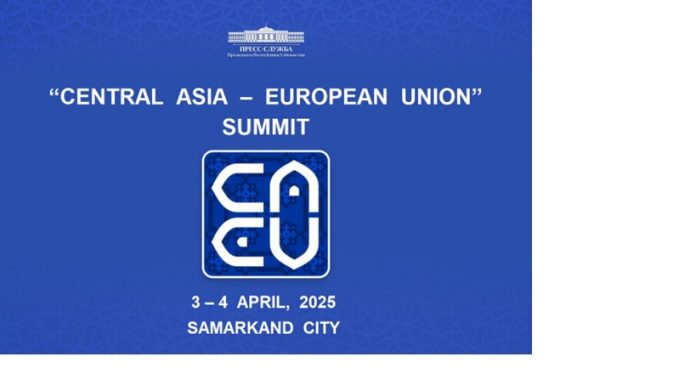
On April 3–4, 2025, Samarkand will host a historic event: the first-ever Summit between the European Union and Central Asia. The meeting will be chaired by the President of Uzbekistan, Shavkat Mirziyoyev, and will include the participation of the leaders of Kazakhstan, Kyrgyzstan, Tajikistan, and Turkmenistan. The EU will be represented by European Council President Antonio Costa and European Commission President Ursula von der Leyen.

The Summit’s agenda includes discussion of economic issues, which is of particular interest given the long-standing history of economic cooperation between Uzbekistan and European countries, as well as the new economic opportunities that may arise from the Summit’s outcomes.

Trajectory of Uzbekistan–EU Cooperation

Cooperation between the EU and Uzbekistan began in the early years of Uzbekistan’s independence. In April 1992, a Memorandum of Understanding was signed between the Government of Uzbekistan and the European Commission, and diplomatic relations with the EU were established in November 1994. Since 1995, the Embassy of Uzbekistan in Brussels has served as the Mission to the EU, and since 2011, the EU has maintained a diplomatic presence in Tashkent. A strong foundation for cooperation was established with the signing of the Partnership and Cooperation Agreement (PCA) in June 1996, which entered into force in 1999.

Uzbekistan’s cooperation with the EU has significantly deepened with the onset of major reforms initiated by President Shavkat Mirziyoyev. In July 2017, Stefano Manservisi, Director-General for International Cooperation and Development of the European Commission, during his visit to Tashkent, stated that “the EU considers Uzbekistan a strategic partner.”

The legal framework for relations has also expanded. Whereas previously the EU and Uzbekistan had granted each other most-favored-nation status under the PCA, in April 2021 the EU granted Uzbekistan GSP+ beneficiary status under the Generalized System of Preferences, and in 2022 the new Enhanced Partnership and Cooperation Agreement was initialed.

In recent years, trade and economic cooperation has intensified. Between 2017 and 2024, Uzbekistan’s trade with EU countries increased 2.4 times from $2.6 billion to $6.4 billion, exports rose 3.6 times from $472.3 million to $1.7 billion, and imports grew 2.2 times from $2.2 billion to $4.7 billion. As a result, in 2024 the EU’s share in Uzbekistan’s foreign trade was 9.7% in total trade, 6.3% in exports, and 12% in imports, placing the EU third among Uzbekistan’s trading partners after China and Russia.

It is also noteworthy that during the same period, from 2017 to 2024, the EU’s share in Uzbekistan’s total exports rose from 3.8% to 6.3%, reflecting the growing competitiveness of the Uzbek economy. A particularly striking comparison is between 2024 and 2023: trade turnover with the EU increased by 5.2% to $6.4 billion, while exports jumped by 26.9% to $1.7 billion, with imports remaining unchanged at $4.7 billion. This is a very positive trend for Uzbekistan, given that the EU, with a population of over 500 million, is one of the largest markets in the world.

Uzbekistan’s accession to the group of GSP+ beneficiary countries has played a key role in increasing exports to the EU, granting duty-free access to approximately 6,200 tariff lines. The current utilization rate of GSP preferences in Uzbekistan is relatively high.

As a GSP+ beneficiary, Uzbekistan enjoys additional economic benefits through the full elimination of tariffs on two-thirds of the product lines covered by the system, which in turn promotes export growth and attracts further investment. GSP+ commitments in the area of sustainable development further reinforce Uzbekistan’s position as a reliable economic partner.

The volume of imports from Uzbekistan covered by GSP+ preferences increased from €100 million in 2019 to €392 million in 2023. This significant growth demonstrates how the preferential system influences trade with the European Union.

The share of imports from Uzbekistan benefiting from GSP+ preferences stands at 59%. Particularly noteworthy is the preference utilization rate, which has reached 84%, indicating a high level of effective use of the benefits. This is associated with improved trade relations and a more active use of the opportunities offered by the GSP+.

The most active sectors benefiting from these preferences are textiles and garments, plastic products, and agricultural goods such as fruits, nuts, and vegetables.

In 2024, the bulk of Uzbekistan’s exports to the EU consisted of chemical products (52.1%), as well as textiles, ferrous and non-ferrous metal products, mineral and food products (including vegetables, fruits, spices, nuts, etc.). Among EU countries, France ranked first in imports from Uzbekistan (47.2% of exports), followed by Lithuania (10%) and Latvia (6.9%).

Uzbekistan’s imports from the EU significantly exceed exports, largely due to the structure of mutual trade and the country’s need for technological modernization. EU countries account for about 16% of Uzbekistan’s total imports of machinery, equipment, and transport vehicles. In 2024, these items, including aircraft, electrical products, instruments, and medical equipment, made up about 50% of imports from the EU.

Investment cooperation with EU countries has also developed rapidly in recent years. In 2024, the volume of foreign investment and loans from EU countries (including financial institutions of EU member states) increased by 77% and reached $4.1 billion (compared to $2.3 billion in 2023). The most active investors were Germany ($1.37 billion), the Netherlands ($1.05 billion), Cyprus ($858.9 million), the Czech Republic ($137.8 million), Italy ($99.8 million), and Sweden ($97.5 million). Currently, about 1,000 enterprises with EU capital operate in Uzbekistan, including 201 enterprises with German capital.

Prospects for the Development of Economic Cooperation

As for the expectations associated with the upcoming Summit in Samarkand, its outcomes could accelerate the development of economic cooperation between Uzbekistan and European countries along several key directions.

In terms of cooperation and investment, it is currently relevant to expand ties with leading EU investor countries to integrate Uzbekistan’s industrial sector into global value chains of major European multinational corporations. For instance, during the recent visit of the President of Uzbekistan to France, a Joint Program for Innovation and Industrial Partnership was adopted, which includes projects in critical raw material extraction and processing, energy, infrastructure, transport, and other sectors totaling €6.5 billion.

The most promising areas of cooperation and investment include energy, especially renewables, chemical, pharmaceutical, textile, and electrical industries; building materials production; agricultural processing; mining and mineral processing; and transport logistics.

Transport and logistics are also central to enhancing cooperation due to the geographic distance between Uzbekistan and Europe. Therefore, the development of effective logistics corridors is highly relevant, particularly the Trans-Caspian multimodal route, to improve access to European markets, considering existing constraints on routes via Russia. It is advisable to align these efforts with the goals of the European “Global Gateway” initiative, which aims to invest around $340 billion in infrastructure projects in developing countries by 2027.

Further growth in exports to the EU is expected under Uzbekistan’s GSP+ status. In particular, there is significant potential for increased exports of fresh and dried fruits, nuts, tomatoes, textiles (especially finished garments) and specific industrial goods. To better leverage GSP+ benefits, expanded EU technical assistance is needed to establish laboratories for certifying Uzbek exports in line with EU standards. Additionally, during Uzbekistan’s WTO accession talks, technical support from European experts would be highly beneficial.

The entry into force of the new Enhanced Partnership and Cooperation Agreement between Uzbekistan and the EU, which has already been initialed, should also be accelerated. This agreement provides for expanded cooperation in new areas and improved regulation of trade and economic relations. It outlines cooperation in key areas such as economic and investment partnership, energy, transport, environment and climate change, the digital economy, agriculture and rural development, employment and social affairs, as well as scientific research.

Another priority is the effective and targeted use of EU financial assistance under the 2021–2027 Uzbekistan–EU Development Program, which supports projects in areas like good governance, digital transformation, inclusive and green growth, and sustainable agro-food systems.

Attracting European companies to develop Uzbekistan’s tourism infrastructure, with consideration of EU tourist preferences, would also stimulate tourist flows from visa-exempt EU countries.

Conclusion

The range of priority areas for economic cooperation with the EU is quite broad, and deeper engagement could provide a powerful impetus for Uzbekistan’s economic development and modernization.

However, it is important to consider that the current geopolitical situation has created significant challenges for the European economy. This was recently confirmed by European Council President Antonio Costa, who said: “We live in a world of disorder and division, and for the European Union, the only solution is to strengthen cooperation in pursuit of peace and prosperity. In a multipolar world, more active and purposeful engagement is necessary. The first EU-Central Asia Summit will reinforce our commitment to working together for peace, security, and sustainable development.”

There is mutual interest in adopting mutually beneficial decisions, and this implies that the outcomes of the Summit will most favorably contribute to the development of economic cooperation between the countries of Europe and Central Asia, and in particular, Uzbekistan.

Obid Khakimov,

Director of the Center for Economic Research and Reforms

New Zealand thump Pakistan in second ODI to secure decisive lead in series

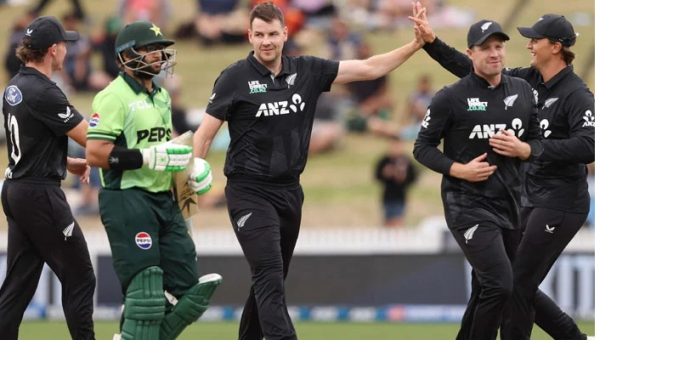
HAMILTON: Pakistan were outclassed by New Zealand and bowled out for 208 runs in the second ODI while chasing the hosts’ 293-run target at the Seddon Park on Wednesday.

With today’s win, the Black Caps have now secured an unassailable 2-0 lead in the three-match 50-over series. The Green Shirts will now face Black Caps in third ODI set to take place on April 5.The innings began with Abdullah Shafique (1) falling early to O’Rourke, followed by Imam-ul-Haq (3 ) and Babar Azam (1), both dismissed cheaply by Jacob Duffy. 

With three quick wickets down, Pakistan’s innings appeared shaky, and things only worsened as Mohammad Rizwan (5) and Salman Agha (9) departed without making any significant contribution.

Tayyab Tahir (13) attempted to stabilise the innings, but New Zealand bowlers continued to apply relentless pressure, ensuring that Pakistan never gained any momentum in the chase.

All-rounder Faheem Ashraf, however, displayed fighting spirit and notched up a brilliant half-century. With him losing partners rapidly — Mohammad Wasim Jr (1) and Akif Javed (8) dismissed by Ben Sears and Jacob Duffy, respectively, Pakistan found themselves struggling at 114-8.

In an unfortunate turn of events, Haris Rauf suffered a concussion after being struck on the head, forcing his departure from the match. Naseem Shah was brought in as a concussion replacement and batted alongside Faheem.

The duo forged a crucial 50-run stand for the ninth wicket, keeping Pakistan’s chase alive at 165-8 in 36 overs. 

However, their partnership of 60 runs came to an end when Ben Sears returned to the attack and dismissed Faheem, who played a valiant knock of 73 off 80 deliveries. Faheem’s departure left Pakistan at 174-9 in 37.4 overs.

Despite the mounting pressure, Naseem continued to fight, scoring boundaries effortlessly.

He reached his maiden ODI fifty in just 41 deliveries, but Pakistan’s innings was eventually wrapped up for 208 in 41.2 overs. 

Sears ended the match with a five-wicket haul, dismissing Naseem for 51 and leaving Sufiyan Muqeem stranded on 13 not out.

Earlier, New Zealand’s innings had begun with a strong opening partnership between debutant Rhys Mariu and Nick Kelly, who put on a 50-run stand.

However, Haris struck in the 6th over, dismissing Kelly for 31 off 23 balls, leaving the Blackcaps at 54-1.

Wasim Jr struck again in the 10th over, removing Mariu for 18, as New Zealand stumbled to 71-2. Daryl Mitchell managed 18 off 18 before falling to Sufiyan, making it 100-3.

Henry Nicholls followed soon after, dismissed LBW for 22, leaving the hosts at 102-4 in 16.5 overs.

Captain Michael Bracewell and Muhammad Abbas added 30 runs before Wasim Jr removed Abbas (17), reducing New Zealand to 132-5. Mitchell Hay and Abbas (41 off 66) then shared a vital 77-run stand before Muqeem dismissed Abbas, leaving New Zealand at 209-6.

Despite the wickets falling, Hay brought up his half-century. Faheem Ashraf dismissed Nathan Smith (8) at 236-7, and Rizwan ran out Ben Sears for a duck (270-8). Hay’s late blitz in the final over took New Zealand to a total of 292.

Playing XIs

Pakistan: Abdullah Shafique, Imam-ul-Haq, Babar Azam, Mohammad Rizwan(w/c), Salman Agha, Tayyab Tahir, Faheem Ashraf, Mohammad Wasim Jr, Haris Rauf, Sufiyan Muqeem, Akif Javed.

New Zealand: Nick Kelly, Rhys Mariu, Henry Nicholls, Daryl Mitchell, Michael Bracewell(c), Muhammad Abbas, Mitchell Hay(w), Nathan Smith, Jacob Duffy, Ben Sears, William O’Rourke.

Trilateral Meeting of the Presidents of Uzbekistan, Tajikistan and Kyrgyzstan in Khujand

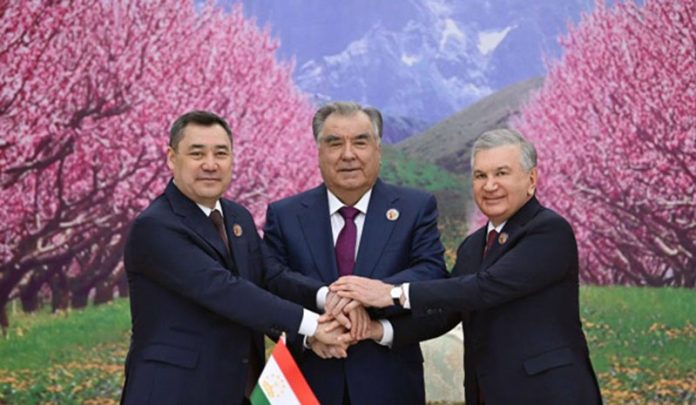
On March 31, in the city of Khujand, the President of the Republic of Uzbekistan, Shavkat Mirziyoyev, took part in a trilateral meeting with the President of the Republic of Tajikistan, Emomali Rahmon, and the President of the Kyrgyz Republic, Sadyr Japarov.

The heads of state exchanged congratulations on the occasion of the sacred holiday of Ramadan Hayit – Eid al-Fitr and the spring celebration of Navruz, wishing peace, prosperity, and well-being to the brotherly peoples.

President Shavkat Mirziyoyev also extended heartfelt congratulations to the Tajik and Kyrgyz sides on the final resolution of all issues and the signing of the Treaty on the Delimitation of the State Border.

It was emphasized that this document, along with the Treaty on the Junction Point of the State Borders of the three countries, will contribute to ensuring stability, sustainable development and enhancing the international standing of the entire region. The newly unveiled Friendship Monument will serve as a new symbol of strengthening good neighborly relations, mutual trust, and strategic partnership among the brotherly nations.

The President of Uzbekistan also highlighted key priorities for practical interaction.

Above all, this is maintaining active and trust-based contacts at the highest level.

This week, Samarkand will host the first “Central Asia – European Union” Summit and the Climate Forum, dedicated to addressing common environmental challenges in the region.

In May, a summit with the Gulf Arab states is scheduled, followed by the seventh Consultative Meeting of the Heads of State of Central Asia in September.

In this context, the importance of maintaining regular consultations between the foreign ministries was emphasized to thoroughly prepare the agendas of upcoming events and develop coordinated approaches.

Particular attention was given to fostering close cooperation between border regions.

It was noted that in recent years, Uzbekistan’s trade with Kyrgyzstan and Tajikistan has increased severalfold, with nearly half of the trade volume attributed to border areas.

In this regard, the need was highlighted for comprehensive modernization and expansion of border customs checkpoints, as well as the development of convenient, modern trade and logistics infrastructure.

A proposal was made to explore the establishment of a trilateral trade platform, including the organization of a permanent exhibition and fair for industrial and agricultural products.

Another key area is industrial cooperation projects.

Uzbekistan enterprises and private companies are actively investing in the development of modern production facilities in neighboring countries.

To support such cooperation, the President of Uzbekistan expressed readiness to increase the capital of the established joint investment funds gradually.

It was agreed to continue efforts to enhance transport connectivity among the countries. This includes increasing the frequency and expanding the geography of air routes, as well as launching new intercity bus routes in border regions.

Attention is also being given to advancing major regional projects in green energy and transport, along with joint programs related to water resources and environmental protection.

The President of Uzbekistan, Shavkat Mirziyoyev, emphasized that more proactive government efforts in the economic sphere must yield swift and tangible results aimed at enhancing the well-being of the region’s people.

It was noted that the cultural and humanitarian events currently taking place in Khujand contribute to strengthening friendship and mutual understanding among the peoples of the region, especially among the youth.

The President of Uzbekistan proposed holding joint concerts and friendship festivals annually in border regions during the celebration of Navruz and expressed readiness to host such events next year in the city of Fergana.

Following the meeting, a historic Treaty on the Junction Point of the State Borders of Uzbekistan, Tajikistan, and Kyrgyzstan was signed, and a Joint Declaration of the three heads of state was adopted.

* * * * * * *

As part of the high-level events taking place in the city of Khujand, the President of the Republic of Uzbekistan, Shavkat Mirziyoyev, the President of the Republic of Tajikistan, Emomali Rahmon, and the President of the Kyrgyz Republic Sadyr Japarov formally inaugurated the Friendship Monument at the junction point of the state borders of the three countries.

Deputy Prime Ministers of the three nations, via videoconference, reported to the leaders on the completion of construction works and the readiness of the site.

It is worth noting that this monument is intended to serve as a new symbol of strengthening friendship, good neighborliness, mutual trust, and strategic partnership among the brotherly nations.

* * * * * * *

As part of the cultural program of the summit in the city of Khujand, the heads of state of Uzbekistan, Tajikistan, and Kyrgyzstan visited the Khujand Fortress and got acquainted with its historical significance.

It is worth noting that the construction of this unique complex dates back to the 6th-5th centuries BCE. Archaeological excavations have confirmed that the first fortress was built during that period.

Following its reconstruction in 1999, a regional history museum was opened adjacent to the fortress, now housing over 28,000 exhibits.

During the most recent restoration, the fortress walls, citadel, and gates were rebuilt. An administrative building and artisan shops were constructed, and replicas of traditional Khujand courtyards were created.

A complex featuring five exhibition halls dedicated to the history and culture of the Tajik people was also established on the site. In eight artisan courtyards, artisans engage in calligraphy, painting, the production of adras and suzani, stone carving, blacksmithing, and pottery.

The leaders viewed an exhibition showcasing traditional crafts, agricultural products, and national cuisine from the three countries and attended performances of traditional cultural presentations.

* * * * * * *

The President of the Republic of Uzbekistan, Shavkat Mirziyoyev, the President of the Republic of Tajikistan, Emomali Rahmon, and the President of the Kyrgyz Republic, Sadyr Japarov, participated in a joint event – a concert featuring masters of culture and art from the three countries.

In his welcoming remarks, the President of Uzbekistan warmly congratulated the brotherly peoples on the occasion of Navruz, the holiday of spring renewal, and the holy celebration of Ramadan Hayit – Eid al-Fitr.

“Today is truly a great and long-awaited celebration for our people. We have signed a historic Treaty on the Junction Point of the State Borders of our three countries. From now on, borders will be lines of brotherhood – spaces of new opportunities, creativity, and integration”, the President stated.

It was emphasized that our peoples share one sacred land, one faith, one destiny, as well as common concerns, joys, and aspirations. We must now work together to transform this beautiful land into a dignified and prosperous life for both current and future generations.

In recent years, thanks to a shared political will, relations between our countries have undergone significant positive changes.

Today, the Treaty on Allied Relations between Uzbekistan and Tajikistan has officially entered into force. A similar agreement between Uzbekistan and Kyrgyzstan is expected to be signed in the near future.

There has been dynamic growth in trade, investment, freight transportation, and mutual travel by citizens. The number of successful cooperation initiatives continues to increase.

It was noted that during today’s talks, agreements were reached on creating favorable conditions for business and cultural exchanges, increasing the frequency of direct flights, and launching new bus routes between cities in the border regions.

Special attention was given to the regular organization of cultural events, creative festivals, youth forums, and sports competitions.

“Art knows no borders – its great mission is to unite people. And today’s concert, featuring talented masters of the arts from our three countries, will once again showcase the richness, diversity, and shared heritage of our cultures”, concluded the President of Uzbekistan.

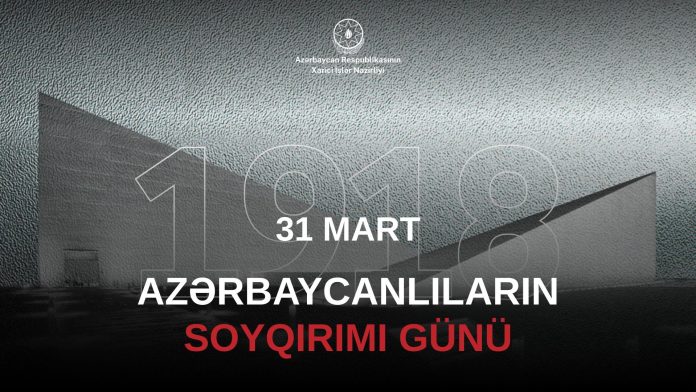
31 March – Day of Genocide of Azerbaijanis


31 March 2025

Today marks the 107th anniversary of the March genocide of 1918, one of the largest genocides committed by radical Armenian groups against peaceful Azerbaijanis in the last century, when thousands of compatriots were brutally killed on ethnic and religious grounds.

On 31 March – Day of Genocide of Azerbaijanis, we commemorate innocent victims of these tragic events with respect and honor.

During these massacres, which were part of a systematic policy of ethnic cleansing and genocide against Azerbaijanis, the killings of innocent Azerbaijanis were carried out with extreme brutality in Baku, Shamakhi, Guba, Garabagh, Zangazur, Nakhchivan, Shirvan, and Irevan by 6,000 armed soldiers from the Baku Soviet and 4,000 soldiers from the Dashnaksutyun Party, as admitted by Stephan Shaumyan, Extraordinary Commissioner of the Caucasus and an ethnic Armenian, under the pretext of “fighting counter-revolutionaries.” As a result of these massacres, over 16,000 people were killed, and 167 villages were destroyed with particular savagery in Guba alone.

The atrocities carried out against cultural and religious monuments, mosques, and cemeteries belonging to Azerbaijanis during this massacre, when tens of thousands of our compatriots were killed, stand as clear evidence of the crime of ethnic hatred and intolerance.

Although, following the establishment of the Azerbaijan Democratic Republic, special institutions were set up to investigate these events and raise awareness in the international community, and 31 March was observed as a day of national mourning, the fall of the Republic hindered the political and legal assesment of this crime.

After the restoration of our independence and the return of the National Leader Heydar Aliyev to power, a political assesment of this genocide was made through the Decree “On the Genocide of Azerbaijanis” dated 26 March 1998.

Policy of ethnic hatred and intolerance, which underlies the massacres committed at the beginning of the twentieth century, persisted through the mass deportation of Azerbaijanis from the territories of present-day Armenia, atrocities committed against our people during the conflict and occupation, crimes against humanity such as the Khojaly genocide at the end of the century, as well as war crimes against civilians during 44-day Patriotic War in 2020.

Although the current post-conflict period offers historical opportunities to turn the pages of these tragic chapters in the region’s history and establish lasting and irreversible peace, the territorial claims that have fueled all the atrocities to date—and are enshrined in the Constitution of Armenia and various legislative acts —remain the greatest obstacle and source of concern for the region’s stable future.

In this regard, Azerbaijan continues its national and international efforts to hold those responsible for the crimes accountable, while remaining firm and unwavering in its demand to end Armenia’s ongoing territorial claims against our country, in pursuit of lasting peace in the region.

On 31 March – the Day of Genocide of Azerbaijanis, we solemnly and respectfully pay tribute to the memory of innocent Azerbaijanis who suffered from ethnic hatred and genocide. May Allah rest their souls in peace!

Army Chief Gen Asim Munir visits Wana

Rawalpindi, 31 March 2025:

General Syed Asim Munir, NI (M), Chief of Army Staff, visited Wana in South Waziristan and Chehkan in Dera Ismail Khan to spend Eid-ul-Fitr with the officers and troops employed on the Western Border. COAS offered Eid prayers, and prayed for the enduring stability and prosperity of Pakistan.

During his interaction, the COAS extended warm Eid-ul-Fitr greetings to the troops, lauding their unwavering dedication and exemplary service to the nation. “Your commitment and resilience not only secure our homeland but also exemplify your profound love for Pakistan,” he stated. He appreciated the performance of the Armed Forces and LEAs alongside the people of Khyber Pakhtunkhwa who have always braved against the menace of terrorism.

In acknowledging the formations’ tireless efforts, the COAS attributed their achievements to the sacrifices of our martyrs and those who are committed towards the greater cause of peace and stability.

Upon his arrival, the COAS was warmly received by the Corps Commander Peshawar.

Eid in the USA: Celebrating Unity

Qamar Bashir

Qamar Bashir

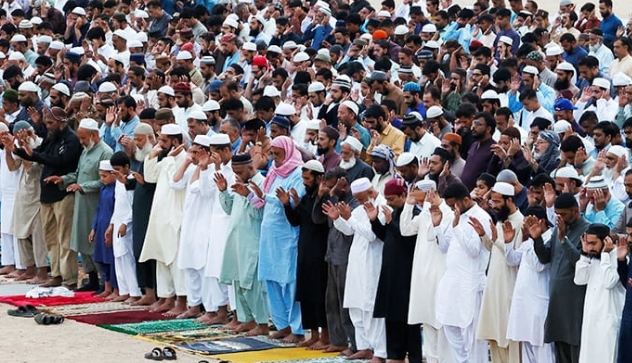
Our first Eid in Michigan was not just a religious celebration—it was a deeply moving and eye-opening experience. Having migrated to the United States on September 7, 2024, this marked our first Ramadan and Eid in a new land, far from the traditions and familiar environment of our homeland. After observing nearly 30 days of fasting, Eid arrived as a welcome occasion of joy, community, and spiritual fulfillment.

That morning, our entire family woke early, dressed in festive clothes, and enjoyed a traditional bowl of kheer, a gesture rooted in our cultural and religious identity. Soon after, we boarded two cars and made our way to the Islamic Center of Rochester Hills, located near Detroit, Michigan. This was our first visit, and not knowing what to expect, I assumed it would be a small mosque or a community hall—perhaps a modest place temporarily arranged for Eid prayers. But what greeted us upon arrival was beyond anything I had imagined.

The Islamic Association of Greater Detroit (IAGD), located at Auburn Road, Rochester Hills, Michigan established in 1978 has grown into a pivotal institution for the local Muslim community, offering spiritual guidance, educational programs, and social services. A significant $20 million expansion in March 2024 increased the facility’s total area to approximately 100,000 square feet, making it one of Michigan’s largest Islamic centers. Inside, spacious prayer halls, classrooms, meeting rooms, a library, recreational spaces, and community event areas support a wide range of activities, including religious gatherings, educational seminars, interfaith dialogues, and social outreach initiatives, highlighting the center’s dedication to community enrichment and intercultural understanding.

The prayer hall was enormous, large enough to accommodate thousands of worshippers. Male and female worshippers prayed in separate sections, maintaining tradition while fostering inclusivity. The hall was beautifully adorned with Quranic calligraphy, and large digital clocks displayed prayer timings. The level of organization and discipline during the Eid prayer was exemplary, a reflection of the unity and respect deeply embedded in the Muslim community here.

Following the prayer, the khutbah (sermon) by the khateeb delivered a powerful message. He shared an astonishing fact: Muslims in the United States—numbering around 4 to 5 million—collectively hold an estimated purchasing power of nearly $200 billion. That’s more than the GDP of many Muslim-majority countries. He emphasized that this economic power should not be underestimated. It can and should be used strategically—not only to secure rights, protect freedoms, and advocate against discriminatory policies but also to promote Islamic values and support the global Ummah.

He also expressed concern over the rising air of uneasiness among Muslim communities in the U.S., particularly due to certain executive actions and policies under former President Trump that had created a sense of intimidation, even among those with legal status. Despite the legal protections available, many families still live under a subtle fear. In this context, the khateeb encouraged the community to remain united, informed, and engaged—economically and politically—to safeguard their interests.

After the sermon, we witnessed families gathering in the beautifully landscaped outdoor areas and near the center’s prominent Shangri-La-style dome, taking photographs in their vibrant Eid outfits. The atmosphere was full of joy and harmony. The weather, too, had played its part—the gentle rainfall the night before had cooled the air, making the day pleasantly crisp and perfect for the outdoor gathering.

Inside the gymnasium, the community had arranged complimentary refreshments—samosas, baklava, tea, and other delicacies. This gym, which usually serves as a fitness space, had been transformed into a hospitality hall. The thoughtfulness and generosity behind this arrangement reflected the warmth and strength of the local Muslim community.

This Eid was only our second experience attending a religious gathering in the United States. Just a few days prior, we had visited a Shia community center in the Michigan area, which was equally impressive. The quality of design and construction exceeded most nearby buildings, standing as a symbol of religious pride and community cohesion.

Reflecting on these two experiences, one thing became clear: the religious freedom and infrastructure available to Muslims in the United States—especially in places like Michigan—are more robust and protected than in many Muslim-majority countries. This, though ironic, is also a powerful lesson.

In many Muslim countries, sectarian divides remain a cause of intimidation, suppression, and even violence. In some Shia-majority nations, Sunnis feel unsafe or marginalized. In Sunni-majority countries, Shias, Ismailis, and Ahmadis often face institutional discrimination or physical threats. The same intolerance extends to other minority Muslim groups and non-Muslims alike.

And yet, here in the United States—a secular country with a majority non-Muslim population—Muslims are free to practice their faith, build grand mosques, organize religious events, and express their identity without fear. The support for such freedoms is not merely legal—it is cultural and institutional. From local police providing security at Eid prayers, to municipal services accommodating prayer schedules, to ordinary citizens respecting the diversity of faiths around them, the American model of religious freedom stands out as a benchmark.

This is the strength of democracy. It protects the rights of all individuals—regardless of race, religion, or ethnicity—and allows communities to thrive without fear. This is also a reflection of the character of the American people and their institutions, who believe in inclusion, tolerance, and the protection of civil liberties.

There is a lesson in this for the global Muslim community. If a country like the United States, with no historical Islamic governance, can offer such dignity and freedom to Muslims, then surely Muslim-majority countries can and should do better. They must rise above sectarianism, uphold justice, protect minorities, and foster an environment where every believer—regardless of sect—can practice their faith without intimidation.

Islam, after all, is a religion of peace. And peace begins with tolerance. It is not enough to preach unity—we must practice it. If Muslims worldwide begin to embrace diversity within the Ummah, respect other faiths, and reflect the values of the Holy Qur’an in their everyday conduct, then the perception of Islam will change globally. It will elevate the image of Muslims, uplift the legacy of the Prophet Muhammad (peace be upon him), and demonstrate the true spirit of the religion.

In the end, our first Eid in Michigan was not just a celebration of a sacred festival. It was a reminder of what it means to belong to a community—one that is free, diverse, and united in faith. It reaffirmed the importance of coexistence, the value of democracy, and the responsibility that comes with religious liberty.

Qamar Bashir

 Press Secretary to the President (Rtd)

 Former Press Minister at Embassy of Pakistan to France

 Former MD, SRBC

 Macomb, Detroit, Michigan

Pakistan marks Eid ul Fitr with prayers for unity, peace, prosperity

Pakistan marks Eid ul Fitr with prayers for unity

ISLAMABAD, MAR 31: Pakistanis across the country are celebrating Eid ul Fitr with religious zeal and traditional fervour, offering prayers for unity, peace, and prosperity.

The day began with special congregational prayers at mosques and Eidgahs, where people sought divine blessings for the country’s progress and security.

Eid is a time of joy and togetherness, with families gathering to celebrate the occasion. People wear traditional attire, visit their loved ones, and exchange sweets and gifts.

Special dishes like sheer khurma and various meat delicacies are prepared, while children eagerly collect Eidi from elders, adding to the festive spirit.

To mark the occasion, the country’s leadership urged people to remember those in need and contribute generously to charity.

President Zardari stresses unity on Eid
President Asif Ali Zardari extended his heartfelt greetings to the nation and the Muslim world, highlighting the importance of sharing Eid’s joy with those in need.

“We should actively fulfil our obligations of Zakat, charity, and Fitrana so that no needy person is deprived of Eid’s happiness,” he said. He described Eid as a divine gift, granted as a reward for the fasting and worship observed during Ramadan.

The president emphasised that Ramadan teaches patience, endurance, and compassion for the less fortunate, and these values should be reflected in daily life.

Stressing the need for unity, he urged Pakistanis to support one another and contribute to the country’s progress and stability.

He also prayed for the people of Indian Illegally Occupied Jammu and Kashmir (IIOJK), expressing hope that they would soon celebrate Eid in peace.

PM Shehbaz calls for national solidarity
Prime Minister Shehbaz Sharif, in his Eid message, said the festival embodies the values of happiness, gratitude, brotherhood, and empathy.

He urged the nation to uphold the principles of patience and sacrifice beyond Ramadan.

Highlighting the challenges Pakistan faces, the premier called for unity against extremism, sectarianism, and external threats. “We need to be united for the country’s integrity and stability and not let any conspiracy succeed,” he said.

The prime minister stressed the collective responsibility to strengthen the economy and social fabric, noting that his government was making all-out efforts for economic revival and law and order.

He paid tribute to the armed forces, whose personnel continue to sacrifice their lives in the fight against terrorism.

PM Shehbaz also expressed solidarity with the families of martyrs and victims of the recent Jaffar Express attack. He reiterated Pakistan’s unwavering support for the people of Palestine and IIOJK, urging the international community to intervene in ongoing human rights violations.

Concluding his message, the premier encouraged people to share Eid’s blessings with the underprivileged and contribute to building a more compassionate and inclusive society.

Armed forces remember national heroes
The Chairman Joint Chiefs of Staff Committee (CJCSC) and the Service Chiefs extend their heartfelt Eid ul Fitr greetings to all Pakistanis as well.

“Eid ul Fitr, marking the conclusion of Ramadan, stands as a symbol of unity, compassion, and gratitude,” the Inter-Services Public Relations (ISPR) said in a statement.

“For our soldiers, the true essence of Eid is embodied in the honor of defending our cherished nation—even in separation from family—while striving to foster peace, prosperity, and harmony.”

“This auspicious occasion affords us the opportunity to reflect upon the unwavering valour and commitment of our national heroes — the brave men and women who safeguard our freedom and sovereignty.”

“The Armed Forces remain deeply appreciative of the sacrifices made by these courageous individuals and the enduring support of their families,” it said.

In the spirit of Eid, the Armed Forces of Pakistan call upon all citizens to unite under the banner of love, respect, and solidarity, the very principles that define our great nation, the statement said.

Stay Connected

64FansLike
60FollowersFollow

Latest Reviews

Exchange Rates

USD - United States Dollar
EUR
1.17
GBP
1.35
AUD
0.72
CAD
0.73