Home Blog Page 632

Internet services suspended again!

Internet services suspended again!

QUETTA, APR 5: The citizens were facing hardships due to the internet outage. According to details surfaced on Saturday, the internet services were suspended again in Quetta due to the security concerns.

The city faced the internet outage again following five days of the suspension of the services.

Meanwhile, the netizens were facing severe hardships due to the internet outage.

PM Shehbaz hails coalition govt’s efforts for reducing power prices

PM Shehbaz hails coalition govt's efforts for reducing power prices

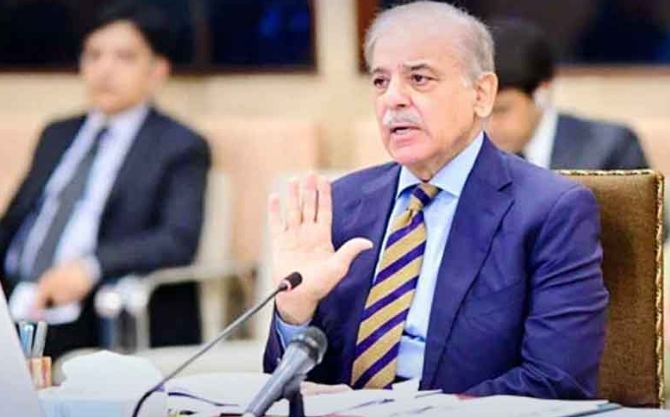
ISLAMABAD, APR 5: Prime Minister Shehbaz Sharif on Saturday hailed the government’s efforts for reducing power prices. Sources divulged that the party leaders called on PM Shehbaz Sharif at his residence in Lahore. On this occasion, the premier held consultations with the party leaders over the country’s situation.

“It is the good omen that their allied government is being run with trust,” said the premier.

“The allied government is being worked by joining hands together for the sake of the country’s prosperity,” said PM Shehbaz.

The premier expressed optimism about the country’s economic situation, saying, “The country’s economy is getting back on track.”

“We will continue to take further measures to address the masses’ problems,” said the premier.

President Zardari recovering well, will be discharged within 48 hours: Dr Asim

President Zardari

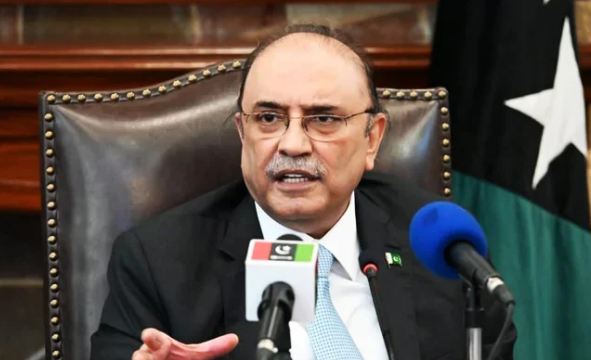
KARACHI, APR 5: President Asif Ali Zardari is recovering well and will be discharged from the hospital in a day or two, said his physician Dr Asim Hussain on Saturday.

“The president is fine now,” said Dr Asim while addressing the media in Karachi. He added that “speculations should stop now”.

The president had been placed in isolation after testing positive for COVID-19 a few days ago.

In the previous update, the physician said that the president was receiving medical care from infectious disease specialists at a private hospital.

In today’s presser, he elaborated that the hospital arranged some medicines for the head of state that were unavailable in Pakistan. Asim added that coronavirus is still present in the country, and its cases are being reported.

He added that anti-viral medicines have been developed for COVID-19 patients that are very effective.

Asim said further that the president was shifted to Karachi on Monday night, and his treatment was started.

It turned out to be a COVID-19 variant after his medical tests confirmed the diagnosis, said Asim, adding that the variant was nonfatal.

The physician also expressed sorrow over “baseless reports” being aired by Indian media and certain social media accounts.

Asim slammed political opponents for twisting the facts and said that even ailing persons were not spared from such misinformation.

Earlier, Sindh Senior Minister Sharjeel Memon refuted reports relating to Zardari’s health and said that his health was improving.

In a statement, Memon said that reports suggesting that President Zardari was being shifted to Dubai for medical treatment were not true and that the latter would soon recover completely.

Prime Minister Shehbaz Sharif enquired about the health of President Zardari via a telephone call.

The premier prayed for the early recovery of the president, adding that prayers of the entire nation were with the president.

FinMin Aurangzeb hopes to turn US tariffs into ‘win-win’ situation

FinMin Aurangzeb hopes to turn US tariffs into 'win-win' situation

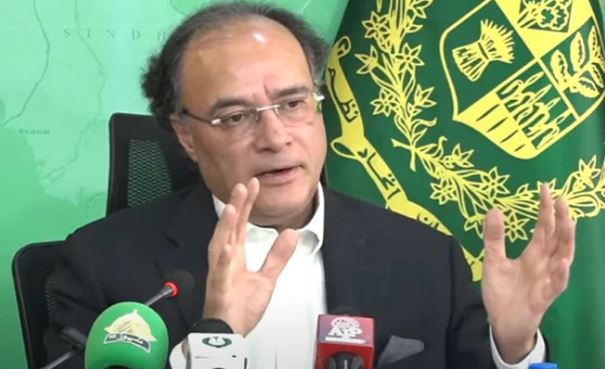
ISLAMABAD, APR 5: Finance Minister Muhammad Aurangzeb expressed optimism that the current concerns around US tariffs could be transformed into a mutually beneficial opportunity for both countries.

“We want to make sure that we, in terms of our representations, put forward how we see it in the medium to long term as a win-win situation for both Pakistan and the US,” Aurangzeb said during a press conference in Islamabad on Saturday.

US President Donald Trump has imposed a staggering 29% tariff on imports from Pakistan — one of the sharpest economic strikes in recent history.

The US remains Pakistan’s top export destination, and according to the State Bank of Pakistan, total exports to the US during the fiscal year 2023-24 amounted to $5.44 billion.

This unprecedented levy, part of the most aggressive US trade policy in almost a century, has rattled global markets and put emerging economies on edge.

For Pakistan, whose textile industry heavily relies on exports to the US, this tariff is more than just a financial setback — it’s a direct hit to its economic backbone.

The country of over 240 million people now faces a 29% tariff (set to begin on April 9) on its exports to the US, significantly higher than the 10% baseline, which came into effect on April 5 (today). After April 9, all Pakistani exports will be charged a 39% tariff.

A veteran banker, the finance minister emphasised that Islamabad views the issue not only as a challenge but also as a chance to deepen economic cooperation with its largest export market.

He highlighted that the United States is an important strategic and trade partner for Pakistan, adding that the government is approaching the matter with a comprehensive response plan.

To that end, Prime Minister Shehbaz Sharif has constituted two specialised bodies: a steering committee chaired by Aurangzeb himself and comprising ministers, prominent business leaders, secretaries, and academics; and a working group led by the secretary of commerce.

Aurangzeb noted that while the situation presents immediate challenges, it also opens doors for negotiation and long-term engagement. “You should never let a good crisis go to waste,” he remarked, underlining the government’s intention to formulate and present a well-structured package to the US administration.

The finance minister said the recommendations are expected to be finalised in the coming days and submitted to the prime minister for approval.

Following that, a high-level delegation will travel to Washington to convey Pakistan’s position and further dialogue with US officials. He affirmed that Islamabad remains “very constructively engaged” and hopes to strengthen the relationship through strategic discussions before the upcoming April 9 deadline of the 29% tariff.

Balochistan govt tells BNP-M to protest at Sariab Road, warns against violations

Balochistan govt

QUETTA, APR 5: Authorities asked the Balochistan National Party-Mengal (BNP-M) on Saturday to limit their protest to Quetta’s Sariab Road and warned against violations of Section 144 imposed in the provincial capital.

Balochistan government spokesperson Shahid Rind on Saturday said they had held two rounds of talks with the BNP-M, where the party expressed the wish to protest in the Red Zone. He said that the demand could not be allowed, and hence, the government offered the Sariab Road location as an alternative.

The BNP-M declared a “long march” from Wadh to Quetta last Friday, protesting the detention of Baloch Yakjehti Committee (BYC) leaders and activists, including Dr Mahrang Baloch and Sammi Deen Baloch, alongside the police action against their sit-in in the provincial capital.

Sammi was freed on Tuesday, while BNP-M’s sit-in has been going on for the last nine days.

Rind mentioned that three main demands had been presented during the two meetings with Sardar Akhtar Mengal, including the release of Baloch Yakjehti Commitee (BYC) leader and rights activist Mahrang Baloch Baloch. However, the government refused to permit the protest in the Red Zone, maintaining that it should be held at Sariab Road.

The spokesperson added that the government continued to prioritise resolving the matter through political dialogue and that both sides need to show flexibility.

“If Sardar Akhtar Mengal remains insistent on his demands, the government has options available,” Rind warned.

He said that everyone knew that the BYC started protests and sit-ins after the Jaffer Express attack, during which anti-state speeches were also made.

Rind also spoke about the recent anti-government remarks made during the BNP-M rally, saying that the platform of a registered political party was used for anti-state speeches.

“On the remarks made against the Balochistan government by [Akhtar] Mengal yesterday, the government reserves the right and capacity to respond but Balochistan Chief Minister Sarfraz Bugti had directed from day one that no such remarks should be made that would derail this political process, and hence this is not the moment to respond,” Rind said.

He said that the authorities were reviewing the situation and would take action as necessary.

Prisoner advocacy groups publish findings on Palestinian detainees’ plight

Prisoner advocacy groups publish findings on Palestinian detainees’ plight

DNA

RAMALLAH, APR 5: At least 350 Palestinian children are currently being held by the Israeli occupation in various central prisons and military camps across the country, including more than 100 of them who are incarcerated without trial or charge under Israel’s unlawful military court system.

On the occasion of the Palestinian Child’s Day marked annually on April 5, Palestinian political prisoners’ legal defense and advocacy groups issue this report highlighting key facts and figures surrounding the children held in difficult conditions behind Israeli bars amid the most violent period yet in the Palestinian people’s struggle against the occupation.

Like the rest of the thousands of political prisoners held by the occupation, Palestinian children face a wide array of abuses and rights violations including torture, starvation, deprivation of medical care and systematic maltreatment. These policies lead to the killing of the first child detainee since the start of the genocide in Gaza in October 2023. The minor, 17-year-old Walid Ahmad from the town of Silwad near Ramallah in the central occupied West Bank, was martyred in Israel’s Megiddo prison on March 22, 2025.

In parallel with Israel’s significantly increasing mass arrests since the genocide, children have not been spared. No less than 1,200 cases of arrests among children in the occupied West Bank and Jerusalem have been recorded since October 2023. As for Gaza, Israeli authorities have blocked the ability of Palestinian lawyers and prisoner groups from gaining access to information on the number of cases of arrest among children as well as the number who remain in custody with many subject to the severe crime of enforced disappearance.

Over the past few months, legal teams of prisoner groups have been able to carry out visits to many child detainees in the Israeli prisons of Ofer, Megiddo, and Damon, despite the heavy restrictions imposed on lawyer visits. During these visits, dozens of testimonies were collected from the children, reflecting the level of brutality they are subjected to.

They have been enduring an unprecedented level and scale of abuse behind bars. Severe physical assault by Israeli occupation guards is one of the most prominent abuses taking place inside prisons, including through sudden, violent raids on their cells by specialized prison units leaving many of them wounded. Statistics and documented testimonies indicate that the majority of the children arrested are subject to one or more forms of physical and psychological torture, through a range of systematic methods that violate enshrined protection laws, international standards and child rights agreements.

Additionally, there have been cases of executions of Palestinian children during their arrest as well as documentation of cases where occupation soldiers used children as hostages to pressure family members into surrendering. There are also instances where the occupation’s intelligence services summon the families of the children, forcing them to bring their children for military interrogations. Dozens of children are also being subject to mass field interrogations.

The abuse of Palestinian children begins from the moment of their arrests in the late hours of the night, where dozens of heavily armed soldiers raid Palestinian homes in a violent manner and cause intentional vandalism and destruction before the arrest, terrorizing the child and their entire family.

Many of these children are injured or ill, and during their arrests, occupation soldiers use humiliating and degrading methods that violate their dignity. The majority of them are held in detention centers belonging to the occupation army under tragic conditions, with threats, insults, severe beatings, and deprivation of food and access to restrooms for long hours. This is done in an attempt to pressure them into making confessions. Children are also coerced into signing documents written in Hebrew which they do not read or understand. In addition, dozens of sick and wounded children have been denied medical treatment by prison authorities, including those suffering from chronic and serious diseases and various levels of injuries.

Starvation of Child Detainees

The crime of starvation, which is being perpetrated against prisoners, including children, has taken center stage in testimonies collected after the war on Gaza. Hunger looms over the child prisoners’ sections in an unprecedented manner, to the point where many of them are being forced to fast for days. What the prison administration refers to as meals are, in fact, mere scraps of food. While prisoners have, for decades, established certain standards within the sections with the help of adult prisoner supervisors, this system has effectively ceased to exist. The prison administration now exclusively controls the children, with no oversight as to what happens to them. The care that prisoners had attempted to establish through sacrifice was dismantled by the prison administration, just like all the previous conditions of prison life prior to the genocide.

Walid Ahmed, a 17-year-old child, was arrested from his family home in Silwad on September 30, 2024. During the months he spent in Megiddo prison, he faced systematic crimes, the most notable of which was the crime of starvation, which led to his martyrdom on March 22, 2025. Walid had suffered from scabies (the skin disease) for several months and was subjected to denial of medical care alongside intentional starvation, being completely deprived of treatment until his death. According to the post-mortem medical report of his autopsy, the primary cause of death was starvation.

Dozens of Children Contracted Scabies in Megiddo Prison and Were Denied Treatment

In recent months, child detainees have been suffering from skin diseases, most notably scabies, which has become a health disaster across several central prisons. The occupation has effectively used this disease as a tool to torture prisoners, including child detainees, by depriving them of treatment and of the necessary tools to eradicate the disease. The prison administration deliberately failed to take any measures to limit the spread of the diseases, which can be life-threatening if left untreated.

According to numerous legal team reports, many prisoners, including children, who went for visits had their bodies covered in sores and complained of being unable to sleep due to the intense itching they continuously endure. Despite some efforts by prisoner organizations to pressure the prison administration to provide the necessary tools to prevent the spread of the disease, particularly by ensuring an acceptable level of hygiene, the disease continues to spread widely among the prisoners, leading to the martyrdom of some prisoners in the past months due to the physical complications that arose from this disease.

Over 100 Children Held Without Trial or Charge

Israel’s military court system allows for the detention of Palestinian children without trial or charge under a “secret file” which neither the detainee nor the lawyer have access to in what is referred to as “administrative detention.” Since the genocide, the occupation’s practice of using this pretext to detain and incarcerate Palestinians, including children, has reached unprecedented levels. The number of Palestinians held under administrative detention as a whole reached 3,498 by early April 2025. Among them, there are over 100 children, including some under the age of 15, being held in administrative detention. These figures have never been recorded historically, even during the peak of confrontations in the most prominent uprisings against the occupation.

Occupation’s Military Courts: Part of the Brutality Against Children

The occupation relentlessly continues its crimes against Palestinian children, subjecting them to unjust military trials that lack the fundamental guarantees of due process, just as with all Palestinian political prisoners under Israeli detention. These sham trials serve as a tool for further oppression, where the rights of Palestinian children are systematically violated. Israeli military courts in the West Bank and the occupation courts in Jerusalem have become central instruments in this widespread abuse.

A particularly alarming and inhumane practice is the imposition of house arrest, which has become a prevalent tactic against Palestinian children, especially in occupied Jerusalem. This policy effectively transforms their homes into prisons, confining children to their residences under harsh conditions. The occupation authorities impose house arrest in a manner that isolates these children from their communities, education, and essential support networks, further exacerbating their suffering and denying them the most basic rights afforded to children under international law.

Call for International Action

Palestinian prisoners’ institutions persist in urging the international human rights system to take decisive action to hold the leaders of the occupation accountable for the war crimes they continue to commit against our people. They demand the imposition of comprehensive sanctions on the occupation to isolate it on the global stage, thereby restoring the international human rights system to its rightful role in upholding justice and human dignity. This is essential to break the paralyzing inaction that has allowed the ongoing genocide and aggression to persist unchecked. The institutions also call for the immediate end to the exceptional immunity granted to the occupying state, which has consistently evaded accountability, judgment, and punishment for its systematic violations of international law. It is time to hold the occupation to account and ensure that its impunity comes to an end.


PNS ASLAT joins CTF-151 to secure Arabian Sea shipping routes

PNS ASLAT joins CTF-151 to secure Arabian Sea shipping routes

ISLAMABAD, APR 5 /DNA/ – Pakistan Navy Ship ASLAT undertook counter-piracy patrols in the Arabian Sea, off the east coast of Somalia, in support of Combined Task Force 151 (CTF-151), which is currently being led by Pakistan Navy.

PNS ASLAT joins CTF-151 to secure Arabian Sea shipping routes

Pakistan Navy-led CTF-151 is taking proactive measures to enhance its presence in the region, remaining vigilant of the piracy threat in the Gulf of Aden, the vicinity of Socotra Gap, and off the east coast of Somalia. These efforts aim to deter piracy, armed robbery, and other illicit activities to ensure the safety of vital Sea Lines of Communication (SLOCs).

PNS ASLAT joins CTF-151 to secure Arabian Sea shipping routes

The deployment of PNS ASLAT reflects Pakistan Navy’s firm resolve to combat piracy and armed robbery, while also protecting global maritime commons and ensuring the free flow of maritime trade in the region.=DNA

============

Maharang: Another Mallala in the Making?

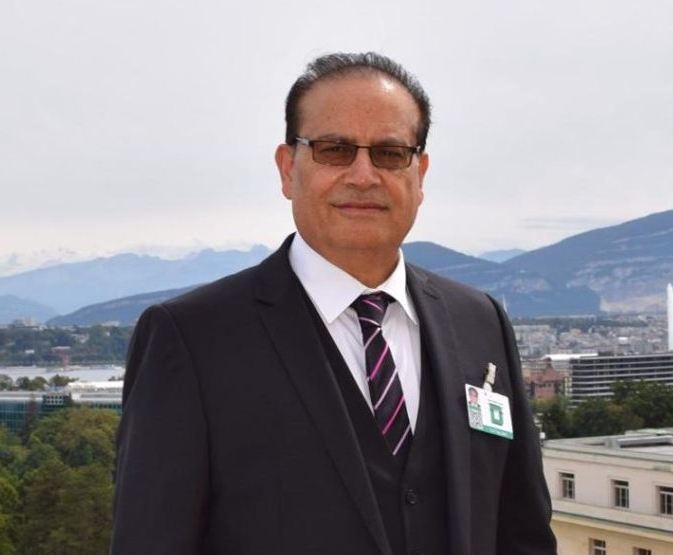
Qamar Bashir

Qamar Bashir

There was once a little girl named Malala in the peaceful valleys of Swat. She was known not for her strength but for her voice. Even as a child, Malala spoke passionately for the right of girls to get an education. She became a symbol of resistance against the darkness brought by the Pakistani Taliban. But her courage had a price. In a cruel attempt to silence her, they shot her. The attack could have ended her life, but fate had other plans. She survived and was taken to the United Kingdom, where she healed and emerged stronger than ever. Her wounds were deep, but they also became the reason the world started listening to her voice. From a small town in Pakistan, she rose to the international stage and was awarded the Nobel Peace Prize, becoming one of the most recognized human rights voices of our time.

Now, in the shadows of Balochistan, another fragile voice is rising—that of Maharang Baloch. This time, the oppressor is not a terrorist group but reportedly our own state security forces. Through their actions, they are shaping another global icon. Their resistance to her voice is the very fuel that may transform her from a local activist to an international symbol of justice.

Maharang’s demands are simple. She is asking for the missing persons—allegedly held without legal process—to be brought into the judicial system. Her call is not for rebellion or revenge; it is for justice, due process, and the rule of law. What wrong is there in asking for legal transparency? In any civilized nation, this should be the norm. She is not carrying arms. She does not promote violence. Her protests are peaceful, her words are firm, and her actions are grounded in democratic values. From her long marches to her public statements, she has stayed committed to a lawful, peaceful path.

Initially, Maharang’s voice was confined only to her village or town, but when her concerns remained unheard, she became the voice of all of Balochistan. When her demands continued to be ignored, her voice spread further, echoing loudly across social media and conventional media channels.

If the state continues to rely on brute force to silence voices, this division will deepen further. Moreover, if the state continues to enforce development without local consent, it will only erase the love and affection our people once held for our security forces. This is heartbreaking for patriotic Pakistanis who have witnessed our security forces’ transformation from heroes to being treated with suspicion and fear. I remember when people saluted their convoys with pride. Now, in many areas, those same convoys are viewed with suspicion and fear; they are shouted at, labeled terrorists, and pelted with stones. This is not just sad—it is dangerous for the unity of our country.

History has numerous examples of state aggression inadvertently turning local figures into international icons of resistance. Nelson Mandela became a global hero after being imprisoned by the apartheid regime. Aung San Suu Kyi’s years of house arrest by Myanmar’s military rulers amplified her voice globally. Ken Saro-Wiwa, executed by Nigeria’s military regime, brought global attention to the plight of the Ogoni people. Rosa Parks, through her quiet yet resolute defiance against racial segregation in the United States, sparked the civil rights movement, becoming an iconic figure worldwide. Similarly, Greta Thunberg, a young climate activist from Sweden, rose from obscurity to global prominence by challenging world leaders to act against climate change.

If Maharang Baloch is not respectfully released from jail, this hatred will reach new heights. Such state oppression will only accelerate her transformation into a global symbol of justified resistance. This elevation of the Balochistan issue from a domestic concern to an international one will severely damage the country’s global image. Such internationalization will inevitably cause immense economic, financial, and diplomatic harm.

These significant costs can only be avoided by recognizing Maharang Baloch as a respected daughter of the nation, addressing her genuine demands, and nurturing her as a national leader rather than treating her as an adversary.

I have watched Maharang Baloch closely. Her struggle is not personal; it is principled. She represents the grief of countless families whose loved ones have disappeared without explanation. She speaks not only for her people but for the dignity of every citizen who believes in the Constitution and basic human rights.

Baloch society, where I come from, is rooted in honor, tradition, and mutual respect. Even in times of tribal conflict, our unwritten code forbids harm to women, children, or the elderly. Violating this code brings shame and severe consequences. Unfortunately, this noble tradition has been ignored by some elements within the state. Instead of honoring Baloch dignity, these forces have trampled it.

It is still not too late. The government can still take the high road. They can meet Maharang Baloch, listen to her demands, and offer her the protection and respect she deserves. If they do, the fire burning in Balochistan can be calmed. The roadblocks, protests, and unrest can be replaced with hope and dialogue. Arresting her or ignoring her will only escalate the crisis. Releasing her and addressing her lawful demands can bring peace.

This approach should not be limited to Maharang Baloch. Every aggrieved citizen—in Balochistan, in Khyber Pakhtunkhwa, in Sindh—deserves to be heard and treated with dignity. The path forward must be based on respect, not repression. We must bring our own people back into the national fold, not push them further away.

In the end, strength is not shown by silencing the weak. It is shown by lifting them, by meeting them halfway, by proving that justice and humanity still form the backbone of this nation. Let us not wait for another fragile girl from an obscure region to rise through tragedy. Let us rise with her in peace, dignity, and unity.

Qamar Bashir

 Press Secretary to the President (Rtd)

 Former Press Minister at Embassy of Pakistan to France

 Former MD, SRBC

 Macomb, Detroit, Michigan

Tarar grieved over death of former secretary information Khawaja Ijaz Sarwar

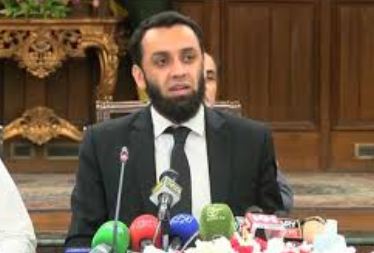
Federal Minister for Information and Broadcasting Attaullah Tarar

ISLAMABAD, Apr 05 (APP/DNA): Federal Minister for Information and Broadcasting Attaullah Tarar on Saturday expressed deep grief and sorrow over the demise of former secretary information and broadcasting Khawaja Ijaz Sarwar.

In a condolence message,  the information minister extended his heartfelt condolences and sympathy to the family of Khawaja Ijaz Sarwar.

Tarar said he was deeply saddened to hear the news of the death of Khawaja Ijaz Sarwar.

The minister said that the deceased was a dignified, sincere and experienced personality who played a key role in the development of the information sector and the effective interpretation and dissimination of the national narrative.

The services of the deceased will always be remembered, Attaullah Tarar maintained.

He played to Allah Almighty to rest the departed soul in eternal peace and grant courage to the bereaved family to bear this loss with fortitude.=DNA

===========

Dr. Arshad Associates host sumptuous diplomatic get-together

Dr. Arshad Associates host sumptuous diplomatic get-together

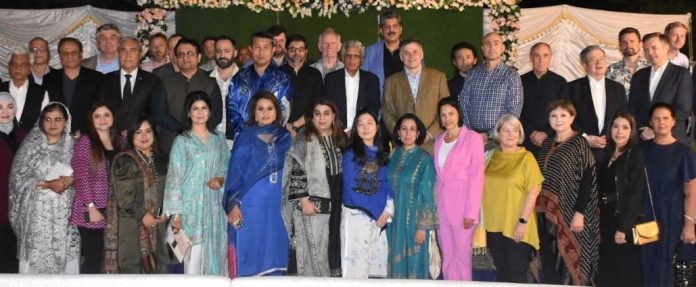
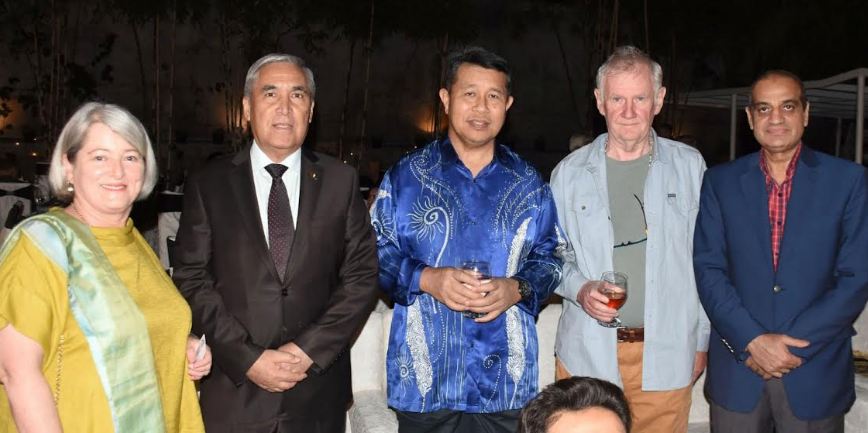
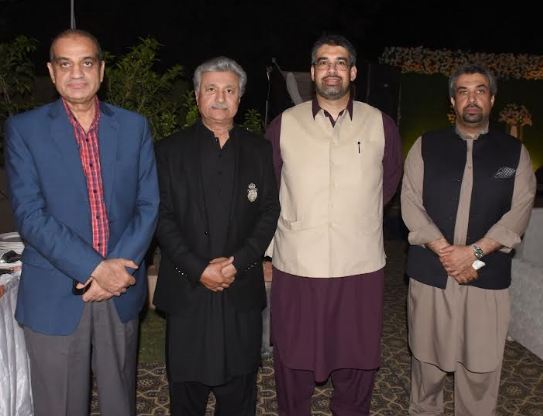
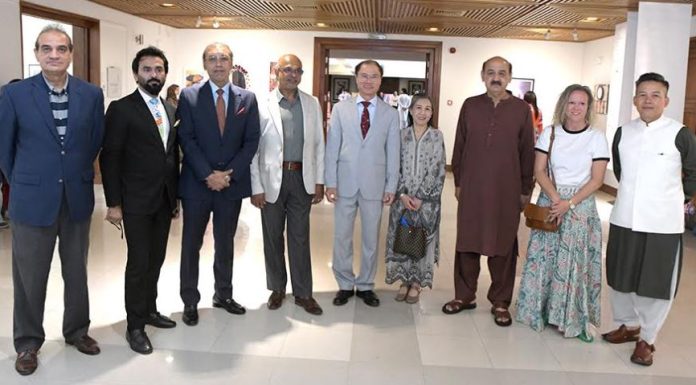
ISLAMABAD, APR 5 /DNA/ – Dr. Arshad Associates hosted a vibrant diplomatic get-together, bringing together members of the international diplomatic community for an evening of cultural exchange and hospitality.

The event was graced by several distinguished guests, including Ambassador of France Nicolas Galey, High Commissioner of Brunei Kamal Ahmad, Ambassador of Brazil Olyntho Vieira, Ambassador of Argentina Sebastian Sayus, Ambassador of Ireland, and other senior diplomats and dignitaries. Guests were treated to an array of traditional Pakistani cuisines, offering a rich taste of the country’s culinary heritage.

Adding further charm to the evening, traditional musical performances were held, showcasing the cultural vibrancy and artistic spirit of Pakistan.

The gathering provided an excellent opportunity for diplomats to connect in an informal setting while experiencing the warmth and hospitality that Pakistan is known for.=DNA

Stay Connected

64FansLike
60FollowersFollow

Latest Reviews

Exchange Rates

USD - United States Dollar
EUR
1.17
GBP
1.35
AUD
0.72
CAD
0.73