Home Blog Page 629

Iran blast kills more than 50 mine workers

Iran blast kills more than 50 mine workers

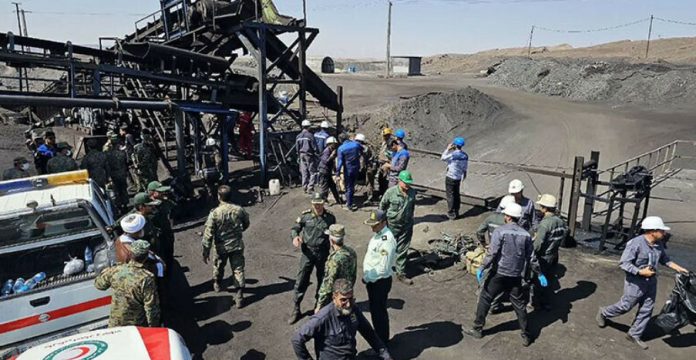
TEHRAN, SEPT 22: A blast caused by a gas leak at an Iranian coal mine has killed at least 51 people, state media said Sunday, in one of the country’s deadliest work accidents in years.

“The number of dead workers increased to 51” in the explosion at the Tabas mine in eastern Iran, the official IRNA news agency reported, revising an earlier death toll of 30.

It added that 20 other people were injured.

The explosion occurred at around 9pm (1730 GMT) on Saturday, when around 70 workers were present at the site in South Khorasan province, IRNA said.

According to the report, a leak of methane gas led to the blast in two blocks of the mine, which is owned by private Iranian firm Madanjoo.

State TV broadcast footage of ambulances and helicopters arriving at Tabas to transport the injured to hospital.

Online footage carried by IRNA showed bodies of some of the victims, wearing their work uniform, carried out of the site on mining carts.

South Khorasan governor Javad Ghenaat told state TV that rescue teams were working to recover the remaining bodies.

Iran’s President Masoud Pezeshkian, in remarks carried state TV before departing for the UN General Assembly in New York, offered his condolences to the families of the victims and ordered a probe into the deadly incident.

“Unfortunately, we learned that an accident occurred in one of the coal mines in Tabas and a number of our compatriots lost their lives. I offer my condolences to their respected families,” Pezeshkian said.

His first vice president, Mohammad Reza Aref, spoke with cabinet members to ensure “emergency follow-up” and support for the victims and their families, IRNA said.

Trapped
Iran’s Red Crescent said search and rescue operations were underway in the mine, where some workers remained trapped.

According to IRNA, they were about 250 metres below the surface, cut off from rescuers by chambers that had filled up with concentrated methane gas.

“Gas accumulation in the mine” has made the search operations difficult, local prosecutor Ali Nesaei was quoted by IRNA as saying.

“Currently, the priority is to provide aid to the injured and pull people from under the rubble,” Nesaei said.

He added that “the negligence and fault of the relevant agents will be dealt with” later on.

Last year, an explosion at a coal mine in the northern city of Damghan killed six people, also likely the result of methane leak according to local media.

In May 2021, two miners died in a collapse at the same site, local media reported at the time.

A blast in 2017 killed 43 miners in Azad Shahr city in northern Iran, triggering anger toward Iranian authorities.

Mineral-rich Iran has around 1.5 billion tons of proven coal reserves, according to state media.

The Tabas mine covers an area of more than 30,000 square kilometres and holds mass reserves of coking and thermal coal, according to IRNA.

It is “considered the richest and largest coal area in Iran,” IRNA said.

Pakistan set to raise Palestine, Kashmir and Islamophobia issues at UNGA

Pakistan set to raise Palestine, Kashmir and Islamophobia issues at UNGA

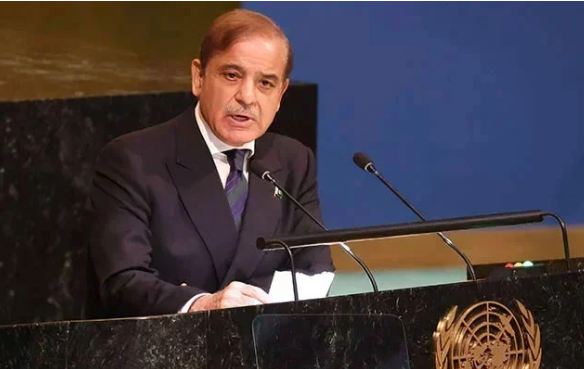
ISLAMABAD, SEPT 22 – Prime Minister Shehbaz Sharif will be attending the upcoming 79th Session of the United Nations General Assembly (UNGA) wherein he will highlight Palestine, Islamophobia and other issues during his address slated for September 27, the Foreign Office said in a statement on Sunday.

The premier, set to attend the UNGA session from September 23 to 27, will underscore the importance of addressing long-standing issues on the agenda of the UN Security Council (UNSC) such as Indian Illegally Occupied Jammu and Kashmir (IIOJK) and Palestine.

The prime minister, a day earlier, reached London for a short tour from where he would depart for New York on Monday (tomorrow).

“Departing for New York to represent Pakistan at the 79th UN General Assembly. Looking forward to a busy week full of engagements. We will present Pakistan’s perspective to the world,” the PM said in a post on X.

Deputy PM and Foreign Minister Ishaq Dar was also scheduled to travel to the US for the UNGA session, however, his trip was cancelled hours before PM Shehbaz left for London.

“In view of some important upcoming diplomatic engagements and the ongoing preparations for the 23rd meeting of the Council of the Heads of Governments of the Shanghai Cooperation Organisation Deputy PM and FM [Ishaq] Dar will not proceed to New York for the 79th session of the UNGA,” an FO spokesperson said.

Sources told The News that the decision for the cancellation of the foreign minister’s trip to New York was taken on Friday afternoon in a meeting at the FO.

Expanding on PM Shehbaz’s trip, the FO said that the premier will not only reaffirm Pakistan’s commitment to multilateralism and support for the UN’s role in fostering global peace, security, and prosperity but will also accentuate the importance of addressing the inequities in international economic relations and reforming the international financial architecture during his time in New York.

The premier will also highlight the country’s priority to place people at the heart of the domestic and global development agenda.

He will express Islamabad’s commitment as an incoming member of the UNSC for the year 2025-26, to work with all UN member states to uphold the UN Charter, preventing conflict, fostering peace, and promoting global prosperity, the FO added.

Furthermore, PM Shehbaz would urge the international community to take decisive measures in addressing climate change and countering the rising tide of Islamophobia.

Moreover, the premier will attend several high-level meetings on the sidelines of the UNGA Session including the “High-Level Meeting on Existential Threat posed by Sea-level Rise,” and the UNSC’s open debate on “Leadership for Peace”.

The prime minister’s schedule also includes bilateral meetings with several world leaders, including the UN secretary-general and UNGA president.

Addis Ababa’s Green Legacy Initiative: A Journey from Deforestation to Reforestation

Addis Ababa’s Green Legacy Initiative: A Journey from Deforestation to Reforestation

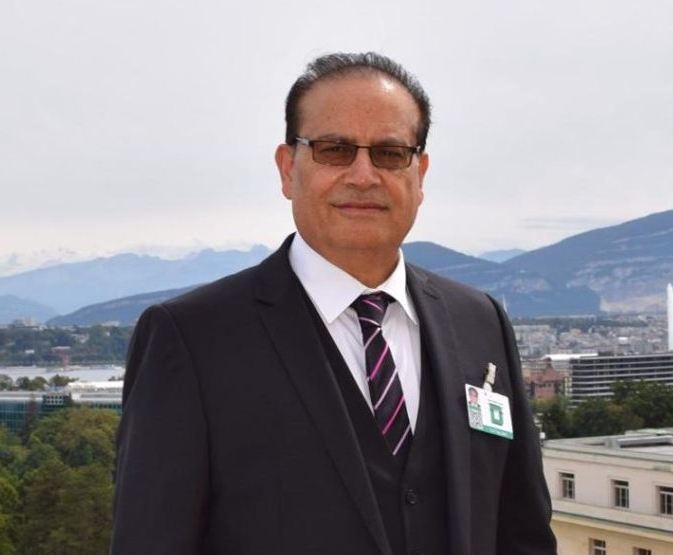
By: Ambassador Dr. Jemal Beker Abdula

The contemporary climate change and environmental degradation debates cannot be divorced from Ethiopia’s recently launched Green Legacy Initiative (GLI). It is a landmark development in the country’s history and its historical environment-protecting mission, spearheaded by the current Prime Minister of the Federal Democratic Republic of Ethiopia, Dr. Abiy Ahmed.

The primary mission of GLI, introduced by Prime Minister Ahmed in 2019, is to plant seedlings through a broader social campaign that would let its government ensure social prosperity, economic development, environmental and biodiversity restoration. The seedling planting campaign focuses on the urban and rural areas simultaneously by introducing multifaceted green initiatives with appropriate research and development support. This countrywide green campaign concentrates on the country’s social and ecological goals, strongly connected with the greater theme of a greener, sustainable and cleaner Ethiopia.

While realizing the severe threats of increasing droughts in the country and their impacts on the lives of more than 120 million people, Prime Minister Ahmed tried to raise public awareness about the overwhelming wave of prevailing non-traditional security threats in the Ethiopian nation where the government has marked the environment degradation as a serious challenge. Prime Minister Abiy Ahmed has led the entire nation to understand the significance of green socialattitude and behaviorto support and promote the social practices of planting and protecting trees. It positively contributes to Addis Ababa’s greater mission of encouraging sustainable environmental and social practices in the country to overcome the emerging security threats of the non-traditional nature.

The GLI represents the Ethiopian government’s determination to uphold the notion of creating an environment-friendly and environment-protecting green culture, enabling its government to mitigate the emerging challenges of climate change and global warming. Addis Ababa-based government officials under the leadership of Abiy Ahmed determined to plant billions of trees across the country to reduce the existing levels of carbon dioxide in the air, parallel to decreasing the environment-degrading effects of greenhouse gasses and developed Long Term Low Carbon Emission Strategy by 2030 net zero carbon emission.

 The extensive public support for the Prime Minister’s green vision is linked with improving present levels of soil health and water conservation and regulating the country’s vulnerability to extreme weather conditions through enhancing the environment-resilient social capacities of the nation. The motto “A Nation that Plants; A Generation that Sustain” fundamentally mobilized around 39 million general public to join the government’s mission due to Prime Minister’s announcement of calling 2024 as the year of Green Legacy Initiative that break its previously held world record planted 615.7 million within a day.

Thus, Addis Ababa’s green mission has made Ethiopia a popular environment-friendly nation in the world, according to various credible reports. The United Nations Department of Economic and Social Affairs has formally recognized the environment-protecting struggle of Addis Ababa by recalling the country’s history ofbecoming an active part of the United Nations Framework Convention on Climate Change (UNFCC) IN 1994. Several other intergovernmental frameworks of the international community, such as the African Union and World Bank, have appreciated the country’s climate-safeguarding quest. The Guinness World Records list has also registered the Ethiopian tree-planting records and made Ethiopia as one of the leadings nations in international reforestation struggles.

The recent records of planting seedlings showed the government’s high commitment to achieving the defined Tree Planting Targets, which are mentioned in detail on the official online sources of GLI. The GLI’s implementation through massive public participation so far has planted 40.5 Billion seedlings in between 2019 to 2024 of which 56 percent is fruits and 44 percent are various trees suitable to local ecology based on research undertakings. These figures show the persistent efforts of state-society collaboration, which facilitated the current Ethiopian government to achieve its desired climate-specific national targets within a defined timeframe.

Public support has been considered internationally as the factor enabling Dr. Abiy Ahmed’s government to achieve high targets for the plantation. In other words, public support is the outcome of Addis Ababa’s comprehensive history of advocating global environmental efforts, which could be measured on certain lines like the launching of the National Adaptation Plan of Action in 2007, the Program of Adaptation on Climate Change and Nationally Appropriate Mitigation Action in 2010 and endorsing the Climate Resilient Green Economy (CRGE) in 2011. Ethiopia is the first country that adopted a policy to ban fossil car import and incentives the green transition.It is pertinent to mention the positive impact of the country’s evolving green culture on the Ethiopian national economy, which has produced around one million jobs and 130,000 nurseries across the country.

On similar note, Ethiopia has achieved food self-sufficiency and ensured food security and start to export avocado, papaya mango, banana etc to Europe, Middle East and Asia. In light of this perspective, the Food and Agricultural Organization (FAO) of United Nations awarded the prestigious medal Agricola to H.E. Dr. Abiy Ahmed for his role and leadership in ensuring food self-sufficiency, poverty alleviation, sustainable development. This progress validates Addis Ababa’s strengths for meeting global pledges agreed upon at various international forums, such as the Paris Climate Change Agreement, the Sustainable Development Agenda of 2030, and the African Regional Agenda of 2063. 

In this way, the Ethiopian campaign of planting massive trees contributes positively to countering the emerging wave of environment-centric global security problems. The global voices for combating the threats of climate change have formally appreciated and acknowledged the Ethiopian role in promoting environmental protection and social practices in the African region. While considering the appreciable efforts of Addis Ababa to restore the degraded landscapes, the Ethiopian government identified the areas needing reforesting under an enhanced natural environment.

So, the multidimensional benefits of Ethiopia’s GLI campaign inflicted a sense of supporting ecosystems and ecological diversity in the African region, and it has become a symbol of a green nation in the region by introducing diverse agroforestry social practices. Moreover, these Ethiopian practices have become exemplary models in the region for other governments whilehelping other nations to follow the state-led broader environment plans of Addis Ababa under Fraternity Planting Programme across Africa. The multileveled phases of planting massive seedlings in different cities and villages proved that the African nations could effectively address the alarming levels of deforestation and soil erosion through the government’s properly structured social awareness campaigns.

Therefore, it could be treated as a blueprint for different African nations witnessing analogous issues of land degradation, agricultural administration, and effective greenland management. The Ethiopian reforestation efforts also led other African nations to start positively engaging different segments of their societies in various productive activities, which could ultimately produce the chance of enhanced community engagement and social mobilization under various political administrations.

 The participation of millions of residents in the large-scale tree-planting activities allowed people of different age groups and diverse ethnic backgrounds to show Ethiopian exertions for developing a sense of responsibility and collectiveness in society. In this way, it delivered a message of togetherness to other nations concerning the collective role of the public in supporting the major government policies and developmental initiatives, and the other African nations could find it an interesting case for strengthening the cooperative state-society connections under their respective political systems. 

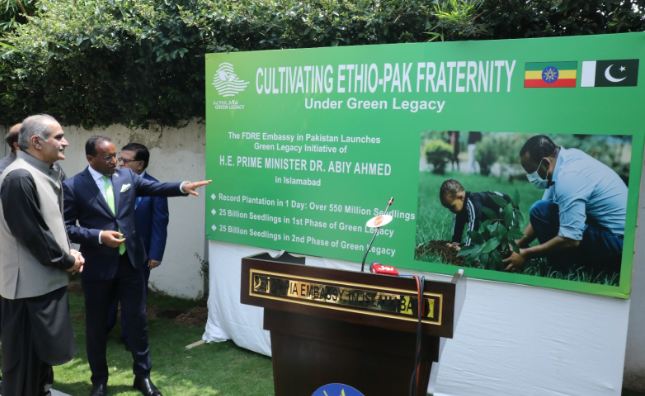
On similar note, the Ethiopian Embassy in Islamabad in collaboration with the Ministry of Climate Change and Environmental Coordination of the Government of Pakistan introduced Ethio-Pakistan Fraternity Planting under Green Legacy Initiative programme throughout the major cities of Pakistan to counter the unfolding the climate danger. 

Australian Diplomat Neil Hawkins strengthens Pak-Australia relations thru sports donation

Australian Diplomat Neil Hawkins strengthens Pak-Australia relations thru sports donation

ISLAMABAD, SEPT 22 (DNA) – The players of the Rising Stars Hockey Club and Rising Stars Girls Hockey Academy are indebted to the Australian High Commissioner to Pakistan Neil Hawkins for donating hockey sticks to the talented players of the Rising Stars Girls Hockey Academy Islamabad.

This selfless act of kindness embodies the true spirit of sports diplomacy and demonstrates his unwavering commitment to empowering young Pakistani athletes.

By providing these talented girls with world-class equipment, Hawkins has not only boosted their morale but also paved the way for them to showcase their skills on the international stage.

His visionary leadership and philanthropic efforts will have a lasting impact on the development of hockey in Pakistan, inspiring a new generation of players to strive for excellence.

We extend our heartfelt gratitude to Excellency Hawkins for his generosity, dedication, and belief in the potential of Pakistani youth.

On this occasion Excellency Col(R) Kamal High Commissioner of Brunei.,Mr Ansar bhatti, Mr Mehmood Ahmed,Mr Asif Bhatti and Sohail Akram Janjua were also present.

Musadik Malik visits YanChang Petroleum to strengthen strategic energy partnerships

Musadik Malik visits YanChang Petroleum to strengthen strategic energy partnerships

ISLAMABAD, SEPT 21 (DNA) – In a significant move towards fostering international cooperation in the energy sector, Dr Musadik Malik, the Federal minister of Petroleum, visited the YanChang Petroleum, a leading Chinese energy company, on the sidelines of 8th Silk Route Expo. The visit underscores both nations’ commitment to enhancing strategic partnerships in the fields of energy exploration, innovation, and sustainable development.

During the visit, Dr Musadik Malik was received by YanChang Petroleum’s senior leadership team, led by Deputy Chief manager, who provided an in-depth overview of the company’s ongoing projects and future growth strategies. The discussion focused on several key areas, including oil and gas exploration, refinery cooperation, integrated coal industrial complex, technological innovations.

Minister highlighted the importance of international collaboration to meet the growing energy demands. Pakistan and China have shared goals in ensuring energy security, and this visit is an opportunity to explore new avenues for cooperation that align with both nations’ commitments to  innovation in the energy sector,” he said.

The visit also included a tour of YanChang Petroleum’s state-of-the-art display of company’s facilities.He was briefed on the company’s latest advancements in energy technologies, including renewable energy integration and carbon capture initiatives. The discussions paved the way for potential joint ventures and collaborations in oil and gas exploration, as well as new opportunities in .

Deputy Chief manager of YanChang Petroleum commented, “We are honored to welcome Dr Musadik Malik to our facilities. This visit has laid the foundation for future cooperation. After indepth exchanges we have great potential of cooperation. Pakistani companies will have detail discussions on technical and commercial aspects of various prospective projects.

The visit marks a new chapter in the energy dialogue between Pakistani and Chinese energy companies, setting the stage for future projects that will not only boost economic growth but also bring about innovation and technology.

Iraqi Ambassador calls on PRCS Chairman

Iraqi Ambassador calls on PRCS Chairman

Ambassador Mr. Hamid Abbas Lafta expresses his pleasure at visiting PRCS, commending the organization’s efforts under Chairman Laghari’s leadership; reiterates Iraq’s commitment to supporting humanitarian causes

ISLAMABAD, Sept 21 /DNA/ – Hamid Abbas Lafta, Ambassador of the Republic of Iraq to Pakistan, visited the National Headquarters of the Pakistan Red Crescent Society (PRCS) on Friday, where he met with PRCS Chairman Sardar Shahid Ahmed Laghari. The two leaders engaged in discussions centered around strengthening bilateral ties between Pakistan and Iraq, with a special focus on humanitarian collaboration and exploring potential joint initiatives to assist vulnerable communities in both nations.

Chairman Laghari provided an overview of PRCS’s wide-ranging humanitarian efforts across Pakistan, notably emphasizing the support extended to millions impacted by the devastating monsoon floods of 2022. He highlighted the organization’s ongoing recovery initiatives, including providing shelter, livelihood support, WASH (Water, Sanitation, and Hygiene) services, and cash assistance for flood-affected families.

Ambassador Lafta expressed his delight in visiting PRCS and praised the organization’s impactful work under the leadership of Chairman Laghari, especially during natural disasters and crises. He reiterated Iraq’s strong commitment to humanitarian causes and expressed deep appreciation for Pakistan’s support during the COVID-19 pandemic, including the provision of essential medicines and vaccines.

The Ambassador emphasized the importance of enhancing collaboration between the PRCS and the Iraq Red Crescent Society, expressing his commitment to facilitating future exchange visits between the two National Societies. He also suggested the possibility of signing Memorandums of Understanding (MoUs) to formalize cooperation on various humanitarian projects.

During his visit, Ambassador Lafta toured the PRCS library and left a message in the guest book. As a gesture of goodwill, Chairman Laghari presented him with souvenirs and his book, Dastan-e-Azam.

Pak-China to boost security cooperation, plan joint Police exercises in Xinjiang

Pak-China to boost security cooperation, plan joint Police exercises in Xinjiang

ISLAMABAD, SEPT 21 (DNA) – Federal Interior Minister Mohsin Naqvi met with a high-level Chinese delegation led by Minister for Political and Legal Affairs Chen Mingguo. Federal Minister for Interior warmly welcomed Minister Chen Minguo and his delegation upon their arrival at the Ministry of Interior. During the meeting, it was agreed to enhance cooperation in various fields, including counter-terrorism, cross-border cooperation, anti-smuggling, and anti-narcotics efforts.

During the meeting Pakistan-China relations, particularly with Xinjiang, and matters of mutual interest were discussed. During the meeting, it was agreed to conduct joint police and paramilitary forces exercises in Gilgit-Baltistan or Xinjiang and train Gilgit-Baltistan police officers at the Xinjiang Police Academy.

During the meeting, it was also agreed that comprehensive measures would be taken to against terrorism which is a global issue. It was also decided that a Pakistani delegation, led by the Federal Secretary of Interior, would soon visit Xinjiang to enhance mutual cooperation.
Chinese Minister Chen Mingguo also invited Federal Interior Minister Mohsin Naqvi to visit Xinjiang.

Mohsin Naqvi said that Xinjiang province is of vital importance for Pakistan in it’s relations with China. He underscored that besides being Pakistan’s neighbor, we have a 600-kilometer-long border with Xinjiang. He added that the China-Pakistan Economic Corridor (CPEC) project also passes through Xinjiang. He emphasized that Pakistan wants to completely eliminate smuggling of drugs, arms, and all other goods. He noted that the visit of the Pakistani delegation to Xinjiang would open new avenues for strengthening mutual cooperation.

Minister Chen Mingyuo expressed the desire to enhance relations with Pakistan in all fields. He said that terrorism is a common problem, adding that Xinjiang had suffered from it for many years. He highlighted that Pakistan can benefit from Xinjiang’s experience in counter-terrorism. Pakistan-China relations, particularly with Xinjiang, and matters of mutual interest were discussed during the meeting.

The Chinese delegation included Xinjiang’s Deputy Secretary of the Committee of Parliamentary and Legal Affairs, Executive Director General of Police, and Vice President of Xinjiang Police Academy. Secretary Interior Khurram Ali Agha, Special Secretary Interior Waqas Ali Mahmood, and Additional Secretary Interior Nazar Muhammad Buzdar were also present on the occasion.

Tariff relief expected as govt completes IPPs’ review: minister

Tariff relief expected as govt completes IPPs' review: minister

ISLAMABAD: Federal Minister for Power Awais Ahmad Khan Leghari has said that the masses will get relief in electricity tariffs in the coming weeks as the the Power Sector Task Force has completed its review of Independent Power Producers (IPPs) and state-run power plants, The News reported on Saturday.

“The committee has been provided with all necessary information regarding the IPPs […] We will soon share the good news with the public about the IPPs,” Leghari said during a briefing to the Senate Standing Committee on Power.

The minister’s remarks come at a time when Prime Minister Shehbaz Sharif-led coalition government is under the spotlight over sky-high electricity tariffs which have further burdened the inflation-weary masses.

Owing to the flak received regarding the IPPs, the government has been renegotiating contracts with the power produces to rein in “unsustainable” electricity tariffs — the highest in the region.

The announcement regarding relief in tariffs follows the Power Division’s earlier statement on a relief of up to Rs2.65 (tax inclusive) in electricity bills for September courtesy of fuel adjustments.

Combining both the adjustments, agricultural and domestic consumers using up to 300 units would get relief of Rs2.19 per unit in their September bills, while Rs2.65 per unit (tax inclusive) would be provided to other consumers, the Power Division had said.

Expanding on the measures taken up by the government, Leghari informed the Senate committee — chaired by Senator Mohsin Aziz — that the task force had conducted a comprehensive assessment of the return on equity (ROE), operation and maintenance (O&M) costs, and outstanding dues of the IPPs.

Noting that the review also included a thorough evaluation of investment technology and associated costs for each plant, he said: “All work is being carried out with the confidence and consent of the IPPs.”.

Further announcements regarding progress with IPPs will be made in the coming weeks, the minister remarked.

During the meeting, the forum addressed a significant public concern regarding electricity over-billing, brought to light by Senator Palwasha Muhammad Zai Khan in the August 30 meeting. The senator had criticised the indifference of officials to consumer grievances and shared her family’s experience of having to visit the power office 28 times in three months due to incorrect meter readings.

Senator Palwasha condemned the behaviour of officials, likening it to mafia conduct, and called for stringent action against those responsible. She proposed referring the matter to the Federal Investigation Agency (FIA) to dismantle the alleged group behind the malpractice and set a precedent for accountability.

Committee Chairman Senator Mohsin Aziz acknowledged the senator’s concerns, agreeing that the issue was of public importance and likely indicative of a broader problem, whereas a senior Power Division official confirmed that action had already been taken, including the transfer of the employee responsible for the faulty meter readings.

In response, Leghari remarked that the senator’s concerns fell under customer care, which is not directly part of electricity distribution companies.

Moving on, committee chair Senator Aziz stressed the urgent need to address electricity theft and over-billing, instructing the Power Division to clarify inconsistencies in reports regarding Bagasse-based IPPs and their tariff structures. He raised concerns over the pricing of bagasse, suggesting that its historical valuation has led to exploitation.

“We have no price of Bagasse,” National Electric Power Regulatory Authority (Nepra) Chairman Waseem Mukhtar informed the committee while acknowledging that the authority determines tariffs for Bagasse-based power plants.

It is to be noted that Pakistan’s eight bagasse-based IPPs, with a combined capacity of 259.28 megawatts, are operating under the 2006 power policy, with agreements set to expire between 2044 and 2049.

Additionally, the parliamentary panel also reviewed a detailed report on load-shedding and electricity distribution from Peshawar Electric Supply Company (Pesco) and Sukkur Electric Supply Company (Sepco).

A high-level inquiry into the allegations of corruption and poor performance of the Punjab Wildlife Department is necessary

A high-level inquiry into the allegations of corruption and poor performance of the Punjab Wildlife Department is necessary

A high-level inquiry into the allegations of corruption and poor performance of the Punjab Wildlife Department is necessary

If the inquiry finds evidence of wrongdoing, those responsible must be held accountable under the law. This would send a clear message that corruption and negligence will not be tolerated in the management of Punjab’s Wildlife.

Mumtaz Ahmed Bhatti

The Punjab Wildlife Department has a broad mandate that includes wildlife conservation, habitat protection, and the management of natural parks, zoos, and biodiversity centers. It is also tasked with enforcing wildlife protection laws, regulating hunting, and managing the breeding and rehabilitation of endangered species. The department’s collaboration with other governmental bodies, such as the Department of Communication and Works Punjab and the Department of Monitoring and Evaluation, is critical for the success of these projects.

Collaboration seems to have been fraught with challenges, including inefficiencies and questionable practices, leading to widespread dissatisfaction with the outcomes of the department’s work.The UGPP is part of a national effort to enhance Pakistan’s green cover, mitigate the impacts of climate change, and preserve biodiversity. It includes a variety of projects such as tree planting, the establishment of protected areas, and the restoration of degraded ecosystems.

The ADP, on the other hand, is an initiative aimed at the long-term development of infrastructure and services in the province, including the development of zoos, biodiversity parks, and wildlife habitats.The Department of Monitoring and Evaluation has expressed serious concerns regarding the quality of the wildlife department’s development work. In Lahore, Sargodha, Dera Ghazi Khan, Lal Suhanra, Jallo Park, and Taunsa, where new zoos and biodiversity parks have been built, evaluations by the government agency have pointed out significant shortcomings. These projects, which should have served as cornerstones of biodiversity conservation and environmental education, have fallen short of expectations, both in terms of construction standards and the ecological outcomes they were meant to achieve.

In addition to the concerns about substandard work, there have been serious allegations of corruption and malpractice within the Punjab Wildlife Department. These allegations range from mismanagement of funds to improper allocation of resources, and they have been compounded by the department’s lack of transparency and accountability. Complaints have emerged that funds earmarked for vital conservation efforts, such as the protection of migratory birds or the support of local communities living near wildlife reserves, have not been used effectively or honestly.

There are also reports of wildlife officers inflating the number of field visits they record in order to collect higher allowances. These field visits, which are crucial for monitoring illegal poaching, checking the progress of wildlife conservation projects, and ensuring compliance with regulations, are being underperformed in reality, while more visits are reported on paper. This not only undermines the department’s ability to carry out its mandate but also contributes to the growing problem of illegal poaching and habitat destruction in the province.The department’s apparent inaction regarding these allegations is particularly concerning.Instead it seems that the department has engaged in a pattern of covering up allegations rather than addressing them.

 Even from the highest offices, including the Chief Minister’s Office and the Minister of Forests, Wildlife, and Fisheries, there has been little to no effort to conduct transparent inquiries into the department’s conduct. This has eroded public trust in the department and its ability to protect Punjab’s natural heritage.Construction of zoos and biodiversity parks that do not meet the required safety and quality standards. The resulting infrastructure may be dangerous for both the animals housed within them and the visitors who come to see them.

The failure to adhere to proper construction standards can lead to environmental degradation, undermining the very goals of the UGPP and ADP. For instance, poorly constructed enclosures may allow animals to escape, or inadequate drainage systems may cause flooding and other environmental issues in sensitive habitats.Given the serious nature of the allegations against the Punjab Wildlife Department, it is clear that immediate action is needed. There have been widespread calls for the Chief Minister of Punjab to initiate a high-level inquiry into the department’s performance, particularly with regard to the UGPP, ADP, and other wildlife conservation initiatives.

Such an inquiry would provide the transparency and accountability that have been sorely lacking in the department’s operations.The inquiry should focus on several key areas. First, it should investigate the department’s handling of funds and resources, including the allegations of corruption and mismanagement. Second, it should examine the quality of the department’s development projects, particularly the involvement of civil engineers and other technical experts in ensuring that these projects meet safety and quality standards.Inquiry should assess the department’s effectiveness in carrying out its core responsibilities, such as protecting endangered species, preventing illegal hunting, and engaging with local communities.

If the inquiry finds evidence of wrongdoing, those responsible must be held accountable under the law. This would send a clear message that corruption and negligence will not be tolerated in the management of Punjab’s Wildlife. It would also help to restore public confidence in the department and ensure that future conservation efforts are carried out with integrity and professionalism.

Parliament’s Reckless Amendments

Qamar Bashir

Qamar Bashir

When Parliament passed the Supreme Court Procedure and Practices Act 2023, analysts, including myself, predicted that the government, if it came to power in a subsequent term, would soon realize the shortsightedness of this move, as it was enacted mainly to curtail the powers of the then-outgoing Chief Justice, Atta Bandial. This act, which was quickly passed by Parliament and endorsed by the President without thorough deliberation, lacked the collective wisdom and broad consultation that are essential for any successful legislation.

The main provision of the newly amended Supreme Court Procedure and Practices (SCPP) Act 2024 is to empower the Chief Justice to select the third member of his choice for the three-member committee responsible for determining the composition of Supreme Court benches. This role is of paramount importance, as it greatly influences the direction any given case will take.

While the current Chief Justice, whom the government believes it has empowered through this amendment, will soon complete his tenure, the next Chief Justice—who is largely perceived as being less favorable to the government—is expected to assume this power. This upcoming Chief Justice is likely to hold office for several years and could leverage this authority to challenge the vested interests of the government, potentially creating significant challenges for them in the future.

Parliament has passed other laws similarly, often drafted hastily and merely rubber-stamped, only for their flaws to become evident, requiring them to be reversed later. A notable example is the decision to replace retired judges with serving judges in the Election Tribunal. The ruling elite eventually recognized the mistake in this amendment and reverted to the original practice of appointing retired judges as presiding officers, highlighting the importance of foresight and careful legislative deliberation.

Governments knew very well that Laws enacted through thorough consultation, debate, and stakeholder engagement tend to be more effective and beneficial in the long term. For example, the Civil Rights Act of 1964 in the US and the Disability Discrimination Act (1995) in the UK underwent extensive deliberations, ensuring they addressed the complexities of societal issues, resulting in enduring positive impacts. Engaging stakeholders and following established procedures enable laws to consider diverse perspectives and prevent unintended consequences.

In contrast, laws passed hastily without due process often face resistance, reversals, and negative outcomes. The Farm Laws in India (2020), enacted without adequate consultation, triggered widespread protests and were eventually repealed. Similarly, the Prohibition laws in the US (1920-1933), passed without understanding societal implications, led to organized crime and corruption, demonstrating the pitfalls of bypassing rigorous scrutiny.

Ultimately, enacting laws through a set procedure ensures public trust, legitimacy, and adaptability. Comprehensive processes, like those behind the Social Security Act (1935) and the Affordable Care Act (2010) in the US, have led to long-lasting, impactful legislation that remains relevant and resilient, proving that deliberate, inclusive law-making yields more successful outcomes.

Contrary to the established principle that enacting or amending laws requires thorough scrutiny to ensure they provide long-term benefits to the general public, the government appears to be enacting laws and amending existing ones hastily, primarily in an attempt to maintain its hold on power. In doing so, they are deviating from established practices and legal norms, particularly the principle that laws should not be applied retrospectively. For instance, the retrospective amendments to the Election Act 2023 in Pakistan seem intended to alter the outcomes of elections conducted under that law, potentially undermining democratic principles and the legitimacy of the electoral process. Previously, election tribunals were required to resolve disputes within a stipulated six-month period. However, recent amendments introduced flexibility, allowing tribunals to seek extensions if cases were complicated or required more time.

The recent amendment to the Supreme Court (Practice and Procedure) Act 2024, signed by President Asif Ali Zardari, expands the Chief Justice of Pakistan’s power to select a judge for the committee overseeing the Supreme Court’s affairs, giving the Chief Justice more control over case assignments. The amendment also mandates that all hearings be recorded, with transcripts made publicly available.  Additionally, a sub-clause limiting the right of appeal was removed.

These amendments, initially seen as advantageous for the government, may soon backfire and cause more harm to the ruling party than to any other institution. The government is likely to confront the Supreme Court over its larger bench verdict, which restored the PTI as a political party and allowed independent candidates to join it. The live hearings and the availability of transcripts to the public are expected to attract significant media attention, potentially exposing inconsistencies in the government’s stance and strengthening the position of opposition parties, particularly the PTI. Moreover, the removal of limitations on the right to appeal may end up benefiting the PTI more than the government itself.

In established democracies like the United Kingdom, United States, and Germany, there is a strong emphasis on the principle of legal certainty, which ensures that laws remain consistent and predictable, especially in matters like elections. Once elections are held under a specific law, subsequent processes—such as seat allocation, party status determination, and legal challenges—typically follow the legal framework in place at the time of the election. This principle ensures fairness, transparency, and respect for the democratic process.

For example, in the US presidential elections, the Electoral College process and state laws governing elections remain fixed and unaltered throughout the election cycle. Any changes to election laws or procedures are implemented prospectively, not retrospectively, to avoid influencing the outcome of elections that have already taken place.

In the case of Pakistan, the government’s retrospective amendments to the Election Act 2023 appear to be an attempt to influence election outcomes and subsequent legal and procedural matters. Such amendments, especially if enacted with the intention of impacting ongoing court cases or the allocation of seats, violate the principles of legal certainty and rule of law. They create a sense of instability and undermine public trust in democratic processes.

Comparatively, established democracies typically avoid retrospective legislation that directly affects election outcomes. For instance, in the UK, the Representation of the People Act (which governs elections) undergoes amendments, but these are always applied to future elections. This ensures that the rules remain consistent throughout an electoral cycle, preventing any manipulation of election results post-facto.

Retrospective changes to election laws, as seen in Pakistan, can be perceived as attempts to manipulate the political landscape for short-term gains. Such practices can have long-term detrimental effects on democratic institutions, as they create an environment where electoral outcomes can be influenced by those in power, rather than reflecting the will of the people. In established democracies, any attempt to alter election laws retroactively would likely face strong resistance from the judiciary, civil society, and opposition parties, as it would be seen as undermining democratic principles.

The use of retrospective amendments to influence election outcomes and related processes, as observed in Pakistan, contrasts sharply with established democratic practices that prioritize legal certainty, fairness, and respect for the democratic process. To maintain the integrity of elections and democratic governance, it is crucial that any amendments to election laws be applied prospectively, ensuring that the rules in place at the time of the election remain the guiding framework for all subsequent actions.

Qamar Bashir

Former Press Secretary to the President

Former Press Minister to the Embassy of Pakistan to France

Former MD, SRBC, CEO, ATV

Stay Connected

64FansLike
60FollowersFollow

Latest Reviews

Exchange Rates

USD - United States Dollar
EUR
1.16
GBP
1.34
AUD
0.67
CAD
0.72