Home Blog Page 629

Saudi Arabia: A World Power in the Making (Part-1)

Qamar Bashir

Qamar Bashir

Saudi Arabia, long recognized as the world’s largest exporter of oil, is now dramatically transforming itself into a multifaceted global power. Driven by ambitious leadership, vast economic resources, and visionary strategic projects, the kingdom is poised to reshape not just its own future but also impact the international community significantly. Central to this transformation is Crown Prince Mohammed bin Salman (MBS), who represents a new era of modernity, economic diversification, and cultural openness.

The modern story of Saudi Arabia began in earnest in the 18th century, with the alliance between Muhammad bin Saud and the religious scholar Muhammad ibn Abd al-Wahhab. This partnership unified tribes across the Arabian Peninsula, forming the basis of the contemporary Saudi state. Fast forward to the early 20th century, the discovery of massive oil reserves catapulted the kingdom from a modest regional entity into an economic powerhouse.

The House of Saud, now consisting of more than 25,000 members, is the world’s wealthiest royal family, amassing an estimated fortune exceeding $1.4 trillion. Their wealth far surpasses that of other global powerhouses, including tech giants like Elon Musk and Jeff Bezos combined. This immense wealth largely stems from Saudi Aramco, the state-owned oil company that, in 2019, had a capitalization of over $1 trillion, surpassing even major American corporations.

King Salman, who ascended to the throne in 2015, quickly made bold moves to expand Saudi Arabia’s economic presence globally. Two years into his reign, he established the Al Saud Company, a strategic investment entity designed to make multi-billion-dollar acquisitions internationally. Yet the most critical move of his reign was appointing his son, Mohammed bin Salman, as Crown Prince in 2017. At just 39 years old, MBS had a revolutionary vision not merely to manage the kingdom but to fundamentally transform its societal and economic landscape.

MBS introduced Vision 2030, an ambitious national development plan to diversify Saudi Arabia’s economy, reducing its reliance on oil and emphasizing technology, tourism, entertainment, and renewable energy. His reforms have significantly reshaped Saudi Arabia’s societal norms, opening avenues previously unimaginable in the deeply conservative kingdom. Allowing women to drive, reopening cinemas, and permitting concerts and cultural events were groundbreaking changes that attracted international attention and energized younger Saudis.

While his modernization drive has been transformative, MBS’s reign has not been without controversy. His rigorous anti-corruption campaign, aimed at recapturing over $100 billion for the state, has faced scrutiny and criticism domestically and internationally. Yet, despite criticisms, MBS’s approach demonstrates a decisive push towards transparency and economic efficiency.

Saudi Arabia’s economic diversification strategy centers around the Public Investment Fund (PIF), which manages a staggering $500 billion in assets. The fund has facilitated significant global acquisitions, including Newcastle United Football Club and stakes in major corporations like Uber, Microsoft, and Lucid Motors. These strategic investments underline Saudi Arabia’s ambition to become a leading global financial and technological hub.

The centerpiece of Saudi Arabia’s ambition is undoubtedly NEOM, a futuristic megacity project valued at $500 billion. NEOM aims to house nine million people across a car-free environment facilitated by innovative transport solutions like high-speed rail and flying taxis. It represents Saudi Arabia’s commitment to sustainability, featuring the world’s largest floating industrial complex, a year-round ski resort, and wellness-focused mountain destinations. This ambitious urban development initiative positions Saudi Arabia at the forefront of global innovation and sustainable living.

The immense wealth of the Saudi royal family manifests in their luxurious lifestyles, showcasing the scale of their global influence. Their residences, such as the iconic Murabba Palace built in the 1930s, have evolved into opulent estates like the Al-Yamama Palace in Riyadh, which boasts hundreds of rooms, marble floors, and gold-plated interiors. Internationally, their property acquisitions, such as the Chateau Louis XIV near Paris, purchased by MBS for $300 million, underscore the magnitude of their luxury spending.

The Saudi royals’ luxurious lifestyle extends far beyond palaces and properties. Their unparalleled collection of luxury vehicles, including MBS’s Pagani Zonda Riviera, valued at $5.5 million, and other supercars like Bugatti and Ferrari, demonstrate an unmatched taste for opulence. Their wealth also translates into extravagant private yachts, most notably MBS’s Serene, a $500 million vessel featuring Leonardo da Vinci’s Salvator Mundi painting, valued at $450 million.

Despite their lavish spending, the royal family is also deeply involved in philanthropy. Prince Alwaleed bin Talal, one of the family’s most prominent members, pledged his entire $16 billion fortune to charitable causes, highlighting a commitment to social impact and humanitarian work. Their philanthropic efforts extend globally, often intersecting with strategic international diplomacy.

Saudi Arabia’s growing influence on global sports, culture, and entertainment further solidifies its emerging status as a world power. Their creation of LIV Golf, funded by the PIF, aims to challenge established tournaments like the PGA Tour, signifying Saudi ambitions beyond economic influence.

Moreover, Saudi Arabia is actively leading regional megaprojects aimed at redefining urban living and sustainability. Projects such as the floating “Vertical City Dubai,” the “Al Mahara Floating Theater,” and the eco-friendly Jubail Island in Abu Dhabi are designed to showcase the Kingdom’s vision for innovation, luxury, and environmental consciousness. These groundbreaking initiatives demonstrate Saudi Arabia’s aspiration to set new global standards for future cities.

Saudi Arabia’s increasing global investments extend into the realm of artificial intelligence, with a $100 billion initiative designed to position the Kingdom as a leading AI nation by 2030. Through strategic partnerships with global tech leaders and investments in AI research and development, Saudi Arabia is set to become a critical player in the future of global technology, further cementing its role as a multifaceted global power.

As Saudi Arabia continues its rapid transformation under MBS’s leadership, the kingdom stands poised as a multifaceted global power, impacting everything from global finance and technology to culture and international relations. Its blend of strategic economic planning, ambitious infrastructure projects, and bold societal reforms underscore Saudi Arabia’s potential to redefine global geopolitics profoundly. The House of Saud’s evolving legacy demonstrates a remarkable shift from oil-dependent prosperity to becoming a dynamic and influential world power.

Starlink services to launch in Pakistan by Nov or Dec

Starlink

DNA

ISLAMABAD: Starlink, the satellite internet service, is set to launch in Pakistan by November or December, according to Minister of State for Information Technology (IT) and Telecommunication Shaza Fatima Khawaja.

The minister shared the update during a meeting of the National Assembly Standing Committee on IT and Telecom, chaired by Aminul Haq.

Last month, Khawaja confirmed that the satellite-based internet provider was granted temporary registration in Pakistan following the directives of Prime Minister Shehbaz Sharif. “With the consensus of all security and regulatory bodies, Starlink has been issued a temporary no-objection certificate (NOC),” she said in a statement on March 21.

The Chairman of the Pakistan Telecommunication Authority (PTA) informed the meeting that the Pakistan Space Activities Regulatory Board (PSARB) had granted Starlink a temporary licence. 

The PTA chairman clarified that the company would receive a full licence once the regulatory framework for satellite internet is given final touches.

Addressing questions from the committee, IT minister Khawaja assured that there were no significant hurdles in issuing the licence. 

Rwandan High Commissioner in Islamabad Hosts Reception to Commemorate the 31st Anniversary of the Genocide Against the Tutsis

Rwandan

DNA

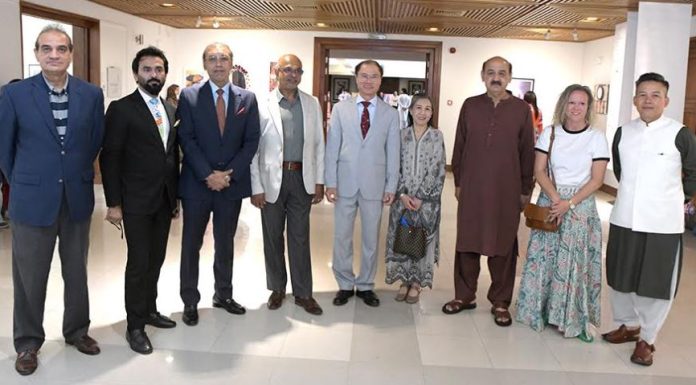
ISLAMABAD: The Rwandan High Commission in Islamabad Ms.Fatou hosted a solemn and poignant reception to mark the 31st anniversary of the genocide against the Tutsi people in Rwanda. The event, held on April 7, 2025, brought together diplomats, dignitaries, and members of the Rwandan community in Pakistan to reflect on the tragic events that occurred in 1994, when an estimated 800,000 Tutsis and moderate Hutus were systematically killed in a span of just 100 days.

Additional Secretary (Africa) Ministry of Foreign Affairs Hamid Asghar Khan was the chief guest. He along with the high commissioner lit candles on the occasion.

The reception also served as a platform for international solidarity. Diplomats from several countries, including the United States, China, and Pakistan, attended the event to express their countries’ support for Rwanda’s post-genocide recovery and its continued efforts in the fight against genocide denial.

The 31st commemoration of the genocide against the Tutsis not only serves as a time to remember the lives lost but also as an opportunity to reflect on the remarkable journey Rwanda has made since 1994. The country has become a symbol of resilience, reconciliation, and nation-building, with its leadership firmly committed to creating a future where such atrocities are never repeated.

Rwanda’s journey is a testament to the power of forgiveness and the importance of building inclusive societies. The Rwandan government continues to work toward national unity through initiatives like the Gacaca courts, which allowed communities to participate in the process of justice and reconciliation, and the National Unity and Reconciliation Commission, which has focused on fostering social cohesion.

As Rwanda continues to forge ahead, its story serves as an inspiration to the world, reminding us that even in the darkest times, hope and renewal are possible.

The reception in Islamabad was a poignant reminder of the resilience of the Rwandan people and the importance of remembering the past to shape a better future for all.

Washington seeks stronger economic partnership with Islamabad

Washington seeks stronger economic partnership with Islamabad

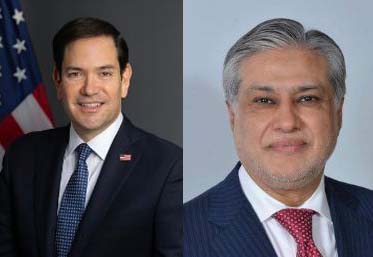
ISLAMABAD, APR 7 /DNA/ – Deputy Prime Minister/Foreign Minister Senator Mohammad Ishaq Dar held a telephone call with US Secretary of State Marco Rubio today. The two leaders discussed bilateral relations, regional security, and economic cooperation.

During the call, DPM/FM Dar reiterated Pakistan’s commitment to strengthening its partnership with the United States. He emphasized the importance of strengthening cooperation in areas such as trade, investment and counter-terrorism.

Secretary Rubio reciprocated the desire to collaborate with Pakistan in trade and investment in various sectors, especially critical minerals. He said that cooperation in economy and trade would be the hall-mark of future relations between the two countries.

DPM/FM Dar highlighted Pakistan’s efforts in successfully fighting terrorism during 2013-18, which caused Pakistan huge economic and human losses.

Secretary of State Rubio also appreciated Pakistan’s efforts in the fight against terrorism and expressed the US desire to further enhance counter-terrorism cooperation.

The two leaders also discussed the situation in Afghanistan. Secretary Rubio agreed on the need to resolve the issue of US Military equipment left behind in Afghanistan.

DPM/FM Dar and Secretary of State Rubio agreed to remain in close contact and to work together to advance the shared interests of both countries.

11th JA Zaman Memorial Golf Championship tees off in Lahore

11th JA Zaman Memorial Golf Championship tees off in Lahore

By our correspondent

ISLAMABAD, APR 7 /DNA/ – The 11th edition of JA Zaman Memorial Open Golf Championship is set to get underway at Gymkhana Golf Club from Tuesday and will culminate on April 13.

Now in its 11th iteration, the JA Zaman Memorial – a PGA and PGF sanctioned event – garners interest of top golfers from across the country. The match has progressed to become one of the most anticipated matchups in the Pakistan golfing calendar with top professional and amateur golfers competing for merited prize money and honors.

The salient features of the 2025 edition are – the top 100 ranked professionals will compete in the main draw for a total purse of PKR 9 million from 10th April to 13th April over 72 holes. Top amateur golfers will compete for glory and honors in victory over 54 holes with the results contributing towards the World Amateur Golf Ranking (WAGR).

A chance to win a Haval Jolion 1.5T for a hole-in-one on designated holes. Seven categories including juniors, senior amateurs, lady amateurs, junior and senior professionals along with the main draw of professional and men amateur golfers makes the tournament one of the most inclusive matches in golf.

Ladies WAGR category to encourage ladies golf in Pakistan with over 30 participants. Live streaming on Youtube of selected holes and live scoring makes for enjoyable viewing as per international standards of golf and 550+ participants make the tournament one of the most popular events in Pakistan golf.

The tournament is held in memory of JA Zaman (late) who was a man of boundless dignity and dexterity. He was a notable entrepreneur and a philanthropist who believed in sharing generously of the good fortune bestowed on him by the Almighty. His family cherish his memory and continue to take inspiration from how he found success and balance in this world and, God willing, the hereafter.

At the press conference to start the event, Hamid Zaman highlighted the passion for golf his late father had which his descendants carry forward in this shape of this tournament. He also thanked the Lahore Gymkhana committee, Taimour Anwar and Aahyan Mumtaz – tournament organizer – for their all-out support in the organisation of the tournament. He also expressed his goal of making this an international tournament in the coming years.

The golf course at Lahore Gymkhana Club is one of the oldest courses in Pakistan tracing its origins to the 19th century. It’s a par-72 championship level 18-hole golf course which is tree lined demanding excellence from start to finish. Star players on the national circuit like Pakistan No 1 Shabbir Iqbal, Ahmed Baig, Matloob Ahmed, Minhaj, Muhammad Alam and Zubair, amongst others, will be competing against one another to see who emerges victorious. The tournament welcomes spectators to watch the play as a part of its inclusive approach towards promoting golf in Pakistan.

ECC approves Rs9bn grant for finance division expenditures

ECC approves Rs9bn grant for finance division expenditures

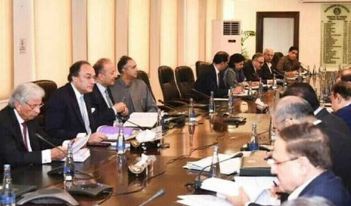
ISLAMABAD, APR 7 /DNA/ – The Economic Coordination Committee (ECC) of the Cabinet met today under the chairmanship of Federal Minister for Finance and Revenue, Senator Muhammad Aurangzeb.

The meeting was attended by several key federal ministers, including Minister for Power, Sardar Awais Ahmed Khan Leghari, Minister for Petroleum, Mr. Ali Parvez Malik, Minister for Commerce, Jam Kamal Khan, and Federal Minister for National Food Security & Research, Rana Tanveer Hussain. Senior officials from various ministries and divisions were also present.

During the meeting, the ECC reviewed and approved several Technical Supplementary Grants (TSGs) for ongoing projects and initiatives from different ministries and divisions. The committee emphasized that, with the fourth quarter of the fiscal year underway, it would closely monitor and prioritize the allocation of future TSGs to ensure efficient utilization of government resources.

Key Approvals from the ECC Meeting:

Rs 9 Billion TSG for Finance Division

The ECC approved a TSG of Rs 9 billion for the Finance Division to address grants, subsidies, and miscellaneous expenditures for the fiscal year 2024-25.

Rs 50 Million TSG for the National Commission for Human Rights

A TSG of Rs 50 million was approved for the National Commission for Human Rights, based on a proposal moved by the Ministry of Human Rights.

Rs 23.434 Billion TSG for Federal Directorate of Immunization (FDI)

The ECC approved a TSG amounting to Rs 23.434 billion (Rs 23.20 billion being the provincial share and Rs 622.36 million being the federal share) for the Federal Directorate of Immunization to support the immunization of over 8 million children under two years of age against 12 vaccine-preventable diseases. This initiative is part of Pakistan’s ongoing commitment to public health.

Rs 1.06 Billion TSG for the Transformation to National Forensic Agency Project

A TSG of Rs 1.06 billion was approved for the timely completion of the ‘Transformation to National Forensic Agency’ project, ensuring it is completed by June 30, 2025.

Rs 264.8 Million TSG for Government Building Maintenance

The ECC granted Rs 264.8 million in TSG for the maintenance and repair of government buildings, with funds allocated for buildings that have been shifted from the Pakistan Public Works Department (PAK-PWD) to the Capital Development Authority (CDA). The CDA has been directed to ensure proper and optimal utilization of these funds.

Rs 3.57 Billion TSG for Jinnah Medical Complex and Research Center Company

The ECC approved a TSG of Rs 3.57 billion to support the establishment of a 1,000-bed academic medical center, featuring centers of excellence, research, and education facilities, to be built by the Jinnah Medical Complex and Research Center Company in the capital.

Rs. 54.5 Billion TSG for the Danish Education Trust

The ECC considered and approved a proposal from the Ministry of Federal Education and Professional Training for a TSG of Rs 54.5 billion to the Danish Education Trust to provide high-quality higher

education to underprivireged students, ensuring academic excellence nationwide.

In conclusion, the ECC reiterated its commitment to advancing important public welfare projects, strengthening infrastructure, and supporting critical sectors including health, education, and forensic services. The committee expressed its focus on ensuring that these resources are utilized effectively for the benefit of the people of Pakistan.

PTI dissociates itself from US Congress bill seeking sanctions against Pakistani officials

PTI

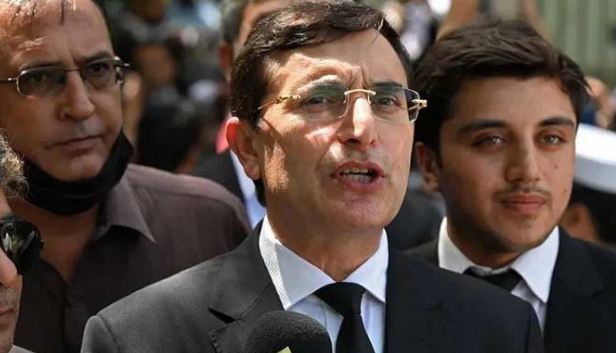
ISLAMABAD, APR 7: Reacting to a bipartisan bill introduced in the US House of Representatives seeking sanctions against Pakistan, PTI Chairman Barrister Gohar Ali Khan clarified on Monday that his party has no connection with legislation in the US Congress.

His comment came after two US lawmakers in the House of Representatives last month sought sanctions against Pakistani state officials via the bill titled ‘Pakistan Democracy Act’ over alleged human rights violations, including the “persecution” of former prime minister Imran Khan”.

The bill aims to invoke the US Global Magnitsky Human Rights Accountability Act, which permits the US to deny visas and entry to individuals accused of committing human rights violations.

Talking to reporters at the Parliament House, Gohar said countless legislations and resolutions are passed in the US Congress, however, the former ruling party has no connection with the said bill.

He also clarified that his party is not in contact with the US delegation that arrived in Pakistan.

The Ministry of Foreign Affairs had brushed aside what was seen as an anti-Pakistan bill introduced in the US House of Representatives and hoped that the US would instead continue its supportive role in strengthening the Pak-US ties.

“We are aware of the bill being introduced in the House of Representatives. This is an initiative of a single individual legislator. We believe the timing and context of the bill do not align well with the current positive dynamics of Pakistan-US bilateral relations based on mutual respect, understanding and non-interference in each other’s affairs,” said the Foreign Office spokesperson Shafqat Ali Khan at a press briefing.

Pakistan remains committed to constitutionalism, rule of law, protection of human rights and freedom of expression because it considers democracy as a vehicle for prosperity and progress as a nation, he added.

To a query regarding PTI-establishment contacts, Gohar gave a vague response, saying he was just as aware of the development as the media.

Some reporters questioned Gohar about the PTI’s next political move. To this, Gohar said that the PTI would finalise its future strategy after forming an alliance with the opposition parties.

He detailed that Jamiat Ulema-e-Islam-Fazl (JUI-F) Chief Maulana Fazlur Rehman will announce his decision on April 15 after consulting his party’s executive committee. The joint opposition will decide on terms of reference for the upcoming anti-government movement.

It is noteworthy to mention here that the Imran Khan-founded party expedited efforts to form a grand opposition alliance to launch an anti-government movement after Eid ul Fitr.

Following Khan’s directives, PTI leaders approached every political party to form a grand opposition alliance and launch an anti-government movement.

In April 2024, the PTI formed the Tehreek-e-Tahaffuz-e-Ayeen-e-Pakistan (TTAP), a multi-party opposition alliance comprising the Sunni Ittehad Council (SIC), Pashtunkhwa Milli Awami Party (PkMAP), Balochistan National Party-Mengal (BNP-M), Jamaat-e-Islami (JI), and Majlis Wahdat-e-Muslimeen (MWM).

Whereas, after talks between the government and the opposition collapsed in January, the PTI made another push to establish a joint front against the ruling coalition by roping in ex-premier Shahid Khaqan Abbasi last month to become part of its movement.

Commenting on the internal rifts among the PTI leadership, Gohar said in today’s media talk that all of them are part of a democratic party which doesn’t stop anyone from expressing opinions.

He, however, advised the PTI leaders to discuss party affairs within the party.

Pakistan-Ethiopia Business Forum set for April 15 in Islamabad

Pakistan-Ethiopia Business Forum set for April 15 in Islamabad

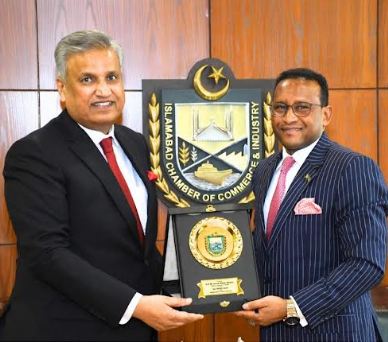
ISLAMABAD, APR 7 /DNA/ – The Islamabad Chamber of Commerce and Industry (ICCI) and the Ethiopian Embassy in Islamabad have agreed to hold a Business Forum at the ICCI on April 15th, 2025, to mobilize traders and investors for the Single Country Exhibition, being organized by the Ministry of Commerce and Trade Development Authority of Pakistan ( TDAP )  in Addis Ababa, Ethiopia, from May 15th to May 17th, 2025.

The decision to this effect was taken during a meeting between H.E. Dr. Jemal Beker Abdula, Special Envoy and Ambassador Extraordinary of the Federal Democratic Republic of Ethiopia (FDRE), and Nasir M. Qureshi, President of ICCI, at the Islamabad Chamber of Commerce and Industry here on Monday.

Both sides discussed various matters of mutual interest, including trade relations between  Ethiopia and Pakistan, and also different modalities to hold a successful business forum on April 15th, 2025 in the Islamabad Chamber.

On the occasion, the Ambassador congratulated President Qureshi on assuming the office of President ICCI and highlighted the strong connection between the Ethiopian Embassy Islamabad and ICCI, recalling their joint initiatives to strengthen trade and investment relations between the two countries.

He briefed the ICCI President about extraordinary business, trade, and investment opportunities in Ethiopia following the successful implementation of homegrown economic reforms in two phases undertaken by H.E. Dr. Abiy Ahmed, Prime Minister of Ethiopia.

The Ambassador said the Government of Ethiopia and the business community in the country are fully prepared to host the traders from Pakistan for the Single Country Exhibition that is coinciding with “Invest In Ethiopia 2025,” a high-level business forum scheduled from May 12th to May 14th 2025 in Addis Ababa.

Welcoming the Ambassador, President Nasir Mansoor Qureshi appreciated the strengthening ties between the two countries and said, “Ethiopia is one of Africa’s fastest-growing economies and offers significant opportunities for Pakistani businesses seeking to explore new markets.”

The ICCI President assured the Ambassador of his full support in further strengthening the bilateral trade relations between the two countries.

The discussions further explored avenues for cooperation in agriculture, trade and commerce, aviation, connectivity, technology, education, and skill development. President Qureshi noted that Pakistan’s industrial strengths and strategic location complement Ethiopia’s role as a gateway to Africa, creating a solid foundation for mutually beneficial partnerships.

He said the ICCI would extend full support to the Ethiopian Embassy and other stakeholders to ensure the Single Country Exhibition in Addis Ababa is successful.

The meeting was also attended by former ICCI President Zahid Maqbool, former Senior Vice President Khalid Chaudhry, Executive Member Mohsin Khalid Malik, and Secretary General Ghulam Murtaza.

PODA advocates for right to health as a constitutional right

PODA advocates for right to health as a constitutional right

Mahnoor Ansar

ISLAMABAD, APR 7 /DNA/ – On World Health Day, PODA Alliance for Rural Women Leadership – Pakistan, representing over 2,000 rural women leaders from 130 + districts, reiterates its call to incorporate right to health in the fundamental chapter of rights of the Constitution of Pakistan.

There is no specific article directly related to right to health in the Constitution of Pakistan. However, Pakistan affirms its commitment to the 2030 Agenda for Sustainable Development by adopting the Sustainable Development Goals (SDGs) as its own national development agenda through a unanimous National Assembly Resolution in 2016. SDG 3 states “ensure healthy lives and promote wellbeing for all at all ages.” In this perspective, it’s obligation of the government to fulfill all indicators described under SDG 3 specifically and Article 38 of the Constitution of Pakistan which safeguards access to healthcare services.

The World Health Organization (WHO) was founded in 1948 with the goal of promoting health, keeping the world safe, and serving the vulnerable. The First World Health Assembly, held that same year, designated April 7 as World Health Day to be celebrated annually starting from 1950. According to WHO the right to health features in approximately three-quarters of the constitutions of the 194 WHO Member States (at least 140).

Focusing on the current theme of World Health Day, Ms. Sameena Nazir, Chief Executive Officer of PODA said “recognizing health as a constitutional right is key to quality healthcare for every mother and newborn. Advocacy, policy reforms, and investment in healthcare infrastructure can make this right a reality.”

The current theme “Healthy Beginnings, Hopeful Futures” highlights the importance of ensuring healthy starts in life. By addressing child marriages and promoting access to healthcare, Pakistan can work towards achieving this goal and creating a brighter future for its citizens, said Sameena Nazir.

PODA is implementing a 3-year project, “Reduce Early Marriages to Enhance Gender Equality,” supported by the Norwegian Embassy in Islamabad. The project acknowledges the link between child marriages and healthcare in Pakistan, aiming to reduce early pregnancy and related health risks for young mothers and their children. A key strategy involves advocating for a uniform law establishing a minimum age for marriage to mitigate child marriages and associated health issues. Building on years of efforts to combat gender-based violence, PODA has been instrumental in educating marginalized communities about reproductive healthcare, enabling them to access better facilities and services to safeguard their basic constitutional rights.

Mirziyoyev, Gillani review progress on bilateral investment plans

Mirziyoyev, Gillani review progress on bilateral investment plans

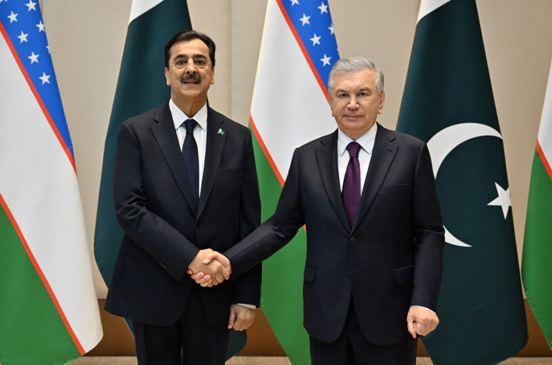
TASHKENT, APR 7 /DNA/ – As part of the 150th anniversary Assembly of the Inter-Parliamentary Union, the President of the Republic of Uzbekistan Shavkat Mirziyoyev met with a delegation from the Islamic Republic of Pakistan, headed by the Chairman of the Senate Syed Yousuf Raza Gillani.

At the beginning of the meeting, the distinguished guest conveyed the sincere greetings and best wishes of President Asif Ali Zardari and Prime Minister Muhammad Shehbaz Sharif to Head of Uzbekistan.

With deep satisfaction, the growing dynamics of the development of Uzbek-Pakistani strategic partnership were noted. The volumes of mutual trade, the number of joint ventures, and direct flights are increasing. Business forums and exhibitions involving leading companies from both countries are regularly held.

Special attention was given to strengthening the role of parliaments in ensuring the effective implementation of agreements reached during the recent historic high-level visit to Uzbekistan.

The importance of accelerating priority projects and programs in the trade-economic, investment, and transport sectors was emphasized, including the promotion of the Trans-Afghan corridor construction, as well as expanding interregional cooperation and humanitarian exchanges.

Stay Connected

64FansLike
60FollowersFollow

Latest Reviews

Exchange Rates

USD - United States Dollar
EUR
1.17
GBP
1.35
AUD
0.72
CAD
0.73