Home Blog Page 626

A War, A Ceasefire, and A Shattered Indian Myth

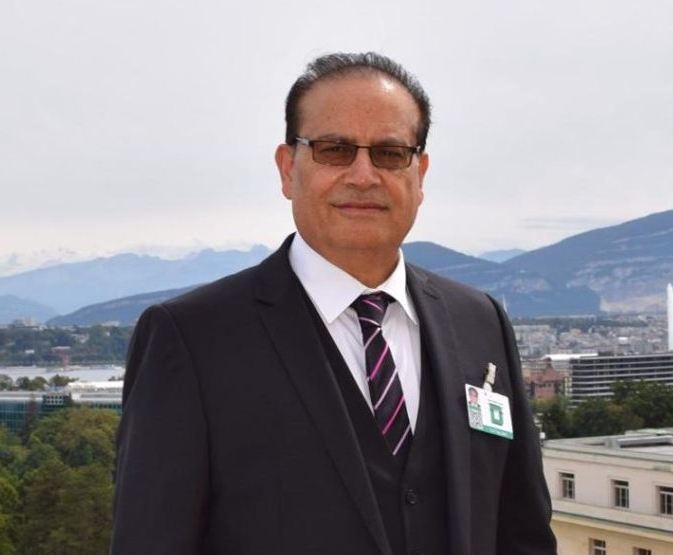
Qamar Bashir

Qamar Bashir

In one of the most consequential military escalations in recent South Asian history, the May 2025 conflict between India and Pakistan concluded not with a decisive proclamation of victory, but with an abrupt and uneasy ceasefire—sought under growing international pressure. Initiated by India under the pretext of retribution for the tragic terrorist attack in Pahalgam, the confrontation ended with Pakistan not only holding its ground militarily, but emerging diplomatically strengthened and strategically vindicated.

CNN’s Nic Robertson, reporting from Islamabad, offered a compelling account of Pakistan’s response to India’s deep airstrikes. He described it as a “relentless barrage of missiles and rockets” launched against Indian military targets across the Line of Control and into mainland India, targeting airbases, depots, and command structures with striking precision. Robertson called it a “calibrated show of strength” that reversed India’s offensive momentum and compelled New Delhi to urgently seek international mediation. His report echoed the sentiment that Pakistan’s counteroffensive had significantly altered the trajectory of the conflict and revealed serious gaps in India’s preparedness.

The ceasefire, brokered with the active involvement of U.S. Secretary of State Marco Rubio and Vice President JD Vance, culminated in a statement from President Donald J. Trump on his Truth Social platform:

“I am very proud of the strong and unwaveringly powerful leadership of India and Pakistan… Millions of good and innocent people could have died… I am proud the USA was able to help you arrive at this historic and heroic decision… Additionally, I will work with you both to see if, after a ‘thousand years,’ a solution can be arrived at concerning Kashmir.”

This marked a rare and notable moment—an American president publicly acknowledging Kashmir as the core issue and proposing to facilitate a long-term solution. For Pakistan, this was a diplomatic breakthrough, bringing to the fore a demand it had made for decades: international engagement on Kashmir. For India, it was an abrupt strategic recalibration, revealing the limits of unilateral aggression and the price of escalation in a nuclear environment.

India’s invocation of the Kashmir issue during back-channel negotiations signaled a significant shift. Having long resisted third-party involvement, India found itself using Kashmir as a bargaining lever to draw Pakistan into accepting U.S.-mediated talks. The irony was not lost on observers: India had inadvertently internationalized the very issue it had always insisted was bilateral.

Public sentiment in India reflected growing disillusionment. Social media platforms were awash with criticism of Prime Minister Narendra Modi and Defence Minister Rajnath Singh. Many accused the government of dragging the nation into a conflict it could neither win nor sustain. A widely circulated post read:

 “You couldn’t protect Indians. You couldn’t avenge their deaths. More Indians died in the crossfire. Why are you still in office?”

Another stated:

 “India was so shocked by Pakistan’s military response, it had to beg Trump for a ceasefire. Don’t provoke a war you can’t manage.”

The backlash highlighted a growing credibility gap between India’s military rhetoric and its battlefield realities. Analysts from leading global outlets offered similar assessments. The Guardian termed the war a “miscalculated gamble” that ended in embarrassment for India. France 24 questioned the performance of India’s Rafale fleet after reports confirmed the downing of three by Chinese-origin jets. Al Jazeera highlighted the precision of Pakistan’s counterstrikes, while the BBC noted how India’s attempt to project strength backfired, leading to diplomatic retreat and external mediation.

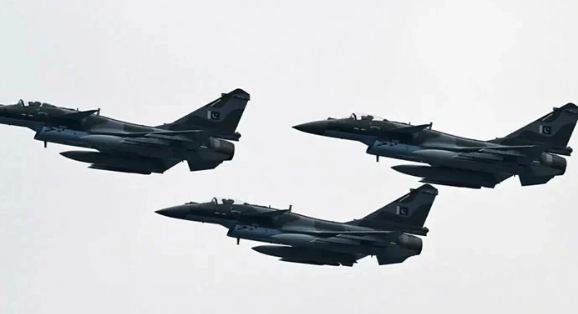
Technologically, the mismatch was stark. Pakistan’s use of Chinese J-10CE and JF-17 Thunder jets, armed with PL-15 long-range missiles, displayed integrated network warfare capabilities. India’s multi-sourced fleet—combining French, Russian, and Israeli platforms—suffered from lack of system-wide coordination. This disparity contributed to India’s failure to repel deep strikes and safeguard critical infrastructure, including forward airbases and missile systems in Adampur.

Estimates from defense correspondents suggest at least five Indian aircraft were downed, including three Rafales. Pakistan’s deep penetration—reportedly 200 km into Indian territory—without interception, further dented the credibility of India’s air defense.

Symbolically, India’s perception as the “net security provider” in South Asia took a serious hit. Its attempt to display dominance instead exposed operational vulnerabilities and forced an unwanted climbdown. Conversely, Pakistan’s firm yet controlled response helped restore deterrence, drew international empathy, and opened diplomatic pathways that had long been closed.

Think tanks responded swiftly. The Council on Foreign Relations noted that “India’s effort to assert dominance has backfired, exposing strategic weaknesses.” The International Institute for Strategic Studies (IISS) observed that “Pakistan has demonstrated battlefield coherence, technological integration, and strategic restraint.”

Within India, the political consequences may be far-reaching. The ruling BJP, already facing domestic challenges, now confronts criticism over its handling of national security. The opposition is likely to seize on the events as a turning point in public confidence, particularly among young voters who have grown increasingly skeptical of nationalist bluster.

Though the war lasted just a few days, its implications will reverberate far longer. Pakistan demonstrated not only its military resolve but also its growing stature as a rational and capable state actor. It forced a reevaluation of strategic assumptions in the region and made clear that peace in South Asia hinges not on rhetoric, but on addressing long-standing disputes—beginning with Kashmir.

The May 2025 conflict has redrawn the strategic contours of the subcontinent. For Pakistan, it was not just a matter of defending its borders, but of asserting its place on the regional and global stage. For India, it was a sobering lesson in the limits of power projection without preparation.

Qamar Bashir

 Press Secretary to the President (Rtd)

 Former Press Minister at Embassy of Pakistan to France

 Former MD, SRBC

 Macomb, Detroit, Michigan, USA
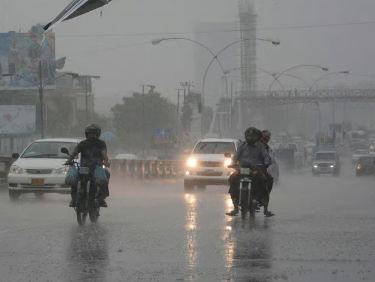
Heavy rain, hailstorm lash parts of Lahore after storm

Heavy rain

Lahore , MAY 11: Following a strong storm in Lahore, various areas experienced heavy rainfall and a hailstorm. The rain, accompanied by thunder and lightning, continued intermittently across the city. Notable areas affected included Mall Road, Abbott Road, Canal Road, Kalma Chowk, Gulberg, and Barkat Market.

  • Strong winds and overcast skies bring relief in Kharian, surroundings –

Strong winds swept through Kharian and its surrounding areas, with thick clouds covering the sky.
The intensity of the heat dropped significantly, bringing pleasant and cooler weather conditions.

“Beyond the Plastic Waste” conference to mark World Environment Day on June 3

“Beyond the Plastic Waste” conference to mark World Environment Day on June 3

ISLAMABAD, MAY 11 /DNA/ – Development Communications Network (Devcom-Pakistan) and partners has scheduled a conference titled “Beyond the Plastic Waste” on June 3 under its annual flagship event “Pakistan Environmental Awards and Conference of Best Practices”. The event marks World Environment Day more meaningfully with a thematic conference and appreciation awards for the good work.

The conference will include the high-level inaugural panel on “Plastic-Waste: From Pollution to Solution”. Other two sessions will focus on “Single-use Plastics: Sustainable Consumption, Production and Alternatives”, and “The Waste Business: 3Rs and Integrated Resource Recycling (IRR)”. The Second Pakistan Environmental Awards will also be conferred upon for some of the best practices promoted under the Corporate Social Responsibility (CSR), Corporate Environmental Compliance (CEC), and environmental conservation projects by the nongovernmental sector. Some individuals and media-persons will also be awarded for their good work.

Devcom-Pakistan Executive Director Munir Ahmed said: “By beating the plastic pollution, together we can create a healthier future for the planet earth. This year’s World Environment Day theme reminds us of our collective responsibility. This year’s World Environment Day comes exactly two months before countries meet again to continue negotiating a global treaty to end plastic pollution. Led by the United Nations Environment Programme (UNEP), and held annually since 1973, it has grown to be the largest global platform for environmental outreach. It is celebrated by millions of people across the world. The Republic of Korea will host World Environment Day 2025 with a focus on ending plastic pollution globally. Ridding the planet of plastic pollution is an important contribution to achieving the Sustainable Development Goals, including those on climate action, sustainable production and consumption, protection of seas and oceans and repairing ecosystems and retaining biodiversity.”

Ahmed said: Plastic pollution permeates every corner of the planet – even in our bodies in the form of microplastics. World Environment Day 2025 calls for collective action to tackle plastic pollution. Pakistan faces a significant challenge with plastic pollution, impacting both its terrestrial and aquatic ecosystems. Annually, the country generates approximately 3.9 million tonnes of plastic waste, with around 70% of this waste being mismanaged—either dumped in open spaces, burned, or ending up in water bodies. A substantial portion of this mismanaged plastic waste finds its way into the Indus River system. Each year, over 164,000 tonnes of plastic waste are transported by the Indus River to the Arabian Sea, posing severe threats to marine ecosystems. Studies have identified the Indus as one of the most plastic-polluted rivers globally, with plastic constituting approximately 40 percent of the total solid waste found in the river and along its banks.”

In response to this escalating crisis, Pakistan has initiated several measures. The government has implemented the Single-Use Plastics (Prohibition) Regulations, 2023, aiming to curb the production and use of single-use plastic items. Additionally, the Living Indus Initiative’ seeks to establish ‘zero plastic waste’ cities along the Indus River, targeting major urban centers like Karachi, Lahore, and Islamabad.

Munir Ahmed said: “Despite these efforts, the effectiveness of such regulations is often hindered by challenges in enforcement and public awareness. The persistent increase in plastic consumption and inadequate waste management infrastructure underscore the need for comprehensive strategies, including public education, improved waste collection systems, and the promotion of sustainable alternatives to plastic. By drawing inspiration from nature and showcasing real-world solutions, the conference will encourage individuals, organizations, industries, and governments to adopt sustainable practices that drive systemic change.” For participation, the interested ones may contact on [email protected].

Pakistan must recalibrate geopolitical strategy to navigate multipolar world: Experts

Pakistan

ISLAMABAD, MAY 11 /DNA/ – As the global order transitions toward multipolarity amid growing regional rivalries and non-traditional security threats, Pakistan must adopt a unified, clear-headed national approach to leverage its enduring geopolitical relevance. This demands balanced strategic recalibrations in relations with established and emerging global powers, supported by a comprehensive vision rooted in economic and military resilience, and internal cohesion. Key priorities include decolonizing prevailing knowledge systems, crafting an inclusive national narrative, and responding to ideological divides and the growing challenges of information warfare.

These views were expressed during a seminar, “Pakistan in a New Age of Geopolitics,” held at the Institute of Policy Studies (IPS), Islamabad, alongside the launch of “Geopolitics: Frameworks and Dynamics in a Multipolar World,” authored by Aneela Shahzad and published by IPS, which offers insights into challenges and opportunities for fostering balanced ties between nations.

The event had a keynote address by Ambassador (r) Sardar Masood Khan, former president AJK, who was joined by Ambassador (r) Naghmana Hashmi, Dr Nazir Hussain, former dean social sciences, University of Wah, Dr Khurram Iqbal, associate professor, National Defence University, Dr Adam Saud, dean humanities and social sciences, Bahria University, Brig. (r) Said Nazir, defense analyst, Brig. (r) Dr. Tughral Yamin, IPS associate, Khalid Rahman, chairman IPS, Ambassador (r) Syed Abrar Hussain, vice chairman IPS, and Aneela Shahzad.

Amb (r) Masood Khan underscored Pakistan’s historical security dependence on the US while noting the country’s growing strategic reliance on China. While acknowledging the perception that Pakistan seeks balance between these two powers, he argued that true equilibrium is difficult without developing proportional ties with the US. He described Pakistan’s conflict with India as civilizational, rooted in the ideological stance of the BJP and RSS, and called for strengthening military and economic capabilities and forging a unified national identity.

Building on this perspective, Amb (r) Naghmana Hashmi reinforced the importance of sincere, unwavering ties with China while maintaining multi-tiered engagement with the US. She emphasized that Pakistan’s deepening partnership with China would come under increasing pressure and must be managed carefully.

Dr Khurram Iqbal questioned Pakistan’s binary worldview centered on the US-China rivalry and called for policy adjustments that reflect a truly multipolar reality. He noted that alternative global alignments are already taking shape and must be acknowledged in Pakistan’s foreign policy.

Turning attention to the regional dimension, Aneela Shahzad elaborated on her concept of the AfPakKash subregion, comprising Afghanistan, Pakistan, and Kashmir, arguing that its trajectory would shape the future of South Asia. She cited China’s Belt and Road Initiative as a key factor transforming the region’s economic landscape.

Dr Nazir Hussain highlighted the dominance of Western paradigms in South Asian academic discourse and called for decolonizing knowledge systems and re-evaluating theories through indigenous frameworks. He asserted that Pakistan’s geopolitical relevance is enduring, which explains sustained attempts by global powers to influence its direction through international institutions.

Adding to the theme of shifting global dynamics, Dr Adam Saud pointed to emerging global trends, including the rise of non-state actors, populism, information warfare, and shifting economic tools like tariffs and sanctions. These, he said, mark the features of a world in flux that demands fresh analytical frameworks.

Further emphasizing the need for strategic depth, Said Nazir stressed that an in-depth understanding of geopolitics is vital, as it serves as both a strategic strength and vulnerability. He pointed to India’s persistent belligerence as a destabilizing factor in the region.

Echoing concerns about global realignments, Dr Tughral Yamin observed that the West’s retreat from multilateralism and its aggressive policy shifts reflect an attempt to preserve dominance in a multipolar context. He emphasized the need for alternative narratives and alliances rooted in local experiences.

Amb (r) Abrar Hussain highlighted Pakistan’s geographic advantage for cross-regional connectivity. He said managing the growing US-China rivalry through a delicate strategic balance is crucial for Pakistan’s long-term geopolitical relevance.

Khalid Rahman concluded the session by noting that while the constants of geopolitics remain, the variables are rapidly changing. He warned against narrow strategic thinking and urged bridging the growing divide between public sentiment and elite decision-making.

Participants lauded Aneela Shahzad’s book for its intellectual depth, clarity, and bold challenge to Western-dominated perspectives on global affairs. It equips readers, particularly in Pakistan, with the conceptual tools needed to critically interrogate power, territory, identity, and influence, not as dictated by external forces but as shaped by local realities.

India caught off guard by Pakistan’s hardware, technical edge: UK expert

India

LONDON, MAY 11: British security and defence analyst Professor Michael Clarke remarked on Saturday that Pakistan may have caught India off guard with the strength of its military hardware and technical capabilities, The News reported, citing Sky News.

In an interview with British news outlet, Clarke stated that India would likely view Pakistan’s display of strength as a sign of risk-taking.

“The Indians might have been surprised by the hardware that the Pakistanis brought to bear,” he said, “because as we’re now discovering they’ve used quite a lot of their Chinese-based technology, and the attention at the moment is focused on the J-10 fighter.”

Clarke added that it appeared one of Pakistan’s J-10 jets may have downed a Rafale, one of the French-made fighter aircraft in India’s arsenal. “And undoubtedly,” he continued, “the Pakistanis have used their HQ-9, anti-aircraft missiles, which again may have been rather effective.”

“So I think the Indians might have been surprised by the technical abilities that Pakistan seems to have absorbed with their Chinese equipment, but they won’t have been surprised by the bellicosity of [Gen Asim] Munir because they rather expected that,” he further added.

He also said that partly, India’s response has been to try to, as it were, teach (Gen) Munir a lesson that they really are prepared to do whatever it takes, and indeed they’ve deployed a carrier battle group of their Western fleet.

“It’s sitting only 300 miles off Karachi, which is a sort of threat to go in for a more general war, unless the Pakistanis found a way of backing down from this position. Unfortunately, the international community has given them a line that they can both top out at.”

He said both sides have agreed to a ceasefire which has been pushed so hard and, to its credit, by the Trump administration and US Secretary of State Marco Rubio. However, he said, they (the US administration) were rather late in getting on this, as this thing had been going on since Tuesday but now it seems their words have made a difference.

US President Donald Trump said on Saturday that India and Pakistan had agreed to a “full and immediate ceasefire” after a fourth day of strikes and counter-strikes against each other’s military installations.

Pakistan’s foreign minister also said both countries had agreed to a ceasefire “with immediate effect” and India’s foreign ministry said it would start at 5pm Indian time (1130 GMT).

The latest escalation in the decades-old Pakistan-India rivalry began on May 7 when at least 31 civilians were killed in an unprovoked Indian cross-border attack. In retaliation, Pakistan downed five IAF fighter jets, including three Rafale, and dozens of drones.

Shortly after the attack on the Pakistani airbases in the wee hours of Saturday, the Pakistan army launched its counter-attack in direct response to continuous provocations by India.

In a major success for the Pakistan Air Force (PAF), hypersonic missiles fired by JF-17 Thunders destroyed India’s S-400 system at Adampur airbase, security sources said. The airbase was also hit during the strike.

The S-400 air defence system is worth around $1.5 billion, considered India’s most advanced air defence shield.

Middle class surge, youth: Pakistan’s quiet revolution

Middle class surge, youth: Pakistan’s quiet revolution

Ambassador of Hungary Béla Fazekas reflects on his tenure in Pakistan

Exclusive

Ansar Mahmood Bhatti

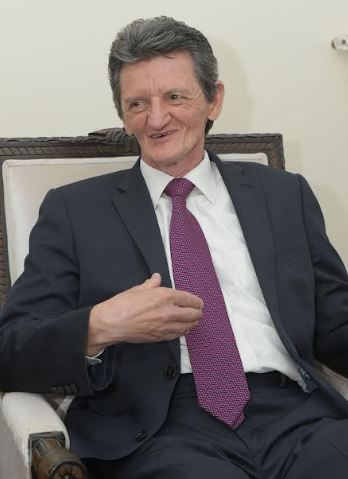
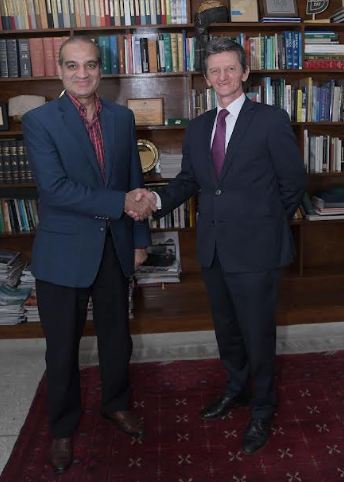
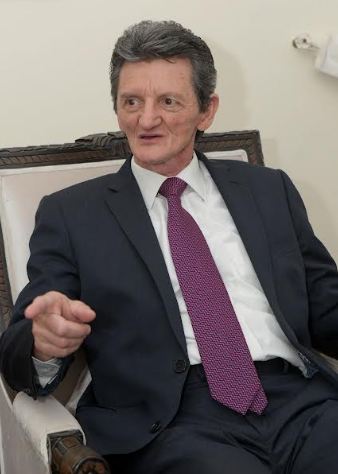
ISLAMABAD – In a rare and insightful interview after nearly five years, Hungary’s Ambassador to Pakistan, H.E. Béla Fazekas, sat down with Centreline, Daily Islamabad POST, and Diplomatic News Agency (DNA) to share reflections on his diplomatic journey, Pakistan’s transformation, and the evolving bilateral ties between Hungary and Pakistan. Ambassador Fazekas is currently serving his second term in Islamabad, which is set to conclude in June 2025.

Witness to a Nation’s Transformation

Reflecting on his nearly decade-long association with Pakistan, Ambassador Fazekas described his experience as deeply personal and transformative. “You not only witness the history of this country but become a part of it,” he said. “Pakistan became a part of me—its challenges and values have left a mark on my personality. I’ve become more open and aware of issues I once took for granted—like climate resilience, women’s empowerment, and mercy in the Shakespearean sense.”

Changing Perceptions and Rising Potential

Since his first posting in 2005, the Ambassador has seen tremendous change. “You cannot step into the same river twice, and similarly, you cannot arrive twice in the same country,” he remarked. “The most visible shift has been the rise of an affluent middle class, which is now driving a burgeoning service sector. Simultaneously, a connected and aware youth—empowered by social media—is forging bonds with their global peers.”

However, he lamented that outdated stereotypes still cloud foreign perceptions of Pakistan. “These perceptions often linger even after their truths fade. But the reality I’ve experienced is vastly different,” he said, recalling how Pakistan was once viewed as a non-family duty station. “I came here with my family and two young children—they loved it. They still return to visit and cherish their time here.”

He highlighted the global recognition brought by Pakistani athletes as a powerful force for changing perceptions. “When Arshad Nadeem won the silver medal in Budapest at the 2023 World Athletics Championship, he made Pakistan proud. And when he clinched gold at the Paris Olympics a year later, he reshaped global associations with Pakistan more effectively than any diplomat could.”

The Heart of Pakistan: Culture, Values, and Hospitality

Ambassador Fazekas praised the moral fabric of Pakistani society. “There’s a deep-rooted cultural principle to help those in need. Unlike some other countries in the Global South, I’ve never heard of anyone dying of hunger in Pakistan. Perhaps it’s linked to the Islamic principle of almsgiving, but whatever the reason, it adds to the deep respect I hold for the people here.”

On hospitality, he was equally appreciative. “Guests are treated with genuine warmth and respect. I’ve experienced this consistently—more often than in any other country I’ve served in.”

Strengthening Hungary-Pakistan Ties

Highlighting key milestones in bilateral relations, Ambassador Fazekas emphasized the role of “soft power diplomacy” and people-to-people connections. “My greatest discovery was learning that our ties with this region go far beyond our 60 years of diplomatic relations, which we’ll celebrate in 2025.”

He spoke of uncovering forgotten Hungarian contributions to the subcontinent, particularly in Lahore. “Hungarian professors, doctors, and orientalists left intellectual footprints here in the 19th and early 20th centuries. For instance, the University of the Punjab owes much of its early foundation to Hungarian academics, something even current students are unaware of.”

The embassy’s cultural initiatives—such as the publication of a Punjabi-language collection of poems by Hungarian national poet Sándor Petőfi—have resonated strongly with the younger generation.

In the realm of formal diplomacy, Ambassador Fazekas noted several “first ever” events during his tenure. “We hosted the first-ever visit of a Hungarian foreign minister to Pakistan and later, the first-ever Pakistani foreign minister to Hungary. Today, these exchanges are so frequent, they’ve become ‘business as usual.’”

Looking Ahead

As Ambassador Fazekas prepares to conclude his term in 2025, his words reflect a deep appreciation for Pakistan and optimism about the future of bilateral ties.

“The roots are strong, the potential is vast, and with continued engagement—especially through cultural diplomacy and youth connections—I believe Hungary-Pakistan relations will only grow stronger in the years to come.”

Heartfelt congratulations to the people of Pakistan

Heartfelt congratulations to the people of Pakistan

In recent days, our defence has become our uniting flame,
A testament to the strength that bears our nation’s name.


With sleepless nights and tireless might,
Our guardians stood firm restoring hope, restoring light.


Their wisdom deep, their vision wide,
They’ve led us with unwavering pride—


Not just in arms, but with resolve so grand,
They’ve steadied the course of this beloved land.


Let us salute General Syed Asim Munir,
And every soul who stood sincere.


You’ve made each heart beat bold and loud—
You’ve made every Pakistani proud.


Forever may you shine, O land of grace,
Pakistan Hamisha Zindabad—forever in the highest place.

Imran Ghaznavi

Neglected dreams: G-14/1 still awaits development

Neglected dreams: G-14/1 still awaits development

Plot owners have now appealed to the Supreme Court of Pakistan and relevant authorities to take urgent suo motu notice of the matter. They argue that the issue should be treated not merely as a matter of development but one of justice and equity. After paying full dues and fulfilling all requirements, they deserve timely possession — or at the very least, a concrete timeline and action plan

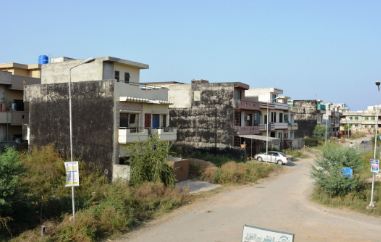
ISLAMABAD, MAY 11 /DNA/ – Sector G-14, a residential sector of Islamabad announced in 2004 under the Capital Development Authority (CDA), remains a symbol of chronic administrative neglect and failed urban planning. Of its four sub-sectors — G-14/1, G-14/2, G-14/3, and G-14/4 — only the latter three have seen partial development over the past two decades. G-14/1, however, continues to remain in limbo, largely due to illegal encroachments and a persistent lack of political will to address the issue.

The sector, meant to accommodate federal government employees through the Federal Government Employees Housing Authority (FGEHA), was a beacon of hope for thousands of allottees. Many invested their life savings with the dream of owning a home in Islamabad. Two decades later, that dream remains unfulfilled for many — and tragically, several allottees have passed away while waiting for possession of their plots in G-14/1.

The key obstacle in the development of G-14/1 has been the failure to vacate the illegally occupied land. Despite repeated efforts, FGEHA and CDA have failed to remove the encroachments and initiate development. The presence of unauthorized constructions — often built with the implicit support of local influential groups — has not only stalled progress but also made legal allottees suffer in silence.

During the tenure of Prime Minister Imran Khan, an anti-encroachment operation was finally launched with high hopes. Bulldozers rolled into the area, and initial action signaled a shift towards reclaiming the long-stalled land. However, the operation was abruptly halted, allegedly due to political pressure. Sector G-14/1 fell within the constituency of former minister Asad Umar, and residents claim that political interference led to the discontinuation of the operation. This decision dashed hopes and reinforced the perception that ordinary citizens’ rights are secondary to political expediency.

Unfortunately, the current government has done little to change the status quo. While plots in G-14/2, 3, and 4 have seen infrastructure development — including roads, sewerage systems, and partial possession — the complete silence over G-14/1 continues to frustrate the affected families. The absence of accountability within the FGEHA and a lack of commitment by elected representatives have left residents feeling abandoned.

For many plot owners, this issue is more than just an administrative delay — it’s a matter of human rights. Every citizen has the right to shelter, and for many government servants who have retired and waited for years, it’s a violation of dignity to be denied what is rightfully theirs. The mental anguish, financial burden, and emotional distress suffered by these families cannot be overstated.

Plot owners have now appealed to the Supreme Court of Pakistan and relevant authorities to take urgent suo motu notice of the matter. They argue that the issue should be treated not merely as a matter of development but one of justice and equity. After paying full dues and fulfilling all requirements, they deserve timely possession — or at the very least, a concrete timeline and action plan.

Civil society activists also point out that Islamabad, as the federal capital, should set an example in transparency, rule of law, and planned urban growth. The continued failure to develop G-14/1 tarnishes this image. When powerful land grabbers can stall state-backed development for over 20 years, it sends a damaging message to investors and citizens alike.

Plot holders have also demanded that if FGEHA cannot resolve the matter, the land be taken over by the CDA for expedited action, or that they be offered alternative plots in already developed sectors. At the very least, the state owes these citizens clarity and assurance.

The plight of G-14/1 must not be allowed to become another forgotten file in the corridors of bureaucracy. It is a litmus test for the government’s sincerity in addressing citizens’ concerns. For the many families still holding on to hope, the time for action is now. Bureaucratic red tape, political maneuvering, and institutional apathy have stolen two decades from their lives — they can’t afford to wait any longer.=DNA

President Zardari hails military’s “befitting reply” to Indian aggression

President Zardari hails military's

ISLAMABAD, MAY 10 /DNA/ – President Asif Ali Zardari, on the ceasefire between Pakistan and India, has reaffirmed his faith in Pakistan’s armed forces, lauding their befitting response to Indian aggression and defending the nation’s sovereignty.

“I have always had faith in the armed forces of Pakistan—the army, navy, and air force,” the President said. “Their response to the aggressor India has been befitting, and we have severely dented their so-called military might.”

President Zardari stated that the bravery and resolve demonstrated by Pakistan’s armed forces is a testament to the strength derived from the Two Nation Theory and the country’s unshakeable faith in Allah. “As an Islamic state, our belief gave us the courage and the strength to stand against a country five times our size,” he noted.

The President extended his heartfelt congratulations to the Chief of the Army Staff, General Syed Asim Munir; the Chief of Air Staff, Air Chief Marshall Zaheer Ahmed Babar Sidhu; the Chief of Naval Staff, Admiral Naveed Ashraf, and all fighting arms of the military, whose restless efforts and bravery led to this victory. “The nation must jubilate, and also pray for those who embraced Shahadat,” he said.

Reiterating Pakistan’s principled stance, the President emphasized that enduring peace in South Asia hinged upon the just and final resolution of the Jammu and Kashmir dispute in accordance with the relevant UN Security Council resolutions, besides resolving other outstanding issues with India, particularly the Indus Waters Treaty.

President Zardari also expressed gratitude to all friendly countries, including the USA, Turkey, the Kingdom of Saudi Arabia, Iran, and especially China who stood with Pakistan in an hour of turbulence.

Reaffirming Pakistan’s commitment to peace, the President stated, “Pakistan seeks peace, not provocation. But we will never compromise on our sovereignty.”

Greece welcomes Pakistan-India ceasefire in talks with FM Dar

Greece welcomes Pakistan-India ceasefire in talks with FM Dar

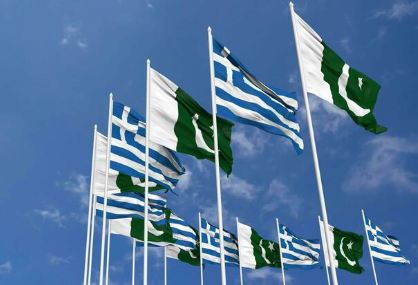
ISLAMABAD, MAY 10: /DNA/ – Deputy Prime Minister/Foreign Minister, Senator Mohammad Ishaq Dar @MIshaqDar50, spoke with Foreign Minister of Greece, Giorgos Gerapetritis, who welcomed the ceasefire understanding between Pakistan and India. The DPM/FM reaffirmed Pakistan’s commitment to peace & security in the region and beyond.

Both sides agreed to remain in close contact and to work together in multilateral fora as non-permanent members of the UNSC.

Stay Connected

64FansLike
60FollowersFollow

Latest Reviews

Exchange Rates

USD - United States Dollar
EUR
1.17
GBP
1.35
AUD
0.72
CAD
0.73