Home Blog Page 625

A right time to redefine a new political order

Comment

Ansar M Bhatti

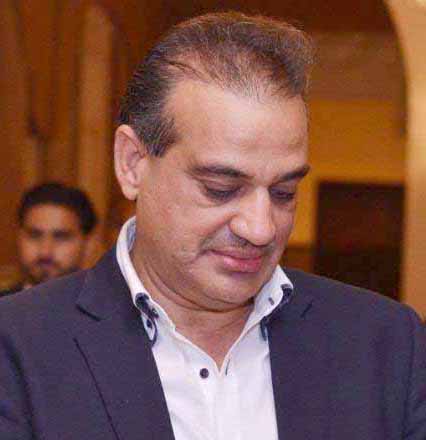
With a fragile ceasefire now in place between Pakistan and India after a brief but intense exchange of hostilities, there lies an opportunity—perhaps a rare one—for deep introspection, particularly within Pakistan’s own political structure. While the military has once again proven its capability to respond effectively to external aggression, the short conflict also highlighted an equally vital element: the importance of internal political harmony in matching enemy threats and maintaining national cohesion.

The recent crisis underscored that a nation’s strength lies not just in its military prowess but in the unity and clarity of its political direction. In this moment of post-conflict reflection, it is imperative that Pakistan reconsiders and, where necessary, redefines its internal political order for the greater national good. The current system, marred by division, mistrust, and selective justice, needs urgent repair if Pakistan is to move forward as a stable and resilient state.

At the core of this needed transformation is the principle that the country’s interest must be kept paramount over individual egos and political grudges. Pakistan’s turbulent recent history—punctuated by political witch hunts, selective accountability, and the marginalization of key political players—has weakened its democratic institutions and undermined the people’s confidence in the political process.

It is time to ensure a level playing field for all political parties, including Pakistan Tehreek-e-Insaf (PTI), which despite its contentious relationship with state institutions, remains one of the most popular political forces in the country. Whether one agrees or disagrees with PTI’s policies or rhetoric, it is undeniable that millions of Pakistanis see the party, and particularly Imran Khan, as their chosen representatives. Ignoring or suppressing this political reality not only risks further instability but also damages the democratic fabric of the state.

The need for redefining relations with PTI is not merely about appeasement; it is about practical statesmanship. In the recent conflict, PTI’s social media apparatus—often labeled as a thorn in the side of the establishment—surprisingly showed maturity by rallying behind the military in the face of foreign aggression. This gesture of unity, despite underlying grievances, deserves recognition and reciprocation. Political inclusivity, rather than exclusion, will strengthen the country’s ability to present a unified front both domestically and internationally.

One significant step toward healing would be the release of Imran Khan from jail, not as a concession, but as a step toward greater political harmony. If the establishment were to support this move, it could gain public respect and demonstrate a commitment to genuine democratic values. In return, it is expected—reasonably so—that Imran Khan would also demonstrate statesmanship by adjusting his political strategy to the ground realities and working toward establishing a functional relationship with the establishment for the good of the country.

There is an old saying: “Never waste a good crisis.” The war, unfortunate as it was, created space for internal realignment. The existential threat from across the border forced various political actors to see beyond their narrow agendas and realize that Pakistan’s survival and prosperity depend on unity, not division. This moment should not be wasted. Political reconciliation now could lead to a stable future.

The possibility of early, free, and fair elections in which all political parties, including PTI and Imran Khan, are allowed to participate without hurdles, may offer a viable path toward political stability. The international community, investors, and even Pakistan’s own citizens are watching closely. They want to see whether Pakistan is ready to chart a new course that puts democracy, transparency, and inclusion at the forefront.

Pakistan’s enemies had hoped to exploit our divided political landscape and fraying national fabric. The attempted incursions and strikes were not just acts of war—they were a test of our internal strength. That test has revealed our vulnerabilities, but also our potential. We have seen that, even in a politically fractured environment, a spark of unity can ignite collective strength.

However, let’s not be under any illusions: economic recovery and long-term national strength cannot be achieved in a politically unstable environment. Wars are fought—and won—by nations with robust economies, resilient institutions, and united populations. Pakistan’s current economic state is dire. Inflation is sky-high, foreign reserves are dwindling, and the IMF continues to dictate terms. Without political stability, there can be no investor confidence, and without investment, there can be no sustainable growth.

Thus, better sense must prevail—among all stakeholders. The establishment must realize that its role is to support, not steer, the democratic process. Political parties must understand that rhetoric alone cannot replace governance, and mutual respect is the foundation of lasting cooperation. The judiciary, media, and civil society must also play their part in fostering accountability without bias.

In conclusion, this is not just a political moment—it is a national one. A time to look beyond individual ambitions and work collectively for the survival and success of Pakistan. The war may have been short-lived, but its message was clear: a divided nation is a vulnerable one. Let us not wait for another crisis to teach us the same lesson.

Pakistan today stands at a crossroad. One path leads to reconciliation, reform, and resurgence. The other, to continued polarization, economic decay, and eventual collapse. The choice, as always, lies in the hands of those who lead us—but the consequences will be borne by every citizen of this country.

It is indeed the right time to redefine a new political order—before it’s too late.
Dialogue without deadlines: A fragile hope for peace in Ukraine

Dialogue without deadlines: A fragile hope for peace in Ukraine

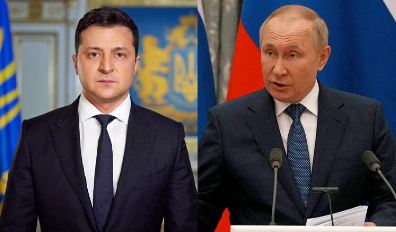
Russian President Vladimir Putin’s recent announcement expressing willingness to engage in dialogue with Ukraine marks a significant moment in the ongoing war. After more than two years of brutal conflict, the Kremlin’s indication that it may be open to negotiation offers a glimmer of hope for a war-weary region and a concerned international community. Yet, this potential shift towards diplomacy comes with a caveat — there is still no confirmed date or framework for a ceasefire, casting doubt over the sincerity and immediacy of this overture.

Equally important is the response from Kyiv. Ukrainian leadership has shown readiness to participate in talks and has voiced support for a cessation of hostilities. President Volodymyr Zelensky and his administration have consistently maintained that peace must be achieved through meaningful dialogue, though not at the cost of Ukraine’s sovereignty or territorial integrity. The current posture from both sides suggests that diplomacy, long overshadowed by guns and missiles, may once again be on the table.

However, optimism must be tempered by caution. Russia’s previous signals toward diplomacy have often been contradicted by actions on the ground. The lack of a declared ceasefire or even a date for beginning talks makes it difficult to assess how serious Moscow truly is about ending the conflict. Without a concrete timeline or conditions, the announcement risks being little more than a political maneuver to relieve international pressure or manipulate the narrative ahead of global summits.

For Ukraine, the stakes are equally high. Any negotiations must ensure that the sacrifices of its people are not in vain and that peace does not come at the cost of unjust concessions. Ukraine’s insistence on a full withdrawal of Russian forces and the restoration of its territorial boundaries remains central to any future settlement.

The international community must play a constructive role in this critical moment. Western powers, including the EU and the U.S., should encourage dialogue while also ensuring that any peace process is grounded in international law and justice. Neutral countries and international organizations such as the UN could help broker and monitor discussions to ensure transparency and fairness.

In conclusion, while Putin’s announcement and Ukraine’s willingness to engage in dialogue represent a step away from confrontation, peace remains elusive until both sides commit to an immediate and verifiable ceasefire. Words alone cannot end wars — only actions can. The world watches and waits, hoping that this moment marks the beginning of the end of a devastating chapter in European history.

Trump’s Kashmir mediation offer: A diplomatic mirage

Trump’s Kashmir mediation offer: A diplomatic mirage

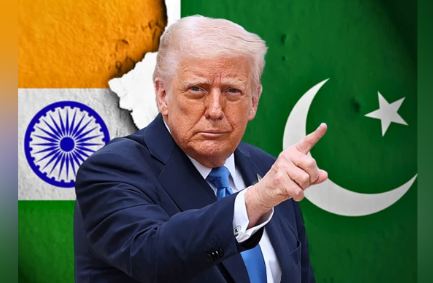
U.S. President Donald Trump’s recent remarks offering to mediate on the Kashmir issue between India and Pakistan should be taken with a healthy dose of skepticism. Known for his frequent flip-flops and unpredictable statements, Trump’s latest intervention appears more like a calculated geopolitical maneuver than a genuine peace initiative.

The timing and tone of his comments raise eyebrows. When India launched aggressive military actions against Pakistan, the U.S. maintained a deafening silence, brushing the conflict aside as an internal matter. Yet, when Pakistan responded, and it became increasingly evident that India was facing a significant challenge on the battlefield, Trump suddenly emerged as a peacemaker. This shift indicates not a balanced concern for peace but rather a strategic alignment favoring India.

It is no secret that the U.S. has deepened its ties with India over recent years. From defense deals to economic partnerships, Washington views New Delhi as a crucial counterbalance to China in the Indo-Pacific region. Trump’s statement, therefore, seems less about resolving the long-standing Kashmir dispute and more about protecting a key ally from military embarrassment.

The selective nature of U.S. engagement in South Asia underscores the growing perception that Washington is far closer to New Delhi than to Islamabad. This dynamic was evident in the way Trump’s administration framed the narrative — downplaying Indian aggression and highlighting the need for restraint only when Pakistan asserted itself.

Despite the dubious motivations behind Trump’s offer, the broader idea of a ceasefire deserves attention. Both India and Pakistan are nuclear-armed nations with a history of conflict and mistrust. Escalations like the recent flare-up not only threaten regional stability but also global security. A ceasefire, therefore, is not merely a tactical pause but a crucial step towards de-escalation and dialogue.

For peace to be sustainable, however, it must be built on mutual respect, genuine diplomacy, and a commitment to resolving core issues like Kashmir — not on opportunistic interventions by external powers with vested interests. Any mediation that lacks neutrality or fails to consider the aspirations of the Kashmiri people is doomed to fail.

In conclusion, while Trump’s offer may have grabbed headlines, it is unlikely to change the geopolitical equation in South Asia. It serves more as a reminder of the U.S.’s strategic priorities than as a credible step toward peace. That said, both India and Pakistan must recognize the danger of further conflict and commit to upholding the ceasefire — not for the sake of global spectators, but for the future of their own people.

BY ANSAR M BHATTI/DAILY ISLAMABAD POST

Pakistan armed forces fulfilled its promises

Pakistan armed forces fulfilled its promises

says it was demonstration of only a few of our capabilities

DNA

ISLAMABAD, MAY 11: Addressing a press briefing, DG ISPR Lt Gen Ahmed Sharif Chaudhry said the presser was aimed to apprised the nation on the conduct and conclusion of ‘Operation Bunyan-um-Marsoos’ — a military campaign launched in response to Indian aggression that began on the night of May 6 and 7, resulting in the loss of civilian lives, including women and children.

He noted that Pakistan had pledged justice and retribution for the reprehensible Indian military strikes and brutal civilian casualties. “Pakistan armed forces have fulfilled the promise that made to our people.”

THE Director General of the Inter-Services Public Relations (DG ISPR) emphasized that Pakistan exercised considerable restraint and professionalism during its response to Indian aggression. He clarified that only a limited portion of Pakistan’s military capabilities were employed, showcasing the country’s desire to avoid escalation and maintain regional peace.

“Our response was calibrated and proportionate,” said the DG ISPR. “We deliberately targeted only military installations to send a clear message: Pakistan has the capability and the will to respond, but it does not desire war.”

He noted that even Indian military officials had acknowledged that the Pakistani strikes hit military targets and avoided civilian casualties. This, he said, demonstrated Pakistan’s commitment to international norms and responsible conduct during conflict.

The DG ISPR further revealed that it was India that ultimately sought a ceasefire, recognizing the intensity and precision of Pakistan’s response. He underlined that Pakistan’s military did not wish for further escalation but was fully prepared to respond to any aggression.

Pakistan Air Force (PAF) officials described the technical and tactical aspects of the aerial engagements, highlighting the high level of preparedness and professionalism displayed by PAF pilots. They shared declassified footage of the operation to demonstrate how targets were carefully chosen and successfully hit without crossing the Line of Control (LoC).

Pakistan Navy officials discussed their state of readiness and deployment during the standoff, noting that naval assets had been mobilized in anticipation of any potential maritime escalation. They reiterated that the Navy was fully prepared to respond to threats from the sea, and maintained a deterrent posture throughout the crisis.

Miliary targeted only those Indian facilities involved in ‘cold-blooded’ killings of Pakistani civilians: DG ISPR

ISLAMABAD, MAY 11: Addressing the presser, the DG ISPR said the Pakistan armed forces expressed profound appreciation for the brave Pakistani nation, whose moral strength, unshakeable resolve, and wholehearted support and prayers served as a force multiplier during these testing times.

Special acknowledgment was given to the youth of Pakistan, who played a crucial role as frontline cyber warriors, defending the nation’s narrative in the digital space.

The armed forces also thanked the vibrant Pakistani media for standing firm against India’s information warfare and war-mongering.

The military also expressed deep gratitude to the political leadership of all parties “without any distinction”, for demonstrating unified resolve and unwavering support for the armed forces and the defence of Pakistan’s sovereignty.

Trilateral dialogue: Afghan Taliban govt seeks constructive engagement with Pakistan, China

Afghan Taliban

BEIJING, MAY 11: The Afghan government under the Taliban has called for “mutual respect and constructive engagement” with Pakistan and China, according to a statement issued by its interior ministry.

The statement was issued after special envoys of Pakistan and China, Mohammad Sadiq and Yue Xiaoyong, met Afghan Interior Minister Sirajuddin Haqqani in Kabul. The trilateral forum was established in 2017, with earlier meetings held in Beijing and the Afghan capital.

“Minister of Interior Khalifa Sirajuddin Haqqani emphasised the importance of strengthening regional ties, stating that, from the Islamic Emirate’s perspective, the advancement of economic and political relations, as well as regional understanding, can be achieved through mutual respect and constructive engagement,” the Afghan interior ministry said.

It added that the special envoys of China and Pakistan reaffirmed their commitment to strengthening good neighbourly relations and fostering cooperation with Afghanistan based on mutual engagement. They also agreed that the sixth round of the trilateral dialogue between the foreign ministers would be held in Kabul, continuing the established mechanism.

Separately, in a post on X, Ambassador Sadiq said: “The meeting aimed to follow up on the fifth trilateral dialogue between the foreign ministers of the three countries, held in Islamabad; prepare for the upcoming sixth ministerial round; and strengthen three-way political and economic cooperation.”

“The delegations emphasised their commitment to good neighbourly relations, regional stability, mutual respect, and constructive engagement as foundations for stronger ties,” he added.

Meeting with Afghan FM
Separately, the Afghan Foreign Ministry said that Foreign Minister Amir Khan Muttaqi held a meeting in Kabul with the Pakistani and Chinese special envoys and their accompanying delegations.

In a statement, the ministry said the meeting “focused on following up on the agenda of the fifthth round of the Afghanistan-China-Pakistan Trilateral Foreign Ministers’ Dialogue”.

The fifthth round, which was held in Islamabad in May 2023, had “stressed on the need of not allowing any individual, group or party, including the Tehreek-e-Taliban Pakistan (TTP), the Eastern Turkistan Islamic Movement (ETIM) etc., to use their territories to harm and threaten regional security and interests, or conduct terrorist actions and activities”.

Kabul’s trilateral meeting on May 10 decided that the sixth round of the Trilateral Foreign Ministers’ Dialogue would be convened in Kabul, with preparatory measures also to be undertaken for the forthcoming meeting of the Foreign Ministers of Afghanistan’s neighboring countries.

However, no date was announced for the trilateral meeting. “Underscoring the importance of political and economic relations with both countries, FM Muttaqi expressed hope for continued progress in these areas,” the statement added.

In a post on X, Ambassador Sadiq said the meeting provided the occasion for convergence of views on economic and security cooperation as well as regional stability.

Meeting with Afghan commerce minister
Earlier, the Chinese and Pakistani envoys also met Afghan Commerce Minister Nooruddin Azizi. According to the ministry, the meeting aimed at strengthening and developing trade relations, attracting investment, and launching joint projects between Afghanistan, Pakistan, and China.

The meeting discussed key issues including the establishment of joint industrial parks in Afghanistan, the establishment of special economic zones, the launch of joint export processing centres, the holding of trilateral trade fairs, the establishment of small and medium-sized enterprise support centers in Afghanistan, and the facilitation of banking relations between the three countries were discussed and exchanged.

Azizi expressed gratitude for the presence of high-ranking representatives of Pakistan and China and emphasised the importance of joint and mutual cooperation, the statement said.

“The policy of the Islamic Emirate is economy-oriented, and we organise and implement programs to attract foreign investment based on this policy, taking into account common interests,” it quoted Azizi as telling the special envoys.

The Afghan minister officially invited his Pakistani and Chinese counterparts to visit Afghanistan to deepen discussions and expand cooperation.

Key decision expected on PSL X resumption within next 48 hours

Key decision expected on PSL X resumption within next 48 hours

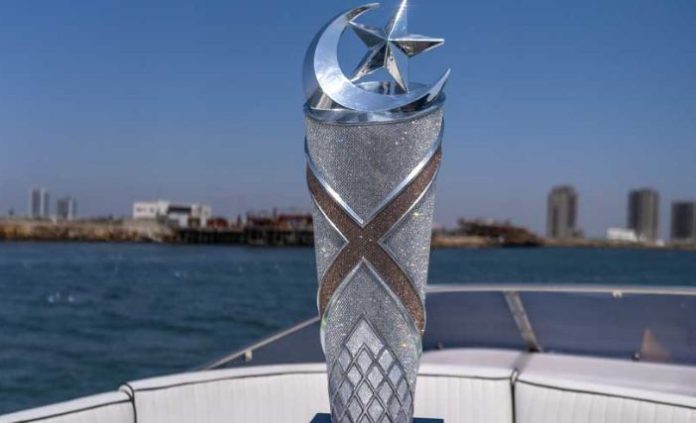
RAWALPINDI, MAY 11: A decision on the resumption of the Pakistan Super League (PSL X) is expected within the next 48 hours, sources confirmed on Sunday.

The remaining eight matches of PSL X will be played in Lahore and Rawalpindi, sources have said. Despite economic challenges, PSL X will be completed at all costs.

Sources also revealed that if some franchises are unable to field foreign players, the league will proceed with local players. Ongoing discussions with foreign players are expected to continue, according to sources.

Earlier on Saturday, it was reported that the PSL management was reportedly considering reviving the excitement of cricket through the resumption of the tenth edition of the domestic marquee tournament, following Pakistan’s recent victory over India.

Sources divulged that the PSL management had contacted franchise owners, and Chief Executive Officer Salman Naseer has instructed all franchises to remain prepared. All foreign players have been asked to stay at their current locations until further notice.

“The arrangements are being made — I will provide complete details shortly. PSL will go ahead,” Salman Naseer told sources.

The PSL was postponed yesterday and all foreign players and staff were affected. The players had previously departed for Dubai aboard Pakistan Armed Forces’ aircraft.

Sajid Sadpara summits world’s seventh highest mountain without supplemental oxygen

Sajid Sadpara

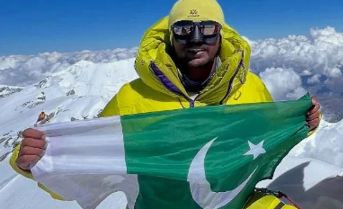
Renowned Pakistani climber Sajid Ali Sadpara on Saturday summited the world’s seventh highest peak — Dhaulagiri at 8,167 metres — without oxygen or porter support.

On May 4, four Pakistani climbers began their expedition to climb Dhaulagiri, located in Nepal. Sadpara had reached the base camp of the peak on April 6 and had begun his rotation and climbed up to the Camp 3 and descended to the base camp.

The feat, confirmed by the Alpine Club of Pakistan, marks Sadpara’s ninth 8,000m peak, all of which were climbed without bottled oxygen and were completely unsupported.

In a statement, Seven Summit Treks said the team successfully reached the summit starting at 9:35am on Saturday, marking the first confirmed ascent of Dhaulagiri in the Spring 2025 season.

The expedition team had previously fixed ropes up to 8,050m and launched their final summit push during a favourable weather window.

The team began their summit push from Camp IV at 6:15pm on Friday, making relentless efforts to reach the top while simultaneously securing the final section of the route by fixing over 350m of rope.

This year, Kangchenjunga has seen an impressive turnout, with nearly 70 international climbers and an equal number of Sherpas taking on the challenge.

“At just 29 years old, Sajid has displayed remarkable endurance, resilience, and dedication to high-altitude mountaineering,” the Alpine Club of Pakistan said in a statement.

His Dhaulagiri expedition was organised by Seven Summit Treks Nepal and Sabroso Pakistan, with technical gear sponsored by Kailas.

“[Sadpara] is the proud son of the legendary Muhammad Ali Sadpara, who tragically lost his life during a winter ascent of K2 in 2021. Carrying his father’s legacy with honour, Sajid has emerged as a powerful symbol of Pakistani mountaineering strength and global excellence.

Karrar Haidri, secretary of the Alpine Club of Pakistan, congratulated Sadpara, calling it “a historic milestone that reflects the strength and courage of Pakistani climbers on the world stage”.

“This is another proud moment for Pakistan and the mountaineering world!”

While speaking to Dawn.com before beginning his summit push, Sadpara had said he would attempt to climb the peak without supplement oxygen and porter support.

Sadpara has already summited eight of the world’s peaks above 8,000m, including Everest, K2 , Nanga Parbat, Broad Peak, Gasherbrum-I, and Gasherbrum-II.

He has also taken part in rescue operations at several peaks including K2, and plans to summit all 14 peaks above 8,000m.

Sadpara has made a name for himself in the alpine community with his summits of the most daunting peaks at a young age.

He has climbed K2 twice; once without supplemental oxygen. He also set records when he summited both Gasherbrum-I and Gasherbrum-II peaks in three days and 18 hours without supplementary oxygen.

In February 2021, his father Muhammad Ali Sadpara, Iceland’s John Snorri and Chile’s Juan Pablo Mohr went missing while attempting to summit the K2 during the winter season.

Their bodies were found in July, nearly five months after they went missing.

Sadpara described the search for the bodies of his father and other missing climbers as “the most challenging and extraordinary mission” of his life.

“First, the summit of K2 itself was a dangerous adventure and the burial of my father above eight thousand metres was heartbreaking,” he said.

“It was impossible to take the bodies back to base camp so we decided to bury them on the mountain.”

Now, Sajid Sadpara said his mission to summit all 14 peaks above eight-thousand metres altitude without supplementary oxygen would be the fulfilment of his father’s dream.

For him, climbing was something he was born to take up.

“When you get an environment where you listen and practice only to become a mountaineer, you definitely become one,” he explained while talking about his father’s training.

RCCI salutes civil-military leadership on glorious victory

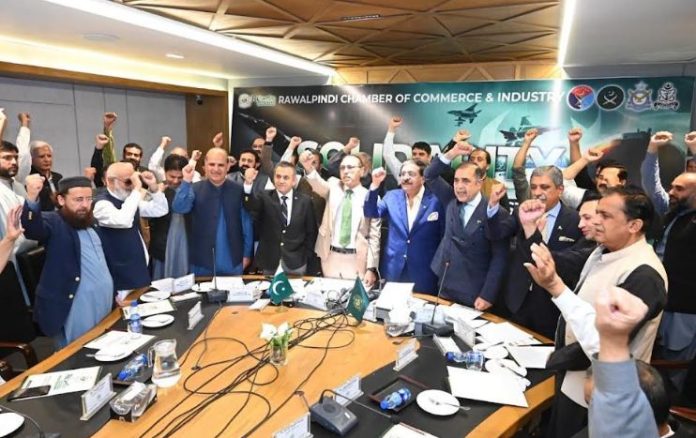
RAWALPINDI, MAY 11: /DNA/ – The Rawalpindi Chamber of Commerce and Industry (RCCI) has paid rich tribute to Pakistan’s Armed Forces and civil leadership on the occasion of a glorious national victory against Indian aggression. RCCI President Usman Shaukat extended heartfelt congratulations to the entire nation, applauding the unwavering resolve, courage, and professionalism demonstrated in defense of Pakistan’s sovereignty.

“We salute our civil and military leadership for this historic triumph, which reflects the unmatched bravery, strategic brilliance, and patriotism of our forces. This victory is a powerful reminder that Pakistan remains resilient and united in the face of all challenges,” he stated.

He expressed deep appreciation to President Asif Ali Zardari, Prime Minister Muhammad Shehbaz Sharif, Deputy Prime Minister and Foreign Minister Senator Ishaq Dar

And the top military leadership: General Sahir Shamshad Mirza, Chairman of the Joint Chiefs of Staff Committee (CJCSC),General Syed Asim Munir, Chief of the Army Staff (COAS),Admiral Naveed Ashraf, Chief of the Naval Staff (CNS), Air Chief Marshal Zaheer Ahmad Babar Sidhu, Chief of the Air Staff

“Pakistan’s triumph is a testament to the valor and dedication of our brave Armed Forces. The entire nation stands with them—saluting our defenders, honoring our martyrs (Shuhada), and expressing unwavering solidarity with their proud families. Allah has bestowed great honor and dignity upon our beloved homeland, making every Pakistani proud. Pakistan Zindabad!” he added.

President Usman Shaukat also commended the strategic leadership of General Asim Munir, whose vision has garnered global respect. “Our Air Force has once again showcased world-class precision and strength—MashAllah. The Navy’s steadfast dedication equally deserves the nation’s applause.”

RCCI Group Leader Sohail Altaf praised the spirit of national unity during this critical time. “The entire nation deserves appreciation for standing united. The business community, too, stood firmly with our Armed Forces, and the resolve demonstrated at RCCI will be remembered for years. The media’s role was exemplary. We thank Almighty Allah for His countless blessings.”

“Heartiest congratulations to the nation. May Allah keep us united, strong, and safe from every evil eye. Aameen. Pakistan Zindabad!”

Algeria hopes Pakistan-India ceasefire leads to lasting peace

Algeria

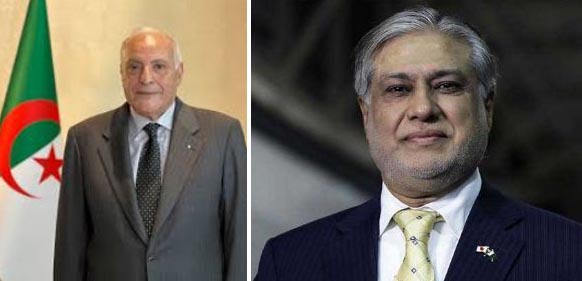
ISLAMABAD, MAY 11 /DNA/ – Minister of State, Minister of Foreign Affairs, National Community Abroad, and African Affairs, Mr. Ahmed Attaf, received a phone call this afternoon from Deputy Prime Minister and Minister of Foreign Affairs of the Islamic Republic of Pakistan, Mr. Muhammad Ishaq Dar.

On this occasion, the Pakistani Minister briefed his Algerian counterpart on the latest developments in the Indian subcontinent, particularly the circumstances surrounding the ceasefire agreement between Pakistan and India, with the aim of calming the situation and avoiding any escalation that could jeopardize security and stability in both countries and the region.

For his part, the Minister of State expressed Algeria’s welcome of this agreement, praising the mediation efforts made to achieve it by emphasizing diplomacy and dialogue over the logic of tension and conflict. Mr. Ahmed Attaf also emphasized Algeria’s hope that this step will be consolidated and strengthened in the coming days, enabling it to open new horizons toward establishing the foundations for a lasting, just, and final peace between the two neighboring countries, serving the interests of their peoples and enhancing security and stability in the entire region.

Stay Connected

64FansLike
60FollowersFollow

Latest Reviews

Exchange Rates

USD - United States Dollar
EUR
1.17
GBP
1.35
AUD
0.72
CAD
0.73