Home Blog Page 623

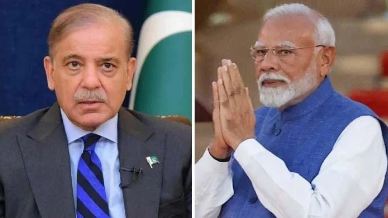
‘We have avenged 1971 war’, PM Shehbaz warns Modi against future aggression

'We have avenged 1971 war', PM Shehbaz warns Modi against future aggression

ISLAMABAD, MAY 14: Prime Minister Shehbaz Sharif has declared the success of Operation Bunyan-um-Marsoos as a historic moment, saying the Pakistan armed forces had avenged the 1971 war by giving a decisive and powerful response to Indian aggression.

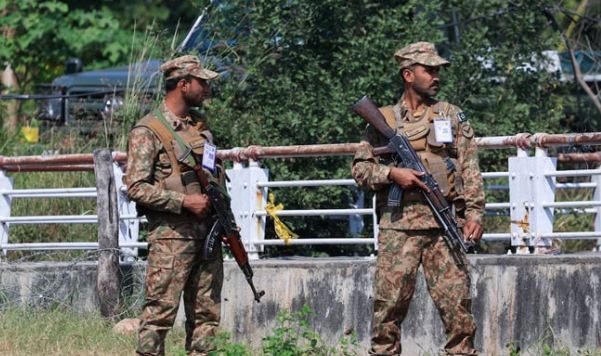
“History will eternally record, how within few hours, Pakistan’s defenders extinguished India’s unprovoked aggression with unmatched precision and resolve,” he said while addressing soldiers deployed at the frontline areas in Pasrur Cantonment near Sialkot.

The prime minister accompanied by Deputy Prime Minister Ishaq Dar, Defence Minister Khawaja Asif, Minister for Planning and Development Ahsan Iqbal and Information Minister Attaullah Tarar.

Chief of Army Staff (COAS) General Syed Asim Munir and Chief of Air Staff, Air Chief Marshal Zaheer Ahmed Baber Sidhu were also present during the visit, the Inter Services Public Relations (ISPR) said.

During the visit, the prime minister received a comprehensive briefing on the conduct of the battle and the current operational preparedness of the Corps.

Addressing the personnel, he said the valiant Pakistan Armed Forces, fortified by the unwavering resolve of the nation, defended the motherland in a heroic manner and dealt a decisive blow to the adversary’s dastardly aggression.

The premier said books would be written on Pakistan’s recent military success, calling it a testament to the bravery and professionalism of the armed forces.

He commended the leadership and personnel of the army, navy and air force, saying they had “put the enemies of Pakistan in their place”.

Taking aim at Indian Prime Minister Narendra Modi, PM Shehbaz said the world knows who trained Mukti Bahini in 1971. “Today, the same nexus is seen in support of groups like the BLA and TTP, and it leads back to Modi.”

He rebuffed recent statements made by the Indian prime minister, saying: “Mr Modi, keep your fiery speeches to yourself. Pakistan seeks peace in the region, but do not mistake our desire for stability as weakness.”

Referring to the suspension of Indus Waters Treaty, he warned India against tampering, saying: “If India even thinks of stopping Pakistan’s water, let it be known: water and blood cannot flow together,” he warned. “This is a red line we cannot compromise on.”

He noted the armed forces had crushed the false sense of regional dominance harboured by India. “The illusion that India is the regional power has been shattered,” he added.

The prime minister assured that Pakistan was committed to dialogue on all unresolved issues, including Kashmir dispute. However, he said: “We will not allow a one-sided approach where only sweet things are welcomed and the bitter truths ignored.”

He also warned Modi that any future hostility from India would be met with a forceful and unprecedented response. “Modi, if you attempt another act of aggression, you will face consequences beyond imagination,” he added.

Interacting with officers and brave men at the frontline, the premier lauded their high morale, exceptional professionalism, and unflinching readiness.

“Pakistan takes immense pride in its brave sons; they are the crown jewels of the nation,” he said, adding that the blatant aggression against innocent civilians resulting into martyrdom of children, women and elderly and calling them terrorists is utterly shameful and against all international laws, norms and morality.

He stated that despite Pakistan’s offer of neutral investigations, India deliberately evaded such a path, as they had nothing to prove and based on a false pretext and bloated arrogance and ego, launched the offensive, “for which it has got a very befitting response”.

The premier also said that the martyrs have always been “our pride and the nation shall eternally remain indebted to them”.

‘Operation Bunyan-um-Marsoos’
Pakistan armed forces launched a large-scale retaliatory military action, named “Operation Bunyan-um-Marsoos” and targeted several Indian military strikes across multiple regions.

The strikes, described by officials as “precise and proportionate”, were carried out in response to India’s continued aggression across the Line of Control (LoC) and within Pakistan’s territory, which New Delhi claimed were aimed at “terrorist targets”.

After at least 87 hours, the war between the two nuclear-armed nations ended on May 10 with a ceasefire agreement brokered by the United States.

According to ISPR, a total of 53 individuals, including 13 personnel of the armed forces and 40 civilians, were martyred in Indian strikes during the recent military confrontation.

The military confrontation between the two countries was triggered by last month’s attack in Indian Illegally Occupied Jammu and Kashmir (IIOJK) that left 26 tourists dead, with India blaming Pakistan for the attack without offering any evidence.

Islamabad denied any links to the attack and called for a neutral investigation. It said the targets hit on Wednesday were civilian sites.
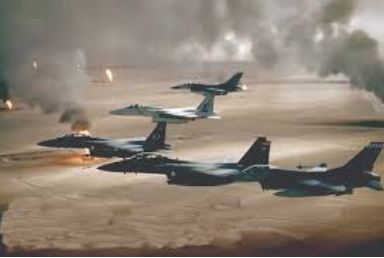
Rare Superiority: Qualitative Ascendancy of PAF over IAF

Rare Superiority: Qualitative Ascendancy of PAF over IAF

by: Ertaan  Siddiqui

A Tale of Two Arenas: Cricket and Combat

The “Mauqa Mauqa” advertisement has become a staple of cricket broadcasts whenever the most anticipated clash in world cricket—India vs. Pakistan—takes place. Regardless of the venue of the game and menu of players on offer, the outcome has consistently been unfavorable for the Pakistani audience in the recent past. This recurring disappointment has started to affect the spirit surrounding these encounters.

Much like the cricket pitch, the skies above South Asia have long served as symbolic arenas of national pride. However, in aerial engagements, the Pakistan Air Force has historically reversed the cricketing narrative. With favorable outcomes during 1965 & 1971 wars, stand-offs during the Kargil conflict, 2/0 in the 2019 post-Pulwama skirmishes, and 6/0 in the 2025 Operation Bunyan-ul-Marsoos, Pakistan Air Force has consistently outsmarted, outmaneuvered, and outclassed the Indian Air Force in air-to-air combat, carving out what may be called a “Rare Superiority”—a phrase that not only echoes the technical term “Air Superiority,” but also resonates with the strategic edge Pakistan has maintained in the skies.

Foundations of Strength: The Origins and Early Challenges

Born out of the Royal Indian Air Force, both PAF and IAF began from the same foundation. At Partition, Pakistan inherited just 17 percent of the military assets, many of which were stranded in Indian territory. Financial and logistical obstructions, largely influenced by the Congress leadership, aimed to pressure the nascent Pakistani state. Despite these constraints, the PAF rose rapidly, overcoming adversity through resilience and resolve.

PAF’s Tactical and Strategic Mastery

Throughout history, the PAF has countered IAF misadventures with clinical precision. From Flying Officer Mukhtar Ahmed Dogar’s daring evasion in 1948 to M.M. Alam’s legendary one-minute dogfight, PAF pilots have etched their names into the annals of air combat. Wing Commander Noman Ali Khan and Squadron Leader Hassan Siddiqui reaffirmed this legacy during Operation Swift Retort in 2019.

In Operation Bunyan-ul-Marsoos (2025), the PAF delivered a decisive response, downing six Indian aircraft, including three Rafales—4.5-generation fighter jets touted as game-changers for the IAF. This overwhelming performance left India with no choice but to seek a ceasefire, having underestimated Pakistan’s response.

Leadership’s Vision : The Cornerstone of Success

The Latin maxim, “Per proelia victoria belli fatum statuit”—“Through battles, victory determines the fate of war”—perfectly encapsulates the ethos of the PAF.

How did PAF mange to achieve this feat despite the material challenges and resource constraints?

PAF’s success in these encounters was a result of numerous factors but none more significant than its visionary leadership. From Air Marshal Asghar Khan—rightly hailed as the father of the PAF—to Air Marshal Nur Khan, known for his steady hand during times of crisis, and extending to the Air Chief Marshal Zaheer Ahmed Baber Sidhu, each has pursued an ambitious agenda to modernize the force. In essence, PAF leadership has consistently looked beyond the horizon, strived to shape a future that seemed distant or even unimaginable at the time. The relentless push for modernization has remained central to their strategic efforts.

Full Spectrum Multi Domain Warfare

Despite its success after the Balakot strikes, the PAF avoided complacency and swiftly adapted to India’s induction of Rafale jets. To retain its edge, it operationalized the J-10C aircraft equipped with PL-15E BVR missiles, reestablishing superiority in air-to-air combat. Recognizing the evolving nature of warfare, PAF adopted a multidimensional modernization strategy that integrated advanced platforms and focused on developing indigenous capabilities—cementing its position as the region’s only air force with homegrown niche technologies.

Modern aerial warfare now extends beyond dogfights, merging air, space, cyber, and electronic warfare domains. In response, PAF expanded its arsenal with fighter jets, UAVs, air mobility assets, and reinforced its air defense, EW, and space capabilities. It has also developed robust cyber and space defenses, transforming former vulnerabilities into strengths. These comprehensive upgrades, driven by visionary leadership, reflect PAF’s strategic foresight and readiness to meet emerging threats with integrated, multi-domain superiority.

Indigenous Innovation: The Power of Self-Reliance

The ever-growing demands of a tech-sensitive and tech-intensive air force cannot be met through foreign acquisitions alone. Such reliance burdens the national exchequer and is increasingly difficult amid global restrictions on high-end technologies. As such, indigenous R&D has become imperative. The PAF leadership has launched an ambitious yet sustainable strategy to build national capacity for research and development.

At the heart of this effort lies the National Aerospace Science and Technology Park (NASTP). With a strong emphasis on industry-academia collaboration, realized through public-private partnership with domestic and international partners, NASTP has rapidly evolved into a project of national significance—deserving a detailed discussion of its own.

Excellence Through Adaptation

The Pakistan Air Force has carved a unique niche in regional military history—defined not by sheer numbers but by quality, clarity of vision, and operational finesse. Driven by the vision of its leadership, PAF has emerged as a technologically adept, strategically agile, and professionally superior air force. PAF’s “Rare Superiority” is not just a military reality but a strategic benchmark. It stands as a defining pillar of Pakistan’s national defense,  recognized globally, and respected by allies and adversaries alike.

UAE backs peace as Pakistan seeks stable South Asia

UAE backs peace as Pakistan seeks stable South Asia

ISLAMABAD, MAY 14 /DNA/ – Prime Minister Shehbaz Sharif held a telephone conversation with Sheikh Mohamed bin Zayed Al Nahyan, President of the United Arab Emirates and Ruler of Abu Dhabi, this evening.

During their warm and cordial conversation, the Prime Minister conveyed profound gratitude for UAE’s diplomatic efforts and constructive role to defuse the recent crisis in South Asia. He added the UAE had always stood by Pakistan, through thick and thin.

The Prime Minister said that Pakistan desired peace in South Asia, and in this spirit, had agreed to the ceasefire understanding with India. He reaffirmed Pakistan’s commitment to uphold the understanding, as well as its iron resolve to defend its sovereignty and territorial integrity at all costs. He also made it clear that Pakistan would never permit the sanctity of the Indus Waters Treaty to be challenged. 

The Prime Minister affirmed the warm, close and brotherly ties between Pakistan and the UAE. He recalled with great satisfaction that during the last one year, bilateral cooperation between the two friendly countries was progressing well, especially in the areas of economy and investment. He renewed his strong resolve to transform the existing Pakistan-U.A.E. ties into a mutually beneficial economic partnership.

The UAE President welcomed the ceasefire understanding, while appreciating Pakistan’s efforts for peace. He said the UAE supported maintenance of peace and stability in South Asia.=DNA

Kashmir Dispute – A Nuclear Flashpoint in South Asia 

South Asia’s New Chaudhary

Sadaf Noreen Awan 

The Kashmir dispute has remained a bone of contention between two nuclear powers of South Asia – India and Pakistan – both of whom have fought three major wars over the region, seeking territorial supremacy for decades. Despite several resolutions and interventions by the United Nations, the issue remains unresolved, keeping over 1.6 billion people—about one-fifth of the world’s population—under the looming threat of war, especially under the nationalist regime of Indian Prime Minister Narendra Modi.

Recent tensions escalated due to a false Indian allegation against Pakistan following the Pahalgam attack in Indian-occupied Kashmir on April 22, 2025, where 26 people, including Muslims, were reportedly killed. Despite deploying 900,000 troops in the region, the Indian government failed to provide adequate security. Within ten minutes of the incident, India filed an FIR against Pakistan without any evidence or investigation. Pakistan’s political and military leadership condemned the attack and offered full cooperation for a transparent investigation.

Narendra Modi, seeking political mileage ahead of elections, suspended the Indus Waters Treaty of 1960 and made inflammatory speeches against Pakistan. Indian media amplified war hysteria, while Pakistan’s Army Chief General Syed Hafiz Asim Munir warned that any Indian misadventure would be met with a decisive response.

India violated international border laws by launching missile strikes on six Pakistani locations, including mosques and civilian areas, on the night of May 6–7, 2025. These attacks were termed “Operation Sindoor.” Pakistan defended its territory and condemned the violations. National and international media reported the facts, despite Indian media’s attempts to conceal the truth.

On May 9, India escalated the situation further by sending 88 Israeli-made drones into major Pakistani cities, all of which were neutralized by Pakistan’s defense systems. India then staged drone attacks on its own cities to falsely implicate Pakistan. Pakistan’s DG ISPR General Ahmed Sharif Chaudhary rejected the claims, stating, “When we respond, the world will hear it.”

Later that night, India attacked Pakistani military airbases in Rawalpindi, Shorkot, and Muridke. After three days of strategic patience, Pakistan launched Operation Bunyan ul Marsoos on May 10, targeting 26 Indian sites, including BrahMos missile storage in Beas and the Udhampur airbase. Pakistan’s cyber units also disabled Indian power and defense infrastructure.

Around 5 PM, former US President Donald Trump mediated a ceasefire. The war hysteria and Modi government’s conspiracy were exposed globally. With unity and public support, Pakistan’s leadership and armed forces successfully defended the nation. Prime Minister Shehbaz Sharif declared May 10 as “Youm-e-Marka-i-Haq” to be commemorated annually.

This conflict marked a shift in regional warfare dynamics. In the largest dogfight in South Asian history, 150 jets engaged. Pakistan’s JF-17 Thunders, built with Chinese support, downed six Indian jets including three Rafales, showcasing superior pilot skill and technology. CNN reported this as a major test for Chinese military equipment.

China, which supplies 81% of Pakistan’s arms, witnessed global validation of its military technology. Pakistan became the first nation to shoot down Rafale jets using Chinese aircraft, leading to a decline in Rafale’s global reputation. The power balance in South Asia is shifting, with China rising in a multipolar world.

India must reconsider its strategic assumptions, as future confrontations may not be limited to Pakistan but could involve China. The question remains: Is India prepared for a two-front challenge over Kashmir?

PM Shehbaz praises troops’ valor in operation Bunyanum Marsoos

PM Shehbaz praises troops' valor in operation Bunyanum Marsoos

RAWALPINDI, MAY 14 /DNA/ – Prime Minister of Pakistan, Mr. Muhammad Shehbaz Sharif, accompanied by Deputy Prime Minister / Foreign Minister, Defence Minister, Minister for Planning and Development, Information Minister, visited Pasrur Cantonment, Sialkot, today to commend the exceptional bravery and professionalism of the troops during Operation Bunyanum Marsoos, part of The Marqa-e-Haq. Chief of Army Staff General Syed Asim Munir, NI (M) and Chief of Air Staff, Air Marshal Zaheer Ahmed Baber Sidhu, NI (M) were also present during the visit.

During the visit, the Prime Minister received a comprehensive briefing on the conduct of the battle and the current operational preparedness of the Corps.

Commending the Armed Forces on their exemplary performance in the Marka-e-Haq, the Prime Minister stated, “The valiant Armed Forces of Pakistan, fortified by the unwavering resolve of the nation, defended the motherland in a heroic manner and dealt a decisive blow to the adversary’s dastardly aggression. History will eternally record, how within few hours, Pakistan’s defenders extinguished India’s unprovoked aggression with unmatched precision and resolve.”

Interacting with officers and brave men at the frontline, the Prime Minister lauded their high morale, exceptional professionalism, and unflinching readiness.

The Prime Minister further affirmed, “Pakistan takes immense pride in its brave sons; they are the crown jewels of the nation.” He said that the blatant aggression against innocent civilians resulting into martyrdom of children, women and elderly and calling them terrorists is utterly shameful and against all international laws, norms and morality. He stated that despite our offer of neutral investigations, India deliberately evaded such a path, as they had nothing to prove and based on a false pretext and bloated arrogance and ego, launched the offensive, for which it has got a very befitting response., Alhumdulillah” The Prime Minister also said that our martyers have always been our pride and the nation shall eternally remain indebted to them.

Upon arrival, the Prime Minister was warmly received by the Chief of Army Staff and Corps Commander Gujranwala.

Trump to Gulf leaders Iran must cease support of groups

Trump’s comments on Iran came after he met Wednesday with Syrian President Ahmad Al-Sharaa, a face-to-face engagement with the onetime insurgent leader who spent years imprisoned by US forces after being captured in Iraq

Centreline Report

RIYADH, Saudi Arabia: President Donald Trump told Gulf leaders on Wednesday that he urgently wants “to make a deal” with Iran to wind down its nuclear program but that Tehran must end its support of proxy groups throughout the region as part of any potential agreement.

Iran “must stop sponsoring terror, halt its bloody proxy wars, and permanently and verifiably cease pursuit of nuclear weapons,” Trump said in remarks at a meeting of leaders from the Gulf Cooperation Council hosted by Crown Prince Mohammed bin Salman in the Saudi capital. “They cannot have a nuclear weapon.”

The US and Iran have engaged in four rounds of talks since early last month focused on Iran’s nuclear program. Trump has repeatedly said he believes brokering a deal is possible, but that the window is closing.

The president’s strongly worded push on Iran to cease support of Hamas in Gaza, Hezbollah in Lebanon, and the Houthis in Yemen come as its proxy network has faced significant setbacks in the 19 months since Hamas launched its Oct. 7, 2023, attack on Israel.

In Iran, Foreign Minister Abbas Araghchi called Trump’s remarks “deceitful” but did not directly address the US leader’s call on Iran to cease support of proxy groups.

Trump added that he believed the moment was ripe “for a future free from the grip of Hezbollah terrorists.” Hezbollah is severely weakened after its war last year with Israel in which much of its top leadership was killed, and after losing a key ally with the fall of former Syrian President Bashar Assad, a conduit for Iran to send arms.

Trump’s comments on Iran came after he met Wednesday with Syrian President Ahmad Al-Sharaa, a face-to-face engagement with the onetime insurgent leader who spent years imprisoned by US forces after being captured in Iraq.

Trump agreed to meet Al-Sharaa at the end of his stay in Saudi Arabia. He headed next to Qatar, where he will be honored with a state visit. His Mideast tour also will take him to the United Arab Emirates.

Al-Sharaa was named president of Syria in January, a month after a stunning offensive by insurgent groups led by Al-Sharaa’s Hayat Tahrir Al-Sham, or HTS, stormed Damascus and ended the 54-year rule of the Assad family.

Trump said he decided to meet with Al-Sharaa after being encouraged to do so by Prince Mohammed and Turkish President Recep Tayyip Erdogan. The president also pledged to lift yearslong sanctions on Syria.

“The sanctions were really crippling and very powerful,” Trump said. “It’s not going to be easy anyway, so it gives them a good, strong chance” to rebuild the country, he added.

Prince Mohammed joined Trump and Al-Sharaa for the meeting, which lasted about 33 minutes. Erdogan also took part in the talks via video conference.

The prince said Trump’s decision to engage with Al-Sharaa and lift the sanctions will “alleviate the suffering of the Syrian people” and spur a “new chapter” for the nation.

Formerly known by the nom de guerre Abu Mohammed Al-Golani, Al-Sharaa joined the ranks of Al-Qaeda insurgents battling US forces in Iraq after the US-led invasion. He still faces a warrant for his arrest on terrorism charges in Iraq. The US once offered $10 million for information about his whereabouts because of his links to Al-Qaeda.

Al-Sharaa came back to his home country of Syria after the conflict began in 2011 and led Al-Qaeda’s branch that used to be known as the Nusra Front. He later changed the name of his group to Hayat Tahrir Al-Sham and cut links with Al-Qaeda.

The sanctions go back to the rule of Assad, who was ousted in December, and were intended to inflict major pain on his economy.

Both the Biden and Trump administrations left the sanctions in place after Assad’s fall as they sought to take the measure of Al-Shara.

After meeting with members of the GCC — which includes Bahrain, Kuwait, Oman, Qatar, Saudi Arabia and the United Arab Emirates — Trump was heading to Qatar, the second stop in his Mideast tour.

Qatar also has served as a key mediator, particularly with the militant group Hamas as the international community pursues a ceasefire for the Israel-Hamas war in the Gaza Strip. Qatar also served as host of the negotiations between the United States and the Taliban that led to America’s 2021 withdrawal from Afghanistan.

ICCI, Dr. Baig push for FDI and ease of doing business

ICCI, Dr. Baig push for FDI and ease of doing business

ISLAMABAD, MAY 14 /DNA/ – Prominent business leader and Member National Assembly Dr. Mirza Ikhtiar Baig has reaffirmed his strong commitment to supporting Pakistan’s business community and strengthening its role in national economic development. Speaking at a well-attended gathering at the Islamabad Chamber of Commerce and Industry (ICCI) on Wednesday, Dr. Baig praised the community’s resilience and expressed full cooperation in the Chamber’s initiatives to boost economic growth and foreign investment.

Dr. Baig emphasized that he would continue to raise the concerns of the business community at all relevant forums to ensure timely resolution, improved ease of doing business, and a conducive environment for attracting foreign direct investment (FDI). He lauded ICCI’s efforts in creating a business-friendly climate and assured his full support for the successful execution of the upcoming Build and Invest Pakistan Expo in Muscat, Oman, scheduled for June 2025. He also committed to mobilizing support from the Karachi business community for the event.

Dr. Baig paid rich tribute to the armed forces of Pakistan, acknowledging their unwavering dedication and sacrifices in protecting the country and dismantling threats to national security.

ICCI President Nasir Mansoor Qureshi briefed the audience on the Chamber’s key initiatives and its pivotal role in fostering economic activity. He noted that the Build and Invest Pakistan Expo will serve as a strategic platform to highlight Pakistan’s industrial, real estate, and investment potential, while establishing stronger trade and economic linkages with the Gulf region.

 “The Chamber has always remained at the forefront of advancing economic well-being, and this expo is aligned with our mission to connect Pakistani businesses with international markets,” said Qureshi.

President of the Federation of Pakistan Chambers of Commerce and Industry (FPCCI), Atif Ikram Shaikh, applauded ICCI’s advocacy efforts. He also demanded the deferment of new income tax amendments, which he termed harmful to business growth. He also paid homage to the armed forces for their vital role in safeguarding the nation.

ICCI Group Leader Tariq Sadiq emphasized the importance of national unity within the business community by uring Dr. Baig to engage with Karachi-based businesses to maximize the impact of the upcoming expo.

Former FPCCI President Abdul Rauf Allam and United Business Group (UBG) Secretary General Zafar Bakhtawari commended Dr. Baig’s tireless efforts and leadership, recognizing his role in elevating the business community’s image, both domestically and internationally. Former ICCI President Mian Akram Farid described Dr. Baig as the true representative of business interests in the National Assembly.

Delivering the vote of thanks, ICCI Senior Vice President Abdul Rehman Siddiqui reaffirmed the Chamber’s resolve to continue acting as a strong advocate between the private sector and the government to ensure sustainable economic policies.

The event was attended by a distinguished gathering of business leaders, including ICCI Vice President Nasir Mehmood Chaudhry, Council Members Mohammad Ejaz Abbasi and Mian Shaukat Masood, and Executive Members Ms. Fatima Azim, Ms. Shumila Siddiqui, Irfan Chaudhry, Rohail Anwar Butt, Aftab Gujjar, Imran Minhas, Zulqurnain Abbasi, Ishaq Sial, and several other prominent figures from Islamabad’s business circles.

Hadi, Bismal clinches DHA Punjab Tennis Championship titles  

DHA Punjab Tennis Championship titles 

By our correspondent 

ISLAMABAD: Rising star Hadi Hussain captured the spotlight by clinching the Men’s Singles title at the prestigious DHA Lahore Punjab Juniors and Seniors Tennis Championship 2025, held at the state-of-the-art DHA Sports Complex.

In a commanding performance, Hadi defeated Musa Haroon 6-1, 6-2 in the final to claim top honours in the premier men’s category.

In the Men’s Doubles final, the duo of Musa Haroon and Talha Saleem emerged victorious after a thrilling contest, edging past Ahsan Javeed and Taha Saleem 9-8 in a closely fought match. The Seniors Doubles 60+ title was secured by seasoned campaigner Rashid Malik, who teamed up with Brig. Ghazanfar to defeat Saleem Khan and Dr. Mushtaq Haroon 8-2 in a dominant display.

The junior categories saw an impressive array of talent on display. In the Boys U-18 final, Asad Zaman showcased his class by beating Ohad-e-Mustafa 6-2. The Girls U-18 and U-14 titles were both claimed by the talented Bismal Zia, who continued her remarkable run by defeating Romisa Malik 6-1 in the U-18 final and Khadija Khalil 6-4 in the U-14 final.

The concluding ceremony was graced by PLTA Senior Vice President and tournament organiser Rashid Malik, who attended as the chief guest and distributed prizes among the winners. He was joined by Brig. Mir Muhammad Siddique, Director Sports DHA Lt. Col. Muhammad Shahbaz, Col. (R) Asif Dar and a large gathering of tennis enthusiasts. 

Pakistan honors martyrs, condemns India’s cowardly civilian attacks

Pakistan honors martyrs

RAWALPINDI, MAY 14: /DNA/ – Indian Armed Forces blatant and cowardly aggression which was launched on the night of 6-7 May 2025, targeted innocent civilians, including women, children, and the elderly. While defending the motherland with exemplary courage and unwavering resolve, 2 more valiant sons of the soil embraced shahadat today who were hospitalised, bringing the total number of martyred personnel of the Pakistan Armed Forces to 13 while 78 have sustained injuries in the line of duty.

The martyred heroes are Havaldar Muhammad Naveed Shaheed of the Pakistan Army and Senior Technician Muhammad Ayaz Shaheed of the Pakistan Air Force. Their noble sacrifice stands as a timeless testament to their courage, devotion to duty, and unshakeable patriotism.

The Pakistan Armed Forces, in unity with the people of Pakistan, pay the highest tribute to these brave martyrs and extend heartfelt condolences to the bereaved families. Prayers are also offered for the swift and complete recovery of all those injured in the attack.

Their sacrifice will forever remain etched in the nation’s collective memory, inspiring generations to come.

When Blood Spoke Louder Than Words

When Blood Spoke Louder Than Words

by Muhammad Mohsin Iqbal

Allah Almighty says in the Holy Qur’an: “Every soul shall taste death” (Surah Al-Imran, 3:185). This is an unchangeable truth accepted by all religions of the world. Yet, Islam elevates the one who dies a martyr’s death to a station beyond human comprehension. The Holy Qur’an declares: “And do not say of those who are slain in the way of Allah, ‘They are dead.’ Nay, they are living, but you perceive not” (Surah Al-Baqarah, 2:154). The martyr does not die in the true sense—his blood becomes the foundation of a nation’s honour, his sacrifice a beacon of valor for generations to come.

When Blood Spoke Louder Than Words

Among the many ranks of martyrdom, one of the highest is laying down one’s life in defence of the motherland. Ask the mother whose son went to the battlefield and never returned. Ask the father who buried his child wrapped in the national flag. Ask the widow who weeps silently, raising her children with the dignity her husband died preserving. Ask the children who look at a photograph to know the warmth of their father’s face. The pain of these noble families cannot be measured, but their courage is the lifeblood of this nation. As someone rightly said, the death of a martyr is the life of the nation.

The Prophet Muhammad (peace be upon him) said, “The martyr is granted six blessings by Allah: he is forgiven with the first drop of his blood; he is shown his place in Paradise; he is spared the torment of the grave; he is secured from the great terror; a crown of dignity is placed on his head… and he is permitted to intercede for seventy of his relatives” (Hadith, Sunan At-Tirmidhi). What an exalted rank, reserved only for those who give everything in the path of duty, justice, and faith.

The history of Islam is rich with examples of noble martyrs—towering figures who laid down their lives for the truth, for justice, and for the preservation of righteousness. Our civilian and military martyrs today walk in the sacred footsteps of Hazrat Ameer Hamza (RA), “Syed- ul- Shuhada” and the beloved uncle of the Prophet (peace be upon him); Hazrat Umar Farooq (RA), the embodiment of justice; Hazrat Usman Ghani (RA), the generous and steadfast; Hazrat Ali (RA), “Saif Ullah”; Hazrat Imam Hassan (RA), the emblem of peace; Hazrat Imam Hussain (RA), who sacrificed everything at Karbala to uphold the truth. These shining names of Islamic history form the vanguard of martyrdom, and our martyrs are their proud companions in spirit and in sacrifice.

On the tragic night of 6th to 7th May 2025, the Indian Armed Forces launched unprovoked and reprehensible attacks on Pakistani soil, targeting innocent civilians, including women, children, and the elderly. In their barbarity, they martyred 40 civilians—among them 7 women and 15 children—and wounded 121 more, including 10 women and 27 children. The night was dark, not merely in time but in spirit, drenched in the blood of innocents. Yet even in mourning, Pakistan did not falter. The cowardice of the enemy was answered with the courage of the brave.

In response to this grave act of aggression, the Pakistan Armed Forces launched Marka-e-Haq—a just war—executing Operation Bunyanum Marsoos with precision and resolve. This was not merely a retaliatory campaign; it was the nation rising in dignity, reclaiming its honour. Our defenders did not seek war, but once drawn into it, they responded with unmatched valour, defending our soil and sovereignty with every drop of blood.

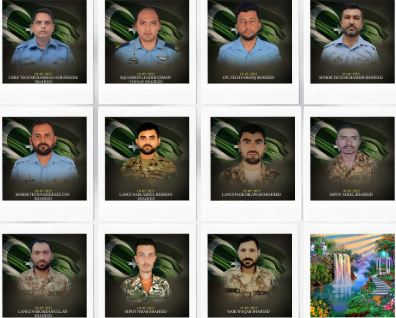
During this noble defence, eleven sons of Pakistan from the Armed Forces embraced martyrdom, and seventy-eight were injured. Their names will remain inscribed in the heart of the nation, not as casualties but as eternal symbols of bravery. The ever-shining stars of the Galaxy of Martyrs are Squadron Leader Usman Yousuf, Naik Abdul Rehman, Lance Naik Dilawar Khan, Lance Naik Ikramullah, Naik Waqar Khalid, Sepoy Muhammad Adeel Akbar, Sepoy Nisar, Chief Technician Aurangzeb, Senior Technician Najeeb, Corporal Technician Farooq, and Senior Technician Mubashir.

Each of these martyrs stood not merely for a uniform or an institution, but for the idea of Pakistan—a land that lives free because of the sacrifice of its brave. These names shall not be lost to time; they are now written in the annals of glory.

Let it not be forgotten that as we sleep in peace at night, it is because of the countless men in uniform—soldiers, airmen, sailors—who guard the frontiers of our nation, who remain awake under open skies, so we may close our eyes without fear. The martyr may fall, but his blood waters the tree of our liberty.

And as some returned from battle, not as martyrs but as Ghazis, they too are bearers of honour. They are the shining beacons of victory and sovereignty, living testaments of Pakistan’s indomitable will. They have written with their courage a story of defiance and dignity that generations shall remember.

The Pakistan Armed Forces, alongside the entire nation, pay solemn tribute to the martyred civilians and military personnel, and extend heartfelt prayers for the swift recovery of those injured. Their grief is our collective grief; their pride, our shared honour.

Let the enemy know—and let the world bear witness—that the nation of Pakistan shall never bow before tyranny. The Holy Qur’an states: “Indeed, Allah defends those who believe” (Surah Al-Hajj, 22:38). With this divine promise in our hearts and the resolve of our defenders in the field, we stand united. Our sovereignty is sacred, and any attempt to challenge it shall be met with full-spectrum, swift, and decisive response—Inshallah.

The spirit of martyrdom is not death—it is eternal life. It is the force that shields the weak, humbles the oppressor, and secures the homeland. Today, we honour those who gave everything, so that Pakistan may live forever in dignity, freedom, and peace.

Stay Connected

64FansLike
60FollowersFollow

Latest Reviews

Exchange Rates

USD - United States Dollar
EUR
1.17
GBP
1.35
AUD
0.72
CAD
0.73