Home Blog Page 622

FPCCI appoints Kashif Zahir as an Advisor on Regional Coordination

FPCCI appoints Kashif Zahir as an Advisor on Regional Coordination

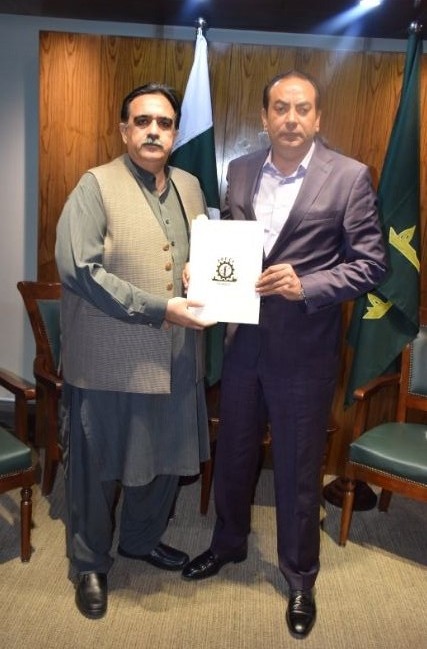
ISLAMABAD, SEPT 22 (DNA) – Atif Ikram Shiekh, President of the Federation of Pakistan Chambers of Commerce and Industry (FPCCI), has appointed Mr. Kashif Zahir Chairman of Pakistan Affairs Scandinavia – Pakistan Chamber of Commerce & Industry (SPCCI) & Former Vice Chairman of Handicraft Association Pakistan as an Advisor to the President of FPCCI on Regional Coordination for the term 2024-25.

Mr. Zahir’s appointment acknowledges his vast experience in fostering global relationships. His timely recommendations and strategic insights are expected to greatly benefit the business community, particularly in promoting bilateral trade and enhancing exports from Pakistan through the various initiatives of the Ministry of Commerce and the SIFC.

Mr.Zahir’s Leadership and  Vision will play a pivotal Role in enhancing Trade Relations and Fostering Economic Collaborations between Pakistan & Various Regions of the World .

Mr. Zahir stated, “The government must focus on rapid industrialization and take bold steps to accelerate economic growth. It is essential to restore the confidence of both foreign and local investors to drive sustainable development.”

IED Incident Near Malam Jabba

IED Incident Near Malam Jabba

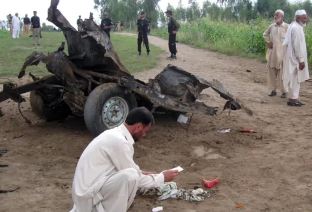
ISLAMABAD, SEPT 22 (DNA) – Today a group of diplomats traveling to Islamabad after their trip to Malam Jabba and Swat witnessed an incident. An advance scout police vehicle was hit by an IED which resulted in a casualty of the police detail. All members of the diplomatic corps have returned safely to Islamabad.

Our sympathies are with the families of the shaheed policeman and three injured in the incident.

We honour our law enforcement authorities that remain steadfast in the face of terrorists. Such acts will not deter Pakistan from its commitment towards the fight against terrorism.

Beyond Realism: Resolving Pakistan’s Internal Balance of Power Dilemma

Beyond Realism: Resolving Pakistan’s Internal Balance of Power Dilemma

Afnan Wasif 

In international relations, the concept of the balance of power is a foundational tenet of Realism, a school of thought that sees the international system as inherently anarchic, where states act primarily in their self-interest to ensure survival. This balance ensures that no single state becomes dominant, preserving the sovereignty of all. The theory posits that states, seeking to protect themselves from dominance by others, engage in power-balancing behaviors—forming alliances, building military capabilities, and countering the influence of rising powers. Yet, while this concept is designed to maintain stability, it also fosters a perpetual state of competition, arms races, and security dilemmas.

Though traditionally applied to international relations, this realist framework strangely can also be seen operating within the domestic political landscape of Pakistan, specifically in the relationship between the military and political institutions. Both entities, bound by the dynamics of power, seem caught in a similar balancing act, where each fears dominance by the other, inadvertently destabilizing the very system (democracy) they aim to preserve.

In Pakistan, the military holds a unique place in the national power structure. Despite being constitutionally subordinate to civilian authority, it has historically wielded significant influence over governance, often acting as a political actor in its own right. From direct military coups to indirect sway over domestic and foreign policies, the military has played a central role in the state’s evolution. On the other hand, political institutions, particularly civilian governments, often find themselves in a precarious position, needing to assert their authority without antagonizing the military establishment. This precarious dance mirrors the classic balance of power seen in international relations.

The political leadership in Pakistan, much like states in the international system, acts to preserve its sovereignty. The military, representing a highly organized and powerful institution, similarly seeks to protect its interests. The result is a cyclical power struggle—a quest for dominance that is unlikely to reach a definitive conclusion. Like international states locked in a perpetual arms race, the political and military institutions in Pakistan are engaged in a tug of war, each striving to counterbalance the other to maintain equilibrium.

This quest for balance, however, does not lead to stability. In fact, it breeds insecurity on both sides. Political institutions, fearing the military’s encroachment on governance, often take steps to curb its influence, sometimes leading to policies that alienate the military establishment. On the other hand, the military, perceiving threats to its authority and privileges, seeks to maintain a certain level of political involvement, which in turn exacerbates tensions.

This insecurity paradox is similar to the security dilemma in international relations, where efforts by one state to increase its security (e.g., through military build-up) are interpreted as threats by others, leading them to enhance their own security measures. In Pakistan, every attempt by civilian governments to assert control over the military is viewed with suspicion by the armed forces, leading to heightened tensions and, in extreme cases, intervention. Conversely, political leaders are wary of the military’s power, fearing that unchecked authority could erode democratic governance and undermine civilian rule.

The implications of this dynamic are significant. As in international relations, where the balance of power often results in heightened risks of conflict, the tug of war between Pakistan’s political and military institutions creates an environment of instability and insecurity. The focus on balancing power distracts both entities from their primary objectives—serving the state and its people.

The solution to this problem, however, is clear. Pakistan’s Constitution provides a framework that clearly delineates the roles and responsibilities of each institution. The military is a subordinate institution, meant to serve under the direction of the civilian government, which is elected by and accountable to the people. The political leadership, representing the will of the people, must be allowed to govern without undue interference from the military.

Realist theory suggests that the balance of power is a necessary evil in an anarchic international system, but in the context of a nation-state like Pakistan, this competition is both unnecessary and harmful. The military and political institutions are not rival states locked in a power struggle; they are different entities within the same system, both ultimately serving the same state. Recognizing this reality is crucial to breaking the cycle of insecurity and power struggle.

By adhering to the constitutional order, this balance of power dynamic can be resolved. The political leadership must have the authority and competence to govern, and the military must accept its role as a protector of the state, not a competitor for political power. In doing so, Pakistan can overcome the cyclical deadlock that has long plagued its civil-military relations, fostering a more stable, secure, and prosperous future for the nation.

Ultimately, the recipe for resolving this power struggle is already written in Pakistan’s Constitution. Abiding by it, both institutions can focus on their respective roles, leading to a smoother, more functional governance system where power is not something to be feared but exercised responsibly for the greater good.

Micromanagement of Judiciary…

Qamar Bashir

Qamar Bashir

The judiciary, executive, and parliament are three distinct, exclusive, and mutually independent pillars of the state. The independence of each pillar from the influence and jurisdiction of the others, as defined in the Constitution, is the hallmark of any democratic system. It is not only the duty of each pillar to protect itself from encroachment by another but also the duty of civil society and the public at large to resist any attempt by any pillar to interfere in the workings of the others.

The most damaging, however, was the encroachment of Parliament into the exclusive domain of the judiciary, which is a fundamental component of a functioning democratic system. The Parliament first enacted the Supreme Court (Practice and Procedure) Act, 2023. A close scrutiny of the provisions of SCPPA 2023 reveals it as a clear example of blatant micromanagement of the judiciary.

The SCPPA 2023 was initially struck down by the Supreme Court under the tenure of former Chief Justice Umar Ata Bandial. However, under the leadership of Chief Justice Qazi Faez Isa, a 15-member full court later upheld the Act. Unfortunately, Chief Justice Qazi Faez Isa’s decision effectively opened the doors of the superior judiciary to parliamentary micromanagement. The logic offered by Chief Justice Isa—that Parliament is supreme and has the right to make laws, even those that impact the independence of the judiciary—was not only flawed but also lacked solid constitutional grounding, as it threatened the principle of judicial independence.

When the Supreme Court (Practice and Procedure) Act, 2023 (SCPPA), was introduced for the first time, it micromanaged the judiciary primarily by altering how the Chief Justice’s powers were exercised. The act established a three-member committee comprising the Chief Justice and the two most senior judges to decide on the formation of benches and the initiation of suo motu action.

This change meant that the Chief Justice no longer had the sole authority to form benches or take suo motu notices, which had previously been an essential aspect of the Chief Justice’s autonomy. This redistribution of power effectively regulated and limited the Chief Justice’s role, thereby introducing a level of micromanagement into the Supreme Court’s internal processes.

The door to the micromanagement of the judiciary, which was left wide open due to the shortsightedness of Chief Justice Qazi Faez Isa, is now being forcefully pushed against the judiciary’s independence. Not content with the initial attempt to micromanage and bring the judiciary under the influence of the executive, Parliament has once again been used to further exert control over the superior judiciary.

 While the original act mandated a three-member committee to decide on the formation of benches, the 2024 amendment provided the Chief Justice with more power by allowing him to nominate the third member of this committee. This gave the Chief Justice greater influence in constituting benches and influencing the outcome of the decisions.

The amendment imposed a “first in, first out” approach, to bind the supreme court to hear the cases in the order they were filed unless there were clear criteria or legal stipulations for urgency. Any deviation from this sequence required justification, which reduced the flexibility of the judiciary to prioritize cases based on perceived importance..

The amendment required that any suo motu action must be accompanied by a “reasoned and speaking order,” detailing the public importance and fundamental rights involved. This provision imposed additional checks on the use of suo motu powers.

A significant transparency measure introduced was the requirement that all proceedings of the superior courts be transcribed and made publicly available. This ensured that the public could access and review the judicial process, imposing a form of micromanagement over the court’s operations.

The Supreme Court (Practice and Procedure) Act, 2023, and its 2024 amendment have several provisions that contradict the constitutional principles guaranteeing the independence of the judiciary and the separation of powers as defined in the Constitution of Pakistan.

Article 175 enshrines the separation of powers between the judiciary, executive, and legislature. It states that the judiciary is to be independent and free from interference by the other branches of government. Article 191 empowers the Supreme Court to make its own rules regarding its practice and procedures. The Article 184(3) authorizes the Supreme Court to exercise suo motu jurisdiction, which is a constitutional power allowing the court to act in matters of public interest and fundamental rights.

In well-established democracies such as the United States, United Kingdom, Germany, and India, the principle of judicial independence is respected, and Parliament avoids micromanaging the judiciary. In the United States, Congress refrains from interfering in the judiciary’s procedures, allowing the courts to interpret laws independently. Similarly, the UK’s judiciary, protected under the Constitutional Reform Act 2005, operates without parliamentary interference, ensuring that judicial functions are separate from the legislative branch. In Germany, the Basic Law (Grundgesetz) guarantees judicial independence, with the Federal Constitutional Court operating autonomously to review laws in line with the constitution. India also upholds this separation, as seen in the landmark Kesavananda Bharati case, where the judiciary established that Parliament cannot alter the “basic structure” of the Constitution, including judicial independence.

The Supreme Court’s autonomy in managing its own affairs is fundamental to maintaining an independent judiciary. The imposition of external controls through the SCPPA 2023 and its 2024 amendment not only blurs the separation between the pillars of the state but also threatens the constitutional safeguards designed to protect judicial independence. This micromanagement of the judiciary is detrimental to good governance, as it undermines the checks and balances essential for ensuring accountability, fairness, and impartiality in a democratic system. To ensure the progress and prosperity of the nation, it is crucial to preserve the judiciary’s independence and prevent any interference that jeopardizes the effective functioning of the justice system, as it plays a vital role in upholding the rule of law and fostering a stable environment for national development.

Qamar Bashir

Former Press Secretary to the President

Former Press Minister to the Embassy of Pakistan to France

Former MD, SRBC, CEO, ATV

APNS expresses grief

APNS expresses grief

ISLAMABAD, SEPT 22 (DNA) – The APNS  expresses profound grief over the sad demise of Mr. Usman Arab Saati senior editor and publisher of Daily Vatan Gujrati karachi.

Ms Nazafreen Saigol Lakhani President and Mr Sarmad Ali Secretary General of the All Pakistan Newspapers Society in a joint statement have expressed their condolences to the bereaved family and colleagues of Mr Usman Saati and prayed that Almighty Allah may rest the departed soul in eternal peace and give courage to the family bear the great loss.

Free treatment on health cards suspended at PIMF for Punjab, KP patients

Free treatment on health cards suspended at PIMF for Punjab, KP patients

ISLAMABAD, SEPT 22: Pakistan Institute of Medical Sciences (PIMS) in Islamabad has suspended free treatment services for patients from Khyber Pakhtunkhwa and Punjab under the health facility card program due to the non-payment of insurance claims.

The suspension affects a wide range of patients, particularly those seeking gynecological and general surgery treatments.

According to hospital sources, the decision was made after State Life Insurance failed to pay Rs 140 million in outstanding claims.

As a result, patients who relied on the health facility card for free treatments will now face difficulties accessing medical care. Only those in the Cardiac Care Unit (CCU), Intensive Care Unit (ICU), and dialysis patients will continue to receive free treatment under the program.

The suspension is expected to disproportionately affect the poor and lower-middle-class residents of both provinces, as they heavily depend on the health facility card for essential medical procedures.

While emergency operations for patients from Punjab and Khyber Pakhtunkhwa will continue at PIMS, new admissions under the health facility card have been halted until the payment issue is resolved.

Iran blast kills more than 50 mine workers

Iran blast kills more than 50 mine workers

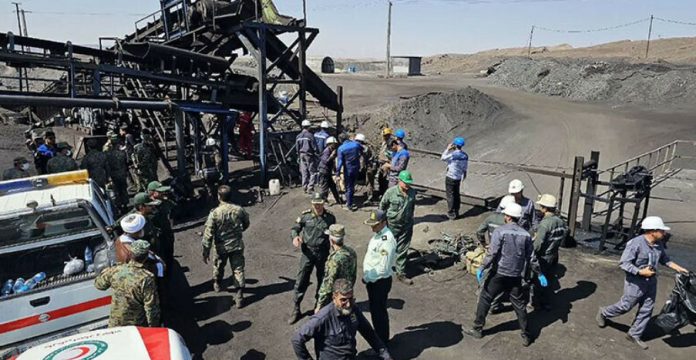
TEHRAN, SEPT 22: A blast caused by a gas leak at an Iranian coal mine has killed at least 51 people, state media said Sunday, in one of the country’s deadliest work accidents in years.

“The number of dead workers increased to 51” in the explosion at the Tabas mine in eastern Iran, the official IRNA news agency reported, revising an earlier death toll of 30.

It added that 20 other people were injured.

The explosion occurred at around 9pm (1730 GMT) on Saturday, when around 70 workers were present at the site in South Khorasan province, IRNA said.

According to the report, a leak of methane gas led to the blast in two blocks of the mine, which is owned by private Iranian firm Madanjoo.

State TV broadcast footage of ambulances and helicopters arriving at Tabas to transport the injured to hospital.

Online footage carried by IRNA showed bodies of some of the victims, wearing their work uniform, carried out of the site on mining carts.

South Khorasan governor Javad Ghenaat told state TV that rescue teams were working to recover the remaining bodies.

Iran’s President Masoud Pezeshkian, in remarks carried state TV before departing for the UN General Assembly in New York, offered his condolences to the families of the victims and ordered a probe into the deadly incident.

“Unfortunately, we learned that an accident occurred in one of the coal mines in Tabas and a number of our compatriots lost their lives. I offer my condolences to their respected families,” Pezeshkian said.

His first vice president, Mohammad Reza Aref, spoke with cabinet members to ensure “emergency follow-up” and support for the victims and their families, IRNA said.

Trapped
Iran’s Red Crescent said search and rescue operations were underway in the mine, where some workers remained trapped.

According to IRNA, they were about 250 metres below the surface, cut off from rescuers by chambers that had filled up with concentrated methane gas.

“Gas accumulation in the mine” has made the search operations difficult, local prosecutor Ali Nesaei was quoted by IRNA as saying.

“Currently, the priority is to provide aid to the injured and pull people from under the rubble,” Nesaei said.

He added that “the negligence and fault of the relevant agents will be dealt with” later on.

Last year, an explosion at a coal mine in the northern city of Damghan killed six people, also likely the result of methane leak according to local media.

In May 2021, two miners died in a collapse at the same site, local media reported at the time.

A blast in 2017 killed 43 miners in Azad Shahr city in northern Iran, triggering anger toward Iranian authorities.

Mineral-rich Iran has around 1.5 billion tons of proven coal reserves, according to state media.

The Tabas mine covers an area of more than 30,000 square kilometres and holds mass reserves of coking and thermal coal, according to IRNA.

It is “considered the richest and largest coal area in Iran,” IRNA said.

Pakistan set to raise Palestine, Kashmir and Islamophobia issues at UNGA

Pakistan set to raise Palestine, Kashmir and Islamophobia issues at UNGA

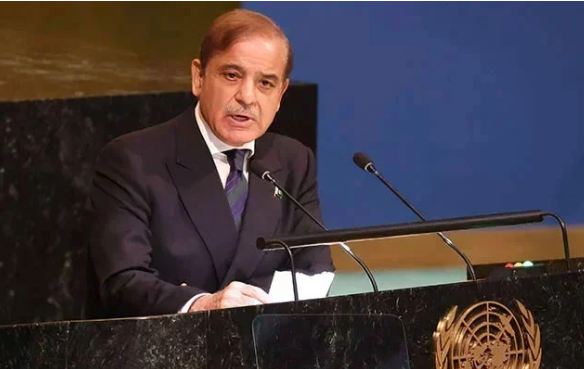
ISLAMABAD, SEPT 22 – Prime Minister Shehbaz Sharif will be attending the upcoming 79th Session of the United Nations General Assembly (UNGA) wherein he will highlight Palestine, Islamophobia and other issues during his address slated for September 27, the Foreign Office said in a statement on Sunday.

The premier, set to attend the UNGA session from September 23 to 27, will underscore the importance of addressing long-standing issues on the agenda of the UN Security Council (UNSC) such as Indian Illegally Occupied Jammu and Kashmir (IIOJK) and Palestine.

The prime minister, a day earlier, reached London for a short tour from where he would depart for New York on Monday (tomorrow).

“Departing for New York to represent Pakistan at the 79th UN General Assembly. Looking forward to a busy week full of engagements. We will present Pakistan’s perspective to the world,” the PM said in a post on X.

Deputy PM and Foreign Minister Ishaq Dar was also scheduled to travel to the US for the UNGA session, however, his trip was cancelled hours before PM Shehbaz left for London.

“In view of some important upcoming diplomatic engagements and the ongoing preparations for the 23rd meeting of the Council of the Heads of Governments of the Shanghai Cooperation Organisation Deputy PM and FM [Ishaq] Dar will not proceed to New York for the 79th session of the UNGA,” an FO spokesperson said.

Sources told The News that the decision for the cancellation of the foreign minister’s trip to New York was taken on Friday afternoon in a meeting at the FO.

Expanding on PM Shehbaz’s trip, the FO said that the premier will not only reaffirm Pakistan’s commitment to multilateralism and support for the UN’s role in fostering global peace, security, and prosperity but will also accentuate the importance of addressing the inequities in international economic relations and reforming the international financial architecture during his time in New York.

The premier will also highlight the country’s priority to place people at the heart of the domestic and global development agenda.

He will express Islamabad’s commitment as an incoming member of the UNSC for the year 2025-26, to work with all UN member states to uphold the UN Charter, preventing conflict, fostering peace, and promoting global prosperity, the FO added.

Furthermore, PM Shehbaz would urge the international community to take decisive measures in addressing climate change and countering the rising tide of Islamophobia.

Moreover, the premier will attend several high-level meetings on the sidelines of the UNGA Session including the “High-Level Meeting on Existential Threat posed by Sea-level Rise,” and the UNSC’s open debate on “Leadership for Peace”.

The prime minister’s schedule also includes bilateral meetings with several world leaders, including the UN secretary-general and UNGA president.

Addis Ababa’s Green Legacy Initiative: A Journey from Deforestation to Reforestation

Addis Ababa’s Green Legacy Initiative: A Journey from Deforestation to Reforestation

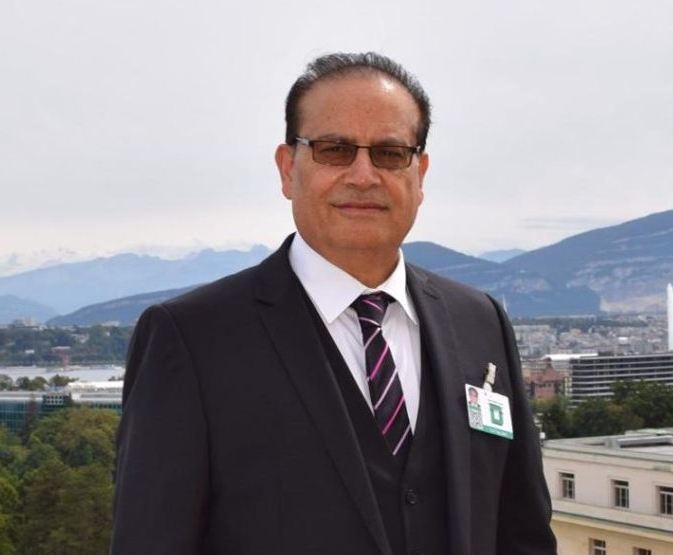
By: Ambassador Dr. Jemal Beker Abdula

The contemporary climate change and environmental degradation debates cannot be divorced from Ethiopia’s recently launched Green Legacy Initiative (GLI). It is a landmark development in the country’s history and its historical environment-protecting mission, spearheaded by the current Prime Minister of the Federal Democratic Republic of Ethiopia, Dr. Abiy Ahmed.

The primary mission of GLI, introduced by Prime Minister Ahmed in 2019, is to plant seedlings through a broader social campaign that would let its government ensure social prosperity, economic development, environmental and biodiversity restoration. The seedling planting campaign focuses on the urban and rural areas simultaneously by introducing multifaceted green initiatives with appropriate research and development support. This countrywide green campaign concentrates on the country’s social and ecological goals, strongly connected with the greater theme of a greener, sustainable and cleaner Ethiopia.

While realizing the severe threats of increasing droughts in the country and their impacts on the lives of more than 120 million people, Prime Minister Ahmed tried to raise public awareness about the overwhelming wave of prevailing non-traditional security threats in the Ethiopian nation where the government has marked the environment degradation as a serious challenge. Prime Minister Abiy Ahmed has led the entire nation to understand the significance of green socialattitude and behaviorto support and promote the social practices of planting and protecting trees. It positively contributes to Addis Ababa’s greater mission of encouraging sustainable environmental and social practices in the country to overcome the emerging security threats of the non-traditional nature.

The GLI represents the Ethiopian government’s determination to uphold the notion of creating an environment-friendly and environment-protecting green culture, enabling its government to mitigate the emerging challenges of climate change and global warming. Addis Ababa-based government officials under the leadership of Abiy Ahmed determined to plant billions of trees across the country to reduce the existing levels of carbon dioxide in the air, parallel to decreasing the environment-degrading effects of greenhouse gasses and developed Long Term Low Carbon Emission Strategy by 2030 net zero carbon emission.

 The extensive public support for the Prime Minister’s green vision is linked with improving present levels of soil health and water conservation and regulating the country’s vulnerability to extreme weather conditions through enhancing the environment-resilient social capacities of the nation. The motto “A Nation that Plants; A Generation that Sustain” fundamentally mobilized around 39 million general public to join the government’s mission due to Prime Minister’s announcement of calling 2024 as the year of Green Legacy Initiative that break its previously held world record planted 615.7 million within a day.

Thus, Addis Ababa’s green mission has made Ethiopia a popular environment-friendly nation in the world, according to various credible reports. The United Nations Department of Economic and Social Affairs has formally recognized the environment-protecting struggle of Addis Ababa by recalling the country’s history ofbecoming an active part of the United Nations Framework Convention on Climate Change (UNFCC) IN 1994. Several other intergovernmental frameworks of the international community, such as the African Union and World Bank, have appreciated the country’s climate-safeguarding quest. The Guinness World Records list has also registered the Ethiopian tree-planting records and made Ethiopia as one of the leadings nations in international reforestation struggles.

The recent records of planting seedlings showed the government’s high commitment to achieving the defined Tree Planting Targets, which are mentioned in detail on the official online sources of GLI. The GLI’s implementation through massive public participation so far has planted 40.5 Billion seedlings in between 2019 to 2024 of which 56 percent is fruits and 44 percent are various trees suitable to local ecology based on research undertakings. These figures show the persistent efforts of state-society collaboration, which facilitated the current Ethiopian government to achieve its desired climate-specific national targets within a defined timeframe.

Public support has been considered internationally as the factor enabling Dr. Abiy Ahmed’s government to achieve high targets for the plantation. In other words, public support is the outcome of Addis Ababa’s comprehensive history of advocating global environmental efforts, which could be measured on certain lines like the launching of the National Adaptation Plan of Action in 2007, the Program of Adaptation on Climate Change and Nationally Appropriate Mitigation Action in 2010 and endorsing the Climate Resilient Green Economy (CRGE) in 2011. Ethiopia is the first country that adopted a policy to ban fossil car import and incentives the green transition.It is pertinent to mention the positive impact of the country’s evolving green culture on the Ethiopian national economy, which has produced around one million jobs and 130,000 nurseries across the country.

On similar note, Ethiopia has achieved food self-sufficiency and ensured food security and start to export avocado, papaya mango, banana etc to Europe, Middle East and Asia. In light of this perspective, the Food and Agricultural Organization (FAO) of United Nations awarded the prestigious medal Agricola to H.E. Dr. Abiy Ahmed for his role and leadership in ensuring food self-sufficiency, poverty alleviation, sustainable development. This progress validates Addis Ababa’s strengths for meeting global pledges agreed upon at various international forums, such as the Paris Climate Change Agreement, the Sustainable Development Agenda of 2030, and the African Regional Agenda of 2063. 

In this way, the Ethiopian campaign of planting massive trees contributes positively to countering the emerging wave of environment-centric global security problems. The global voices for combating the threats of climate change have formally appreciated and acknowledged the Ethiopian role in promoting environmental protection and social practices in the African region. While considering the appreciable efforts of Addis Ababa to restore the degraded landscapes, the Ethiopian government identified the areas needing reforesting under an enhanced natural environment.

So, the multidimensional benefits of Ethiopia’s GLI campaign inflicted a sense of supporting ecosystems and ecological diversity in the African region, and it has become a symbol of a green nation in the region by introducing diverse agroforestry social practices. Moreover, these Ethiopian practices have become exemplary models in the region for other governments whilehelping other nations to follow the state-led broader environment plans of Addis Ababa under Fraternity Planting Programme across Africa. The multileveled phases of planting massive seedlings in different cities and villages proved that the African nations could effectively address the alarming levels of deforestation and soil erosion through the government’s properly structured social awareness campaigns.

Therefore, it could be treated as a blueprint for different African nations witnessing analogous issues of land degradation, agricultural administration, and effective greenland management. The Ethiopian reforestation efforts also led other African nations to start positively engaging different segments of their societies in various productive activities, which could ultimately produce the chance of enhanced community engagement and social mobilization under various political administrations.

 The participation of millions of residents in the large-scale tree-planting activities allowed people of different age groups and diverse ethnic backgrounds to show Ethiopian exertions for developing a sense of responsibility and collectiveness in society. In this way, it delivered a message of togetherness to other nations concerning the collective role of the public in supporting the major government policies and developmental initiatives, and the other African nations could find it an interesting case for strengthening the cooperative state-society connections under their respective political systems. 

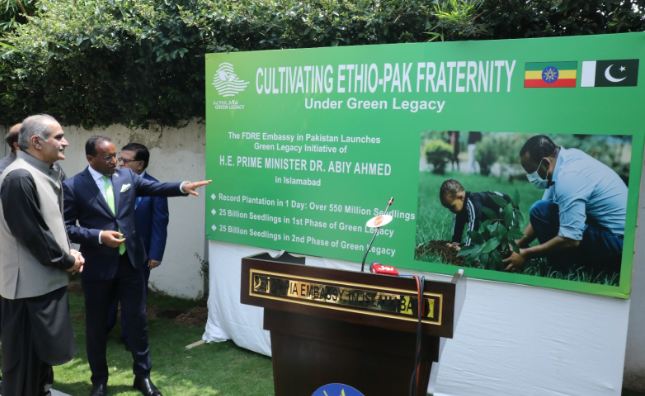
On similar note, the Ethiopian Embassy in Islamabad in collaboration with the Ministry of Climate Change and Environmental Coordination of the Government of Pakistan introduced Ethio-Pakistan Fraternity Planting under Green Legacy Initiative programme throughout the major cities of Pakistan to counter the unfolding the climate danger. 

Australian Diplomat Neil Hawkins strengthens Pak-Australia relations thru sports donation

Australian Diplomat Neil Hawkins strengthens Pak-Australia relations thru sports donation

ISLAMABAD, SEPT 22 (DNA) – The players of the Rising Stars Hockey Club and Rising Stars Girls Hockey Academy are indebted to the Australian High Commissioner to Pakistan Neil Hawkins for donating hockey sticks to the talented players of the Rising Stars Girls Hockey Academy Islamabad.

This selfless act of kindness embodies the true spirit of sports diplomacy and demonstrates his unwavering commitment to empowering young Pakistani athletes.

By providing these talented girls with world-class equipment, Hawkins has not only boosted their morale but also paved the way for them to showcase their skills on the international stage.

His visionary leadership and philanthropic efforts will have a lasting impact on the development of hockey in Pakistan, inspiring a new generation of players to strive for excellence.

We extend our heartfelt gratitude to Excellency Hawkins for his generosity, dedication, and belief in the potential of Pakistani youth.

On this occasion Excellency Col(R) Kamal High Commissioner of Brunei.,Mr Ansar bhatti, Mr Mehmood Ahmed,Mr Asif Bhatti and Sohail Akram Janjua were also present.

Stay Connected

64FansLike
60FollowersFollow

Latest Reviews

Exchange Rates

USD - United States Dollar
EUR
1.17
GBP
1.35
AUD
0.67
CAD
0.72