Home Blog Page 618

China condemns Balochistan School Bus Terror Attack

China condemns Balochistan School Bus Terror Attack

ISLAMABAD, MAY 21 /DNA/ – Chinese Ambassador Jiang Zaidong Expressed Deepest Condolences to the Deceased and Sincere Sympathy to the Injured and the Bereaved Families in the Terrorist Attack in Balochistan.

On May 21st 2025, at the event of 74th anniversary of the establishment of diplomatic relations between China and Pakistan, Chinese Ambassador Jiang Zaidong said, we are saddened to learn that a terrorist attack on a school bus took place in Balochistan today.

We strongly condemn this terrorist attack, express our deepest condolences to the deceased and sincere sympathy to the injured and the bereaved families.

China opposes all forms of terrorism and will continue to firmly support Pakistan in advancing counter-terrorism operations, maintaining social stability, and protecting the safety of the people.

India’s proxies will be defeated, says Tarar

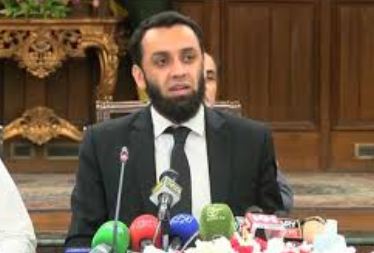
Federal Minister for Information and Broadcasting Attaullah Tarar

ISLAMABAD, MAY 21 (DNA) — Federal Minister for Information and Broadcasting Attaullah Tarar on Wednesday reaffirmed the government’s commitment to defeating terrorism and said India’s proxies would be defeated from Pakistan’s soil.

Speaking in the National Assembly, the minister strongly condemned the terrorist attack on a school bus in Khuzdar, Balochistan, calling it a cowardly act by enemies who have failed to confront Pakistan in traditional warfare.

“This morning, a school bus was deliberately targeted in Khuzdar. Innocent children were attacked. It is a day of national mourning,” he said.Tarar said India was supporting terrorism in Balochistan and Khyber Pakhtunkhwa through Fitna al-Khawarij.

He said, “These are enemies who do not know our history. When the time comes to sacrifice, even the sacrifices of our children are worthy of being written in golden words.” He praised Pakistan’s armed forces for their courage and resilience in defending the nation. “Thanks to Allah, our forces have always defeated the enemy with bravery.

 But today’s attack on schoolchildren shows how desperate our enemies have become,” he added.The minister said that after losing in direct combat, the enemy was now using proxy warfare to destabilize the country.

“They lack the courage to face us openly. Under the leadership of Field Marshal Syed Asim Munir , our forces have shown dominance. Having failed on the battlefield, the enemy is now trying to create unrest in Balochistan and KP through terrorist groups,” he said.

He assured the House that these attacks would not weaken the nation’s resolve. “Our unity is our strength. These foreign-funded terrorists cannot match our willpower. We have previously taken down enemy airbases, missiles, and plans.”

Tarar said the attack on schoolchildren has been condemned by the House. “We will not rest until every terrorist is punished. Investigations are ongoing, and those behind this attack will be brought to justice.”

He also prayed for the early recovery of the injured children, some of whom are in critical condition. “May Allah grant them a quick recovery. Our resolve stands firm—India’s proxies will be defeated, and terrorism will be completely wiped out,” he added.—DNA

Palestine condemns Israel’s attack on diplomatic delegation in Jenin

Palestine condemns Israel's attack on diplomatic delegation in Jenin

RAMALLAH, MAY 21 /DNA/ – The Ministry of Foreign Affairs and Expatriates of the State of Palestine condemns, in the strongest possible terms, the heinous crime committed by the Israeli occupation forces, which deliberately targeted by live fire an accredited diplomatic delegation to the State of Palestine during a field visit to Jenin Governorate. The delegation was undertaking an official mission to observe and assess the humanitarian situation and document the ongoing violations perpetrated by the occupying forces against the Palestinian people.

This deliberate and unlawful act constitutes a blatant and grave breach of international law and of the fundamental principles of diplomatic relations as enshrined in the 1961 Vienna Convention on Diplomatic Relations. The targeting of accredited diplomatic representatives — who enjoy full legal protections and immunities under international law — reflects the systematic contempt of the Israeli occupation for the norms and obligations governing inter-state relations and underscores the deeply entrenched impunity with which it continues to operate.

The Ministry holds the Israeli occupying government fully and directly responsible for this criminal assault and affirms that such acts will not pass without accountability. The Ministry further calls upon the international community — particularly the home countries of the targeted diplomats — to take a clear and resolute stance against this egregious violation and to implement effective measures to curb Israel’s ongoing crimes, including its aggression against the diplomatic corps accredited to the State of Palestine.

The Ministry reiterates its urgent demand for international protection for the Palestinian people and for all diplomatic personnel operating in the State of Palestine.

EU delegation discusses governance reforms with Sindh Assembly Speaker

EU delegation discusses governance reforms with Sindh Assembly Speaker

Nazir Siyal /DNA
KARACHI: A delegation from the European Union, led by Mr. Jeroen Willems, Head of Cooperation, called on the Speaker of the Provincial Assembly of Sindh, Syed Awais Qadir Shah, at his office on Wednesday.

The delegation included Dr. Sebastien Lorion, Team Leader for Governance and Human Capital Development, and Ms. Brekhna Ajmal, Programme Manager for Parliaments and Gender Equality.

The Honourable Speaker was accompanied by MPA Tanzeela Qambrani, Secretary Provincial Assembly Mr. G.M. Umar Farooq, Director General Media Mr. Irfan Ahmed Memon, and Ms. Huma Ikramullah.

Discussions focused on the progress of ongoing collaborative efforts, including the Mustehkam Parlimaan program and its role in strengthening the strategic planning of the Sindh Assembly. The Speaker appreciated the continued cooperation and discussed future support avenues.

The delegation also reviewed the e-Parliament initiative, a project where the European Union will assist in digitizing the Assembly by providing modern technology and equipment to facilitate a transition toward a paperless legislative environment.

Additionally, the EU delegation shared details of an upcoming initiative—the Pakistan Women Leaders Program—being developed in collaboration with UN Women. This program aims to build the capacity of the Women Parliamentary Caucus (WPC) by addressing issues such as harassment during election campaigns, cybercrime challenges faced by women legislators, and efforts to enhance women’s voter registration across Sindh.

The Speaker expressed his strong support for these initiatives and reiterated his commitment to gender equality and women’s empowerment within the legislative process. He acknowledged the role of the EU as a key development partner and assured full cooperation from the Assembly’s leadership.

Later, the Honourable Speaker personally guided the delegation on a tour of the new hall of the Sindh Assembly, where he briefed them on the planned technological installations under the EU-supported digitization program.

In conclusion, Speaker Syed Awais Qadir Shah thanked Mr. Jeroen Willems and his delegation for their continued engagement and invaluable support to the democratic and institutional strengthening of the Provincial Assembly of Sindh.

Taxation: Revenue vs Welfare

Taxation: Revenue vs Welfare

Dr M Ali Hamza

Taxation is the foundation of a strong economy. It funds essential services like infrastructure, education, healthcare, and security, supporting the well-being and growth of society. Paying taxes isn’t just a legal duty; it’s a shared investment in our nation’s future.The core purposes of taxation arei) creating an environment where businesses can thrive and public welfare can be supported through government revenue, ii) promoting fair wealth distribution by ensuring equal opportunities for all; a level playing field, iii) aligning with global tax standards to stay competitive in international trade, and iv) driving national development and progress.Ultimately, it is the responsibility of government decision-makers, those who design and approve the budget, to ensure the said goals are achieved through sound tax policies.

Fairness is a fundamental principle of taxation. The idea isn’t new. In The Wealth of Nations, Adam Smith introduced the Four Canons of Taxation: Equity – taxes should be fair,Certainty- taxpayers should know what to expect,Convenience- taxes should be easy to pay, andEfficiency- tax collection should not be wasteful.Modern economists like Joseph Stiglitz and Arthur Laffer have built on these ideas, focusing on how to raise government revenue while still encouraging growth and supporting public welfare.

Arthur Laffer, known for the “Laffer Curve,” presents another view. He suggests that lower tax rates can sometimes lead to higher revenue by stimulating economic activity and broadening the tax base. According to Laffer, high taxes discourage investment, work, and entrepreneurship. For countries under IMF programs like Pakistan, adopting a more growth-friendly tax policy might increase revenues without stifling the economy and compromising public welfare.

While taxation is meant to support public welfare in all economic models, the real issue lies in how policies are designed and applied. For a country like Pakistan; facing fiscal pressure and operating under IMF programs, it’s crucial to adopt smarter, fairer, and more equitable tax systems.Even the IMF emphasizes the need to protect public welfare. Do our policymakers follow this vision? Maybe, but some recent decisions suggest otherwise.

Let’s look at an example from the 2024–25 budget.The government imposed an 18% GST on packaged, safe milk, shifting it from zero-rated to fully taxed. Why was this decision made?There seem to be two main reasons. First, policymakers likely assumed that packaged milk is mainly consumed by the wealthy, making the tax progressive. However, a study by Mackenzie disproved this. It founds that 60% of packaged milk in Pakistan is consumed by households earning around PKR 50,000 per month; clearly not part of the rich class. This makes the tax regressive. Second, the government may have expected higher revenues by taxing the formal dairy sector. But the result was the opposite: sales dropped by 20%, and revenue targets weren’t met.Beyond these two misjudgements, the decision also led to other negative impactson public health, consumer trust, and the formal dairy industry, which already struggles to compete with the huge unregulated sector.

As an agriculture-based country, farmers are the economy warmers.However, the recent imposition of 18% GST on packaged milk has severely impacted them.According to a report by the Pakistan Dairy Association (PDA), over 500 milk collection centres have shut down. Instead of adding 10–15% new farmers each year, 35% of existing formal dairy farmers were forced to shift back to the unsafe and unregulated loose milk market. Meanwhile, the price of loose milk increased by PKR 30–40 per litre, but farmers had no benefit from this rise, rather the sellers (gawalas).

This tax decision also caused dairy companies to halt major investments. Around PKR 1.3 billion per year meant for farm productivity and farmer development was withdrawn. Additionally, companies had to lay off 20% of their workforce, run their plants at less than 50% capacity, and cancel PKR 400 million per year in investments aimed at converting consumers from raw to safepackaged milk.

A 2024 report by the Federation of Pakistan Chambers of Commerce and Industry (FPCCI) highlights another serious impact of the 18% tax on the formal dairy sector. After the tax was imposed, the unregulated loose milk market, controlled by milk sellers (gawalas), not farmers, gained an extra PKR 1,319 billion through unfair price hikes. Yet, the government didn’t earn a single extra rupee in tax revenue from this shift.The result? More unsafe milk flooded the market, putting public health at risk. Gawalas and shopkeepers made huge profits, while farmers suffered.

Who lost? The farmers, the consumers, the regulated dairy sector, and ultimately, the government itself.This policy undermined progress in food safety, rural livelihoods, and long-term economic development.In a country like Pakistan, with a population of 242 million and over 40% of children suffering from stunted growth due to malnutrition, taxing safe packaged milk goes against public health goals and it is also not even in line with global practices.  Safe milk be either zero taxed or should not exceed 5%.

Dairy example raises concern about, how taxes been dealt in preparation of budget. If pressure of revenue collection is superseding public welfare, we need to re-evaluate our approach. Pakistan needs to expand its tax base, improve administration, and generate sustainable revenue without harming economic growth, compromising on public health and blocking investment into regulated sector.

Sindh Governor, Philippines Envoy to jointly hoist flags in Karachi

Governor Sindh

Nazir Siyal

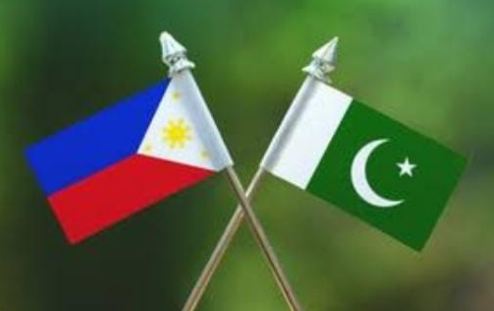
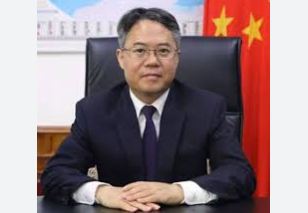
KARACHI, MAY 21 /DNA/ – The Ambassador of Philippines and Governor Sindh will attend the hoisting flag ceremony to mark the 127th National day of the Republic of the Philippines here in Karachi.

The Council General of Phillipines in Karachi Dr. Imran Yousuf S.I and The Islamabad Ambassador H.E Emmanuel R Fernandez from Philippines embassy

 has invited the Governor of Sindh Kamran Tessori to participate in the 76th anniversary of the establishment of Philippines-Pakistan bilateral relations, and 127th anniversary of the declaration of independence of Re-Public of Philippines to promote the bilateral relations on the Philippines national independence day organized on Monday 16th June, 2025, while on 15th June 2025 the Governor of Sindh Kamran Tessori and the Ambassador Emmanuel R Fernandez from Philippines embassy with his diplomatic team to hoist both Philippines-Pakistan flags together at Fountain Chowk near Karachi Press Club on the occasion.

Pak-UK Forum hails Gen. Munir’s elevation to field marshal

Pak-UK Forum hails Gen Munir’s elevation to field marshal

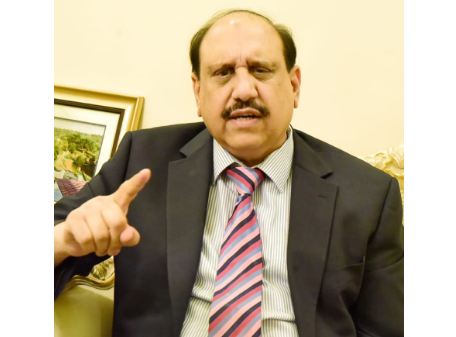
ISLAMABAD, MAY 21 /DNA/ – Khurshid Ahmad Hashmi, Vice President of the Pak-UK Trade Forum, has lauded the Government of Pakistan’s decision to elevate Chief of Army Staff General Syed Asim Munir to the rank of Field Marshal, calling it a commendable move and a great honor for the entire nation.

Speaking at a press conference held at a local hotel in Islamabad during his visit from the United Kingdom, Mr. Hashmi praised the Pakistan Armed Forces for their decisive and courageous response to Indian aggression under the cover of darkness. “The Pakistani military has once again brought pride to the nation on the global stage through its unmatched professionalism and valor,” he said.

Mr. Hashmi stated that the recent military engagement significantly boosted the morale of the Pakistan Army and won the hearts of overseas Pakistanis, who stand shoulder to shoulder with the armed forces. “The exceptional strategy and leadership of General Syed Asim Munir have strengthened Pakistan’s defense capabilities,” he added.

He emphasized that the Federal Cabinet’s decision to promote General Munir as Field Marshal truly reflects the aspirations of the Pakistani people. “With divine support and professional excellence, the Pakistan Army has demonstrated its ability to defend the motherland against a far larger adversary, proving that it is among the best armies in the world.”

Mr. Hashmi also paid tribute to the success of Operation “Bunyan Marsos”, acknowledging the vital role played by Pakistan’s Army, Navy, and Air Force. “Overseas Pakistanis are immensely proud of the accomplishments of our armed forces, and their heads are held high with pride,” he said.

Zardari hails 74 Years of Pakistan-China “Iron Brother” ties

Zardari forms committee for talks with electables

DNA

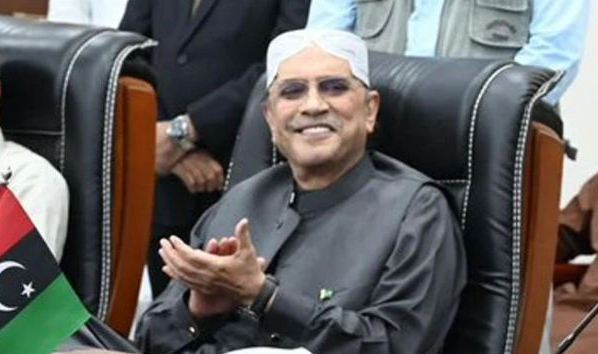
Islamabad, 21 May: President Asif Ali Zardari has extended heartfelt congratulations to the governments and peoples of Pakistan and China on the occasion of the 74th anniversary of the establishment of diplomatic relations between the two countries. He said that Pakistan highly valued its historic and time-tested relationship with China, adding that ties with China remained a cornerstone of Pakistan’s foreign policy.

The President remarked that over the past seven decades, bilateral relations between the two brotherly nations had grown from strength to strength, evolving into a comprehensive strategic cooperative partnership. He described Pakistan and China as “iron brothers” bound by an all-weather friendship. “Pakistan is a staunch supporter of the ‘One China’ policy and will continue to stand firmly with China on its core national interests,” he added.

The President expressed gratitude to the government and people of China for consistently supporting Pakistan in times of need. He lauded China’s vital role in Pakistan’s economic and social development, as well as in strengthening Pakistan’s defence sector.

Highlighting the China-Pakistan Economic Corridor (CPEC) as a shining example of bilateral cooperation, the President noted that CPEC has positively impacted Pakistan’s economy, infrastructure, and energy sector.

“Pakistan-China relations are anchored in mutual trust, respect, and goodwill, and both countries remain committed to promoting regional peace, stability, shared prosperity, and enhanced connectivity,” the President stated. He reiterated Pakistan’s desire to further deepen bilateral ties in the areas of economy, technology, defence, education, and trade. He also reaffirmed his resolve to broaden and strengthen these relations in the future.

The President also extended his best wishes to the people and leadership of China on this occasion.

Latvia envoy visits ICCI to boost trade, investment ties with Pakistan

Latvia envoy

ISLAMABAD, MAY 21 /DNA/ – In a significant step towards strengthening bilateral relations Ms. Dana Goldfinaca, the Ambassador of Latvia to the United Arab Emirates and Non-Resident Ambassador to Pakistan, visited the Islamabad Chamber of Commerce and Industry (ICCI)  showcasing enthusiasm for expanding trade, investment, and cultural cooperation between Latvia and Pakistan.

During her remarks, the Ambassador emphasised the strong potential for growth in key sectors including agriculture, information technology, and innovation. “Latvia’s advanced agricultural practices and expertise in the IT sector can significantly contribute to enhancing Pakistan’s productivity and technological development,” she said, underscoring Latvia’s willingness to forge a mutually beneficial partnership with Pakistan.

The Ambassador highlighted that enhanced trade relations will not only boost economic collaboration but also promote cultural exchange and people-to-people connections, setting the foundation for long-term friendship and mutual growth.

Welcoming the Ambassador, Nasir Mansoor Qureshi, President of ICCI, noted that her visit reflects a spirit of goodwill and a growing interest in exploring Pakistan’s vast economic potential. “With an economy valued at USD 375 billion, a dynamic labor force of over 70 million, and 60% of the population under 30, Pakistan is a nation of youthful energy and immense opportunity,” he said.

He further pointed out that Latvia stands to benefit from partnerships in sectors such as textiles, renewable energy, pharmaceuticals, and tech innovation. “There is a strong foundation for Latvia and Pakistan to collaborate in areas of mutual strength,”  Qureshi added.

To formalize this growing partnership, the sides decided to ink a Memorandum of Understanding (MoU) at the earliest possible time to promote bilateral trade and investment opportunities, facilitate the exchange of business, trade, and cultural delegations, encourage collaboration in organizing and participating in trade fairs, exhibitions, and conferences, enhancing mutual understanding and collaboration in economic, political, and cultural spheres.

Tariq Sadiq, Chairman ICCI Founder Group talked about Chamber’s key initiatives for the ease of doing business and economic stability of Pakistan as well as its future endeavours for the purpose.

Former Presidents Mian Akram Farid, Zahid Maqbool, Khalid Iqbal Malik, Mian Shaukat Masood also shared their insights for the collaboration.

Naeem Siddiqui, Advisor to ICCI President moderated the event by showcasing potential sectors of cooperation between Pakistan and Latvia.

Former Presidents Zafar Bakhtawari, Mohammad Ahmad , Executive Members Fatima Azim and former SVP Mehmood Warrich were also among the attendees.

A Peaceful Nation, A Powerful Warning

A Peaceful Nation, A Powerful Warning

by Muhammad Mohsin Iqbal

There was a time when the art of “Kush’ti” wrestling held a cherished place in the hearts of the youth. It was not merely a pastime, but a noble pursuit—an emblem of strength, discipline, and honour. Young men, in the prime of their years, would engage in rigorous exercise with great zeal and pride, preparing themselves for the challenges in the “Akharra” Arena. The streets echoed with the determined footsteps of these young wrestlers, who walked their neighborhoods with chests puffed in the innocent arrogance of youth and the boldness that comes with untested strength. Often, when two such spirited souls crossed paths, their silent stares would be enough for the elders to intervene, directing them to the akharra—the arena—where strength could be proven not in words or boasts, but in action and courage.

In those contests, the skilled and powerful wrestler would dominate, tossing his opponent to the ground with clean and commanding moves. And when victory was his, he was celebrated with beating drums and songs of triumph, a true hero of the soil. The defeated, though humbled, would accept his loss as part of the game—perhaps consoling himself with schemes for a future rematch. But no amount of whispering in corners or brewing of petty plots could stain the honour of the victor, for his triumph had been earned in open combat, under the watchful eyes of all.

And now, what was once a tale of the wrestling pit seems to have come to life on the larger canvas of nations. In recent days, India has found itself in the place of the defeated wrestler—cast to the ground by Pakistan in a manner both public and undeniable. Stripped of its pride on the battlefield, it is left with no honourable avenue through which to respond. But rather than accept defeat with dignity, it has chosen the way of whispers and plots. Like the vanquished wrestler who cannot bear the sting of loss, India has turned away from the open arena and has instead embraced the shadows.

Pakistan, on the other hand, has always acted with restraint and dignity. It is a peaceful country, seeking peace and development not only for itself but for the entire region. Our intentions are rooted in cooperation, not confrontation. Yet, we are never negligent in our defense. History bears witness that we have never been the first to strike—but when the enemy crosses the line and tests our patience, we have always known how to correct his behaviour with forceful clarity. We do not raise the sword by choice, but when it is raised against us, we do not falter in its use.

Unfortunately, India’s rulers have long followed a dangerous pattern: whenever elections approach, they drag Pakistan into their political theater, weaving false dramas and fabrications to stir public emotions and win votes. This tired tactic has not only poisoned the atmosphere of the region but has also made a mockery of the idea of responsible leadership. It is high time they abandon this reckless strategy and begin to act like good neighbors rather than hostile provocateurs. They must understand that Pakistan’s hands are now untied—and if they make the mistake of provoking us again, the response will be far more decisive than before. The elders have long said that a hint is enough for the wise, but it seems that wisdom has long fled their counsel.

India, having failed in direct confrontation, now seeks to inflict harm through underhanded means—by rekindling old alliances with elements hostile to Pakistan, by sowing discord in Balochistan, and by nurturing the venom of terrorism in the very veins of our nation. These are not the acts of a noble adversary but of one who has lost both the contest and the courage to face the truth of his defeat.

Pakistan must not allow this moment of triumph to dull its senses. Indeed, now is the time for sharper vigilance and deeper unity. We must recognise that the defeated often become the most dangerous, for they carry the bitterness of loss with them, feeding on it, waiting for a moment of weakness in their adversary. India, wounded and embarrassed, will not soon forget the humiliation it has suffered. Its pride has been pierced, and it shall roam the region like an injured beast, desperate to strike, even if only in small and cowardly ways.

We must not give it that chance.

Our resolve must be steeled, our development plans guarded, and our national unity preserved. Let us not be caught off-guard in this next phase, for while the war may be over in one form, it continues in another—less visible, but equally insidious. We must look beyond the celebrations of victory and recognise the long road that still lies ahead, fraught with trials and the constant tests of our strength, our patience, and our wisdom.

The lesson from the wrestling arena is a timeless one: victory must be followed by vigilance, and strength must be tempered with foresight. As long as we remain watchful and united, the defeated may plot, but they shall never prevail. Let the drums of triumph continue to sound, not only for our victories on the field but for the steadfastness we show in the face of every storm that follows.

Stay Connected

64FansLike
60FollowersFollow

Latest Reviews

Exchange Rates

USD - United States Dollar
EUR
1.17
GBP
1.35
AUD
0.72
CAD
0.73