Home Blog Page 617

Four dead in Karachi as Covid sees ‘odd’ summer surge

Four dead in Karachi as Covid sees 'odd' summer surge

Nazir Siyal

KARACHI: At least four people — mostly elderly individuals with compromised immune systems and pre-existing health conditions — have died of Covid-19 in Karachi amid a marked uptick in cases over the past fortnight, officials and infectious disease experts confirmed on Thursday, The News reported.

All the fatalities occurred at Aga Khan University Hospital (AKUH), which has reported a steady rise in Covid-19 admissions — a trend described by experts as “unusual” for this time of year.

Prof Dr Syed Faisal Mahmood, an infectious diseases specialist at AKUH, said the hospital has been seeing a consistent influx of Covid patients. “And we’re seeing patients getting hospitalised daily with Covid-19.”

Describing the current wave as “odd”, Dr Mahmood noted that being a respiratory illness, Covid has typically seen higher transmission in winter months, but this time the cases are rising even as the city is experiencing daytime temperatures exceeding 40°C.

“It’s a flu-like infection, and its spikes are usually seen in winter. However, this year we’re witnessing a midsummer rise, which is not something we usually expect.” Reassuring the public, he said that while the virus is circulating, it is largely causing mild, flu-like symptoms among healthy individuals.

He advised those with symptoms such as sore throat, cough, runny nose and fever to wear a mask, avoid gatherings, and consult a healthcare provider for symptomatic treatment.

“People with high-risk conditions, the elderly and pregnant women should remain cautious. People with high-risk conditions such as those over 65 or with low immunity should get tested so that treatment can be started early.”

Dr Javed Khan, a specialist in respiratory diseases, shared that 8 to 10 patients with symptoms of COVID-19 are arriving daily at a private hospital. “Since last week, 8 to 10 positive cases of COVID-19 are being observed daily,” said Dr Khan.

PM Shehbaz offers condolences to China over landslide deaths

PM Shehbaz offers condolences to China over landslide deaths

At least four dead, 17 missing after rain-triggered landslides hit China’s Guizhou province

Mehtab Pirzada/DNA

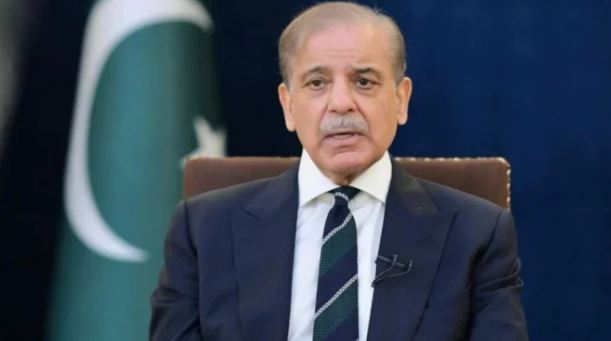
ISLAMABAD: Prime Minister Shehbaz Sharif on Friday expressed deep sorrow over the tragic loss of life caused by landslides in Guizhou, China.

Offering condolences to the bereaved families, the prime minister said Pakistan stands in solidarity with the people and government of China during this difficult time and prayed for the safe recovery of those still missing.

At least four people have been confirmed dead and 17 remain missing after torrential rains triggered two separate landslides in southwestern China’s mountainous Guizhou province on Thursday, according to state media reports.

The first landslide struck Changshi township in Dafang County at around 3am local time (1900 GMT Wednesday), followed by a second in Guowa township at approximately 9am, state broadcaster CCTV reported. Nineteen people from eight households were initially trapped, with ongoing efforts to locate survivors.

Aerial footage showed entire villages submerged in thick brown mud, with farmland inundated at the base of densely forested hillsides.

In response, authorities activated a Level II emergency response — China’s second-highest alert — for geological disasters. The Ministry of Natural Resources has dispatched a specialised team to oversee rescue operations, while the emergency management ministry urged rescue personnel to exert “every possible effort” despite difficult terrain.

However, it said the remote region was “high and steep” and that rescue efforts were proving “difficult”.

Chairman HEC, Bangladeshi envoy discuss avenues of collaboration

Chairman HEC, Bangladeshi envoy discuss avenues of collaboration

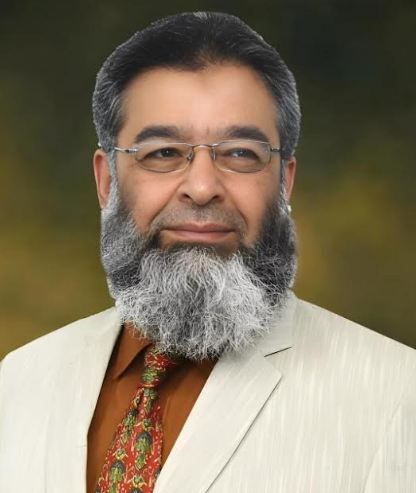
ISLAMABAD, MAY 23, /DNA/ – Chairman Higher Education Commission (HEC) Prof. Dr. Mukhtar Ahmed held a productive meeting with High Commissioner of Bangladesh to Pakistan Md. Iqbal Hussain Khan to discuss opportunities for collaboration in higher education and research with a particular focus on medical education. 

Highlighting the critical shortage of qualified medical professionals in Bangladesh, the High Commissioner underscored the need for enhanced bilateral cooperation. He also emphasised the significance of collaboration between the Pakistani medical universities and their Bangladeshi counterparts. He noted that the Pakistani universities may offer assistance to Bangladesh in medical education. 

Dr. Mukhtar Ahmed assured the High Commissioner of the Government of Pakistan’s unwavering commitment to supporting the advancement of higher education in Bangladesh. He elaborated on Pakistan’s efforts to facilitate academic collaboration, including the provision of scholarships for Bangladeshi students in medical education and other disciplines.

The two sides agreed to closely work on mutual academic interests, paving the way for future collaborations that will contribute to the advancement of higher education both in Pakistan and Bangladesh.

Poland slams attack on school bus, hails Pak-India ceasefire

Poland slams attack on school bus

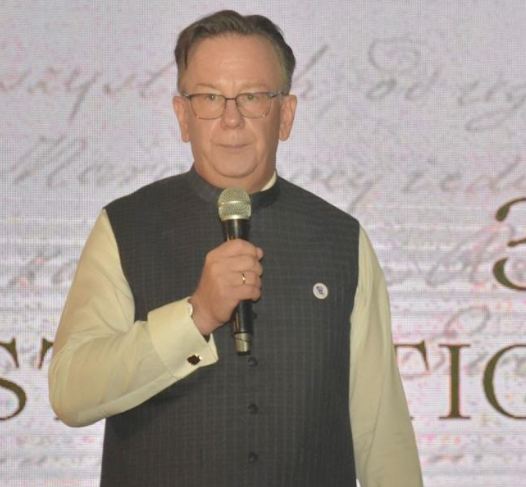
In his keynote address, Polish Ambassador Maciej Pisarski began on a somber note, strongly condemning the recent terrorist attack on schoolchildren in Khuzdar, Balochistan. “To shutter the life, future, dreams of the young ones is just beyond comprehension and condemnation

Mahnoor Ansar/DNA

ISLAMABAD, May 23 — The Embassy of the Republic of Poland in Islamabad hosted a vibrant and emotionally resonant ceremony on Thursday evening to mark the Constitution Day of Poland, drawing a distinguished gathering of diplomats, parliamentarians, civil servants, and media personnel.

In his keynote address, Polish Ambassador H.E. Maciej Pisarski began on a somber note, strongly condemning the recent terrorist attack on schoolchildren in Khuzdar, Balochistan. “To shutter the life, future, dreams of the young ones is just beyond comprehension and condemnation. No cause can ever justify such heinous action,” he stated, urging global unity against violence targeting innocent lives.

Amid the solemn backdrop of ongoing global conflicts, Ambassador Pisarski reaffirmed Poland’s commitment to peace, lauding recent de-escalatory steps taken by Pakistan and India. “One could only hope the Russian leadership follows the example of more responsible leaders,” he added, referencing continued Polish support for Ukraine amid Russian aggression.

The ambassador reflected on the historic significance of Poland’s May 3rd Constitution of 1791, the first in Europe and second globally, as a lasting symbol of democratic ideals and civic rights. “This evening marks the closing of our Constitution Day celebrations, which began with a concert of Chopin and Moniuszko. Today, we celebrate not just history, but our enduring friendship with Pakistan,” he said.

He also highlighted the deep historical ties between Poland and Pakistan, recalling the contributions of Polish airmen such as Air Commodore Władysław Turowicz to the early development of the Pakistan Air Force. “The slogan ‘Pak-Poland Dosti Zindabad’ is not just symbolic—it reflects a growing partnership,” the ambassador noted, citing expanding trade and investment initiatives.

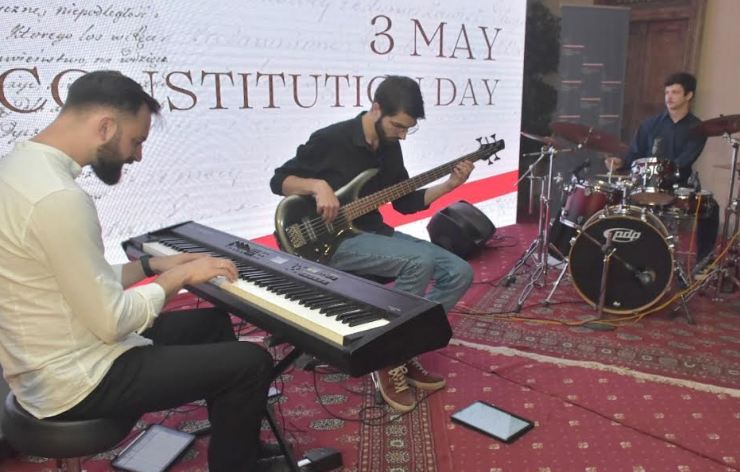
The evening culminated in a spirited jazz recital by the renowned Polish ensemble, JAH Trio. Part of the “Jazz po polsku” (Jazz in Polish) project, the performance featured pianist Jan Jarecki, bassist Michał Aftyka, and drummer Marcin Sojka—rising stars of Poland’s contemporary jazz scene. The trio, known for blending traditional jazz elements with modern improvisation, captivated the audience with their rhythmic sophistication and melodic charm.

Their performance added a refreshing cultural flourish to the event, which also included Polish cuisine and lively diplomatic exchanges, symbolizing the warmth of Poland-Pakistan relations. As the notes of jazz echoed through the embassy gardens, guests celebrated not only a historic constitution but also a shared vision of peace, resilience, and cultural exchange.

Pakistan Volleyball Federation unveils ambitious international calendar for 2024

Pakistan Volleyball Federation unveils ambitious international calendar for 2024

Chaudhry Yaqoob emphasized the need for strong governmental support, stating that without state backing, it would be challenging to consistently raise Pakistan’s profile internationally

Ansar M Bhatti

ISLAMABAD: Chairman of the Pakistan Volleyball Federation (PVF), Chaudhry Muhammad Yaqoob, held a press conference to outline the federation’s international participation plans for the year 2024. Despite limited resources, Pakistan is set to participate in seven major international volleyball events, demonstrating its commitment to elevating the sport and promoting the country’s image on the global stage.

One of the most significant announcements was the visit of the Russian national volleyball team, which will tour Pakistan from June 23 to 27. This historic tour is expected to boost bilateral sporting ties and offer valuable exposure to the national team.

Chaudhry Yaqoob emphasized the need for strong governmental support, stating that without state backing, it would be challenging to consistently raise Pakistan’s profile internationally. “Governmental assistance is vital if we are to continue making Pakistan proud on the world stage,” he said.

He also announced that the national senior team will participate in the Central Asian Volleyball League in Uzbekistan starting May 29, and later in the Asian Nations Cup in Bahrain.

The U-16 national team will tour Uzbekistan and Thailand in June and July, while the U-19 team will make its debut at the World Championship to be held in Uzbekistan from July 24 to August 3.

In addition, Pakistan’s junior team is set to participate in the Asian Youth Games, marking another step in the federation’s strategy to develop young talent.

Chaudhry Yaqoob highlighted the talent emerging from Pakistan, saying, “Our young players are immensely talented, and many of them are already playing in international volleyball leagues.” He credited the federation’s efforts for this success and expressed optimism about the future of volleyball in Pakistan.

The PVF’s roadmap reflects an ambitious vision to place Pakistan firmly on the international volleyball map, nurturing future stars and expanding the country’s footprint in global competitions.

Govt vows decisive action against Fitna al-Hindustan after Khuzdar attack

Govt vows decisive action against Fitna al-Hindustan after Khuzdar attack

ISLAMABAD, MAY 23: Interior Secretary Captain (retd) Khurram Muhammad Agha on Thursday said Pakistan’s response to the recent Fitna al-Hindustan attack in Khuzdar would be “decisive”, warning that the perpetrators would not succeed in their objectives.

Addressing a joint press conference alongside Director General of the Inter-Services Public Relations (DG ISPR) Lieutenant General Ahmed Sharif Chaudhry, the interior secretary condemned the tragic terrorist incident and said the government stands in full solidarity with the affected families.

Captain (retd) Agha said that initial investigations point to the involvement of Fitna al-Hind in the attack, terming it a continuation of India’s subversive strategy in the region.

He stressed that the attack on Khuzdar was not just an act of terrorism, but a direct assault on Pakistan’s traditions and educational values.

The top official revealed that schoolchildren were deliberately targeted in the incident and accused Fitna al-Hindustan of attempting to destabilise regional peace through such violent acts.

The interior secretary said that the Ministry of Interior, in collaboration with the provincial government and other institutions, is reviewing every aspect of the attack.

He further stated that following the failure of Operation Sindoor, India instructed its proxies to carry out attacks in Balochistan.

Captain (retd) Agha added that the Pakistani state has the capability to eliminate those involved and asserted that after failing to strike hard targets, these elements have now turned to soft targets.

Reaffirming the state’s resolve, he concluded: “Our response will be decisive. They will not succeed.”

For his part, DG ISPR Lt Chaudhry said that Pakistan had provided evidence of Indian-sponsored terrorism to the United Nations in 2015, and again in 2019.

He added that in 2009, the Government of Pakistan had also presented similar evidence to the Indian Prime Minister in Sharm El Sheikh, a city in Egypt.

He said that India had been involved in state-sponsored terrorism for the past 20 years, and this record was now being placed before the public. Lt Gen Chaudhry reminded the world that Indian spy Kulbhushan Jadhav was arrested from Pakistan, while several captured terrorists had confessed to receiving support from India.

Lt Gen Chaudhry said that India wanted to sabotage regional peace, and the attack on May 21 was carried out by Fitna al-Hindustan on direct orders from India.

He termed this as the “terrorist and brutal face of India” and clarified that these attacks had nothing to do with Baloch or Pakistani identity.

He said that on April 12, 2024, 12 labourers were martyred in Nushki. On April 28, two labourers were killed in Tump Kech. On February 14, 10 people lost their lives in an IED blast in Harnai.

Innocent civilians and off-duty security personnel were martyred in the Jaffer Express attack, while three innocent barbers were martyred in Lasbela on May 9, he mentioned.

Six children were martyred in the Khuzdar attack on May 21, and 51 children were still fighting for their lives, he added.

He said that terrorists, acting on Indian instructions, were now targeting women and children. However, the resilience of the people of Balochistan could not be broken. Videos of the families of those martyred in Balochistan were shown during the press conference.

Beijing’s Afghan Future

Beijing’s Afghan Future

By Qamar Bashir

While the West devastated Afghanistan through decades of war, drone strikes, and foreign occupation, China took a different path—quiet, strategic, and respectful. As American troops dropped bombs and NATO scrambled for exits, China was building something far more enduring: relationships, trust, and long-term partnerships—not with governments or factions, but with the people themselves.

China never intervened in internal conflicts. It didn’t back one militia over another or try to redesign Afghanistan in its own image. Instead, it reached out to Afghan farmers, miners, traders, and workers—those who hold the real stake in a nation’s future. China didn’t issue ultimatums or demand allegiance. It offered trade, development, investment, and a shared vision rooted in mutual benefit. While others saw Afghanistan as a battlefield, China  saw it as a bridge. And now, that vision is taking form.

On May 21, 2025, a landmark “informal” meeting in Beijing brought together the foreign ministers of China, Pakistan, and Afghanistan. More than handshakes and smiles, it marked a strategic turning point: the decision to extend the China-Pakistan Economic Corridor (CPEC) into Afghanistan. A decision that could not only reshape the region, but offer Afghanistan a real shot at peace—on Afghan terms.

CPEC, the flagship of China’s Belt and Road Initiative, has already transformed Pakistan with highways, ports, power plants, and rail links. Now, Afghanistan joins this evolving network—not as a dependent state, but as a vital partner. This is not just about infrastructure; it’s about integration. Roads will link not only cities, but economies. Corridors will connect not only markets, but destinies.

Importantly, the emphasis is not just on “hard” connectivity—rails, roads, ports—but also on “soft” connectivity: harmonizing regulations, easing trade, facilitating the movement of people, and respecting local customs and social structures. It’s a nuanced, sophisticated model. One that does not demand political alignment but offers economic alignment.

And within this spirit of integration, other dormant regional initiatives are regaining momentum—CASA-1000, TAPI, the Trans-Afghan Railway—each poised to support energy sharing, trade expansion, and regional mobility.

What sets China apart is its commitment to letting Afghanistan rebuild itself—on its own cultural, social, and religious terms. There is no political engineering. No social or cultural meddling. China is not offering a model to impose; it is offering a hand to uplift. And that matters in a land long scarred by foreign interference.

This new economic vision will allow Afghanistan to thrive the Afghan way. Under the guidance of its traditions, shaped by the values of its people, and led by the social fabric rooted in the Pashtunwali code, Afghanistan can now envision a future that is both modern and authentic.

In the same meeting, the three nations also addressed regional peace and stability with clarity and resolve. They jointly emphasized that no group or actor—whether Tehreek-e-Taliban Pakistan (TTP) or the Eastern Turkistan Islamic Movement (ETIM)—would be allowed to use their territories to threaten regional security.

But this was not a military statement. It was a reaffirmation that true security is a product of stability and opportunity, not surveillance and subjugation. And for the first time in years, regional players are aligning not around ideology, but around infrastructure, integration, and mutual interest.

The commitment to non-interference in Afghanistan’s internal affairs—a principle stressed by all three parties—further highlights the maturity of this partnership. Where others tried to rule, this alliance seeks to support.

This development also sends a gentle but clear message to powers like the United States, the broader West, and even India: peace is not built through pressure or presence—it is earned through partnership.

India, in particular, is watching this shift with unease. Having long opposed CPEC due to its passage through Pakistan-administered Kashmir, New Delhi now sees its regional influence challenged by a deepening China-Afghanistan-Pakistan axis. Its strategic projects like Chabahar Port and regional outreach to Central Asia now face real competition.

But perhaps this is also a moment for reflection. What has military intervention achieved that peaceful development cannot exceed? What has isolation created that connectivity cannot heal?

Afghanistan, long viewed as a crossroads of conflict, is now being prepared to become a corridor of cooperation. With CPEC stretching into its heartlands, Afghan traders will gain access to global markets. Afghan workers will have new employment prospects. Afghan youth will see schools grow, roads built, and hope return.

This transformation won’t happen overnight—but it is no longer a fantasy. With $40–50 billion in projected regional investments, trade volume expected to multiply, and transit routes expanding across borders, Afghanistan is poised to become a pivot—linking South Asia to Central Asia, the Middle East, and beyond.

China’s approach isn’t just strategic—it is profoundly human. It understands that the way to build peace is to help people live with dignity. To give them something to lose—and thus, something to protect. And that’s exactly how China transformed Xinjiang—by investing in education, skills, industries, and livelihoods. Now, the same model is being softly replicated in Afghanistan.

With China’s integrated, respectful, and win-win approach, a new Afghanistan is within reach—one where terrorism fades into irrelevance, schools thrive, trade routes flourish, and airports once again welcome the world. Roads of international standard will connect the country to the region. Its corridors will pulse with economic life. Its cities will hum with opportunity.

And most importantly, this prosperity will belong to Afghans. It will be shaped by their traditions, guided by their values, lived according to their social norms, and honored through their timeless Pashtunwali code. No foreign model will be imposed. No social fabric will be rewritten. No cultural identity will be challenged.

This is not a distant hope. It is a near and unfolding reality. Under China’s guidance and with regional cooperation, Afghanistan is no longer the world’s forgotten battlefield. It is becoming its new bridge—linking civilizations, reviving ancient trade routes, and lighting a path toward shared peace and prosperity.

By Qamar Bashir

 Press Secretary to the President (Rtd)

 Former Press Minister at the Embassy of Pakistan to France

 Former MD, SRBC

 Macomb, Michigan, USA

Murder of Innocence: India’s War by Proxy in Pakistan

Murder of Innocence: India's War by Proxy in Pakistan

by Muhammad Mohsin Iqbal

The tragedy that unfolded in Khuzdar, where innocent schoolchildren were mercilessly targeted in a despicable act of terrorism, has plunged the nation into mourning and deepened our resolve to confront the evil that stalks our land. This was not just an attack on young lives—it was a calculated strike against our future, a cowardly blow inflicted by an enemy that has repeatedly failed to subdue us on the battlefield and now turns to the slaughter of our children to quench its bitterness.

Why is it that the pure and innocent—the school-going children of Pakistan—are made victims of such heinous crimes? The nation still bears the scar of December 16, 2014, when terrorists stormed the Army Public School in Peshawar and massacred over 140 lives, most of them children. It was a day when the heavens wept, and the earth stood still in grief. Now, a similar nightmare has descended upon Khuzdar. The message from our enemy is unmistakable: if we cannot defeat you in combat, we will break you by murdering your young.

This strategy of targeting civilians and, worse, children, is not born of battlefield tactics but of desperation and inhuman cruelty. After the Peshawar attack, the Government of Pakistan presented a meticulously prepared dossier to the United Nations and other international bodies. That document provided clear, irrefutable evidence of Indian involvement in planning and supporting the terrorists behind the massacre. It detailed communications intercepted between operatives in Afghanistan and handlers linked to Indian intelligence agencies. It revealed funding channels traced back to Indian sources and the use of Afghan soil under Indian patronage for orchestrating the attack.

And yet, despite the gravity of these revelations, the international community remained disturbingly indifferent. The dossier, which should have led to firm diplomatic consequences and international condemnation, was quietly shelved. Justice was neither demanded nor delivered. If that evidence had been given the seriousness it warranted, if India had been held accountable in 2014, perhaps Khuzdar would never have happened.

Allah Almighty has warned in the Holy Qur’an:

“And do not kill the soul which Allah has forbidden, except by right…” (Surah Al-Isra, 17:33)

This divine commandment is not only a cornerstone of Islamic jurisprudence but a universal moral truth. The murder of innocent souls, particularly children, is an abomination that cries out to the heavens. The Prophet Muhammad (peace be upon him) forbade the killing of women and children even during war. In an authentic Hadith, he said:

“Do not kill any child, any woman, or any elder or sick person.” (Sunan Abu Dawood)

Such teachings starkly contrast with the barbarity we witnessed in Khuzdar and earlier in Peshawar.

It is time we stand firm and loud against this injustice. Pakistan must revive the 2014 dossier and present it again, now alongside the new evidence emerging from the Khuzdar incident. The patterns are too similar, the motives too familiar, and the enemy too well known for this to be dismissed as coincidence. From covert operations in Balochistan to the funding of separatist and terrorist outfits, India has waged a shadow war against Pakistan for years, often targeting those least able to defend themselves.

The world is well aware of the states that have made brutality their policy. Whether in Gaza or Kashmir, whether it is Israel or India, it is the same thirst for horror that drives bullets into the hearts of children, women, and peaceful citizens. Yet, these powerful nations hide behind diplomatic cloaks and international alliances, while the blood of the innocent continues to flow.

Pakistan must now formulate a coherent and assertive policy that goes beyond statements of condemnation. We must unite our civil and military intelligence, strengthen border surveillance, and take the diplomatic offensive. The world must be shown—again and again—what our enemy is capable of, not with accusations, but with proof, dossiers, and undeniable facts. Let the Khuzdar tragedy become a rallying cry for international justice, not a forgotten headline.

At the same time, we must prepare to respond with the same strength and strategy that has led us to victory on the battlefield. The resolve that broke the back of terrorism after Peshawar must be renewed, and our security apparatus revitalized. We must never let our enemy believe that targeting children can break our will. It cannot—and it will not.

Let this also be a moment of soul-searching for the global conscience. How many more children must die before the world acts not out of politics, but out of principle? How many more coffins must be lowered before justice is no longer selective?

The Holy Qur’an says:

“Whoever kills a soul…it is as if he had slain mankind entirely. And whoever saves one—it is as if he had saved mankind entirely.” (Surah Al-Ma’idah, 5:32)

Our mission, then, is not only national but profoundly human. We owe it to the martyrs of Peshawar, to the victims of Khuzdar, and to every tear-stained mother’s prayer. The enemy seeks to instil fear; we must answer with unity, justice, and truth.

We can no longer afford silence. The blood of our children is louder than any speech, and it demands justice with a voice no nation can dare ignore.

Australia Day in Spring celebrated with cultural fusion and warmth in Islamabad

Australia Day

Ansar M Bhatti / DNA

ISLAMABAD: The Australian High Commission hosted a colourful and culturally rich reception to mark Australia Day in Spring 2025, highlighting the vibrant people-to-people ties that define the ever-growing relationship between Australia and Pakistan.

Haroon Akhtar Federal Minister for Industries and Production was the chief guest. The Minister also spoke on the occasion and vowed to further strengthen relations with Pakistan.

Held in the lush gardens of the High Commission in Islamabad, the event brought together diplomats, government officials, civil society members, academia, and media representatives to celebrate the shared values and enduring partnership between the two nations.

The reception this year embraced a unique and interactive theme—“Powered by People”—which was vividly brought to life through creative expressions of both Australian and Pakistani cultures. From kangaroos adorned with Pakistani truck art to ambient sounds of native Australian birds echoing across the venue, the setting reflected a dynamic blend of heritage, nature, and innovation.

In his keynote address, Australian High Commissioner Neil Hawkins emphasized the human dimension of bilateral ties. “This relationship is powered by people,” he noted, recounting the journey from the Baloch cameleers who helped build Australia’s outback to today’s thriving Pakistani diaspora of over 100,000 individuals in Australia.

“Ours is a relationship built on cooperation and shared experience—scientists tackling salinity together, girls playing cricket, alumni shaping Pakistan’s future. It’s about connection, hope, and a shared future,” Mr Hawkins said.

The High Commissioner highlighted the enduring cooperation of more than 40 years of working together to build resilience in the agriculture and water sectors, and our long-standing defence ties. Australia’s support continues to strengthen climate resilience, education, and gender equality through grassroots partnerships that uplift Pakistani communities.

“This friendship is not just official—it’s about connections between ordinary people. And it’s growing stronger every day,” Mr Hawkins concluded.

PSL X Qualifier: Quetta Gladiators win toss, elect to bat first against Islamabad United

PSL X Qualifier: Quetta Gladiators win toss, elect to bat first against Islamabad United

LAHORE, MAY 21: Quetta Gladiators won the toss and decided to bat first against Islamabad United in the Pakistan Super League (PSL) 10 Qualifier being played at Lahore’s Gaddafi Stadium on Wednesday.

Playing XIs
Quetta Gladiators: Saud Shakeel (c), Finn Allen, Hasan Nawaz, Dinesh Chandimal, Avishka Fernando, Rilee Rossouw, Faheem Ashraf, Mohammad Wasim Jr, Mohammad Amir, Abrar Ahmed and Usman Tariq.

Islamabad United: Sahibzada Farhan, Alex Hales, Rassie van der Dussen, Salman Ali Agha, Shadab Khan, James Neesham, Muhammad Ghazi Ghouri, Imad Wasim, Ben Dwarshuis, Naseem Shah and Salman Irshad.

HEAD-TO-HEAD
United and Gladiators have come face to face 21 times since the advent of the marquee league in 2016 with the latter boasting a narrow lead in their head-to-head record with 11 victories.

Matches: 21
Quetta Gladiators: 11
Islamabad United: 10
FORM GUIDE
The two teams enter the match with contrasting momentums in their favour as United could won only one out of their last five matches, while Gladiators are unbeaten in their previous five games, including a washout against Lahore Qalandars.

Gladiators finished at the top of the PSL 10 standings with 15 points, while United secured 12.

Quetta Gladiators: W, W, W, NR, W (most recent first)

Islamabad United: W, L, L, L, L

Stay Connected

64FansLike
60FollowersFollow

Latest Reviews

Exchange Rates

USD - United States Dollar
EUR
1.17
GBP
1.35
AUD
0.72
CAD
0.73