Home Blog Page 615

Interview: Dr. Zuhair Zaid, Ambassador of Palestine to Pakistan: ‘Unity among Muslim world a must for an independent Palestine’

Ambassador of Palestine

The Ambassador of the State of Palestine, Dr. Zuhair Zaid, recently gave an exclusive interview to Daily Islamabad POST, Centreline journal and Diplomatic News Agency (DNA). Having recently assumed his duties in Pakistan, Ambassador Zaid spoke candidly about various dimensions of the ongoing Gaza crisis. He offered insightful commentary on the international community’s approach to the Palestinian issue and shared his perspective on the evolving situation. Below is the full text of his interview.

Exclusive

Ansar Mahmood Bhatti

Q: Your Excellency, how do you see Pakistan’s support for Palestine?

As a Palestinian, I want to express our deep and heartfelt gratitude for the unwavering support we have continuously received from Pakistan. This solidarity—both in word and deed—has been a source of strength and comfort for our people, especially in times of hardship and crisis.
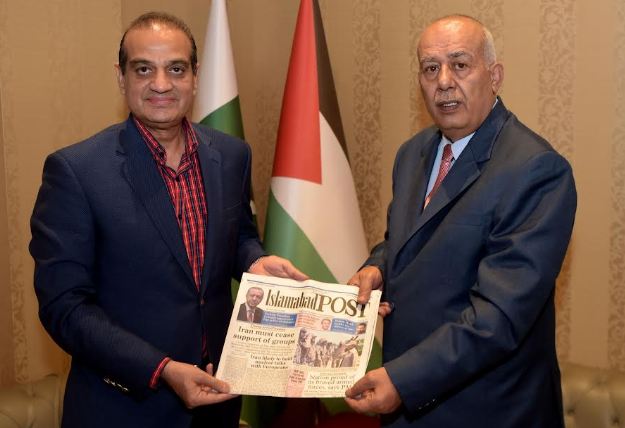
Pakistan’s position on the Palestinian cause has always been principled, clear, and steadfast. On the international stage, whether at the United Nations, the Organisation of Islamic Cooperation (OIC), or other global forums, Pakistan has consistently raised its voice in defense of Palestinian rights. It has never hesitated to condemn injustice, illegal occupation, and human rights violations committed against the Palestinian people. This diplomatic support reflects a deep-rooted commitment to justice, freedom, and the right of people to self-determination.
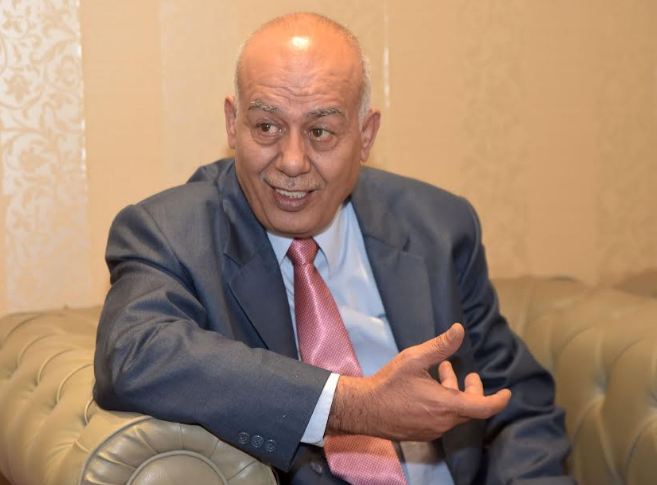
Importantly, this solidarity is not confined to the corridors of power. The people of Pakistan—across all walks of life—have shown immense empathy and unity with the Palestinian cause. From peaceful demonstrations and awareness campaigns to heartfelt messages on social media, the national consensus in support of Palestine is both overwhelming and deeply moving. It is rare to witness such a unified front across an entire nation, and it speaks volumes about the moral compass of the Pakistani people.
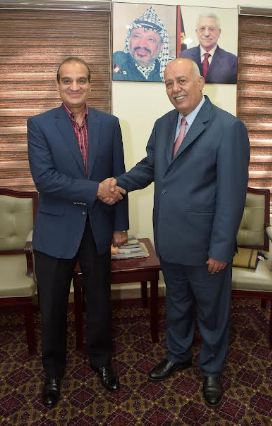
Beyond political support, Pakistan has also extended a generous hand on the humanitarian front. Numerous Pakistani relief organizations, often encouraged and facilitated by the government, have provided vital aid to Palestinians in times of dire need. From medical supplies and food packages to tents and emergency assistance, Pakistan’s humanitarian outreach has reached our people in refugee camps, conflict zones, and besieged areas. These acts of compassion and brotherhood are not forgotten—they are etched in our hearts as a reminder that we are not alone in our struggle. In every way, Pakistan has stood by us. This enduring friendship is a beacon of hope for our nation, and we are profoundly grateful for it.

Q: You have mentioned a desire for practical cooperation between Pakistan and Palestine. Could you elaborate?

Yes, we are keen to move beyond symbolic gestures and establish practical cooperation. We have already presented several agreements to the Government of Pakistan for consideration. With full cooperation from Pakistan, I am hopeful that we will soon sign these agreements, enabling us to enhance cooperation on economic, educational, and cultural levels. This is my vision—to see concrete progress during my tenure.

Q: Is there any parliamentary-level cooperation being considered?

Absolutely. I believe the Pakistani Parliament and Senate fully support the Palestinian cause. I see no obstacles—legal or otherwise—in enhancing our cooperation. In fact, there have been previous discussions about inviting Pakistani parliamentarians to visit Palestine.

 Such visits, especially to meet Palestinian prisoners, can be a source of moral support. But the challenge is that Israel controls all borders, making such visits practically impossible unless Israeli authorities allow entry.

Q: You were once imprisoned in Israel. Would you share that experience?

Certainly. I am part of my people and their struggle. I spent 14 years in Israeli prisons. Over one million Palestinians have faced imprisonment. Many are detained under so-called “administrative detention”—without charges or trial—based on intelligence reports. The initial detention is for six months, often renewed repeatedly. Some remain imprisoned for years under this unjust system.

Q: How do you assess the humanitarian aid currently reaching Gaza?

The current situation in Gaza has surpassed the bounds of humanitarian crisis, embodying a systematic and calculated campaign of violence, displacement, and deprivation. The insufficient aid trickling into the region barely scratches the surface of the dire needs on the ground. Israel’s ongoing blockade and deliberate restriction of essential resources—food, water, medicine—constitute a form of collective punishment that violates international law and moral conscience alike.

The demolition of homes, arbitrary arrests, and settler violence operate in tandem with official state policy to dispossess Palestinians of their land and identity. What is unfolding is not just a military conflict—it is the systematic cleansing of a people from their homeland, pursued through both overt aggression and structural oppression.

Q: What does the Nakba mean to Palestinians?

Nakba, or “catastrophe,” refers to the events of 1948 when Palestinians were expelled from their homeland. It began much earlier, with the Balfour Declaration—supported by the British and Americans—granting Zionists the right to establish a state in Palestine.

This was an unjust and illogical decision. Palestinians are paying the price for crimes committed against Jews in Europe—crimes we had no part in. Historically, Muslims and Arabs welcomed Jews fleeing persecution, offering them shelter and respect.

Q: How do you view the roles of Muslim countries like Saudi Arabia, Turkey, and Iran?

We, as Palestinians, look to our brothers and sisters across the Muslim world with hope and expectation. Our cause is not just a national struggle—it is a humanitarian and moral issue that resonates deeply with the Islamic Ummah. We do not ask for war or conflict; rather, we appeal for meaningful and sustained diplomatic, political, and economic pressure on those who continue to deny our fundamental rights. In today’s interconnected world, political influence and international alliances can be powerful tools to advocate for justice and to hold aggressors accountable.

We particularly commend the principled position taken by the Kingdom of Saudi Arabia under the leadership of Crown Prince Mohammed bin Salman. The clear and unwavering stance—that normalization with Israel cannot proceed without a just and comprehensive resolution to the Palestinian issue—has been a significant and encouraging development. This policy not only affirms the importance of Palestinian rights but also sends a strong message to the international community that peace cannot be built upon injustice. We trust the leadership of Saudi Arabia, whose central role in the Muslim world and on the global stage gives weight to its positions. With their support, we feel stronger, more hopeful, and less alone in our struggle.

Likewise, the roles played by countries such as Egypt and Jordan have been vital. As neighbors with direct stakes in the region’s stability and with longstanding historical ties to the Palestinian people, their involvement has been instrumental in diplomatic efforts, humanitarian support, and mediation during moments of crisis.

We believe that the collective strength of the Muslim world—when guided by unity, justice, and compassion—can influence international dynamics in favor of a just and lasting solution.

Q: Some countries like UAE and Bahrain have normalized ties with Israel. Your thoughts?

We respect sovereign decisions, but we must question what has been gained. Unity within the Arab League and commitment to its initiatives are vital. Without collective Arab consensus, such moves weaken our position. The Zionist mindset still sees Arabs and Muslims as adversaries, regardless of peace deals.

As regards the role of the OIC and the Arab League, both work in harmony. Both institutions have always supported Palestine on political and humanitarian fronts.

Q: What role do Palestinian youth play in the resistance?

Our youth have always been at the forefront of the struggle. From student movements to social media activism, they are deeply engaged. Even in Pakistan, we have over 400 Palestinian students enrolled in various universities, with many having graduated already. They are our future and a crucial part of our resistance.

Q: Has social media impacted global opinion on Palestine?

“Yes, immensely. Social media has played a pivotal role in shaping global awareness and opinion regarding the ongoing atrocities committed by Israel against the Palestinian people. Through platforms like X (formerly Twitter), Instagram, TikTok, and Facebook, graphic evidence of the destruction in Gaza, the suffering of civilians, and violations of international law are being disseminated in real time. This direct flow of information has bypassed traditional media filters and given the global public, especially the youth, unfiltered access to the truth.”

“Across the United States, Canada, and Europe, we are now witnessing a historic shift. University students, young activists, and even schoolchildren are organizing protests, sit-ins, and public awareness campaigns demanding justice for Palestine.

These movements reflect a global awakening—a deep moral response from younger generations who have grown up with values rooted in human rights, equality, and social justice. They no longer rely solely on state narratives; instead, they seek the truth, and they stand firmly on the side of the oppressed.”

“The power of social media has allowed Palestinian voices—voices that were once marginalized or silenced on international platforms—to be heard loudly and clearly. It has also fostered solidarity movements, linking people from different cultures and backgrounds in a united front against oppression. The impact has been so significant that governments and institutions have begun to respond—sometimes with suppression, but increasingly with calls for inquiry and accountability.”

“This shift in global consciousness, driven largely by the youth and amplified through social media, gives us hope. It assures us that the Palestinian cause is not isolated. It is part of a broader global struggle for dignity, justice, and human rights. And as long as these voices continue to rise, the truth cannot be buried.”

Q: Finally, Your Excellency, a message for the people of Pakistan?

The people of Pakistan are our beloved brothers and sisters. The love and support we receive from every Pakistani—young, old, political, or civilian—is unparalleled. My message, especially to youth, is to keep Palestine in your hearts. We pray for peace, prosperity, and stability for Pakistan, and we are forever grateful for your solidarity.

Pakistan has always stood by the choices of the Palestinian people—firmly supporting our legitimate rights and legal institutions. This unwavering support is deeply valued.

To those political parties in Pakistan that may hold differing views, my humble message is this: unity is vital. Pakistan should continue to serve as a unifying force for the Palestinian cause, not one that contributes to division.

As for the various organizations involved—whether political or humanitarian—they are merely instruments. We, as freedom fighters, are also instruments. The ultimate goal for all of us is one and the same: Palestine. Allah SWT blessed us to be the guards of the first Qibla of Al-Masjid Al-Mubarak. We know that this holy land for all and also for Pakistan. Keep always Palestine above everything.

The liberation of the Palestinian people is our shared objective. This goal should be embraced as a guiding principle by our Pakistani brothers and sisters. Lastly, I want to express that just as the people of Pakistan love, respect, and support us—we, too, feel the same for you. We pray for Pakistan’s stability, for peace across your land, and for your continued development and prosperity.
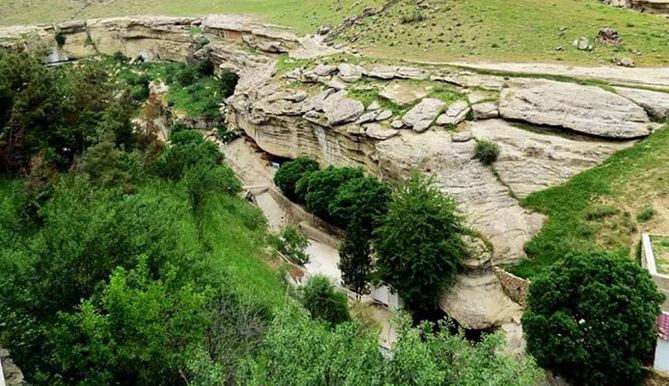
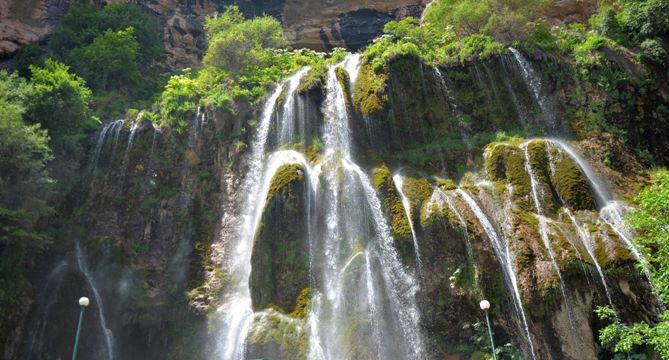
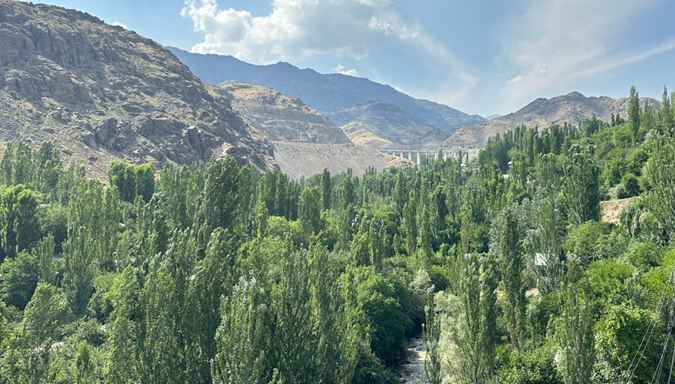
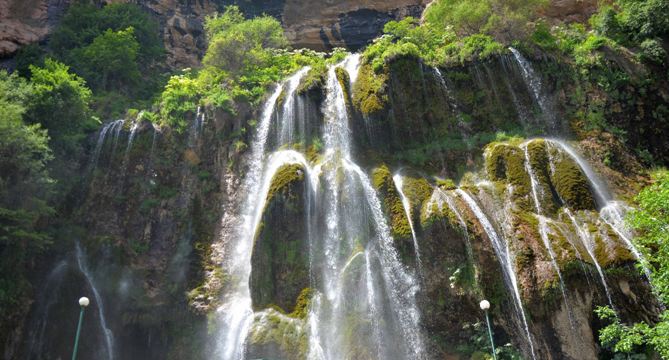
Sangardak Waterfall: A Hidden Gem in Uzbekistan

Located in the Surkhandarya region of Uzbekistan the Sangardak waterfall is a natural wonder that is often overlooked by

Located in the Surkhandarya region of Uzbekistan the Sangardak waterfall is a natural wonder that is often overlooked by tourists. This hidden gem is a must-visit for nature lovers and adventure seekers who want to explore the off-beaten path.

The Sangardak waterfall is surrounded by lush greenery and rocky terrain. The waterfall is fed by a natural spring that flows down from the mountains, creating a stunning cascade of water that drops over 50 meters into a crystal-clear pool below.

Getting to the Sangardak waterfall can be an adventure in itself. The journey involves a scenic drive through winding roads and rugged terrain, passing through small villages and farms along the way. Once you reach the parking area, you’ll need to hike for about 30 minutes through the forest to reach the waterfall.

As you approach the Sangardak waterfall, you’ll hear the sound of rushing water echoing through the trees. The sight of the waterfall is breathtaking, with water cascading down the rocky cliffs and mist rising up from the pool below. The area around the waterfall is also home to a variety of flora and fauna, including rare species of birds and butterflies.

Visitors can take a dip in the pool below the waterfall, which is refreshing and invigorating, especially on a hot summer day. There are also picnic areas and camping sites nearby, making it an ideal spot for a day trip or weekend getaway.

Upon bidding farewell to the waterfall, one feels that another empty niche in one’s mind has been filled with something bright. Indeed, unlike other natural wonders, the Sangardak waterfall can not only be seen but also heard its singing, plunge into its breath and breathe it. And also let it play the melody of kindness and wise eternity on the strings of the soul.

Omonxona – a Mountain Miracle, Source of Healing and Inspiration

In the heart of Surkhandarya’s unique mountains, nestled within its beautiful nature, lies a place called Omonxona. This village is not just an ordinary location, but a truly exceptional destination where nature, history, and the human spirit harmoniously blend. Omonxona embodies captivating beauty, springs that bring healing to body and soul, ancient traditions, and genuine hospitality.

A tourist stepping into Omonkhona feels like they’ve entered another world: while crystal-clear, ice-cold healing waters cleanse the body, the peaceful landscape on the mountainside brings comfort to the soul. Here, natural treasures blend perfectly with modern tourism: cable cars, recreation areas, hotels, and family houses offer not only relaxation but also spiritual refreshment.

The most unique blessing of this land is the spring water, rich in crystalline and mineral elements. Local residents call this water the elixir of life: it improves the functioning of internal organs, calms the nervous system, and naturally cleanses the body. Every year, thousands of local and foreign tourists recover their health in this beautiful place. For example, in 2024, more than 100,000 tourists visited, and this number continues to grow year by year.

Modern sanatoriums and health resorts are being established around this healing water source. These projects are transforming Omonkhona into a perfect destination not only for recreation but also for health recovery and spiritual refreshment.

Omonxona’s charm is further enriched by its warm-hearted people who preserve the ancient art of handicrafts, prepare traditional dishes with love, and welcome guests as if they were blessings from above.

Today, Omonkhona is the pride of Surkhandarya region, a pearl of Uzbekistan’s tourism, and priceless treasure yet to be discovered by the world’s travelers. With its natural wonders, living heritage, and forward-looking approach to tourism, it stands as a must-visit destination in Uzbekistan.

Unknown. Unforgettable. Welcome to Chodak – the heart of Uzbekistan

Hidden in the heart of Uzbekistan, Chodak is an eternal village with over 4000 years of history, combining rich cultural heritage with amazing natural beauty. This place is quickly becoming a mandatory destination for those seeking authentic Uzbek life experiences.

Chodak is a place that has preserved its customs, village life, traditional methods of gardening and farming.

Chodak, which embodies peace and tranquility, as well as true warmth, is surrounded by lush green valleys, clear rivers, and stunning mountain scenery. The village has more than 300 family guest houses, 4 resorts, 3 children’s camps and 30 gastronomic tourist destinations. Here there is an opportunity for a deeper appreciation of natural beauty and national traditions. In this village, more than 1,500 local residents are employed in the tourism sector.

The gastronomic potential of the village of Chodak reflects the rich national culinary heritage of Uzbekistan. From famous pilaf to other national dishes, it creates amazing emotions in the hearts of the guests. Visitors can also take part in cooking workshops to learn the time-honored methods that have been passed down through generations.

The heart of Chodak is its local inhabitants. Visitors can get acquainted with craftsmen and farmers and get deeper into the village’s daily life. Chodak, by preserving its natural and cultural heritage, is becoming a place of national traditions for tourists visiting it.

Chodak is not just a destination – it is a history, tradition, and experience. Through the harmony of history, nature, and national identity, it evokes unforgettable emotions in visitors.

Eid ul Adha: Ruet-e-Hilal committee meets tomorrow to sight Zil Hajj moon

Eid ul Adha: Ruet-e-Hilal committee meets tomorrow to sight Zil Hajj moon

ISLAMABAD, MAY 26: The Central Ruet-e-Hilal Committee will meet in Islamabad on Tuesday for sighting of Zil Hajj moon 1446 Hijri to confirm the dates of Eid ul Adha thsi year.

Chairman of the Committee Maulana Syed Muhammad Abdul Khabeer Azad will preside over the meeting.

Moreover, the Zonal Ruet-e-Hilal Committees will also meet separately at their respective headquarters for sighting of the Eid ul Adha moon.

Eid ul Adha falls on the 10th day of Zil Hajj, which also marks the Hajj pilgrimmage, and Muslims in Pakistan are expected to celebrate the occassion on June 7, according to a prediction by the Pakistan Space and Upper Atmosphere Research Commission (Suparco).

The space agency said that the first of Zil Hajj — the final month in the Islamic lunar calendar — is likely to be observed on May 29, depending on the official moon sighting. This projection places Eid ul Adha on Saturday, June 7.

Suparco revealed that the Zil Hajj moon will be born on May 27 at 8:02am, but its age by sunset that day will only be 11 hours and 34 minutes, making the chances of visibility almost negligible across the country.

On the other hand, in the United Arab Emirates (UAE), the auspicious festival in the Islamic calendar is expected to fall on June 6, according to the Emirates Astronomy Society.

Eid ul Adha is the second of the two main festivals in Islam alongside Eid ul Fitr. Celebrations and observances are generally carried forward for three days.

RCCI honors envoys for solidarity during Pakistan-India conflict

RCCI honors envoys for solidarity during Pakistan-India conflict

RAWALPINDI, MAY 26: /DNA/ – In a symbolic and heartfelt gesture during a special segment of the 17th All Pakistan Chambers Presidents Conference (APCPC), the Rawalpindi Chamber of Commerce and Industry (RCCI) honored esteemed ambassadors Dr. Irfan Neziroglu, Ambassador of the Republic of Türkiye to Pakistan Khazar Farhadov, Ambassador of Azerbaijan to Pakistan with commemorative mementos. The gesture recognized their unwavering solidarity, enduring friendship, and diplomatic support—particularly in the context of the recent Pakistan-India conflict.

The ceremony was graced by Deputy Prime Minister and Foreign Minister Senator Ishaq Dar, who joined RCCI President Usman Shaukat, Group Leader Sohail Altaf, and other senior dignitaries in presenting the honors. The segment was held to acknowledge the pivotal role of diplomatic partners in fostering peace, cooperation, and mutual respect.

 H.E. Atadjan Movlamov, Dean of the Diplomatic Corps and Ambassador of Turkmenistan, who graciously accepted the memento on behalf of the Ambassador of China.

“This recognition is more than ceremonial; it reflects the deep-rooted partnerships Pakistan shares with its friends across the globe,” said RCCI President Usman Shaukat. “The presence and unwavering support of these ambassadors symbolize the unity and shared values we uphold as a nation and as a global community.” 

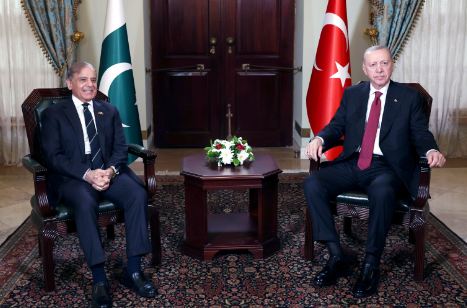
PM Shehbaz meets Recep Tayyip Erdogan

PM Shehbaz meets Recep Tayyip Erdogan

ANKARA, MAY 25 /DNA/ – Prime Minister of Pakistan Muhammad Shehbaz Sharif, who arrived on an official two-days visit to Turkiye, held a warm and most cordial meeting with the President of the Republic of Türkiye, Recep Tayyip Erdoğan, during his offici visit to Turkiye today. The engagement reaffirmed the deep-rooted, historic, and brotherly ties between Pakistan and Türkiye, anchored in shared values, mutual respect, and a common vision for progress and prosperity.

Prime Minister Shehbaz Sharif, who was accompanied by Field Marshal Syed Asim Munir, Chief of Army Staff,

 expressed heartfelt gratitude to the Government and people of Türkiye for their unwavering support to Pakistan during the recent developments in South Asia, underscoring the strength of the fraternal bonds between the two nations. He lauded Turkiye’s principled stance and the outpouring support of goodwill of the Turkish people for Pakistan  and termed it as a source of great comfort and strength for Pakistan. The Prime Minister highlighted the commitment and courage and the spirit of sacrifice of the Armed Forces of Pakistan and the resolute patriotism of the people Pakistan that was  demonstrated in an unprecedented manner which contributed greatly to Pakistan’s overwhelming victory in Marak-e-Haq and Operation Bunyanum Marsoos in the defence of our homeland.

Emphasizing the need to further strengthen economic cooperation, particularly through joint ventures and enhanced bilateral investment, the Prime Minister highlighted key sectors including renewable energy, information technology, defence production, infrastructure development, and agriculture as areas of mutual interest and potential.

The two leaders conducted a comprehensive review of the entire spectrum of bilateral relations and reiterated their resolve to elevate the strategic partnership to greater heights. They also followed up on the implementation of key decisions taken during the 7th session of the High-Level Strategic Cooperation Council (HLSCC), held in Islamabad on 13 February 2025. Both sides agreed to take steps for achieving 5 billion USD annual bilateral trade target as agreed earlier by the two leaders.

In addition to bilateral issues, Prime Minister Sharif and President Erdoğan discussed pressing regional and international developments. Both leaders reaffirmed their principled support for each other’s core concerns, including the Jammu and Kashmir dispute. They also expressed deep concern over the grave humanitarian situation in Gaza, urgently calling for an immediate ceasefire and unimpeded humanitarian access to the affected Palestinian population.

The meeting concluded with a renewed commitment to further deepen the multifaceted cooperation between Pakistan and Türkiye. The two leaders pledged to continue working closely for regional peace, sustainable development, and the shared prosperity of their peoples.

Deputy Prime Minister  Muhammad Ishaq dar, Information & Broadcasting Ataullah Tarar, SAPM Syed Tariq Fatemi and Pakistan’s Ambassador to Turkiye Dr. Yusuf Junaid were also part of Pakistan delegation.

Turkish President Erdogan also hosted dinner in honour of Prime Minister Shehbaz Sharif and the accompanying delegation.

4-Nation Tour: PM Shehbaz meets President Erdogan in Istanbul

4-Nation Tour: PM Shehbaz meets President Erdogan in Istanbul

Centreline Report/DNA

ANKARA: Prime Minister Shehbaz Sharif arrived in Istanbul, Turkiye, on Sunday evening, on the first leg of his four-nation regional tour aimed at thanking Pakistan’s allies for their support during the recent standoff with India.

Turkiye’s Minister for National Defence Yasar Guler welcomed PM Shehbaz upon his arrival at the Istanbul airport.

Meanwhile, the premier held an important meeting with Turkish President Tayyip Erdogan.

Earlier, taking to X, Erdogan’s head of communications Fahrettin Altun said: “During the meeting, bilateral relations, regional and international issues, including the fight against terrorism, will be discussed,”

The two leaders would also discuss further expanding cooperation between Turkiye and Pakistan in diverse fields, including defence, economy, tourism, and culture.

The premier is accompanied by a delegation that includes Deputy Prime Minister Ishaq Dar, Federal Minister for Information Attaullah Tarar and Special Assistant to PM Tariq Fatemi.

Besides Turkiye, PM Shehbaz would also visit Azerbaijan, Iran and Tajikistan. This multi-nation tour is expected to focus on strengthening bilateral ties and discussing regional issues.

“During the visit, the prime minister will have wide-ranging discussions with the leaders of these countries on an entire range of issues covering bilateral relations and matters of regional and international importance,” said the PM Office Media Wing in a press release.

The premier, during his visit to these countries, will have the opportunity to express the deepest appreciation and acknowledgement for the support extended to Pakistan by the friendly countries during the recent standoff with India.

He will also attend the International Conference on Glaciers in Dushanbe, Tajikistan, to be held on 29-30 May.

Turkish President Recep Tayyip Erdogan had reaffirmed his country’s unwavering support for Pakistan, assuring Islamabad that Turkey would, God willing, stand by Pakistan in both good times and bad.

Meanwhile, Azerbaijan announced full support and strong solidarity with Pakistani government and people, despite boycotts by India, while Iran had extended offer to mediate and de-escalate tensions between Pakistan and India, which spiraled into worst fighting in decades.

According Foreign Office press release, Deputy Prime Minister and Foreign Minister Senator Mohammad Ishaq Dar held a telephone conversation on Saturday with Azerbaijan’s Foreign Minister Jeyhun Bayramov.

During the discussion, both leaders reviewed the full spectrum of bilateral relations and exchanged views on regional and international developments. They also spoke about the forthcoming visit of PM Shehbaz to Azerbaijan.

It is pertinent here to mention that Pakistan has launched a diplomatic campaign to discuss with its friendly countries about India’s aggression towards Pakistan on unfounded allegations of the latter’s involvement in the Pahalgam attack.

At least 26 people were killed in the April 22 attack on tourists in the scenic part of IIOJK, Pahalgam. Following which, India immediately blamed Pakistan for the attack without providing a shred of evidence corroborating the claim, which has been denied by Islamabad, and launched a series of small cross border attacks before launching missile strikes inside the country.

This led to a short-lived battle between the nuclear-armed neighbouring countries, which finally stopped through intervention of the United States, as asserted by US President Donald Trump.

Pakistan Peoples Party (PPP) Chairman Bilawal Bhutto will lead a high-level delegation comprising key parliamentarians to global capitals to present Pakistan’s case at the international level after the recent Pakistan-India conflict.

In a meeting with PM Shehbaz on Friday, the PPP chief thanked the premier for trusting him with this diplomatic task and entrusting him with the leadership of the Pakistani delegation.

“I hope that under your leadership, this delegation will present Pakistan’s position and narrative to the world in a comprehensive and effective manner,” the prime minister said.

Niaz Support and Youth Parliament of Pakistan Join Hands

Niaz Support and Youth Parliament of Pakistan Join Hands

ISLAMABAD, MAY 25 /DNA/ – In a landmark step toward inclusive development, Niaz Support and the Youth Parliament of Pakistan have entered into a strategic partnership aimed at delivering customised mobility solutions and educational opportunities to families impacted by disability.

The Memorandum of Understanding (MoU) was signed at Hotel Margala, Islamabad, by Air Commodore (R) Syed Ahmer Raza, Honorary Director of Niaz Support, and Mr. Ubaid Qureshi, President of the Youth Parliament of Pakistan. Also present at the ceremony were Mr. Hussain Odhwani, Global Founder of Niaz Support and award-winning social entrepreneur; Mr. Hammad Malik, General Secretary of the Youth Parliament of Pakistan; and Mr. Zeeshan Saleem, Field Manager for Niaz Support in Islamabad.

Through this partnership, the Youth Parliament will function as a Youth Task Force of Niaz Support – assisting in identifying persons with disabilities for customized mobility solutions and supporting the educational journey of children whose parents live with disabilities.

Mr. Ubaid Qureshi, President of the Youth Parliament of Pakistan, stated: “Our youth hold the power to drive meaningful change. By aligning with Niaz Support, we are creating a structure through which young leaders can reach the most underserved and ensure that no one is left behind.”

Mr. Hussain Odhwani, Founder of Niaz Support, shared: “This collaboration underscores the role of youth in shaping a compassionate, inclusive society. Together, we aim to empower not just individuals, but entire families and communities through mobility and education.”

The leadership teams also discussed avenues for expanding Niaz Support’s presence in Azad Jammu & Kashmir (AJK), aiming to create local employment and deliver impact in underserved regions.

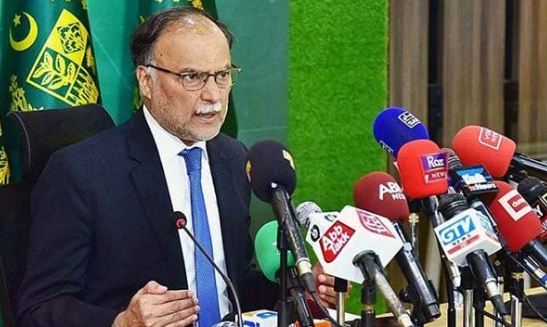
Govt set to raise defence budget, says Ahsan Iqbal

Ahsan Iqbal

ISLAMABAD, MAY 25 (DNA) — Minister for Planning Ahsan Iqbal has confirmed that the defence budget will be increased in the upcoming fiscal plan, while also assuring that the government intends to provide relief to the public. He added that there was no pressure from the International Monetary Fund (IMF) regarding the finalisation of the budget.

Addressing a delegation of engineers led by the Institution of Engineers Pakistan (IEP) Secretary General, Engineer Ameer Zameer, Iqbal said that water-related projects are being prioritised in response to India’s water-related aggression.  He added that dedicated funds would be allocated to such projects on a priority basis to ensure the country’s long-term water security.

Iqbal said the government will ensure the early completion of all hydro-related projects, including the Diamer-Bhasha Dam, to prevent India from taking advantage. Iqbal clarified that the delay in the upcoming federal budget is due to the prime minister’s foreign visit and the Eid holidays, not due to any pressure from the IMF. He stressed that there was no IMF pressure on the budget, and the government was committed to offering relief to the people.

He also stated that the security situation demands an increase in the defence budget and announced the introduction of a paid internship programme for young engineers. The planning minister reassured the engineers that their demands would be incorporated into the upcoming budget and expressed satisfaction that the IMF was content with the government’s economic policies. 

Regarding political matters, he said the country remained united following the recent military success against India. He criticised the PTI founder, saying the response to COAS Field Marshal Syed Asim Munir’s recognition for exemplary leadership has not been positive from Imran Khan. He concluded by stating that the government will not take any step that harms national unity or cohesion.

Meanwhile, Pakistan and the IMF continued parleys for finalising the upcoming budget amid FBR’s proposal to reduce rates of taxable slabs of salaried income by 2.5%. The IMF staff inquired about the ‘alternate measures’ only on the income tax side to bridge the gap of Rs56 billion arising due to the proposed relief for the salaried class in the next budget. 

Although, the IMF did not agree to increase the taxable ceiling from Rs0.6 million to Rs1.2 million but there is a proposal under consideration to decrease the rate of this slab to just a token rate of 1% from the existing rate of 5%.  For all remaining slabs up to 35%, the maximum slab is proposed to be reduced to 32.5%.

There is a surcharge for income earners of Rs1 million per month at a rate of 10%. There is also a Super Tax on higher income brackets, so it is proposed to be reduced gradually. On the expenditure side, it is under consideration to increase the salaries of defence/military officials, and different proposals are under consideration in this regard. The civilian side salary and pension will also be increased, but it will be in line with the proportion of CPI-based inflation.

Keeping in view pressing requirements of the overall defence budget as well as increasing their salaries, the FBR’s tax collection target for the next budget might be jacked up from Rs14.05 trillion to Rs14.2 trillion, but the finalised revenue collection figure was still underway because it hinges upon expenditure side requirements of the Ministry of Finance. —DNA

PM Shehbaz begins regional tour to thank allies for support in India standoff

PM Shehbaz

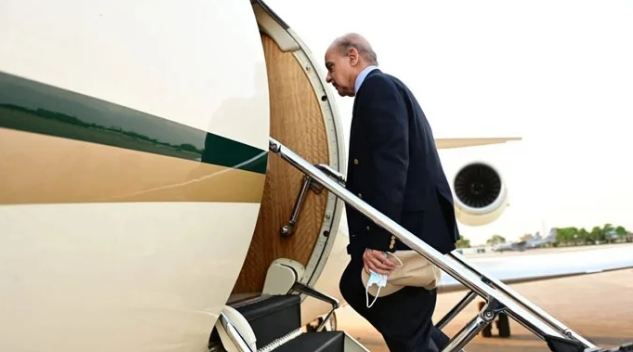
ISLAMABAD: Prime Minister Shehbaz Sharif has departed on a significant six-day visit to Turkiye, Azerbaijan, Iran and Tajikistan on Sunday (today).

The prime minister is scheduled to arrive in Istanbul via a special aircraft. He is accompanied by a delegation that includes Deputy Prime Minister Ishaq Dar, Federal Minister for Information Attaullah Tarar and Special Assistant to PM Tariq Fatemi. This multi-nation tour is expected to focus on strengthening bilateral ties and discussing regional issues.

“During the visit, the prime minister will have wide-ranging discussions with the leaders of these countries on an entire range of issues covering bilateral relations and matters of regional and international importance,” said the PM Office Media Wing in a press release.

The premier, during his visit to these countries, will have the opportunity to express the deepest appreciation and acknowledgement for the support extended to Pakistan by the friendly countries during the recent standoff with India.

He will also attend the International Conference on Glaciers in Dushanbe, Tajikistan, to be held on 29-30 May.

Turkish President Recep Tayyip Erdogan had reaffirmed his country’s unwavering support for Pakistan, assuring Islamabad that Turkey would, God willing, stand by Pakistan in both good times and bad.

Meanwhile, Azerbaijan announced full support and strong solidarity with Pakistani government and people, despite boycotts by India, while Iran had extended offer to mediate and de-escalate tensions between Pakistan and India, which spiraled into worst fighting in decades.

According Foreign Office press release, Deputy Prime Minister and Foreign Minister Senator Mohammad Ishaq Dar held a telephone conversation on Saturday with Azerbaijan’s Foreign Minister Jeyhun Bayramov.

During the discussion, both leaders reviewed the full spectrum of bilateral relations and exchanged views on regional and international developments. They also spoke about the forthcoming visit of PM Shehbaz to Azerbaijan.

It is pertinent here to mention that Pakistan has launched a diplomatic campaign to discuss with its friendly countries about India’s aggression towards Pakistan on unfounded allegations of the latter’s involvement in the Pahalgam attack.

At least 26 people were killed in the April 22 attack on tourists in the scenic part of IIOJK, Pahalgam. Following which, India immediately blamed Pakistan for the attack without providing a shred of evidence corroborating the claim, which has been denied by Islamabad, and launched a series of small cross border attacks before launching missile strikes inside the country.

This led to a short-lived battle between the nuclear-armed neighbouring countries, which finally stopped through intervention of the United States, as asserted by US President Donald Trump.

Pakistan Peoples Party (PPP) Chairman Bilawal Bhutto will lead a high-level delegation comprising key parliamentarians to global capitals to present Pakistan’s case at the international level after the recent Pakistan-India conflict.

In a meeting with PM Shehbaz on Friday, the PPP chief thanked the premier for trusting him with this diplomatic task and entrusting him with the leadership of the Pakistani delegation.

“I hope that under your leadership, this delegation will present Pakistan’s position and narrative to the world in a comprehensive and effective manner,” the prime minister said.

From Cyber Silence to Battlefield Brilliance: Pakistan’s Triumph Over India

From Cyber Silence to Battlefield Brilliance: Pakistan’s Triumph Over India

By Muhammad Mohsin Iqbal

In the early hours of May 7, 2025, the world witnessed an extraordinary demonstration of national will, military discipline, technological prowess, and divine favor when Pakistan decisively repelled Indian aggression in a conflict that lasted less than twenty-four hours but reshaped strategic thinking in South Asia. What unfolded was not just a military encounter—it was a moment in history where truth stood against deception, preparation against arrogance, and resolve against recklessness. The brief war became a symbol of Pakistan’s supremacy, not only in conventional defense but in the cyber domain as well.

The events began when Indian forces, encouraged by their political leadership and overconfidence in their numerical strength, initiated a series of strikes across the Line of Control, particularly targeting civilian areas in Azad Jammu & Kashmir. However, what India failed to understand was that Pakistan was no longer a country it could test with impunity. Within minutes of the first assault, the Pakistan Armed Forces activated their defense mechanisms, initiating a swift and calculated response. Air, land, and naval units moved in complete harmony, proving that Pakistan’s defense doctrine was not based merely on reaction, but on preparation, precision, and deterrence.

Yet, what surprised the global observers and left Indian command structures in disarray was Pakistan’s unprecedented cyber dominance. The Inter-Services Intelligence and Pakistan’s Cyber Command had, in preceding months, developed capabilities to penetrate India’s most critical infrastructure. As Indian jets were airborne, many of their communication networks failed. Radar systems were rendered blind. Indian naval assets lost GPS navigation, and their missile targeting systems misfired or shut down. Major power grids in Delhi, Mumbai, and military hubs such as Pathankot and Ambala collapsed under massive cyber breaches. Even India’s media broadcasting systems were hijacked, displaying messages of peace from Pakistan, highlighting its unwillingness for war but preparedness for defense.

This surgical dismantling of India’s war machine without a single soldier crossing the border became a historic milestone in the evolution of hybrid warfare. The Indian Parliament, in an emergency session on May 8, was forced to acknowledge the scale of the damage. Prime Minister Narendra Modi, under immense pressure from global leaders and domestic outrage, admitted that India’s offensive miscalculated Pakistan’s strength. International media—from Washington Post to Al Jazeera, from BBC to Tokyo’s NHK—hailed Pakistan’s performance not only as a military victory but as a demonstration of national unity and technological maturity. Think tanks across the globe published immediate analyses noting that Pakistan had emerged as a “regional cyber superpower,” and its war strategy could serve as a case study for military academies worldwide.

It was not just force and intelligence that led to Pakistan’s supremacy, but also the moral and spiritual strength embedded in the belief of its people and leadership. The entire nation stood in prayer, unshaken by the threat, trusting in Allah’s promise in the Holy Quran: “And how many times has a small group overcome a large group by the will of Allah. And Allah is with the patient.” (Surah Al-Baqarah, 2:249). This verse echoed in the hearts of every Pakistani soldier and citizen alike, reminding them that victory is never solely determined by numbers or power, but by faith, unity, and justice.

The Prophet Muhammad (peace be upon him) once said, “Do not wish to meet the enemy in battle, but when you meet them, be firm and patient.” (Sahih Bukhari). Pakistan did not desire war, nor did it initiate aggression. Its doctrine remained consistent; peace with dignity, and defense with might. But when the aggression was imposed, it responded not with emotion, but with strategic brilliance.

China, Russia, Turkey, Saudi Arabia, Iran, and even Western countries acknowledged that Pakistan acted not only with competence but with restraint, avoiding civilian harm and preserving regional stability. Many compared Pakistan’s handling of the war to the defensive precision seen in modern military alliances, but with the moral clarity that emerges only from a just cause.

More importantly, the unity of the Pakistani nation, from the mountains of Gilgit to the coasts of Gwadar, was exemplary. In every mosque, church, temple, and home, people prayed together. Civil-military coordination was seamless. Media acted responsibly. The parliament stood united. Political differences were set aside. That was perhaps the greatest victory—one that no missile or malware could achieve.

India’s loss was not just in destroyed systems or failed missions; it was a blow to its strategic credibility. With millions of dollars lost in defense technology that failed, international arms markets began reconsidering their sales to India. Insurers and investors saw the vulnerability of a country that could not protect its own command systems. Meanwhile, Pakistan’s defense exports, software development sector, and global image all received a boost.

No doubt, May 7, 2025, will be remembered not just as a date of military supremacy, but as a day when Pakistan’s spirit, science, and sincerity combined to defend its sovereignty. It was a moment when the blood of martyrs, the prayers of the nation, and the vision of its founding fathers all aligned to echo a timeless truth: “Indeed, the party of Allah—they will be the successful.” (Surah Al-Mujadila, 58:22).

Stay Connected

64FansLike
60FollowersFollow

Latest Reviews

Exchange Rates

USD - United States Dollar
EUR
1.17
GBP
1.35
AUD
0.72
CAD
0.73