Home Blog Page 609

Pakistan will not allow India to unilaterally suspend IWT, says PM Shehbaz

PM Shehbaz

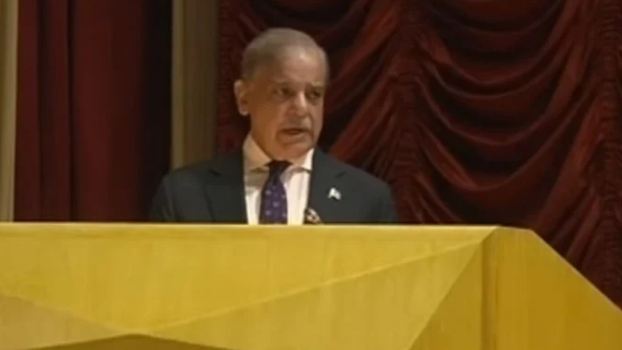
QUETTA: Prime Minister Shehbaz Sharif on Saturday reiterated that Pakistan would not allow India to unilaterally suspend the Indus Waters Treaty, warning that water cannot be used as a weapon against the country.

Addressing army officers at the Command and Staff College Quetta, the premier said that India’s repeated provocations — including using the Pahalgam incident as a pretext for aggression — were firmly countered by Pakistan, both on the battlefield and diplomatic front.

“The Pakistan Air Force showed its professionalism by downing Indian jets and targeting seven high-value enemy assets. Air Chief Marshal Zaheer Ahmed Babar proved his mettle, while Chief of Army Staff Asim Munir delivered a historic victory, cementing his stature as a deserving Field Marshal,” he added.

The military confrontation between the two countries was triggered by last month’s attack in Indian Illegally Occupied Jammu and Kashmir (IIOJK) that left 26 tourists dead, with India blaming Pakistan for the attack without offering any evidence.

Earlier this month, Pakistan’s armed forces launched a large-scale retaliatory military action, named “Operation Bunyan-um-Marsoos”, and targeted several Indian military targets across multiple regions.

Pakistan downed six IAF fighter jets, including three Rafale, and dozens of drones. After at least 87 hours, the war between the two nuclear-armed nations ended on May 10 with a ceasefire agreement brokered by the United States.

According to ISPR, a total of 53 individuals, including 13 personnel of the armed forces and 40 civilians, were martyred in Indian strikes during the recent military confrontation.

In his address today, the prime minister further said that the government and people of Pakistan stood shoulder to shoulder with the armed forces in safeguarding the country’s sovereignty.

Welcoming foreign guests at the institution, PM Shehbaz said their presence reflected Pakistan’s strong ties with friendly nations. He lauded the Command and Staff College for its outstanding contributions in shaping the country’s military leadership.

Speaking of the economic front, the premier noted that the recent successful agreement with the International Monetary Fund (IMF) had brought much-needed stability, with inflation coming down from 38% to single digits.

“There is now a need for deep-rooted structural reforms to ensure sustainable economic growth that benefits the common man,” he added.

Reaffirming Pakistan’s resolve, the premier warned that any future misadventure by India would be met with a resolute and forceful response.

Earlier, PM Shehbaz arrived in Quetta on a day-long visit. Upon his arrival, he was received by Acting Governor and Speaker Balochistan Assembly Abdul Khaliq Achakzai and Chief Minister Balochistan Mir Sarfraz Bugti.

Tax harassment complaints to get swift action: RTO assures

Tax harassment complaints to get swift action: RTO assures

RAWALPINDI, MAY 31 /DNA/ – Chief Commissioner of the Regional Tax Office (RTO) Tehmina Aamir, along with her team, visited the Rawalpindi Chamber of Commerce and Industry (RCCI) and met with President Usman Shaukat. The visiting delegation included Additional Commissioner Riaz Khan, Commissioner Wilayat Khan, and Commissioner Haroon Masood.

The session, chaired by RCCI President Usman Shaukat, featured comprehensive discussions on recent tax ordinances, frequent amendments to tax laws, the increasing number of SROs, challenges in the registration process, and issues concerning the installation of Point-of-Sale (POS) systems. Concerns raised by the business community were noted and addressed with due seriousness.

Chief Commissioner Tehmina Aamir assured RCCI of the RTO’s full cooperation and support in resolving issues related to tax notices, registration difficulties, and compliance challenges. She welcomed the Chamber’s input on broadening the tax base, proposed legal reforms, and the implementation of policy changes.

It was mutually agreed to establish a joint committee comprising representatives from RCCI, traders’ associations, and the RTO. The committee will focus on raising awareness about tax laws and promoting new initiatives. Additionally, the Chief Commissioner proposed that withholding agents be considered as strategic partners in tax collection and be offered incentives to encourage higher compliance and improved revenue collection.

Ms. Aamir highlighted that, with the support of the business community, the number of registered taxpayers in Rawalpindi has surpassed 1.2 million over the past two years. She stressed the importance of promptly reporting any incidents of harassment or misconduct, promising swift and strict action. A comprehensive taxpayer education and awareness campaign is also underway.

The meeting was attended by RCCI Group Leader Sohail Altaf, Senior Vice President Khalid Farooq Qazi, Vice President Fahad Barlas, former presidents, executive committee members, and representatives of the Traders’ Association including Shahid Ghafoor Pracha, Sheikh Siddique, Chaudhry Iqbal, Haji Mumtaz, Chaudhry Farooq, as well as women members and other RCCI representatives.=DNA

=============

Governor KP Calls for Collective Action to Unlock Pakistan’s Sports Brilliance

Governor KP Calls for Collective Action to Unlock Pakistan’s Sports Brilliance

By our correspondent

ISLAMABAD: Khyber Pakhtunkhwa Governor Faisal Karim Kundi has emphasized that Pakistan possesses immense sports talent and expressed his willingness to welcome constructive proposals for the development of sports in the province.

He expressed these views during a meeting at the Governor House with the newly elected office-bearers of the Rawalpindi-Islamabad Sports Journalists Association (RISJA), led by their newly elected President, Abu Bakar Bin Tallat.

Faisal Karim Kundi congratulated the newly elected RISJA officials and said that those who have come through the electoral process will play an important role in promoting sports journalism.

He reiterated that the media plays a key role in the development of sports in the country. “Youth are our future, and everyone must contribute to engaging them in sports,” he said. “There is no shortage of talent in Pakistan, and media plays a crucial role in bringing this talent to the forefront. I hope RISJA will also promote the talented athletes of Khyber Pakhtunkhwa.”

The Governor further stated that sports journalists project the positive image of the country globally. “We will welcome all positive suggestions for sports development in KP,” he said. Faisal Karim Kundi also assured the RISJA delegation of full cooperation.

The RISJA delegation, led by Abu Bakar Bin Tallat, included Abdul Mohi Shah, Shakeel Awan, Nasir Naqvi, Kiran Khan, Arfa Feroze Zaki, Shakir Abbasi, and Afzal Javed.

Arshad Nadeem wins gold with 86.40m throw in Asian Athletics final

Arshad Nadeem

Pakistan’s javelin star Arshad Nadeem has again made the nation proud by winning the gold medal at the Asian Athletics Championships final, finishing with a powerful throw of 86.40 metres in his final attempt.

Nadeem, who holds the Olympic record after a monstrous 92.97-metre throw at the Paris 2024 Olympics, delivered a performance just short of the Asian Championship record, which stands at 86.72 metres.

His consistent performance throughout the event, capped by this remarkable throw, secured him the top spot on the podium.

Sachin Yadav of India secured the silver medal with a best throw of 85.16 metres, while Japan’s Yuta Sakiyama earned bronze after reaching a mark of 83.75 metres.

The top Pakistani javelin thrower kicked off his campaign at the Asian Athletics Championships final with a confident first throw of 75.64 metres.

Fellow Pakistani athlete Yasir Sultan, who is the country’s second representative in the final, began with a throw of 70.53 metres, before significantly improving in his second attempt with an impressive 75.39 metres.

Arshad, meanwhile, improved his mark with a second throw of 76.60 metres, maintaining steady momentum.

In the third round, Yasir managed a slight improvement, throwing 75.50 metres. However, it was Arshad who truly raised the bar, launching a massive 85.57-metre throw—his best of the competition so far. This powerful effort catapulted him to the top of the group standings.

With that performance, Arshad Nadeem took the lead on the overall final leaderboard after the third attempt, outpacing his closest rivals and establishing himself as the frontrunner for the gold medal.

Yasir’s fourth attempt dropped to 72.92 metres, while Nadeem continued his consistency with another strong throw of 83.99 metres. At the end of the fourth round, Nadeem remained firmly in first place.

President Asif Ali Zardari and Prime Minister Shehbaz Sharif also congratulated the athlete on the splendid victory as he continues to make the nation proud.

Nadeem’s hometown, Mian Channu, erupted in celebrations as news of his victory spread — bringing tears of joy and cheers from proud supporters. His family distributed sweets amid the sound of beating drums, marking the moment with jubilation.

Meanwhile, in the stadium, the national song “Dil Dil Pakistan” echoed through the air as Nadeem celebrated his triumph by offering a sajda (prostration) in gratitude to Allah.

The javelin ace had secured his spot in the final with an impressive first throw of 86.34 metres in Group A on Friday.

Nadeem has become the first Pakistani in over 50 years to win a gold medal at the Asian Athletics Championships, marking Pakistan’s first gold since 1973 when the country last claimed top honors in javelin throw and 800 meters — won by Allah Dada and Muhammad Younis, respectively, during the event in the Philippines.

He is also Pakistan’s first-ever individual Olympic gold medalist and the nation’s first medalist in athletics at the Summer Games.

So far, he has won four golds, one silver, and four bronze medals in various events, including the Olympics, World Championships, Commonwealth Games, Asian Games, Islamic Solidarity Games, South Asian Games, and Asian U20 Championships.

Pakistani youth to gain global jobs through ICCI-BEOE partnership

Pakistani youth to gain global jobs through ICCI-BEOE partnership

ISLAMABAD, MAY 31: /DNA/ – In a landmark move aimed at enhancing employment opportunities and skill development for Pakistani youth, the Islamabad Chamber of Commerce and Industry (ICCI) and the Bureau of Emigration and Overseas Employment (BEOE) have agreed to sign a Memorandum of Understanding (MoU). The initiative is designed to empower the country’s youth with market-relevant skills, enabling access to international employment avenues.

The agreement was reached during the visit of Muhammad Tayyab, Director General of BEOE, to the ICCI, where he held a detailed meeting with Nasir Mansoor Qureshi, President ICCI. The DG was accompanied by Farrukh Jamal, Director BEOE.

Speaking on the occasion, DG BEOE Muhammad Tayyab  noted the vast potential of Pakistani youth and underscored the importance of strong industry-academia linkages to channel their talent effectively.

“The private sector is central to driving innovation, business growth, and national development,” said DG Tayyab. “BEOE is fully committed to supporting ICCI in this shared vision.” He also announced the appointment of Umar Qureshi, Convener of Export of Manpower and Overseas Pakistanis at ICCI, as the focal person for coordination.

President ICCI Nasir Mansoor Qureshi highlighted the Chamber’s recent initiatives, including the launch of an ERP system to improve service delivery to its members. He reiterated ICCI’s role as a bridge between the government and private sector.

He also stressed the urgent need to equip youth with practical skills, enabling them to become job creators rather than job seekers. “Our goal should be to nurture a generation of entrepreneurs and enhance the global standing of the green passport,” he remarked.

Muhammad Ishtiaq Qureshi, Coordinator  to President FPCCI on Overease Pakistanis and HR Department also contributed his insights for the purpose.

On this occasion Faheem Iqbal Chaudhry,  Chairman  Pakistan Overseas Employment Promoters Association, Advisor to ICCI President Naeem Siddiqui and other were also present.

Turbulence on a plane: what passengers need to know before flying

Turbulence on a plane: what passengers need to know before flying

John Walton

Following severe turbulence on a Singapore Airlines flight this week, we take a look at what turbulence is and the risks to passengers. You’ve probably seen images and videos from the recent incident onboard Singapore Airlines flight 321, and if you’re worried about turbulence as a result that’s understandable. We turned to John Walton, Lonely Planet’s resident aviation journalist, with some questions about what turbulence is, how commonly it causes problems for flights, and how you can stay safe onboard.

The pictures from Singapore Airlines flight 321 that made an emergency landing in Bangkok after severe turbulence are certainly frightening, and the news of a passenger’s death and many injuries is sobering.

One of the reasons you’re seeing a lot more about severe turbulence events like this one is that we all have cameras in our phones now and share a lot more pictures and videos. However, experts also agree that part of the reason these events are happening more often is due to climate change. Let’s take a deeper look.

A plane flies above blue misty mountains
Turbulence – the shaking of the plane – comes in several different forms © iStockphoto / Getty Images
What is turbulence, and why does it happen?
Turbulence comes in several forms when you’re on a plane, and you’ll feel it in its mildest form as your plane passes through clouds on its way up from or down to the airport at relatively low levels.

Higher up, though, you’ll probably be concerned about clear air turbulence, caused where temperature variations between layers of air create strong air currents going up or down. These might be from jet streams (the high level air currents found around the world), from high terrain pushing air upwards, or from storms, especially thunderstorms.

You feel turbulence on the plane as shaking, which in its most severe cases can end up as the kind of extreme movement experienced on Singapore Airlines flight 321. Do remember, though, that the plane itself landed safely even in the severe turbulence from that incident — the worst that we’ve seen in quite some time.

Evidence so far seems to suggest that the recent Singapore Airlines turbulence incident came from fast-forming thunderstorms, with an unusually rapid convective cell forming over southeast Asia.

While planes do route around slowly forming storms, swiftly developing ones are are incredibly difficult to forecast.

Is it worse on some planes versus others?
To an extent: in theory, the bigger the plane, the smaller the effect of any turbulence compared with a smaller plane in the same situation. But you might have noticed that the Singapore Airlines flight 321 plane was a large Boeing 777 — one of the biggest planes currently flying.

So yes, while you’ll feel a greater effect from the same amount of turbulence on a small narrowbody 737 compared with a big widebody 777, severe turbulence will still feel severe no matter what plane you’re on.

A member of cabin crew wearing a red uniform walks down the central aisle of a plane while all passengers are seated
Keep belts fastened when seated and listen to flight crew if unexpected turbulence hits © Peter Bannan / Getty Images
Can I sit somewhere on the plane to avoid turbulence?
It might sound weird, but planes are built to be a little flexible. You can expect the wingtips to wiggle a bit during turbulence, and the plane flexes along the length of its tube a little too. The closer you sit to the wing, the less likely you are to feel turbulence and experience its effects.

That said, in severe turbulence like this incident, you’ll feel it strongly wherever you’re sitting.

Is turbulence common and are some parts of the world more susceptible to it?
Light turbulence is totally routine: you’ll feel a little bump as you fly through clouds, for example. Severe turbulence is much more rare, although the effects of climate change — specifically the greater extremes in temperatures and stronger, more unpredictable storms — mean that experts expect it to become more common.

There are parts of the world where medium to severe turbulence is a regular occurrence. You can expect it where there’s a lot of temperature variation, where flying over high mountains (think the Rockies, Andes or Himalayas), where fast-forming storms can be found, or where there are strong winds like the “Roaring Forties” westerlies in the southern hemisphere.

Looking through the window of an aircraft at the wing and beyond into the blue sky
Turbulence is a routine part of flights, but you may feel it less if you’re sat near the wings © Lucky Business / Shutterstock
How can I stay safe on a flight if it hits turbulence?
The best piece of advice is to keep your seatbelt snugly fastened throughout the flight. By snugly, I mean enough that if there was a sudden drop due to turbulence you wouldn’t hit the ceiling or fly up out of your seat.

You might hear advice to keep your belt “loosely fastened”, but if it’s very loose you risk sliding out of the seatbelt if you hit severe turbulence.

As a guide, I keep my belt at least as tight as a car seatbelt would be whenever I’m in my seat. If you’re traveling with babies or infants without their own seat, ensure they’re secured in your lap or a bassinet crib if one is available.

If you happen to be in the lavatory, sit down immediately (if you’re not already) and hold on to the grab bars, then follow crew instructions. If you’re swanning around one of the inflight bars on certain airlines, there are seatbelts there: buckle yourself in immediately. The crew will tell you when it’s safe to return to your seat.

If you’re walking in the aisle, sit down at once, in the nearest empty seat, rather than walking all the way to yours if it’s further away.

But overall, please be reassured: turbulence is routine, flights are routed around it, airplanes are designed to cope with it if it does happen, weather prediction is improving all the time, and severe turbulence is still rare.

Paris conference to chart path for viable Palestinian statehood

Paris conference to chart path for viable Palestinian statehood

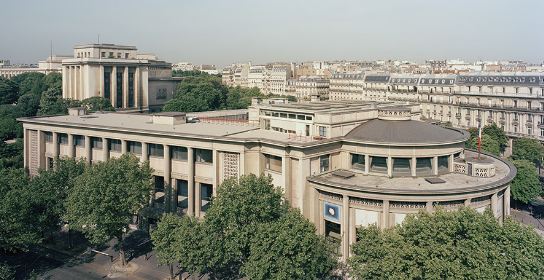
PARIS, MAY 30 /DNA/ – Responding to the call of the Israeli, Palestinian, and global populations for lasting peace in the Middle East, the Paris Peace Forum is hosting a civil society mobilization event for the two-state solution, peace, and regional security in Paris on June 13, 2025. Entitled “Paris Call for the Two-State Solution, Peace and Regional Security,” the event will be held at the Economic, Social and Environmental Council (CESE) under the high patronage of Mr. Emmanuel Macron, President of the French Republic.

This key meeting will take place a few days ahead of the High-Level International Conference on the Peaceful Resolution of the Palestinian Question and the Implementation of the Two-State Solution, which will be held from June 17 to 20, 2025, at the United Nations in New York.

This event will bring together several hundred civil society actors committed to the implementation of the two-state solution and a shared future based on mutual recognition, peace, and security for all. At a time when the region is plagued by extreme violence, terrorism, hatred, and injustice, and when the two-state solution faces existential threats, participants—mostly Israelis and Palestinians, but also from the Middle East, Europe, and the United States—will highlight the need for decisive action. They will stress the urgency of an immediate and permanent ceasefire, the release of all hostages, and the unconditional delivery of humanitarian aid commensurate with the needs of the people of Gaza.

On June 13 in Paris, these organizations and civil society figures will put their expertise and experience at the service of concrete solutions for the implementation of the two-state solution and the establishment of a viable Palestinian state, offering security guarantees for all, and for advancing regional integration. In addition to contributing to the work of the eight thematic working groups of the High-Level International Conference on June 17-20, the civil society actors gathered in large numbers on this occasion will launch a call to action to the international community reflecting their commitment to peace and security for all.

This Paris Call will reinforce the action of France and the European Union, which are committed to peace in the Middle East, which cannot be achieved without the implementation of the two-state solution. The conference organized by the Paris Peace Forum aims to support this objective by providing a platform for the concrete expression of civil societies committed to the two-state solution, regional peace, and security.

Pakistan crush Bangladesh in second T20I to clinch series

Pakistan crush Bangladesh in second T20I to clinch series

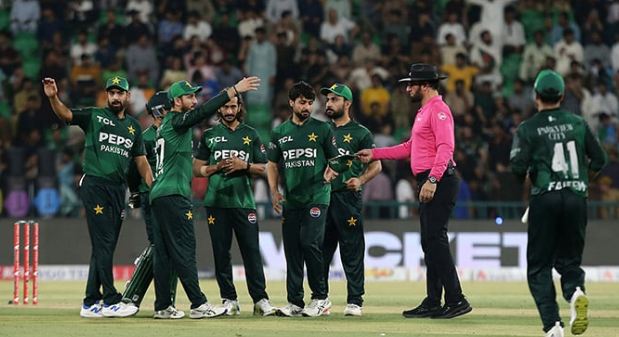
LAHORE: Pakistan stormed to a dominant 57-run win over Bangladesh in the second T20I at Gaddafi Stadium on Friday, taking an unassailable 2-0 lead in the series thanks to explosive fifties from Sahibzada Farhan and Hasan Nawaz, backed by a disciplined bowling display.

The dominant victory gave the home side an unassailable 2-0 lead in the three-match series, with the final match scheduled to be played at the same venue on Sunday.

Chasing a daunting 202-run target, the touring side could muster 144 before being bowled out in 19 overs.

Bangladesh, however, had a blazing start to the pursuit as they were 38/0 in three overs with Tanzid Hasan going after the home-side bowlers.

The green shirts got the much-needed breakthrough in the fourth over through Haris Rauf, who dismissed Parvez Hossain Emon on eight.

Tanzid, who was the core aggressor of the opening stand, followed suit in the next over when he handed a straightforward catch to Abrar Ahmed at the short fine-leg off Faheem Ashraf.

The opening batter remained a notable run-getter for Bangladesh with a brisk 33 off 19 deliveries, featuring five fours and a six.

His dismissal sparked a match-defining collapse, which saw Bangladesh lose five more wickets at an alarming rate and consequently slip to 77/7 in 9.5 overs.

Meanwhile, Mehidy Hasan Miraz, who stood firm at one end during the collapse, knitted a defiant 33-run partnership for the eighth wicket with Tanzim Hasan Sakib until eventually falling victim to Khushdil Shah in the 14th over after scoring 23 off 17.

Sakib, on the other hand, continued to retaliate and registered his maiden half-century before being caught behind by Saim Ayub.

He remained the top-scorer for Bangladesh with a 31-ball 50, laced with one four and five sixes.

Abrar Ahmed was the standout bowler for Pakistan, taking three wickets for 19 runs in his four overs, while Hasan Ali, Haris Rauf, Faheem Ashraf, Shadab Khan, Khushdil Shah and Ayub chipped in with one wicket apiece.

Earlier, Opener Sahibzada Farhan and emerging Hasan Nawaz scored swashbuckling half-centuries to power Pakistan to a massive total in the second T20I.

Pakistan captain Salman Ali Agha’s decision to bat first proved beneficial as his team’s batting unit accumulated 201/6 in their allotted 20 overs.

The home side, however, had a contrasting start to their innings as their left-handed opener Saim Ayub (four) in the second over with just 12 runs on the board.

Following the early stutter, wicketkeeper batter Mohammad Haris joined Farhan in the middle and the duo partnered strongly to turn the tide back in the hosts’ favour.

Farhan and Haris dominated the Bangladesh bowlers during their second-wicket partnership and added 103 runs at a brisk rate before both perished in quick succession.

Sahibzada Farhan remained the top-scorer for Pakistan with a 41-ball 74, studded with four fours and six sixes, while Haris made 41 off 25 deliveries with the help of four fours and two sixes.

Following the back-to-back dismissals, Agha and Hasan Nawaz put together a crucial 45-run partnership for the fourth wicket and kept the momentum in Pakistan’s favour.

The stand culminated with Agha’s dismissal in the 16th over when he was trapped lbw by Hasan Mahmud while playing a ramp shot. He scored 19 off 12 deliveries with the help of three boundaries.

Hasan then shared a brief 24-run partnership with Shadab Khan, who could score seven off 10 deliveries before falling victim to Mahmud in the penultimate over.

Hasan, on the other hand, batted until the end and walked back after scoring an unbeaten 51 off 26 deliveries, laced with two fours and three sixes.

For Bangladesh, Tanzim Hasan Sakib and Mahmud bagged two wickets each, while Rishad Hossain chipped in with one.

Playing XIs

Pakistan: Fakhar Zaman, Saim Ayub, Mohammad Haris (wk), Salman Agha (c), Hasan Nawaz, Shadab Khan, Khushdil Shah, Faheem Ashraf, Hasan Ali, Haris Rauf and Abrar Ahmed.

Bangladesh: Tanzid Hasan, Parvez Hossain Emon, Litton Das (c), Towhid Hridoy, Mahedi Hasan, Jaker Ali (wk), Shamim Hossain, Rishad Hossain, Tanzim Hasan Sakib, Hasan Mahmud and Shoriful Islam.

Crypto Council to meet on June 2

Crypto Council to meet on June 2

Mahnoor Ansar

ISLAMABAD: The Pakistan Crypto Council (PCC) is set to hold a high-level meeting on June 2 to discuss the evolving regulatory and legal framework surrounding digital currency and the broader crypto landscape in the country.

The meeting would be chaired by Minister for Finance and Revenue Senator Muhammad Aurangzeb, according to press release issued by finance ministry.

Special Assistant to the Prime Minister on Blockchain and Crypto, Bilal Bin Saqib would participate in his capacity as the PCC’s Chief Executive Officer.

The press release also said, “Key items on the agenda include the development of a robust regulatory framework to govern digital and virtual assets in Pakistan, in alignment with global standards and technological advancements.

“A focal point of discussion will be the groundwork for the establishment of the Pakistan Virtual Assets Regulatory Authority (PVARA) — a proposed autonomous body to oversee the digital finance and crypto ecosystem in the country.”

The finance ministry said the PCC aims to establish a “secure, transparent, and innovation-friendly regulatory environment”, to promote “responsible adoption of blockchain technology, protecting investors, and enhancing financial inclusion”.

Stay Connected

64FansLike
60FollowersFollow

Latest Reviews

Exchange Rates

USD - United States Dollar
EUR
1.17
GBP
1.35
AUD
0.72
CAD
0.73