Nawaz leaves for London
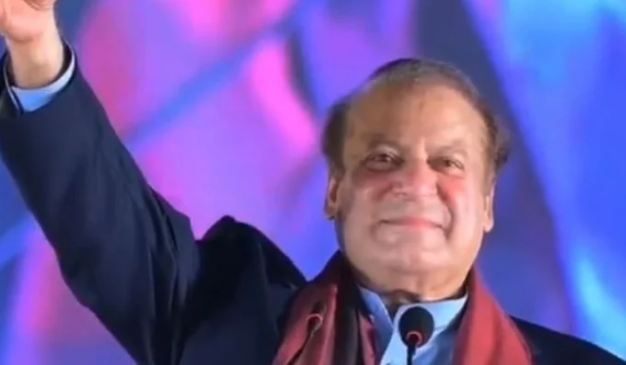
LAHORE, Jun 01 (DNA): PML-N chief and former Prime Minister Muhammad Nawaz Sharif has left for London on Sunday. Nawaz Sharif left for the old terminal of Allama Iqbal International Airport from Jati Umra.
According to PML-N official sources, Nawaz Sharif left Lahore for London by a special plane.His stay in London will last for about two weeks. He will also undergo a routine medical examination. He will also celebrate Eid-ul-Adha in London. His medical examination was scheduled, but he returned home due to tension between Pakistan and India.
Experts call for adoption of legislation to end child marriages in Punjab

LAHORE, JUN 1 /DNA/ – Experts and stakeholders at a high-level consultation organized by the Potohar Organization for Development Advocacy (PODA), in collaboration with the Women Development Department (WDD) Punjab on Friday, identified key recommendations to bridge the gap between pro-women legislation and its implementation across the province.
The participants reinforced the recommendation to raise awareness at the grassroots level to ensure the effective implementation of existing laws for the collective benefit of society.
Key recommendations included the adoption of the Islamabad Capital Territory (ICT) Child Marriage Restraint Act 2025 by the Punjab Government, which sets 18 years as the minimum legal age of marriage for girls. Participants also urged that violations under the forthcoming Punjab Child Marriage Restraint Act be made cognizable, non-compoundable, and nonbailable to reduce underage marriages through stronger legal enforcement. It was recommended to empower Union Councils to take prompt action against violations involving child marriages at grassroots level.
The expert consultation was part of PODA’s project “Reduce Child Marriages to Enhance Gender Equality”, supported by the Norwegian Embassy, Islamabad. It brought together policymakers, civil society members, legal experts, and activists to review gaps between existing legislation and the on-ground realities in Punjab.
Parliamentary Secretary for the Women Development Department, Ms. Saadia Temur, chaired the session. She said women development department is dedicated to promoting gender equality and ensuring protection and empowerment of women through policy development, institutional support, and legislative reforms. She welcomed the efforts of the Punjab Government under the leadership of Chief Minister Ms. Maryam Nawaz for advancing women’s empowerment. Ms. Temur also announced that a women development center will be inaugurated by the end of June to support ongoing women-related programs.
Executive Director of PODA, Sameena Nazir, urged the government to constitutionally mandate matriculation—comprising 12 years of education—as the minimum educational requirement, emphasizing its importance for empowering girls and preventing early marriages.
Participants acknowledged the significant step taken through the passage of the ICT Child Marriage Restraint Act 2025 and urged Punjab to follow suit. They stressed that only through a combination of legal reform, administrative will, and grassroots mobilization can the province make real progress toward ending early and forced marriages and achieving gender equality.=DNA
=================
Uzbek-Afghan-Pak railway project to transform region

Another notable dimension to this evolving regional scenario is the growing role of China as a stabilizing force. Beijing has played a key role in bridging gaps between Islamabad and Kabul, using its economic and strategic leverage to encourage cooperation
Ansar Mahmood Bhatti
ISLAMABAD, JUN 1 /DNA/ – In a significant diplomatic breakthrough, Pakistan and Afghanistan have agreed to elevate their bilateral diplomatic ties to the ambassadorial level. This development marks a new phase in the relationship between the two neighboring countries, who have long shared not only a border but also deep historical, cultural, and economic linkages.
The announcement came after a constructive telephone conversation between Pakistan’s Deputy Prime Minister and Foreign Minister, Senator Mohammad Ishaq Dar, and Afghanistan’s Acting Foreign Minister, Amir Khan Muttaqi. Both leaders expressed satisfaction over the move, with Muttaqi warmly welcoming Pakistan’s decision and affirming Kabul’s reciprocal commitment. He termed the upgrade as a “significant milestone” in improving and stabilizing bilateral ties.
The telephone conversation also placed a strong focus on regional connectivity, especially the strategic Uzbekistan-Afghanistan-Pakistan (UAP) Railway Line Project. This multi-billion-dollar infrastructure initiative is poised to transform the region’s economic landscape by linking South and Central Asia through a modern rail corridor. The project is not only about freight or passenger movement—it is about reshaping the economic future of a region long hindered by geopolitical instability. The two foreign ministers expressed a shared resolve to finalize the framework agreement quickly, demonstrating political will to overcome logistical and bureaucratic delays.
This move is a follow-up to the Pakistani Foreign Minister’s official visit to Kabul on 19 April 2025, during which a series of key understandings were reached. Both sides have now reiterated their commitment to implementing those decisions in letter and spirit. The emphasis remains on rebuilding mutual trust—something that has historically been elusive in this sensitive relationship.
Another notable dimension to this evolving regional scenario is the growing role of China as a stabilizing force. Beijing has played a key role in bridging gaps between Islamabad and Kabul, using its economic and strategic leverage to encourage cooperation. China’s Belt and Road Initiative (BRI) and its vested interest in regional peace have made it a natural facilitator. This development can be seen as a diplomatic blow to India, whose influence in Afghanistan had seen a sharp decline following the Taliban’s return to power in 2021.
With relative peace now emerging on its western border, Pakistan is in a better position to shift strategic focus towards its eastern frontier with India. The geopolitical rebalancing offers Islamabad breathing space to handle the challenges posed by the Modi-led government, especially in occupied Kashmir.
This latest diplomatic advancement also holds wider implications. For Afghanistan, it’s a step toward greater international recognition and engagement. For Pakistan, it’s a chance to solidify its position as a regional connector and peacemaker, rather than merely a frontline state in conflict.
Ultimately, the telephone conversation between Ishaq Dar and Amir Khan Muttaqi represents more than just a symbolic exchange—it reflects a recalibration of strategic priorities, a renewed hope for regional integration, and a cautious optimism for a more peaceful, economically interlinked South and Central Asia.=DNA
Glaciers conference gets lukewarm response
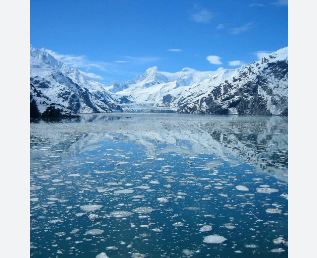
ISLAMABAD, JUN 1 (DNA): The “International High-Level Conference on Glacier Preservation” concluded to emphasize the inextricable link between glacier conservation and sustainable socio-economic development.
However, important outcomes of the Conference are the adoption of the Dushanbe Declaration and the Dushanbe Appeal: Call for Action, which call on UN Member States and stakeholders to take the necessary measures to strengthen international cooperation to advance and align the global agenda for the conservation of the cryosphere and glaciers.
A Tajik official said that Tajikistan, as a country at the forefront of these processes and deeply committed to advancing the water and climate agenda, is ready to continue to make every effort to achieve our common goals.
In conclusion, “I would like to thank all participants for their active participation and our partners for their support, as well as the National Organizing Committee, the International Advisory Committee and the Secretariat for the work done to successfully hold the completed Conference” Tajik Prime Minister said.
As per the additional input from the western media, analysts however say the conference got a lukewarm response as only the Pakistani prime minister attended the conference. No other important country attended it.=DNA
Serena Hotels and Nomad Art Gallery host vibrant event

Syed Fahim Inam Chief Marketing Officer (Group) of Serena Hotels said, “Our goal is to provide a platform where culture, community, and creativity can converge
Mahnoor Ansar/DNA
ISLAMABAD, JUN 1: Serena Hotels, in collaboration with the renowned Nomad Art Gallery, brought Islamabad to life with a vibrant cultural event that seamlessly merged art, craft, and cinema into an inspiring experience for visitors from all walks of life. Held at the prestigious Serena Hotel premises, the event drew diplomats, artists, entrepreneurs, and members of the public in celebration of Pakistan’s diverse cultural heritage.
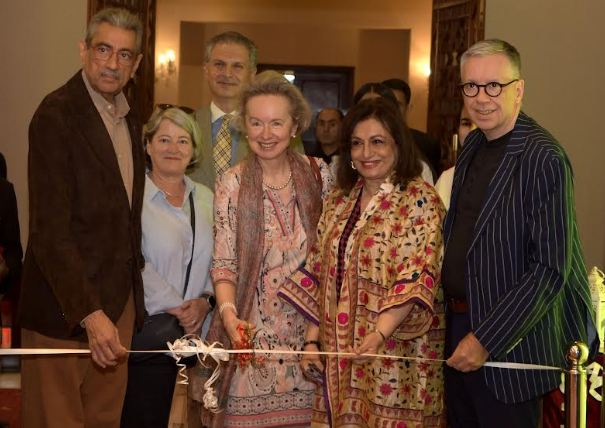
The event was inaugurated by the Ambassador of Austria to Pakistan, Andrea Wicke, alongside the Ambassadors of Ireland and Jordan and the management of Serena Hotels. In their opening remarks, the dignitaries underscored the vital role that art and culture play in promoting peace, tolerance, and understanding among communities. Ambassador Andrea Wicke, in particular, highlighted the power of cultural expression to bridge divides and foster dialogue.
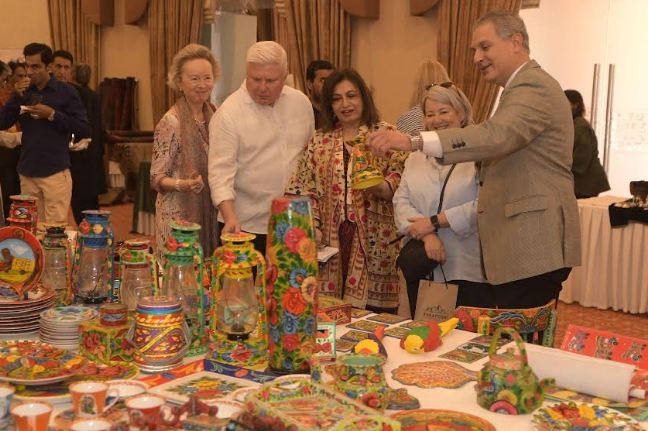
A major highlight of the event was the Crafts Bazaar, which offered a carefully curated selection of handmade crafts from across Pakistan. The bazaar presented a colorful and captivating showcase of textiles, jewelry, accessories, and home décor, all crafted by talented artisans representing a wide range of cultural traditions. Visitors had the rare opportunity to interact with the artisans, understand the stories behind their work, and purchase items directly—supporting local talent and community-based entrepreneurship.
Exhibits included a diverse range of products from Nomad Art Gallery’s artisan partners spread across the country. These included vibrant Ajrak prints from Sindh, finely woven Kashmiri shawls and embroidery, eco-friendly block-printed textiles, handmade toys by Granmani, and exquisite silver jewelry by Amna Shariff and the SS Collection. The event highlighted the immense potential of Pakistan’s traditional crafts sector, particularly when supported by platforms that value cultural integrity and sustainability.
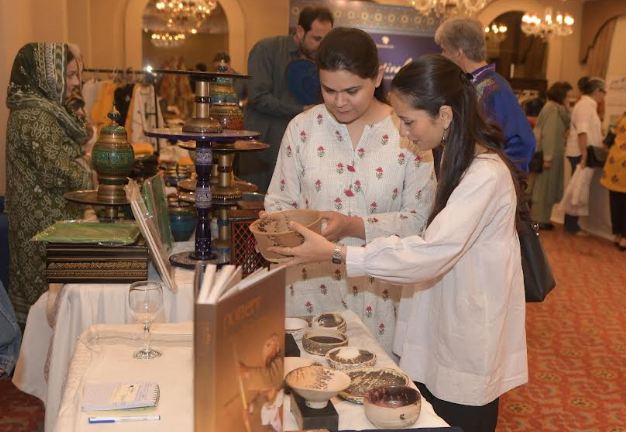
Serena Hotels, known for its consistent efforts to promote art and culture in the region, reaffirmed its commitment to supporting such initiatives. Syed Fahim Inam Chief Marketing Officer (Group) of Serena Hotels said, “Our goal is to provide a platform where culture, community, and creativity can converge. By empowering artisans and facilitating dialogue through art, we believe we can contribute to positive, lasting change in society.”
Nomad Art Gallery, a long-time promoter of indigenous art and social dialogue, also reiterated its dedication to creating spaces where art meets activism. The gallery has played a pivotal role in nurturing young artists, women entrepreneurs, and marginalized communities through exhibitions, workshops, and cultural collaborations.
The cultural event at Serena was was a celebration of identity, a showcase of talent, and a call for inclusion and peace through the universal language of art.=DNA
Pakistan’s consumer confidence hits six-year high in 2025 survey
ISLAMABAD, JUN 1 /DNA/ – The Federal Minister for Finance and Revenue, Senator Muhammad Aurangzeb, has welcomed the findings of the IPSOS Consumer Confidence Survey for the second quarter of 2025, calling it a strong affirmation of the improving economic outlook and public sentiment across Pakistan.
The survey reveals a significant surge in consumer confidence, with 42% of Pakistanis now believing the country is heading in the right direction—the highest level recorded in six years. Perceptions of the economy being strong have also reached their most favorable levels since August 2019. Notably, optimism has overtaken pessimism for the first time since consumer confidence tracking began, marking a key psychological shift among the population.
The Minister noted that this encouraging data reflects the success of the government’s disciplined and targeted macroeconomic strategy implemented over the last 14 months. The stabilization of key economic indicators—including the containment of inflation, strengthening of the exchange rate, rebuilding of foreign exchange reserves, and improved fiscal discipline—has created a foundation for renewed public trust and economic recovery.
He highlighted that consumer confidence in making major purchases and investments has doubled compared to the same period last year, indicating that households are beginning to feel more secure in their financial prospects. Similarly, confidence in job security is now at its highest since 2019, a sign that labor market conditions are gradually stabilizing in response to pro-growth policies and reforms.
The Minister further pointed out that this upswing in confidence spans across urban and rural areas, and is particularly evident among youth and women—demonstrating the broad-based nature of the economic turnaround. He linked this optimism to sustained government efforts to create an enabling environment for private sector growth, boost exports, enhance social protection, and encourage financial inclusion.
Senator Aurangzeb reaffirmed that the government remains committed to maintaining macroeconomic stability, accelerating structural reforms, and ensuring that economic growth translates into real and inclusive progress for all citizens. The findings of the IPSOS survey, he said, are a timely validation of Pakistan’s economic direction and a clear signal that the country is on a steady path toward recovery and resilience.
PM urges engagement with ‘misguided’ elements for national reintegration
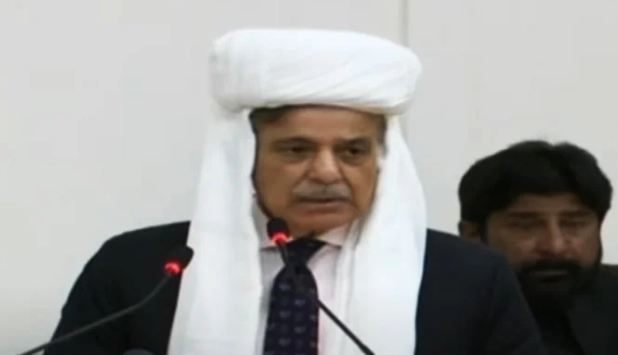
QUETTA: Highlighting it as essential for the country’s unity and progress, Prime Minister Shehbaz Sharif on Saturday called for efforts to guide those led astray by extremist forces in Balochistan back into the national fold.
Addressing a grand jirga in Quetta, the premier remarked: “Your concerns are fully respected, but these terrorists know nothing but brutality — no one can tolerate them.”
He said that grievances should be resolved by sitting together as brothers.
“Come, let us sit and talk,” the prime minister said, adding that a family becomes strong and prosperous only through dialogue and unity.
Terrorists were against the progress of Pakistan, he said and urged the people to foil their evil intentions.
Currently, Punjab has given Rs11 billion from its own share to Balochistan under the NFC, he stated.
“Out of the Rs1,000 billion development budget, Rs250 billion is for Balochistan only,” the premier added. He further said that the government provided financial support to help farmers shift to solar energy.
Karachi-Quetta highway had become a “bloody highway”, he said, adding that funds were being issued for its construction.
The premier announced that 25% of the next PSDP development budget would be allocated to Balochistan. Laptops would be given to the students of the province, he said further.
He maintained that efforts should be made to bring the misguided individuals back into the national mainstream.
Earlier, addressing army officers at the Command and Staff College Quetta, the prime minister reiterated that Pakistan would not allow India to unilaterally suspend the Indus Waters Treaty, warning that water cannot be used as a weapon against the country.
He said that India’s repeated provocations — including using the Pahalgam incident as a pretext for aggression — were firmly countered by Pakistan, both on the battlefield and diplomatic front.
“The Pakistan Air Force showed its professionalism by downing Indian jets and targeting seven high-value enemy assets. Air Chief Marshal Zaheer Ahmed Babar proved his mettle, while Chief of Army Staff Asim Munir delivered a historic victory, cementing his stature as a deserving Field Marshal,” he added.
In his address, the prime minister further said that the government and people of Pakistan stood shoulder to shoulder with the armed forces in safeguarding the country’s sovereignty.
Welcoming foreign guests at the institution, PM Shehbaz said their presence reflected Pakistan’s strong ties with friendly nations. He lauded the Command and Staff College for its outstanding contributions in shaping the country’s military leadership.
It is pertinent to mention here that PM Shehbaz arrived in Quetta on a day-long visit. Upon his arrival, he was received by Acting Governor and Speaker Balochistan Assembly Abdul Khaliq Achakzai and Chief Minister Balochistan Mir Sarfraz Bugti.
Apparel sector seeks PM meeting ahead of budget to save exports
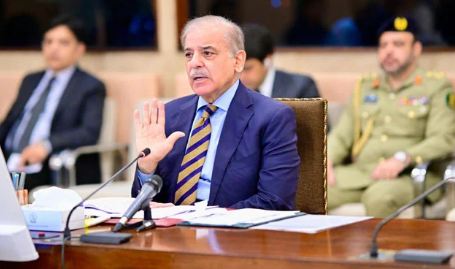
PRGMEA, PHMA warn tariff barriers threaten exports as vital materials unavailable locally
LAHORE, MAY 31 /DNA/ – Seeking an urgent meeting with Prime Minister Shehbaz Sharif ahead of the federal budget, Pakistan’s apparel sector — a vital contributor of over $9 billion in export revenue — has warned that the country’s value-added textile industry faces serious setbacks due to continued tariff barriers and restrictive policies that are choking supply chains.
In a joint statement issued by the Pakistan Readymade Garments Manufacturers and Exporters Association (PRGMEA) and the Pakistan Hosiery Manufacturers & Exporters Association (PHMA), apparel exporters stressed that global buyers now demand certified, high-performance materials that are simply not available in Pakistan. Yet, import of such essential raw materials remains hindered by duties and outdated regulations.
PRGMEA Regional Chairman Dr. Ayyazuddin and PHMA Zonal Chairman Abdul Hameed jointly demanded a direct and an immediate meeting with the prime minister ahead of the budget, warning that without urgent intervention, Pakistan could lose out on the global shift in sourcing patterns that has opened fresh opportunities for new exporters.
Dr. Ayyazuddin emphasized that Pakistan still relies heavily on cotton-based exports — primarily denim and fleece — while nearly 80% of global apparel trade has moved toward synthetic and functional textiles. “We cannot expand or diversify if we don’t have access to the right raw materials,” the statement said. “We are being penalized for importing items that aren’t even produced locally.”
Abdul Hameed pointed out that man-made fibers, technical yarns, performance fabrics, and critical trims — many categorized under HS Chapters 54, 55, and 96 — are subject to duties despite not being manufactured in the country. “Keeping tariffs on non-available raw materials is equivalent to taxing exports before they even happen,” he said.
Former PRGMEA chairmen Ijaz Khokhar and Sajid Saleem Minhas backing the joint demand highlighted that SMEs are particularly vulnerable due to rigid policies and lack of flexibility in global compliance. “We’ve sent a detailed letter to the Prime Minister Shehbaz Sharif and commerce ministry outlining how certain recent policy changes, like the shortening of the Export Facilitation Scheme (EFS) input period from 60 to just 9 months, are unrealistic for the apparel sector,” he said.
PRGMEA ex-chairmen Ijaz Khokhar added that the letter, addressed to the PM as well as the Commerce Minister Jam Kamal, strongly criticizes the abrupt shift in EFS timelines. He argued that value-added exporters often operate under just-in-time and never-out-of-stock business models, requiring longer input cycles to fulfill diverse orders. He said that the current restrictions, it warns, will disrupt operations and increase compliance burdens for exporters.
Sajid Saleem Minhas added that the local spinning industry has not evolved to meet the requirements of today’s global fashion market. Since we don’t produce the materials our buyers demand, we should at least allow their duty-free import. Otherwise, we are locking ourselves out of high-growth product categories, he said.
The PRGMEA and PHMA members also called for restoration of the Final Tax Regime (FTR) for exporters, stating that the shift to the Normal Tax Regime has led to complex audits and disrupted business continuity. We need simplicity and certainty, not additional paperwork and scrutiny,” the statement noted.
Ijaz Khokhar also raised another concern which is the lack of government push on trade diplomacy, particularly with the United States, where Pakistani textiles face an average import tariff of 29%, compared to lower rates for competitors like Bangladesh and Vietnam. The letter suggests Pakistan negotiate preferential terms or targeted tariff relief with the U.S., especially for eco-friendly and sustainable products that align with global ESG compliance.
He said that tefund delays were also highlighted as a chronic problem. Exporters are facing severe liquidity shortages due to delayed disbursement of DLTL, DDT, sales tax, and withholding tax refunds. The industry has requested an automated and time-bound mechanism for refund processing to ease working capital constraints.
Additionally, both associations emphasized the need for a strong national marketing campaign for “Made in Pakistan” garments. They urged the Ministry of Commerce to initiate global trade outreach through embassies, digital platforms, and targeted B2B events to increase visibility and improve brand image.
He said that this sector has the potential to double its exports in five years and added that we need the government to first remove these structural roadblocks.
Sajid Minhas said that the Pakistan’s value-added textile sector is one of the largest employers and a key contributor to national exports. The country cannot afford to lose this opportunity. We request the prime minister to meet us urgently and help align policy with global market realities.
OGRA rolls out e-licensing system to facilitate the oil and gas industry
ISLAMABAD, MAY 31 /DNA/ – In a major step toward digital transformation and regulatory efficiency, the Oil and Gas Regulatory Authority (OGRA) has officially launched a comprehensive e-licensing system for Pakistan’s oil and gas sector. Developed in collaboration with the National IT Board (NITB), the new platform enables fully digitized licensing across all industry segments, including Gas, LNG, CNG, LPG, refineries, and oil.
The initiative is designed to simplify and accelerate the process of obtaining or renewing licenses, offering enhanced transparency and efficiency for businesses operating in the midstream and downstream energy markets.
“This launch marks a significant milestone in our journey toward digital governance,” said a spokesperson OGRA. “By cutting paperwork and enabling faster processing, we’re not only improving convenience for applicants and investors, but also reinforcing confidence in Pakistan’s regulatory framework.”
Accessible from anywhere, the new system allows users to submit applications online, track progress in real time, and benefit from a streamlined approval process. It aligns with national goals to enhance energy security, foster private sector participation, and attract greater investment into Pakistan’s energy landscape.=DNA