Home Blog Page 606

Charter of Parliament: will it work?

Charter of Parliament: will it work?

If the speaker is genuinely appalled by the events of September 10, he should immediately file an FIR, just as he did in 2014 when Imran Khan and Tahir ul Qadri’s protestors attempted to storm Parliament. This is precisely what PTI has demanded of him: if he is truly committed to uniting political parties for the betterment of the country, he must demonstrate courage by taking action and holding the real culprits accountable.

Analysis

Ansar M Bhatti

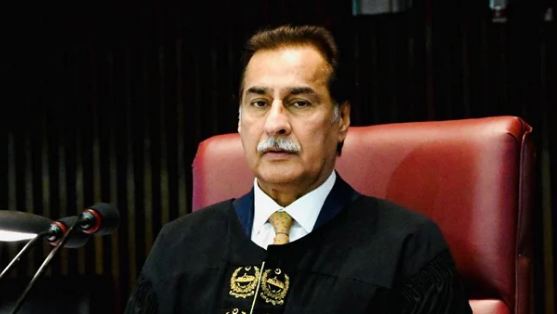
ISLAMABAD: The Speaker of the National Assembly, Sardar Ayaz Sadiq, has proposed a “Charter of Parliament” aimed at fostering political consensus among various stakeholders, including the Pakistan Tehreek-e-Insaf (PTI). Bilawal Bhutto, in his speech, emphasized that any effort towards political consensus without PTI’s participation would be futile.

But the question arises: why did the Speaker suddenly propose this charter, and why did all political parties, except PTI, agree to it?

The answer seems obvious. The unprecedented “ransacking” of the Parliament House on September 10, 2024, by masked individuals left everyone shocked. The Speaker, as the custodian of the House, bears responsibility for the safety of its members. The fact that members of Parliament were arrested from within the National Assembly premises was a particularly troubling development. No one expected that those who consider themselves above the law would go so far as to violate the sanctity of the Parliament itself.

In an attempt to mitigate the humiliation caused by these events and the arrests of parliamentarians within the House, the Speaker, it appears, proposed the so-called “Charter of Parliament” as a means of diverting attention.

In justifying the proposal, Speaker Ayaz Sadiq suggested that if the leaderships are uninterested in such an arrangement, then members should move forward on their own. However, one must question whether Ayaz Sadiq, a long-time ally of Nawaz Sharif and Shehbaz Sharif, could truly act independently of their influence. Is he capable of disregarding their directives? The answer is likely no, which raises the suspicion that this proposal is merely a political maneuver designed for face-saving purposes rather than a genuine effort toward political unity.

If the speaker is genuinely appalled by the events of September 10, he should immediately file an FIR, just as he did in 2014 when Imran Khan and Tahir ul Qadri’s protestors attempted to storm Parliament. This is precisely what PTI has demanded of him: if he is truly committed to uniting political parties for the betterment of the country, he must demonstrate courage by taking action and holding the real culprits accountable.

The prospects for the success of the Charter of Parliament appear quite bleak. Both the PPP and PML-N have a history of signing similar agreements, such as the Charter of Democracy, but failing to honor their commitments. As a result, the Charter of Democracy never truly materialized. One particularly interesting clause in that charter was a pledge by both parties to never form a government with the help of the Establishment!!

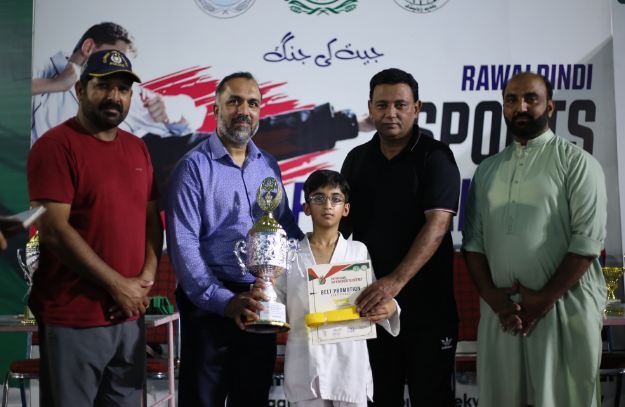
Ahmed Abid claims first position in taekwondo yellow belt test in Rawalpindi

Ahmed Abid claims first position in taekwondo yellow belt test in Rawalpindi

RAWALPINDI: /DNA/ – Under the supervision of the Rawalpindi Sports Department, the National Taekwondo Academy, led by President Attaullah Khan and Coach Mehabullah Khan, hosted a successful Taekwondo Belt Promotion Test ceremony at the Shehbaz Sharif Sports Complex in Rawalpindi. District Sports Officer, Shams Tahir Abbasi, presented the trophy, belt, and certificate to Ahmed Abid, who secured the first position in the yellow belt category. Also present on the occasion were:

  • Abid Mahmood Mughal, President of Rawalpindi Chase Association and Chairman of Media Workers Organization
  • Sarwar Naimee, SHO of Islamabad Police
  • Tahir Ahmed, Incharge E-Library Rawalpindi

Experts call for resumption of Iran nuclear negotiations

Experts call for resumption of Iran nuclear negotiations

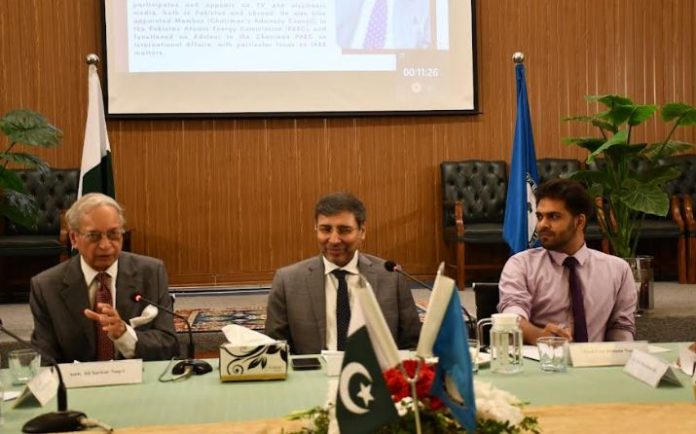
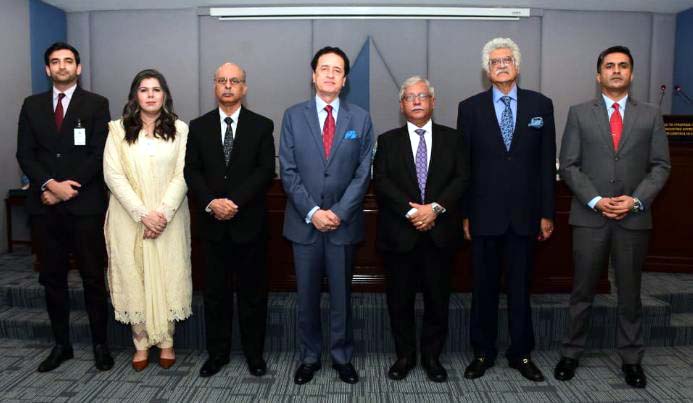
Speaking at a roundtable discussion organized by the Institute of Regional Studies (IRS), several experts maintained that the West bore greater responsibility for bringing nuclear negotiations back on track with Iran. 

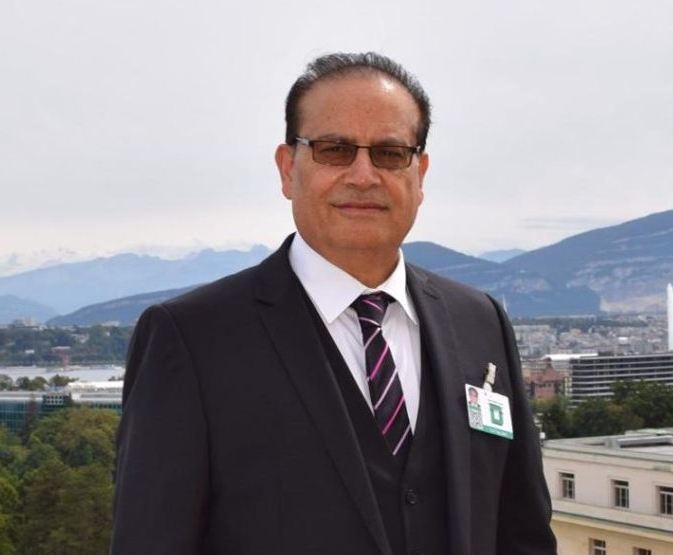
ISLAMABAD, SEPT 11 (DNA) – Ambassador Jauhar Saleem, President IRS, highlighted that while nuclear weapons brought about strategic stability in some instances, they also resulted in arms races in other situations. Ambassador Saleem cautioned that the break down of  negotiations might lead to a major change in Iran’s stated nuclear policy, which in turn could start a chain reaction in the Middle East in terms of a quest for nuclear capability. 

Ambassador Ali Sarwar Naqvi, Executive Director of Centre for International Security Studies and Pakistan’s former envoy to IAEA, provided a detailed historical overview of Iran’s nuclear program. He also touched upon the international community’s suspicions about Iran’s nuclear program and  noted that despite Iran’s compliance with certain inspections, considerable doubts persisted, leading to heightened tensions and breakdown of  negotiations with the P5+1. He underscored that Iran had a right to peaceful nuclear technology being a signatory of Nuclear Non-proliferation Treaty (NPT) so long as it met its treaty obligations. 

Dr Zafar Nawaz Jaspal, Dean Faculty of Social Sciences at Quaid-i-Azam University, traced the evolution of Iran’s nuclear posture through three significant phases. He highlighted Iran’s initial nuclear developments under Atoms for Peace program of the US in 1950s, its eventual signing of the NPT in 1970s and its current uranium enrichment activities following US withdrawal from JCPOA. 

Syed Muhammad Ali, Chairperson PEMRA Council of Complaints and a prominent security expert, analysed Iran’s nuclear program through five distinct phases, highlighting its diplomatic, technological, economic, strategic, and political dimensions. He felt that economic sanctions imposed on Iran had been counterproductive as Iran’s nuclear posture would essentially be determined by Israeli motives, not economic factors. 

The seminar was attended  by diplomats, security experts, researchers, academics, media personnel and students.

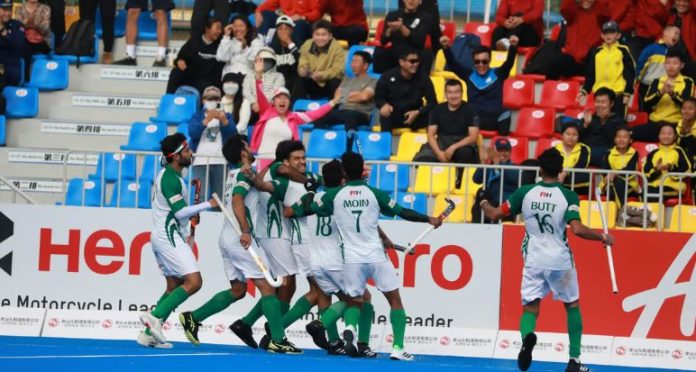
Asian Hockey Champions Trophy: Pakistan secure well-deserved victory over Japan

Asian Hockey Champions Trophy: Pakistan secure well-deserved victory over Japan

BEIJING, SEPT 11 – Pakistan has defeated Japan by 2-1 in Asian Hockey Champions Trophy, on Wednesday.

Pakistan registered their first win of the tournament, while Japan will have to wait longer to secure their first victory.

The Asian Hockey Champions Trophy established in 2011 is a prestigious tournament that features top hockey teams from across Asia.

The competition provides a platform for teams to showcase their skills and vie for regional supremacy. This year’s tournament has brought together leading teams from the continent, highlighting the growing competitiveness of Asian hockey.

Experts address arms control challenges at CASS Lahore seminar

Experts address arms control challenges at CASS Lahore seminar

LAHORE, SEPT 11 (DNA) – The Centre for Aerospace & Security Studies (CASS), Lahore, hosted a seminar titled “Adapting to Strategic Complexities: Innovating Approaches to Arms Control in South Asia” on 10 September 2024. The seminar explored the intricate dynamics of strategic stability and arms control in the South Asian region, focusing on the impact of Indian belligerence and recent technological developments. Ms Nidaa Shahid, Senior Researcher, CASS Lahore, commenced the seminar with an overview of the event’s objectives.

Lt Gen Khalid Kidwai (Retd), Adviser, National Command Authority (NCA), delivered the keynote address. He highlighted that Pakistan’s Full Spectrum Deterrence (FSD) capability, while generally remaining within the larger philosophy of Credible Minimum Deterrence, enables Pakistan to effectively counter aggression through smart deterrence strategies. While discussing arms control and disarmament, he emphasised the difference between the two. He said that while arms control arguably may be an option without disturbing strategic balance, disarmament for Pakistan is a no-go area. He concluded by stating that Pakistan’s policy of FSD ensures that strategic stability in South Asia will continue to prevail irrespective of global and regional shifts. India must recognise that political bluster and political rhetoric is not policy and must be dispensed with.

Dr Naeem Salik, Executive Director, Strategic Vision Institute (SVI), provided insights into the complexities introduced by advancements in missile technologies. Examining the impact of these newer technologies, such as Multiple Independently Targetable Reentry Vehicles (MIRVs) and hypersonic cruise missiles, he discussed how they intensify strategic competition and challenge existing arms control frameworks in South Asia.

Ambassador Zamir Akram (Retd), Adviser, Strategic Plans Division (SPD), highlighted that arms control measures can only work when both sides are willing to work together and make concessions. He said that some of the measures that have been on the plate for decades have now become redundant, owing to Indian developments, including the Ballistic Missile Defence (BMD) and Anti-Satellite Weapons (ASAT) test of 2019. He added that even the Indian No First Use (NFU) pledge is conditional to the situation as noted by many Indian leaders.

In his concluding remarks, Air Marshal Asim Suleiman (Retd), President CASS, Lahore, noted the need for a shared modernised strategy, tailored to address evolving regional strategic stability challenges. He said that the path forward necessitates a steadfast commitment to dialogue, trust-building, and practical risk-reduction measures to secure a more stable and peaceful future for South Asia. He further said that given the recent actions of the Indian leadership, the responsibility for creating a conducive environment for arms control rests squarely on their shoulders.

The seminar probed the imperatives for arms control in South Asia amid strategic complexities, highlighting the critical need for innovative and collaborative approaches to maintain regional security.

Free my Country

Qamar Bashir

Qamar Bashir

The September 8th public meeting did not attract the large crowd the PTI leadership had hoped for—one that could have put significant pressure on the government and provided much-needed public support for the PTI’s key demands, which included the release of Imran Khan, the configuration of election results based on Form 45, the release of arrested workers, the army stepping back from politics, and ensuring the judiciary’s independence. However, ironically, the government ended up aiding the PTI’s cause by placing containers to block all routes to the venue, dispersing the crowd with tear gas, and making a series of arrests after the event.

These unnecessary and poorly thought-out actions by the government ultimately played into the PTI’s hands. As the media shifted its focus from the less-than-expected turnout to the government’s aggressive and disproportionate response, it inadvertently boosted the PTI’s narrative. Had the government not taken such measures, it might have dampened PTI’s momentum, demoralized its leadership, and disillusioned its supporters. But, unfortunately for the government and establishment, and fortunately for the PTI, the government did exactly what it should have avoided.

To add insult to the injury, the arrest of PTI parliamentarians within the premises of the parliament and the rumors of abduction of the Chief Minister and other leaders catapulted the popularity of the PTI to new heights, increased its sympathy vote and conversely eroded the political capital of the government and the establishment.

Instead of exercising grace and restraint, the government responded to the tall claims, threats, and foul language from the opposition with even worse language. Rana Sanaullah, the government spokesman and de facto spokesperson for the establishment, hurled even more severe accusations and threats, reminiscent of the way Sultan Rahi used to challenge villains in old movies. He went as far as to challenge the KP Chief Minister, daring him to enter Punjab and face severe consequences. Sanaullah warned that the Chief Minister would not be allowed to hold a public meeting at Minar-e-Pakistan and would be insulted in a manner even worse than what was done to the Punjab Chief Minister.

These statements flagrantly disregarded the constitutional rights guaranteed to every citizen of Pakistan. Article 15 of the Constitution ensures the freedom of movement, stating, “Every citizen shall have the right to remain in, and, subject to any reasonable restriction imposed by law in the public interest, enter and move freely throughout Pakistan and to reside and settle in any part thereof.” Further, Article 16 guarantees the freedom of assembly, providing that “Every citizen shall have the right to assemble peacefully and without arms, subject to any reasonable restrictions imposed by law in the interest of public order.” Finally, Article 19 guarantees freedom of speech, ensuring that every citizen has the right to express their views, subject to restrictions related to the glory of Islam, national security, and public order. The threats and challenges issued by the government’s spokesperson clearly violated these fundamental rights enshrined in the Constitution, which protect every citizen, including public figures like the KP Chief Minister.

In its reactive press conference, the PTI accused the government and establishment of subverting the Constitution, violating laws and regulations, disrespecting the sanctity of Parliament, abducting party leaders and workers, and suffocating the freedoms of the press, speech, and assembly—rights guaranteed under the Constitution.

During the press conference, the PTI leaders expressed regret for any inadvertent remarks made against the state, the military, and women in general. However, they stood by the substantive parts of the speech, particularly those delivered by the KP Chief Minister.

The General Secretary fully endorsed the Chief Minister’s statements regarding the role of the Army. Specifically, he supported the claim that the military should “put its house in order” and return to its barracks, vacating roles not constitutionally mandated to them. He emphasized that the Army should refrain from interfering in the electoral process, influencing the selection of parliamentarians, and undermining the people’s mandate. Furthermore, he called for the military to divest from its business, investment, trade, and real estate ventures, as these activities fall outside the Army’s core constitutional responsibilities. His key demand was for the Establishment to loosen its iron grip on the country, free the country and allow the nation and its people to breathe freely.

The speaker apologized for the part of the speech that insulted journalists but endorsed the substantive claim, stating that conducting interviews in the drawing rooms of individuals who were abducted, tortured, and coerced into giving confessional statements under duress goes against the established norms and ethics of journalism.

They also apologized for the derogatory remarks made against Parliament but stood by the part where the KP Chief Minister referred to it as a “faux parliament” lacking any mandate or endorsement from the people, calling its members stooges of those who brought them to power.

The speakers then announced a countrywide protest to be held on the coming Friday, condemning the unconstitutional actions of the government. The protest’s main objectives are to demand the release of arrested PTI leaders, including Imran Khan, and to call for free and fair elections.

Here’s the corrected and improved version of your text:

During the press conference, the KP Chief Minister, who had been absent for several hours, returned to his seat. It was revealed that he had been in a meeting with the establishment, discussing various political and law-and-order issues. However, the full details of these discussions came to light later. In a separate interview, Faisal Vawda added a critical perspective, hinting that while the Chief Minister was able to return this time, if a similar episode were to occur again in the future, he would face severe consequences.

The disproportionate reaction of the government and establishment against the PTI has once again elevated the party to a high moral ground, significantly boosting its political capital and public sympathy. This overreaction has had a negative impact on the law and order situation, heightened political tensions, and further eroded Pakistan’s international image. It has also scared away foreign traders, investors, and businessmen, worsening the overall perception of the country and further depleting public support for the government and the establishment.

Qamar Bashir

Former Press Secretary to the President

Former Press Minister to the Embassy of Pakistan to France

Former MD, SRBC, CEO, ATV

Goodbye Monal

Goodbye Monal

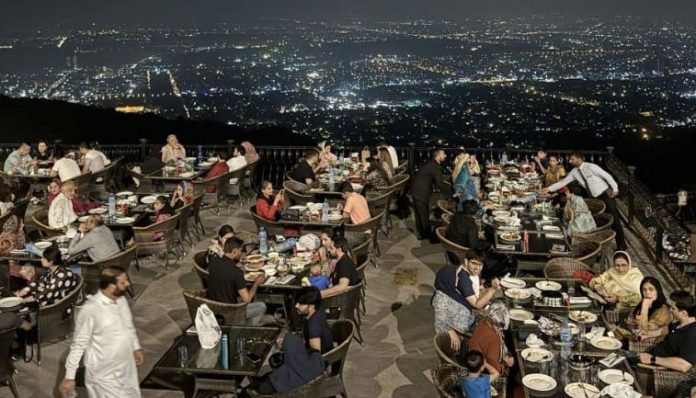
ISLAMABAD, SEPT 10 (DNA) – One of Pakistan’s most iconic landmarks, the Monal Restaurant, has officially closed its doors following a Supreme Court ruling.

The closure marks a bittersweet moment for both the restaurant’s staff and management, who must now say goodbye to an establishment that has been part of their lives for many years.

Equally, food lovers, local residents, and foreign tourists are left disappointed, not only losing a popular dining destination but also a must-visit tourist spot.

Though farewells are never easy, especially to places rich with memories, such changes are part of the evolving landscape in this Land of the Pure. – Text by Ansar Bhatti, Photo by Online

President lauds services of A.Q.Khan Hospital Trust, assures his support

President lauds services of A.Q.Khan Hospital Trust, assures his support

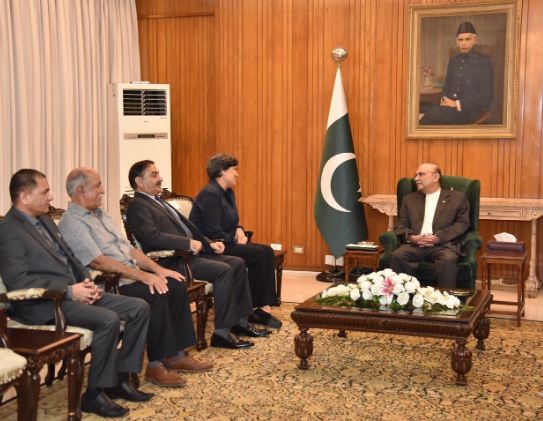
ISLAMABAD, SEPT 10 (DNA) – President Asif Ali Zardari has assured the Chairperson of Abdul Qadeer Khan Hospital Trust, Dr. Dina Khan , of his support to the Trust that provides free medical and healthcare services to the deprived and marginalized section of the society. He commended the services of the Trust offering accessible healthcare to the needy people.

The President expressed these views during a meeting with the delegation of Dr. A.Q. Khan Hospital Trust, led by Dr. Dina Khan, daughter of Mohsin-e-Pakistan Dr. Abdul Qadeer Khan (Late), at Aiwan-e-Sadr, today. Ms. Aseefa Bhutto Zardari, MNA, was also present during the meeting. The meeting was also attended by the Trustees namely Mr. Habib-ur-Rehman, Raja Arshad Mehmood and Advisor Chaudhry Ghulam Yasir Abbas.

Dr. Dina Khan briefed the President about the role of the hospital in the provision of medical services to the people. She also apprised the President about certain problems being faced by the Trust and highlighted that some former trustees had committed financial embezzlement and had misused the accounts of the Trust.

The President said that the entire nation was indebted to Dr. Abdul Qadeer Khan for his services to the nation and that their issues would be resolved.

The President commended the working of A.Q. Khan Hospital Trust, and appreciated the generous donations by the people for the noble cause of providing much-needed free health services to the underprivileged.

NA speaker demands immediate release of PTI lawmakers

NA speaker demands immediate release of PTI lawmakers

ISLAMABAD, SEPT 10 – A day after Pakistan Tehreek-e-Insaf (PTI) lawmakers were chased within the Parliament’s premises, National Assembly Speaker Ayaz Sadiq Tuesday reprimanded the Islamabad Inspector General (IG) of Police Syed Ali Nasir Rizvi, demanding their immediate release.

“You cannot arrest anyone from the Parliament House or lodges. These parliamentarians should be released immediately,” said the speaker.

Sadiq added that he is “very saddened” by this incident and also watched the footage of PTI leader Sher Afzal Marwat’s arrest.

“What way was it to arrest a parliamentarian?” the speaker questioned IG Rizvi.

Sadiq’s directive comes in the wake of the arrests of PTI lawmakers followed by a fiery speech delivered by the party’s leader Ali Muhammad Khan on the floor of the lower house today.

Khan, in his speech, strongly protested the treatment meted out to fellow members of the NA including Aamir Dogar, Sheikh Waqas, Maulana Naseem, Sher Afzal Marwat and Jamshed Dasti — all of whom took shelter in the Parliament last night.

Protesting against the arrests, the former minister said: “What happened on May 9 was wrong, but last night was the May 9 of democracy.”

The politician, in the NA, said he was not making a case for his party’s founder Imran Khan today but for democracy. “We are not in Israel but in Pakistan.”

Earlier today, the speaker maintained he won’t remain silent on arrests of lawmakers and will action. “Whatever happened in the Parliament will have to be protested. I have ordered all the videos,” he said, summoning the leadership of all political parties in the chamber.

Sadiq maintained that the matter is to be looked into with seriousness. “I will file a case against those involved in yesterday’s incident.”

The speaker had then immediately summoned IG Islamabad, DIG operations and senior superintendent of police (SSP) operations.

Meanwhile, during his speech in the NA, Khan questioned who took away his party’s lawmakers from the Parliament. “Who were those masked people who took our people from the Parliament?”

“Impose Article 6 on those who stormed the Parliament last night,” he said, adding that the episode will be remembered as a “dark chapter in the democratic history of Pakistan”.

“What happened yesterday was an attack on democracy, Pakistan and the Constitution of Pakistan,” he said.

He added that the attack was, in fact, one on the speaker, Prime Minister Shehbaz Sharif and Pakistan Peoples Party (PPP) Chairman Bilawal Bhutto Zardari.

The PTI leader told fellow parliamentarians that it was difficult for him to arrive at the Parliament today following strict checking in the federal capital.

What happened?
The Islamabad police on Monday had arrested PTI Chairman Barrister Gohar Khan and lawmaker Marwat outside Parliament House, as well as took others into custody for allegedly violating the newly enacted public gathering law during the party’s Sunday power show in the capital.

The Islamabad police said that PTI leaders Omar Ayub Khan and Zartaj Gul Wazir would also be taken into custody.

Heavy contingents of police were deployed outside the parliament while all entry and exit routes to the Red Zone were also closed from D-Chowk, Nadra Chowk, Serena, and Marriott, except for Margala Road.

However, Ali Muhammad Khan was not taken into custody by the police when he departed from the parliament.

Marwat was arrested for violating regulations devised under a new law —Peaceful Assembly and Public Order Bill, 2024, sources told Geo News, adding that the PTI lawmaker was accused of clashing with police personnel a day earlier.

The sources had, on Monday, claimed that all the PTI lawmakers, including Zain Qureshi, Naseem-ur-Rehman and Zubair Khan were arrested from the Parliament House.

Thriving Without the IMF

Thriving Without the IMF

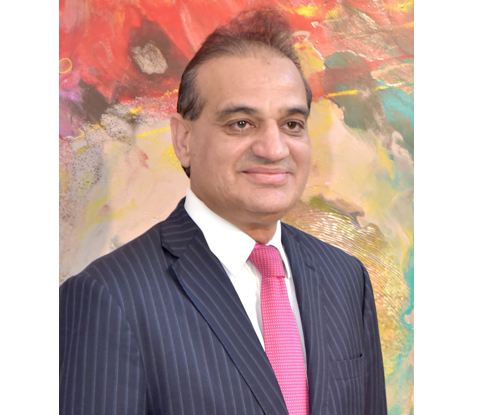
Muhammad Faiq Shah

In the contemporary global economic system, many developing nations, including Pakistan, rely on external financial support to stabilize their economies. The International Monetary Fund (IMF) and other multilateral institutions have often been a lifeline for Pakistan, providing much-needed financial assistance to cope with fiscal deficits, inflation, and external debt crises. However, the reliance on external entities can result in stringent conditions that often lead to domestic policy challenges, increased debt, and economic vulnerability. This raises an important question: Can Pakistan achieve sustainable development and prosperity without the assistance of institutions like the IMF? The answer lies in reshaping economic policies, prioritizing internal resources, and pursuing innovative solutions.

One of Pakistan’s foremost economic challenges is its low tax-to-GDP ratio, which hinders revenue generation and forces the government to rely on external borrowing. As of 2023, Pakistan’s tax-to-GDP ratio was approximately 9.5%, one of the lowest in the region, compared to India’s 17% and Bangladesh’s 9.9%. This inadequate revenue generation pushes the country towards borrowing and external financial support. A significant portion of Pakistan’s economy operates in the informal sector, accounting for 35-40% of GDP, according to the World Bank. By formalizing this sector and improving tax compliance, Pakistan can tap into previously untaxed areas. Formalizing just 20% of this informal economy could increase government revenues by up to 2-3% of GDP. Implementing a progressive tax system that ensures the wealthiest 10% of the population, who control 60% of the nation’s wealth, contribute fairly, could generate an additional PKR 1 trillion annually. Additionally, digital tax collection has already led to a 17% increase in tax returns in 2022 compared to the previous year, showing the potential for further improvement through technological solutions.

Pakistan’s trade deficit remains one of its most pressing economic concerns. In the fiscal year 2023, the country’s exports stood at $31.8 billion, while imports were $58.7 billion, resulting in a trade deficit of $26.9 billion. To move towards sustainable development, Pakistan must focus on an export-led growth strategy. Diversifying its export base is critical, as textiles currently account for 60% of exports. Pakistan’s tech exports were only $2.6 billion in 2022, compared to Vietnam’s $96 billion in 2020, highlighting the need to prioritize tech-based goods. Improving agricultural productivity is another key factor. Currently, Pakistan’s wheat yield is 30-40% lower than countries like Egypt and the United States. Increasing productivity through modern agricultural practices and efficient water management could lead to significant savings. For example, Pakistan’s water scarcity crisis is expected to worsen by 2025, but adopting water-efficient practices such as drip irrigation could mitigate the problem and save the economy billions.

With a median age of 22.8 years, Pakistan has a young population that could be an economic asset. However, 58% of Pakistan’s youth is unskilled, limiting their potential to contribute to economic growth. Pakistan’s education expenditure is currently only 2.8% of GDP, compared to the global average of 4.5%. By increasing this to at least 4%, the country could drastically improve access to quality education, particularly in STEM fields, similar to how South Korea invested in education and saw its GDP grow from $2.7 billion in 1960 to $1.6 trillion in 2020. In addition, Pakistan spends only 1.2% of GDP on healthcare, while the World Health Organization recommends at least 6%. Increased spending on healthcare can lead to a healthier, more productive workforce, potentially increasing economic output by 2-3% annually.

Pakistan’s energy crisis is a major impediment to growth. The country spends $14 billion annually on energy imports, while energy shortages cost the economy an estimated 2-2.5% of GDP each year. Pakistan has vast untapped renewable energy potential, with 50,000 MW in wind energy and over 2.9 million MW in solar energy. However, the country utilizes less than 5% of its renewable energy potential. Scaling up renewable energy could not only reduce the import bill but also create approximately 300,000 green jobs. Additionally, reducing energy wastage by upgrading transmission infrastructure could save up to PKR 200 billion annually, according to the World Bank.

Corruption remains a significant challenge for Pakistan, costing the economy 5% of its GDP annually. Strengthening institutions like the National Accountability Bureau (NAB) and promoting digital governance could reduce corruption and improve economic efficiency. For example, e-governance in Estonia saves the country 2% of GDP annually. Pakistan could potentially save PKR 500 billion annually through the digitalization of public services. Strengthening public institutions to ensure transparency could add an additional $7-8 billion to Pakistan’s economy annually by reducing corruption by just 2%.

Lastly, Pakistan’s national savings rate is just 11-13% of GDP, compared to an average of 30-35% in emerging economies. Encouraging domestic savings and investments could reduce reliance on external loans. Expanding financial inclusion, where currently only 21% of the population has access to formal banking services, could mobilize up to PKR 1 trillion in untapped capital. Strengthening capital markets and improving corporate governance could also attract significant investment, reducing the need for external financial support.

In conclusion, achieving prosperity and development without the IMF or other external support is a challenging yet achievable goal for Pakistan. The statistics indicate that by focusing on domestic reforms, fostering export-led growth, investing in human capital, promoting energy independence, and reducing corruption, Pakistan can significantly enhance its economic performance. By adopting innovative solutions and utilizing its internal resources effectively, Pakistan can chart a path to self-reliant and sustainable economic development.

Muhammad Faiq Shah is a businessman, political figure, and dedicated philanthropist. He can be reached via Email: [email protected]

Stay Connected

64FansLike
60FollowersFollow

Latest Reviews

Exchange Rates

USD - United States Dollar
EUR
1.17
GBP
1.34
AUD
0.67
CAD
0.73