Home Blog Page 601

Philippines and Pakistan: a friendship forged in shared struggles and aspirations

Philippines

By Mahnoor Ansar

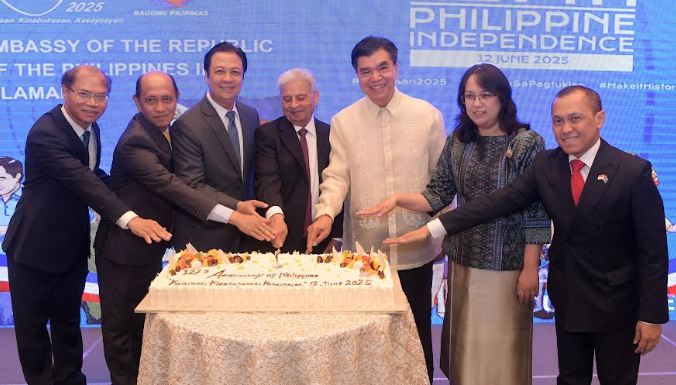
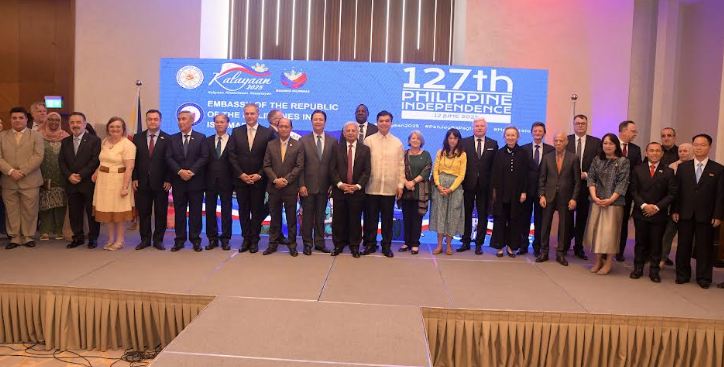
ISLAMABAD: In a heartwarming and poignant ceremony held at the Philippine Embassy in Islamabad, Ambassador of the Philippines to Pakistan, Fernandes, commemorated the 127th Anniversary of the Proclamation of Philippine Independence. The ambassador hosted a grand reception attended by government dignitaries, members of the diplomatic corps, civil society representatives, and fellow Filipinos residing in Pakistan.

Chief Guest for the evening was Federal Minister for National Food Security and Research, Hon. Rana Tanveer Hussain, who joined the celebrations alongside a number of ambassadors, diplomats, and Pakistani officials.

In his address, Dr. Emmanuel R. Fernandez Ambassador of the Philippines eloquently recounted the historical significance of June 12, 1898 — the day when the Filipino people declared their independence after a prolonged and painful struggle against colonial oppression. “Almost a century and a half ago, the Filipino people asserted their right to be free. It was an assertion that was preceded by a long and bloody struggle against colonial rule,” he said.

Paying homage to the forefathers of the Philippine independence movement, the ambassador said the occasion was not only to honor their sacrifice but also to renew a national commitment. “More importantly, tonight, we Filipinos renew our commitment to safeguard that freedom and to use it to shape a better future for our country,” he remarked.

Drawing a meaningful parallel between the histories of the Philippines and Pakistan, Ambassador Fernandes emphasized the shared legacies of resilience and sacrifice. “Like the Philippines, Pakistan also won its freedom and independence at a very high cost. And, like the people of the Philippines, the people of Pakistan know what it means to endure, to struggle, and to triumph – again and again – over all forms of adversities and challenges,” he said.

The ambassador described this shared historical narrative as the foundation of a strong and enduring bilateral relationship between the two countries. “I believe that it is our common experience of having to fight long and hard for our freedom that makes Pakistan and the Philippines natural friends,” he noted.

Recalling the early days of bilateral engagement, the ambassador highlighted that the Philippines was among the first nations to recognize the newly independent Pakistan in 1947. Since then, he said, the two countries have cooperated extensively across sectors including education, culture, trade, and climate change resilience. “Indeed, the Philippines has every reason to consider Pakistan its abiding friend,” he stated.

In a message brimming with optimism, Ambassador Fernandes conveyed his hope for a future marked by deeper cooperation and shared prosperity. “We have achieved much together during the past 76 years. We can do more together in the coming years to attain the common aspirations of our people – for peace, for prosperity, and for a future marked by inclusivity and innovation,” he said.

The ambassador concluded his speech with the traditional Filipino greeting of goodwill, “Mabuhay!” – meaning “Long live!” – before offering a heartfelt tribute to both nations: “Long live the Philippines! Long live Pakistan!”

The evening featured traditional Filipino music, cuisine, and cultural performances, offering guests a vibrant glimpse into the rich heritage of the Southeast Asian nation. The ceremony not only celebrated the independence of the Philippines but also stood as a testament to the strength of bilateral relations and people-to-people connections between the Philippines and Pakistan.

As both countries look to the future, their enduring friendship, shaped by shared histories and strengthened by mutual respect, remains a beacon of diplomatic goodwill in the region.

Moscow train service to boost Pak exports: FPCCI panel convener

Moscow train service to boost Pak exports: FPCCI panel convener

                LAHORE, JUN 13 (APP/DNA): The launch of a train service between Pakistan and Moscow is a landmark initiative that would open new vistas for trade promotion not only with Russia but also with Central Asian states, European countries, and even parts of Africa.

Convener of Federation of Pakistan Chamber of Commerce and Industry (FPCCI) Regional Committee on Food, Shahid Imran stated this in a meeting with industrialists delegation led Mian Zahid Iqbal, former VP FPCCI, here on Friday.

Shahid Imran emphasized that this rail link would reduce significantly transportation costs and delivery times, making Pakistani goods more competitive in international markets. He was of the view that the train service would also boost Pakistan’s exports of food products especially snacks and other industrial goods, paving the way for economic diversification and regional integration.

“This train service is more than a logistical achievement – it’s a strategic advancement in trade diplomacy,” he said and praised the government’s vision in fostering economic ties through improved connectivity and urged the business community to explore new market opportunities this route would provide.

He hoped that more similar initiatives would follow, connecting Pakistan to other global trade corridors, asserting that such developments could transform Pakistan into a hub of transcontinental trade and bring long-term economic benefits.

Coordinated Aggression in the Muslim World

Coordinated Aggression in the Muslim World

by Muhammad Mohsin Iqbal

In a world already teetering on the edge of multiple crises, the recent Israeli attack on Iran has not only heightened regional tensions but also exposed the dangerous game being played by certain global actors. This act of aggression comes on the heels of the Indian incursion into Pakistani territory earlier in May, which was effectively repelled by Pakistan on May 7 through a calculated and courageous response. While the threat of a prolonged conflict between two nuclear-armed neighbors was fortunately averted, the winds of war appear to have shifted eastward, now blowing over Iran with unsettling force.

This is not the first time Israel has launched strikes on Iranian soil. Over the years, Tel Aviv has carried out numerous covert and overt operations aimed at sabotaging Iran’s nuclear program and military assets. In 27 November 2020, the assassination of a prominent Iranian nuclear scientistMohsen Fakhrizadehin Absard, Damavand County, near Tehran was widely attributed to Israel, though the latter never officially accepted responsibility. Earlier, in 2018, Israeli Prime Minister Benjamin Netanyahu claimed that Mossad had obtained a vast cache of Iranian nuclear documents, a move that was seen as part of Israel’s broader psychological warfare against Tehran.

More recently, Israel has increased the frequency and intensity of its aerial strikes on Iranian positions in Syria, with hundreds of such attacks recorded over the past decade. According to the Syrian Observatory for Human Rights, Israel carried out over 1,200 airstrikes between 2013 and 2023, many of which targeted Iranian personnel or affiliated militias. In April 2024, Israel was also believed to be behind a massive explosion at an Iranian military facility in Isfahan, further escalating the conflict. These incidents form a clear pattern of hostility, aimed not merely at neutralizing perceived threats, but at weakening Iran’s position in the region.

However, this latest assault appears to be different in scope and implication. It does not seem to be a tactical strike but part of a strategic shift—an escalation that may trigger a broader conflict. The silence or muted response of major powers, who otherwise advocate international law and peace, is telling. The question arises; why is there such unflinching tolerance toward Israel’s repeated defiance of international norms, and why does the world community fail to respond with the same vigor when Muslim nations are targeted?

The answer lies perhaps in a larger, more unsettling reality. A pattern has emerged over the past two decades, in which rising Muslim states are systematically destabilized under various pretexts. Iraq was invaded under the claim of possessing weapons of mass destruction—claims that were never substantiated. Libya was bombed into oblivion in the name of democracy. Syria has suffered a decade-long civil war, fueled by both regional and international interventions. And now, the focus has shifted to Iran, a country that has demonstrated resilience in the face of severe sanctions and diplomatic isolation.

It is worth observing that while some powers view any military or scientific progress by a Muslim state as a threat, no Muslim nation has declared a non-Muslim neighbor’s advancement as a justification for preemptive aggression. Rather, most Islamic countries, including Iran and Pakistan, have maintained a defensive posture, advocating peace and coexistence. Yet, provocations continue, often with silent complicity from the global powers who portray themselves as champions of human rights and international order.

The events of May, when India attempted an aggressive maneuver against Pakistan, serve as a vivid reminder of this coordinated hostility. Reports have surfaced indicating that Israel and India shared intelligence and possibly collaborated in planning that operation. Pakistan’s response, however, was swift and decisive. Blessed by the Almighty Allah and executed by a professional and resolute military, Pakistan thwarted their ambitions and preserved regional stability. Failing to destabilize Pakistan, the focus now appears to have shifted to Iran, a nation that, despite decades of isolation, has continued to advance technologically and militarily.

Iran has every right under international law to respond to unprovoked aggression. If it fails to do so, it risks facing the same fate as Palestine, where an oppressed nation has been gradually stripped of land, rights, and international support. But should Iran retaliate, there is little doubt that powerful nations will quickly mobilize to shield Israel and condemn Tehran, continuing the cycle of double standards and strategic land encroachments. History shows us the likely outcome—either subjugation through silence or condemnation through resistance.

This moment demands a collective awakening. The Muslim world, in particular, must reflect on the broader picture—how one after another, flourishing Islamic nations are being targeted, weakened, or dismembered. It is not merely about one country or one conflict; it is about a sustained campaign to prevent the rise of any Muslim nation that can assert itself on the world stage. Iran, like Pakistan, stands at a critical juncture. The decisions taken now will shape not only the future of individual nations but the dignity and sovereignty of the Muslim Ummah as a whole.

The time has come for the international community, especially those who uphold justice, to break their silence. Injustice anywhere is a threat to justice everywhere, and unchecked aggression, especially when cloaked in selective morality, will only push the world closer to chaos. Let us hope that reason prevails before the region is plunged into a broader, perhaps uncontrollable, conflict.

Israel Strikes at the Heart of Iran’s Nuclear Ambition

Qamar Bashir

By Qamar Bashir

The long-brewing confrontation between Israel and Iran has finally erupted into direct confrontation. After months of devastation in Gaza and precision assassinations in Lebanon and Syria, Israel has now escalated the battlefield to Tehran itself. In a daring and coordinated offensive, Israel launched air and missile strikes deep inside Iranian territory, reportedly targeting nuclear research facilities, air defense systems, ballistic missile stockpiles, and military command centers. According to Israeli claims, several senior military leaders and scientists were killed, and substantial damage was inflicted on key installations.

This attack, although sudden in execution, was far from unexpected. I had earlier written—and consistently emphasized—that the real Israeli objective was never just Hamas or Hezbollah. Those were merely stepping stones in a broader strategy aimed squarely at Iran, whom Israel sees as the ideological, financial, and logistical nucleus of anti-Israel militant activity in the region. The elimination of Hamas’s leadership, including Ismail Haniyeh, and the successive neutralization of Hezbollah’s command under Hassan Nasrallah, were deliberate moves to clear the path for a direct strike on Iran. As I noted then in an article titled: “It is not Hamas that is the ultimate target, but Iran—and sooner or later, Israel will strike.”

Despite a barrage of Iranian drone and missile retaliation following Israel’s operations in Gaza and Lebanon, Israel did not immediately retaliate against Iran’s homeland. This delay perplexed many observers. But strategically, it made perfect sense. Israel’s first objective was to degrade Iran’s outer defense perimeter—its proxies: Hamas in Gaza, Hezbollah in Lebanon, and the Houthis in Yemen. Israel methodically eliminated the top command of Hamas and continued high-profile strikes on Hezbollah, including those that killed Fuad Shukr, Taleb Abdallah, and other senior operatives.

This proxy war phase was a calculated move to weaken Iran’s retaliatory arms. Once the regional tentacles were sufficiently blunted, Israel turned its attention to the source: Tehran.

The precision with which this attack was executed mirrors earlier Israeli operations, such as the assassinations of Quds Force commanders in Damascus and the stealth killing of Ismail Haniyeh while under IRGC protection in Iran. Reports suggest that Israel deployed a combination of long-range missiles, advanced drones, and possibly cyber warfare tools to disable Iranian radar systems ahead of the attack.

Among the targets reportedly hit were Iran’s Natanz and Fordow nuclear enrichment facilities, multiple ballistic missile depots near Isfahan, and key command bunkers in Tehran. Israel also claims to have eliminated a number of senior IRGC commanders and nuclear scientists critical to Iran’s uranium enrichment and missile development programs. Although Iran has yet to officially confirm the scope of damage, the silence from Tehran suggests a period of shock and damage assessment before retaliation.

For over three decades, Iran has operated under crushing Western sanctions. Despite limited access to advanced military hardware, Iran has managed to develop indigenous ballistic missile and drone capabilities. However, the recent Israeli strike has called into question the true effectiveness of Iran’s deterrent power.

Iran’s April retaliatory strike on Israel using drones and missiles exposed vulnerabilities. Most of its projectiles were intercepted mid-air by Israel’s layered air defense systems—Iron Dome, David’s Sling, and Arrow. The strike caused minimal damage and maximum embarrassment. The same pattern repeated itself in this latest exchange, suggesting that Iran’s offensive capabilities may be more symbolic than strategic.

President Donald Trump, in his second term, had openly discouraged Israeli strikes while actively pursuing nuclear negotiations with Iran. His envoy was scheduled to meet Iranian Foreign Minister Abbas Araghchi in Oman when the strikes occurred. Trump warned that the operation could derail delicate diplomacy, stating, “I don’t want them going in because, I mean, that would blow it.”

But Iran is unlikely to remain passive. The regime’s credibility—both domestically and regionally—is at stake. It may activate what remains of Hezbollah, mobilize pro-Iran militias in Iraq and Syria, and possibly target American military bases in the Gulf. However, such actions risk triggering a wider conflict that Iran may not be prepared to sustain—militarily, diplomatically, or economically.

This war, unlike previous confrontations, is not confined to a single geographic theater. It is already spilling over diplomatically, economically, and ideologically. The Strait of Hormuz, which sees nearly 20% of the world’s oil shipments, is now at the center of global concern. Any Iranian attempt to disrupt this chokepoint will send global oil prices skyrocketing, potentially triggering inflation, economic slowdowns, and supply chain disruptions—particularly in vulnerable economies like Pakistan, Afghanistan, and parts of Africa.

Regionally, Pakistan must brace for the potential fallout. A full-scale Iran-Israel war could create a new refugee crisis, possibly pushing Shia communities toward Pakistan’s borders, further straining its fragile economic and social fabric. Ethnic and sectarian spillovers could ignite unrest in sensitive areas already on edge due to internal instability.

On a global scale, Iranian diasporas may stage protests, cyber attacks, or other non-kinetic responses. Human rights organizations and anti-war movements are also expected to rally against Israel’s aggression, just as they have against its actions in Gaza. The United Nations will soon become another front, with Iran pushing for international sanctions on Israel and the latter leveraging its alliances to block such moves.

Israel’s response to the October 7 Hamas attack, which killed 1,200 Israelis, has already resulted in the deaths of over 70,000 Palestinians, according to credible international estimates. This level of retribution has drawn severe criticism and raises critical questions about the doctrine of proportionality. Now, with direct military strikes on Iran, the scale of escalation suggests that Israel is prepared to operate outside established norms of proportional response, prioritizing complete neutralization over measured deterrence.

If the goal is to prevent a future nuclear-armed Iran, the stakes are existential. Public intelligence assessments suggest that Iran has not yet achieved weapons-grade enrichment, though it is believed to be close. If Iran already has bomb-grade material and a delivery system, Israel’s gamble could backfire catastrophically. A single nuclear strike on Israeli territory—small as the country is—could be existential.

But this scenario rests on assumptions that are, so far, unverified. If Iran does not yet possess nuclear capability, the conflict may remain conventional. In this case, Israel’s superior airpower, advanced missile defense systems, and deep intelligence capabilities give it a significant edge.

Israel has stated this is not a one-off attack but the beginning of a prolonged campaign. The declared objectives include complete dismantling of Iran’s nuclear capability, ballistic missile infrastructure, air defense systems, and command structure. If successful, this campaign could redraw the strategic map of the Middle East.

The strike has also laid bare the powerlessness of international institutions. The UN, the International Court of Justice, and the global civil society have issued statements—but Israel acted undeterred. Even the International Atomic Energy Agency’s resolution condemning Iran has failed to create any viable deterrence.

Meanwhile, Muslim nations, despite their collective population and wealth, remain spectators. No unified diplomatic or kinetic response has emerged. This exposes not just a military imbalance, but a broader geopolitical humiliation of the Muslim world.

Former Israeli Prime Minister Naftali Bennett justified the strikes by warning that failure to stop Iran could unleash a nuclear arms race across the Middle East—with Turkey, Egypt, and Saudi Arabia all seeking nuclear capabilities. “It’s time to hit the head of the octopus,” he said, calling Iran the epicenter of terror.

Netanyahu echoed this in his national address: “We struck at the head of Iran’s nuclear weaponization program… This is not a one-day attack. It will continue until the threat is removed.”

Israel’s ability to act unilaterally, even against U.S. advice, and without fear of diplomatic fallout, raises profound questions about the current global order. Israel, a tiny nation geographically, now flexes geopolitical muscle equal to—or beyond—that of traditional superpowers.

The events unfolding are more than military maneuvers—they mark the beginning of a new geopolitical epoch. With China, Russia, and the EU largely silent or paralyzed, the illusion of a balanced multipolar world is crumbling. Israel’s actions suggest that global influence is no longer a function of size, economy, or alliances—but of audacity, conviction, and superior military capability.

The strategic, moral, and institutional implications are enormous. Will the world allow the Middle East to descend into nuclear chaos? Will diplomacy resurface, or will military unilateralism become the new norm? And perhaps most importantly, will the Muslim world continue to watch in stunned silence, or will it finally forge a unified response to prevent the annihilation of its own geopolitical dignity?

History is no longer being shaped behind closed doors. It is being rewritten in missile smoke over Tehran. And the world is watching—some in horror, some in awe, and most in helplessness.

By Qamar Bashir

Press Secretary to the President (Rtd)

Former Press Minister at the Embassy of Pakistan to France

Former MD, SRBC

Macomb, Michigan, USA

Israel’s strike on Iran – a dangerous escalation

Israel’s strike on Iran – a dangerous escalation

Ansar Mahmood Bhatti

In a stunning and highly consequential escalation, Israel has launched a direct and deadly attack on Iran, resulting in the killing of Iran’s army chief, a senior nuclear scientist, and at least five other key figures involved in Iran’s nuclear program. A number of civilians also lost their lives in the attack, while critical infrastructure across various strategic locations in Iran sustained heavy damage. This is not merely an isolated incident—it marks the beginning of what could become a full-fledged regional war with global consequences.

The world has responded with condemnation. However, as history has shown, statements of concern and diplomatic calls for restraint do little to prevent further violence when decisive action is needed. Iran, for its part, has declared that it did not start the war but will now finish it. These chilling words make it clear that Tehran is preparing for a large-scale retaliation that could push the Middle East into uncharted and perilous territory.

What is perhaps most alarming is the ease with which Israeli forces were able to penetrate Iranian defenses and strike high-profile, heavily-guarded targets. This raises serious questions for Iranian leadership and military strategists. Was this the result of Israeli technological superiority—perhaps using advanced cyber capabilities, satellite intelligence, or internal sabotage? Or does it indicate a deeper, structural weakness within Iran’s defense establishment? For a country that has consistently positioned itself as a regional power and frequently voices defiance against foreign threats, such a devastating breach is deeply unsettling. The Iranian leadership owes its people and the wider region an explanation.

Israel’s actions must also be examined in the context of its ongoing military campaign in Gaza. For months now, Israel has unleashed a relentless assault in Gaza, resulting in thousands of civilian casualties, widespread destruction, and a worsening humanitarian crisis. Now, by turning its attention toward Iran, it appears that Tel Aviv is not merely acting in self-defense or as a response to provocation—it is seeking to redefine the strategic map of the Middle East by eliminating its adversaries, unchecked and unhindered.

This unilateral military aggression, unfortunately, has been made possible in part by the unconditional support Israel receives from powerful global actors, particularly the United States. Washington’s long-standing political, financial, and military backing of Israel has emboldened Tel Aviv to act with impunity. The United Nations and other international organizations have been reduced to bystanders, issuing condemnations that carry little to no weight. If this conflict spreads, as seems increasingly likely, world powers—especially the United States—must bear part of the responsibility for failing to restrain their ally.

At the same time, Iran must also confront uncomfortable truths. Its role in supporting proxy groups across the region—be it Hezbollah in Lebanon, various militias in Iraq, or the Houthis in Yemen—has exacerbated tensions and drawn criticism, even from within the Muslim world. While Iran positions itself as a resistance power against Western and Israeli domination, its reliance on proxies has often resulted in instability and drawn retaliation from its adversaries. A path forward must involve Iran reevaluating its strategic approach to avoid further escalation.

Nonetheless, the current Israeli attack goes beyond tit-for-tat warfare. This is an outright act of war—targeted, calculated, and designed to eliminate Iran’s top military minds and cripple its nuclear ambitions. It is, in essence, a declaration that Israel will stop at nothing to maintain regional dominance. If such actions go unanswered, it could create a dangerous precedent for the normalization of targeted killings and state-sponsored acts of war.

Iran’s vow to retaliate “heavily” must therefore be taken seriously, but it should also be tempered with strategic foresight. A hasty or disproportionate response could spiral the region into chaos, with devastating consequences for civilians not just in Iran and Israel but across the Middle East. Oil prices have already begun to spike. Trade routes through the Strait of Hormuz may be affected. The world economy, still recovering from earlier global shocks, can ill afford a prolonged regional conflict.

In this volatile scenario, the role of regional powers and multilateral bodies becomes critically important. The Organization of Islamic Cooperation (OIC), the Arab League, and major Muslim countries must step in—not just with words but with actionable diplomacy. It is time for the Muslim world to unite in preventing the total collapse of peace and security in the region. That unity must not be directed blindly in favor of one side, but toward bringing an end to cycles of violence, aggression, and retribution.

Moreover, the international community must urgently push for restraint, de-escalation, and a return to diplomacy. The stakes are simply too high. The situation demands the convening of an emergency summit involving all major stakeholders—including Iran, Israel, the United States, European powers, Russia, and China—to establish red lines and avoid further deterioration.

What is happening today is not just an Israeli-Iranian conflict. It is a crisis that affects the entire world. From global oil prices to the threat of nuclear proliferation, the ripples from this confrontation will reach every corner of the planet. And if war erupts on a larger scale, the resulting humanitarian disaster could dwarf anything we’ve seen in recent years.

As Iran prepares its counterstrike, and Israel remains on high alert, the message from the international community must be clear: war is not the answer. But that message must be backed by credible diplomatic pressure and the willingness to hold all parties accountable—including those who arm, fund, or politically shield them.

The Muslim world must also seize this moment to reclaim its voice. The silence or indifference of past years must end. This is a test not just for Iran or Israel, but for all nations that claim to care about peace, justice, and the rule of international law.

The time to act is now. Before the region is engulfed in fire, and the world dragged into a war it cannot afford.

Japan CG plants tree sapling and addressed Officers of the 43rd MCMC

Japan

By Nazir Siyal
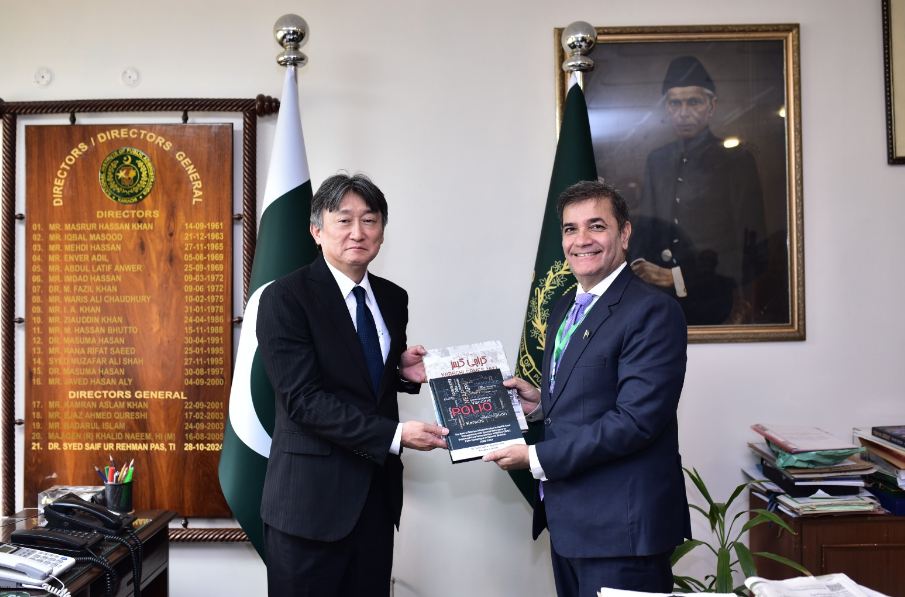
KARACHI: The Consul General Japan H.E Hattori Masaru on Wednesday visited the National Institute of Public Administration, (NIPA).

The Consul General of Japan, while addressing the officers of the 43rd Mid-Career Management Course (MCMC) highlighted that Japan-Pakistan relations are getting stronger.

The Consul General of Japan Hattori Masaru in a presentation and discussions to the Officers of 43rd MCMC here at NIPA, said that the bilateral relations by education, culture and technology exchanges are vital.

Consul General expressed his pleasure to participate in NIPA session over talk to civil services Officers and their training capabilities by the administration authority.

He also discussed the pre and post war development of overall Japan technology and advancements of cultural activities after world war II.

He said the Nation has continued to fight various challenges for the years in different sectors, Japan’s internal policies and industrial skilled workforce mechanism in manufacturing and technology was a difficult task to the concerned ministries, Consul General said.

Regarding, foreign capital policy and Business globalisation Japan improved in international competence told H.E Hattori Masaru in the presentation.

Earlier, Director General NIPA Dr. Saif-ur-Rehman welcomed the Consul General of Japan
Director General NIPA Dr. Saif-ur-Rehman briefed the Consul General of Japan about the services of the institution.

Consul General of Japan Hattori Masaru also planted a sapling as part of the tree planting campaign at NIPA.

Federal minister for maritime affairs visits naval headquarters

Federal minister for maritime affairs visits naval headquarters

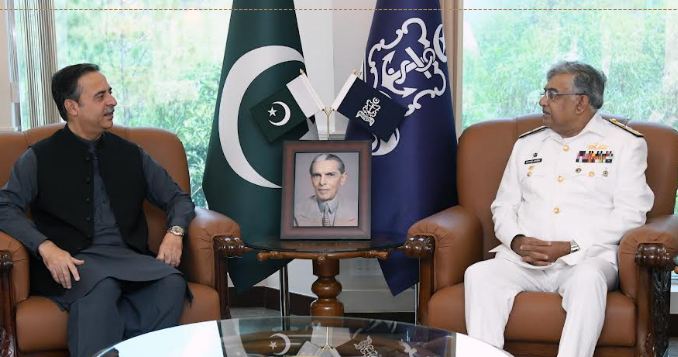
ISLAMABAD, JUN 11 /DNA/ – Federal Minister for Maritime Affairs, Muhammad Junaid Anwar, visited Naval Headquarters, Islamabad, and called on Chief of the Naval Staff, Admiral Naveed Ashraf.

During the meeting, contemporary maritime issues and Pakistan Navy’s role in regional maritime security and Indian Ocean Region were discussed. Both dignitaries also deliberated on the prospects of maritime economy and its significance for overall economic growth of the country. The Federal Minister appreciated Pakistan Navy’s role in the promotion and development of Pakistan’s maritime sector.

Later, a comprehensive briefing was given to the Minister on Pakistan’s maritime interests, challenges, opportunities, and the initiatives undertaken by Pakistan Navy in coordination with the Ministry of Maritime Affairs. The dignitary was also apprised of the preparations for upcoming 2nd edition of Pakistan International Maritime Expo and Conference (PIMEC-2025), and its vital role in enhancing maritime awareness and promoting the Blue Economy as a driver of Pakistan’s future economic growth.

Pakistan is a ‘phenomenal partner’: US Centcom chief

WASHINGTON: United States Central Command (Centcom) Chief General Michael Kurilla has lauded Pakistan as a “phenomenal partner” in global

Recounting terrorists attacks in Pakistan, Gen Kurilla says they are “in active counter-terrorism fight right now”

News Desk

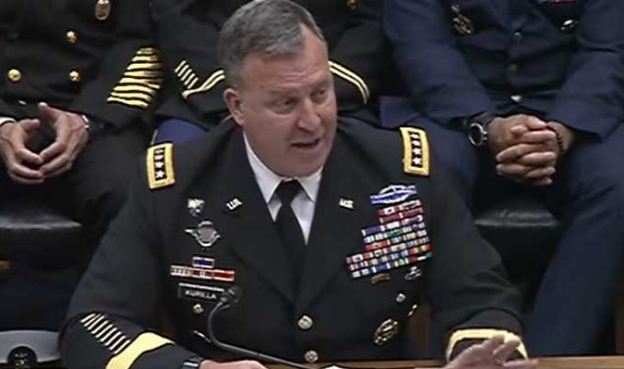
WASHINGTON: United States Central Command (Centcom) Chief General Michael Kurilla has lauded Pakistan as a “phenomenal partner” in global counter-terrorism efforts, highlighting its successful operations against Daesh-Khorasan and the ongoing fight against terrorism.

“Through a phenomenal partnership, Pakistan has gone after Daesh-Khorasan, killing dozens of them… through a relationship we have with them and providing intelligence, they have captured at least five ISIS Khorasan high-value individuals,” he said during a House Armed Services Committee hearing in Washington.

Last month, Islamabad and Washington reaffirmed the continuation of counter-terrorism cooperation to advance regional and global security and stability during a counter-terrorism dialogue.

The dialogue underscored the cooperation between the two countries in addressing the most pressing challenges to regional and global security, including the threats posed by terrorist organisations such as the Tehreek-i-Taliban Pakistan (TTP) and Daesh-Khorasan.

Pakistan has been reeling under rising violent attacks since the Taliban returned to power in Afghanistan in 2021, particularly in the bordering provinces of Khyber Pakhtunkhwa and Balochistan.

During the congressional hearing, General Kurilla was questioned about the security situation along Afghanistan’s border with Pakistan.

“… right now what we saw is the Taliban is going after Daesh-K…they hate each other, pushed a lot of them into the tribal areas on the Afghan-Pakistan border through a phenomenal partnership with Pakistan,” he said.  

“They [Pakistan] have extradited back Jaffar, who was one of the key individuals behind the Abbey Gate bombing,” he added, referring to Daesh operative Mohammad Sharifullah, an Afghan national who was arrested by Pakistan earlier this year.

The Daesh operative allegedly helped carry out the 2021 suicide bombing outside Kabul airport during the chaotic US military withdrawal from Afghanistan.

Sharifullah has confessed to scouting out the route to the airport, where the suicide bomber later detonated his device among packed crowds trying to flee days after the Taliban seized control of Kabul, the Justice Department said.

The blast at the Abbey Gate killed at least 170 Afghans as well as 13 US troops who were securing the airport’s perimeter.

Furthermore, the Centcom chief said, he received a call from Chief of Army Staff (COAS) Field Marshal Asim Munir after Sharifullah’s arrest, saying, “He said ‘I’ve caught him, I’m willing to extradite him back to the United States, please tell the secretary of defence and the president’.

“We’re seeing Pakistan — with limited intelligence that we provided them — go after them using their means to do that and we’re seeing an effect on Daesh Khorasan,” he added.

Gen Kurilla added that there have been 1,000 terrorist attacks in “the western area” of Pakistan since the start of 2024, noting that the country was “in an active counter-terrorism fight right now”. “They have been a phenomenal partner in the counter-terrorism world,” he added.

He concluded by saying that the US needs to maintain ties with both Pakistan and India. “I do not believe it is a binary switch that we can’t have one with Pakistan if we have a relationship with India. We should look at the merits of the relationship for the positives that it has,” he said.

India’s bellicose rhetoric undermines regional peace: FO

India’s bellicose rhetoric undermines regional peace: FO

ISLAMABAD, JUN 11 /DNA/ – Pakistan categorically rejected the irresponsible remarks made by the External Affairs Minister of India during different media engagements in Brussels.

The discourse of top diplomats should aim to promote peace and harmony, rather than producing bellicose punchlines. The tone and tenor of a Foreign Minister should be commensurate with his dignified status.

For last several years, India has been engaged in a malicious campaign to mislead the international community through a fictitious narrative of victimhood. However, India’s continued anti-Pakistan diatribe cannot hide its sponsorship of terrorism beyond its borders, nor can it cover up the state-sanctioned oppression in Indian Illegally Occupied Jammu and Kashmir. Instead of pointing fingers at others, India should introspect on its own involvement in terrorism, subversion and targeted assassinations.

India must also desist from concocting misleading narratives to justify its recent aggressive actions. Pakistan believes in peaceful coexistence, dialogue and diplomacy. However, it stands resolute in its intent and ability to safeguard its sovereignty against any aggression, as exemplified by its robust response to India’s reckless strikes, last month.

The narrative emerging from India betrays sheer frustration, following an unsuccessful military adventure against Pakistan. The Indian leaders would be well-advised to improve the standard of their discourse and discard their obsession with Pakistan.

The history will judge not by who shouted the loudest — but by who acted the wisest.

Swedish envoy presents commemorative book on Pak-Sweden partnership

Swedish envoy presents commemorative book on Pak-Sweden partnership

ISLAMABAD, JUN 11 /DNA/ – The Swedish Ambassador to Pakistan, Alex Berg von Linde called on Additional Secretary (Europe), Muhammad Ayub, and presented a commemorative shield and the book “75 Years of Partnership – Sweden and Pakistan”, published by the Embassy of Sweden in Islamabad.

The book chronicles key milestones, landmark visits, and people-to-people connections that have shaped bilateral relations over the past seven and a half decades. It also highlights the valuable contributions of Swedish companies, NGOs, and individuals to Pakistan’s development journey.

This commemorative exchange is a reflection of the enduring friendship, shared values, and future-forward cooperation between Pakistan and Sweden.

Stay Connected

64FansLike
60FollowersFollow

Latest Reviews

Exchange Rates

USD - United States Dollar
EUR
1.17
GBP
1.35
AUD
0.72
CAD
0.73