Home Blog Page 600

Uzebekistan Airlines flies inaugural Pakistani route: PAA

Uzebekistan Airlines

Tashkent, JUN 14: Uzbekistan Airlines on Saturday flew its inaugural Pakistani route from Islamabad to Tashkent, marking a key moment in connectivity between the two nations, a statement from the Pakistan Airports Authority (PAA) said.

Uzbekistan announced earlier this year that air routes between Karachi, Samarkand and Bukhara would be launched, describing it as a significant step to foster closer ties between the two nations.

According to a PAA statement, the flight took off at 1:09pm with 126 passengers on board, with Zone 1 of Islamabad International Airport specially adorned with colourful balloons for the milestone.

“The event was graced by the esteemed ambassadors of Uzbekistan, Tajikistan, Kazakhstan and Azerbaijan,” the statement read, adding that the Chief Operating Officer of Islamabad Airport, the managing director of Pakistan Tourism Development Corporation and the Country Manager of Uzbekistan Airlines also attended.

“Guests warmly welcomed passengers at Stand 3 and a formal cake-cutting ceremony was held in the upper lounge area (A5) to commemorate the launch,” the statement added. “The entire event was seamlessly organised with the dedicated support and coordination of airport teams under the Pakistan Airports Authority.”

In February this year, Pakistan and Uzbekistan agreed to expand bilateral trade to $2 billion as Prime Minister Shehbaz Sharif met with Uzbekistan President Shavkat Mirziyoyev in Tashkent.

Addressing a joint press conference with PM Shehbaz, President Mirziyoyev said: “We came to the conclusions on different spheres and mutual trade turnover had exceeded $400 million, and we have plans to increase that to $2bn.”

He termed the negotiations between them “very fruitful”, adding that there was a “new direction” for future goals.

PM Shehbaz reaffirms Pakistan’s solidarity with Iran against Israel

Shehbaz Sharif

ISLAMABAD, JUN 14: /DNA/ – Prime Minister Shehbaz Sharif Spoke with President Dr. Masoud Pezeshkian of Iran today to express Pakistan’s unwavering solidarity with the brotherly people of Iran in the face of Israel’s unprovoked aggression.

Strongly condemned the violation of Iran’s sovereignty and territorial integrity —an affront to international law & the UN Charter. Iran has every right to self-defence under Article 51 of the UN Charter.

Grateful to President Pezeshkian for appreciation of Pakistan’s unwavering and principled position at the UN Security Council calling out  Israel’s blatant aggression against Iran, Palestine and others in the region.

We agreed that the international community, particularly the Ummah, must act together to halt these grave violations.

Shehbaz, Pezeshkian vow to counter Israel’s regional aggression

Shehbaz Sharif

ISLAMABAD, JUN 14 /DNA/ – Prime Minister Muhammad Shehbaz Sharif held a telephone conversation with Dr. Masoud Pezeshkian, President of the Islamic Republic of Iran, this evening.

The Prime Minster said Pakistan stood resolutely in solidarity with the brotherly people and the Government of Iran in face of Israel’s unprovoked and unjustified aggression. He strongly condemned Israeli attacks against Iran, that violated its sovereignty and territorial integrity, and were in complete defiance of the UN Charter and international law. Iran had the right to self-defence, as provided under Article 51 of the UN Charter, he added.

While expressing heartfelt condolences to President Pezeshkian over the loss of precious lives in the attacks, the Prime Minister recalled Pakistan’s support to Iran at the UN Security Council’s emergency meeting, held yesterday.

The Prime Minster denounced Israel’s blatant provocations and adventurism as a grave threat to regional and global peace and stability. He also strongly condemned Israel’s unabated genocidal campaign against the valiant Palestinians, carried out with complete impunity. He urged the international community and the United Nations to take urgent and credible steps to put an end to Israel’s aggressive behavior and its illegal actions. He stated that Pakistan was fully committed to promoting peace in the region and stood ready to play its role in this context.

President Pezeshkian thanked the Prime Minister for Pakistan’s support and solidarity with Iran at this difficult time, particularly at the UN Security Council. He said this gesture was reflective of the close and brotherly relations between the two countries. He apprised the Prime Minister about Iran’s perspective on the crisis with Israel and urged the international community, particularly the Islamic countries, to work together closely to counter these threats.

Both leaders agreed to remain in close contact.

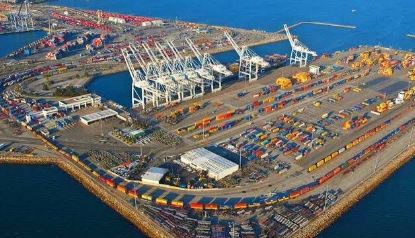
Gwadar port emerges as key trade hub for Afghanistan

Gwadar port emerges as key trade hub for Afghanistan

ISLAMABAD, JUN 14 (DNA): Federal Minister for Maritime Affairs, Junaid Anwar Chaudhry on Saturday welcomed the successful berthing of the second Afghan Transit Trade Ship at Gwadar Port. The vessel, carrying 20,000 metric tons of Di-Ammonium Phosphate (DAP) fertilizer, marks another milestone in enhancing regional trade connectivity, said a press release.

He noted that the fertilizer shipment originated from Townsville, Australia and represents the second successful docking under the revised Afghan Transit Trade framework, following the arrival of MV Beyond 2 on February 4, 2025.

“This is part of our sustained efforts to operationalize Gwadar Port as a strategic trade gateway for landlocked Afghanistan,” he said and added, “Gwadar’s growing role in transit trade reflects our commitment in enabling smooth access for Afghanistan to international markets.”

The minister emphasized that the recent decision by the Economic Coordination Committee (ECC) to replace the bank guarantee requirement with an insurance guarantee for Afghan Transit Trade through Gwadar has significantly improved the ease of doing business and expedited cargo clearance processes.

He further noted that the arrival of MV ASL ROSE is a strong indicator of increasing international trust in Gwadar’s operational readiness and infrastructure, highlighting Pakistan’s role in promoting efficient and reliable transit trade in the region.

Junaid Chaudhry directed Gwadar Port authorities to ensure quick berthing and seamless unloading of cargo, reiterating that the port is fully equipped to handle rising volumes of transit goods under the Afghanistan-Pakistan Transit Trade Agreement (APTTA).

He expressed the confidence that this latest development would help lower transit costs, increase trade efficiency, and reinforce economic ties between Pakistan and Afghanistan. Moreover, he said, it positions Gwadar Port as a pivotal hub for broader regional economic integration.=DNA

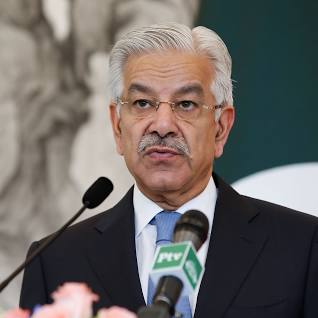
Khawaja Asif urges OIC session for joint strategy against Israel

BEIJING, CHINA - SEPTEMBER 08: Pakistan Foreign Minister Khawaja Muhammad Asif speaks during a press conference with Chinese Foreign Minister Wang Yi (not pictured) at Diaoyutai State Guesthouse on September 8, 2017 in Beijing, China. (Photo by Lintao Zhang/Getty Images)

ISLAMABAD, JUN 14 (DNA): Federal Defence Minister Khawaja Asif on Saturday called on the Organisation of Islamic Cooperation (OIC) to hold an emergency meeting to develop a joint strategy in response to Israel’s ongoing aggression.

Speaking in the National Assembly, the minister condemned Israel’s brutal actions, especially its military aggression against Iran.

He called it a serious threat to regional and global peace. “Palestinian children are being killed, yet there are more protests in non-Muslim countries than in Muslim nations,” he remarked with regret.

He said Iran is not just a neighbour but a brotherly country with deep-rooted ties with Pakistan.

He warned that if the Muslim world doesn’t act together, every country will eventually become a target. “The way Israel has targeted Yemen, Iran, and Palestine shows a larger plan. Most Muslim nations are already facing security risks. Strong leadership is needed now,” he said.

Khawja Asif said, “Israel has innocent blood on its hands. Pakistan stands firmly with Iran and will continue to support it on international forums,” he said.

The minister referred to India’s recent aggression, saying it had faced consequences. “India’s false pride has been broken, and their leadership is now embarrassed at home. This was only possible due to our strong military and the unity of our people,” he said.

He praised the armed forces and the people for standing firm in the face of threats. “We proved to the world that Pakistan is not weak — not yesterday, not today,” he declared. He said enemies tried to weaken Pakistan, but their plans failed.

He highlighted how the world was closely watching Pakistan’s coastal borders during recent tensions, and how Pakistan’s armed forces defended the nation bravely. “Our navy’s response forced the enemy to retreat,” he said.

The defence minister said that while Pakistan’s military strength is commendable, the economy must also be strong.

He praised Pakistan’s youth, especially cyber experts, for delivering a strong blow to India during a recent cyber conflict. “Our young people shut down lights in stadiums, disrupted IPL matches, and even affected dams. Their skills surprised the world,” he said.

He added that the recent military operation Bunyanum Marsoos was a turning point, both strategically and for national morale. He said Pakistan’s response to Indian attacks was firm and timely. “We struck back with full force,” he said.

Khawaja Asif also spoke about Pakistan’s sacrifices in the fight against terrorism. “Our soldiers and civilians have lost lives in attacks, especially in Balochistan. Groups like the TTP and BLA are fighting India’s war on our soil,” he claimed.

He strongly condemned anyone who supports these militants. “Such people are not Pakistanis. They are enemies of the country,” he said.

He insisted that while political problems should be solved through dialogue, foreign interference, especially from India, must not be taken lightly. “Pakistan’s unity — from Balochistan to Punjab — is our top priority,” he added.

The defence minister said politics should be based on ideology, not individuals. “No person is bigger than the country. Leaders come and go, but the nation and its values remain,” he said.

He criticized those who reduce politics to personal legacy. “Political parties that are built on ideas survive even after their leaders are gone,” he said. He gave examples of political martyrs in Pakistan whose parties lived on because of their beliefs, not their names.

He praised the role of Pakistani youth in the fight against terrorism. “Nations are built through the sacrifices of martyrs, not by worshipping individuals,” he said. The strength of a country, he said, comes from unity, not division.

Turning to the economy, Khawaja Asif said Pakistan suffers huge losses due to tax evasion, especially in sectors like tobacco, real estate, steel, and tyres. “We lose around Rs 300 billion annually in tobacco taxes alone,” he said.

He acknowledged that the Federal Board of Revenue (FBR) has made some improvements, but much more needs to be done. “If we can just improve our tax collection by 50%, we wouldn’t need foreign loans,” he noted.

He demanded accountability and urged the finance ministry and FBR to brief the parliament on the people behind large-scale tax evasion.

 “We need honesty in governance. Only then can we provide real relief to the people,” he said.

He gave the example of how public shops in Punjab are rented for very low rates, while private shops in the same area earn ten times more. “This has continued for decades without accountability,” he pointed out.

He called for a national campaign to end corruption, particularly in sectors dominated by a few corrupt families.

Khawaja Asif praised Finance Minister, calling him a professional and experienced person. He credited him for bringing back international trust in Pakistan’s economy.

He shared encouraging economic data: GDP growth improved from -0.2% to +2.7%, inflation dropped to 4.6%, and the current account posted a $1.2 billion surplus. Foreign investment rose by 20%.

He admitted that the public may still be feeling economic pressure but said positive changes are happening. “The business community is showing more confidence, and the stock market recently hit a historic 125,000-point high,” he said.

He criticized those who now attack the government’s economic policy but had once urged the IMF not to support Pakistan. “These people tried to sabotage our economy,” he said.

“Pakistan is not about any one person. It is a mission, a belief, and a shared history,” he added. He urged political leaders to rise above personal ambitions and serve the nation with sincerity.=DNA

===========

Muslim nations must unite against israeli aggression: MPs

ISLAMABAD, JUN 14 (DNA): Members of Parliament have called for an urgent meeting of the Organization of Islamic Countries (OIC) to stop the Israeli war in Gaza and now in Iran.

They said that the attack by Israel on Iran is an open terrorist act.

They said that it is the need of the hour that all Muslim states should show their unity against Israeli aggression.

MNA Qasim Noon said that Pakistan will play its role in the peace and development of this region.

He said that some external elements wanted to disturb the peaceful environment of this region.

MNA Zartaj Gul urged that the International community should play its vital role to stop Israel from aggression against Muslim countries.

She said that Israel violated international law by attacking Iran; Iran has the right to defend itself, and the Muslim world should stand together.=DNA

Delhi launches inspection of Boeing 787s after Air India crash

Delhi launches inspection of Boeing 787s after Air India crash

New Delhi, JUN 14: India’s government is urgently inspecting all Boeing 787s after a devastating Air India crash that claimed at least 279 lives this week, the country’s aviation minister said on Saturday, adding that the authorities were investigating all possible causes.

The aviation regulator on Friday ordered Air India to conduct additional maintenance checks on its Boeing 787-8/9 aircraft equipped with GEnx engines, including assessments of certain take-off parameters, electronic engine control tests and engine fuel-related checks.

“We have also given the order to do the extended surveillance of the 787 planes. There are 34 in our Indian fleet,” aviation minister Ram Mohan Naidu told a media briefing in New Delhi, without saying if the checks will apply to all Indian airlines.

“Eight have already been inspected and with immediate urgency, all of them are going to be done.” Air India operates 33 Boeing 787s, while rival airline IndiGo has one, according to data from Flightradar24.

The planes, however, have not been grounded, but a source on Friday told Reuters the Indian government was considering that as an option.

Naidu also said the government will look at all possible theories of what led to the crash.

Air India and the Indian government were looking at several aspects of the crash, including issues linked to its engine thrust, flaps, and why the landing gear remained open as the plane took off and then came down, Reuters has reported.

Forensic teams are still looking for the second black box as they probe why the plane lost height and crashed straight after takeoff.

The Boeing 787-8 Dreamliner with 242 people on board bound for Britain’s Gatwick Airport began losing height seconds after take-off on Thursday and erupted in a fireball as it hit buildings below, in what has been the world’s worst aviation disaster in a decade.

At least 270 bodies have been recovered from the site of the plane crash, Dhaval Gameti, president of the Junior Doctors Association at B.J. Medical College, told reporters.

Only one of the 242 passengers and crew onboard survived while others were killed as the plane struck the medical college’s hostel as it came down.

The crisis has cast a shadow on Air India, which has for years struggled to rebuild its reputation and revamp its fleet after the Tata Group took over the airline from the Indian government in 2022. Tata’s chairman said on Friday the group wants to understand what happened, but “we don’t know right now”.

Dozens of anxious family members have been waiting outside an Ahmedabad hospital to collect bodies of loved ones killed in the crash, as doctors were working overtime to gather dental samples from the deceased to run identification checks and DNA profiling.

Rafiq Abdul Hafiz Memon, who lost four relatives in the incident, said he was not getting any answers from authorities and was “very hassled”.

“We have lost our children … we are not understanding anything. Please help us get information about our children. Tell us when they are going to release their bodies,” Memon said.

Rafiq Memon, a relative of Javed Ali Syed, who along with his wife and two children died after the Air India Boeing 787-8 Dreamliner plane bound for London’s Gatwick Airport crashed during take-off from Ahmedabad, talks to media outside the DNA sample collection room at a hospital in Ahmedabad, India June 14, 2025. — Reuters
Another father was upset about not being able to get the body of his son, Harshad Patel, saying he was told by authorities it would take 72 hours for DNA profiling. “The authorities are trying to help, but our patience is running out,” he said.

Most bodies in the crash were badly charred, and authorities are using dental samples to run identification checks.

Jaishankar Pillai, a forensic dentist, told reporters on Friday they had the dental records of 135 charred victims, which can then be matched through reference to victims’ prior dental charts, radiographs or other records.

ICCI, PAF Hospital Forge Strategic Partnership for Business Community’s Welfare

ICCI, PAF Hospital Forge Strategic Partnership for Business Community's Welfare

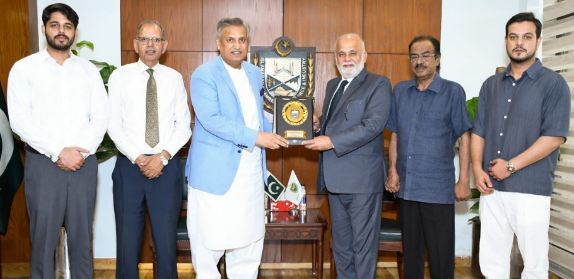
ISLAMABAD, JUN 14: /DNA/ – Islamabad Chamber of Commerce & Industry (ICCI) and PAF Hospital have agreed to strengthen cooperation for the welfare of the business community, with a focus on enhancing healthcare access and promoting well-being among entrepreneurs and employees.

During a meeting at ICCI, President Nasir Mansoor Qureshi welcomed Air Commodore ( Retired )  Raja Viqar Ali, Executive Director of PAF Hospital, and highlighted ICCI’s ongoing efforts to foster business growth, economic resilience, and social responsibility. He stressed the need for strategic alliances with leading healthcare institutions to safeguard the health of those who drive the nation’s economy.

President Qureshi reiterated ICCI’s commitment to supporting the business sector through progressive policy advocacy, capacity building, facilitation services, and health-focused initiatives. He emphasized that the well-being of business owners and their workforce is integral to sustainable economic progress.

In a detailed discussion, both sides agreed to collaborate on launching health awareness campaigns, organizing medical screenings, and ensuring access to quality healthcare services for ICCI members. The partnership aims to deliver long-term value through mutual engagement and socially impactful programs.

To mark the occasion, President ICCI presented a commemorative shield to Air Commodore Raja Viqar Ali in recognition of the budding partnership.

The meeting was also attended by Naeem Siddiqui, Special Advisor to the ICCI President; Ishtiaque Qureshi, Former Vice President ICCI; Umer Qureshi, ICCI Member; and other senior officials.

The visit concluded with a shared commitment to forging enduring collaborations between the business and healthcare sectors for the collective good of the community.

Iran Shatters Israel’s Invincibility

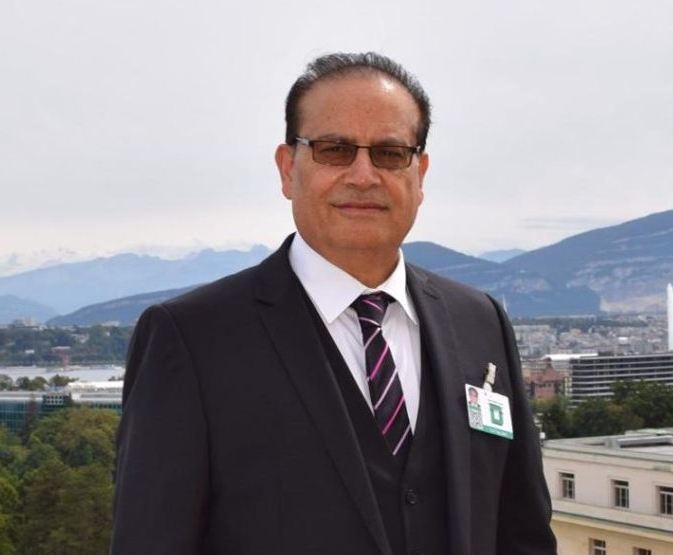
Qamar Bashir

By Qamar Bashir

In the early hours of June 13, 2025, Israeli F-35I “Adir” stealth jets thundered across Iranian airspace under the cover of darkness. What followed was one of the most aggressive strikes in the history of the Middle East—targeting over a hundred strategic Iranian sites, including nuclear enrichment facilities at Natanz and Esfahan, as well as high-level command posts and residences of Iran’s top military leaders. The Israeli offensive, reportedly backed by U.S. intelligence and long in planning through joint CIA-Mossad coordination, left scores of Iranian personnel dead and hundreds wounded, including prominent IRGC commanders and nuclear scientists.

Israel believed this strike would be the final word, a demonstration of supremacy, and an assertion of impunity. Publicly, President Donald Trump attempted to distance the United States from the operation, claiming that Israel had acted alone. However, credible leaks from within the White House told a different story—this was not a rogue mission, but a meticulously coordinated assault approved at the highest levels of Washington. American satellites, logistical resources, and defense planners had all played their part in enabling what was, in essence, a premeditated act of war, cloaked in the garb of plausible deniability.

Iran, caught off guard by the deception that had masked this act of aggression as diplomatic engagement, was shaken but not silenced. Within hours, Tehran launched a blistering retaliation that would rewrite the military equations of the region. Operation True Promise III was not merely a response—it was a message sent in fire and steel. Over 150 ballistic missiles and more than 100 armed drones rained down on Israeli territory, with Tel Aviv and Haifa witnessing explosions that pierced through Israel’s once-vaunted multilayered defense system.

What was thought to be invincible—the Iron Dome, David’s Sling, Arrow-3, and Patriot batteries—was overwhelmed. Iranian missiles, including the newly unveiled Fattah-2 and Qassem Bassir hypersonic variants, reached speeds of up to Mach 15, maneuvered mid-flight, and evaded radar detection with alarming precision. These missiles, equipped with electro-optical guidance, penetrated the very core of Israel’s defense network. For a state that prided itself on technological supremacy and unmatched military intelligence, the breach was both tactical and psychological.

This was the first time in its modern history that Israel felt truly vulnerable. The belief that no power in the region could threaten Tel Aviv or breach its airspace had now been shattered. Hypersonic technology changed the rules. According to open-source estimates, Iran’s Fattah-2 system can only be intercepted 5 to 10 percent of the time—far below what any defense shield in the world today is capable of reliably neutralizing. In contrast, the Iron Dome interceptors, costing over $40,000 each, could not match the sheer speed and volume of the incoming Iranian projectiles. The sky over Israel, once guarded by billions of dollars in U.S.-funded defense infrastructure, became porous and unpredictable.

Iran’s response was not random. It targeted military installations, intelligence outposts, and symbolic structures like the Mossad headquarters and air defense command centers. Civilian casualties, while inevitable, were not the objective. In fact, Iranian officials went to lengths to stress that their operation was calibrated and proportionate—a response to Israel’s indiscriminate bombing of Tehran that killed civilians, including women and children. This retaliation, according to one Iranian academic, was meant to make Israel understand what it meant to live under the fear of sudden annihilation—something Palestinians in Gaza had endured for decades.

This conflict has laid bare not just the vulnerabilities in Israel’s military doctrine, but also the hypocrisy of Western political narratives. While Israel’s strike was praised in Western capitals as a legitimate act of self-defense, Iran’s retaliation was condemned as disproportionate and provocative. The same American lawmakers who struggle to agree on domestic policies like healthcare or education were suddenly unified in their support of Tel Aviv. This bipartisan alliance, fueled by lobbying, campaign contributions, and ideological allegiance, refused to acknowledge the fundamental truth: that Israel had violated Iranian sovereignty, launched an unprovoked attack, and triggered a conflict with dangerous global consequences.

And yet, the global tide is shifting. Public sentiment across Europe, Latin America, Asia, and even within the United States is no longer monolithic. The endless footage of Gaza’s ruins, the cries of orphaned Palestinian children, and now the images of Israeli neighborhoods under fire have started to humanize both sides of the equation. War is no longer a one-way story. Civilians, whether in Tehran or Tel Aviv, suffer the same pain, loss, and trauma. It is this human cost—so often hidden behind the veil of strategic calculus—that is now forcing the world to rethink its allegiance and moral posture.

The repercussions are not confined to Israel and Iran. Iran’s influence extends deeply into the Arab world. Through its network of allies and Shia militias in Iraq, Syria, Lebanon, and Yemen, Tehran holds the capacity to ignite a much broader regional war. Meanwhile, Sunni-majority nations like Saudi Arabia, the UAE, and Egypt, though ideologically distant from Iran, remain cautious. Their reluctance to support Tehran stems from deep-rooted sectarian and geopolitical divisions. And yet, none of them have openly sided with Israel either. They remain paralyzed—watching, calculating, waiting.

There are reports—unverified but persistent—that Iranian systems may have downed at least two Israeli F-35 jets. These U.S.-made aircraft, the pride of Israeli air superiority, cost over $100 million each. The claim, if validated, would be a severe blow to both Israel’s military image and the reputation of American defense exports. Israel, which has long relied on technological dominance to deter regional adversaries, now finds its superiority publicly questioned.

But the ultimate lesson of this confrontation is not military—it is moral and political. Iran, a country sanctioned, demonized, and isolated by much of the West, stood alone. And yet it responded not with chaos, but with calculated, disciplined force. Israel, despite its alliances and unmatched resources, underestimated the capacity of its adversary. And in doing so, it may have permanently altered the strategic balance in the Middle East.

The path forward is narrow and perilous. Both nations now stand at the edge of an abyss. Escalation could engulf the entire region. The United Nations must intervene decisively, and nations with influence—be it the United States over Israel or Russia and China over Iran—must compel their allies to step back. Dialogue, not drones, must define the next steps.

Iran has made its point. Israel must acknowledge its limits. And the world must choose peace over vengeance. In a world already scarred by war, climate crisis, and division, the Middle East cannot afford another inferno. The time for pride is over. The time for peace is now.

By Qamar Bashir

Press Secretary to the President (Rtd)

Former Press Minister at the Embassy of Pakistan to France

Former MD, SRBC

Macomb, Michigan, USA

Technology Wins Battles, Humanity Loses Lives

Technology Wins Battles, Humanity Loses Lives

by Muhammad Mohsin Iqbal

Since the dawn of civilization, mankind has been entangled in the bitter pursuits of war—often to expand territory, subdue enemies, or liberate the oppressed. In those early times, victory depended largely upon the physical strength of warriors and the sharpness of their blades. Swords, spears, and bows defined the battlefield. Armies mounted on horses and elephants clashed with brute force, and the outcome of battle often hinged upon the courage and stamina of individual soldiers. But with the invention of gunpowder in China during the 9th century and its eventual militarization in Europe by the 14th century, the face of warfare began to change.

Gunpowder introduced cannons and firearms into battle, replacing the bow with the musket and reshaping military formations forever. The Napoleonic Wars witnessed the coordination of artillery, infantry, and cavalry in unprecedented ways. In the 20th century, particularly during the World Wars, warfare advanced dramatically. The world saw the emergence of tanks, submarines, fighter aircraft, and eventually, the most devastating invention of all—nuclear weapons.

The atomic bombings of Hiroshima and Nagasaki in 1945 demonstrated the terrifying potential of scientific advancement when used destructively. Nearly 200,000 lives were lost, and generations thereafter suffered the consequences. The nature of war had been irreversibly transformed. No longer were wars won by sheer manpower; now, technological superiority could obliterate entire cities in seconds.

The Cold War that followed ushered in an arms race driven by technological competition rather than open conflict. Satellites, nuclear submarines, long-range ballistic missiles, and surveillance drones became tools of both deterrence and espionage. The Gulf War of 1991 marked the first televised precision bombing campaign, with the U.S.-led coalition employing satellite-guided missiles and stealth aircraft to a scale the world had never seen before.

In the 21st century, warfare has reached a level where invisibility, speed, precision, and information supremacy determine the victor. The battleground is no longer just land, air, and sea—but also cyber space and outer space. Drones, artificial intelligence, hypersonic missiles, and electromagnetic pulse (EMP) weapons are rewriting the rules of engagement. A drone weighing less than a human can eliminate a high-value target from thousands of miles away with pinpoint accuracy and zero risk to the operator.

This technological shift was exemplified in Pakistan’s response to Indian aggression on May 7, 2025. In a matter of minutes, Pakistan deployed advanced air defense systems and targeted Indian installations with unmanned aerial vehicles (UAVs) and precision-guided munitions, rendering India’s conventional military preparations ineffective. The brief engagement underscored how modern warfare now depends on speed, accuracy, and electronic warfare rather than large troop movements. It was not only a demonstration of national resolve but also a textbook case of asymmetric advantage powered by technology.

Just two days ago, Israel executed a similarly calculated strike against Iranian positions using a combination of cyber-attacks and advanced air-launched munitions. Reports indicate that Israeli fighter jets penetrated Iranian airspace undetected using stealth technology, while cyber units simultaneously disabled communication and radar infrastructure. The operation, though brief, marked another chapter in the evolution of modern conflict, emphasizing the dominance of information warfare, surveillance capabilities, and precision targeting over brute military force.

From these recent episodes, one thing becomes evident; the classical ideals of valor and physical might have given way to remote-controlled engagement, algorithmic warfare, and sensor-based targeting. The soldier on the ground, though still essential, is now just one component of a much broader and more complex war machine operated by engineers, data scientists, and intelligence analysts.

Yet amid all this evolution, one immutable truth remains—war is destruction. Whether waged with swords or satellites, it results in death, displacement, and devastation. Civilized societies, which aspire to peace, progress, and prosperity, can ill afford its cost. Economies are wrecked, generations are scarred, and social fabrics are torn apart. While technological superiority may ensure military success, it can never heal the wounds of war.

The great paradox of our time lies in the dual-use nature of technological advancement; what can launch a satellite to explore the universe can also guide a missile to destroy a city. The challenge for humanity is not just to win wars more efficiently, but to prevent them altogether. As history has shown, no nation ever emerged unscathed from war, no matter how advanced its arsenal.

In this age of drone strikes and cyber offensives, global powers must recognize that sustainable peace cannot be maintained by force alone. Diplomatic resolve, mutual respect, and international cooperation must accompany scientific advancement. Otherwise, we risk turning our greatest inventions into instruments of our greatest regrets.

The past has given us lessons in blood, and the present offers a mirror to reflect on what we might become. If we fail to heed the warnings of history, then the future, no matter how technologically brilliant, will be shadowed by the same darkness that has plagued humanity since the age of the sword.

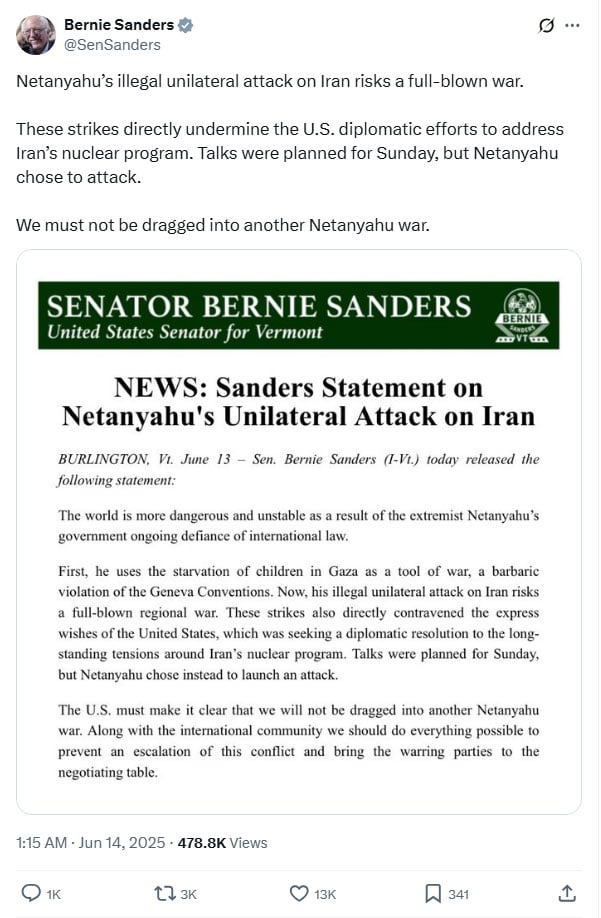
Netanyahu’s actions making world more dangerous: Bernie Sanders

WASHINGTON, JUN 14: US Senator Bernie Sanders has noted that Israel’s strikes against Iran came just days before talks on

WASHINGTON, JUN 14: US Senator Bernie Sanders has noted that Israel’s strikes against Iran came just days before talks on the Iranian nuclear deal were expected to take place.

“The world is more dangerous and unstable as a result of the extremist Netanyahu’s government ongoing defiance of international law,” Sanders said in a statement.

“The US must make it clear that we will not be dragged into another Netanyahu war,” he added.

“Along with the international community, we should do everything possible to prevent an escalation of this conflict and bring the warring parties to the negotiating table.”

Stay Connected

64FansLike
60FollowersFollow

Latest Reviews

Exchange Rates

USD - United States Dollar
EUR
1.17
GBP
1.35
AUD
0.72
CAD
0.73