Home Blog Page 592

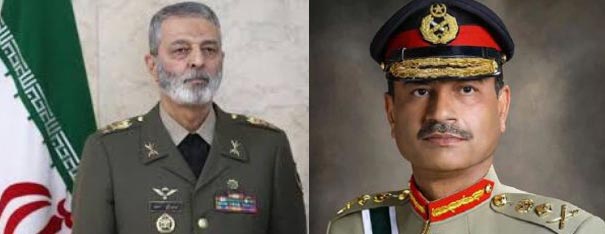
Iran, Pakistan Army Chiefs Discuss Regional Security Over Phone

Iran

Tehran, Jun 29 (DNA) – The Chief of General Staff of the Iranian Armed Forces, Major General Seyed Abdul Rahim Mousavi, held a telephone conversation with Pakistan’s Field Marshal General Syed Asim Munir, on Sunday to discuss bilateral defense cooperation and regional security.

According to Iranian news agency, the two military leaders emphasized strengthening ties between their armed forces and enhancing joint efforts to combat terrorism and ensure stability in the region. Gen. Mousavi highlighted the importance of mutual trust and collaboration in addressing common security challenges, including border security and counter-terrorism operations.

Field Marshal. Munir reaffirmed Pakistan’s commitment to deepening defense relations with Iran and expressed appreciation for Tehran’s role in regional peace. Both sides agreed on the need for continued dialogue and coordinated actions to prevent threats to regional security.

This high-level contact follows recent diplomatic engagements between Iran and Pakistan, signaling a renewed focus on security partnership amid evolving geopolitical dynamics. Analysts view the conversation as a step toward greater military coordination between the two neighboring nations.

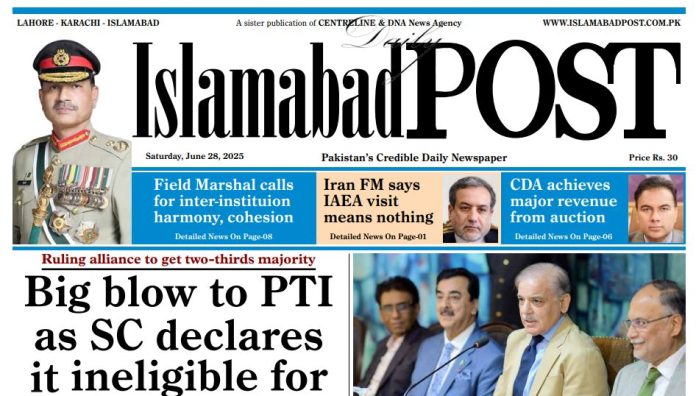
Supreme Court verdict on reserved seats: ‘a death knell for democracy’

Supreme Court verdict on reserved seats: ‘a death knell for democracy’

“The current ruling alliance appears powerful on the surface. With the judiciary’s decision gifting them enhanced parliamentary strength, they now wield near-absolute authority. But this power is conditional, fragile, and temporary. History tells us that the moment this “same page” narrative with the establishment fades, the very powers that elevated them will become their undoing”

Ansar Mahmood Bhatti

The recent Supreme Court decision regarding the distribution of reserved seats in the National Assembly has sent shockwaves across Pakistan’s political spectrum. By denying Pakistan Tehreek-e-Insaf (PTI) its share of reserved seats and directing that these be distributed among other political parties, the apex court verdict appears to have shifted the balance of parliamentary power .

With this verdict, the ruling coalition—comprising PML-N, PPP, and allied parties—is poised to gain a two-thirds majority in the National Assembly. This supermajority, made possible not by electoral strength but by judicial endorsement, has been rightly labelled by many as an undemocratic, even unjust, outcome. Whether or not PTI fulfilled the legal prerequisites to claim these seats is beside the point; what matters is that the ruling parties, who themselves did not contest these seats, are now reaping the political dividends. This manufactured majority is not a reflection of the people’s mandate—it is a result of ‘judicial engineering’, and it will have long-lasting consequences for Pakistan’s political landscape.

This decision is a glaring example of how state institutions, instead of playing a neutral role, have once again appeared to side with the powers that be. In this case, the ruling elite and the establishment seem to be the ultimate beneficiaries, while democracy lies ‘bruised and battered’. Indeed, Pakistan has never enjoyed a fully functional democratic system, but the small semblance of representative governance that did exist has now been severely undermined.

Let us be candid. The PTI government during its tenure failed on multiple fronts. Governance was chaotic, corruption reached record levels, and institutional dysfunction grew exponentially. PTI failed to live up to its lofty promises and instead indulged in political vendettas, poor policymaking, and an overall disregard for consensus-building. But does that justify the unprecedented crackdown on the party after its fallout with the establishment? Absolutely not.

The way PTI has been marginalized—its leaders jailed, its members coerced into disassociating from the party, and now, its rightful political space usurped—is not just troubling; it is dangerous. This appears to be a punishment not for incompetence, but for disobedience. PTI’s real crime was refusing to toe the line, to continue playing puppet.

The current ruling alliance appears powerful on the surface. With the judiciary’s decision gifting them enhanced parliamentary strength, they now wield near-absolute authority. But this power is conditional, fragile, and temporary. History tells us that the moment this “same page” narrative with the establishment fades, the very powers that elevated them will become their undoing. We have seen this cycle repeat with the PML-N, PPP, and now PTI. The question is: for how long will this vicious cycle continue?

This institutionalized power game is crippling the country. It has distorted the foundations of governance, hollowed out democratic institutions, and left the common citizen disillusioned and disenfranchised. With each passing day, poverty grows, corruption festers, and the gap between the rulers and the ruled widens. The state appears more interested in maintaining its internal power equilibrium than addressing the needs of its people. It is a shameful reality that we continue to celebrate IMF bailouts as achievements, rather than confronting the root causes of our economic dependence.

The ruling elite seems disconnected from the ground realities. Inflation is choking the masses, public services are deteriorating, and lawlessness is spreading. Yet, the corridors of power remain preoccupied with political maneuvering, rather than public welfare. Governance has become a sideshow to the main drama of power consolidation and political survival.

This Supreme Court verdict has not just handed over a few parliamentary seats—it has fundamentally altered the political equation of the country. It has given legitimacy to a distorted electoral outcome and has validated the exclusion of one of the largest political parties from the democratic process. The consequences of this will be far-reaching. It may create a short-term political stability for the ruling alliance, but it will do so at the cost of long-term national cohesion and democratic development.

Pakistan’s democratic journey has always been fraught with interruptions, but never before has the erosion been so systemic, so institutional, and so unapologetic. If the political class does not unite to resist this ongoing decay, the very idea of representative democracy will be rendered meaningless. What is needed now is not just an outcry from civil society and political commentators, but a serious introspection by all stakeholders—including the judiciary and the establishment—on the damage being done to the constitutional order of the country.

It is time to ask ourselves: What kind of Pakistan are we building? One where power is determined not by the ballot but by boardroom deals? One where judicial decisions tilt political fortunes? One where parties that challenge the status quo are decimated through non-political means? If this trajectory continues, then we are hurtling toward authoritarianism, whether civil or military, masked in democratic attire.

There is no doubt that PTI made grave mistakes during its tenure. It alienated allies, mishandled the economy, and eroded institutional trust. But political mistakes should be corrected through the democratic process—not by sidelining an entire party through legal, administrative, and coercive tools. Democracy demands inclusion, competition, and accountability. What we are witnessing is exclusion, manipulation, and repression.

The Supreme Court decision on reserved seats may have resolved a legal question, but it has opened a moral and political wound. The judiciary may have thought it was interpreting the constitution, but in doing so, it has added fuel to the fire of political polarization. This verdict, rather than being a triumph of law, will be remembered as a setback for democratic ideals. The road ahead for Pakistan appears even more uncertain, and unless corrective steps are taken soon, the dream of a democratic, prosperous Pakistan will remain elusive.

The first and most immediate casualty of the recent Supreme Court verdict on the distribution of reserved seats is likely to be the Pakistan Tehreek-e-Insaf (PTI)-led government in Khyber Pakhtunkhwa (KP). The decision, which has significantly altered the political calculus at the national level by denying PTI its share of reserved seats and allocating them to rival parties, is expected to embolden efforts to dislodge the provincial government in KP—a stronghold of PTI.

There is a growing consensus among influential quarters that KP, given its geo-strategic significance and security sensitivities, cannot be left under the control of a party that is perceived to be defiant and uncooperative with the federal government and other state institutions. In this context, the PTI government is increasingly being viewed as a destabilizing factor rather than a legitimate stakeholder in the democratic process.

However, replacing the PTI government in KP is not a straightforward task. Despite the political will to oust PTI, the practical question remains: who will run the province in its absence? Neither the Pakistan Muslim League-Nawaz (PML-N) nor the Pakistan Peoples Party (PPP) has the numerical strength in the KP Assembly to form a government. The only feasible political player with some presence in the province is the Jamiat Ulema-e-Islam (JUI-F), led by Maulana Fazlur Rehman. Yet, bringing the JUI-F on board is not without its complications. The party’s ideological rigidity, internal dynamics, and long-standing opposition to certain federal policies make it a difficult coalition partner.

Given these constraints, an increasingly likely scenario is the imposition of Governor’s Rule in the province. This would effectively place KP under direct federal control—an extraordinary move that may provoke legal and political challenges but is being seriously contemplated. The justification offered will likely center on maintaining law and order, national security, and the need to ensure “governance continuity.” However, such a step would also risk exacerbating the political divide and could trigger strong public and institutional reactions in KP and beyond.

Beyond the immediate provincial implications, the Supreme Court’s verdict could pave the way for deeper, more structural changes in Pakistan’s political framework. One potential and highly consequential outcome could be the introduction of a constitutional amendment aimed at formalizing the role of the Establishment in political decision-making. Such a move would, in effect, legitimize the behind-the-scenes influence that the Establishment has historically exerted over civilian governments. This would not only insulate it from criticism but also provide legal cover to its interventions in political processes, including elections, governance, and parliamentary affairs.

If pursued, this amendment would mark a significant shift in Pakistan’s constitutional order—one that would further blur the lines between civil and military domains. While proponents might argue this ensures political stability and national security, critics would view it as a step backward for democratic norms and civilian supremacy.

In sum, the Supreme Court’s verdict is not just a legal pronouncement—it is a political earthquake with aftershocks that may fundamentally reshape Pakistan’s political and constitutional architecture. KP stands on the frontlines of this unfolding drama, with its future governance structure hanging in the balance.

‘Power Smart App’ to curb overbilling, billing transparency

Power Smart App

The app enables consumers to take a photograph of their electricity meter on a specified date and upload it to the App. Based on this user-submitted image, monthly electricity bills will be generated

Mahnoor Ansar

ISLAMABAD, JUN 29 /DNA/ – The Ministry of Power Division has introduced the Power Smart App under the “Apna Meter, Apni Reading” initiative to make electricity consumers directly part of the system and promote transparency in the billing process.

The App was formally launched by Prime Minister Muhammad Shehbaz Sharif on Sunday, said the spokesperson of the power division.

The app enables consumers to take a photograph of their electricity meter on a specified date and upload it to the App. Based on this user-submitted image, monthly electricity bills will be generated—offering a technological response to long-standing issues such as overbilling, reading errors and delay in reading.

This is not just a technology feature but a solid reform in governance, which truly empowers consumers. With this system, consumers will not only be able to keep an eye on their bill, but now they will also be the guardians of the reading process.

One of the key advantages of the Power Smart App is its potential to protect subsidy-eligible users from losing financial support due to delayed or inaccurate readings. Officials cited the example of users consuming up to 200 units of electricity, whose subsidized bills total approximately Rs 2,330. If usage rises even slightly above that threshold, the subsidy ends and the bill can jump to over Rs 8,000. Through this app, it will be possible to ensure that the beneficiaries benefit from their subsidy by providing timely readings.

Another feature included in the app, if the user provides the reading on the due date, the meter reading taken after that day will not be given priority and only the reading provided by the user will be fed.

Features like “Apna Meter, Apni Reading” will not only create transparency in the electricity system but will also empower the consumers to the extent that they can monitor their own billing. This will significantly reduce overbilling, unnecessary interference and complaints.

This innovative and revolutionary solution was implemented with the efforts of Secretary Power Division Dr. Fakhar Alam and the entire team working on it under the leadership of Federal Minister for Energy Sardar Awais Ahmed Khan Leghari.=DNA

A wave of diplomatic departures: Several envoys did farewell to Pak

A wave of diplomatic departures: Several envoys did farewell to Pak

Hungarian Ambassador Bela Fazekas holds a unique position in diplomatic history, having served as Hungary’s envoy not once, but twice. His first term was in 2007, and he returned years later for a second stint, making him one of the few ambassadors to be appointed to the same country multiple times

Mahnoor Ansar

ISLAMABAD, JUN 29 /DNA/ – In recent months, Pakistan has witnessed a significant transition in its diplomatic landscape as several foreign ambassadors have either completed their tenures or are preparing to leave. This wave of departures includes long-serving diplomats, retiring envoys, and those leaving due to political changes in their home countries. Among them is Hungary’s Ambassador Bela Fazekas, who is set to depart after completing his second term in Pakistan—a rare distinction in the world of diplomacy.

Hungarian Ambassador Bela Fazekas holds a unique position in diplomatic history, having served as Hungary’s envoy not once, but twice. His first term was in 2007, and he returned years later for a second stint, making him one of the few ambassadors to be appointed to the same country multiple times. His deep understanding of Pakistan’s political and cultural dynamics allowed him to strengthen bilateral ties, particularly in trade, education, and cultural exchange.

Fazekas is part of an exclusive group of diplomats who have had the rare opportunity to serve twice in the same country. Another notable example is Aybek Osmanov, the former Ambassador of Uzbekistan to Pakistan, who also served two separate terms. Such reappointments are uncommon in diplomacy, as ambassadors are typically rotated to different postings after their terms end.

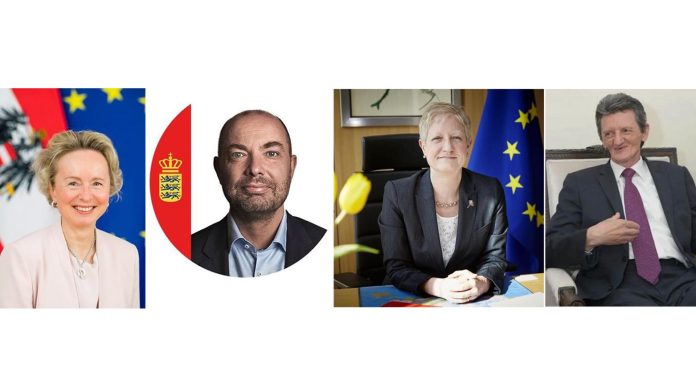
Alongside Ambassador Fazekas, several other high-profile envoys are bidding farewell to Pakistan: Austria’s Ambassador Andrea Wicke: After a distinguished career, Ambassador Wicke is retiring from foreign service. During her tenure, she worked to enhance Austria-Pakistan relations, particularly in economic cooperation and cultural diplomacy.

Iraq’s Ambassador Hamid Abbas Lafta has already left Islamabad, marking the end of his diplomatic assignment. His departure follows the completion of his term, with Iraq expected to appoint a new ambassador soon.

South Korea’s Ambassador is set to leave Pakistan in the coming weeks. His tenure saw significant progress in Pakistan-South Korea relations, especially in technology, automotive industry collaboration, and workforce exchanges.

EU Ambassador Riina Kionka as the head of the European Union delegation to Pakistan, played a pivotal role in shaping EU-Pakistan relations, particularly in trade, governance, and human rights. Her departure marks the end of a dynamic term.

Denmark’s Ambassador Jakob Linulf, known for his active engagement in development projects and climate advocacy, is also concluding his assignment in Pakistan.

In some cases, ambassadors have left before completing their expected tenures, likely due to political shifts in their home countries:  Kyrgyzstan’s ambassador departure was abrupt, with no official successor named yet. Given recent political developments in Kyrgyzstan, his exit may be linked to changes in government priorities.

Sri Lanka’s high commissioner left Pakistan earlier than anticipated. Colombo has not yet announced a replacement, suggesting internal political factors may have influenced the decision.

The simultaneous departure of multiple ambassadors signals a transitional phase in Pakistan’s foreign relations. While some exits are routine (due to retirements or term completions), others—like those of Kyrgyzstan and Sri Lanka—reflect broader geopolitical changes.

For now, the country bids farewell to these diplomats, acknowledging their service in strengthening Pakistan’s global partnerships. The coming months will be crucial as new envoys take charge, shaping the next chapter of Pakistan’s diplomatic relations.

Experts warned tourists to avoid northern areas trips

Experts warned tourists to avoid northern areas trips

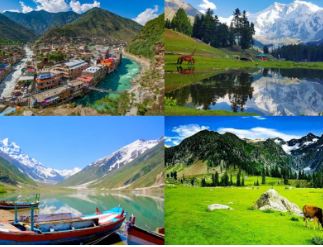
ISLAMABAD, JUN 29 (DNA): As the monsoon season approaches, experts are cautioning tourists to exercise extreme caution when planning trips to Pakistan’s northern areas. The region’s picturesque landscapes and scenic beauty are expected to be shrouded in heavy rainfall, landslides and flash floods, posing significant risks to travelers.

The northern areas, known for their breathtaking scenery and adventure opportunities, are prone to natural disasters during the monsoon season. Heavy rainfall can lead to landslides, flash floods, and disruptions to transportation networks, putting tourists’ lives at risk.

Dr. Sadique Ali, a weather expert advise tourists to postpone their trips to the northern areas during the moonsoon season saying that “We strongly advise tourists to postpone their trips to the northern areas during the monsoon season as the risks associated with traveling during this time far outweigh the benefits. Landslides and flash floods can occur without warning, and tourists may find themselves stranded or worse.” He emphasized that by avoiding travel to the northern areas during the monsoon season, tourists can minimize their risk of being affected by landslides and flash floods.      

Another health expert Muhammad Nazeer said who still plan to visit the northern areas during the monsoon season should take necessary precautions to ensure their safety. “Tourists should stay informed about weather conditions, travel with guides who are familiar with the terrain, and be prepared for unexpected situations”, he stated. He added that it is  also essential to have a contingency plan in place in case of emergencies.

The National Disaster Management Authority (NDMA) has also issued warnings for tourists and locals alike, advising them to take necessary precautions and stay informed about weather conditions. According to the NDMA, the northern areas are expected to experience heavy rainfall throughout the monsoon season, which typically lasts from July to September.   

The NDMA has also emphasized the importance of staying vigilant and being prepared for emergencies. The NDMA’s spokesperson said “We urge everyone to prioritize their safety and avoid traveling to areas that are prone to landslides and flash floods”.                                                                 

“We are working closely with local authorities to ensure that tourists are aware of the risks and take necessary precautions”, he said. By avoiding travel to the northern areas during the monsoon season, tourists can minimize their risk of being affected by landslides and flash floods, he added.      

Israeli strikes on south Lebanon kill three: ministry

Israeli strikes on south Lebanon kill three: ministry

BEIRUT, LEBANON, JUN 28 (AFP/APP/DNA): Israeli strikes killed three people in southern Lebanon on Saturday despite a ceasefire in force there, authorities said, with Iran-backed Hezbollah suggesting its patience for the “ongoing aggression” was wearing thin.

The Lebanese health ministry said an “Israeli enemy” drone strike on a car in Kunin, south Lebanon, killed one man and wounded another person.

The Israeli military said the strike “eliminated the terrorist Hassan Muhammad Hammoudi”, who it said was responsible for anti-tank missile attacks on Israeli territory during the recent war.

In a second statement later on Saturday, the health ministry said a strike on a motorcycle in Mahrouna, near Tyre, resulted in “two martyrs and wounded one person”, with one of the dead a woman.

The Israeli military said it carried out a strike Saturday that “eliminated the terrorist Abbas Al-Hassan Wahbi in the area of Mahrouna in southern Lebanon.

The IDF statement said Wahbi was a Hezbollah intelligence official “involved in efforts to rebuild Hezbollah and weapons transfers.”

  “These activities constitute a blatant violation of the understandings between Israel and Lebanon,” it said.

The attacks came a day after Lebanon blamed Israel for strikes that killed a woman and wounded 25 others.

Lebanon’s state-run National News Agency reported that the woman was killed in an Israeli drone strike on an apartment in the city of Nabatiyeh.

But Israeli military spokesman Avichay Adraee said on social media that the army “did not target any civilian building”, attributing the death to a Hezbollah rocket set off by an Israeli strike.

The Israeli military said it had “identified rehabilitation attempts made by Hezbollah beforehand and struck terror infrastructure sites in the area”.

Adraee said the civilian building “was hit by a rocket that was inside the (fire and defence array) site and launched and exploded as a result of the strike”.

Israel has repeatedly bombed its northern neighbour despite the November ceasefire aimed at ending over a year of hostilities with Hezbollah.

  The group’s leader, Naim Qassem, said in a televised speech on Saturday that the “ongoing aggression” by Israel “must not be allowed to continue”.

“The (Lebanese) state must exert pressure, and it must fulfil all of its duties,” he said, insisting Hezbollah had held up its end of the ceasefire bargain.

  “Do you imagine we will remain silent forever? No. Everything has its limits.”

Under the ceasefire deal, Hezbollah was to pull its fighters back north of the Litani river, about 30 kilometres (20 miles) from the Israeli border, leaving the Lebanese army and United Nations peacekeepers as the only armed parties in the region.

Israel was required to fully withdraw its troops from the country, but has kept them in five locations in south Lebanon that it deems strategic.

Central Asia offers huge business potential: expert

Central Asia offers huge business potential: expert

Mahnoor Ansar

ISLAMABAD, JUN 29: /DNA/ – The Institute of Regional Studies (IRS), Islamabad, held a compelling lecture today under its Eminent Speaker Series, featuring renowned academic Dr. Ahmed Ijaz Malik, Associate Professor at the School of Politics and International Relations, Quaid-i-Azam University and PhD from the School of Oriental and African Studies (SOAS), University of London.

 The lecture, titled “Political Economies of Central Asia,” offered a comprehensive and analytical look at the dynamic socio-economic and strategic landscape of Central Asia, with a special focus on Kazakhstan, Kyrgyzstan, Tajikistan, Turkmenistan, and Uzbekistan.

In his opening remarks, President of IRS, Ambassador Jauhar Saleem, set the tone by framing Central Asia as a region of growing geopolitical significance. He highlighted the region’s geography, bridging Russia, China, and South Asia, positioning it as a vital transit hub for trade and energy across Eurasia. Reflecting on the region’s post-Soviet evolution, he noted the varied trajectories in governance and economic reform—from state-led models to market-oriented approaches. He also touched upon the region’s reliance on hydrocarbons and the resulting pressure to diversify, especially in the face of global energy shifts.

Dr. Malik’s address delved into the complex political and economic contours of the region, noting its landlocked geography but immense natural resource wealth. Kazakhstan, with its oil, gas, and uranium reserves, and Turkmenistan, rich in natural gas, stand out as energy giants. Uzbekistan, with substantial gold and cotton production, is moving towards economic liberalization. He lauded the 2025 Kyrgyz-Tajik border treaty as a promising sign of improving regional diplomacy. Dr. Malik stressed the pivotal role played by major global actors—China, the EU, Russia, and India—in shaping the region’s developmental trajectory. China’s enhanced role through the BRI, the Digital Silk Road, and strategic partnerships with Kazakhstan and Turkmenistan has reshaped infrastructure and digital connectivity. The European Union, meanwhile, is deepening its footprint via the €12 billion Gateway Initiative, a component of the broader Global Gateway strategy, aimed at mobilizing up to €300 billion globally across critical sectors including energy, transport, and technology.

Russia’s influence remains rooted in security frameworks and its North-South Corridor, though newer transport initiatives like the Trans-Caspian route and Middle Corridor. The EU’s first Central Asia Summit in April 2025 signaled a serious commitment to the region, identifying areas of cooperation such as counterterrorism, cybersecurity, border control, and safeguarding against hybrid threats, disinformation, and trafficking. Shared concerns around youth unemployment, labor migration, and environmental degradation—especially the Aral Sea crisis—were also underlined as ongoing regional challenges. Despite these, Dr. Malik pointed to significant opportunities in renewable energy, hydrogen development, rare-earth extraction, and digital innovation.

Regarding Pakistan’s engagement with Central Asia, Dr. Malik emphasized the importance of deeper economic and strategic partnerships. He highlighted Kazakhstan’s agricultural and petroleum sector reforms as a model Pakistan could adapt to revitalize its own economy. Kyrgyzstan offers scope for trade in consumables and tourism, while Uzbekistan’s shift toward IT and AI presents an opening for Pakistan’s skilled workforce. In Tajikistan, with remittances forming a key part of GDP and significant untapped mineral resources, there exists strong potential for bilateral cooperation. Dr. Malik also touched upon the underutilized potential of the TAPI pipeline, hampered by regional instability, and suggested that with a renewed focus and regional trust-building, such initiatives could still be realized.

Professor Malik also discussed emerging trilateral collaborations involving Pakistan, Azerbaijan, and Turkiye, citing recent agreements on trade, military cooperation, and sustainable development as steps toward a broader Eurasian strategic partnership. The lecture concluded with a call for Pakistan to build an economic transformation model grounded in reform of its agriculture, small and medium industries, and the creation of industrial and technological hubs. By initiating trade in key sectors, developing sovereign wealth funds and Sukuk bonds, and strengthening economic diplomacy, Pakistan could position itself as a more effective player in the evolving Central Asian matrix.

The event concluded with a lively Q&A session and was attended by academics, analysts, and students.

From Proxy to Open War How Israel-Iran’s shadow conflict ignited the region

From Proxy to Open War How Israel-Iran’s shadow conflict ignited the region

Analysis

Abdul Waheeh Khan

For years, Israel and Iran waged a hidden war—a conflict fought through cyberattacks, covert assassinations, and proxy militias across the Middle East. By 2025, that shadow war erupted into direct confrontation.

This was no sudden explosion, but the inevitable result of unchecked strategic ambition, critical miscalculations, and diplomatic failure. Both sides overestimated their deterrence capabilities, pushing boundaries until the line between proxy warfare and open conflict vanished entirely.

Israel, emboldened by unconditional Western support, escalated extraterritorial strikes—sabotaging nuclear sites, targeting Iranian personnel, and framing its actions as “defensive” while entrenching military dominance. Iran, meanwhile, expanded its proxy networks, leveraging them for influence while evading direct accountability. Its strategy blurred the line between self-defense and destabilization.

Gradually, aggression intensified. Israel expanded operations beyond its borders; Iran shifted from covert deterrence to overt retaliation, launching drone strikes and maritime attacks. With diplomacy absent, tit-for-tat reprisals spiraled into all-out war—likely beyond either side’s original intent.

Contrary to simplistic narratives, neither was purely reactive. Israel deliberately escalated, confident it could control the fallout—a fatal misjudgment. The region, already fragile from shifting U.S. priorities, Arab-Israeli normalization, and Iran’s expanding influence, was pushed to the brink.

When rockets struck Tel Aviv, Israel responded with overwhelming force—unleashing its full arsenal on Gaza, one of the world’s most densely populated and impoverished territories. Entire neighborhoods were erased. Infrastructure collapsed. Humanitarian corridors were blocked. Tens of thousands perished—mostly women and children—buried under rubble or killed in strikes on homes, shelters, and hospitals.

Beirut, too, faced Israeli airstrikes, but Gaza bore the weight of total war. The asymmetry was undeniable: Israel endured disruption; Gaza faced annihilation. Civilians—trapped, besieged, with nowhere to flee—became the primary casualties. The distinction between battlefield and home vanished.

As borders dissolved and proxy fronts collapsed, the region descended into chaos. Palestinians suffered most, but Lebanese, Syrians, and Israelis were also swept into the storm. What began as calculated proxy warfare had spiraled into a humanitarian catastrophe.

Ironically, Israel and Iran mirrored each other’s tactics. Israel’s security doctrine, once rooted in preemption, increasingly resembled the very strategies it condemned in Tehran: covert strikes, political interference, and the weaponization of deterrence. For both, deterrence became a language of escalation, not restraint.

At the core of this breakdown lay mutual miscalculation. Iran overestimated its asymmetric capabilities, underestimating Israel’s technological edge and willingness to strike. Israel exaggerated Iran’s threat, framing every maneuver as existential while dismissing Tehran’s ideological resilience. Each side interpreted the other’s moves as provocation, justifying its own aggression as defense—reinforcing a cycle of mistrust and violence.

Though a ceasefire now holds, the damage is irreversible. Israel, despite its military superiority, faces internal dissent, regional isolation, and a weakened deterrence posture. Iran, defiant but economically shattered, is diplomatically cornered—its proxy strategy exposed as a path to chaos.

The Arab world, once inching toward normalization with Israel, now recoils as public outrage surges against foreign aggression and domestic repression. The U.S., abandoning any pretense of mediation, shattered its neutrality by backing Israel’s devastation of Gaza and striking Iranian nuclear sites. Its role shifted from peacemaker to belligerent—its credibility in ruins.

Donald Trump’s ultimatums—demanding Iran’s surrender, Tehran’s evacuation, and regime change—proved mere political theater. They failed to topple Iran’s leadership but succeeded in exposing America’s declining strategic influence. Empty threats eroded Washington’s deterrence and handed Tehran a propaganda victory. Far from isolating Iran, the spectacle fractured global diplomacy, revealing a superpower that speaks loudly but stands alone.

In a grim irony, Pakistan’s nomination of Trump for the Nobel Peace Prize—a transparent bid for favor—rings hollow amid the rubble.

This war was not inevitable. It was the product of militarism, unaccountable leadership, and global apathy. Both Israel and Iran must confront an uncomfortable truth: security built on domination breeds endless war, not peace.

The path forward demands not louder threats or deadlier weapons, but mutual recognition, sovereignty, and the moral imperative to protect civilian lives. If these lessons go unheeded, the next war will be wider, bloodier, and beyond containment.

The views expressed in the article are writer’s own

The Rise of Daily Islamabad Post: A Beacon of Balanced Journalism in Pakistan

The Rise of Daily Islamabad Post: A Beacon of Balanced Journalism in Pakistan

In an era where media polarization and sensationalism often dominate headlines, Daily Islamabad Post has emerged as a trusted source of balanced and credible journalism in Pakistan. Launched in 2020, this English-language daily has quickly gained recognition for its fair reporting, insightful analysis, and wide coverage of national and international affairs. With its strong presence in both print and digital formats, the newspaper has carved a niche for itself among diplomats, policymakers, and the corporate community.

A Legacy of Credible Journalism

Daily Islamabad Post is part of a well-established media network that includes the Monthly Centreline—a publication known for its in-depth features on socio-political issues—and the Diplomatic News Agency, which specializes in foreign affairs and diplomatic reporting. Both sister publications were launched earlier, with Centreline debuting in 2010 and the Diplomatic News Agency in 2012. Under the leadership of Chief Editor Ansar Mahmood Bhatti, a seasoned journalist with years of experience, all three publications uphold high editorial standards, ensuring accuracy, objectivity, and professionalism.

Balanced Reporting in a Divided Media Landscape

One of the key reasons behind Daily Islamabad Post’s rapid rise is its commitment to balanced journalism. In a country where media outlets often align with political or ideological biases, the newspaper has maintained an independent stance, providing readers with well-researched and unbiased news. This approach has earned it membership in the All Pakistan Newspaper Society (APNS), a prestigious recognition that underscores its credibility and influence in Pakistan’s media industry.

The newspaper covers a wide range of topics, including politics, economy, international relations, business, and culture. Its editorial team consists of career journalists who bring years of expertise to their reporting, ensuring that readers receive not just news, but also meaningful context and analysis.

Popular Among Diplomats and Corporate Leaders

Given its affiliation with the Diplomatic News Agency, Daily Islamabad Post has developed a strong following within Pakistan’s diplomatic community. Foreign missions, international organizations, and local policymakers rely on the newspaper for accurate and timely updates on Pakistan’s political developments and foreign relations.

Similarly, the business and corporate sector values the newspaper’s comprehensive economic reporting. From stock market trends to government policies affecting industries, Daily Islamabad Post provides valuable insights that help professionals make informed decisions.

Embracing Digital Transformation

While the print edition of Daily Islamabad Post continues to thrive, the newspaper has also embraced digital transformation, ensuring that it reaches a global audience. Its online platform offers real-time updates, multimedia content, and interactive features, catering to the evolving preferences of modern readers. This dual presence in print and digital spaces has allowed the publication to expand its readership beyond Islamabad to other major cities like Karachi, Lahore, and Peshawar.

A Promising Future

Since its inception in 2020, Daily Islamabad Post has demonstrated remarkable growth and resilience. In just a few years, it has positioned itself as one of Pakistan’s leading English dailies, competing with long-established newspapers. Its success can be attributed to its unwavering commitment to journalistic integrity, diverse content, and adaptability in a rapidly changing media environment.

As Pakistan’s media landscape continues to evolve, Daily Islamabad Post stands out as a beacon of responsible journalism. With its strong editorial leadership, expanding reach, and reputation for fairness, the newspaper is well on its way to becoming an even more influential voice in the country’s press.

For readers seeking reliable news free from sensationalism, Daily Islamabad Post remains a top choice—a testament to the power of balanced and professional journalism in today’s world.

Why designations matter in every career path

Why designations matter in every career path

Ms. Sabahat Ali

In today’s evolving world of work, changing jobs is no longer viewed as a mark of inconsistency — it is increasingly acknowledged as a sign of professional maturity, self-awareness, and strategic career planning. The rigid linear career ladder has transformed into a flexible career lattice, accommodating cross-functional moves, lateral transitions, and cross-sector roles — all indicative of a dynamic and progressive career journey.

Beyond the Private Sector: Diverse Career Paths and Designations

While job mobility is commonly associated with the private sector, it is important to recognize that not all professions operate under the same framework. Many government, public service, civil, defense, and judiciary positions have fixed hierarchies and require service until retirement. Still, even within these structures, designation-based growth is a vital indicator of performance, leadership, and contribution.

Here is a broad classification of designations across sectors:

1. Corporate/Private Sector

Entry to Senior Roles

Intern → Associate → Executive → Senior Executive → Assistant Manager → Manager → Senior Manager → General Manager → Director → Vice President → CEO/MD

Specialized Tracks (e.g., IT, Finance, Marketing)

Developer → Team Lead → Tech Lead → Solutions Architect → CTO

Analyst → Senior Analyst → Finance Manager → Head of Finance → CFO

Marketing Assistant → Brand Manager → Marketing Director → CMO.

2. Government & Civil Service (Administrative)

Central/Provincial Bureaucracy (e.g., Pakistan Administrative Service, IAS, CSS Cadres)

Assistant Commissioner → Deputy Commissioner → Additional Secretary → Joint Secretary → Secretary → Federal Secretary

Other Civil Departments (e.g., Education, Health, Revenue)

Assistant Director → Deputy Director → Director → Director General.

3. Judiciary & Law

Judicial Cadre

Civil Judge → Senior Civil Judge → Additional District & Sessions Judge → District & Sessions Judge → High Court Judge → Supreme Court Judge

Legal Profession (Practice)

Junior Advocate → Advocate High Court → Advocate Supreme Court → Senior Counsel → Attorney General/Law Secretary

4. Armed Forces & Defense Services

Military Designations (e.g., Army, Navy, Air Force)

Second Lieutenant → Lieutenant → Captain → Major → Lieutenant Colonel → Colonel → Brigadier → Major General → Lieutenant General → General

(Note: Similar hierarchies apply in Navy and Air Force with different nomenclature.)

5. Education Sector

Teaching/Academic Line

School Teacher → Senior Teacher → Subject Specialist → Vice Principal → Principal → Director Education

Higher Education (University Faculty)

Lecturer → Assistant Professor → Associate Professor → Professor → Dean → Vice Chancellor

6. Judiciary-Linked Services (Magistracy, Prosecution, Investigation)

Public Prosecutor → Deputy Prosecutor → Additional Prosecutor General → Prosecutor General

Judicial Magistrate → Sessions Judge → Registrar High Court

7. Public Sector Enterprises/Autonomous Bodies

Government Corporations/Authorities

Junior Officer → Assistant Manager → Deputy Manager → Manager → General Manager → Executive Director → MD/Chairman

8. Healthcare Sector

Doctors/Nurses/Public Health

House Officer → Medical Officer → Senior Medical Officer → Consultant → Senior Consultant → Medical Superintendent

Staff Nurse → Head Nurse → Nursing Superintendent

Why Designation Matters

In both fluid and fixed-career structures, designations matter greatly. They indicate:

Growth in responsibility and leadership

Institutional trust and promotion

Recognition of skill and service

Authority and accountability

Even in roles where individuals are expected to serve until retirement — such as in civil service, judiciary, or defense — designation-based progression is a critical marker of achievement and standing.

Changing Jobs vs Growing Within a Structure

While job-hopping is common in the private and entrepreneurial sectors, many professionals in structured public careers — such as teachers, judges, military officers, or civil servants — serve long tenures in one institution but still progress through clearly defined designations.

The key is not whether a person changes jobs frequently or stays in one — it is whether they are growing in their role, enhancing their competence, and advancing in designation.

Recognizing Designation-Based Growth Across All Sectors

Professional growth is not always defined by changing employers. In careers with fixed service duration, designation progression plays an equally important role in reflecting development. Whether someone rises from Lecturer to Professor or from Captain to  General, the trajectory reflects commitment, performance, and leadership.

In all cases — whether through job transitions or internal promotions — the pursuit of excellence, continuous learning, and aligned purpose defines a successful career.

Let us reframe job mobility and title progression not as disjointed changes, but as steps in a purposeful and evolving professional journey.

Stay Connected

64FansLike
60FollowersFollow

Latest Reviews

Exchange Rates

USD - United States Dollar
EUR
1.17
GBP
1.35
AUD
0.72
CAD
0.73