Home Blog Page 59

Bosnian Ambassador highlights deepening ties with Pakistan

ISLAMABAD, NOV 25 /DNA/ -

The event also featured a special screening of the internationally acclaimed film “Quo Vadis, Aida?”, timed to coincide with Bosnia’s Statehood Day celebrations.

Saifullah Ansar

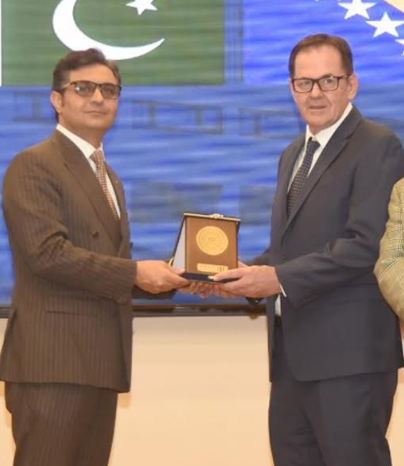
ISLAMABAD, NOV 25 /DNA/ – The Ambassador of Bosnia and Herzegovina Mr. Emin Cohodarevic delivered an inspiring address at Iqra University, underscoring the growing friendship between Bosnia and Herzegovina and Pakistan, while encouraging students to embrace their responsibility as the country’s future leaders.

Addressing faculty members, diplomats, students, and distinguished guests, the ambassador began with warm greetings—“Good morning, Selam aleikum”—and said it was always an honor to speak to young people who represent Pakistan’s future scholars, leaders, and entrepreneurs. He added that the energy and talent he witnessed in the room made him deeply optimistic about Pakistan’s future as well as the future of Bosnia–Pakistan relations.

The envoy highlighted the significance of Bosnia and Herzegovina’s Statehood Day, celebrated every year on November 25. The day commemorates the 1943 decision of the Anti-Fascist Council of National Liberation, which restored Bosnia’s statehood within its historical borders and reaffirmed its identity as a multicultural, multi-ethnic nation where all citizens enjoy equal rights. “Today, we honor Bosnia’s statehood and celebrate its vibrant culture, diversity, and institutions,” he said.

Reflecting on three decades of diplomatic ties, the ambassador described relations between Bosnia and Herzegovina and Pakistan as warm, steady, and grounded in mutual respect. “If you have a friend far away who knows your heart, distance cannot keep you apart,” he remarked. “The 3,000 miles between us can no longer separate Bosnia and Herzegovina and Pakistan. Instead, our relationship serves as a bridge bringing our nations even closer.”

The event also featured a special screening of the internationally acclaimed film “Quo Vadis, Aida?”, timed to coincide with Bosnia’s Statehood Day celebrations. The ambassador explained that the film—centered on the Srebrenica genocide of 1995—captures the emotional struggle of Aida, a UN translator trying to save her family amid the horrors of war. He urged students to reflect on the lessons of the tragedy, asking: “How many things would have been different if we had shown more empathy and solidarity? Did this tragedy have to end the way it did?”

Before concluding, the ambassador extended his gratitude to Mr. Tazeen Akhtar, Chief Editor of Pakistan in the World magazine, and Dr. Shehryar Khan, Associate Professor, for organizing and supporting the event. He also thanked Iqra University for hosting the gathering.

He ended his speech with a heartfelt tribute to bilateral ties:

“Long live the friendship between Bosnia and Herzegovina and the Islamic Republic of Pakistan. Pakistan aur Bosnia Herzegovina ki dosti zindabad.”

Thrilling NPC Hockey match: Legends XI beat Journalists XI

Thrilling NPC Hockey match: Legends XI beat Journalists XI

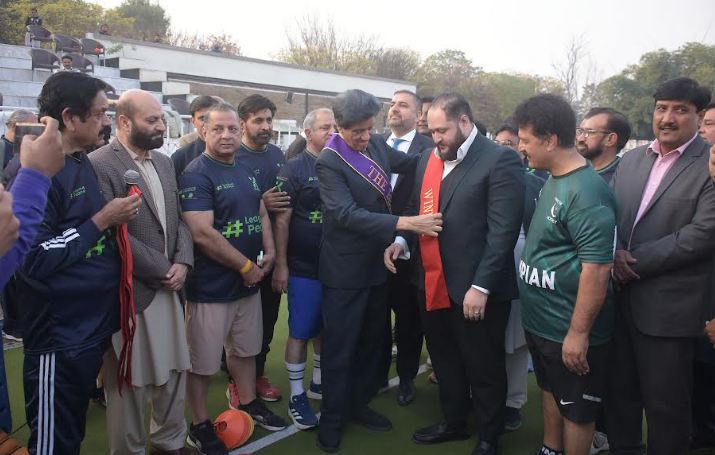
The exhibition match, held at the Nasir Bunda Hockey Ground, saw the Legends XI led by Pakistan Hockey Federation (PHF) Secretary General Rana Mujahid, while the Journalists XI was captained by PFUJ President Afzal Butt

Saifullah Ansar

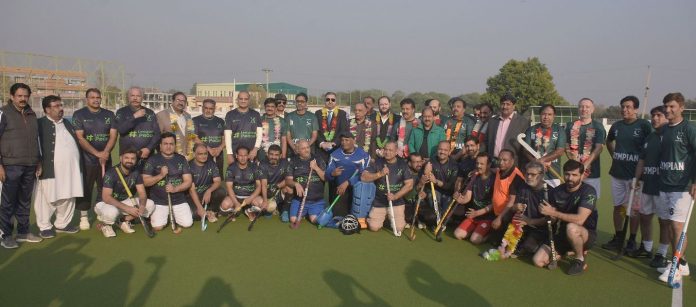
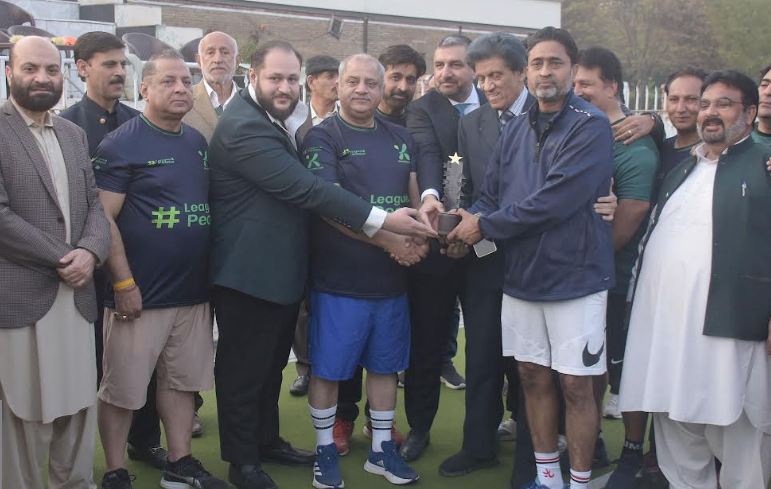
ISLAMABAD : A friendly hockey match organized by the National Press Club Islamabad between Hockey Legends XI and Journalists XI concluded with the Legends team winning by a margin of two goals.

The exhibition match, held at the Nasir Bunda Hockey Ground, saw the Legends XI led by Pakistan Hockey Federation (PHF) Secretary General Rana Mujahid, while the Journalists XI was captained by PFUJ President Afzal Butt.

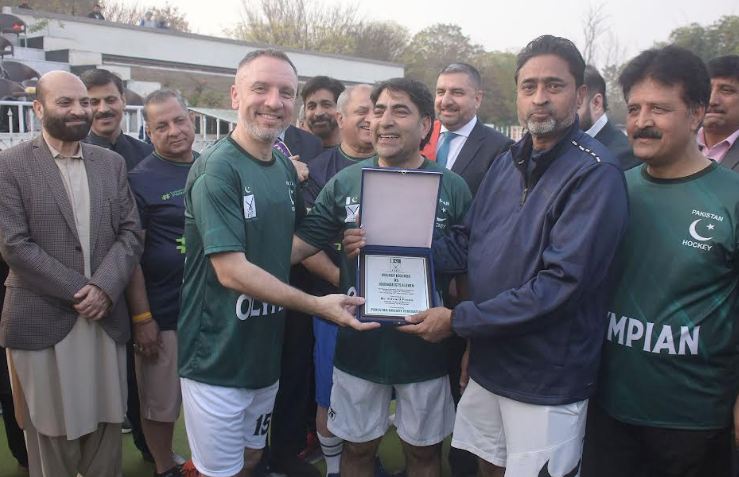
The event was attended by a large number of notable personalities, including President National Press Club Azhar Jatoi, Governing Body Member Shakeel Awan, senior journalist Shehryar Ahmed, former governing body member Zulfiqar Baig, former PHF treasurer Muhammad Ikhlaq Usmani, hockey legend Shahbaz Senior, head coach Olympian Tahir Zaman, Olympian Anjum Saeed, Secretary General Islamabad Olympic Association Rizwan-ul-Haq Razi, Deputy Head of Mission Romanian Embassy Eduard Preda and former MD PTV Akhtar Waqar Azeem, among many others.

In an exciting contest, the Legends XI defeated the Journalists XI by 8–6. For the Legends XI, Rana Mujahid scored three goals, while Shahbaz Senior, Tahir Zaman, and Anjum Saeed contributed one goal each.

For the Journalists XI, Ansar Bhatti, Nasir Aslam Raja, and Afzal Javed scored goals.

Voices from the Roof of the World set to launch Season 4

ISLAMABAD, NOV 25 /DNA/: Voices from the Roof of the World (VRW), the internationally recognized documentary series highlighting the far-reaching impact of environmental change across Central and South Asia, is set to launch its fourth season. The new season amplifies urgent climate narratives, focusing on air pollution, rising heat, glacier retreat, water scarcity, and the resilience of communities confronting these challenges in the third pole, also known as the ‘Roof of the World’. This region’s glaciers provide life-sustaining water to an estimated 1.6 billion people living downstream.

As Pakistan faces one of the most severe environmental periods in its history, the climate crisis has become a daily reality. In recent years, the country has felt the force of climate change most vividly through the surge in intense rainstorms that have triggered devastating floods and landslides, causing widespread loss of life and extensive damage to homes and infrastructure. These events have been compounded by the rapid melting of glaciers, which has increased the scale and severity of flooding.

Alongside these disasters, Pakistan is facing an ever-deepening air pollution emergency that harms every form of life. The country ranks among the five most polluted in the world, and millions in Punjab are seeking treatment for respiratory illnesses, especially children. It’s widely recognised that developing countries contribute the least to global CO2 emissions from fossil fuels and industry, yet bear the brunt of the impacts. Pakistan is just one stark example.

Against this backdrop, “Color of Smog,” one of VRW season one’s films directed by Jawad Sharif, showcases Lahore’s spiraling smog emergency. Once known for its gardens, Lahore now ranks high among the world’s most polluted cities.

 “Smog in Lahore is not just a figure but a daily reality that shapes how people breathe, move, and imagine their futures,” said Director Jawad Sharif. “Behind every air quality reading are families trying to protect their health and dignity. Through VRW and films like Color of Smog, we hope audiences can clearly see how the climate crisis is already unfolding around us and why meaningful action can no longer wait.”

VRW’s Executive Producer Andrew Tkach, eight-time Emmy Award winner who brings over 30 years of experience, is also mentoring young filmmakers and helping them shape their ideas into impactful stories.

“VRW was created to highlight the climate emergency from the perspective of the people who live it every day,” notes Andrew Tkach. “In Season 4, we shed light on communities confronting melting glaciers and vanishing forests, but also more hopeful stories of saving falcons and reviving ancient water canals. These stories make one thing clear: the environment is changing faster than we are responding.”

The series has won numerous honours and awards including Columbia University Journalism School’s John B. Oakes Award for Distinguished Environmental Journalism. VRW episodes have been selected and screened at over 50 international film festivals worldwide.

 “VRW’s unique expression of local realities highlights the impact of climate change on the lives and the cultures of the vulnerable communities whilst narrating the story of a changing era,” explained Laila Naz Taj, Director AKDN Pakistan Communications. “These films are not distant warnings, they are reflections of the challenges communities are facing right now across Pakistan and the region.”

VRW is a joint initiative of the Aga Khan University (AKU), the Aga Khan Agency for Habitat (AKAH), the University of Central Asia (UCA), and the Aga Khan Foundation (AKF), made possible through the generous support of Ross Beaty, the Jenabai Hussainali Shariff Family, the Sitka Foundation, Gulshan Kassamali Jiwa Family, and Prince Sadruddin Aga Khan Fund for the Environment. Across three seasons, VRW has produced 30 documentaries from Tajikistan, Kyrgyzstan, Pakistan, Nepal and beyond, available in English, Urdu, and Russian, with Arabic versions also planned.

Australian Immi App now available to visa applicants in Pakistan

ISLAMABAD/DNA, NOV 25 /DNA/: The process to apply for an Australian visa just got easier in Pakistan, thanks to the rollout of the Australian Immi App.

From today, eligible applicants in Pakistan can use the free Australian Immi App to submit passport details and facial biometrics directly from their smartphones—without needing to travel to a biometric collection centre. To be eligible, clients must have previously provided their biometrics (facial image and fingerprints) to the Department of Home Affairs, and hold a valid passport.

Australian High Commissioner, Timothy Kane said this is a major step forward in making the Australian visa process easier and more accessible for people in Pakistan.

“The Australian Immi App allows travellers, students and skilled workers to provide their details securely from their phone, saving time and travel costs,” he said.

Launched in 2024, the Australian Immi App has already proven to be a success across the Pacific and Asia, helping thousands of applicants complete visa requirements quickly and securely.

With this latest rollout, the app is now available in 34 countries, including new access across the Middle East, North Africa, Latin America and Europe.

“We encourage all eligible visa applicants in Pakistan to use the app. It’s secure, simple to use, and helps speed up visa applications—making travel to Australia easier and more convenient,” said High Commissioner Kane.

This rollout is part of the Department of Home Affairs’ ongoing program to modernise visa services and improve traveller facilitation worldwide.

The final global implementation of the app across all remaining countries in Australia’s Biometric Collection Program is scheduled for early 2026.

More information, including eligibility details and user guidance, is available on the Department of Home Affairs website: Australian Immi App<https://immi.homeaffairs.gov.au/supporting/Pages/australian-immi-app.aspx>.

360° on the Russia–Ukraine Peace Plan

Qamar Bashir

By Qamar Bashir

The search for peace between Russia and Ukraine has entered a new and complicated phase, shaped not only by events on the battlefield but by the conflicting ambitions of global powers, domestic pressures on leaders, and the shifting calculus of international diplomacy. For nearly three years, the world has watched the war drag on with unrelenting devastation, and yet none of the principal actors—Russia, Ukraine, the United States, or Europe—have fully embraced a compromise that could end the conflict. Today, diplomacy is active but still gridlocked. Negotiators produce frameworks, counter-frameworks, and amendments, but the distance between what Moscow demands and what Kyiv can accept remains wide enough to keep real peace out of reach. A full 360° examination reveals that every stakeholder wants peace on their own terms, and those terms often collide instead of converging.

The latest chapter in this ongoing diplomatic effort began when the United States unveiled a detailed 28-point peace proposal designed to force movement where the front lines had stalled. The Trump administration hoped that a comprehensive framework could bring Kyiv and Moscow toward a ceasefire, territorial compromise, and eventual normalization of relations. But the plan ignited controversy immediately. Many in Europe and Ukraine interpreted it as leaning heavily toward Moscow’s demands—especially on territory, NATO membership, and the size of Ukraine’s armed forces. Trump publicly expressed frustration that he could not “end the war in 24 hours” as he had long promised on the campaign trail, discovering instead that the political, military, and emotional realities of the conflict were far more complex than campaign rhetoric allowed.

Ukraine’s response was swift and firm. President Volodymyr Zelensky called the idea of trading territory for peace “absolutely unacceptable,” repeating his longstanding position that Ukraine cannot cede land to legitimize Russia’s aggression. Kyiv also rejected any limits on the size or structure of its army, arguing that a nation under invasion must reserve the right to defend itself without external constraints. Recent speeches in European parliaments—particularly Zelensky’s appearance in Stockholm—reinforced Ukraine’s demand that Russia pay for the war through reparations and frozen assets. In Kyiv’s view, peace without justice would simply embolden future aggression, turning Ukraine into a precedent rather than a victor.

Yet Ukraine also faces military fatigue, economic strain, and internal pressure to find a path toward stability. That is why Zelensky agreed to meet U.S. diplomats in Geneva, where a “refined peace framework” was announced. The revised American position, though not publicly detailed, signaled a shift toward accommodating Ukraine’s red lines on sovereignty and security guarantees. It was a diplomatic maneuver designed to reassure Kyiv while keeping Moscow tentatively engaged. However, without public details, the framework remains more of a political gesture than a concrete roadmap, and Russia has not formally endorsed it.

On the Russian side, President Vladimir Putin has alternated between signaling openness to negotiations and insisting that Russia’s territorial gains remain non-negotiable. Moscow said the original U.S. proposal could serve as a “basis for further discussion,” primarily because it reflected several longstanding Russian demands: a guarantee that Ukraine would never join NATO, international acceptance of the annexed regions, and a demilitarized Ukraine incapable of threatening Russian territory. For the Kremlin, any settlement must also include the phased lifting of Western sanctions—preferably early in the process rather than at the end. Putin has emphasized that Russia will not halt operations unless the political settlement secures these goals, and he has warned that if Ukraine rejects the deal outright, Russian forces will “resolve it on the ground.”

The United States now finds itself occupying an awkward middle ground. It remains Ukraine’s principal military backer, but it is also attempting to shape a diplomatic settlement that could end a war with global economic and strategic consequences. The political pressure on Washington is tangible. Inside the U.S., critics argue that the administration’s proposal either forces Ukraine toward capitulation or, conversely, does too little to compel Moscow. Trump’s impatience—calling for a deal “before Thanksgiving”—clashes with the slow pace of diplomatic reality. U.S. envoys have tried to smooth the fissures by insisting that Washington will not impose peace on Ukraine, while simultaneously pushing for a framework that would satisfy Moscow enough to freeze the conflict.

Europe’s role has become increasingly assertive. After two years of relying heavily on U.S. leadership, European governments now insist that peace cannot be brokered through a bilateral U.S.–Russia channel. Officials in Berlin, Warsaw, Paris, and London have emphasized that European security architecture is directly affected by whatever settlement emerges. They warn that any agreement that rewards Russia could destabilize Europe for decades. Many European capitals are quietly drafting an alternative peace package emphasizing tougher security guarantees for Ukraine, long-term military support, and maintaining frozen Russian assets until reparations are addressed. European leaders publicly describe recent diplomatic movement as “promising,” but privately they express concern that Washington’s desire for a quick deal could undermine Ukraine’s sovereignty and Europe’s stability.

China, though not directly involved in the latest negotiations, continues to promote its earlier 12-point peace blueprint calling for a ceasefire, negotiation, and respect for sovereignty—while opposing unilateral sanctions. But Beijing avoids demanding Russian withdrawal and instead emphasizes “legitimate security concerns of all parties,” a phrase widely interpreted as support for Moscow’s objections to NATO expansion. China’s stance gives Russia diplomatic cover and economic stability but also enables Beijing to present itself as a global peacemaker without assuming real responsibility for the outcome.

India maintains a carefully balanced position, calling repeatedly for dialogue and diplomacy while avoiding any criticism of Moscow. New Delhi has become one of the largest buyers of discounted Russian oil, even as it increases exports of refined fuels—ironically, some of which end up in European markets. India portrays itself as a potential bridge between East and West, but it has not presented a concrete peace proposal. Instead, it limits its role to public messaging and quiet diplomacy.

With so many competing perspectives, what is the actual trajectory of peace? Diplomatically, activity has increased; substantively, the gap remains as wide as ever. The United States wants a deal but cannot impose one. Ukraine wants peace without sacrifice. Russia wants concessions Kyiv cannot accept. Europe wants a settlement that does not reward aggression. China wants stability without compromising its relationship with Moscow. India wants neutrality without irrelevance.

Most experts predict that a final peace deal remains distant. The war has not reached a point where either side believes the battlefield has exhausted its political value. Absent a dramatic military shift or a major political transition in Moscow, Kyiv, or Washington, the most plausible near-term outcome is not full peace but a limited arrangement—perhaps a sectoral ceasefire around the Black Sea or a monitored freeze along a defined front line. Even such limited steps, however, require trust, guarantees, and enforcement mechanisms that the parties have not yet agreed upon.

A comprehensive settlement that resolves territorial disputes, security guarantees, sanctions, and reparations may ultimately require a new geopolitical moment—one in which either Russia recognizes the cost of perpetual war or Ukraine recalibrates its conditions for peace under global pressure. Until then, the negotiations will continue, the frameworks will multiply, and diplomats will fly from Riyadh to Geneva to Ankara hoping that one day the war will finally bend toward resolution. But for now, the Russia–Ukraine peace plan remains an aspiration more than a destination, suspended between what the world hopes for and what the parties can actually accept.

By Qamar Bashir

Press Secretary to the President (Rtd)

Former Press Minister, Embassy of Pakistan to France

Former Press Attaché to Malaysia

Former MD, SRBC | Macomb, Michigan, USA

President Zardari, General Sahir discuss national security

President Zardari, General Sahir discuss national security

ISLAMABAD, NOV 24 /DNA/ – President Asif Ali Zardari held a significant meeting with General Sahir Shamshad Mirza, the Chairman of the Joint Chiefs of Staff Committee (CJCSC), at the Aiwan-e-Sadr on Monday.

The high-level meeting focused on matters of paramount national security, regional stability, and the operational readiness of the armed forces.

According to a press release issued by the President’s Secretariat, the meeting featured a comprehensive review of the country’s overall security environment. The President and the CJCSC discussed the ongoing professional pursuits of the Pakistan Armed Forces and the challenges facing the region.

President Zardari lauded the professionalism and unwavering commitment of the armed forces in safeguarding the nation’s territorial integrity and sovereignty. He expressed his confidence in the military’s capabilities to counter any threats to the country’s security.

Lahore Qalandars, Peshawar Zalmi renew 10-year PSL contracts with PCB

Lahore Qalandars, Peshawar Zalmi renew 10-year PSL contracts with PCB

ANSAR BHATTI

ISLAMABAD: Lahore Qalandars and Peshawar Zalmi have renewed their Pakistan Super League (PSL) franchise rights for the next ten years after accepting the Pakistan Cricket Board’s (PCB) new long-term offer, the two teams announced on Monday.

The renewals follow independent valuations conducted by EY MENA, which placed Lahore Qalandars as the league’s most valuable franchise based on combined on-field performance and organisational strength.

The Qalandars have won three PSL titles in the past four seasons, a run that has strengthened their position as one of the tournament’s leading sides.

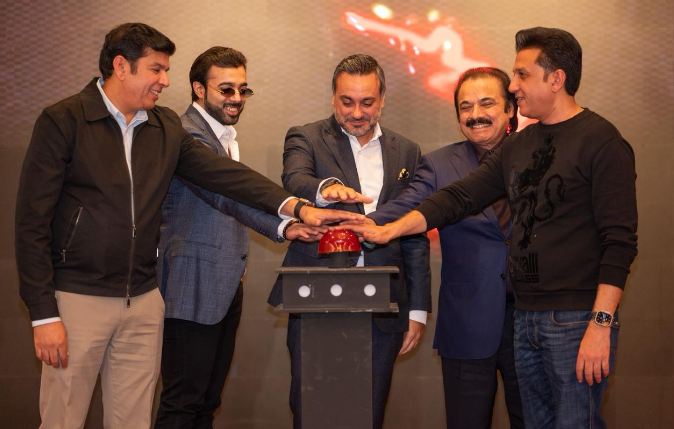
Marking their 10th anniversary, the Qalandars held a “Decade of Glory” event in Islamabad, attended by players, management, partners, and international guests.

The celebrations included a trophy showcase and a reception with Zimbabwe Cricket’s Managing Director Givemore Makoni, and the visiting Zimbabwe team, reflecting the franchise’s growing global partnerships.

The team highlighted its ongoing collaboration with Zimbabwe Cricket, including player-exchange opportunities and support for Pakistani players seeking exposure in Zimbabwe’s domestic circuit.

Zimbabwe captain Sikandar Raza, popularly known as “Qalandars ka Sikandar,” featured prominently at the event. Sri Lanka’s Bhanuka Rajapaksa and PSL final hero Kusal Perera also joined the celebrations.

PSL Chief Executive Officer Salman Naseer said that all franchises have worked extremely hard to make the Pakistan Super League a successful and powerful brand. “This is a collective achievement for all of us,” he stated.

He paid tribute to the management of Lahore Qalandars, acknowledging their efforts in significantly improving cricket standards in the country. Salman Naseer expressed hope that the partnership between PSL and Lahore Qalandars would continue for many years.

Addressing the ceremony, Lahore Qalandars’ Chief Operating Officer Sameen Rana and Chief Executive Officer Atif Rana congratulated the Zimbabwe team for attending the event, adding that despite numerous challenges, the inauguration of the High-Performance Center marked an important milestone in Lahore Qalandars’ development journey.

They thanked the Zimbabwe Cricket Board for allowing Sikandar Raza to travel to Pakistan during their ongoing Test series — a moment he described as a source of pride for the franchise, adding that “We are grateful to PSL CEO Salman Naseer and Lahore Qalandars stars Salman Mirza, Shaheen Shah Afridi, Fakhar Zaman, and Haris Rauf, who have always rendered outstanding services for the franchise.”

A key announcement at the ceremony was the establishment of a new Lahore Qalandars High Performance Centre in partnership with Capital Smart City Islamabad, developed by the Zahid Rafiq Group.

Saudi Armed Forces Chief of General Staff calls on PM Shehbaz Sharif

Saudi Armed Forces Chief of General Staff calls on PM Shehbaz Sharif

ISLAMABAD, NOV 24 /DNA/ – General Fayyad bin Hamed Al-Ruwaili, Chief of General Staff of the Armed Forces of the Kingdom of Saudi Arabia, called on Prime Minister Muhammad Shehbaz Sharif, at the Prime Minister House in Islamabad, today.

While conveying his warm wishes to The Custodian of the Two Holy Mosques His Majesty King Salman bin Abdulaziz Al Saud as well as to His Royal Highness Crown Prince Mohammed bin Salman bin Abdulaziz Al Saud, the Prime Minister reaffirmed his steadfast resolve to further strengthening of the historic fraternal ties between Pakistan and the Kingdom of Saudi Arabia in all domains, including defence, security and economic cooperation.
The Prime Minister welcomed General Al-Ruwaili and conveyed Pakistan’s deep appreciation for the unwavering support and solidarity extended by the brotherly Kingdom of Saudi Arabia at all times. He underlined that the relationship between Pakistan and Saudi Arabia was rooted in shared faith, common values, and mutual trust.

Recalling his highly successful visits to Riyadh in the last two months, during which the historic Strategic Mutual Defence Agreement (SMDA) was signed between the two sides, the Prime Minister expressed Pakistan’s unwavering commitment to further deepening of bilateral defence collaboration, including joint training, exercises, and exchange of expertise.

The Prime Minister also highlighted the shared resolve of both countries to combat terrorism and extremism in all its forms and manifestations, and to promote peace and stability in the region.
General Al-Ruwaili conveyed the warm greetings of the Saudi leadership to the Prime Minister and the people of Pakistan. He reiterated the Kingdom’s strong desire to elevate the existing excellent defence and strategic partnership with Pakistan to new heights.

The meeting was attended by Deputy Prime Minister & Foreign Minister Mohammad Ishaq Dar, Chief of Army Staff Field Marshal Syed Asim Munir, Defence Minister Khawaja Muhammad Asif, SAPM Tariq Fatemi and other senior officials from both sides.

OGRA cuts gas prices for consumers in a surprise move

OGRA cuts gas prices for consumers in a surprise move

ISLAMABAD NOV 24 /DNA/ – Oil and Gas Regulatory Authority (OGRA), under Section 8(2) of OGRA Ordinance, 2002, vide its decisions dated November 24, 2025 has determined the Review of Estimated Revenue Requirement (RERR) of SNGPL & SSGCL for FY 2025-26.

OGRA has carefully reviewed the revenue requirement of SNGPL & SSGCL and rationalized the demand by optimizing costs as well as revenues. Moreover, impact of deferred cargoes in case of Pakistan LNG Limited has been included to the benefit of gas consumers. Accordingly, average prescribed price for FY 2025-26 of SNGPL & SSGCL has been provisionally determined at Rs. 1,804.08/MMBTU and Rs. 1,549.41/MMBTU for FY 2025-26, thereby reducing the price by 3% and 8% respectively over current prescribed price in line with its mandate to protect consumers’ interest and promote fiscal discipline. Moreover, OGRA in pursuance of Federal Cabinet dated July 01, 2024 has adjusted Rs. 13,565 million in case of SNGPL & Rs. 47,315 million in case of SSGCL against previous shortfall /stock of gas circular debt.

Through the above said determination, Federal Government has been requested for advice on category-wise sale prices. Any revision, as advised by Federal Government, shall be accordingly notified by OGRA. Till such time the existing category-wise natural gas sale prices shall continue to prevail.

The details of OGRA’s decision regarding revenue requirements of gas utilities are available at www.ogra.org.pk.

Iranian Top Security Official Ali Larijani arrives in Pakistan

Iranian Top Security Official Ali Larijani arrives in Pakistan

ISLAMABAD, NOV 24 /DNA/ – In a visit termed as “unprecedented” and “historic” by diplomatic sources, H.E. Dr. Ali Larijani, the Honorable Secretary of Iran’s Supreme National Security Council, arrived in Pakistan on Tuesday for high-level strategic discussions.

The high-profile visit is widely seen as a pivotal moment designed to elevate the already strong bilateral ties between the two neighboring nations into a new, more profound strategic phase.

Official statements from both capitals emphasized that the trip comes at a critical juncture, driven by the rapidly evolving global landscape and shifting regional dynamics. The need for closer coordination and a elevated partnership has been deemed more imperative than ever for both Islamabad and Tehran.

“The already solidified and time-tested relations between our two brotherly nations are set to enter another strategic phase,” a senior Pakistani official stated, underscoring the significance of the engagement. “This visit will meaningfully advance the objective of further strategizing our multifaceted relationship.”

During his stay, Dr. Larijani is scheduled to hold extensive talks with Pakistan’s top leadership, including the Prime Minister and the Chief of Army Staff. The agenda is expected to cover a wide range of issues, with a particular focus on enhanced security cooperation, regional stability, and bolstering economic and trade ties.

Analysts believe this strategic dialogue will provide a crucial opportunity to align policies and foster a unified approach to common challenges, reinforcing the deep-rooted fraternal bond between Pakistan and Iran.

Stay Connected

64FansLike
60FollowersFollow

Latest Reviews

Exchange Rates

USD - United States Dollar
EUR
1.17
GBP
1.35
AUD
0.67
CAD
0.73