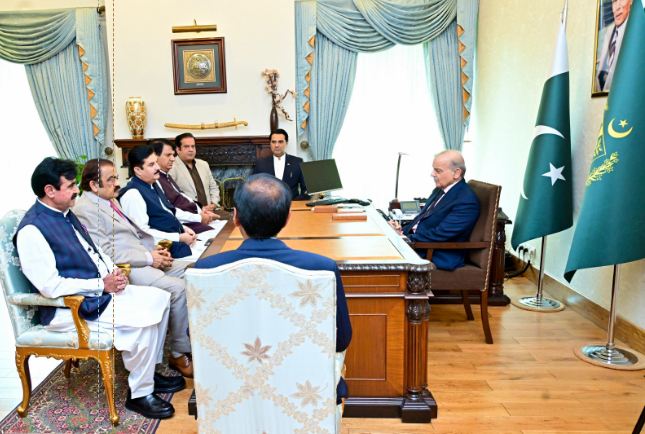
ISLAMABAD, JUL 2 /DNA/ – Governor Khyber Pakhtunkhwa, Faisal Karim Kundi calls on Prime Minister Muhammad Shehbaz Sharif on 2 July, 2025; Federal Minister for Kashmir Affairs, Gilgit Baltistan, State and Frontier Regions Engineer Ameer Maqam, Federal Minister for Public Affairs Unit Rana Mubashar Iqbal, Advisor to the PM on Political Affairs Rana Sana Ullah, Minister of State for Power Abdul Rehman Kanju and Special Assistant to the Prime Minister Talha Barki are also present.
Pakistan cricketers drop in latest ICC Test rankings
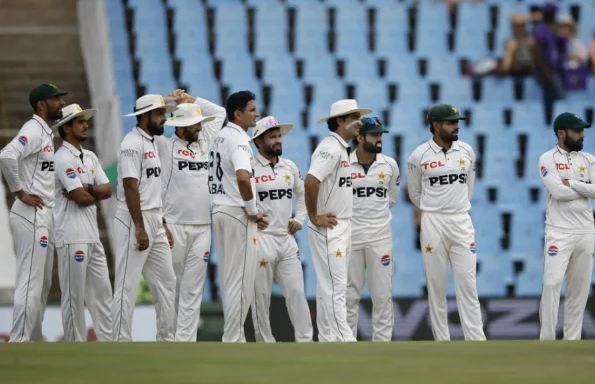
DUBAI: Pakistan’s presence in the latest ICC Test rankings has taken a hit, with several players dropping in their respective categories amid a lack of upcoming red-ball fixtures.
The team is currently scheduled to play only white-ball cricket over the next two months, with series lined up against Bangladesh and the West Indies, likely contributing to further ranking stagnation or decline.
They will start their ICC World Test Championship (WTC) 2025–27 campaign with a home series against South Africa in October–November.
Middle-order batter Saud Shakeel has fallen out of the top 10, slipping one spot to 11th with 739 rating points.
Mohammad Rizwan, the wicketkeeper-batter, has dropped three places to 19th with 671 points, while former skipper Babar Azam has retained his 22nd position on the list with 651 points.
All-rounder Salman Ali Agha remains steady at 33rd with 592 points, and Test captain Shan Masood has climbed three places to reach 44th with 542 points.
Abdullah Shafique holds on to the 51st spot, while Kamran Ghulam has slipped two spots to 76th. Young opener Saim Ayub also dropped two places to 83rd, now holding 352 points.
In contrast, India’s Rishabh Pant continues to climb, earning a career-best rating in the ICC Men’s Test Batting Rankings.
His twin centuries (134 and 118) in the opening Test against England earned him a rise to sixth place with 801 points, just 88 behind the top-ranked batter Joe Root. Pant is now just one spot below his career-high ranking of fifth, which he last achieved in 2022.
Root holds onto the No.1 position following scores of 28 and an unbeaten 53 at Headingley. He is closely followed by teammate Harry Brook, who trails by just 15 rating points. Kane Williamson of New Zealand sits in third with 867 points.
In the bowling rankings, Pakistan’s Noman Ali has slipped one place to fifth, holding 806 rating points. Sajid Khan retains the 20th position, with Shaheen Shah Afridi right behind at 21st with 641 points.
Mohammad Abbas has moved up one place to 26th, while Naseem Shah has gained a spot to reach 34th with 526 points.
Among other bowlers, Abrar Ahmed dropped one place to 48th, Khurram Shahzad slid two spots to 62nd, and Aamer Jamal currently stands at 70th.
Mir Hamza and Salman Ali Agha fell six and five places respectively, now ranked 92nd and 93rd, while Zahid Mahmood dropped five spots to 95th.
India’s Jasprit Bumrah remains the No.1 ranked Test bowler, followed by Kagiso Rabada of South Africa in second and Australian skipper Pat Cummins in third.
Legal experts stress global norms for constitutional integrity
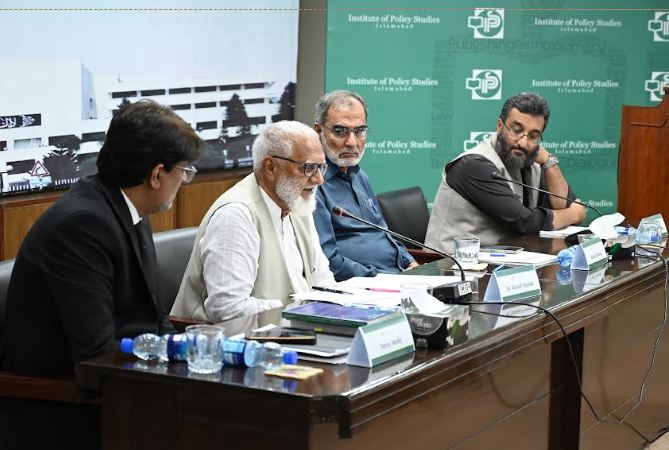
ISLAMABAD, JUL 2 /DNA/ – International law should be harmonized with Islamic teachings and grounded in the local context, shaped by cultural sensitivities, and upheld through democratic legitimacy. Though global engagement is essential, bypassing parliamentary oversight in the adoption of international conventions risks eroding legislative authority and cultural coherence. Only a thoughtful, context-driven adaptation can ensure relevance, inclusivity, and sustainable impact.
This was discussed at a seminar hosted by the Institute of Policy Studies (IPS), Islamabad, titled “Pakistan’s Constitutional Framework and International Law,” which brought together prominent legal scholars and practitioners from Pakistan, Malaysia, and Bangladesh. The event, organized in collaboration with GIFT University, Gujranwala, explored the intersection of Islamic jurisprudence and modern international legal standards within Pakistan’s constitutional context.
Khalid Rahman, chairman IPS, cited Pakistan’s unique constitutional trajectory and noted that the country’s legal system represents a purposeful synthesis of Islamic values and global legal norms. Emphasizing that tradition and modernity need not be in conflict, he stressed, “Pakistan’s Constitution is a model that aspires to harmonize religious imperatives with contemporary international standards.” Acknowledging the judiciary’s pivotal role in actualizing this harmony, he pointed out the persistent skepticism shaped by both internal contradictions and external misperceptions.
Dr. Khalid Masood, member Shariat Appellate Bench at the Supreme Court of Pakistan and former chair of the Council of Islamic Ideology, delved into the concept of universality, contrasting the universals of Western nation-states with those rooted in Islamic tradition. He critiqued the modern polarization of knowledge and emphasized the need for critical intellectual engagement. “Islamic law has been nationalized in different states, yet its legitimacy is often judged by external definitions of authenticity,” he said. Dr. Masood urged scholars to revisit foundational concepts such as ijtihaad and taqleed, encouraging renewed engagement with tradition to respond to modern challenges.
Ahmer Bilal Soofi, senior advocate Supreme Court and former law minister, described the Constitution as a moral and social contract rooted in Islamic and democratic values, not just a legal document. He emphasized its evolving nature, anchored in justice and fairness. Highlighting Pakistan’s duty to uphold international law, he said that treaty commitments are both legal and religious obligations, echoing Qur’anic teachings on honoring promises. Soofi warned against weakening constitutional rights and called for judicial reforms, equal rights, and stronger local governments.
Dr. Aziz ur Rehman, director, School of Law at Quaid-i-Azam University, Islamabad, noted that tension between international human rights discourse and domestic sovereignty existed in almost all societies. Challenging the attribution of unqualified universality to the Eurocentric concepts of human rights, he highlighted a concerning trend in Pakistan’s judiciary, where international conventions are increasingly cited without proper ratification or parliamentary oversight. “This diffusion bypasses our dualist legal tradition and may undermine both legislative integrity and cultural specificity,” he warned. He emphasized that international law, while valuable, must be integrated into Pakistan’s system with due process and constitutional alignment.
Imran Shafiq, advocate of the Supreme Court, provided a historical and legal analysis of Shariah interpretation in Pakistan. Tracing developments across three phases – from colonial resistance to constitutional Islamization – he critiqued recent judicial rulings that dilute explicit Islamic character and provisions of the Constitution. “We need to reclaim ownership over our legal evolution and avoid superficial transplants of foreign jurisprudence,” he said.
Dr. Shamrahayu Abdul Aziz, from the International Islamic University Malaysia, presented the Malaysian model of constitutional dualism. She discussed the integration of Islamic and civic laws, highlighting challenges such as minority rights and interfaith legal disputes. “Malaysia’s peace and harmony formula is not a compromise on Shariah but a pragmatic model for coexistence,” she explained.
Dr. Mumtahina Nazbin, from the Bangladesh Institute of Islamic Thought, addressed the topic of women’s participation in governance. She emphasized Islam’s inclusive political vision and constitutional efforts in Bangladesh to ensure gender equity. “Competence, not gender, is the Qur’anic standard for leadership,” she stressed.
The seminar concluded by reaffirming the relevance of Pakistan’s blended legal framework and calling for further scholarly and institutional engagement to address ambiguities, reinforce constitutional integrity, and strengthen global understanding of Islamic legal systems.
Ruling coalition gets lion’s share of reserved seats as ECP implements top court’s order
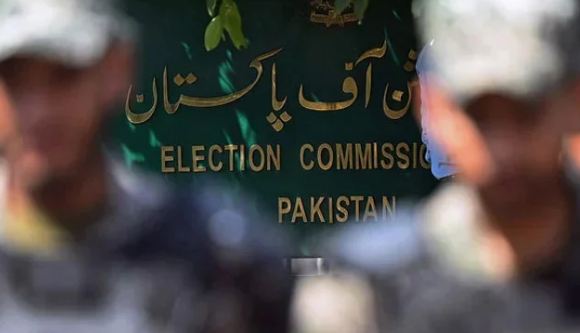
Top electoral body notifies restoration of reserved seats following Supreme Court’s July 27 verdict
Faisal Sheikh
ISLAMABAD: The Election Commission of Pakistan (ECP) on Wednesday issued a notification regarding the reserved seats following the July 27 verdict given by the Supreme Court’s Constitutional Bench.
The top court’s Constitutional Bench accepted review petitions and ruled that the Pakistan Tehreek-e-Insaf (PTI) is not entitled to seats reserved for women and minorities in the national and provincial assemblies — providing a lion’s share of the reserved seats to the ruling coalition.
Following the notification, five reserved seats for women in the National Assembly from Khyber Pakhtunkhwa were restored by the top electoral body.
Two seats each were allotted to the Pakistan Muslim League-Nawaz (PML-N) and one to the Jamiat Ulema-e-Islam-Fazl (JUI-F).
Eleven reserved seats for women in the National Assembly from Punjab were also restored. 10 seats have been allotted to the ruling PML-N and one to the Pakistan Peoples Party (PPP).
The commission restored three seats reserved for minorities in the lower house which were handed over to the PML-N, PPP, and JUI-F.
KP Assembly
As per the notification, 21 reserved seats for women were reinstated in the KP Assembly of which 8 were allocated to JUI-F, six to PML-N, and 5 to PPP. One seat each was also allotted to the PTI Parliamentarians and the Awami National Party (ANP).
Meanwhile, four reserved seats for minorities in the KP Assembly were restored of which two were handed over to the JUI-F, one each to the PML-N and PPP.
Punjab Assembly
The ECP restored 24 reserved seats for women in the Punjab Assembly of which the PML-N got 21 one each by PPP, Istehkam-e-Pakistan Party (IPP), and Pakistan Muslim League-Quaid (PML-Q).
Three minority seats were restored and two of them were allotted to the PML-N and one to the PPP.
Sindh Assembly
Two reserved seats for women and one for minorities have been reinstated in the Sindh Assembly of which one was allotted to the PPP and another to the Muttahida Qaumi Movement-Pakistan (MQM-P).
PM Shehbaz to attend 17th ECO Summit in Baku

ISLAMABAD, JUL 2 /DNA/ – The 17th Summit of the Economic Cooperation Organization (ECO) will be held in Baku, Republic of Azerbaijan, on 3-4 July 2025. The Prime Minister of Pakistan, Muhammad Shehbaz Sharif, will lead the Pakistan delegation to the Summit. The theme of the Summit is “New ECO Vision for a Sustainable and Climate Resilient Future.”
During the Summit, the Prime Minister will share Pakistan’s perspective on key regional and global challenges, reaffirm Pakistan’s commitment to the ECO Vision 2025, and advocate for enhanced intra-regional trade, transport connectivity, energy cooperation, and sustainable development. He will also hold bilateral meetings with other ECO leaders on the sidelines of the Summit to discuss matters of mutual interest.
AC among 5 killed in Bajaur blast
DNA
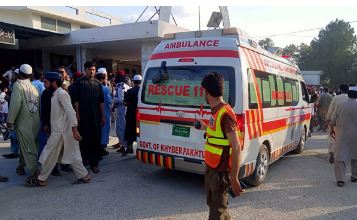
ISLAMABAD: At least five people, including an assistant commissioner, were killed and 11 others injured on Wednesday in a bomb explosion in Khyber Pakhtunkhwa’s Bajaur district.
Bajaur District Police Officer Waqas Rafique told that five people, including two policemen and a civilian, were killed in the explosion targeting a government vehicle on Nawagai Road in Siddiqabad railway attack area of Khar tehsil.
“The blast was so intense that the vehicle targeted was completely destroyed,” he said, adding that 11 people were injured in the blast and immediately transported to Khar Hospital for treatment.
The DPO said that security was increased in the area and relief activities were underway.
The deceased include Nawagai Assistant Commissioner Faisal Ismail, Tehsildar Abdul Wakil, Subedar Noor Hakim, and police constable Rashid.
KP Health Adviser Ihtisham Ali strongly condemned the blast and expressed grief over the demise of the assistant commissioner and others in the incident.
He contacted the district health officer and the medical superintendent of District Headquarters Hospital Khar Bajaur and enquired about the well-being of those injured in the attack.
“An emergency has been imposed in Bajaur hospitals and health department staff has been alerted for first aid,” he said.
The health adviser assured the pubic that medical assistance would be provided to the injured.
KP Inspector General of Police (IG) Zulfiqar Hameed sought a report on the blast from the Malakand regional police officer (RPO).
He also ordered to speed up intelligence-based operations against the banned Tehreek-i-Taliban Pakistan (TTP) group and directed the Counter-Terrorism Department’s additional inspector general of police to send a special team to Bajaur.
“A special branch is obtaining intelligence related to the incident,” Hameed said, adding that according to initial information, the TTP targeted the assistant commissioner’s vehicle.
Hameed said that teams were formed “to arrest the elements involved in the incident while all necessary evidence is being collected from the spot”, adding that bomb disposal teams were present on site.
Those elements disturbing the country and province’s peace will be strictly dealt with, the KP police chief said.
KP government spokesperson Barrister Mohammad Ali Saif strongly condemned the incident and said the loss of lives was regrettable.
“The KP chief minister has issued orders for an enquiry into the incident and to provide medical facilities to the injured,” Saif said.
ICCD, FPCCI host summit to promote medical tourism in Pakistan

KARACHI, JUL 2: /DNA/ – The Islamic Chamber of Commerce and Development (ICCD) and the Federation of Pakistan Chamber of Commerce and Industry (FPCCI) will jointly organize a Medical Tourism Conference under the theme “Serving Global Patients with Paramount Quality Services.”
The conference, part of the “Tea for Tourism Series,” launched by organizers, is scheduled to be held on July 15, 2025, at the ICCD Headquarters in Karachi. It will bring together top-tier experts, healthcare professionals, hospital administrators, pharmaceutical and biomedical firms, supply chain specialists, and government officials from Pakistan and abroad.
The conference will serve as a dynamic platform to discuss the latest trends, innovations, and challenges in the medical tourism sector—aiming to identify actionable strategies to enhance service delivery and attract global patients to Pakistan and the broader OIC region.
The conference will be complemented by a dedicated Expo, providing participants with an opportunity to showcase their healthcare products and demonstrate their medical and wellness services. The inauguration of the event and expo will be graced by a distinguished VIP guest.
This landmark event follows the recent success of the Sustainable Tourism Forum (STF) jointly hosted by ICCD and FPCCI which welcomed international delegations and stakeholders. Building on that momentum, both institutions are taking practical steps to position Pakistan as a leading hub for sustainable and medical tourism among OIC member countries.
The leadership of FPCCI and ICCD emphasized the importance of linking health and tourism to unlock new economic opportunities. With rising global demand for affordable, high-quality medical care, Pakistan is uniquely placed to emerge as a destination of choice for international patients.
Islamic Chamber of Commerce and Development (ICCD) is an international institution affiliated with the Organization of Islamic Cooperation (OIC), representing the private sector across 57 member states. ICCD is headquartered in Karachi, Pakistan.
Breaking: Pakistan dumps advanced GD payments to ease trade barriers
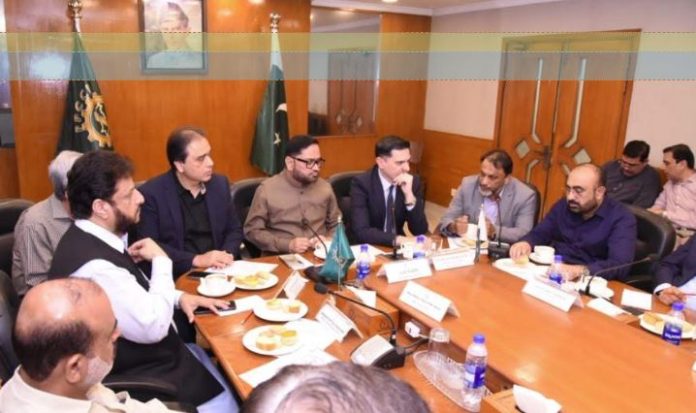
KARACHI, JUL 2: /DNA/ – Atif Ikram Sheikh, President FPCCI, has apprised that Mr. Syed Aftab Haider, CEO of Pakistan Single Window (PSW), visited Federation House for a detailed briefing and interactive, consultative session on the government’s efforts to digitize and streamline customs procedures and documentations in line with WTO guidelines and international best practices.
Mr. Atif Ikram Sheikh highlighted the need to create awareness in the business, industry, trade and services community of Pakistan on PSW’s facilitation, services and progress made in customs digitalization so far – as it will enable utilization of PSW from the current utilization of the pre-arrival GDs to a much higher and healthier number.
Mr. Saquib Fayyaz Magoon, SVP FPCCI, elaborated that PSW’s aim should be to establish a single electronic platform to efficiently and flawlessly meet requirements for regulating imports, exports and transit trade; while simplifying, harmonizing and digitizing the trade processes at the same time.
Mr. Asif Sakhi, VP FPCCI, informed that – on FPCCI’s recommendation – the government authorities and PSW have decided to abolish Advanced Payments on GDs from July 8, 2025 onwards. The practice was also against the international best practices and the spirit of trade promotion.
Mr. Syed Aftab Haider, CEO PSW, explained that as part of its trade facilitation and regional connectivity agenda; Pakistan is committed to reforming, modernizing, upgrading and automating its system to match the on-going investments in its infrastructure for cross-border trade. Moreover, Pakistan has ratified the WTO’s Agreement on Trade Facilitation on 27th October, 2015 – PSW is enabling country’s compliance with the agreement.
CEO PSW informed that – on FPCCI’s demand – its charges of Rs. 500 will be waived to expand its user base; and, enable them fully utilize its services. He also informed that 22 government departments have already been connected with PSW; it has a user base of 94,000 as of now; one million documents have been processed so far and PSW is striving to connect with all 77 relevant government departments ASAP.
Mr. Khurram Ijaz, Chairman of FPCCI’s Advisory Council on Customs – who is also a Director of PSW representing the private sector – elaborated that PSW’s objectives are transparent trade transactions; reduced trading costs & delays; hassle-free banking operations for trade; integrated declaration & automated routing of customs; real-time data exchange via Electronic Data Interchange (EDI); connecting government departments for paperless processing in customs; ease of doing business for women traders and boosting exports and FDI.
Monsoon rains expected to intensify across Pakistan from July 05
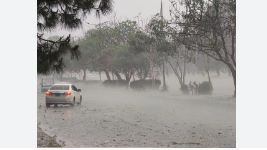
ISLAMABAD, Jul 02 (DNA): The Pakistan Meteorological Department (PMD) on Wednesday has forecast a significant intensification of monsoon activity across the country beginning from the evening of July 05, with widespread rain, thunderstorms and the possibility of flash floods and urban flooding in several regions.
According to the Met Office, moist monsoon currents were continuously penetrating the country and will likely strengthen over the weekend.
A westerly wave was also expected to approach the upper parts of Pakistan on July 06, further enhancing the rainfall.
As per the regional forecast highlights, rain-wind/thunderstorms with scattered heavy to very heavy rainfall are expected from July 5-10 in multiple areas including Muzaffarabad, Neelum Valley, Rawalakot, Swat, Dir, Malakand, Kohistan, Chitral, and others.
Gilgit-Baltistan regions like Skardu, Hunza, Gilgit, and Astore may also experience similar conditions from July 6 to 10.
In Punjab and Islamabad, widespread rain and thunderstorms with heavy falls are expected from July 5-10 in Islamabad, Rawalpindi, Lahore, Sialkot, Gujranwala, Faisalabad, and several other districts. Southern Punjab regions including Multan, Bahawalpur, and Dera Ghazi Khan will receive rain between July 06-08.
About Sindh and Balochistan, the PMD forecast that rain-thunderstorms are likely in southern and northeastern Balochistan including Loralai, Khuzdar, and Lasbella from July 03-04 and again from July 06-08.
Sindh regions such as Karachi, Hyderabad, Tharparkar, and Sukkur may experience moderate rainfall during July 3-4, with chances of isolated heavy falls in southeastern parts.
As per possible impacts and public advisory, heavy to very heavy rains may generate flash floods in local nullahs and streams of Murree, Galliyat, Manshera, Kohistan, Abbottabad, Buner, Chitral, Dir, Swat, Shangla, Nowshera, Swabi, Mardan, Islamabad/Rawalpindi, hill torrents of Dera Ghazi Khan, northeast Punjab, Kashmir, and parts of Balochistan from the night of July 05-08.
Heavy downpours may cause urban flooding in low-lying areas of Islamabad, Rawalpindi, Gujranwala, Lahore, Sialkot, Sargodha, Faisalabad, Nowshera, and Peshawar from July 06-08.
Landslides and mudslides may lead to road closures in vulnerable hilly areas of Khyber Pakhtunkhwa, Murree, Galliyat, Kashmir, and Gilgit-Baltistan during the wet spell.
Heavy rainfall, strong winds, and lightning may damage weak structures such as roofs and walls of mud houses, electric poles, billboards, vehicles, and solar panels during the forecast period.
The farmers are advised to manage their agricultural activities keeping in view the weather forecast.
Public, travelers, and tourists are strongly advised to avoid unnecessary exposure in vulnerable areas and stay updated on weather developments to prevent any untoward situations.
All concerned authorities have been advised to remain on high alert and take precautionary measures to mitigate any potential risks.
Trump-Netanyahu Meeting – Will It Bring Peace to Gaza?

The recent meeting between U.S. President Donald Trump and Israeli Prime Minister Benjamin Netanyahu has once again brought the Gaza conflict into the global spotlight. Trump, known for his unpredictable diplomacy, claimed that a Gaza peace accord could be reached “within two weeks” and urged Hamas to accept the deal. However, given the history of Trump’s foreign policy maneuvers—marked by grand promises followed by erratic actions—skepticism remains over whether this will translate into real peace or just another fleeting statement.
Trump’s sudden optimism about a Gaza deal raises eyebrows, especially considering his long-standing, unconditional support for Israel’s hardline policies. During his presidency, he emboldened Netanyahu’s government by recognizing Jerusalem as Israel’s capital, cutting aid to Palestinians, and endorsing illegal settlements. Now, as he positions himself for a potential return to the White House, his rhetoric appears more about political posturing than genuine conflict resolution.
Worse still, Trump remained conspicuously silent as Israeli forces slaughtered thousands of Gazans in relentless bombardments. His indifference to Palestinian suffering underscores a troubling pattern: allowing aggressors to inflict maximum damage before stepping in as a self-proclaimed peacemaker. This was evident in the Iran-Israel tensions, where Trump let hostilities escalate before offering mediation. Such an approach is not statesmanship—it is cynical opportunism that costs innocent lives.
Trump’s insistence that Hamas must accept the deal and leave Gaza is a non-starter. Hamas, despite its controversial stance, remains a key political and military force in Gaza, and its complete removal is an unrealistic demand that only prolongs the conflict. True peace requires inclusive dialogue, not unilateral ultimatums. Past agreements have failed precisely because they excluded critical stakeholders—lessons that Trump seems unwilling to learn.
Moreover, his two-week timeline for a deal appears more like a campaign soundbite than a serious diplomatic effort. Gaza’s crisis is deeply rooted in decades of occupation, blockade, and failed negotiations. A lasting solution requires sustained engagement, not impulsive declarations.
Trump’s transactional and erratic style of diplomacy is ill-suited for resolving complex conflicts like Gaza. His strategy of allowing violence to peak before intervening only deepens distrust and suffering. The international community must reject this dangerous approach and instead push for consistent, impartial mediation that holds all parties accountable.
If Trump truly wants to broker peace, he must pressure Israel to halt its brutal offensive, ensure humanitarian aid reaches Gaza, and support a credible two-state solution. Otherwise, his promises will remain empty, and Gaza’s agony will continue. The world must not be fooled by theatrics—real peace demands justice, not just convenient ceasefires.
While Trump’s sudden interest in a Gaza deal may grab headlines, his track record offers little hope. True resolution requires ending Israel’s occupation, lifting the blockade, and addressing Palestinian rights—not just temporary truces. The international community must demand more than rhetoric; it must insist on accountability and a just, lasting peace. Otherwise, Gaza will remain trapped in a cycle of violence, with Trump’s promises fading as quickly as they were made.