Home Blog Page 584

Pakistan Military at the Next Level

Qamar Bashir

By Qamar Bashir

What happens when a nuclear-armed country—surrounded by rivals, forged by decades of warfare, and positioned at the junction of South Asia, Central Asia, and the Middle East—decides not just to survive, but to dominate the battlefield? This is not fiction. This is the evolving reality of Pakistan’s military transformation—an extraordinary arc of resilience, innovation, and rising strategic relevance on the global stage.

How does a country build a combat doctrine not from textbooks, but from blood, pressure, and relentless engagement? Pakistan’s army has not only witnessed war—it has lived it continuously. Its training fields are battle zones. Its soldiers are veterans long before promotion. Pakistan’s first decisive test came during the Soviet invasion of Afghanistan in 1979. Despite limited resources, it played a central role in organizing, arming, and coordinating the Afghan resistance. Over time, that resistance—backed by Pakistan’s strategy—contributed to the breakup of the Soviet Union itself. Western analysts may debate the scale of influence, but no one denies the pivotal role played by Pakistan in one of history’s most significant Cold War victories.

When the United States launched its global War on Terror after 9/11, where did they turn? Again, Pakistan became the key player. Hosting logistics hubs, launching independent military operations, and working in tandem with NATO, Pakistan didn’t just participate—it led. One U.S. general bluntly admitted that Pakistan’s Operation Zarb-e-Azb eliminated terrorist networks with such efficiency that it created panic across the border in Afghanistan, where NATO had failed for over a decade to contain insurgents. What made Pakistan’s operations so effective? Was it merely terrain familiarity, or was it the fusion of human intelligence, drone strikes, and synchronized air-ground execution that set the new gold standard in counterterrorism?

Unlike many modern armies that have stretches of peacetime, the Pakistan Armed Forces have had no such luxury. From the mountains of Waziristan to the deserts of Balochistan, from the urban conflict zones of Karachi to the Line of Control in Kashmir, Pakistan’s soldiers have fought continuously—against terrorists, insurgents, and foreign incursions. Has this constant engagement weakened the force? Quite the opposite. It has produced what few nations can boast: a battle-hardened, tactically mature, and psychologically resilient military corps—trained not in simulation, but in sustained warfare.

What did Pakistan learn from two decades of partnership with U.S. and NATO forces? Beyond tactical know-how, it absorbed critical competencies in ISR (Intelligence, Surveillance, Reconnaissance), electronic warfare, encrypted communications, cyber defense, drone operations, and joint-force coordination. These were not mere workshops—they were shared operations, combat tested. Over time, this knowledge was indigenized, integrated into local doctrine, and reinforced through Pakistan’s own institutions. Could it be said, then, that Pakistan now operates at near-parity with mid-tier NATO forces in digital battlefield integration? All indicators suggest: yes.

What makes Pakistan’s weaponry unique in the South Asian equation? Not the number of tanks or fighter jets, but the sophistication of its systems and the strategic logic behind their deployment. The Shaheen missile series grants Pakistan extended-range strike capability. The Nasr missile—the crown jewel of tactical deterrence—can be deployed at the battlefield level with nuclear payloads, neutralizing India’s Cold Start doctrine. The Babur and Ra’ad cruise missile systems, featuring stealth and terrain-hugging trajectories, provide multi-platform delivery from land, air, and sea. Are these systems merely symbolic? Or do they signal Pakistan’s mastery of strategic ambiguity and layered deterrence?

Pakistan’s aerial strength has also seen remarkable evolution. The JF-17 Thunder, co-produced with China, now in its Block III configuration, comes equipped with AESA radar, BVR (beyond visual range) missile compatibility, and stealth features. Add to that the acquisition of China’s J-10C fighters, which are comparable in capability to Western 4.5-generation aircraft, and the equation tilts. Pakistan’s pilots, many trained through real combat sorties and joint exercises with China, Turkey, and even NATO members, have repeatedly demonstrated agility, adaptability, and lethality.

Is air superiority the only game-changer? Far from it. Pakistan’s air defense matrix—once minimal—now includes the HQ-9B long-range surface-to-air missile system, backed by radar jamming and electronic warfare components.

On the seas, Pakistan’s Navy, though traditionally underfunded, is undergoing a serious upgrade. New Type 054A/P frigates and Hangor-class submarines (nuclear-capable variants included) are redefining maritime deterrence and second-strike capability. For a country with a short coastline, is such an investment justifiable? When considering the geopolitical value of Gwadar Port and the Indian Ocean trade arteries, the answer becomes self-evident.

How deeply integrated is Pakistan’s defense network with global power structures? In a revealing interview in 2025, Indian Army General Rahul Singh admitted that India no longer faces Pakistan alone. During recent standoffs, he explained, Pakistan’s military command had real-time intelligence on nearly every Indian maneuver—timings, locations, deployments.

Singh went further, acknowledging that China not only exerted pressure along India’s northern border but also shared satellite intelligence with Pakistan. He described the battlespace as a “board game” in which Pakistan and China coordinated to destabilize India’s options. Does this confirm what I theorized —that any military plan against Pakistan must now factor in China as an active deterrent? General Singh’s words remove all doubt.

While traditional defense spending and direct arms imports matter, another layer of Pakistan’s rise lies beneath the surface: the silent power of dual-use civilian technology. Over the past two decades, Pakistan has legally imported photolithography machines, CNC tools, aerospace-grade processors, encrypted satellite modules, and thermal guidance components—mostly under industrial or medical licenses from countries like Germany, France, Switzerland, Spain, the UK, and the United States. Were these tools left idle in labs? Quite the contrary. They were reverse-engineered, adapted, militarized.

Through institutions like NESCOM, SUPARCO, ISPAE, and the Strategic Plans Division, Pakistan has used these components to design indigenous missile guidance systems, encrypted communications, AI-enabled drones, radar-detection platforms, and anti-jamming technology. How resilient is this supply chain? Because it is global, diversified, and rooted in civilian sectors, it is not easily disabled by sanctions or embargoes.

Can Pakistan claim independence in defense innovation? Not entirely—but its trajectory is toward autonomy. It now maintains joint development labs with China, drone collaboration with Turkey, and ISR and electronic warfare alignment with Russia. The fusion of East and West, of Cold War-era tactics and AI-age capabilities, places Pakistan in a rare position: capable of matching regional threats while disrupting global ones.

When India launched Operation Sindoor in 2025 to strike insurgent bases, Pakistan’s response was swift and strategically devastating. It reportedly downed multiple Indian aircraft—Rafales, Mirage 2000s, and SU-30MKIs—using J-10Cs equipped with PL-15 long-range missiles. Supported by Chinese AWACS and electromagnetic warfare units, Pakistan neutralized the attack with minimal losses. Were these exaggerated claims? Possibly. But independent imagery confirmed at least three Indian aircraft losses. For once, narrative control in the region tilted decisively toward Pakistan.

How does all this culminate? It leads to one unambiguous conclusion. The Pakistan military has transformed from a reactive, survivalist institution into a sophisticated, digitally integrated, battle-proven force—on land, at sea, in the skies, and now, increasingly, in cyberspace. It is no longer just a South Asian power—it is a strategic actor with global deterrence value.

Whether navigating the snow-covered peaks of Kashmir, the electromagnetic spectrum of digital war, or the economic chokepoints of the Arabian Sea, the Pakistan Armed Forces operate with clarity, maturity, and technological depth. They are not preparing for war—they are ready for it.

And for any adversary, the calculus has changed. Because when you contemplate war with Pakistan, you’re no longer facing a single nation. You are confronting a military-industrial matrix, battle-forged by history, reinforced by technology, and shielded by alliances. The message is unmistakable: Pakistan military is operating at the next level.

By Qamar Bashir

 Press Secretary to the President (Rtd)

 Former Press Minister, Embassy of Pakistan to France

 Former MD, SRBC | Macomb, Michigan, USA
Nationwide security on high alert for 9th Muharram observances

Nationwide security on high alert for 9th Muharram observances

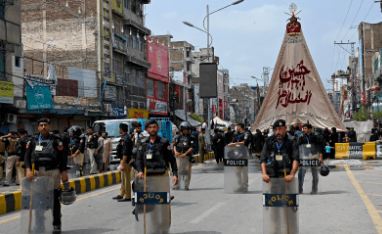
ISLAMABAD, JUL 5 /DNA/ – Comprehensive security arrangements have been implemented across the country for the processions and majalis on the 9th of Muharram. Around 2,763 processions and 7,598 majalis are being held today In the Federal Capital, Punjab, Khyber Pakhtunkhwa, Balochistan, Sindh, Azad Kashmir, and Gilgit-Baltistan.

Strict security measures have been enforced in 1,129 highly sensitive areas, with continuous monitoring through drones and CCTV cameras.

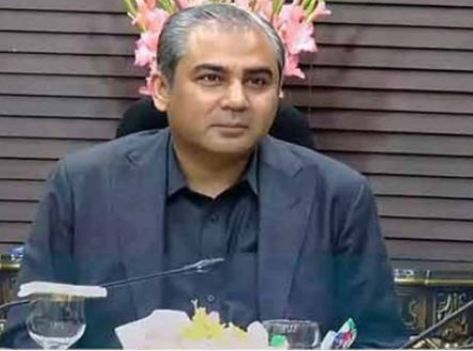
The Federal Government’s central monitoring cell is operational 24/7 and closely coordinating with provincial governments. Federal Interior Minister Mohsin Naqvi, Minister of State Tallal Chaudhry, and Interior Secretary Khurram Agha are personally overseeing the monitoring and coordination processes.

Today 61 majalis and 17 processions are being held in Islamabad, while 3,805 majalis and 1,677 processions in Punjab, 1,207 majalis and 644 processions in Sindh, 939 majalis and 261 processions in Khyber Pakhtunkhwa, 115 majalis and 11 processions in Balochistan, 1,290 majalis and 111 processions in Gilgit-Baltistan, and
181 majalis and 42 processions are being held in AJK.

Law enforcement agencies remain on high alert to maintain law and order. The security plans have been developed in consultation with provincial governments, and zero tolerance will be observed regarding hate speech or sectarian provocations. Central and provincial control rooms have been activated for real-time coordination and response.

Interior Minister Mohsin Naqvi emphasized that religious incitement on social media will not be tolerated under any circumstances. He stressed that maintaining law and order is the top priority, and that law enforcement agencies are fully vigilant to foil the malicious designs of Fitna-e-Hindustan. He said that, InshaAllah Ashura will remain peaceful through the efforts of the Government and tireless dedication of security forces. He emphasized that the enemy’s evil intentions have niether succceded before nor will succeed this time.

Paigham-e-Pakistan: A collective resolve for peace in Muharram

Paigham-e-Pakistan: A collective resolve for peace in Muharram

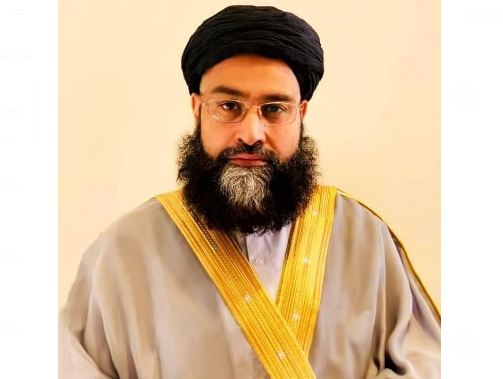
Hafiz Muhammad Tahir Mehmood Ashrafi (Chairman, Pakistan Ulema Council)

As in previous years, this year too, the Pakistan Ulema Council, along with scholars and spiritual leaders from all schools of thought, began efforts immediately after Hajj to maintain peace and order and promote inter-sectarian tolerance and religious harmony during Muharram-ul-Haram. They expressed their firm resolve that every possible step would be taken by the scholars and spiritual leaders to promote interfaith and inter-sectarian tolerance, and that no disrespect towards the sanctities of any sect or religion would be tolerated.

With this mindset, the Pakistan Ulema Council convened a meeting in Islamabad, bringing together senior scholars and spiritual leaders from all schools of thought. Over fifty prominent personalities from across the country participated, and they unanimously endorsed the “Paigham-e-Pakistan Code of Conduct.” In light of recent events, such as India’s attack on Pakistan and the Iran-Israel conflict, it was decided to take immediate steps for unity and cohesion. Following this meeting, a series of gatherings and conferences were initiated at both local and national levels, attended by leaders from various communities.

With the cooperation of the National Solidarity Council and central and provincial governments, the Pakistan Ulema Council organized visits of scholars across the country. The aim was to address local issues and dispel misunderstandings at the grassroots level. Chairman Hafiz Muhammad Tahir Mehmood Ashrafi personally met with and visited responsible figures, scholars, and spiritual leaders from all divisions of Punjab, Khyber Pakhtunkhwa, Gilgit-Baltistan, Sindh, Balochistan, and Azad Kashmir, both individually and collectively. All meetings and conferences were held with great enthusiasm, where the complete endorsement of the Paigham-e-Pakistan Code of Conduct was reaffirmed. In Sindh, Governor Kamran Tessori, in Punjab, Ms. Maryam Nawaz, and in other provinces, the administration provided full cooperation. Thus, comprehensive awareness and practical steps for the implementation of the 14-point Paigham-e-Pakistan Code of Conduct have begun at every level.

The Paigham-e-Pakistan Code of Conduct is not only for inter-sectarian harmony but also a strong document for interfaith harmony and tolerance. Its key points are as follows:

Sectarian hatred, armed sectarian conflict, and imposing one’s beliefs on others by force are against the commands of Islamic Shariah, are considered corruption on earth, and are national and communal crimes.

Scholars, spiritual leaders, and jurists from all sects in Pakistan completely reject extremist thinking and radicalism.

It is a duty to respect the sanctity of the Prophets, Companions of the Prophet (PBUH), the Rightly Guided Caliphs, the Wives of the Prophet, and the Pure Ahl al-Bayt. All schools of thought disassociate from anyone who insults or declares these sanctities as infidels, and the law should immediately take action against such individuals.

It is the duty of scholars, spiritual leaders, and jurists to educate people about the distinction between correct and incorrect beliefs, while the act of declaring someone an infidel (takfir) is the prerogative of the state, which will decide in accordance with Islamic Shariah.

All non-Muslim citizens of Pakistan have the full right to worship in their places of worship and celebrate their religious festivals according to their faith. No individual, group, or party can deprive them of the rights granted by the Constitution of Pakistan.

It is forbidden and sinful to kill non-Muslims who live peacefully in an Islamic state. If they violate the Constitution or laws of Pakistan, it is the responsibility of the state to punish them within the legal framework.

During the days of mourning in Muharram-ul-Haram and Safar-ul-Muzaffar, all citizens and Muslims of Pakistan have the legal freedom to organize prescribed gatherings, conferences, and events. The sanctity of privacy and homes must be fully respected during such lawful gatherings.

All residents and lovers of Ahl al-Bayt and the Companions should remain vigilant against conspiracies by enemies of the nation and Islam. They should fully assist Muslims of all schools of thought in observing these days according to their beliefs and within the law and constitution.

It is pre-established that each scholar, preacher, orator, and reciter of every sect should address their followers about their own beliefs, principles, and jurisprudence. In their manner of speech, they must ensure that they do not insult the religious and spiritual figures of the Islamic world or ridicule the beliefs and thoughts of others.

During Muharram-ul-Haram, the most dangerous weapon our enemy uses to disrupt peace and order is social media. The Pakistan Ulema Council, in continuous and organized collaboration with the Ministry of Information, PEMRA, ISPR, and PTA, has devised a comprehensive strategy to prevent the dissemination of any material that could cause discord and to take timely action against it.

It is a fact that this year, the effective measures taken to prevent the broadcast of sectarian violence and disrespectful material towards the sanctities of various sects are commendable and praiseworthy.

Alongside the Pakistan Ulema Council, the Council of Islamic Ideology, the Punjab Inter-Muslim Unity Committee, the Federal Ministry of Religious Affairs and Interfaith Harmony, and other religious leaders are playing a crucial role in conveying the Paigham-e-Pakistan Code of Conduct to the public. Under the guidance of Federal Minister for Religious Affairs Sardar Muhammad Yousaf, the ministry, led by the Secretary of Religious Affairs, is highly active, and the country’s security agencies are also playing a proactive role.

Given the current circumstances, there is no doubt that, after the defeat of Israel and India, hostile forces will try every possible means to incite riots during Muharram-ul-Haram. However, with the cooperation of security agencies, federal and provincial institutions, and scholars, these conspiracies have been and will continue to be thwarted. By the grace of Allah, the cooperation and coordination between the country’s security agencies, Pakistan’s armed forces, police, administration, and religious leaders not only foil these plots but also make it clear that if influential personalities and organizations at the governmental and national level work together sincerely, any issue can be resolved. What is required is sincerity, good intentions, and hard work.

Conflicts during Muharram-ul-Haram or in normal times arise when a preacher, reciter, or orator of one sect insults, declares infidel, or disparages the sanctities, elders, or beliefs of another sect. If it is firmly established, as it is in the Paigham-e-Pakistan Code of Conduct, that followers of any sect will not insult, disparage, or declare infidel the elders, sanctities, especially the Companions of the Prophet (PBUH), Ahl al-Bayt, the Rightly Guided Caliphs, Mothers of the Believers, and Imams of another sect, then all paths to conflict are closed. Therefore, any violation of the code of conduct must be met with immediate legal action, and, God willing, the law will be enforced.

There is no doubt that the beliefs of different sects vary from each other, and everyone has the right to live according to their own beliefs and sect. Even the Constitution of Pakistan and Islamic Shariah grant non-Muslims living in Pakistan the full right to live their lives with freedom and autonomy, to worship in their places of worship, and to observe their religious days and festivals as they wish according to their religion, provided they do not interfere with the beliefs of others.

When the Constitution of Pakistan and the Paigham-e-Pakistan Code of Conduct, signed by thousands of scholars and spiritual leaders, have clarified these matters, then after 76 years, it should be accepted that we must live with mutual respect and love, honoring each other’s sanctities, and disavow anyone who chooses the path of conflict.

All scholars, spiritual leaders, pilgrims, and preachers from all schools of thought are acting on this formula, and everyone must adhere to it: “Do not abandon your own sect, do not interfere with another’s sect.” By following this code, not only will Muharram-ul-Haram pass peacefully, but this spirit must be maintained permanently. Undoubtedly, we must strive for a society that can truly be called an Islamic welfare society. The only way to eliminate the extremism and violence that has entered our lives over the past four decades is through Islam’s true message of moderation. God willing, there is strong hope and effort that this year’s Muharram will be one of peace, moderation, and tolerance. On this occasion, we also appeal to the general public to remain vigilant and not allow their environment to become violent in any way. Cooperate with law enforcement agencies and present your tribute of love and devotion to Imam Hussain (RA) through unity, moderation, tolerance, and love.

Hafiz Muhammad Tahir Mehmood Ashrafi (Chairman, Pakistan Ulema Council)

[email protected]

Interior Minister hails CTD’s success against Indian terror group

Mohsin Naqvi

ISLAMABAD, JUL 5 /DNA/ – Federal Interior Minister Mohsin Naqvi has paid tribute to Punjab Police and the Counter Terrorism Department (CTD) for their successful operation against “Fitna-e-Hindustan” terrorists in Taunsa.

Mohsin Naqvi stated that Punjab Police and CTD once again sent five terrorists of “Fitna-e-Hindustan” to hell. He appreciated the professional capabilities and swift action of the police and CTD team.

The Interior Minister emphasized that the pursuit of “Fitna-e-Hindustan” terrorists will continue wherever they may be. He further stated that the brave officers of Punjab Police and CTD have previously achieved significant successes against Kharijite terrorists with great courage.

Mohsin Naqvi added that the Punjab Police and CTD have effectively thwarted the nefarious designs of these extremists. “We are proud of the brave and professional officers of Punjab Police and CTD,” he concluded.

Thailand e-Visa now available for Pakistani travelers!

Thailand e-Visa now available for Pakistani travelers!

ISLAMABAD, JUL 5 /DNA/ – Exciting news for Pakistani travelers planning to visit Thailand! The Kingdom of Thailand has officially launched its e-Visa service, enabling Pakistani citizens to apply for their visas online without the need to visit the embassy. This streamlined process simplifies travel plans and eliminates the hassle of traditional visa application procedures.

The Thailand e-Visa portal (www.thaievisa.go.th) offers various visa options, including Tourist, Transit, and Non-Immigrant visas. Applicants can conveniently submit their visa applications online, making the entire process faster and more efficient. The new e-Visa system is designed to save time, providing a hassle-free experience that allows travelers to apply for their visa from the comfort of their home or office.

Once the application is submitted and payment is processed, the visa will be processed within 14 working days. It’s important to note that the e-Visa must be printed before traveling, as electronic copies will not be accepted at immigration checkpoints.

The online portal is user-friendly and provides detailed instructions, so travelers can easily follow the steps. For those who need assistance, a comprehensive English User Manual and a helpful video guide are available. Additionally, for any visa-related queries, applicants can reach out directly to the Thai e-Visa support team via email at [email protected].

How to Apply:
Visit www.thaievisa.go.th

Fill out the online application form

Submit your documents and make the payment

Wait for processing (up to 14 working days)

Print your e-Visa for travel

No agents or intermediaries are needed for this process, making it more direct and cost-effective for Pakistani travelers. The Thailand e-Visa is a convenient and efficient solution for those eager to explore the beauty of Thailand.

For more details and to begin your application, visit the official website: www.thaievisa.go.th.

Pakistan observes 9th Muharram with devotion amid tight security

Pakistan observes 9th Muharram with devotion amid tight security

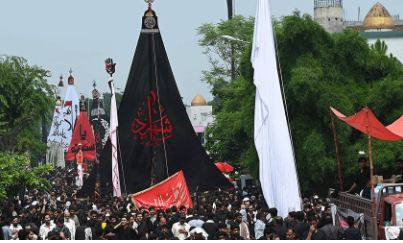
LAHORE, JUL 5: The 9th of Muharram was being observed across Pakistan with solemn religious devotion under strict security arrangements.

According to details surfaced on Saturday, mobile phone services will remain suspended along the procession paths. In Lahore, the central procession of 9th Muharram will be taken out today from Pando Street, Islampura.

Comprehensive security measures have been implemented along the designated route. The procession will proceed to Khaima-e-Sadaat. All markets located along the route will remain closed for the day.

Participants of the procession will return to Pando Street from Khaima-e-Sadaat. The procession is being monitored in real-time through Safe City cameras.

In Islamabad, the 9th Muharram procession will commence from the central Imam Bargah Asna Ashri, and will conclude at the same location after passing through the prescribed route. 3,000 officers and personnel from the District Police, Special Branch, and Traffic Police have been deployed to ensure security. The Islamabad Traffic Police has also devised a special traffic plan for the occasion.

Meanwhile, in South Punjab, the most sensitive 9th Muharram central mourning procession will begin from Imambargah Mumtazabad.

Stringent security measures have been adopted, and close surveillance is being maintained along the procession routes.

Sindh bans pillion riding in Karachi as part of Muharram security measures

Sindh bans pillion riding in Karachi as part of Muharram security measures

KARACHI: Sindh government has imposed a ban on pillion riding as part of the measures taken to provide security to the Muharram processions and activities in the metropolis.

Muharram is one of the four sacred months in Islam. Its 10th day, known as Ashura, marks the martyrdom of Hazrat Imam Hussain (RA), the grandson of Prophet Muhammad (PBUH), along with his family members in the Battle of Karbala.

Across the country, the faithful hold processions and majalis during Muharram. Religious scholars deliver sermons to large gatherings, held under tight security.

In Karachi, more than 5,000 police personnel have been deployed for the central procession coupled with 1,000 personnel maintaining traffic flow, the government has also suspended cellular service along the procession’s route — which has commenced from Nishtar Park.

Apart from sharpshooters deployed on high-rise buildings, coupled with procession routes being checked via sniffer dogs, the authorities are also carrying out monitoring via closed-circuit television cameras (CCTV).

Also MA Jinnah Road has been closed off for traffic and markets and shops at MA Jinnah Road, Saddar, Empress, Regal and Lighthouse markets have been sealed, and streets linking to the procession’s routes have been blocked via containers.

Only vehicles with procession stickers will be allowed to proceed and similar applies to vehicles coming from Sharea Quaideen as they cannot go beyond Khudadad Colony signal.

All kinds of traffic have been prohibited from proceeding beyond Gru Mandir and commuters are being diverted from Soldier Bazaar towards Coast Guard or Nishtar Road

Furthermore, traffic coming from Nazimabad is being diverted from Lasbela Chowk towards Nishtar Road and Garden.

Whereas, vehicles coming from the Super Highway are being diverted from Liaquatabad No 10 to Nazimabad Chowrangi No 2.

People travelling from Liaquatabad are being directed towards Teen Hatti, Martin Road and Jail Road.

As per Karachi Traffic Police’s diversion plan issued on Friday, commuters travelling from Hassan Square to PP Chowrangi may take Kashmir Road under the Jail Flyover, then head to Society Light Signal (Shahrah-e-Quaideen), or use the Jail Flyover to reach Teen Hatti and Nishtar Road via Lasbela Chowk.

€12M EU grant to modernize Lahore, Faisalabad water systems

EU grant

ISLAMABAD, JUL 5 /DNA/ – The European Union (EU) has delegated a €12 million grant to the French Development Agency (AFD) to provide technical assistance aimed at strengthening water and sanitation services in Faisalabad and Lahore. This grant will support the Faisalabad and Lahore Water and Sanitation Agencies (F&L WASAs) and the Housing, Urban Development & Public Health Engineering Department (HUD&PHED), complementing AFD’s infrastructure investments in the water and wastewater sectors.

The agreement was signed in Islamabad by Nicolas Galey, Ambassador of France to Pakistan, Mr. Vincent Thevenot, Country Director AFD Pakistan, and Dr. Kazim Niaz, Secretary, Ministry of Economic Affairs, in the presence of Dr. Sébastien Lorion, Acting Head of Cooperation of the Delegation of the European Union to Pakistan, and Mr. Marc-Antoine Leclercq, the newly appointed Country Director AFD Pakistan.

It reflects the EU’s and AFD’s shared commitment to improving basic services and institutional capacities for the benefit of the people of Pakistan.

The technical assistance, including equipment funding, will support the adoption of modern tools and technologies—such as digitization and metering—and contribute to reducing water losses, improving service delivery, and strengthening governance and policy-making capacities in the sector.

This initiative builds on AFD’s long-standing engagement in Pakistan. Since 2006, AFD has financed projects in clean energy, urban mobility through enhanced public transport, and urban water and wastewater services. A total of €1.34 billion has been committed by AFD between 2006 and 2024.

Key projects currently underway or under consideration include:

• A drinking water treatment plant in Faisalabad, treating surface water to deliver 30 million gallons per day (MGD) of potable water, benefitting around 500,000 residents in an area where groundwater is brackish.

• A proposed wastewater treatment plant in Lahore, expected to treat municipal wastewater, improve water quality in the River Ravi, and reduce negative health and environmental impacts downstream.

• Planned investments in Islamabad for the rehabilitation of an existing treatment plant and replacement of conduction mains, aiming to increase water supply by 12 MGD and improve overall service quality.

Together, these efforts illustrate the strong and sustained partnership between Pakistan, AFD, and the European Union to enhance sustainable urban infrastructure and improve the quality of life for local communities.

Pakistan, Poland agree to boost trade, defence cooperation

Pakistan

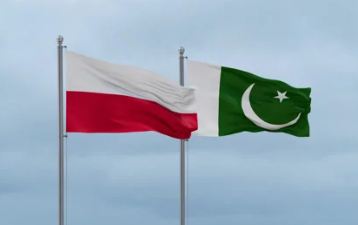
ISLAMABAD, JUL 5 /DNA/ – The 9th Round of Bilateral Political Consultations (BPC) between Pakistan and the Republic of Poland was held in Warsaw on 4 July 2025. The Pakistani delegation was led by Ambassador Muhammad Ayub, Additional Foreign Secretary (Europe), while the Polish delegation was headed by Secretary of State at the Polish Ministry of Foreign Affairs, Władysław Teofil Bartoszewski. The Ambassador of Pakistan to Poland, Muhammad Sami-ur-Rehman, and the Polish Ambassador to Pakistan, Maciej Pisarski, were also present during the consultations.

The two sides reviewed the entire spectrum of bilateral relations. The Additional Foreign Secretary reaffirmed Pakistan’s commitment to further broadening and deepening its ties with Poland in various fields, including trade, investment, energy, security and defence cooperation, science and technology, agriculture, migration and mobility and higher education. Both sides agreed to enhance collaboration, including through the exchange of high-level visits, parliamentary exchanges and dialogue.

Regional and global issues of mutual interest, including developments in South Asia, the Middle East, and Europe were discussed in depth. The two delegations found convergence on key issues and agreed to continue cooperation at multilateral forums, including the United Nations.

It was mutually agreed that the next round of consultations will be held in Islamabad in 2026.

German ambassador Grannas leaving after completing tenure

German ambassador Grannas leaving after completing tenure

ISLAMABAD, JUL 4 /DNA/ – Germany’ Ambassador to Pakistan, Alfred Grannas, is set to depart after completing his tenure, marking the end of a significant diplomatic chapter. His exit coincides with the upcoming departures of envoys from the European Union (EU), Denmark, and Austria in August, signaling a major shift in Pakistan’s diplomatic landscape.

Notably, the EU’s Ambassador Androulla Kaminara and Austria’s Ambassador Andrea Wicke, both female diplomats, will be replaced by male successors, bringing a change in gender representation among key missions. Meanwhile, Hungary and South Korea have already bid farewell to their ambassadors, further adding to the diplomatic turnover.

Grannas, who served during a period of strengthened Pakistan-Germany relations, emphasized trade and development cooperation. His successor is expected to continue fostering bilateral ties. Similarly, the new EU and Austrian envoys will face challenges in maintaining engagement on trade, security, and human rights.

Analysts suggest this wave of departures could signal a broader realignment in Pakistan’s foreign relations. The incoming ambassadors will need to navigate complex geopolitical dynamics, including Pakistan’s economic challenges and evolving global partnerships.

As Islamabad prepares to welcome new diplomatic faces, observers await how these changes will influence Pakistan’s engagement with Europe and East Asia in the coming months.

Stay Connected

64FansLike
60FollowersFollow

Latest Reviews

Exchange Rates

USD - United States Dollar
EUR
1.17
GBP
1.35
AUD
0.72
CAD
0.73