Home Blog Page 583

Islam in the Hands of White Women and Men

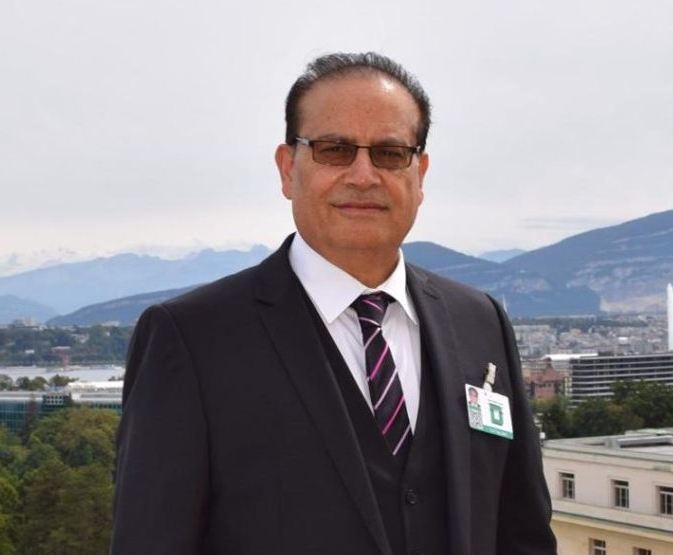
Qamar Bashir

By Qamar Bashir

Since my early youth, I have firmly believed that Islam is not a religion for the ignorant or the indifferent. It is not for those who refuse to seek knowledge, who shy away from questioning, learning, or understanding the world’s great intellectual traditions—be it philosophy, science, or theology. Islam, at its core, invites human beings to ponder, to analyze, and to implement the divine commands of the Qur’an in a way that enriches their lives—spiritually, morally, and intellectually.

Today, an astonishing phenomenon is sweeping through the heart of the West, particularly in the United States: white and Black men and women—many of them formerly living flamboyant, secular lives—are embracing Islam and doing so publicly, confidently, and eloquently. These new Muslims are not hiding in corners or whispering their faith in shame. Instead, they are lighting up TikTok, Instagram, and YouTube with videos that radiate clarity, pride, and profound spiritual wisdom.

One such TikToker—a graceful white woman, once immersed in the glamour of beach life—now walks confidently across sandy shores in a full-body Islamic swimsuit. She is elegant, serene, and joyous—not ashamed of her faith, but proudly showcasing its beauty. Her modesty, wrapped in style, turns heads not in ridicule, but in reverence. Viewers comment not with mockery, but admiration—one said she looked like “an angel on the beach.”

Another white Muslim woman, glowing with dignity, walks through a shopping mall in a flowing abaya and beautifully draped hijab. Her golden hair peeks through the scarf edges, her confidence glowing from her face like divine light. A fellow shopper—an American white woman—approaches her and says, “We thought an angel descended from heaven into this mall.” Such moments are no longer rare—they are part of a growing trend that is reshaping how Islam is perceived in the West.

A newly converted Black Muslim woman recently spoke on TikTok about cosmetic surgery. She explained, with poise and deep medical understanding, that altering one’s natural features purely for beauty goes against the divine perfection with which Allah created us. However, she clearly distinguished that reconstructive surgery—such as restoring facial features after injury—is not only allowed but compassionate and essential. Her blend of Islamic ethics, medical reasoning, and elegance offered one of the most balanced and intelligent perspectives on the topic.

Another famous TikToker, once a celebrated pop singer, has now become known for her breathtaking Qur’an recitation. Her voice—once used for entertainment—now delivers verses of divine truth. With sincerity and mastery of tajweed, she recites Qur’anic passages so beautifully that it fills the hearts of listeners with tears, awe, and the overwhelming presence of Allah’s word. Millions have watched her recitations, and many say they felt the purity of Islam for the first time just by listening to her voice—now repurposed for the highest calling.

Another white TikToker brought a deeply thoughtful and socially relevant explanation of why Islam permits polygamy. She contextualized it during times of war—particularly in early Islamic history—when many men were martyred, and society was left with a disproportionate number of women and orphans. She explained that, rather than leave widows and children vulnerable, Islam allowed up to four wives—but only if the man could do justice to all. It was not about lust, but mercy. It was about social balance and the care of the weakest members of society. She spoke with intelligence, not shame—clarity, not defensiveness—and turned a controversial topic into a lesson of compassion and justice.

Another inspiring figure is a white female TikToker who has revolutionized modest fashion trends. Fully dressed in elegant Islamic attire, she greets her followers with style, warmth, and flair. But more than that, she introduces dazzling new designs with innovation and creativity—trendy, smart, stylish, yet always dignified and modest. Her fashion choices not only comply with Islamic teachings, but also redefine beauty, proving that modesty is not the opposite of style, but its most refined expression. Her content, radiating joy, affection, and pride, has captivated millions. In no time, her audience has grown into a global sisterhood celebrating modesty as empowerment.

These TikTokers—white, Black, male, female—are creating a revolution of the heart. In a society steeped in consumerism, arrogance, and spiritual vacuity, they are offering something pure, beautiful, and rooted in centuries of divine wisdom. They are not apologetic. They do not hide their identity. They are proud Muslims—knowledgeable, articulate, confident, and joyous.

But this spiritual awakening does not come without resistance. When Zohran Mamdani—a proud Muslim and South Asian—was elected as New York’s first Muslim mayor, the backlash was swift and vicious. Commentators and politicians labeled him a “lunatic communist,” others accused him of celebrating 9/11, while some even called for his denaturalization and expulsion from the United States.

Mamdani responded with grace and courage. He acknowledged that this was the predictable outcome of years of demonizing Muslims in America. “We’ve been branded as terrorists,” he said. “So many Muslims have had to live in shadows—hiding their faith, their dress, their identity—just to survive.” His victory, he said, was a turning point. “We are not terrorists. We are human beings.” He promised to bring those who live in fear into the light, to empower them to speak, contribute, and shape society boldly and unapologetically.

And now, something deeper is happening. For decades, Islam’s public image was hijacked by self-appointed clerics and divisive preachers—many of them more interested in power and profit than truth. They preached hate between sects, glorified one school of thought over another, and filled pulpits with fire but no light. They enriched themselves while impoverishing minds. Their message was fear, division, and self-righteousness.

But slowly and steadily, that custodianship is changing.

Today, Islam’s most powerful voices are no longer coming from fanatic mullahs in ivory towers or palatial TV studios. They’re coming from ordinary, beautiful, educated people—white girls, Black women, Western men—who wear Islam like a crown, not a chain. They speak with knowledge, with dignity, with depth, and with joy. They are spiritual, confident, fashionable, and fearless. They prove, through action, that Islam is not a prison—it is a path to light.

They are not apologetic. They are not hiding. They are not afraid.

And this, I believe, is the future of Islam. Not in the hands of those who weaponize it to divide—but in the hands of those who live it to uplift. When Islam is practiced by people of knowledge, reason, confidence, and compassion, it becomes irresistible. And when it blossoms in the West, the rest of the world will follow. Because truth, when carried by those who live it, will always prevail.

By Qamar Bashir

 Press Secretary to the President (Rtd)

 Former Press Minister, Embassy of Pakistan to France

 Former MD, SRBC | Macomb, Michigan, USA

PSG set up Club World Cup semi clash with Mbappe’s Real Madrid

PSG

          Atlanta, July 6 (AFP/APP):Nine-man Paris Saint-Germain set up a Club World Cup semi-final clash against their former superstar striker Kylian Mbappe and Real Madrid with a 2-0 victory over Bayern Munich on Saturday in Atlanta.

                  Los Blancos squeezed out Borussia Dortmund 3-2 in New Jersey in the day’s other quarter-final clash, with Mbappe on the scoresheet for the first time at the tournament.

                  Luis Enrique’s PSG needed to dig deep in front of 67,000 fans at the Mercedes-Benz Stadium after late red cards for Willian Pacho and Lucas Hernandez.

                  The French side won the UEFA Champions League for the first time in their history in May, despite their key player Mbappe departing for Real last year.

                  Young forward Desire Doue, who shone on PSG’s road to European glory, and Ballon d’Or candidate Ousmane Dembele got the goals in the second half of an enthralling clash against Vincent Kompany’s Bayern, who had two strikes ruled out for offside.

                  The German giants also lost playmaker Jamal Musiala to a horror ankle injury just before half-time, which Kompany said made his “blood boil” because of how unfortunate it is for the 22-year-old.

                  “After the first red card it became complicated, then with two players less it was a bit of a lottery,” said a relieved Luis Enrique.

                  PSG goalkeeper Gianluigi Donnarumma and his Bayern counterpart Manuel Neuer both made several excellent saves in a pulsating battle at the air-conditioned, covered venue which allowed both sides’ high-pressing, attacking approaches to shine.

                  Players and spectators at both matches observed a minute of silence in honour of Liverpool forward Diogo Jota and his brother Andre Silva, who tragically died in a car crash on Thursday.

                  PSG’s clash with Bayern was FIFA’s expanded tournament’s biggest heavyweight clash thus far and the game delivered, even if fans had to wait until the 78th minute for the opener.

                  After Harry Kane gave the ball away, PSG surged forward and 20-year-old Doue fashioned some space on the edge of the box before flashing a low strike home at the near post.

                  Bayern were given hope as they hunted for an equaliser when PSG defender Pacho was sent off for a high tackle on Leon Goretzka after 83 minutes.

                  Kane had a goal disallowed for offside, like Bayern’s Dayot Upamecano in the first half, and after Hernandez was dismissed for an elbow Dembele tucked home the second in stoppage time, paying tribute to Jota by copying his video-gaming celebration.

                  “In the first half we showed them who we are and they had problems with us,” said Bayern substitute Thomas Mueller, who played his last game for the club.

                  – Mbappe strikes –

                  Real Madrid cruised for the most part against Dortmund before a flurry of goals at the end left them in danger of losing their lead.

                  Xabi Alonso, unbeaten at the helm, shifted back to a four-man defence against Niko Kovac’s side, shorn of suspended Jobe Bellingham, who would have loved to face his older brother, Madrid’s Jude.

                  The coach decided to leave Mbappe, who missed the three group games after a stomach bug, on the bench and persist with Gonzalo Garcia up front.

                  The 21-year-old striker paid back Alonso for his confidence by grabbing his fourth goal of the tournament after 10 minutes with a close-range finish from Arda Guler’s cross.

                  “He’s doing great work for the team… he’s in the right position in the box, he’s a proper number nine,” said Alonso.

                  In the 20th minute Fran Garcia doubled Los Blancos’ lead, rushing into the box to polish off Trent Alexander-Arnold’s dangerous ball across the face of goal.

                  Madrid were cruising to victory until Max Beier drilled home in stoppage time.

                  Real responded, with substitute Mbappe netting his 44th goal of the season with an acrobatic finish from another Guler cross.

                  He paid tribute to the late Jota by making the number 20 with his hands, the Portuguese striker’s shirt number at Liverpool.

                  Madrid were not home and dry. Dean Huijsen was sent off for tugging back Serhou Guirassy as he ran through and the Guinea international netted from the spot, but Dortmund had no time to equalise.

                  “Everything was under control with the result, not conceding much, but the last 10 minutes were kind of crazy,” said Alonso.

                  “We lost our shape and our intensity, and luckily nothing went wrong.”

More ambassadors to set to leave after term completion

Pakistan: A Pivotal Bridge Aligning Economic Interests Between China and the Middle East

The Ambassador of the Netherlands is also leaving Pakistan after completing her tenure. She is going to be replaced by a male ambassador

DNA

ISLAMABAD – Germany’s Ambassador to Pakistan, Alfred Grannas, is set to depart after completing his tenure, marking the end of a significant diplomatic chapter. He is likely to be replaced by a lady ambassador.  His exit coincides with the upcoming departures of envoys from the European Union (EU), Denmark, and Austria in August, signaling a major shift in Pakistan’s diplomatic landscape.  The Ambassador of the Netherlands is also leaving Pakistan after completing her tenure. She is going to be replaced by a male ambassador.

Notably, the EU’s Ambassador and Austria’s Ambassador Andrea Wicke, both female diplomats, will be replaced by male successors, bringing a change in gender representation among key missions. Meanwhile, Hungary and South Korea have already bid farewell to their ambassadors, further adding to the diplomatic turnover.

Grannas, who served during a period of strengthened Pakistan-Germany relations, emphasized trade and development cooperation. His successor is expected to continue fostering bilateral ties. Similarly, the new EU and Austrian envoys will face challenges in maintaining engagement on trade, security, and human rights.

Analysts suggest this wave of departures could signal a broader realignment in Pakistan’s foreign relations. The incoming ambassadors will need to navigate complex geopolitical dynamics, including Pakistan’s economic challenges and evolving global partnerships.

As Islamabad prepares to welcome new diplomatic faces, observers await how these changes will influence Pakistan’s engagement with Europe and East Asia in the coming months.

In further break from Trump Elon Musk announces forming of ‘America Party’

Trump

“By a factor of two to one, you want a new political party and you shall have it!” says Elon Musk on X

DNA

WASHINGTON: The tattered bromance between Republican President Donald Trump and his main campaign financier Elon Musk took another fractious turn on Saturday when the space and automotive billionaire announced the formation of a new political party, saying Trump’s “big, beautiful” tax bill would bankrupt America.

A day after asking his followers on his X platform whether a new US political party should be created, Musk declared in a post on Saturday: “Today, the America Party is formed to give you back your freedom.”

“By a factor of two to one, you want a new political party and you shall have it!” he wrote.

The announcement from Musk comes after Trump signed his self-styled “big, beautiful” tax-cut and spending bill into law on Friday, which Musk fiercely opposed.

Musk, who became the world’s richest man thanks to his Tesla car company and his SpaceX satellite firm, spent hundreds of millions on Trump’s re-election and led the Department of Government Efficiency from the start of the president’s second term, aimed at slashing government spending.

The two have since fallen out spectacularly over disagreements about the bill.

Musk said previously that he would start a new political party and spend money to unseat lawmakers who supported the bill.

Trump earlier this week threatened to cut off the billions of dollars in subsidies that Musk’s companies receive from the federal government.

Republicans have expressed concern that Musk’s on-again, off-again feud with Trump could hurt their chances of protecting their majority in the 2026 midterm congressional elections.

Asked on X what was the one thing that made him go from loving Trump to attacking him, Musk said: “Increasing the deficit from an already insane $2tr under Biden to $2.5tr. This will bankrupt the country.”

He referenced the growth of Greece from subjugation to preeminence in the ancient world in another tweet, saying: “The way we’re going to crack the uniparty system is by using a variant of how Epaminondas shattered the myth of Spartan invincibility at Leuctra: Extremely concentrated force at a precise location on the battlefield.”

There was no immediate comment from Trump or the White House on Musk’s announcement.

The feud with Trump, often described as one between the world’s richest man and the world’s most powerful, has led to several precipitous falls in Tesla’s share price.

The stock soared after Trump’s November re-election and hit a high of more than $488 in December, before losing more than half of its value in April and closing last week out at $315.35.

Despite Musk’s deep pockets, breaking the Republican–Democratic duopoly will be a tall order, given that it has dominated American political life for more than 160 years, while Trump’s approval ratings in polls in his second term have generally held firm above 40 percent, despite often divisive policies.

Government Employees and Tax Collection

Government Employees and Tax Collection

by Muhammad Mohsin Iqbal

Tax collection has always been an indispensable pillar in the architecture of a functioning state. Since the earliest formations of organized governance, levying taxes has been a standard practice to ensure the sustenance of administrative machinery, provision of public services, and the defense of the realm. No society, however prosperous or modest, can remain viable without a steady inflow of revenue, and taxes provide precisely that foundation. In modern states, particularly those with large populations and growing development needs, tax collection becomes not merely a fiscal necessity but a moral and civic obligation. Citizens who enjoy the privileges and protections offered by the state are expected, in return, to contribute their due share. This principle, though universally acknowledged in theory, often faces glaring contradictions in practice.

Pakistan, unfortunately, presents a classic example of this discrepancy. Despite repeated campaigns and policy measures to broaden the tax base, there remains a large segment of society that views tax payment not as a duty, but as a burden to be shirked. Various interest groups, often shielded by special patronage or informal networks, have for decades found ways to escape their share of contribution. Yet, amidst this culture of evasion and selective accountability, there exists one group that bears the burden consistently and inevitably—the government servants.

Unlike many other classes, the salaried government employees in Pakistan have no room to maneuver or evade. Their income, being drawn directly from the state exchequer, is subject to automatic deductions at the source. Regardless of their consent or financial flexibility, they are taxed before their salaries even reach their hands. And this past fiscal year, these deductions reached a record high. According to recent reports, the salaried class contributed an astounding Rs. 545 billion in income tax during the fiscal year ending June 30, 2025. This contribution not only surpassed but dwarfed the combined tax paid by two other significant segments of the economy—exporters and retailers.

Exporters, despite enjoying the benefits of earning in foreign currency and having access to substantial government incentives, paid only Rs180 billion. Retailers, a politically entrenched group historically resistant to documentation and regulation, contributed a meager Rs62 billion under sections 236G and 236H of the Income Tax Ordinance. When added together, these two sectors paid Rs242 billion—less than half of what the salaried class alone contributed. This disparity speaks volumes about the structural inequalities embedded within the tax regime. Why are income tax rates not levied on other sectors of life at the same rate and with the same spirit as government employees? This question echoes across the corridors of public discourse, unanswered and inconvenient.

The government employees’ contribution of Rs545 billion marked a sharp increase from Rs367 billion in the previous fiscal year, indicating an additional burden of Rs178 billion. Such a dramatic rise, though indicative of increased revenue collection, also highlights the lack of equitable tax enforcement across sectors. It is deeply ironic that those who are most exposed, most transparent in their earnings, and least able to avoid taxation, are the ones carrying the largest share of the burden.

The much-publicized Tajir Dost Scheme (TDS), introduced with fanfare as a mechanism to bring retailers into the formal tax net, has largely failed to deliver on its promises. Retailers, despite their profitability and volume of transactions, have managed to evade meaningful taxation yet again. Sections 236G and 236H, which impose taxes on distributors, dealers, wholesalers, and retailers based on their gross sales, were meant to serve as deterrents against non-compliance. However, even these measures have resulted in limited success. While they have generated some revenue and forced a few into the net, the overall response remains lukewarm.

In light of this, the Federal Board of Revenue (FBR) has attempted to offer some relief to the already overburdened salaried class. According to FBR’s officials, the first two tax slabs have been revised downward for the fiscal year 2025-26. Individuals earning between Rs600,000 and Rs1.2 million annually will now be taxed at 1 percent instead of 5 percent, and those earning between Rs1.2 million and Rs2.2 million will see their rate reduced from 15 percent to 11 percent. This adjustment is expected to provide a collective relief of Rs50 billion to the salaried class—though one could argue it is a modest reprieve considering the scale of their contribution.

Among the salaried class, government employees serving in teaching and research roles had long benefitted from a modest tax rebate—a recognition of their intellectual service to the nation. This rebate was first introduced under General Pervez Musharraf’s government in 2006 at a generous 75%, later reduced to 40% in 2013, and then to 25% by 2022. However, under the Finance Act 2022, the rebate was entirely withdrawn, leaving academicians and researchers without the relief they had relied upon for over a decade. In March 2025, following sustained advocacy by teacher associations, the federal cabinet reinstated the 25% rebate. Yet this reinstatement was met with resistance from the IMF, which objected to the rebate’s continuation on the grounds of tax harmonization.

Despite IMF pressure, the government, through the Finance Bill 2025–26, restored the 25% rebate retrospectively for Tax Years 2023, 2024, and 2025. This gesture has been welcomed as a step toward acknowledging the unique service of educators and researchers, though uncertainty looms over the rebate’s future. Such episodes illustrate the broader dilemma—whether national fiscal policy should prioritize external directives or respond to domestic needs and the principle of fairness.

In any fair and responsible state, the tax regime must be broad-based, equitable, and transparent. Burdening only those who are easily accessible while allowing powerful segments to remain untouched breeds resentment and erodes public trust. The salaried class, especially government servants, have performed their duty—often without applause or recognition. It is now time for other sectors to rise to the same standard. Equity in taxation is not merely a question of numbers; it is a test of the state’s moral authority and administrative integrity.

India’s javelin hero Chopra leverages star power as crowds flock to self-titled event

India’s javelin hero Chopra leverages star power as crowds flock to self-titled event

TOKYO, JUL 6: Olympic javelin star Neeraj Chopra headlined what was billed as India’s inaugural world-class field competition on Saturday, living up to his goal of elevating domestic talent while also walking away with another gold medal.

Chopra, who won gold at the Tokyo Olympics in 2021 and silver at the 2024 Paris Games, triumphed with a throw of 86.18 metres at the 12-athlete javelin Neeraj Chopra Classic event.

He finished ahead of former world champion Julius Yego (silver) and Sri Lanka’s Rumesh Pathirage (bronze).

“The biggest target of the competition was to uplift the Indian athletes alongside the international ones. We got the best javelin throwers to this competition,” Chopra told reporters after winning the competition.

The event drew more than 14,500 spectators — a figure that delighted Chopra, who has long championed greater public support for track and field events.

“We really wanted people to come and watch track and field,” said Chopra, who has single-handedly raised interest for athletics in India and has more than nine million Instagram followers.

“I always request people to come to the stadiums to cheer athletes as they work really hard.

“Track and field is one of the hardest sporting events. I request people to come and watch nationals as well… because our sport can only grow when people will come and watch us.”

The event featured three rounds with six attempts per participant, narrowing the field to eight after the initial round of three throws.

Among the five Indian competitors, three advanced to the second round, including Chopra, outperforming international athletes such as former Olympic champion Thomas Rohler and the Czech Republic’s Martin Konecny.

“We have been doing really well in the sport. They (Indian athletes) were quite happy to get a platform to play alongside the world champions,” the 27-year-old said.

“We also plan to add more events to this competition going forward, which will help the Indian athletes more.”

Among the Indian athletes, apart from Chopra, Asian Athletics Championships silver medallist Sachin Yadav performed well, recording his best throw of 82.33m in the third attempt.

“Sachin could have performed better, but he twisted his ankle in his opening throw. Overall, it was good. They will hopefully do well in the future. They are juniors and have time on their hand so will surely do better,” Chopra said.

India’s claims of China’s ‘live inputs’ support aimed at pacifying domestic audience: Asif

Asif

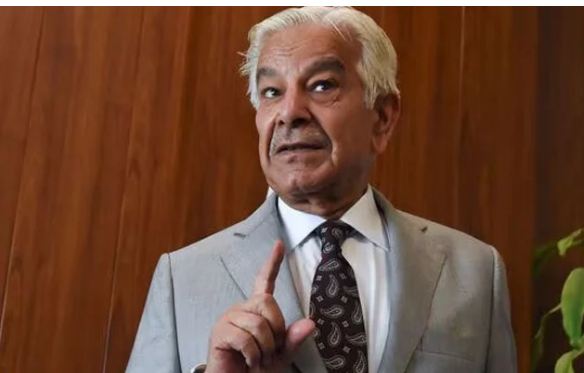
ISLAMABAD, JUL 5: Defence Minister Khawaja Asif rejected the top Indian Army officer’s claims about China’s ‘live [satellite] inputs’ to Pakistan during its recent conflict with India in May, saying such statements are aimed at pacifying the domestic audience.

India’s Deputy Chief of Army Staff, Rahul R Singh, claimed a day ago that Beijing provided real-time satellite intelligence to Islamabad to expose key Indian positions, while Turkiye provided a genre of military support via supplying drones.

India fought two adversaries during the conflict, with Pakistan being the “front face” while China provided “all possible support”, he alleged at a defence industry event in New Delhi.

“When the DGMO (director general of military operations) level talks were going on, Pakistan … said that we know that your such and such important vector is primed and it is ready for action … he was getting live inputs from China,” he said.

Singh did not elaborate on how India knew about the live inputs from China.

Singh said that Turkiye also provided key support to Pakistan during the fighting, equipping it with Bayraktar and “numerous other” drones, and “trained individuals”.

In a statement today, the defence czar said that Pakistan defeated India in the recent conflict and shattered New Delhi’s self-proclaimed pride.

He said that such statements from India were aimed at pacifying its domestic audience.

“The whole world supported us,” Asif said, adding that Israel was the only country standing with India, reflecting Delhi’s defeat on the diplomatic front.

Pakistani military has undoubtedly proved its mettle in the war with India, reiterated Asif.

The defence minister said that the war fought independently by Pakistan. Acknowledging diplomatic support from China and Turkiye, Asif said that buying defence equipment from a country doesn’t imply its involvement in the war.

“We also purchase weapons from the US — does that mean that it was involved too?” he questioned.

Rejecting the accusations, he pointed out that India uses France-made fighter jets while Pakistan has submarines of the same origin.

China extended diplomatic support to Pakistan during the war, he added.

Slamming the Indian accusations, the defence minister vowed that India would experience the same outcome if it resorted to aggression again.

The nuclear-armed rivals used missiles, drones and artillery fire during the four-day fighting — their worst in decades — triggered by an April attack on tourists in the Indian Illegally Occupied Jammu and Kashmir (IIOJK) that New Delhi blamed on Islamabad, before agreeing to a ceasefire brokered by the US.

Pakistan has denied involvement in the April attack and offered to participate in an independent and credible probe.

India’s relationship with China was strained after a 2020 border clash that sparked a four-year military standoff, but tensions began to ease after the countries reached a pact to step back in October.

India had earlier said that although Pakistan is closely allied with China, there was no sign of any actual help from Beijing during the conflict.

Regarding the possibility of China providing satellite imagery or other real-time intelligence, India’s chief of defence staff had said such imagery was commercially available and could have been procured from China or elsewhere.

— With additional input from Reuters

India and Bangladesh postpone cricket tour to 2026

India and Bangladesh postpone cricket tour to 2026

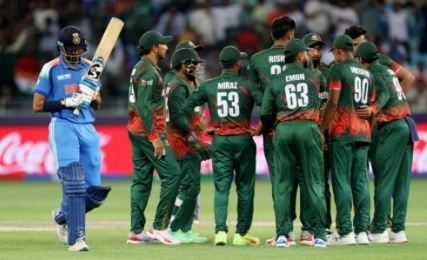
DHAKA, JUL 5: India’s six‑match white‑ball cricket tour of Bangladesh next month has been postponed to 2026, both cricket boards said on Saturday.

The series, including three one-day and three T20 matches, had been due to start on August 17 in Dhaka.

Political relations between India and Bangladesh have turned frosty since a mass uprising last year in Dhaka toppled the prime minister, Sheikh Hasina.

The Bangladesh Cricket Board (BCB) and the Board of Control for Cricket in India (BCCI) have “mutually agreed to defer” the series, the statement read.

It said the decision was made “taking into account the international cricketing commitments and scheduling convenience of both teams”, without giving further details.

It added that Bangladesh’s BCB “looks forward to welcoming India in September 2026”, with exact fixtures to be released later.

There is deep anger in Dhaka at the fate of Hasina, who escaped a student-led uprising by helicopter in August 2024 and flew to New Delhi.

Up to 1,400 people were killed between July and August last year, according to the United Nations, when Hasina’s government ordered a crackdown on protesters in a failed bid to cling to power.

Elections are expected in early 2026.

Naqvi terms ‘change at presidency’ reports social media speculations

Naqvi terms 'change at presidency' reports social media speculations

ROHRI, JUL 5: Interior Minister Mohsin Naqvi on Saturday rejected reports claiming the removal of Asif Ali Zardari as president, and enactment of the 27th constitutional amendment, saying that people should not pay heed to “social media speculations”.

He was addressing the media during his visit to Sindh’s Rohri city on the eve of Ashura.

A journalist sought his comments on reports suggesting President Zardari was being removed from office and that another constitutional amendment was in the offing.

Denying the speculations, Naqvi advised against paying heed to the social media reports.

He also asked the media to refrain from political speculation for at least two days in respect for Ashura days.

“Some people are bothered as for the first time, politicians, government, and military establishment are on the same page. Those elements are spreading misleading narratives,” he said.

His statement came after the ruling Pakistan Muslim League-Nawaz (PML-N) obtained a simple majority in the National Assembly after the reinstatement of reserved seats by the Election Commission of Pakistan following the top court’s Constitutional Bench verdict.

It also handed the ruling alliance a two-thirds majority in the lower house, as its strength rose from 218 to 235 members.

Meanwhile, Deputy Prime Minister and Foreign Minister Senator Ishaq Dar also said today that the Pakistan Peoples Party (PPP) would remain a key ally of the PML-N despite the latter securing a simple majority in the National Assembly as a result of the reserved seats ruling.

“PPP is and will remain our coalition partner,” said the deputy prime minister, recalling that without the PPP’s support, it would not have been possible to form a government following the 2024 general elections.

Talking to journalists at Data Darbar shrine in Lahore, Dar said that the Bilawal Bhutto Zardari-led party stood by the government during difficult times and the Nawaz Sharif-led party would not abandon it in the times of stability.

To a question, he replied that the coalition partner has not demanded any ministerial portfolios from the PML-N.

PPP will remain key ally despite PML-N securing simple majority, says Dar

PPP

ISLAMABAD, JUL 5: Deputy Prime Minister and Foreign Minister Senator Ishaq Dar said on Saturday that the Pakistan Peoples Party (PPP) would remain a key ally of the Pakistan Muslim League-Nawaz (PML-N) despite the latter securing a simple majority in the National Assembly as a result of the reserved seats ruling.

“PPP is and will remain our coalition partner,” said the deputy prime minister, recalling that without the PPP’s support, it would not have been possible to form a government following the 2024 general elections.

Talking to journalists at Data Darbar shrine in Lahore, Dar said that the Bilawal Bhutto Zardari-led party stood by the government during difficult times and the Nawaz Sharif-led party would not abandon it in the times of stability.

To a question, he replied that the coalition partner has not demanded any ministerial portfolios from the PML-N.

His statement came after the Election Commission of Pakistan’s notification of reserved seats handed the ruling alliance a two-thirds majority in the lower house, as its strength rose from 218 to 235 members.

The ECP notification came in line with the top court’s Constitutional Bench ruled that the Pakistan Tehreek-e-Insaf (PTI) was not entitled to seats reserved for women and minorities in the national and provincial assemblies, providing a lion’s share of the reserved seats to the ruling coalition.

Earlier this week, PML-N senior leader and Defence Minister Khawaja Asif said it is entirely up to the PPP whether to join the current government or not.

Speaking on Geo News programme “Capital Talk”, he described the previous PDM government’s past working relationship with PPP as “a good experience”.

In a separate statement, Asif told Geo News that cooperation between the two major political parties could be fruitful for advancing the country’s national agenda.

“I have been in politics for a considerable amount of time. The chances have increased substantially that if there’s an arrangement between both parties in which we can work for our national agenda, then it would be something good, and I would appreciate that,” he added.

While noting that he could not provide a roadmap or confirm the details of any current negotiations, the senior PML-N leader said his comments were based on political experience rather than insider knowledge.

Stay Connected

64FansLike
60FollowersFollow

Latest Reviews

Exchange Rates

USD - United States Dollar
EUR
1.17
GBP
1.35
AUD
0.72
CAD
0.73