Home Blog Page 579

The long slow death of Norway’s wild salmon

The long slow death of Norway's wild salmon

Hegra, Norway, July 9 (AFP/APP):Waist-deep in a rain-swollen river, Christer Kristoffersen cast his line, landed it gently on the water, and caught … nothing. Norway’s iconic wild salmon is in dramatic decline, a victim of fish farming and climate change.

“As a kid, in the early 1980s, there was so much fish in the river, you have no idea. It was packed with sea trout and salmon. We could catch 10-15 fish in one evening,” said the fly fishing enthusiast as he stood in the Stjordal river.

Despite decades of experience, the 52-year-old left the river empty-handed 10 days straight.

Wild salmon is now so rare that Norway in 2021 placed it on its red list of near-endangered species.

An ever-growing number of wild salmon, which hatch in freshwater rivers before migrating to oceans as adults, are not returning to their birthplace to spawn upstream.

They disappear at sea for as yet unknown reasons, though scientists suspect a link to climate change.

Only 323,000 wild salmon swam upstream in Norway’s rivers in 2024, against one million tallied annually in the 1980s, according to the Norwegian Scientific Advisory Committee for Atlantic Salmon, an independent body set up by the Norwegian Environment Agency.

That has sparked concern among sport anglers and those who make a living from the hobby, which has been part of Norwegians’ DNA ever since English aristocrats brought fly fishing to the country in the 19th century.

“Salmon fishing is very important for Norway, both for the local communities along the river valleys and for the economy and value creation,” said Aksel Hembre, vice president of the Norske Lakselver association grouping those who exploit salmon rivers.

“We attract a great deal of tourism in connection with salmon fishing.”

– Fishing quotas –

Following the drop in the number of returning salmon, authorities last year suspended fishing in 33 waterways and introduced new restrictions this year, including the closure of some rivers, shorter seasons and quotas.

That has been a heavy blow to tourism and the 60,000 to 80,000 sport anglers who indulge in their passion in rivers where the salmon population is considered sufficiently abundant.

While locals can do little about climate change — which leads to warmer waters and changing ecosystems — another culprit is fish farming.

Started in the 1970s, farmed salmon has grown into a $12-billion a year industry — Norway’s second-biggest export behind oil and gas — and created much-needed jobs.

Norway’s fjords are now dotted with hundreds of fish farms, each of their six to 12 floating cages holding up to 200,000 fish.
Pakistan, Türkiye pledge deeper economic, energy collaboration

Pakistan

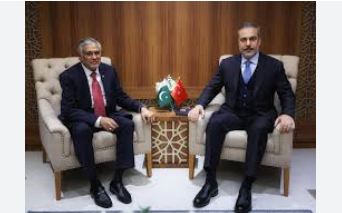
ISLAMABAD, JUL 9 /DNA/ – On the invitation of Deputy Prime Minister/Foreign Minister, Senator Mohammad Ishaq Dar, the Minister of Foreign Affairs of the Republic of Türkiye, Hakan Fidan, co-chair of the Joint Commission under the High-Level Strategic Cooperation Council (HLSCC) framework, and the Minister of National Defence, Yasar Güler, co-chair of the Joint Ministerial Commission, are visiting Islamabad today.

The Deputy Prime Minister/Foreign Minister welcomed the visiting dignitaries and underscored the close and brotherly relations between Pakistan and Türkiye. He appreciated the growing momentum in bilateral cooperation and stressed the importance of expanding collaboration in areas such as trade, investment, and energy.

The Turkish Foreign Minister conveyed warm greetings from President Recep Tayyip Erdogan and reaffirmed Türkiye’s strong desire to deepen cooperation with Pakistan. He highlighted the profound historical, cultural, and religious bonds that underpin the enduring relationship between the two nations.

It may be recalled that during the last session of the HLSCC, held in Islamabad in February this year, both sides had agreed to establish a Joint Commission, co-chaired by the two Foreign Ministers, to review the progress of the twelve Joint Standing Committees working under the HLSCC framework. Today marked the first meeting of this Joint Commission. 

The Deputy Prime Minister/Foreign Minister expressed satisfaction in sharing that all twelve Joint Standing Committees have either already met or are scheduled to meet in the coming weeks.

In addition, both sides noted the upcoming meeting of the Joint Ministerial Commission (JMC), which is expected to be held in the coming weeks. The JMC will be co-chaired by the Minister of National Defence of Türkiye, Yaşar Güler, and the Minister of Commerce of Pakistan, Jam Kamal Khan. This important platform is expected to further bolster economic cooperation between the two countries.

The two sides also exchanged views on a range of regional and global developments. They reaffirmed their shared commitment to peace, security, and development in the region.

This visit underscores the sustained dialogue between Pakistan and Türkiye and their mutual resolve to further deepening their multifaceted partnership.

Can US President Donald Trump win Nobel Peace Prize?

Trump

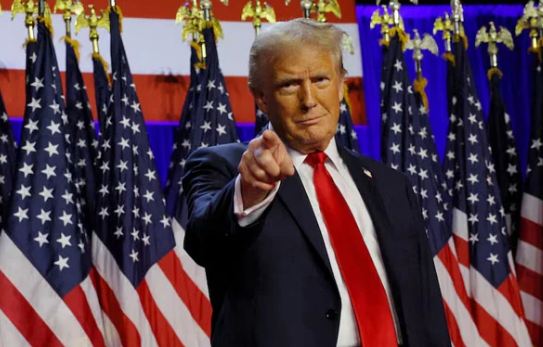
Israeli Prime Minister Benjamin Netanyahu has nominated US President Donald Trump for the Nobel Peace Prize, the highest profile international award given to an individual or organisation deemed to have done the most to “advance fellowship between nations.”

In his letter to the Nobel Committee, which he shared online, Netanyahu said Trump had “demonstrated steadfast and exceptional dedication to promoting peace, security and stability around the world.” Trump, who is trying to broker a ceasefire in the Middle East, has been nominated before.

Pakistan said in June it would recommend Trump for the prize for his work in helping to resolve a conflict between India and Pakistan.

PM Netanyahu’s nomination of Trump has generated scepticism in some quarters, including from former Swedish prime minister Carl Bildt, who said on X that Netanyahu was seeking to flatter Trump.

If Trump won the prize, he would be the fifth US president to do so, after Theodore Roosevelt, Woodrow Wilson, Jimmy Carter, and Barack Obama.

Here is a look at how the award works:

Eligibility
According to the will of Swedish industrialist Alfred Nobel, the inventor of dynamite, the prize should go to the person “who has done the most or best to advance fellowship among nations, the abolition or reduction of standing armies, and the establishment and promotion of peace congresses.” All living persons or active institutions are eligible.

In an introduction on the Nobel website, Chair of the Peace Prize Committee Jorgen Watne Frydnes says “in practice anyone can be the recipient of the Nobel Peace Prize. The history of the prize shows clearly it’s given to people from all layers of society from all over the world”.

The Nobel Prizes are announced in October each year, but nominations close the previous January, meaning Netanyahu’s nomination of Trump could not be considered this year.

Nomination
Thousands of people can propose names: members of governments and parliaments; current heads of state; university professors of history, social sciences, law, and philosophy; and former Nobel Peace Prize laureates, among others. You cannot nominate yourself.

Nominee lists are kept secret for 50 years, though there is nothing to stop those who make nominations from disclosing their choices.

How is the winner decided?
The Norwegian Nobel Committee, which consists of five individuals appointed by the Norwegian parliament, is the arbiter. Members are often retired politicians, but not always. The current committee is led by the head of the Norwegian branch of PEN International, a group defending freedom of expression.

They are all put forward by Norwegian political parties and their appointments reflect the balance of power in Norway’s parliament.

The first meeting of the committee takes place in February of each year, when committee members can make their own nominations to add to the list.

Last year, there were 286 nominees, and in 2025 there are 338 candidates nominated for the prize – 244 individuals and 94 organisations.

The committee whittles the nominations down to make a shortlist, and each nominee is then assessed by a group of permanent advisers and other experts.

The committee aims for unanimity but can decide by majority vote. A final decision is often only made a few days before the prize is announced.

Controversies
The Nobel Peace Prize has often been seen as having a political message. The Nobel website says some recipients have been “highly controversial political actors,” while the prize has also increased public focus on international or national conflicts.

Obama won the award just a few months after taking office. Two members of the committee stepped down over the decision in 1973 to award the Peace Prize to U.S. Secretary of State Henry Kissinger and Vietnamese politician Le Duc Tho for negotiating an end to the Vietnam War.

One member quit in 1994 when Palestinian leader Yasser Arafat shared the prize with Israel’s Shimon Peres and Yitzhak Rabin.

Perks and benefits
A medal, a diploma, 11 million Swedish crowns ($1.15 million), and immediate global attention, if they are not already famous.

The announcement of this year’s prize will be made on October 10 at the Norwegian Nobel Institute in Oslo.

The ceremony will take place at the Oslo City Hall on December 10, the anniversary of Alfred Nobel’s death.

Mohsin Naqvi lauds Pakistan Navy’s role in defending frontiers

Mohsin Naqvi lauds Pakistan Navy’s role in defending frontiers

ISLAMABAD, JUL 8 /DNA/ – Federal Minister for Interior MohsinNaqvi visited Naval Headquarters, Islamabad and called-on Chief of the Naval Staff Admiral Naveed Ashraf.

During the meeting, Pakistan Navy’s strategy to ensure robust maritime defense during the recent Pakistan-India conflict, and its operational readiness were discussed.

The minister commended Pakistan Navy’s high level of operational preparedness during MARKA-E-HAQ and felicitated it on successfully defending the maritime frontiers of the motherland against Indian aggression.

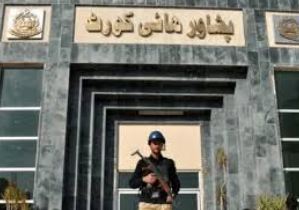
PHC declares KP reserved seats notification null and void

PHC

Peshawar, JUL 8: The Peshawar High Court has declared null and void two notifications issued by the Election Commission of Pakistan regarding the allocation of reserved seats in the Khyber Pakhtunkhwa Assembly.

In a landmark judgement, a two-member bench headed by Justice Syed Arshad Ali issued a two-page written verdict, directing the election commission to reallocate the reserved seats in accordance with the proportional representation formula within 10 days.

The court further ruled that no oath should be administered to the newly elected members until the seat redistribution process is completed.

The decision came after the conclusion of arguments, upon which the judgement had been reserved.

Also Read: PHC stops oath-taking of reserved seat members in KP Assembly

Last week, the PHC had barred newly elected members on reserved seats in the Khyber Pakhtunkhwa Assembly from taking oath.

A two-member bench, headed by Justice Syed Arshad Ali, had heard the petition challenging the proportional distribution of reserved seats. The court sought a detailed response from the ECP and ordered that the oath-taking of members on reserved seats be suspended until the next hearing on July 3.

The petitioner’s counsel argued that the ECP did not allocate the reserved seats in accordance with proportional representation. During the proceedings, Justice Arshad Ali questioned whether the party had submitted a list for the reserved seats, to which the lawyer responded that PTIP holds two general seats and is entitled to one reserved seat for women.

The judge noted that the PTI government was in power but did not secure these seats in this region. The petitioner’s lawyer clarified that PTI did not formally contest the election; rather, independent candidates were fielded.

On June 27, the Supreme Court had accepted the review petitions of the PTI and Sunni Ittehad Council in the reserved seats case and annulled its earlier decision issued on July 12.

The four-page short order came through a majority decision by a seven-member bench. With the acceptance of the review petitions, the judgement of the Peshawar High Court (PHC) in the case was upheld. The short order was signed by 10 judges.

The verdict practically deprived the PTI of the reserved seats in National and provincial assemblies, which have been divided among ruling parties, including the PPP, PML-N and others. After being allocated the additional reserved seats, the ruling government now enjoyed a comfortable two-thirds majority in parliament.

Also Read: Supreme Court divides PTI’s reserved seats among ruling parties

Supreme Court ruling restores 77 reserved seats
Following the decision, 77 reserved seats in the National Assembly and provincial assemblies were restored. The verdict reinstated the Election Commission of Pakistan’s earlier decision to allocate these reserved seats to the ruling coalition, which now regains 22 seats in the National Assembly and 55 in the provincial assemblies.

National Assembly reserved seats:
Women’s seats: 19

Minority seats: 3

Provincial assembly reserved seats:
Khyber Pakhtunkhwa Assembly: 21 women, 4 minority seats

Punjab Assembly: 24 women, 3 minority seats

Sindh Assembly: 2 women, 1 minority seat

Punjab Assembly latest allocation:
Out of the 24 reserved seats for women and 3 for minorities:

PML-N will receive 23 seats

PPP will get 2 seats

PML-Q and Istehkam-e-Pakistan Party (IPP) will each receive 1 seat

Sindh Assembly allocation:
Of the 3 reserved seats:

PPP will get 2 seats

MQM will get 1 seat

Khyber Pakhtunkhwa Assembly:
The distribution of 25 recently restored reserved seats in the Khyber Pakhtunkhwa Assembly:

JUI-F, which previously held 2 reserved seats, will now receive 8 additional seats, increasing its total strength in the assembly to 17 members.

PML-N, already holding 2 reserved seats, will be allotted 6 more, raising its tally to 13 members.

PPP will gain 5 additional reserved seats on top of the 1 it already held, boosting its total to 10 members.

ANP and PTI Parliamentarians (PTI-P) will receive 1 reserved seat each, bringing their total strength in the provincial assembly to 3 members each.

Pakistan, Rwanda economic relations to grow stronger: ICCI President

Pakistan

ISLAMABAD, JUL 8: /DNA/ – Nasir Mansoor Qureshi, President of the Islamabad Chamber of Commerce and Industry (ICCI), participated in the celebration of Rwanda National Day, held to commemorate the country’s independence and progress.

On this occasion, President ICCI extended his heartiest congratulations to the Ambassador of Rwanda and the Defence Attaché, Lt. Col. Shyaka Kajugiro Ismail. He highlighted the deep-rooted and cordial relations between Pakistan and Rwanda, reaffirming his commitment to enhancing existing trade and business collaboration between the two nations.

President Qureshi also took the opportunity to engage in discussions with Ambassadors and High Commissioners of other friendly countries, focusing on strengthening economic cooperation and exploring avenues for bilateral and multilateral trade.

ICCI Executive Member Waseem Chaudhry was also present at the event who also highlighted the Chamber efforts to expand Pakistan’s global economic outreach.

Justice Dogar, 3 others take oath as regular high court CJs

Justice Dogar

ISLAMABAD, JUL 8: Justice Muhammad Sarfraz Dogar and the three acting chief justices of the high courts took their oaths on Tuesday as the regular top judges.

The oath-taking ceremonies were held a day after President Asif Ali Zardari appointed them, based on the nominations by the Judicial Commission of Pakistan (JCP).

President Zardari administered the oath of office to Islamabad High Court (IHC) Chief Justice Sarfraz Dogar, who has been serving in an acting capacity since February, during a ceremony held at Aiwan-i-Sadr in Islamabad.

The ceremony was attended by IHC judges, Senate Chairman Yousuf Raza Gilani, Punjab Chief Minister Maryam Nawaz, ministers, parliamentarians and the legal fraternity, the Associated Press of Pakistan reported.

The development comes less than a month after the Supreme Court’s Constitutional Bench, by a majority of 3-2, upheld the constitutionality of transferring three judges from other provincial high courts to the IHC and referred the matter of seniority determination to the president.

The matter of Justice Dogar and two other judges’ transfer to the IHC in February had sparked a controversy as he was made the senior puisne judge, paving the way for his appointment as the acting IHC chief justice after Justice Aamer Farooq’s elevation to the SC.

Five IHC judges, who were petitioners in the SC case, and four former presidents of the Islamabad High Court Bar Association have challenged the apex court’s ruling.

Oath-takings in Sindh, KP, Balochistan
Meanwhile, the high courts in Sindh, Khyber Pakhtunkhwa and Balochistan also saw their chief justices taking oaths as regular top judges.

In separate ceremonies, Justice Syed Muhammad Attique Shah took oath as the Peshawar High Court (PHC) chief justice, Justice Rozi Khan Barrech was sworn in as Balochistan High Court’s (BHC) top judge, and Justice Junaid Ghaffar took the helm of the Sindh High Court (SHC).

Sindh Governor Kamran Tessori administered the oath to Justice Ghaffar at a ceremony held at the Governor House in Karachi.

Chief Minister Murad Ali Shah, fellow SHC judges and members of the Karachi Bar Association and SHC Bar Association were present on the occasion as well.

After taking oath, Justice Ghaffar visited the Mazar-i-Quaid, where he laid a floral wreath. Responding to a reporter’s query there, he said the confusion of cases being heard by the regular bench or the constitutional bench would “settle down with time”.

Noting that it was the first time that cases had been categorised in such a manner after the 26th Amendment, Justice Ghaffar said whenever there was a confusion of jurisdiction, a larger bench was formed to decide it.

Meanwhile, Justice Shah assumed the responsibilities as the PHC chief justice in a permanent capacity as KP Governor Faisal Karim Kundi administered the oath to him.

He was serving as the PHC acting chief justice since February 14, following the elevation of Justice Ishtiaq Ibrahim to the SC.

KP Chief Minister Ali Amin Gandapur, Minister for States and Frontier Regions Amir Muqam, and KP Assembly’s opposition leader Ibadullah Khan attended the ceremony.

KP police chief Zulfiqar Hameed, Peshawar Commissioner Riaz Masood and other top officials were also present.

In a post on X, Kundi said he held a meeting with Justice Shah after the oath-taking to discuss the “vital role of the judiciary in ensuring justice, peace and stability”.

“I reiterated my full support for stronger collaboration between institutions to uphold the Constitution and address public grievances effectively,” the governor asserted.

In Quetta, Justice Barrech, who took the oath as BHC’s acting chief justice last month after the retirement of Justice Ejaz Ahmed Swati, was sworn in to continue that role.

Balochistan Governor Jaffar Khan Mandokhail administered the oath to Justice Barech at a ceremony held in the evening at the Governor House.

Chief Minister Sarfraz Bugti, Balochistan Assembly Speaker Abdul Khaliq Achakzai, and former governor and retired Justice Amanullah Yasinzai were present on the occasion, along with senior lawyers.

Chinese Air Chief impressed by PAF’s response in recent conflict

Chinese Air Chief impressed by PAF’s response in recent conflict

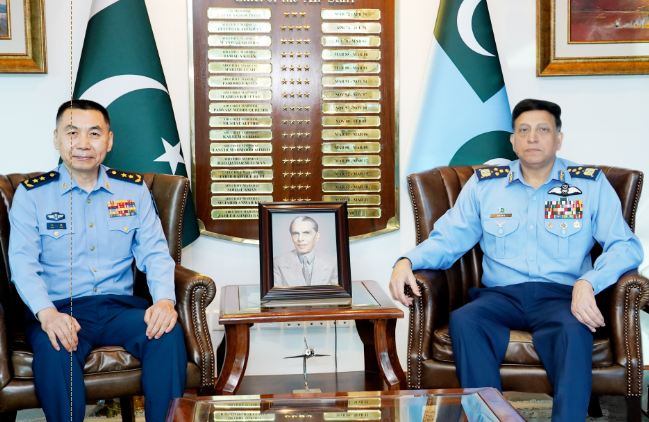
ISLAMABAD, JUL 8 /DNA/ – A high level defence delegation led by Lieutenant General Wang Gang, Chief of Staff of People’s Liberation Army Air Force, called on Air Chief Marshal Zaheer Ahmed Baber Sidhu, Chief of the Air Staff, Pakistan Air Force, at Air Headquarters Islamabad. During the meeting, matters of mutual interest, regional security dynamics and avenues of enhanced bilateral cooperation, particularly in the domain of airpower and operational synergy were discussed.

The Air Chief extended a gracious welcome to the distinguished guests, reiterating that Pakistan and China enjoy historic and time-tested ties rooted in mutual trust, strategic convergence and shared aspirations for regional peace & stability. Lieutenant General Wang Gang was given a comprehensive briefing on PAF’s modern force structure, strategic initiatives and the evolution of its operational doctrine. Chief of the Air Staff also reaffirmed the strong bond of friendship between the two Air Forces and reiterated Pakistan Air Force’s commitment to expanding cooperation in training, technology and operational domains.

General Wang Gang expressed deep appreciation for the high state of operational readiness and the cutting-edge capabilities of Pakistan Air Force. He was particularly impressed by PAF’s seamless integration of Multi-Domain Operations, terming it a hallmark of modern air warfare and conveyed PLAAF’s keen interest in learning from PAF’s battle-proven experience in Multi Domain Operations. Lauding the professional acumen and strategic foresight of PAF’s leadership, the visiting dignitary paid rich tribute to the exemplary performance of Pakistan Air Force during the recent conflict with India. He praised the decisive and measured response delivered by PAF pilots under the resolute leadership of the Air Chief, describing it as a textbook example of precision, discipline and courage in the face of unprovoked aggression.

The meeting stands as a testament to the shared resolve of Pakistan and China to advance their time-tested strategic partnership through deepened cooperation and innovation-driven collaboration.

Bulgaria expresses interest in supporting Islamabad’s urban development initiatives

Bulgaria

ISLAMABAD, JUL 8 /DNA/ – Irena Gancheva, Ambassador Extraordinary and Plenipotentiary of the Republic of Bulgaria to the Islamic Republic of Pakistan, called on Muhammad Ali Randhawa, Chairman CDA, Chief Commissioner Islamabad, and DG Civil Defence at CDA Headquarters. The meeting held in a very cordial atmosphere in which matters of mutual interest, with particular emphasis on fostering institutional cooperation and strengthening bilateral engagement.

H.E. Ms. Irena Gancheva appreciated CDA’s significant initiatives and efforts under the leadership of Muhammad Ali Randhawa, Chairman CDA, Chief Commissioner Islamabad, and DG Civil Defence, in maintaining the capital’s development, beautification, and environmental sustainability.

Chairman CDA said that CDA is committed to make Islamabad more developed and beautiful. H.E. Ms. Irena Ganchevs, Ambassador of Bulgaria appreciated CDA’s tremendous efforts for development, beautification and planting of environment friendly trees.

At the conclusion of the meeting, Muhammad Ali Randhawa reaffirmed Pakistan’s commitment to strengthening the mutual relationship with the Republic of Bulgaria while the ambassador of Bulgaria also assured her full support in advancing the collaboration and conveyed Bulgaria’s willingness to work closely with CDA.

Pakistan Navy seizes liquor worth Rs350 million near Gadani Coast

Pakistan Navy

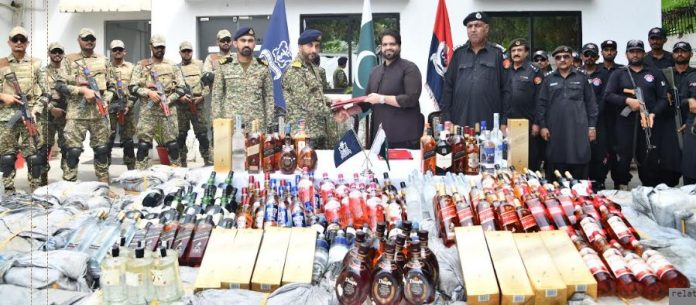
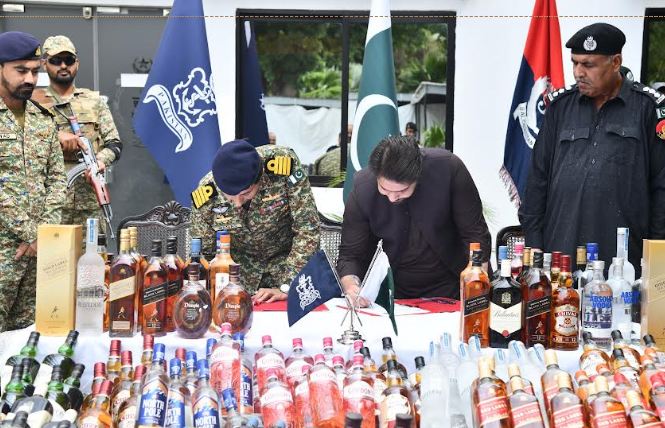
KARACHI, JUL 8: /DNA/ – Pakistan Navy, in collaboration with Directorate of Excise, Taxation & Anti-Narcotics (South Zone Balochistan) and Joint Maritime Information Coordination Centre (JMICC), seized a large quantity of liquor during a counter-narcotics operation off the coast of Gadani. The value of the seized consignment is estimated at Rs 350 million.

The consignment was being smuggled into Pakistan via sea routes from international origins. The confiscated liquor has been handed over to Directorate of Excise, Taxation & Anti-Narcotics (South Zone Balochistan) for further legal proceedings.

This successful operation underscores Pakistan Navy’s unrelenting vigilance and commitment to countering illicit maritime activities, thereby ensuring maritime security and upholding the rule of law at sea.

Stay Connected

64FansLike
60FollowersFollow

Latest Reviews

Exchange Rates

USD - United States Dollar
EUR
1.17
GBP
1.35
AUD
0.72
CAD
0.73