Home Blog Page 578

Pak, Vietnam reinforces economic ties during high-level ministerial meeting

Vietnam

ISLAMABAD, Jul 11 (DNA): The Minister of Commerce of the Islamic Republic of Pakistan, Jam Kamal Khan held a bilateral meeting today with,, Mr. Nguyen Hong Diên, Minister of Industry and Trade of the Socialist Republic of Vietnam, to strengthen economic cooperation and explore new avenues for trade and investment between the two countries.

The high-level meeting took place in a spirit of mutual friendship and partnership, reflecting the growing economic and diplomatic ties between Pakistan and Vietnam, said a press release issued here on Friday.

Both sides reaffirmed their commitment to deepening bilateral trade relations and discussed key areas including trade diversification, market access, investment promotion, and collaboration in industrial development.

During the meeting, the two ministers emphasized the need for enhanced business-to-business linkages, promotion of joint ventures, and cooperation in sectors such as textiles, agriculture, pharmaceuticals, information technology, and energy.

Discussions also focused on reducing trade barriers and working towards a Preferential Trade Agreement (PTA) to facilitate smoother trade flows.

Minister Jam Kamal Khan highlighted Pakistan’s strategic location and offered Vietnam greater access to Central Asian and Middle Eastern markets through regional connectivity projects.

Nguyen Hong Diên expressed Vietnam’s interest in increasing imports of Pakistani rice, textiles, and leather products, and welcomed Pakistani investment in Vietnam’s manufacturing and technology sectors.

The meeting concluded with a shared vision to elevate Pakistan-Vietnam bilateral trade volume and to foster long-term economic partnership for the mutual benefit of both nations.

Iran-Israel conflict signals strategic realignments in the region

Iran-Israel conflict signals strategic realignments in the region

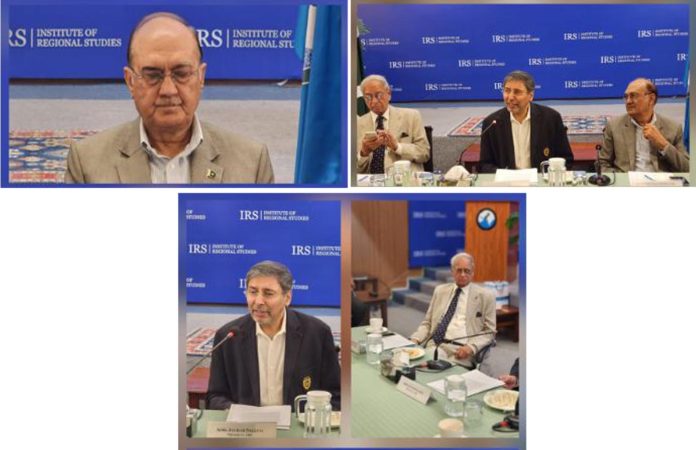
ISLAMABAD, JUL 11 /DNA/ – Speaking at a seminar hosted by the Institute of Regional Studies, Ambassador Jauhar Saleem remarked that Israel’s strike aimed to weaken Iran’s regime and nuclear infrastructure. He said that despite systemic damage, Iran preserved its nuclear capability and demonstrated resilience against the technologically superior US–Israel nexus. He emphasized that, like Iraq episode, regime change is not feasible without ground presence. Amb Jauhar noted that while Israel systematically succeeded in weakening Iran’s proxy partners, its limited demographic size raised questions about its ability to withstand a prolonged Iranian retaliation. 

Dr. Vida Yaghouti, Professor at Islamic Azad University, described the India-Israel partnership as a full spectrum strategic alliance shaped by extremist ideologies of Hindutva and Zionism. Cooperation spans drones, missile defence, and surveillance which is used to manage long-term rivalries with Pakistan rather than border threats, Dr Vida observed. She noted that India’s use of water infrastructure as a non-conventional strategic tool was a destabilising factor for the region. Viewing Iran as both a geopolitical rival and ideological adversary, India and Israel were aligned against Tehran’s Islamic identity and regional ambitions, she highlighted. On Iran–Pakistan ties, Dr. Yaghouti stressed their strategic nature that was focused on border stability and countering militancy. 

Lt Gen (R) Khalid Naeem Lodhi emphasized Clausewitz’s war trinity i.e., people’s passion, leaders’ logic, and war’s unpredictability. He noted that Israel’s decapitating strike was possibly a trap under diplomatic guise. Iran’s missile strikes overwhelmed Israeli defences, showing tactical depth and deterrence, he analyzed. Furthermore, arguing about the impact of Israel strikes, Lt. Gen (R) Lodhi said that Iran’s regime survived and its nuclear assets werr likely relocated and hence sustained little damage. He predicted that Iran might now pursue nuclear weapons as the rationality dictates. Lt. Gen (R) Lodhi urged solidarity between Iran, Pakistan, and Turkey, to present a unified group of Muslim World. 

Ambassador Ali Sarwar Naqvi outlined Israel’s goals which were to sabotage nuclear talks, damage infrastructure, and weaken the IRGC. While the nuclear program was disrupted, regime stability and IRGC endurance prevailed, mentioned Amb Naqvi. He cited that growing unity in Iran and backlash against Indian operatives in Chabahar has now become a new geopolitical reality which provides Pakistan with an opportunity to engage more with Iran. Addressing the Pak-Iran Relations, Amb Naqvi highlighted that both the countries have no outstanding issues. The only issue is the poor border management that can be resolved mutually.

Pak-India military truce holding but Delhi not coming to terms with defeat

Pak-India military truce holding but Delhi not coming to terms with defeat

“India facing international isolation due to its aggressive policies,” says deputy prime minister

Centreline Report

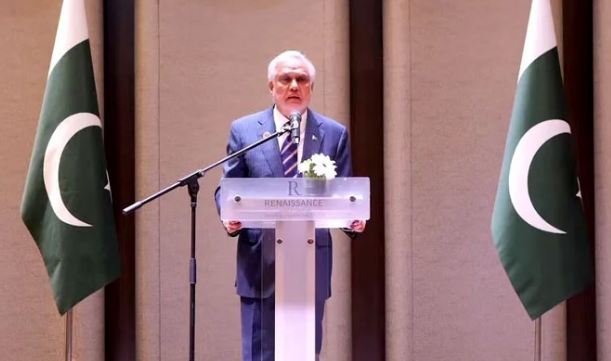
DUBAI: Deputy Prime Minister Ishaq Dar has said that the military-to-military ceasefire between Pakistan and India is holding steady, however, it appears that the latter’s political leader is not coming to the terms with the recent defeat.

“Pakistan-India military-to-military ceasefire is working fine, but India’s political leadership is unable to digest it,” said DPM Dar, who also holds the portfolio of foreign minister, while speaking during an event hosted by the Pakistan High Commission in Kuala Lumpur on Friday.

Pakistan and India engaged in military conflict in May this year, wherein the nuclear-armed rivals used missiles, drones, and artillery fire during the four-day fighting — their worst in decades — before agreeing to a ceasefire.

In response to the Indian aggression, Pakistan’s armed forces launched a large-scale retaliatory military action, named “Operation Bunyan-um-Marsoos”, and targeted several Indian military targets across multiple regions.

The ceasefire was first announced by US President Donald Trump on social media after Washington held talks with both sides, but India has differed with Trump’s claims that it resulted from his intervention and threats to sever trade talks.

FM Dar, who is in Kuala Lumpur for the 32nd Ministerial Meeting of the ASEAN Regional Forum (ARF), has slammed India for suspending the Indus Waters Treaty (IWT) and called the step as strange move.

“India cannot stop or divert Pakistan’s water… New Delhi is facing growing isolation globally,” he said.

India is becoming isolated on the international stage due to its aggressive policies, he added.
Recalling Pakistan’s swift response to Indian action during the conflict, DPM Dar said PAF shot down six Indian pilots including four Rafales. He said that during the recent tensions, India had intentionally targeted Sikh-populated areas with missile strikes.

The deputy prime went on to say that India started the war and ended it by asking for a ceasefire. “At 8:15 in the morning, [the] US secretary of state called and said India wants a ceasefire,” he recalled.

On Pakistan’s economic outlook, Dar said the country has taken off despite tough conditions.

Pakistan has made an economic take-off and now our goal is to get the country included in the G20, he added.

Earlier in the day, DPM Ishaq Dar called on Malaysian Prime Minister Anwar Ibrahim on the sidelines of 32nd ASEAN Regional Forum Ministerial Meeting.

During the meeting, he conveyed warm wishes from Prime Minister Shehbaz Sharif and reaffirmed Pakistan’s commitment to deepening bilateral ties with Malaysia.

FM Dar also appreciated Malaysia’s leadership as ASEAN Chair for the year 2025.

Bosnian envoy urges global unity and remembrance

Bosnian envoy urges global unity and remembrance

He recalled the broader context of the Bosnian War (1992–1995) — a period that witnessed more than 100,000 people killed, thousands of women subjected to sexual violence, and over two million people forcibly displaced. Amid such tragic memories, Ambassador Emin emphasized the importance of collective remembrance and moral vigilance

Saifullah Ansar/DNA

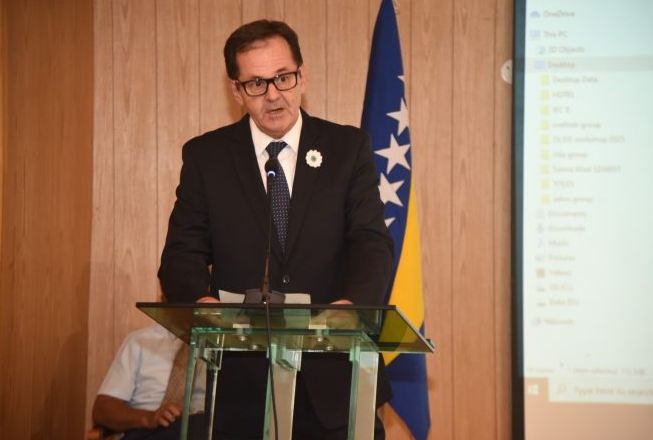
Islamabad: In a deeply moving ceremony held to commemorate the International Day of Reflection and Commemoration of the 1995 Genocide in Srebrenica, the Ambassador of Bosnia and Herzegovina, Emin  Cohodarevic delivered a powerful speech that resonated with solemnity, gratitude, and a renewed call for justice, remembrance, and global solidarity.

Addressing a distinguished gathering of diplomats, civil society members, scholars, and media representatives, Ambassador Emin began with a heartfelt greeting — “Good afternoon, Selamalejkum” — and expressed sincere appreciation for the guests’ presence in observing this solemn occasion.

“This year,” the Ambassador noted, “marks the 30th anniversary of the Srebrenica genocide, during which over 8,000 Bosnian Muslim men and boys were systematically murdered in what the United Nations has termed the worst atrocity on European soil since World War II.”

He recalled the broader context of the Bosnian War (1992–1995) — a period that witnessed more than 100,000 people killedthousands of women subjected to sexual violence, and over two million people forcibly displaced. Amid such tragic memories, Ambassador Emin emphasized the importance of collective remembrance and moral vigilance.

“In our remembrance,” he said, “we reflect on what this anniversary means for today’s increasingly polarized world. We stand together against those who try to divide us and recommit ourselves to opposing hatred, discrimination, and prejudice. Only then can our communities and the world be safer, stronger, and more cohesive.”

A major point of gratitude in the Ambassador’s speech was directed toward the Government of Pakistan, which played a key role in the adoption of the UN General Assembly Resolution in May 2024, formally establishing July 11 as the International Day of Remembrance and Commemoration of the Srebrenica Genocide.

“The adopted resolution has planetary significance,” he remarked. “It is a moral, historical, and civilizational act. In times of complex global relations, it is important to know that the truth has its guardians.”

Ambassador Emin underscored the need to institutionally protect the legacy of the UN courts, condemn the glorification of war criminals, and promote a culture of peace and justice through education and dialogue.

In a poignant cultural tribute, the Ambassador also highlighted the screening of the internationally acclaimed film “Quo Vadis, Aida?” as part of the commemoration. Describing it as both a cinematic masterpiece and a harrowing reminder of the genocide, he invited the audience to contemplate its emotional and ethical questions.

“How many things would have been different if we had more empathy and solidarity?” he asked. “Did this tragedy have to have such a terrible outcome?”

Pakistan never backs terrorists, Bilawal tells India’s Karan Thapar clearly

Pakistan never backs terrorists

Pakistan went through rigorous FATF process, int’l community endorsed actions against terror groups: Bilawal

ISLAMABAD, JUL 9 /DNA/ – Former foreign minister and Pakistan Peoples Party (PPP) Chairman Bilawal Bhutto-Zardari rejected India’s claims of patronising terrorist groups to conduct attacks outside of Pakistan.

In an interview with Indian journalist Karan Thapar, Bilawal said: “Pakistan does not willingly permit […] the groups you mentioned or any group to conduct terrorist attacks outside of Pakistan but also within Pakistan.”

Highlighting the country’s losses during the war against terrorism, the PPP lawmaker said that the world is well aware that Pakistan faced the brunt of terrorism over the past many decades.

“Pakistan is fighting and has been fighting the largest inland war against terrorism. We’ve lost 92,000 lives altogether. Just last year, we lost more than 1,200 civilian lives in more than 200 different terrorist attacks.”

“At the rate at which terrorist attacks are taking place just this year alone, if they continue at this pace, this year will be the bloodiest year in Pakistan’s history.”

Recalling the assassination of his mother and former premier Benazir Bhutto, Bilawal said: “I too am a victim of terrorism. I feel the pain of the victims of the Pahalgam terrorist attack. I understand the trauma that their families are experiencing in a way more than many others can ever imagine.”

He also elaborated on Pakistan’s ongoing battle to root out the menace, saying: “Pakistan went through a process where we not only took military action against terrorist groups within Pakistan.”

He said that in the previous Zardari’s tenure, Pakistan conducted an operation in South Waziristan following Benazir’s assassination, and the next government conducted another operation in North Waziristan.

Updated voter data: 134 million registered voters in Pakistan

134 million registered voters in Pakistan

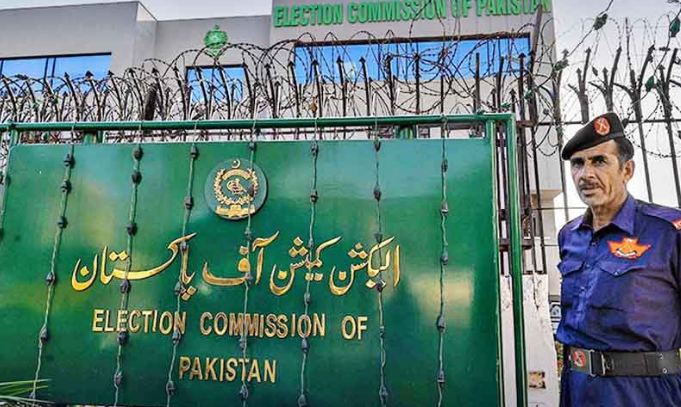
ISLAMABAD, JUL 9: The Election Commission of Pakistan (ECP) has released updated voter statistics, revealing that the number of registered voters across the country has reached 134,428,577 as of July 1, 2025.

According to the ECP data, the number of male voters stands at 72,124,209 (53.65%), while female voters total 62,344,368 (46.35%). The figures highlight a persistent gender gap in voter registration, though overall electoral participation remains high.

Province-wise breakdown:

  • Punjab leads with the highest number of registered voters at 76,563,243, reflecting its status as the most populous province.
  • Sindh follows with 28,172,274 registered voters.
  • Khyber Pakhtunkhwa (KP) has 22,874,402 voters.
  • Balochistan accounts for 5,613,371 voters.
  • Islamabad Capital Territory has 1,207,287 registered voters.

The updated figures are part of the ECP’s preparations for the upcoming general elections and reflect the commission’s ongoing efforts to maintain an accurate and up-to-date electoral roll.

Deputy PM Dar to attend ARF meeting in Kuala Lumpur on July 11

Ishaq Dar

ISLAMABAD, JUL 9 /DNA/ – Deputy Prime Minister and Foreign Minister Senator Mohammad Ishaq Dar will lead the Pakistan delegation at the 32nd Ministerial Meeting of the ASEAN Regional Forum (ARF), being held in Kuala Lumpur, Malaysia, on 11 July 2025. The meeting will be attended by the Foreign Ministers and representatives of the 27 ARF member countries, along with the Secretary-General of ASEAN.

At the ARF Ministerial Meeting, the Deputy Prime Minister and Foreign Minister will participate in discussions on political and security issues affecting the Asia-Pacific region, with a focus on promoting peace, stability, and mutual cooperation through dialogue.

During his visit to Kuala Lumpur, the Deputy Prime Minister and Foreign Minister will also meet with his Malaysian counterpart as well as other visiting Foreign Ministers and representatives. He will also engage with the Pakistani community in Kuala Lumpur.

Established in 1994, the ARF serves as a key platform for multilateral dialogue and consultations on regional peace and security issues. Pakistan has been an active member of the ARF since joining the Forum in 2004 and continues to contribute constructively to its activities and initiatives.

Raja defends PTI’s protest rights, questions govt majority claim in KP

Raja defends PTI’s protest rights

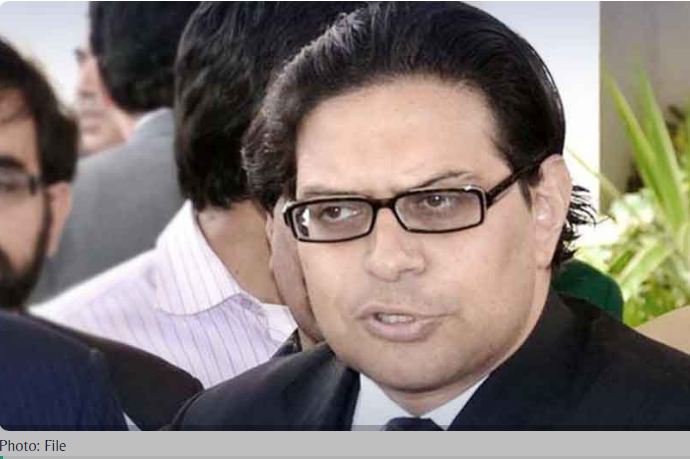
ISLAMABAD, JUL 9: Senior lawyer and PTI leader Salman Akram Raja has strongly defended the Pakistan Tehreek-e-Insaf (PTI) party’s democratic right to protest and criticized the government’s claims of having a two-thirds majority in Khyber Pakhtunkhwa.

Speaking to the media outside the Islamabad High Court on Wednesday, Raja emphasized that the sons of the PTI founder have every right to participate in the party’s political movement. “The family of the party’s founder shares a unique and historical connection with the PTI,” he said.

Highlighting Pakistan’s political history, he noted that street movements have always played a role in democratic struggle. “It is not wrong to come out for your rights. Even Benazir Bhutto launched a street movement for democracy,” he remarked.

Raja raised serious concerns about the government’s legitimacy, especially in Khyber Pakhtunkhwa, where the PTI holds a clear majority. “Even after including reserved seats, the federal government failed to secure a two-thirds majority. In KP, the PTI controls 85% of the seats. It is incomprehensible how the government claims to have a two-thirds mandate there,” he added.

Addressing rumours and tensions around KP Chief Minister Ali Amin Gandapur, Raja said there is no internal threat to his leadership. “He is not in any danger from his own people. If there’s any external conspiracy against him, we will resist it.”

On legal matters, Salman Akram Raja stressed the need for judicial decorum. “Judicial proceedings should be held inside the courtroom, not in the media,” he asserted.

He also called for urgency in hearing the appeal for sentence suspension filed by PTI founder’s wife, Bushra Bibi. “She has the right to have her application heard soon. Even though the courts are on vacation, important cases are still heard during this period,” he pointed out.

On Tuesday, Aleema Khan, a sister of Pakistan Tehreek-e-Insaf (PTI) Founder Imran Khan, announced that his sons Sulaiman and Qasim will join the party’s protest movement once they return from the United States.

Speaking to the media outside Adiala Jail after meeting her incarcerated brother and his wife Bushra Bibi, Aleema Khan revealed that the party’s leader has completely ruled out negotiations and has instead announced a full-fledged protest movement, which he wants to reach its peak on August 5 — the day he completes two years in prison.

“The founder has given a clear message — the people must be ready for a powerful protest,” Aleema told reporters, flanked by her sisters. “He said those who cannot bear the weight of this movement should leave now.”

Aleema clarified that Imran Khan’s sons, Qasim and Sulaiman, were going to America, but have informed their father of their intention to join the protest upon returning.

“We had stopped them earlier too,” she said. “But the children do not feel the need to take their father’s permission — they are simply informing him of their decision.”

Deadline for Hajj 2026 registration extended by 2 days

Deadline for Hajj 2026 registration extended by 2 days

ISLAMABAD, JUL 9: The Ministry of Religious Affairs extended on Wednesday the deadline for Hajj 2026 registration by two days. According to the ministry, the registration process will now continue until July 11 through designated banks and the Ministry’s online portal. The decision to extend the deadline was made in response to requests from prospective pilgrims.

So far, 313,000 applicants have successfully completed their Hajj 2026 registration, a Ministry spokesperson confirmed. The expenses and other terms and conditions for Hajj 2026 will be issued in accordance with the official Hajj policy.

Earlier it was reported on Tuesday that the ministry said that only one day remains for mandatory registration for Hajj 2026.

According to details, so far, over 200,000 intending pilgrims had completed their registration. The final deadline for submission had been set for Wednesday, July 9.

A ministry spokesperson clarified that no registration fee was being charged and the process was currently underway at 15 designated banks across the country. Additionally, applicants may also register online from the comfort of their homes.

As per the ministry, registration is compulsory, and only those individuals who submit their applications within the specified time frame will be considered eligible for Hajj. After registration, applicants will be able to choose between the government and private Hajj schemes.

‘Bully India’ using transnational killings, terror cells to supress Pakistan’s progress: DG ISPR

DG ISPR

RAWALPINDI, JUL 9: Director General of the Inter-Services Public Relations (DG ISPR) Lieutenant General Ahmed Sharif Chaudhry has once again called out India for using terrorism to suppress Pakistan’s rise.

The DG ISPR said that India is acting as a “bully” and using terror cells and carrying out transnational killings in Pakistan.

“Who is the beneficiary […] by these acts of terrorism in Pakistan. It is India. The strategy of India is to keep Pakistan embroiled in the menace of terrorism so that Pakistan’s true potential is not realised,” the military’s spokesperson said in an interview with Al Jazeera.

Lt Gen Chaudhary said that the progress and prosperity was the destiny that the state owes the 250 million people of Pakistan but India does not want it to materialise.

He said that India wants the power differential between the two countries keep on increasing so that the it can act as “a regional hegemon and a bully” who can dictate its own terms.

This is the biggest strategy New Delhi has, he added.

The DG ISPR said that there was not one face of Indian terrorism. “Indian terrorism in Pakistan has multiple faces,” he added.

Highlighting the forms of Indian-sponsored terrorism in Pakistan, the general accentuated the transnational killings carried out by New Delhi and pointed out towards Research & Analysis Wing (RAW) operatives and handler.

Noting that Pakistan had come on record with proof of terror financing of RAW operatives’ involvement in transnational killings through criminal enterprise to carry out targeted killing in Pakistan, the chief military spokesperson said: “It’s all on public record.”

He also referred to an extensive investigation in Indian involvement, which revealed that a terror cell was being operated by an individual named Major Sandeep — a serving Indian military intelligence officer — and was responsible for carrying out IED attacks and planting them all over Pakistan.

“You can see their record, the transactions that are going on between these people.

“These are the faces of the other accomplices,” the military spokesperson said while referring to a non-commissioned officer of the Indian military intelligence and other soldiers involved in such activities.

“These are the audios that’ve all been made public already — where the instructions are being passed, where the money is being exchanged, where the targeting is being done, and these terror cells are operating and they are telling that we are operating in Pakistan from Lahore to Quetta and we’ve been doing it for years,” he remarked.

Expanding on India’s rationale behind such hostile policies towards Pakistan, Lt-Gen Chaudhry said that it “serves India very well, it is their ideal tool of terrorism [….] if you see historically it is not being done for the first time [and] it is not only the last two decades”.

“If you go way back in 1971, what was Mukti Bahini? It was also state-sponsored terrorism by India. And historically, if you see Indians [themselves] have acknowledged it. Prime Minister [Narendra] Modi went on record, he not only acknowledged it but boasted about it that we used terrorism, we used Mukti Bahini,” he said.

Lower thresholds and risk of war
Responding to India’s repeated allegations of terrorism against Pakistan, the DG ISPR termed the terrorism as New Delhi’s internal problem arising out of its own actions.

“We must understand that terrorism is an internal problem of India as a result of the continuous oppression which India imposes on its minorities as part of its policy […] against Muslims, especially Kashmiris, Sikhs, Christians, other minorities and against [even their own] backwards castes,” he said.

Calling out India for putting the blame on Pakistan instead of addressing these grave injustices, inequality and doing some soul searching, the general pointed out towards “externalisation of the problem of terrorism” by New Delhi and the threat that it poses.

“This externalisation of the internal problem of terrorism this goes as a policy in India. And what is it turning into, because of this senseless blame game that the Indians are resorting to, it is bringing the thresholds between India and Pakistan to a dangerously low level, where one incident of terrorism or an act of violence can be turned into an act of war,” he remarked.

“This foolhardy, this hubristic political mindset of India is putting the destiny of 1.6 billion people of this region at risk. Not only that, it is also putting the lives of these 1.6 billion people hostage in the hands of non-state actors […] third parties who might be interested — because of their very own reasons — in a military conflict between Pakistan and India,” he concluded.

“So what is the light here, where to go? The light only here is the responsible and mature manner in which Pakistan is acting,” the DG ISPR concluded while contrasting Islamabad’s actions and policies to those of India’s.

On the issue of Islamabad’s own security and ongoing efforts against the menace of terrorism, he said: “Pakistan is not only fully committed to fight this menace of terrorism, we are also fully committed to uproot this extremism”.

The general also touched upon the concerns regarding the country’s nuclear programme and stressed that it was fully secure and well-protected against any threat.

“No one can dare target Pakistan’s nuclear assets,” he said while underscoring that the country was a responsible and declared nuclear power, and its nuclear capability reflected the nation’s defensive strength and commitment to maintaining regional strategic balance.

“Pakistan’s nuclear assets are under strong institutional control and meet all international safety standards,” he remarked.

Stay Connected

64FansLike
60FollowersFollow

Latest Reviews

Exchange Rates

USD - United States Dollar
EUR
1.17
GBP
1.35
AUD
0.72
CAD
0.73