Home Blog Page 576

GIFT University, APMIA partner to boost marble and minerals sector

GIFT University

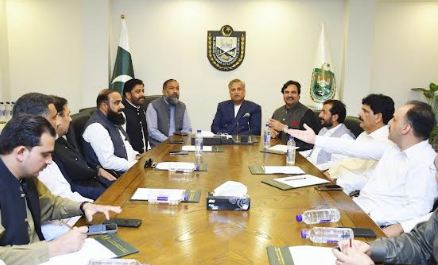
GUJRANWALA, JUL 12 /DNA/ – GIFT University and the All Pakistan Marble Industries Association (APMIA) have joined forces to revolutionize the marble and minerals industry in Gujranwala through collaborative research, skill development, and innovation.

The partnership aims to transform Gujranwala into a center of excellence for marble and minerals processing and value addition, promoting sustainable growth, international competitiveness, and job creation.

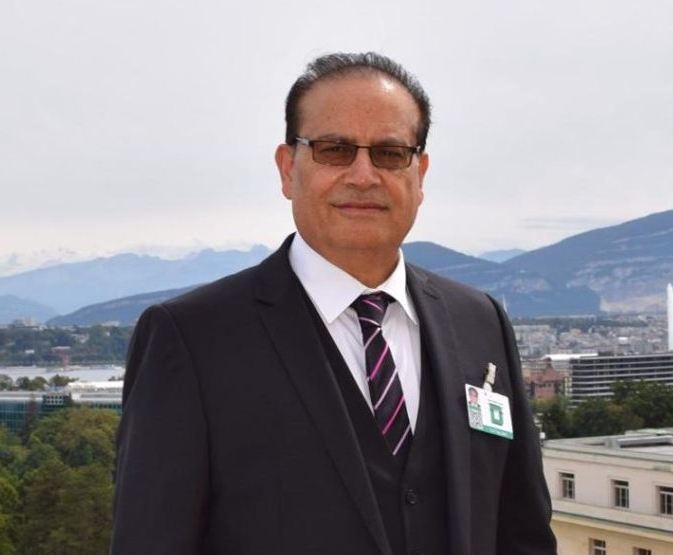
“We are excited to partner with APMIA and contribute to the growth and development of the marble and minerals industry,” said Mr. Anwar Dar, Founder and Chairman of GIFT University.

“APMIA is excited to partner with GIFT University, leveraging our collective expertise to drive innovation, enhance skills, and boost the competitiveness of Pakistan’s marble and minerals industry,” said Muhammad Bilal Khan, Chairman of APMIA.

“This partnership will unlock new opportunities for our students and the marble and minerals industry, fostering innovation and economic growth,” said Atif Farooqi, Advisor to Chairman, GIFT University.

PM Shehbaz vows structural reforms to steer Pakistan towards economic revival

PM Shehbaz vows structural reforms to steer Pakistan towards economic revival

ISLAMABAD: Prime Minister Shehbaz Sharif on Saturday reaffirmed his government’s commitment to achieving economic prosperity through long-overdue structural reforms, institutional changes, and a renewed focus on merit-based governance.

“The road is very challenging as there were long overdue reforms, and the structural changes had not taken place in the last many decades,” he said while addressing a group of Pakistani students, who are getting education in the world leading educational institutes and selected for government’s internship summer scholars programme of Uraan Pakistan.

The prime minister stressed that Pakistan had to undertake these overdue long structural changes, through untiring and long efforts.

At the outset, he pointed out that when the Pakistan Muslim League-Nawaz (PML-N) took charge of the government during 2023, Pakistan was facing a serious threat of default and their fate was hanging in balance.

“The majority viewed that Pakistan would go into default while the minority thought that we will escape this disaster,” he said, adding that he held marathon discussions with the International Monetary Fund (IMF) managing director and assured that Pakistan would not run into default and achieve the IMF programme.

The prime minister said that at that period, the economy was in bad shape, with galloping inflation touching 38% while policy rate was hovering at 22.5%. The business atmosphere in the country was very skeptical.

The premier, in his remarks, further said that they had the huge burden and onus to march in unison and work with sincerity of purpose to change the situation.

He also referred to reforms and digitisation of Federal Board of Revenue (FBR) and said that they had shown doors to the corrupt people without being influenced.

To weed out corruption in FBR, he was very clear in his mind and took decisions which had never taken without heeding to a culture of any ‘Sifarish’, he added.

The prime minister said that previously, digitisation process in FBR was only confined to papers as no practical step was taken and blamed the corrupt and shrewd elements for hoodwinking the system.

He said that it did not mean that there was dearth of hardworking and honest bureaucrats who were not given the chance, adding that they had brought forth the best people in FBR, including its chairman, and hired expert consultants.

Now, he said digitisation was the hallmark of FBR, where working had been converted from papers to multiple initiatives, including AI, and faceless interaction.

Through enforcement of these measures, the revenue collection had risen from Rs12 billion to more than 50 billion rupees in one year, showing massive tax evasion in one sector alone, he maintained.

“We have a long and thorny journey and facing mountain like impediments, but I assure that we will not shy away from discharging our duties in the service of the nation.”

Responding to a student’s query, he said that due to climate change, Pakistan suffered a lot during 2022 floods, with economy faced $30 billion losses, despite the fact that the country did not contribute a friction of percent in the global greenhouse effects.

The prime minister, responding to a question, said that during the month of May, Pakistan faced India’s uncalled aggression in the backdrop of Pahalgam incident.

He said that he had offered a straight proposal to India to let this matter be investigated by the international bodies, but India never commented on this proposal.

As result of Indian aggression, 55 Pakistanis were martyred and they responded in self defence by downing six Indian planes, he said, adding while on May 9 and 10, after India’s attack, Pakistan responded with full might and taught the enemy a lesson.

The prime minister praised the armed forces for showing their professional capabilities and courage, saying Pakistan won the conventional war.

He maintained that Pakistan’s nuclear programme was only meant for the peaceful purposes and for the self-defense.

Islamabad to host Twin Cities school swimming championship

Islamabad to host Twin Cities school swimming championship

ISLAMABAD, JUL 12 /DNA/ – The Islamabad Federal Area Swimming Association is proud to announce the 2nd Twin Cities (Islamabad & Rawalpindi) Inter-School Boys Age-Group Swimming Championship 2025, set to take place on Sunday, July 13, 2025, at 2:00 PM sharp at the indoor Pakistan Sports Board (PSB) Swimming Pool, Aabpara, Islamabad.

This exciting championship brings together young and talented swimmers from schools across Islamabad and Rawalpindi, offering them a platform to compete, showcase their skills, and foster healthy sporting spirit. As part of the association’s commitment to promoting aquatic sports in the region, the event aims to strengthen inter-school collaboration while identifying promising talent for future development.

The competition will feature age-group categories and is expected to witness participation from dozens of schools, making it a key event in the region’s youth sports calendar.

Event Details:

                •             Event: 2nd Twin Cities (Islamabad & Rawalpindi) Inter-School Boys Age-Group Swimming Championship 2025

                •             Date: Sunday, July 13, 2025

                •             Time: 02:00 PM Sharp

                •             Venue: Indoor Swimming Pool, Pakistan Sports Board, Aabpara, Islamabad

                •             Organized by: Islamabad Federal Area Swimming Association

All media representatives, school sports heads, and swimming enthusiasts are cordially invited to attend and cover this exciting event. For further information, please contact the organizers at [email protected].

Let the waves of sportsmanship and youth energy shine through in the pool!

Islamabad nursery to become world-class horticulture hub: CDA Chairman

Islamabad nursery to become world-class horticulture hub: CDA Chairman

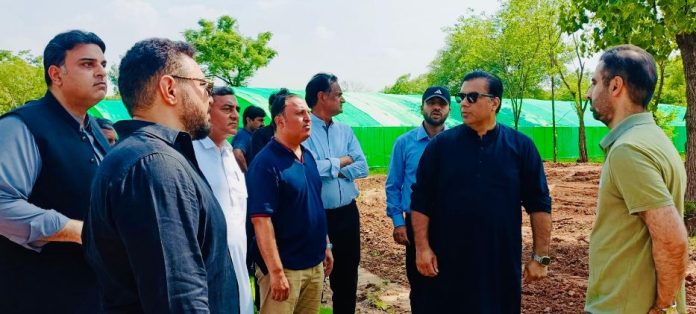
ISLAMABAD, JUL 12 /DNA/ – Chairman CDA and Chief Commissioner Islamabad, Muhammad Ali Randhawa, visited the CDA Model Nursery on Park Road, Saidpur Village, and Melody Food Street, accompanied by Member Environment Esfandyar Baloch, architects and horticulture experts from the Baku team, DG Environment and other relevant officers.

The Baku team’s architects and horticulture experts briefed Chairman CDA on the progress of upgradation and renovation of the CDA Model Nursery into a “Gardenia Hub,” as well as ongoing uplift and renovation of the Saidpur Village and Melody Food Street projects. They briefed Chairman CDA that work is progressing rapidly on transforming the nursery into the Gardenia Hub, with Baku’s architects and horticulture experts providing specialized support. The briefing highlighted that the upgraded nursery will include flower shops, a training and research center and unique, state-of-the-art controlled-ventilation greenhouses designed to optimize plant growth and support research.

Chairman CDA was further briefed that a modern tissue culture center will also be established at the nursery to propagate new plant varieties using advanced techniques.

Chairman CDA Muhammad Ali Randhawa said that the Model Nursery is being developed as a world-class, state-of-the-art facility. He emphasized that all staff working at the nursery will receive specialized training to ensure efficient functioning and maintenance of the nursery. He praised the Baku team’s work on the Gardenia Hub project and other developmental initiatives, expressing hope that the upgraded nursery will meet the horticultural needs of Islamabad’s residents in the future.

Chairman CDA highlighted that the primary goal of upgrading the nursery is to position Islamabad as a key hub in horticulture. He directed the swift completion of modern and aesthetically pleasing flower shops, which will not only enhance the city’s beauty but also serve as an attractive recreational spot for citizens. A dedicated space will be allocated for showcasing seasonal and year-round flowers, and a digital app will be developed to enable cashless online purchases of plants.

Chairman CDA Muhammad Ali Randhawa added that the project’s comprehensive design reflects CDA’s commitment to improving green spaces in Islamabad while promoting environmental sustainability. Transforming the nursery into the Gardenia Hub is a significant step toward making the Capital greener and more beautiful. He instructed the utilization of all available resources to ensure the nursery meets global standards, creating new employment opportunities in horticulture.

Later, Chairman CDA Muhammad Ali Randhawa visited Saidpur Model Village and reviewed ongoing uplift and beautification work. He stated that the project will transform Saidpur into a prime tourist destination with top-tier facilities. He directed the timely completion of all upgradation work and emphasized the allocation of necessary resources to achieve this goal.

Chairman CDA also inspected Melody Food Street, directing to expedite its uplift, renovation and maintenance to ensure quality and maximum convenience for visitors.

Chairman CDA Randhawa reiterated that initiatives like the Gardenia Hub, upgradation and uplift of Saidpur Village and Melody Food Street are part of CDA’s efforts to provide citizens with a clean, green environment and exceptional recreational facilities. He reaffirmed CDA’s commitment to making Islamabad a modern, beautiful, tourist-friendly and eco-friendly model city, ensuring these projects further enhance the Capital’s beautifcation.

JUI-F Chief calls for internal change in KP Government

JUI-F Chief calls for internal change in KP Government

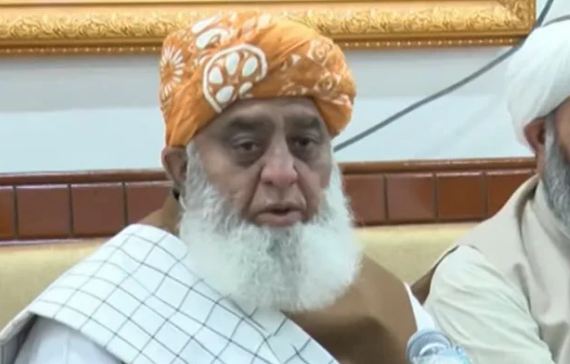
PESHAWAR, JUL 12: Jamiat Ulema-e-Islam-F (JUI-F) chief Maulana Fazlur Rehman said on Friday that if there is to be a change in Khyber Pakhtunkhwa, it should emerge from within the Pakistan Tehreek-e-Insaf (PTI).

“My suggestion has been made — there should be a change in the province,” he said at a press conference in Peshawar.

He added that JUI-F would make decisions regarding the province only after party consultation, noting that the province cannot afford further political instability.

Commenting on the Senate, Fazl said it was too early to offer remarks on any possible adjustments.

Following the Supreme Court’s June 27 verdict — which ruled that the Pakistan Tehreek-e-Insaf (PTI) is ineligible for reserved seats — the opposition alliance in Khyber Pakhtunkhwa (KP) is now just 20 members short of forming a simple majority in the provincial assembly.

A meeting between KP Governor Faisal Karim Kundi and Prime Minister Shehbaz Sharif on July 2 further fueled rumours that the federal government may be considering the ouster of KP Chief Minister Ali Amin Gandapur.

However, senior PML-N leaders Khawaja Asif and Rana Sanaullah have publicly dismissed the possibility of a no-confidence motion against Gandapur.

Meanwhile, KP Governor Kundi did not rule out the option entirely. Speaking to Geo News, he stated: “We are not plotting against the chief minister of Khyber Pakhtunkhwa. However, the day we have even one more member in the assembly, it will be our democratic right to move a no-confidence motion.”

On the political front, he said JUI-F has differences with PPP, PML-N and ANP, but not hostility. “There is no enmity between PTI and JUI either,” he said, adding that there had been a bitter chapter in their relationship in the past.

Addressing the law and order situation, Fazl stated that if the opposition reached out regarding the matter, he would be willing to sit and hold talks.

FATA merger ‘mistake
Regarding the former FATA’s merger with KP, he termed it a mistake.

“All parties must accept that FATA’s merger was a wrong decision,” he said, adding that the real issue was the political future of the tribal people, not the merger itself.

He said that JUI-F had previously tried to make decisions in consultation with tribal elders. “We had said no to the merger proposal — the tribes must be given the right to decide,” he said.

Fazl announced that a grand jirga of tribal leaders will reconvene tomorrow and that JUI-F will seek further consultation with them. He insisted that the consultation of tribal elders on the FATA matter was unavoidable.

He also questioned the composition of the committee on FATA-related affairs. “How many Pakhtuns are there in this committee, and how many members are from the province?” he asked. He said the committee had asked JUI-F for a name and recognised the party as a stakeholder.

Criticising the misuse of provincial funds, he remarked: “Our province’s money exists only so that perks may be taken.” He also expressed solidarity with oppressed children in KP and Balochistan, saying: “Whenever a child suffers in KP or Balochistan, I consider them my own.”

Highlighting governance issues, Fazl noted that even after eight years, no patwari (land revenue official) has been able to go to the FATA region.

SJC ‘rejects’ proposal to release names of judges cleared of complaints

SJC 'rejects' proposal to release names of judges cleared of complaints

ISLAMABAD, JUL 12: The Supreme Judicial Council (SJC) has rejected a proposal for making the names of judges public against whom complaints have been resolved, sources privy to the development told Geo News on Saturday.

The SJC unanimously dismissed 19 complaints filed by different individuals under Article 209 of the Constitution and deferred five others for further consideration, an official statement read.

The meeting, chaired by Chief Justice of Pakistan Justice Yahya Afridi, lasted for two hours and was attended by Justice Mansoor Ali Shah, Justice Munib Akhtar, Justice Aalia Neelum, and Justice Junaid Ghaffar.

The meeting was held under the chairmanship of Chief Justice of Pakistan Justice Yahya Afridi at the Supreme Court in Islamabad.

The meeting was attended by Justice Syed Mansoor Ali Shah via video link, Justice Munib Akhtar, Justice Aalia Neelum, Chief Justice Lahore High Court and Chief Justice Sindh High Court Justice Muhammad Junaid Ghaffar.

The sources said that it was decided that the names of such judges would not be disclosed, maintaining the council’s established practice.

The official statement said that the council examined a total of 24 complaints under Article 209 of the Constitution filed by different individuals.

It approved the proposed draft of the Supreme Judicial Council Secretariat Service Rules, 2025.

The SJC also resolved that the procedure of enquiry and amendments in the Code of Conduct needed to be examined from a legal and drafting point of view; therefore, these required further deliberation.

PM Shehbaz Sharif pledges economic reforms to avoid default

Shehbaz Sharif

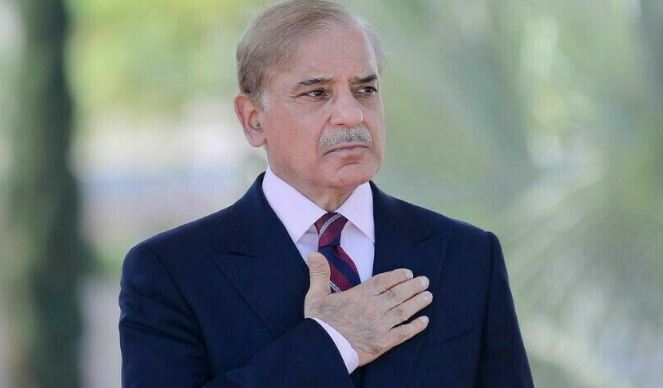
ISLAMABAD, JUL 12 (DNA): Prime Minister Shehbaz Sharif on Saturday said that the government was committed to complete economic turnaround by carrying out long overdue reforms, structural changes and prioritizing meritocracy.

Addressing a group of Pakistani students who are getting education in the world leading educational institutes and selected for government’s internship summer scholars programme of Uraan Pakistan, the prime minister said that when they took charge of the government during 2023, Pakistan was facing a serious threat of default and their fate was hanging in balance.

“The majority viewed that Pakistan would go into default while the minority thought that we will escape this disaster,” he said, adding that he held marathon discussions with the IMF managing director and assured that Pakistan would not run into default and achieve the IMF programme.

The prime minister said that at that period, the economy was in bad shape, with galloping inflation touching 38 percent while the policy rate was hovering at 22.5 percent. The business atmosphere in the country was very skeptical.

The prime minister, in his remarks, telecast on national Tv channels, further said that they had the huge burden and onus to march in unison and work with sincerity of purpose to change the situation.

The joint work paid dividends as now the policy rate was capped under 11 percent. The Uraan Pakistan programme had taken off, he added.

“The road is very challenging as there were long overdue reforms, and the structural changes had not taken place in the last many decades,” he observed, and stressed that Pakistan had to undertake these overdue long structural changes, through untiring and long efforts.

He also referred to reforms and digitization of Federal Board of Revenue (FBR) and said that they had shown doors to the corrupt people without being influenced.

To weed out corruption in FBR, he was very clear in his mind and took decisions which had never taken without heeding to a culture of any ‘Sifarish’, he added.

The prime minister said that previously, the digitization process in FBR was only confined to papers as no practical step was taken and blamed the corrupt and shrewd elements for hoodwinking the system.

He said that it did not mean that there was a dearth of hardworking and honest bureaucrats who were not given the chance, adding that they had brought forth the best people in FBR, including its chairman, and hired expert consultants.

Now, he said digitization was the hallmark of FBR, where working had been converted from papers to multiple initiatives, including AI, and faceless interaction.

Through enforcement of these measures, the revenue collection had risen from Rs12 billion to more than 50 billion rupees in one year, showing massive tax evasion in one sector alone, he maintained.

The prime minister further emphasized, “We have a long and thorny journey and facing mountain like impediments, but I assure that we will not shy away from discharging our duties in the service of the nation.” He said that he believed in teamwork and never took credit for any achievement, adding that he saluted those who performed and sent those home who did not show well as “delivery is the name of the game; performance is the name of the game.”

Terming the economic challenges as difficult, he resolved that they would have to achieve the targets and if they did not, they would have to face the music.

Underscoring the significance of country’s youth, he said key of success of this country was in their hands and any expenditure on youth was akin to a future investment on the country.

Later, responding to students’ queries, he recollected that during his tenure as chief minister Punjab, his government had initiated scholarship programmes on merit to facilitate the deprived and poor students in the backward areas of the province.

To another question, the prime minister said that due to climate change, Pakistan suffered a lot during 2022 floods, with economy faced $30 billion dollars losses, despite the fact that the country did not contribute a friction of percent in the global greenhouse effects.

The prime minister, responding to a question, said that during the month of May, Pakistan faced India’s uncalled aggression in the backdrop of Pahalgam incident.

He said that he had offered a straight proposal to India to let this matter be investigated by the international bodies but India never commented on this proposal.

As result of Indian aggression, 55 Pakistanis were martyred and they responded in self-defence by downing six Indian planes, he said, adding while on May 9 and 10, after India’s attack, Pakistan responded with full might and taught the enemy a lesson.

The prime minister praised the armed forces for showing their professional capabilities and courage, saying Pakistan won the conventional war.

He maintained that Pakistan’s nuclear programme was only meant for the peaceful purposes and for the self-defence.

The prime minister expressed the hope that students would benefit from the Uraan Pakistan initiative and extended his best wishes for their future.=DNA

ICCI vows pro-business advocacy

ICCI vows pro-business advocacy

ISLAMABAD, JUL 12 /DNA/ – Nasir Mansoor Qureshi, President of the Islamabad Chamber of Commerce and Industry (ICCI), has reaffirmed the business community’s unwavering commitment to national development, stating that despite various challenges, entrepreneurs remain determined to serve the country. He emphasized that ICCI is fully dedicated to its advocacy role, serving as a bridge between the government and the private sector to facilitate ease of doing business and promote economic progress.

He expressed these views while addressing a delegation of the Builders Association, which visited the Chamber House under the leadership of its President Sardar Khurshid Ahmed Khan to discuss mutual cooperation and highlight sector-specific concerns.

President Qureshi assured the visiting delegation that ICCI will proactively take up the issues facing the builders community with the relevant authorities, including the Capital Development Authority (CDA), to ensure their timely resolution and to help create a more congenial and supportive environment for builders and developers to operate efficiently.

Earlier, Sardar Khurshid Ahmed Khan, President of the Builders Association (H-13), briefed the Chamber leadership on the pressing challenges confronting the builders’ sector, particularly those related to regulatory matters with CDA. He reaffirmed the Association’s readiness to fully comply with all standard operating procedures (SOPs) and to cooperate with the CDA for the creation of a streamlined and transparent working environment.

On this occasion, Senior Vice President ICCI Abdul Rehman Siddiqui and Vice President Nasir Mehmood Chaudhry apprised the delegation of various initiatives taken by ICCI under the leadership of President Qureshi for the facilitation of the business community. They assured that all possible efforts would be made to support builders and developers and address their concerns through effective representation.

Prominent members of the visiting delegation included Basharat Gujjar, Gulfraz, Aftab Kazmi, Malik Changeez, Malik Shahbaz, and Yousuf Khattak. ICCI Executive Member Aftab Ahmed Gujjar was also present on the occasion.=DNA

Pakistan’s rain havoc and killings in Baluchistan

Pakistan’s rain havoc and killings in Baluchistan

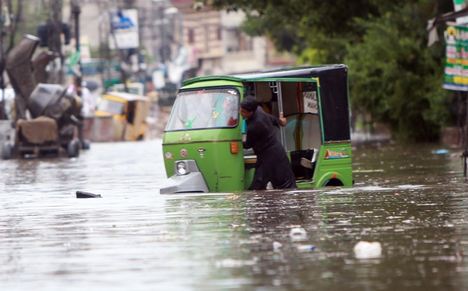
Once again, Pakistan finds itself at the mercy of nature’s fury, with torrential rains wreaking havoc across the country. Dozens of precious lives have been lost, homes have been destroyed, and thousands have been rendered homeless. The scenes of devastation are heart-wrenching—collapsed roofs, flooded streets, and desperate families searching for shelter. Yet, amid this unfolding tragedy, the government’s response has been nothing short of criminal negligence. The Met Office has already warned of more rains in the coming week, which means more destruction, more suffering, and more deaths. But where is the National Disaster Management Authority (NDMA)? Where is the government’s rehabilitation plan? The painful truth is that there is none.

This is not the first time Pakistan has faced such a calamity. Year after year, monsoon rains bring death and destruction, and year after year, the state fails to prepare. The floods of 2010 and 2022 were supposed to be wake-up calls—lessons in disaster preparedness and climate resilience. Yet, nothing has changed. The NDMA, which was created precisely to handle such crises, remains a dysfunctional entity, reactive rather than proactive. Where are the early warning systems? Where are the evacuation plans? Why are there no proper drainage systems in urban centers to prevent flooding? The answers to these questions reveal a bitter reality: those in power do not care.

While ordinary Pakistanis suffer, the ruling elite remains comfortably detached. Their priorities are clear—staying in power, securing their privileges, and engaging in political squabbles. The recent rains have exposed, yet again, how little this government values human life. There is no rehabilitation plan for those who have lost everything. No emergency shelters, no compensation for the deceased, no proper medical aid for the injured. The victims are left to fend for themselves, while ministers issue hollow statements of sympathy.

What makes this negligence even more unforgivable is that the Met Office had already predicted heavy rainfall. Yet, no preventive measures were taken. No efforts were made to reinforce weak infrastructure, clear clogged drains, or relocate vulnerable communities. The government had time to act—but it chose not to. Now, with more rains expected, the cycle of destruction will continue, and more lives will be lost—all because of the criminal incompetence of those in charge.

Pakistan is not being governed—it is being run on an ad-hoc basis. There is no long-term planning, no vision, and no commitment to public welfare. Every crisis is met with the same knee-jerk reactions: temporary relief camps, empty promises, and photo ops. But once the media spotlight fades, so does the government’s attention. The victims of these rains will soon be forgotten, just like the victims of previous disasters. Unfortunately this saga continues unabated no mater which party is in power.

This is not governance—it is a betrayal of the people. A responsible government would have invested in infrastructure, enforced building codes, and created robust disaster response mechanisms. It would have ensured that meteorology warnings translate into action. Instead, Pakistan’s rulers are content with their usual approach: do nothing, let people suffer, and then pretend to care when the damage is done.

Enough is enough. Pakistan cannot afford this cycle of neglect and destruction any longer. The government must adopt a pro-people approach—one that prioritizes human life over political power games. Immediate steps must be taken:

Emergency Relief and Rehabilitation – The NDMA and provincial authorities must immediately set up proper relief camps, provide financial aid to victims, and begin reconstruction of damaged homes.

Preventive Measures for Future Rains – Drainage systems must be cleared, weak structures reinforced, and vulnerable communities relocated before the next spell of rain hits.

Long-Term Climate Resilience – Pakistan must invest in flood-resistant infrastructure, early warning systems, and urban planning to mitigate future disasters.

Accountability – Those responsible for this criminal negligence must be held accountable. The NDMA’s failure to act should be investigated, and officials must answer for their inaction.

The rains will come again—this is an inevitability. But the destruction and deaths they bring are not. They are the result of a failed system, a negligent government, and a ruling class that has abandoned its people. Pakistan needs leaders who actually lead, who take responsibility, and who put the people first. Until that happens, these tragedies will keep repeating, and the blood of the victims will remain on the hands of those in power.

The recent Swat tragedy, where flash floods claimed lives and destroyed homes, saw only the Deputy Commissioner removed—a mere scapegoat, not real accountability. Meanwhile, the Karachi building collapse still haunts us, with no action against negligent builders and corrupt officials. Sindh’s governance is in shambles, with rampant negligence and zero consequences. Across Pakistan, this pattern persists: disasters strike, people suffer, and the powerful walk away unscathed.

On July 10, 2025, yet another gruesome tragedy unfolded in Balochistan as terrorists brutally killed nine innocent bus passengers. All the victims hailed from Punjab, adding another painful chapter to the region’s long-standing history of bloodshed and violence.

This heinous act underscores the alarming deterioration of the law and order situation in Balochistan — a province that continues to suffer despite countless promises of peace and stability. The state’s inability to protect its citizens, even on public highways, is deeply troubling and demands urgent and uncompromising action.

It is high time the government confronts this crisis head-on. No more statements of condemnation or routine security reviews will suffice. What Balochistan needs is a clear and comprehensive strategy to root out militancy, ensure justice for victims, and restore public confidence. Until then, the people of Balochistan — and indeed the entire country — will continue to bleed.

The U.S. Sanctions on Francesca Backfired

Qamar Bashir

 By Qamar Bashir

In a jarring move that sent shockwaves across the globe, the United States imposed sanctions on Francesca Albanese, the United Nations Special Rapporteur on the Occupied Palestinian Territories, accusing her of “systematic demonization” of the U.S. But behind this vague allegation lies a disturbing truth: Albanese’s real “offense” was exposing the industrial economy of genocide—one fueled not just by the Israeli government but by a vast network of corporations, hedge funds, universities, and pension systems across the West.

Her latest report, “The Economy of Genocide,” and a subsequent viral interview laid bare the machinery of death behind the war on Gaza. She revealed how weapons manufacturers, bulldozer suppliers, and construction conglomerates are not merely supporting genocide—they are profiting from it. Israeli bulldozers raze entire neighborhoods, while construction contracts to rebuild illegal settlements flow rapidly. For every bomb dropped, there’s a dividend earned; for every displaced family, a new high-rise emerges.

But what shocked the conscience of the global public was not merely her confirmation of genocide—it was the financial lifelines she traced. From American surveillance and cloud-computing firms to European pension funds and elite universities, Albanese exposed how deeply this war is sustained by capital flows. Norway’s Government Pension Fund alone holds over $122 billion invested in companies complicit in Israeli occupation and military operations. Similar financial trails lead to Sweden, Germany, France, and the United Kingdom.

Even Ivy League institutions like Harvard, Stanford, and NYU—often hailed for social justice advocacy—are enmeshed through opaque endowment investments and silent third-party fund managers. These universities, while professing solidarity with Palestine in student forums, funnel capital into firms that supply arms and equipment to Israeli forces.

Francesca Albanese did not stop at the economic trail. She painted an unflinching picture of Gaza’s humanitarian catastrophe. “More than 75% of those killed in Gaza and the West Bank are women and children,” she said, emphasizing that these victims cannot be labeled militants by any legal or moral standard. “Their only crime is being Palestinian.” This demographic devastation is not accidental. It is systematic, targeted, and genocidal.

Albanese called Gaza “a living textbook of genocide,” fulfilling every criterion under international law—deliberate killings, destruction of living conditions, forced displacement, and erasure of cultural identity. She described how Israeli raids have decimated Palestine’s knowledge ecosystem: universities bombed, professors assassinated, students slaughtered, libraries turned to dust. Gaza’s last remaining research centers and cultural hubs have been wiped out. It is not only the bodies, but the collective memory and future of a nation being erased.

Commerce and civil society lie in ruins. Shops, bakeries, factories, and schools have been obliterated. Gaza is left with no one to educate, to trade, or to heal. The goal is clear: to reduce an entire people to dependency, silence, or oblivion. And yet, this extermination campaign is not funded solely by Tel Aviv or condoned solely by Washington—it is driven by a war economy backed by multinational private contractors.

Security firms, tech companies, arms manufacturers, and logistics contractors have turned Gaza into a testing ground and a profit center. These corporations operate in sync with the IDF, often surpassing state authorities in reach and precision. Private surveillance firms now work alongside Mossad, analyzing data harvested by U.S.-built platforms. Francesca Albanese warned: “This is not just a war—it’s a joint venture. A business enterprise of destruction.”

She highlighted that decision-makers in boardrooms, not just war rooms, control this carnage. A faceless ecosystem of fund managers, politicians, and lobbyists keep the war alive. Private defense contractors mint money; lawmakers receive donations; media pundits get scripts. Israel’s military policy has become a business model. And what especially rattled the U.S. and Israeli establishments was Albanese’s courage in naming these links, not as bystanders but as primary beneficiaries and drivers of genocide.

The sanctions on her backfired spectacularly. Francesca Albanese became an instant global icon. Her voice, once confined to UN documents, exploded across media platforms. She became a symbol of defiance, truth, and moral clarity. “I have done my job,” she stated. “And for that, I was sanctioned. But if telling the truth is punishable, then justice is already dead.”

She revealed she had contacted 48 of the entities named in her report, offering them a right of reply. Only 15 responded—most with evasive statements. None denied the facts. None divested. “They stay in with full knowledge and full intent,” she said. “That makes them complicit.”

In her concluding message, Albanese offered not just a diagnosis but a remedy. She called for immediate divestment from Israeli-linked corporations, a complete boycott of products manufactured or distributed by complicit companies, and full transparency from universities and public institutions on their financial entanglements. Symbolic gestures are not enough, she argued—only strategic, financial, and civic disassociation from genocide will force change.

Yet, as Francesca’s voice grows louder, a larger consensus is forming across the political and analytical spectrum. Experts and former officials now agree: the key to stopping the Gaza genocide rests squarely with the United States. A policy reversal by the White House—if backed by public will—could alter the tide. President trump, or his successor, must face the moral and political reckoning of this complicity. No Israeli prime minister, not even Netanyahu, can sustain such a war without uninterrupted U.S. arms, aid, and vetoes.

Many now identify Netanyahu’s war-mongering policies as the root cause of perpetual conflict. His government must be forced, through sanctions and international legal pressure, to abandon expansionism and militarism. But there’s a third force equally dangerous: the war economy itself. Fueled by private contractors, weapon lobbies, and pro-Israel institutions like AIPAC, this machine funds lawmakers, shapes CNN and Fox coverage, and pressures legislatures globally to maintain the killing spree for profit.

The time has come for people—not governments—to act. The collective conscience of the world, including Americans, Israelis, and the global Islamic community, must rise. It is time to boycott Israeli goods, end all economic support to war profiteers, and demand democratic action from parliaments to stop the slaughter. If we remain silent now, history will not only condemn the leaders who enabled genocide—it will also judge the nations, societies, and individuals who watched, calculated, and did nothing.

Francesca Albanese showed us that genocide is no longer hidden—it’s televised, monetized, and outsourced. The question now is not whether we know, but whether we will act.

By Qamar Bashir

 Press Secretary to the President (Rtd)

 Former Press Minister, Embassy of Pakistan to France

 Former MD, SRBC | Macomb, Michigan, USA

Stay Connected

64FansLike
60FollowersFollow

Latest Reviews

Exchange Rates

USD - United States Dollar
EUR
1.17
GBP
1.35
AUD
0.72
CAD
0.73