Home Blog Page 575

New Indonesian envoy arrives in Islamabad

New Indonesian envoy arrives in Islamabad

Over the years, the relations between Pakistan and Indonesia have transitioned from cordial to truly excellent, underpinned by mutual respect, shared values, and a commitment to regional peace and economic cooperation. The two countries enjoy close cultural, religious, and historical bonds, which have been further cemented through high-level diplomatic engagements and people-to-people contacts

DNA

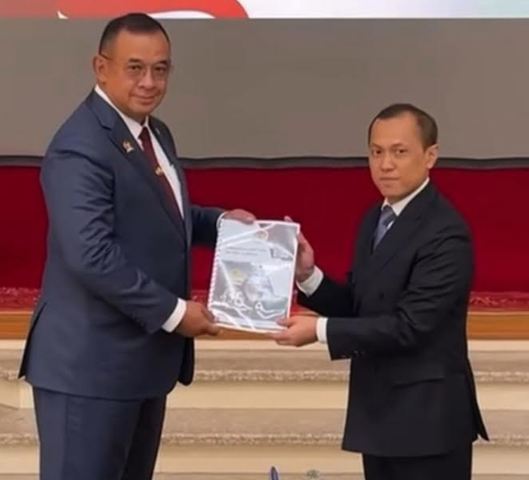
ISLAMABAD, JUL 14: Chandra Warsenanto Sukotjo has officially assumed his responsibilities as the new Ambassador of the Republic of Indonesia to Pakistan, marking a fresh chapter in the already robust and growing relationship between the two brotherly countries. His arrival in Islamabad has been warmly welcomed by the diplomatic community, reflecting the deep-rooted and time-tested ties between Pakistan and Indonesia.

Over the years, the relations between Pakistan and Indonesia have transitioned from cordial to truly excellent, underpinned by mutual respect, shared values, and a commitment to regional peace and economic cooperation. The two countries enjoy close cultural, religious, and historical bonds, which have been further cemented through high-level diplomatic engagements and people-to-people contacts.

Particularly noteworthy is the significant diplomatic momentum gained during the tenures of previous Indonesian ambassadors, Mr. Iwan Suyudhie Amri and Mr. Adam Mulawarman Tugio. Ambassador Iwan Amri played a pivotal role in reinvigorating bilateral cooperation across multiple domains including trade, education, and culture. His tenure saw increased academic and cultural exchanges and the strengthening of the Indonesia-Pakistan Parliamentary Friendship Group.

Ambassador Adam Tugio, who succeeded him, further elevated these ties by advocating greater economic diplomacy. He was instrumental in organizing high-level business forums, promoting trade between the two nations, and supporting collaboration in halal food, textiles, pharmaceuticals, and tourism. His efforts also strengthened interfaith and inter-cultural dialogue, bringing the peoples of both nations even closer.

Now, with Mr. Chandra at the helm, expectations are high that this upward trajectory will continue. He brings with him a wealth of experience and a dynamic approach to diplomacy, which many hope will further enhance bilateral cooperation in key areas such as trade, investment, education, and digital economy.

Indonesia and Pakistan also work closely in multilateral forums such as the Organization of Islamic Cooperation (OIC) and the Developing-8 (D-8) to advance shared interests in the Muslim world and the Global South.

With mutual goodwill, expanding cooperation, and a shared vision for prosperity, the future of Pakistan-Indonesia relations looks brighter than ever. Ambassador Chandra’s appointment comes at a time when both nations are seeking to diversify their international partnerships. His tenure is expected to open new avenues of collaboration and reaffirm the strong friendship that binds Jakarta and Islamabad.

‘Rs32bn financial irregularities’ unearthed in KP Cities Improvement Project

'Rs32bn financial irregularities' unearthed in KP Cities Improvement Project

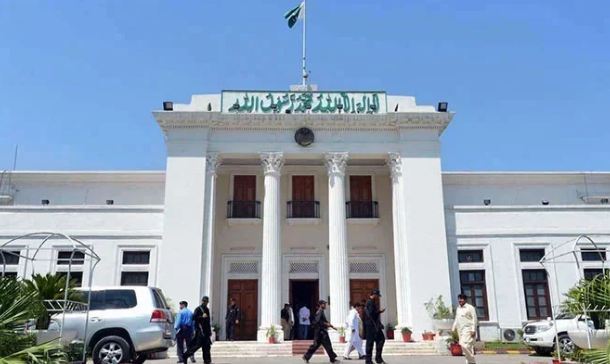
PESHAWAR, JUL 13: A major financial scandal has surfaced in Khyber Pakhtunkhwa, with official documents revealing alleged irregularities worth Rs32 billion in the KP Cities Improvement Project (KPCIP), which aims to enhance urban infrastructure and municipal services in major cities of the province.

The Rs97 billion urban development project is jointly funded by the Asian Development Bank (ADB), the Asian Infrastructure Investment Bank (AIIB), and the KP government.

The project’s objective is to enhance urban infrastructure and municipal services in five cities — Peshawar, Abbottabad, Kohat, Mardan, and Mingora. It was launched at the end of 2022 and is expected to be completed by the end of 2026.

The irregularities prompted several provincial lawmakers — including PTI MPA Muhammad Arif, JUI-F’s Sajjad Ullah, independent lawmakers Taj Muhammad, Munir Hussain Lughmani, and Muhammad Riaz — to write to the chairman of the Public Accounts Committee (PAC), demanding an inquiry into the matter.

According to the letter — a copy of which is available with Geo News — a joint venture involving a Pakistani and an unregistered foreign company was awarded contracts worth billions of rupees, which were not registered with the Federal Board of Revenue (FBR), KP Revenue Authority, or the Pakistan Engineering Council.

Despite limited progress on the ground, Rs32 billion were allegedly disbursed to the company. The payments were reportedly made based on falsified progress reports, poor oversight, and alleged collusion between project staff and consultants, the letter stated.

It further claimed that the foreign company evaded taxes, with no record of income, sales, or withholding tax payments — causing significant losses to the national exchequer.

The lawmakers have demanded a formal investigation into the illegal payments, summoning relevant officials from the KPCIP, the Local Government Department, and project consultants.

The letter also urges the matter to be referred to the National Accountability Bureau (NAB), FBR, and other regulatory bodies, holding all officers accountable who approved payments based on fake or incomplete documentation.

Taking notice of the complaints, Speaker KP Assembly and PAC Chairman Babar Saleem Swati have summoned a meeting of the committee on July 17 to discuss the matter. Officials from the Local Government and Communications & Works Departments, along with the Deputy Auditor General (North), have been directed to attend.

The PAC chairman has directed all relevant departments to prepare detailed responses on the matter.

Speaking to Geo News, JUI-F MPA Sajjad Ullah confirmed that a formal request was submitted to the PAC regarding the alleged large-scale corruption. “The speaker has summoned a session, and everything will be made clear,” he added.

In February 2025, an audit of the cities improvement project uncovered similar financial irregularities, misappropriations, unlawful payments and wasteful expenditure.

The audit findings indicate total financial discrepancies amounting to Rs8.4853 billion, raising serious concerns over governance, oversight and accountability in the province.

The audit report highlights multiple instances of financial mismanagement, including misappropriation of funds, unauthorised work, unapproved variations and deliberate cost escalations. Funds were disbursed for work that was never executed, resulting in significant losses. Payments of Rs8.80 million were misappropriated for non-executed work at the site, while Rs11.219 million was falsely claimed for fibreglass installation in a parking area.

IMF official praises Pakistan’s ‘strong’ progress under EFF programme

IMF official praises Pakistan's 'strong' progress under EFF programme

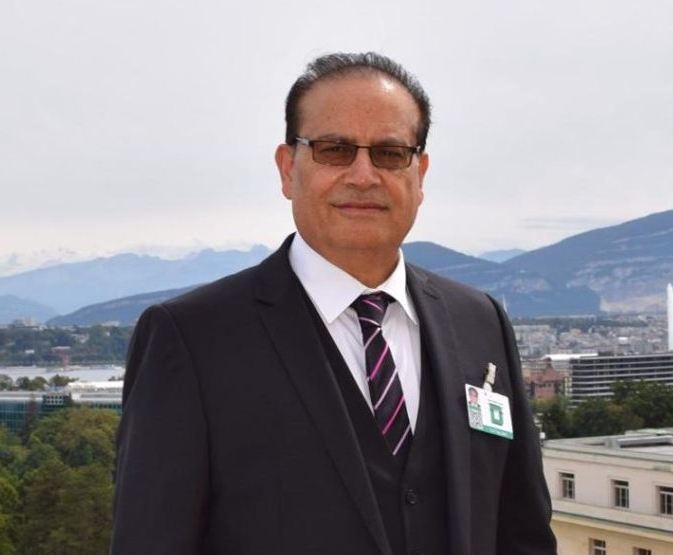
ISLAMABAD, JUL 13: International Monetary Fund (IMF) Resident Representative for Pakistan Mahir Binici said that the country’s performance under the Extended Fund Facility (EFF) has been “strong so far” and expressed hope that its economic growth would strengthen this year.

Binici delivered a comprehensive guest lecture at the Sustainable Development Policy Institute (SDPI) in which he shed light on the evolving economic landscape across the MENA region and Pakistan.

He reaffirmed the Washington-based lender’s continued support for the country’s economic and climate reform agenda.

Addressing economists, researchers and policy experts, Binici said that the growth across the Middle East, North Africa (MENA) region and Pakistan was expected to strengthen in 2025 and beyond.

However, he cautioned that elevated trade tensions, geopolitical fragmentation and weakening global cooperation continued to generate exceptional uncertainty and weigh on the global economic outlook, underlining the urgent need for prudent and forward-looking policy actions, said a press release issued today.

Focusing on Pakistan, Binici said that the country’s performance under the IMF’s EFF has been “strong so far”, adding that the successful completion of the first review by the IMF Executive Board in May 2025 was a key milestone.

“Early policy measures have helped restore macroeconomic stability and rebuild investor confidence, despite persistent external challenges,” Binici remarked.

He emphasised that structural reforms remain central to Pakistan’s long-term economic sustainability, particularly reforms that strengthen tax equity, improve the business climate, and encourage private-sector-led investment.

He also spotlighted Pakistan’s progress on climate-related reforms under the IMF’s Resilience and Sustainability Facility (RSF).

According to Binici, the RSF is designed to help countries like Pakistan bolster resilience to climate-related vulnerabilities and meet international climate commitments.

He mentioned that the key areas of reform under the RSF included enhancing public investment planning, promoting efficient and sustainable use of water resources, improving institutional coordination for disaster preparedness and financing, and expanding the availability and transparency of climate-related data.

Binici stressed: “Support through the RSF will not only strengthen Pakistan’s climate resilience but also help unlock green investments and foster a more climate-conscious economic trajectory.”

SDPI Executive Director Dr Abid Qaiyum Suleri welcomed the IMF representative’s outreach, noting the importance of informed economic dialogue and multilateral cooperation in the country’s journey toward sustainable development.

The lecture concluded with an interactive discussion on fiscal and monetary policy frameworks, external buffers, and the role of international institutions in fostering inclusive growth.

Pakistan and the IMF had reached a staff-level agreement in March under the $7 billion EFF, aimed at ensuring economic stability and facilitating structural change.

Japan outclass Pakistan to win Men’s U18 Asia Cup 2025 title

Japan outclass Pakistan to win Men's U18 Asia Cup 2025 title

DAZHOU, JUL 13: Japan defeated Pakistan 3-0 to claim the Men’s U18 Asia Cup 2025 title at the National Hockey Training Centre on Sunday.

The Japanese side remained unbeaten throughout the tournament, showcasing dominance and composure, while Pakistan’s winning streak came to an end with a goalless performance in the final.

Pakistan began the match with aggressive intent, immediately pressing forward to challenge the Japanese defense in search of an early breakthrough.

Despite both teams attacking with intensity, the opening quarter remained goalless as neither side could find the net.

In the second quarter, Japan broke the deadlock in the seventh minute through Yuma Fujiwara, who scored the opening goal to give his side a crucial lead and put Pakistan under pressure. At halftime, Japan led 1-0.

The third quarter saw Pakistan create multiple opportunities to level the score.

They earned a penalty corner within the first minute, but a brilliant save by the Japanese goalkeeper denied them. Moments later, another penalty corner went unconverted, as Pakistan struggled to capitalise on key moments.

Japan then doubled their lead with another a clinical goal from Fujiwara, making it 2-0 and further tightening their grip on the match. Despite earning a third penalty corner, Pakistan failed once again.

In the final moments of the quarter, they were awarded a fourth penalty corner but couldn’t break through the Japanese defense.

Heading into the final quarter trailing 2-0, Pakistan needed a strong comeback, but Japan remained resolute.

In the closing minutes, skipper Tatsuaki Yasui extended Japan’s lead to 3-0 with a well-executed penalty corner, sealing the victory and the title.

Earlier in the tournament, Pakistan showcased impressive form. They began their campaign with a resounding 8-0 win over Hong Kong, followed by a dominant 9-0 victory against Sri Lanka.

In their third match, they defeated Bangladesh 6-3, virtually securing a place in the semifinals.

In the quarterfinals, Pakistan outclassed China 2-1 with a commanding performance to book their spot in the final four.

Pakistan continued their remarkable run, clinching a nail-biting 4-3 victory over Malaysia in a dramatic semifinal decided by a penalty shootout.

The high-stakes clash had ended 3-3 in regulation time, forcing the contest into a tense shootout.

Qamar Bashir

The Heart Outthinks the Brain

 By Qamar Bashir

For centuries, Muslims have believed with conviction that the heart is more than a biological pump—it is the spiritual and emotional core of the human being. This belief is not derived from myth or metaphor but from the unaltered, timeless verses of the Qur’an and the recorded sayings of Prophet Muhammad (peace be upon him). The Qur’an speaks repeatedly of the heart as the center of understanding, faith, remembrance, and moral decision-making. Allah says, “They have hearts with which they do not understand,” (Surah Al-A‘raf 7:179) and “It is not the eyes that are blind, but the hearts within the breasts that are blind” (Surah Al-Hajj 22:46). These declarations are not poetic abstractions. They are statements of physiological, psychological, and spiritual truth, long before such truths were accessible to scientific inquiry.

And yet, for the better part of the modern era, mainstream science reduced the heart to a muscular organ, essential but mechanical, pumping blood throughout the body with no capacity for thought or emotion. This assumption took hold not just in Western medicine but across much of the global intellectual landscape, including the Muslim world, where scientific validation is too often seen as the final authority. The heart, in this reductionist view, was subservient to the brain—a vital servant, yes, but without any autonomous or higher function.

This was the dominant worldview—until science itself began to shift.

In the early 1990s, a groundbreaking discovery by neurocardiologist Dr. J. Andrew Armour challenged the orthodoxy. Armour and his colleagues uncovered a dense network of neurons—more than 40,000—embedded within the walls of the human heart. This complex neural system includes sensory neurons, motor neurons, and interneurons, much like the brain itself, and is capable of processing information, making decisions, and even learning independently of the central nervous system. Armour coined the term “intrinsic cardiac nervous system,” which researchers now refer to as the “heart brain.”

This discovery led to a new field of study: neurocardiology. From this field, a stunning realization has emerged—the heart does not simply obey orders from the brain. It sends more signals to the brain than it receives. Nearly 90% of the fibers in the vagus nerve, the primary communication highway between heart and brain, are afferent—carrying data from the heart to the brain. The heart informs the brain about the body’s physiological state and directly affects the function of brain regions responsible for emotional processing, threat assessment, and decision-making, including the amygdala, hypothalamus, thalamus, and prefrontal cortex. In other words, the heart has a say not only in how we feel but in how we perceive and react to the world around us.

This neural communication is not only functional but influential. Scientific studies by institutions such as the HeartMath Institute have shown that the heart’s rhythmic patterns can synchronize brainwave activity, leading to what researchers call “heart-brain coherence.” When people experience emotions like gratitude, compassion, and love, their heart rhythms become harmonious and wave-like, sending calming, stabilizing signals to the brain. This state is linked with improved cognitive function, emotional balance, and physical well-being. Conversely, negative emotions such as anger, fear, and anxiety create erratic heart rhythms that disrupt communication with the brain and impair mental clarity.

These findings echo the hadith of the Prophet Muhammad (peace be upon him), who said, “Truly in the body there is a morsel of flesh which, if it is sound, the whole body is sound, and if it is corrupted, the whole body is corrupted. Verily, it is the heart.” (Sahih al-Bukhari and Sahih Muslim). Science is now confirming what revelation articulated long ago: the heart governs the well-being of the entire being—physically, emotionally, and spiritually.

But there is more. Modern research also shows that the heart is involved in intuitive processes. In the famous Iowa Gambling Task, participants begin to unconsciously favor better choices before they can articulate why—often guided by subtle physiological cues, such as heart rate variability. The implication is that the heart is involved in real-time decision-making and prediction, well before the rational mind catches up. These “gut feelings,” long dismissed by science, are now understood to be rooted in the body’s neural networks, particularly those of the heart.

Perhaps most striking is the discovery that the heart produces hormones typically associated with the brain. The heart secretes oxytocin, the so-called “love hormone,” which is involved in social bonding, empathy, and trust. Researchers have found that concentrations of oxytocin in the heart can rival those found in the brain. Additionally, the heart plays a role in producing atrial natriuretic peptide (ANP), a hormone that regulates blood pressure but also influences stress response in the brain. These chemical pathways further establish the heart not as an emotional bystander but as an endocrine organ with executive capabilities.

All of this—validated in peer-reviewed scientific journals, supported by hard data and lab experimentation—brings us back to the starting point of revelation. The Qur’an told us, “The Day when neither wealth nor children will benefit, except for one who comes to Allah with a sound heart” (Surah Ash-Shu‘arā 26:88–89). That “sound heart” is not just a religious metaphor. It is a literal condition of clarity, balance, coherence, and peace—scientifically measurable and spiritually transformative.

In our time, this truth is being embraced not only by Muslim scholars or imams but by increasing numbers of Western men and women—intellectuals, scientists, teachers, and students—who are turning to Islam after discovering the deep spiritual coherence of the Qur’an. Their conversions are not impulsive. They are the result of searching, studying, reflecting, and feeling. When asked why they accepted Islam, many reply in similar terms: “Because the Qur’an touched my heart.” They speak of the unmatched clarity, authenticity, and spiritual resonance they found in Islam—especially in a world that often seems morally hollow and spiritually exhausted.

These converts are not silent. They are visible, articulate, and engaged, using platforms like TikTok, Instagram, and YouTube to explain how Islam changed their lives. They speak of a newfound sense of purpose, inner peace, and connection to the Divine—feelings that did not emerge from intellectual debate alone, but from something deeper and more visceral. The Qur’an did not speak to their minds first; it spoke to their hearts.

And perhaps that is the most important lesson in all of this. For too long, humanity has glorified the mind at the expense of the heart. Nations have rationalized wars, genocides, and exploitation in the name of strategy and logic, while silencing the voice of compassion. The mind, when severed from the moral compass of the heart, becomes a source of endless conflict. It invents problems to feel purposeful, and solves them with tools of control and destruction. The heart, on the other hand, thrives on gratitude, forgiveness, generosity, and love. It does not seek domination; it seeks peace.

If we, as individuals and as a civilization, wish to escape the cycles of tyranny, conflict, and spiritual emptiness, we must shift from the mind to the heart—not to abandon intellect, but to elevate it by reconnecting it to its source. Revelation is that source. Science, when honest, serves it. The Qur’an, preserved in its original form, remains the final and flawless testimony of that truth.

In a time of confusion, let us listen not only with our ears or minds, but with our hearts—for that is where truth resides, and where salvation begins.

By Qamar Bashir

 Press Secretary to the President (Rtd)

 Former Press Minister, Embassy of Pakistan to France

 Former MD, SRBC | Macomb, Michigan, USA

Pakistan-Afghanistan must overcome trust gap, say Analysts

Pakistan-Afghanistan must overcome trust gap

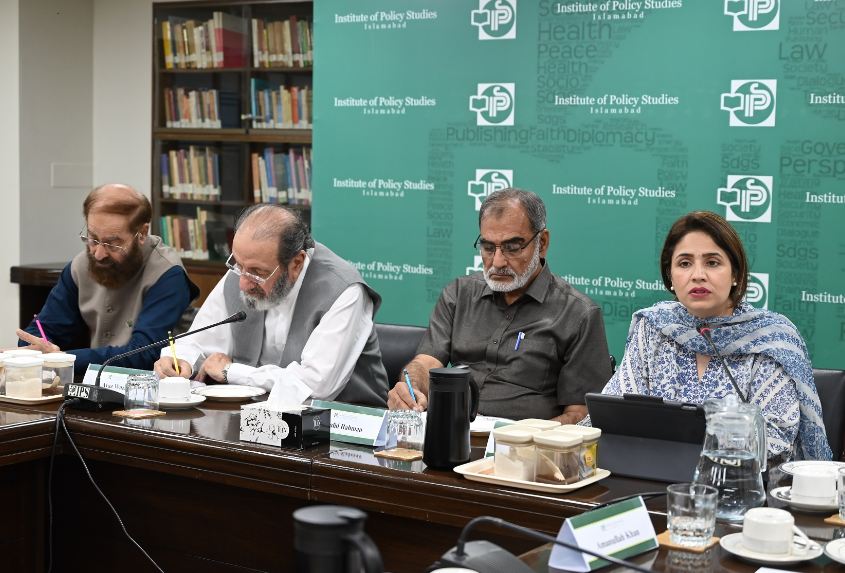
ISLAMABAD, JUL 13 /DNA/ – Addressing the persistent trust deficit between Pakistan and Afghanistan is essential to strengthening the core of their bilateral relationship and setting it on a stable and sustainable path. Confidence-building measures that incorporate long-term, people-centric engagement and a coherent, integrated framework are crucial for both nations and the stability of the region. In this context, a strategic shift toward a ‘4P’ approach – prioritization, partnership, participation, and persistence – is a viable path forward.

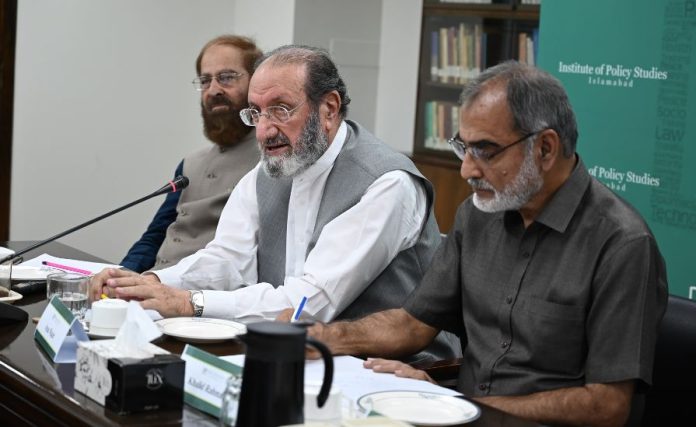
This was discussed by former ambassadors, scholars, and researchers during a session on “Evolving Political Dynamics of Pakistan-Afghanistan Relations” at the Institute of Policy Studies (IPS), Islamabad. The session featured insights from Khalid Rahman, chairman IPS, Ambassador (r) Syed Abrar Hussain, vice-chairman IPS, Amina Khan, director CAMEA, Institute of Strategic Studies Islamabad, Ambassador (r) Ayaz Wazir, Brig (r) Said Nazir, defense analyst, ‎Ambassador (r) Nasrullah Khan, Brig (r) Khurshid Khan, IPS associate, Tahir Khan, senior journalist, Dr Lutfur Rehman, author and researcher, Brig (r) Tughral Yamin, IPS associate, Dr Azhar Ahmad, IPS associate, Amanullah Khan, former member, RCCI, Sheharyar Khan, executive director, National Dialogue Forum, and Dr Sadia Sulaiman, assistant professor Quaid-i-Azam University.

Speakers emphasized that foundational tensions continue to strain bilateral ties. While the Taliban’s return to power in 2021 initially sparked hope for a more stable western border, this expectation was dampened by a surge in cross-border attacks by the Tehreek-e-Taliban Pakistan (TTP). Speakers noted that although the Taliban claim to have limited control over TTP, ground realities suggest otherwise.

The evolving governance structure in Afghanistan reflects a mix of authoritarianism and pragmatism, with the Taliban gaining de facto internal and external recognition despite lacking formal international legitimacy. However, their compartmentalized foreign policy, which engages selectively based on national interests, has limited meaningful regional cooperation and complicates diplomacy.

Speakers emphasized the need for a reset in bilateral relations, grounded in political will and pragmatic diplomacy. This includes addressing each other’s core concerns, security for Pakistan and trade for Afghanistan, and pursuing economic interdependence, refugee management, and regional dialogue through trilateral forums.

The relationship, they argued, has failed to evolve due to the dominance of the security lens and the absence of a genuine bilateral essence. To address this, a ‘4P’ approach was recommended: aligning ‘priorities’, fostering ‘partnerships’, enabling ‘participation’ of both peoples, and ensuring ‘persistence’ in engagement. It is vital to find common ground and invest in domains such as shared human capital. People-to-people contact, especially involving the global presence of Afghan alumni from Pakistani institutions, was highlighted as a practical tool to counter propaganda and build goodwill.

Media narratives and a coherent national story also play a critical role in shaping perceptions. In response, speakers called for independent media engagement, stronger public diplomacy, and a proactive role by Pakistani missions in Afghanistan to promote the country’s contributions to various sectors of Afghanistan.

Speakers concluded that Pakistan and Afghanistan must reorient their relationship around shared interests and mutual respect. A regional, rather than rigidly systematic, approach was considered more effective for achieving sustainable peace and cooperation.

Concluding the session, Khalid Rahman emphasized that local, regional, and global dynamics must be taken into account when addressing the challenges in Pakistan-Afghanistan relations. He stressed the development of an indigenous narrative rather than relying on a Western lens to interpret the Pakistan-Afghanistan enigma. Rahman underscored the need for a medium- to long-term strategy to build trust with Afghans, utilizing all available tools and remaining vigilant for opportunities. He also stressed confidence-building measures that highlight the cultural and social commonalities between Pakistan and Afghanistan. Such efforts, he argued, would foster a more meaningful engagement between both countries.

Pak, China fosters SME education collaboration

China-Pak companies sign $43 mln new energy order

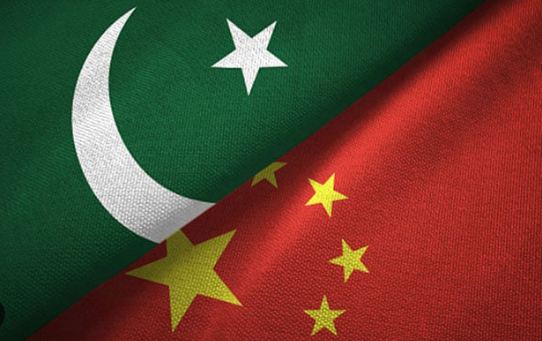
ISLAMABAD, JUL 13 (DNA) — The Gansu Finance and Trade Professional College (GFTPC) held China-Pakistan SME entrepreneurship vocational education conference in Lanzhou, capital of China’s Gansu province, Gwadar Pro reported on Sunday.


The conference marked the launch of China-Pakistan SME Entrepreneurship and Management Vocational Education Branch of the China-Pakistan Digital Education Alliance. It also unveiled the GFTPC Overseas Training Base and SME Entrepreneurship and Management Pakistan Training Centre.

The event brought together education leaders, institutional partners, and technical experts from both countries, UNI Int’l said. This milestone followed the Letter of Cooperation signed between KP TEVTA and the GFTPC in December 2024, facilitated by UNI Int’l, it added. The SME Vocational Education Branch will focus on developing vocational programs, promoting SME education, and enhancing bilateral academic exchange. 

Additionally, a dedicated training centre for Pakistani professionals has been set up, hosted by the GFTPC, which will provide hands-on training in digital and entrepreneurial skills to support cross-border capacity building.  The branch and training centre will be located under KP TEVTA jurisdiction, Yasser Shakoor, Director Operations and Business Development, UNI Int’l Pakistan, told Gwadar Pro.

Meanwhile, The University of Sargodha has signed two separate Letters of Intent (LOIs) with Chinese universities to expand cooperation in research, faculty and student exchange, and digital education.

In the latest development, UoS signed an LOI with Nankai University, one of China’s leading institutions, during a meeting held on the sidelines of the 2025 SCO Digital Economy Forum in Tianjin, China, on Friday.  The agreement was formalized during the meeting of Prof. Dr. Qaisar Abbas, Vice Chancellor of UoS, and Prof. Dr. Chen Yulu, President of Nankai University.


According to a statement issued by the UoS, the two sides committed to joint efforts in research collaboration, faculty exchange, and digital education. Both officials also exchanged souvenirs, “symbolizing a shared commitment to strengthening educational ties.”

 In another development, Pakistan Institute of China Studies at UoS signed Intent of Cooperation (IOC) with the Centre for Pakistan Study at Jiangxi University of Science and Technology on Friday.  This IOC was signed by Prof. Dr. Tahir Mumtaz Awan, Director of the Pakistan Institute of China Studies, and Prof. Cheng Yuan, Director of the Centre for Pakistan Study in Jiangxi.

This partnership aims to promote academic and cultural collaboration, including joint research, faculty and student exchange programs, and collaborative projects focused on Pakistan-China relations, according to an official statement, Gwadar Pro reported on Sunday. — DNA

Nai Gaj Dam Project stalls again amid funding crisis

Nai Gaj Dam Project stalls again amid funding crisis

Over Rs. 23 billion already spent, but construction halts again as WAPDA awaits funds from federal government for payment to the Contractor ; project faces threat of abandonment.

Nazir Siyal


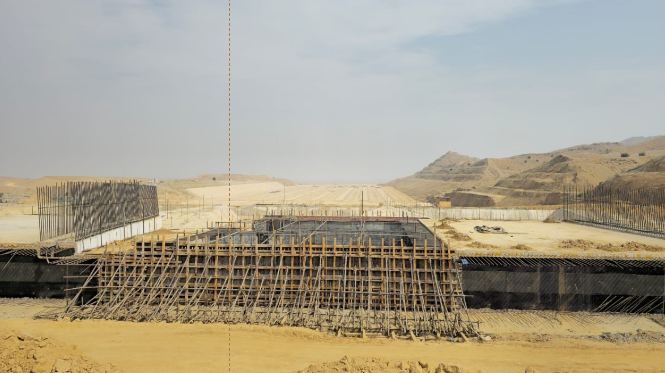
KARACHI, JUL 13: The much-anticipated Nai Gaj Dam project a crucial infrastructure development meant to control floods and ensure round the year water supply to transform water and agriculture landscape of region in Dadu district, is now teetering on the brink of collapse due to persistent funding delays, price escalations, and administrative bottlenecks.

Nestled in the Kheerthar Range and fed by the seasonal Gaj River, the dam is being constructed under the supervision of WAPDA to address frequent flooding in the Kachho region, enhance irrigation for 28,800 acres, and provide water to Manchar Lake through a 52-kilometer pipeline. It also includes plans to generate 4.2 MW of electricity.

However, according to Syed Ali Akhtar Shah, a WAPDA Water Wing official, the project’s fate is increasingly uncertain due to the non-release of promised funds.
He warned that further delays could nullify the years of effort and billions already invested.

Initially approved by ECNEC in 2009 with a cost of Rs. 16.924 billion, the project was marred from the beginning. The lowest bid in 2012 came in at Rs. 38.792 billion, creating a funding gap and delaying the start. By 2012, a revised PC-I estimated Rs. 59.414 billion, was submitted but at the cost of major cutbacks, including the powerhouse, access roads, and pipeline to Manchar Lake it was approved for Rs. 26 Billion

Despite, expectations to finish by 2015, only 38% of the project had been completed by 2018, with Rs. 11.543 billion released. A scandal in 2018 involving a fake performance guarantee forced WAPDA to terminate the contractor, halting the project for 40 months, until the matter was resolved through Arbitration under directives of High Court of Sindh.

In 2021, WAPDA submitted a second revised PC-I of Rs. 47.732 billion, restoring the key components cut earlier. The work was restarted on October 2021 with understanding to complete the Project in three years by October 2024. However progress again remained slow due to unprecedent price hike in construction inputs followed by Flood ls 2022 which caused flooding and damages of access roads and suspension of work for about six months.

Even after a 2023 agreement to unfreeze the price escalation clause under judgement of Sindh High Court in November 2022 WAPDA faced fresh difficulties in payment to the Contractor.
In FY 2024–25, the federal government allocated Rs. 5 billion, but released only Rs. 3 billion, insufficient to maintain momentum but this financial year 2025-26, the total 500 million rupees were allocated which caused more disturbance in the completing of work of the project as contractor halted work site.

By March 1, 2025, work was suspended once again due to non-release of further funds.

Rafiq Ahmed Jamali, PPP MNA from Dadu, told this Correspondent that chronic underfunding has made it impossible for the project to meet targets. He emphasized the importance of resuming and sustaining progress.

Former federal minister Liaquat Ali Jatoi warned that the contractor may terminate the contract entirely if dues are not cleared promptly. “This would mean a total waste of over Rs. 23.231 billion already invested,” he said, urging immediate intervention by both federal and provincial governments.

Ahmed Waheed Bhatti, the project manager, confirmed that 1,500 staff members were demobilized after WAPDA failed to clear Rs. 4.2 billion in dues, blaming the Ministry of Water Resources for the hold-up.

Pir Babar local inhabitant of Nai Gaaj Dam said that the Nai Gaj Dam, once hailed as a game-changer for water security and flood protection in the region, now stands as a stark example of bureaucratic paralysis and financial mismanagement.

The renowned environmentalist Nasir Panhwar told this correspondent that if funding remains inconsistent, experts warn, not only could the dam remain incomplete, but the Kachho region may also continue to suffer seasonal devastation, water shortages, and agricultural decline.

He said that without immediate corrective steps, this critical project risks joining the long list of abandoned public-sector infrastructure dreams in Pakistan.

PSB’s failures threaten the future of sports in Pakistan

PSB’s failures threaten the future of sports in Pakistan

The Pakistan Sports Board (PSB), once envisioned as the guardian and promoter of sports in the country, has sadly become a symbol of failure, mismanagement, and neglect. In what can only be termed as an alarming decline, sports in Pakistan—particularly hockey, our national game—are reportedly  being stifled under the weight of corruption, nepotism, and ill-conceived policies. The PSB, instead of nurturing talent and encouraging athletic excellence, has turned into a bureaucratic hub of incompetence and favoritism.

The latest controversies surrounding the PSB paint a grim picture. An official allegedly imported from the Capital Development Authority (CDA), with little or no sports background, has further exacerbated the crisis. Under his tenure, policies that run counter to the development of sports have been implemented. The most outrageous among them is the reported hike in ground fees for hockey—a sport that is already struggling to stay afloat. This move has made it nearly impossible for aspiring players, many of whom come from underprivileged backgrounds, to access training facilities. In a country where hockey once brought glory on the world stage, this is nothing short of a tragedy.

Hockey, the pride of Pakistan’s sporting legacy, has been abandoned to the fringes. The country that once ruled the world in field hockey is now barely able to field competitive teams. Our stadiums are empty, infrastructure crumbling, and the morale of players at an all-time low. Rather than provide support, the PSB seems determined to drive the final nail into the coffin of our national game. Increasing ground fees in a country where youth struggle for access to quality sports infrastructure is akin to penalizing them for wanting to play.

Unfortunately, the decay is not limited to hockey. Other sports federations are equally mired in misgovernance, rife with internal politics, favoritism, and rampant corruption. Positions in federations are often filled not on merit, but on connections and affiliations. Funding meant for athlete development is allegedly siphoned off, and transparency is nowhere to be seen. Talented athletes are forced to either abandon their dreams or seek opportunities abroad.

The root cause of this rot lies in the absence of vision, accountability, and professionalism within the PSB. Instead of appointing experienced sports administrators, positions are handed to individuals with little understanding of the dynamics of modern sports. Their priorities are contracts, perks, and influence—not the players, the facilities, or the sport itself.

It is imperative that the Prime Minister, as the patron-in-chief of sports in Pakistan, takes urgent notice. Hockey, in particular, needs immediate intervention. A comprehensive inquiry into the affairs of the PSB must be launched, especially regarding recent policy decisions that have alienated young athletes. There must also be a reassessment of who is entrusted with leading sports institutions.

Saving sports in Pakistan is not just about medals or trophies—it is about giving the youth hope, discipline, and an outlet for their talents. If the current state of affairs continues, we risk losing a generation of athletes and the pride of our sporting identity. It is high time the government acts before Pakistan becomes a graveyard of lost sporting potential.

PTI girds up loins against the Government: Will it succeed?

ISLAMABAD: Pakistan Tehreek-e-Insaf (PTI) Core Committee hammered out a multi-pronged strategy to deal with the judges’ letter issue

The Pakistan Tehreek-e-Insaf (PTI) is once again gearing up for a decisive showdown with the federal government, signaling the start of what could become a significant political movement. While the party’s chances of immediate success appear slim given the current power dynamics, its efforts may lay the groundwork for a larger, more sustained campaign in the future. At the very least, PTI’s mobilization will keep the ruling coalition under pressure, exposing the growing fissures within the government and testing the establishment’s tolerance for political instability.

Reports suggest that the Pakistan Peoples Party (PPP), a key ally in the ruling coalition, is increasingly frustrated with its partners. Initially, the PPP was reportedly promised the prime minister’s office after two and a half years as part of a power-sharing arrangement. However, the current leadership, particularly the Pakistan Muslim League-Nawaz (PML-N), shows no intention of relinquishing power. This has left the PPP disillusioned, raising questions about the longevity of this uneasy alliance.

If the PPP decides to distance itself from the government—either by withdrawing support or publicly criticizing its coalition partners—it could create an opening for PTI to exploit. A divided ruling bloc weakens the government’s ability to counter opposition movements effectively, giving PTI more room to maneuver.

The role of the establishment remains pivotal. Historically, Pakistan’s power dynamics have been shaped by the military’s preference for a controlled political environment. There are indications that the establishment may allow—or even subtly encourage—political turbulence to keep the civilian government in check. By letting PTI protest and exert pressure, the establishment could remind the ruling coalition of its dependence on institutional support.

However, the establishment is unlikely to let the situation spiral into chaos. Its primary concern is stability, and any movement that threatens to destabilize the country excessively will likely be reined in. PTI’s challenge, therefore, is to maintain momentum without crossing red lines that could trigger a harsh crackdown.

Another factor that could energize PTI’s movement is the possible return of Imran Khan’s sons, Qasim Khan and Sulaiman Khan, to Pakistan. If they choose to join the political fray, their presence could galvanize PTI supporters, adding emotional and symbolic weight to the movement. Given their father’s incarceration and the party’s narrative of victimization, their involvement could attract greater public sympathy and media attention.

However, their influence will depend on how they engage with politics. If they take a prominent role in rallies and public mobilization, they could become rallying points for PTI loyalists. Conversely, if they remain passive or are sidelined by more experienced party leaders, their impact may be limited.

In the short term, PTI faces significant hurdles. The government still holds the levers of state power, including control over law enforcement agencies. Moreover, the judiciary’s recent rulings have not favored PTI, and the party remains fractured due to crackdowns on its leadership. Without a clear, unified strategy, PTI may struggle to force early elections or secure Imran Khan’s release.

However, even if PTI fails to achieve immediate objectives, its persistent pressure could erode the government’s credibility. If PTI can sustain its momentum, it may set the stage for a broader movement that gains traction over time.

PTI’s latest mobilization may not topple the government overnight, but it serves a crucial purpose—keeping the flame of resistance alive. The ruling coalition’s internal divisions and the establishment’s balancing act create an environment where political upheaval remains possible. If PTI plays its cards right, leveraging public anger and exploiting government weaknesses, it could eventually force a recalibration of power.

For now, the battle is one of endurance. PTI’s ability to maintain pressure, mobilize the masses, and capitalize on the government’s vulnerabilities will determine whether this movement fizzles out or evolves into a decisive political shift.

Stay Connected

64FansLike
60FollowersFollow

Latest Reviews

Exchange Rates

USD - United States Dollar
EUR
1.17
GBP
1.35
AUD
0.72
CAD
0.73