Home Blog Page 573

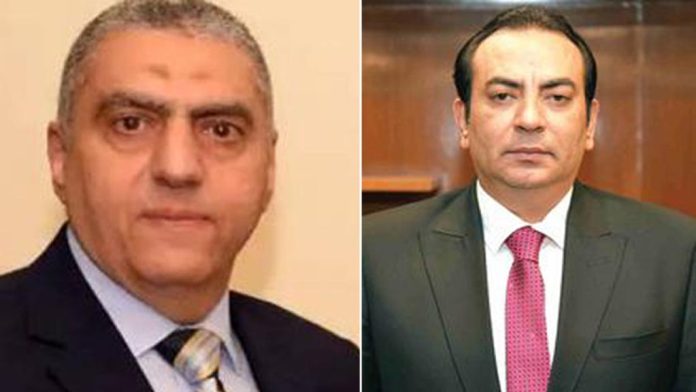
Ambassador of Egypt meets FPCCI President Atif Ikram

Ambassador of Egypt meets FPCCI President Atif Ikram

During the meeting, President FPCCI emphasized the urgent need to reduce high tariffs on Pakistani products entering the Egyptian market, calling it a major barrier to trade growth. He also highlighted the importance of establishing a Free Trade Agreement (FTA) between Pakistan and Egypt, terming it vital for unlocking the full potential of economic cooperation

ISLAMABAD, JUL 15 /DNA/ – The Ambassador of Egypt to Pakistan, Dr. Ihab Mohamed Abdelhamid, called on the President of the Federation of Pakistan Chambers of Commerce and Industry (FPCCI), Atif Ikram Sheikh, to discuss matters of mutual interest, with a key focus on enhancing bilateral trade between the two brotherly nations.

During the meeting, President FPCCI emphasized the urgent need to reduce high tariffs on Pakistani products entering the Egyptian market, calling it a major barrier to trade growth. He also highlighted the importance of establishing a Free Trade Agreement (FTA) between Pakistan and Egypt, terming it vital for unlocking the full potential of economic cooperation.

Expressing concern over the decline in trade volume between the two countries in recent years, Atif Ikram Sheikh urged swift and practical steps to revive trade momentum. He underlined that there exists vast potential for expanding bilateral trade and called for the exchange of business delegations to explore new avenues for commerce.

The Egyptian envoy, Dr. Ihab, briefed the FPCCI President on the investment and trade opportunities available for Pakistani entrepreneurs in Egypt. He reiterated his country’s commitment to strengthening ties with Pakistan and expressed readiness to boost cooperation in multiple sectors.

“Egypt places high importance on its relationship with Pakistan and is determined to enhance mutual trade in diverse fields,” said Ambassador Ihab.

The meeting concluded with both sides agreeing to maintain close collaboration to realize the untapped trade potential and to foster long-term economic partnership.=DNA

=============

FM Dar meets ‘iron-clad brother’ President Xi

FM Dar meets 'iron-clad brother' President Xi

Foreign minister also exchanges views with counterparts from Iran, Uzbekistan and Belarus on sidelines of CFM meeting

DNA

BEIJING: Deputy Prime Minister and Foreign Minister Ishaq Dar met Chinese President Xi Jinping as he represented Pakistan at the joint call of the Foreign Ministers of the Shanghai Cooperation Organisation (SCO) Member States in Beijing on Tuesday.

“Delighted to meet earlier today with President Xi Jinping at the Great Hall of the People in Beijing. Conveyed the warm greetings of the leadership, government and people of Pakistan,” FM Dar said in a post on X.

“As iron-clad brothers and All-Weather Strategic Cooperative Partners, we remain committed to deepening Pakistan-China enduring friendship and advancing shared regional goals,” he added.

The high-level interaction comes as the SCO Council of Foreign Ministers (CFM) is convening in Beijing with representatives from Pakistan, China, Belarus, India, Iran, Kazakhstan, Kyrgyzstan, Russia, Tajikistan and Uzbekistan in attendance.

The CFM is the third-highest forum in the SCO format. It focuses on the issues of international relations, as well as foreign and security policies.

The forum also approves the documents, including declarations and statements, etc, that are to be presented for the consideration of the Council of Heads of State as well as the decisions to be adopted by the CHS.

Meanwhile, the Chinese president, welcoming the heads of delegations, underlined the salience of regional cooperation under the ambit of SCO, an organisation covering the Eurasian land mass and a large expanse of the world’s population.

Apart from his interaction with President Xi, FM Dar also met Kulubaev Zheenbek Moldokanovic, his counterpart from Kyrgyzstan, on the sidelines where both leaders reaffirmed their commitment to the longstanding bilateral relationship and to enhancing collaboration across all areas of mutual interest.

The bitter truth about Pakistan’s sugar crisis

The bitter truth about Pakistan’s sugar crisis

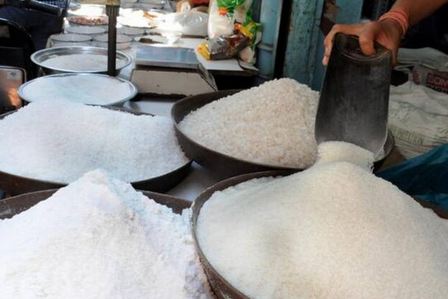
Pakistan is an agricultural country with vast fertile lands, a favorable climate, and a hardworking farming community. Yet, it is a national shame that despite being capable of producing enough sugar to meet domestic demand, the country repeatedly faces sugar shortages and is forced to import the commodity at exorbitant prices. The recent sugar crisis is not an isolated incident but part of a vicious cycle orchestrated by the powerful sugar mafia, which has long exploited both the system and the people. What is more alarming is that despite media exposés and public outcry, no meaningful action has been taken to hold the culprits accountable.

This is not the first time Pakistan has faced such a crisis. In the past, sugar mill owners—many of whom are influential politicians—first exported sugar to create an artificial shortage in the local market and then imported it back at higher rates, making windfall profits at the expense of the common man. Investigations and media reports have exposed these manipulations, yet no punitive measures were taken. The sugar inquiry report of 2020 revealed shocking details of corruption, tax evasion, and exploitation by mill owners, but the powerful lobby ensured that the findings were swept under the rug. Now, it seems the same playbook is being used again.

The root of the problem lies in the fact that many sugar mill owners are also members of parliament or have close ties with those in power. This conflict of interest means that any legislation aimed at regulating the sugar industry or holding the mafia accountable is deliberately stalled. These influential figures ensure that policies remain in their favor, allowing them to manipulate supply, fix prices, and evade taxes with impunity. When those who make the laws are the same ones breaking them, how can justice prevail?

For the poor, sugar is not just a commodity but one of the few affordable luxuries in their meager diet. However, with prices skyrocketing and shortages becoming frequent, even this basic necessity is slipping out of their reach. Inflation has already made life unbearable for low-income families, and the artificial sugar crisis only adds to their misery. The government’s failure to protect its citizens from such exploitation reflects a deep-seated malaise in governance, where the interests of a few elites override the welfare of millions.

The government must take bold steps to dismantle the sugar cartel’s control. This includes strict regulation of sugar exports and imports, transparent pricing mechanisms, and crackdowns on hoarding.Those involved in artificial shortages and price manipulation must be prosecuted, regardless of their political influence. The sugar inquiry report’s recommendations should be implemented without delay.

Pakistan must invest in modernizing sugarcane farming, improving yield, and reducing production costs to ensure self-sufficiency. Citizens must hold their representatives accountable and demand an end to this exploitation.

Pakistan’s recurring sugar crisis is a glaring example of how greed and political influence cripple the nation’s economy and burden its poorest citizens. If the government continues to turn a blind eye to the sugar mafia’s tactics, such crises will keep recurring, and the people will keep suffering.

Turkish embassy marks July 15 as testament to democratic resolve

Turkish embassy marks July 15 as testament to democratic resolve

ISLAMABAD, JUL 15 (DNA): Ambassador of Turkiye to Pakistan, Dr. Irfan Neziroglu on Tuesday said the Turkish nation’s unwavering resistance to the failed coup attempt of July 15, 2016, continues to stand as a beacon of democratic strength and unity.

Addressing a solemn ceremony held here to mark Turkiye’s Democracy and National Unity Day, the ambassador said, “July 15 was a night that began in darkness but ended in the dawn of unity, resistance, and the unshakable resolve of the Turkish people. Citizens of all backgrounds – men, women, the elderly, and youth – took to the streets armed only with courage and conviction.”

In a gathering attended by Federal Minister for Communications Abdul Aleem Khan, Additional Secretary of Foreign Affairs Syed Ali Asad Gilani, and TRNC Ambassador Dilsad Senol, Ambassador Neziroglu recalled the harrowing night when Turkish citizens stood against tanks and bullets to defend their constitution, parliament, and democratic institutions.

Recalling his own experience as the then-Secretary General of the Turkish Parliament, Ambassador Neziroglu revealed, “We were in session when the parliament was bombed. Allah saved us.”

The coup attempt, orchestrated by the Fetullah Terrorist Organization (FETO), claimed 253 lives and left over 2,000 wounded. “Their sacrifice is a sacred legacy that binds us together, wherever we may be in the world,” he added.

He warned that FETO remains a sophisticated and insidious global threat, cloaked in civil society, education, and religion, yet driven by ulterior motives. “It is a cult-like, transnational criminal network – rarely seen in history – which continues to pose security risks not only to Turkiye but to any country it infiltrates.”

Ambassador Neziroglu expressed Turkiye’s unwavering commitment to eliminating FETO’s influence globally. Referring to the death of the group’s US-based ringleader last October, he stated, “His death without facing justice will not weaken our resolve.”

England win third Test thriller against India at Lord’s

England win third Test thriller against India at Lord’s

LORD’S, JUL 14: England beat India by 22 runs to win a thrilling third Test at Lord’s on Monday as they went 2-1 up in a five-match series.

India were on the brink of defeat at 147-9, still needing a further 46 runs to reach a victory target of 193, when last man Mohammed Siraj joined Ravindra Jadeja in the middle.

Nevertheless, the pair batted on until after tea on the final day to give India hope of an improbable win.

But with India in sight of just their fourth win in 20 Tests at Lord’s, Siraj played on to off-spinner Shoaib Bashir — off the field for much of the match with a finger injury — with the ball just dislodging the leg bail to the batsman’s visible despair.

Jadeja was left stranded on 61 not out — the all-rounder’s fourth consecutive fifty this series — after taking India to within sight of what would have been a stunning success before they were all out for 170.

England captain Ben Stokes bowled two lengthy spells today on his way to an innings return of 3-48, with fast bowler Jofra Archer — in his first Test after more than four years of injury-induced exile — taking 3-55.

India were all but beaten at 112-8 when tailender Jasprit Bumrah came out to bat immediately after lunch.

But Jadeja and Bumrah kept England at bay with a stubborn stand of 35 in 22 overs.

Bumrah, defying a run of four successive noughts in Test cricket, defended gamely while making five in 54 balls, only for his innings to end when he top-edged a pull off Stokes to substitute fielder Sam Cook at mid-on.

India were now 147-9 — a position that meant tea was delayed by 30 minutes.

But Jadeja, who overturned an lbw decision given against him on 26, went to fifty when a flashing cut off Stokes flew over the slips for the left-hander’s fourth four in 150 balls faced.

Shortly after tea, Archer struck Siraj a painful blow on the shoulder and it was not long before he fell to Bashir.

This match became a second-innings shoot-out after both teams made 387 in their first innings.

England then posted 192 before India slumped to 58-4 when Stokes bowled nightwatchman Akash Deep with what became the last ball of Sunday’s play.

Bumrah resistance
From 71-4 today, the match swung England’s way once more as India lost three wickets for 11 runs in collapsing to 82-7.

Bumrah, the world’s top-ranked Test bowler, took 5-74 in England’s first innings after being rested from India’s dominant 336-run win in the second Test at Edgbaston.

But in 46 Tests before this match, he averaged a mere 6.77 with the bat.

Nevertheless, Bumrah got off the mark with an impressive pulled four off Archer through a vacant midwicket.

England thought they had dismissed Jadeja for 26 when he was given out on the field lbw to Chris Woakes. But Jadeja’s review indicated that impact had been made marginally outside off stump and the decision was overturned.

Next ball, the left-hander launched Woakes for a huge six over midwicket.

Earlier, Rishabh Pant — who only came into bat today following Deep’s departure — charged down the pitch to drive Archer for a typically aggressive four.

But two balls later, Archer, repeatedly topping the 90mph mark, bowled dangerman Pant for nine with a superb full-length delivery that clipped the top of off stump.

India were looking to KL Rahul to anchor their chase following the opener’s first-innings hundred.

But Rahul had added just six runs to his overnight 33 when he was lbw on review to lively medium-pacer Stokes after getting too far across his stumps.

Archer, who starred in England’s 2019 World Cup final win at Lord’s and made his Test debut at the northwest London ground that same season, then struck again.

The 30-year-old reduced India to 82-7 when he held a sharp one-handed catch to dismiss Washington Sundar for a duck.

Zionist regime seeks to weaken Islamic world, says President Pezeshkian

President Pezeshkian

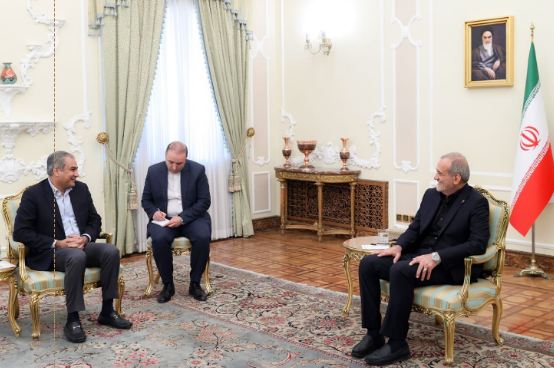
TEHRAN, JUL 14 /DNA/ – President Dr. Masoud Pezeshkian stressed that the Zionist regime seeks to weaken and sow division among Muslim nations.

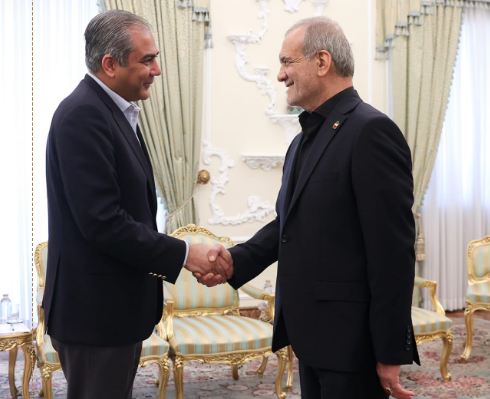
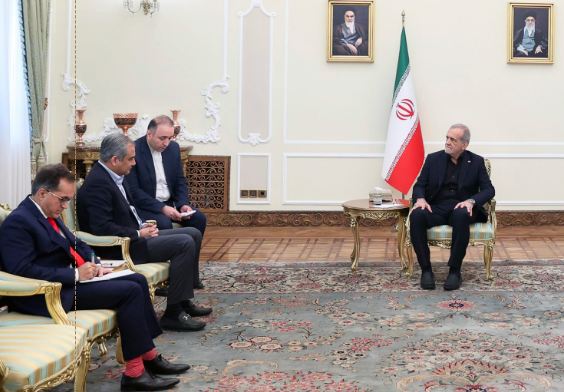
During a meeting with Federal Minister for Interior of Pakistan Mr. Mohsin Naqvi on Monday, President Dr. Pezeshkian emphasized that politicians and decision-makers across the Islamic world must recognize this sinister strategy of the Zionist regime and counter it by strengthening unity and solidarity among Muslim nations.

Reiterating that the Zionist regime aims to undermine and fragment the Muslim community, the president stressed that leaders and policymakers in the Islamic world must remain vigilant against this wicked strategy and work to neutralize it by deepening cohesion and solidarity among Islamic nations.

Referring to the critical situation in the Islamic world, he described unity and synergy among Islamic countries as an undeniable necessity, adding that if Muslim governments and nations fully understand the importance of Islamic unity, they can stand as a united front against the Zionist regime, which survives by sowing discord and committing atrocities in Islamic societies.

Elsewhere in his remarks, Pezeshkian expressed satisfaction with the current level of bilateral relations between Iran and Pakistan, highlighting the importance of diplomatic exchanges and constructive dialogue to deepen and expand comprehensive cooperation between the two nations.

The president also expressed his appreciation for Pakistan’s sincere support during the Israeli-imposed war against Iran, stating that both countries possess vast potential for expanding cooperation, and Tehran is fully prepared to activate these capacities to enhance bilateral relations and implement mutual engagements.

In response, Pakistan’s interior minister conveyed the greetings and respect of his country’s Prime Minister Mr. Shehbaz Sharif to President Pezeshkian and congratulated the Iranian nation on its victory against the Zionist regime’s aggression.

Mr. Naqvi noted: “We believe that the wise leadership of Supreme Leader Ayatollah Khamenei and your Excellency’s strategic management played a decisive role in this proud resistance, an achievement that is a source of pride for the Islamic Ummah.”

He also recalled Islamabad’s swift and unequivocal condemnation of the Zionist regime’s aggression, stating that Pakistan was among the first countries to denounce the regime’s aggression and affirm Iran’s legitimate right to self-defense.

He went on to describe Iran-Pakistan relations as unique and steadily expanding, emphasizing that the ambassadors of both countries are working diligently to deepen bilateral relations and strengthen cooperation across various fields.

CJP orders free legal aid for poor, urges reforms in backward districts

CJP

ISLAMABAD, JUL 14: Chief Justice of Pakistan (CJP) Justice Yahya Afridi chaired a high-level meeting at the Supreme Court Quetta Registry on Monday, emphasizing the need for strengthened institutional cooperation to improve the delivery of justice, especially in underdeveloped districts of the country.

The meeting was attended by representatives from the Balochistan High Court, the Supreme Court Bar Association, and the Pakistan Bar Council. During the session, concerns were raised about the lack of judicial infrastructure in remote and underserved districts, which continues to hamper access to justice for vulnerable communities.

In a major decision aimed at promoting equal access to legal representation, the CJP announced that free legal aid will be provided to poor litigants, with qualified lawyers being compensated by the state up to Rs50,000 for their services.

Justice Yahya Afridi also announced the appointment of Law and Justice Commission representatives in every province, tasked with monitoring development projects in district bar associations and ensuring proper implementation of justice initiatives at the grassroots level.

The meeting further decided to expand the scope of legal assistance to cases at the Supreme Court level. Bar councils were instructed to nominate competent and qualified lawyers for this initiative.

To enhance professional capacity, emphasis was laid on utilizing training opportunities offered by the Federal Judicial Academy. Bar associations across the country were directed to distribute the academy’s training calendar widely to encourage participation among lawyers.

“This is a collective responsibility. All stakeholders must work together to strengthen the justice system,” Chief Justice Afridi said, delivering a strong message of unity and reform to the legal community.

The next high-level meeting will be held in Karachi, where further consultations will take place to address the concerns of bar associations and advance judicial reforms.

Pakistan, Iran pledge closer ties as Mohsin Naqvi visits Tehran

Mohsin Naqvi

TEHRAN: Iranian Interior Minister Abbas Araghchi warmly welcomed Pakistan’s Interior Minister Mohsin Naqvi to Tehran on Monday. Araghchi called the visit a “positive step” towards stronger relations between the neighboring countries.

Both leaders agreed to deepen cooperation on border security, regional stability, and pilgrim movement, aiming for long-term peace and partnership.

In their high-level talks, the two ministers discussed key issues, including the ease of trade, safe and smooth pilgrim travel, and solutions to border management problems.

Araghchi expressed hope that this visit would open a new chapter in bilateral ties. He highlighted the need for practical solutions to long-standing challenges affecting people on both sides of the border.

Naqvi, in turn, stressed the importance of the upcoming trilateral conference between Pakistan, Iran, and Iraq. The conference will address major concerns related to pilgrim safety, visa issues, and border crossings—especially ahead of large religious gatherings.

He said he hoped it would lead to better travel experiences for thousands of Zaireen (pilgrims) who travel between the countries every year.

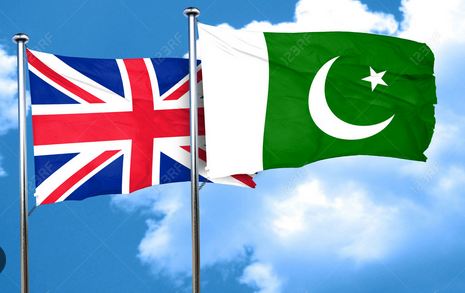
UK, Pakistan agree new business advisory council at inaugural trade dialogue 

UK, Pakistan agree new business advisory council at inaugural trade dialogue 

Ministers from the UK and Pakistan have announced new measures to boost trade between the two countries, following the launch of the UK-Pakistan Trade Dialogue. 

As part of the Dialogue, ministers announced the creation of a new UK-Pakistan Business Advisory Council bringing together senior business leaders and government officials to facilitate high value trade and investment. The Council will provide strategic advice on policy reform, offer a confidential forum for engagement, and help promote commercial opportunities by addressing market access challenges and sharing best practices.  

Today’s (14 July) meeting in London was co-chaired by the UK Minister for Trade Policy and Economic Security, Douglas Alexander, and Pakistan’s Federal Minister of Commerce, Jam Kamal Khan. Both Ministers agreed to annual ministerial meetings to unlock growth opportunities, and support businesses and investors in the UK and Pakistan.  

UK Minister for Trade Policy and Economic Security Douglas Alexander said: 

“Today’s Dialogue marks the next step in our long-standing relationship with Pakistan, taking our trading partnership to the next level and unlocking new opportunities for businesses in both our countries.’’ 

“By deepening cooperation in key sectors like healthcare and digital technology – areas central to the UK’s Industrial Strategy – we can drive growth, foster innovation, and create jobs.” 

Pakistan’s Federal Minister for Commerce, Jam Kamal said:  

“The UK remains one of Pakistan’s most important economic partners. This Dialogue lays the foundation for a more structured and forward-looking trade relationship. By strengthening collaboration and aligning our priorities, we can expand bilateral trade, attract greater investment, and create sustainable economic opportunities that benefit both nations.’’  

The UK has also announced up to £200,000 to support Pakistan’s aspirations to attract investment from the UK. The funds will provide technical assistance for investor outreach, and support matchmaking between Pakistani investors and UK-based opportunities. This initiative reflects the UK’s commitment to supporting Pakistan’s ambitions to increase outbound investment and to strengthening the bilateral investment relationship. 

The Dialogue highlighted shared ambition to build on recent momentum, with bilateral trade increasing by 7.3% during the final quarter of last year. Bilateral trade is currently valued at £4.7 billion. Today’s discussion focussed on key sectors including information technology and healthcare, two priority areas under the UK’s Industrial Strategy. 

The UK’s Industrial Strategy presents a significant opportunity for businesses and investors. The UK is committed to making it easier, faster, and more predictable for international firms to operate in its market. This includes reforms in skills development, innovation, regulation, and planning – creating a more dynamic and open business environment. Through the alignment of the UK’s Industrial Strategy and the UK – Pakistan Trade Dialogue, we are reaffirming our commitment to open and fair trade, and to deepening economic ties with key partners like Pakistan. 

PODA, THQ Murree host workshop against child marriage on World Population Day

PODA

MURREE, JUL 14 /DNA/ – In connection with World Population Day, Potohar Organization for Development Advocacy (PODA), in collaboration with the Family Health Clinic, THQ Murree, organized a workshop emphasizing the urgent need to end child marriage in order to empower youth to make informed decisions about their future, including when to start a family and how to determine family size.

A significant number of Lady Health Supervisors, THQ staff, and Lady Health Workers affiliated with various Basic Health Units across the district attended the workshop. The session stressed the importance of empowering both girls and boys through access to education and opportunities for meaningful employment.

World Population Day is observed annually on 11 July to raise awareness about population-related issues. The workshop was part of the 3-Year project “Reduce Early Marriages to Enhance Gender Equality,” supported by the Royal Norwegian Embassy in Islamabad. PODA is implement this project in 41 districts of Punjab.

Representing PODA, Nabeela Aslam emphasized the need to advocate for a uniform minimum legal age of marriage for girls across the country, similar to the recent legal reform implemented in the Islamabad Capital Territory. She explained that raising the legal age helps ensure girls can complete their education and acquire skills for a dignified life. She highlighted the contradiction that, while women are central to bringing future generations into the world, they are frequently denied access to accurate information and essential services related to their sexual and reproductive health.

She also stressed the importance of better menstrual hygiene management, hydration, and personal cleanliness during menstruation to prevent serious health issues such as urinary tract infections. During the workshop, it was found that the hemoglobin levels of participants varied significantly—eight to ten had levels below 9, around ten had levels above 10, and a few had levels above 12. These findings highlighted and emphasized the need for participants to prioritize their own health.

The participants discussed how many women and girls lack access to the knowledge and resources needed to protect their reproductive health, including basic menstrual hygiene. In some cases, girls stop drinking water during school or work hours to avoid using unhygienic toilets, leading to dehydration and an increased risk of urinary tract infections. If left untreated, these infections can result in serious health complications.

Dr. Maryam Ali, Incharge of the Family Health Clinic, Murree highlighted the importance of equipping the younger generation with knowledge, resources, and opportunities to lead informed and practical lives. She noted that girls who marry early face higher risks of early pregnancies, complications such as obstetric fistulas, and elevated maternal and neonatal mortality.

The participants collectively expressed the view that Pakistan can only achieve sustainable progress through an empowered younger generation. However, they noted with concern that access to essential services and opportunities is rapidly shrinking due to the country’s high population growth rate. If current trends continue, Pakistan is expected to become the fourth most populous country in the world by 2030.

The workshop also addressed the impact of internal migration on local social dynamics. Participants shared that migration from Khyber Pakhtunkhwa to Murree has brought in communities with more conservative views, where child marriage is more common. Among the 30 participants, seven to eight reported knowing underage girls who had been married in their communities. Poverty was identified as one of the key drivers of this practice.

All participants agreed that poverty, limited access to education, and gender inequality remain major contributors to child marriage in Pakistan. The burden falls disproportionately on girls, who are often denied education, economic opportunities, and the ability to make autonomous decisions about their lives.

To strengthen future collaboration on these critical issues, a letter of coordination between PODA and THQ Murree was signed, marking a step forward in promoting the health and well-being of women and girls in the Murree district.

Following the workshop, the participants held a brief awareness walk at GPO Chowk, Murree to engage the public and highlight the harmful impact of child marriage on girls’ health, education, and overall well-being. The walk also aimed to advocate for balanced families in accordance with available resources, emphasizing the importance of planning and informed decision-making for a healthier and more sustainable future.

Stay Connected

64FansLike
60FollowersFollow

Latest Reviews

Exchange Rates

USD - United States Dollar
EUR
1.17
GBP
1.35
AUD
0.72
CAD
0.73