Home Blog Page 571

NSC extends reporting requirement on Houthi attacks against commercial vessels in Red Sea

NSC extends reporting requirement on Houthi attacks against commercial vessels in Red Sea


By Iftikhar Ali

UNITED NATIONS, Jul 16 (DNA):With Pakistan supporting, the United Nations Security Council has adopted a resolution that extends by six months the requirement for the UN Secretary-General to provide monthly reports on attacks by Yemen’s Houthis against ships in the Red Sea.

Adopting resolution 2787 (2025) with a vote of 12 in favour to none against, with 3 abstentions (Algeria, China & Russia), the 15-member Council extended the reporting request as the Houthis — who control a significant portion of Yemen, including the capital city, Sanaa — have defied its previous demands to immediately halt all such attacks.

The reporting obligation was established by the adoption of Resolution 2722 in January 2024, which was moved in response to the repeated attacks on commercial shipping. The  Houthis have vowed to continue targeting vessels until Israel ends its war in Gaza.

Tuesday’s resolution was co-sponsored by the United States and Greece.

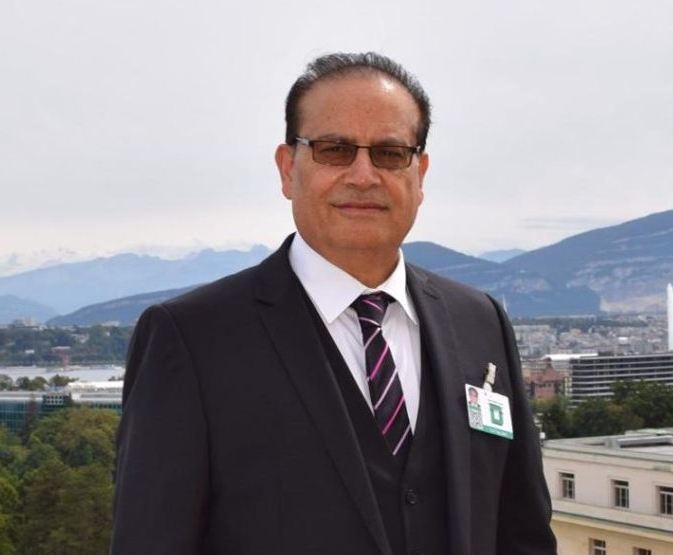
In explaining his vote, Ambassador Asim Iftikhar Ahmad, permanent representative of Pakistan, which holds the Council Presidency for July, having voted in favour of resolution 2787 (2025) and speaking in his national capacity, reaffirmed “our principled and longstanding commitment” to upholding maritime security and unequivocally condemning attacks on all commercial shipping.

The Pakistani envoy denounced the recent assaults on vessels in the Red Sea and called for the immediate and unconditional release of all detained crew members.  

In the current context, the extension of the reporting mandate is a necessary and timely step.  

“We underscore the strategic significance of the Red Sea maritime corridor — not only as a critical artery for global trade, but also as a vital channel for humanitarian aid to Yemen,” Ambassador Asim Iftikhar said.  

All attacks on merchant and commercial vessels navigating the Red Sea and the Gulf of Aden must cease immediately and permanently, in full compliance with international law.

“The international community’s response to the situation must also conform fully with international law,” the Pakistani envoy added.

 “At the same time,” he added, “it is imperative to address the underlying root causes of regional instability and to actively support diplomatic efforts toward de-escalation.

“Preventing further regional spillover of the conflict and its destabilizing consequences is essential—not only to curb attacks on commercial shipping, but also to safeguard broader regional peace and security.”

Acting U.S. Ambassador Dorothy Shea said the resolution recognizes the need for continued vigilance “against the Houthi terrorist threat.”

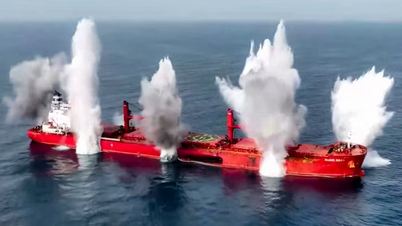
She cited the two latest attacks by Houthis against civilian cargo vessels, the MV Magic Seas and the MV Eternity C, which caused both vessels to sink and led to the loss of innocent seafarers and saw crew members taken hostage.

“The United States strongly condemns these unprovoked terrorist attacks, which demonstrate the threat that the Houthis pose to freedom of navigation and to regional economic and maritime security,” Shea said, reiterating the council’s demand for an immediate halt to Houthi attacks and the release of all crew members kidnapped from the Eternity C.

Russia’s deputy U.N. ambassador Dmitry Polyansky said Moscow abstained because language in the previous resolution demanding a halt to Houthi attacks was arbitrarily interpreted to justify “the use of force affecting the territory of the sovereign state of Yemen.”

“We stand convinced that any steps aimed at stabilizing the situation in Yemen and around Yemen should be taken in political and diplomatic ways,” he said.

China’s deputy U.N. ambassador Geng Shuang said his country abstained because “certain countries took military action against Yemen, which seriously impacted the Yemeni peace process and exacerbated tensions in the Red Sea.”

Shuang called tensions in the Red Sea “a major manifestation of the spillover from the Gaza conflict.” Russia’s Polyansky also stressed the link between normalizing the situation in the Red Sea and the need for a ceasefire in Gaza and release of all hostages.

Algeria’s deputy U.N. ambassador Toufik Koudri,  expressed regret the Yemen resolution demanding an immediate halt to Houthi attacks made no mention of the Gaza war, which he called “one of the catalytic factors.”

“The Security Council cannot disregard the clear nexus between the attacks in the Red Sea and the aggression against the Palestinian people in Gaza and the deep feelings that resulted from the brutal massacres committed against innocent civilians,” he said.
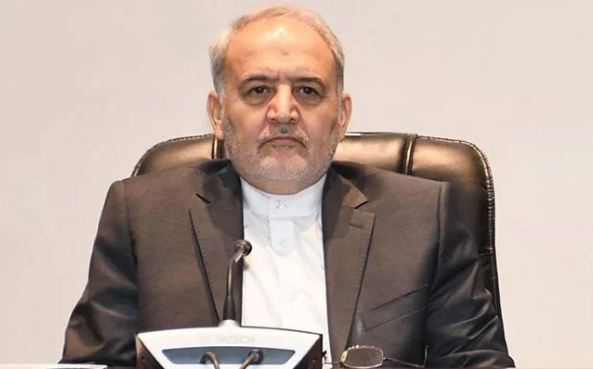
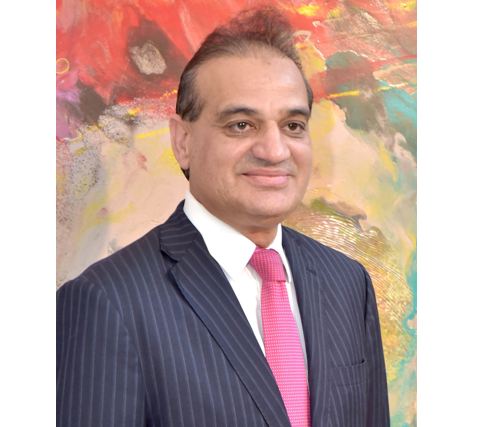
Iran’s Pakistan envoy Reza Amiri Moghadam named in FBI’s ‘most wanted’ list

Iran's Pakistan envoy Reza Amiri Moghadam named in FBI's 'most wanted' list

ISLAMABAD/Tehran, JUL 16: Iranian Ambassador to Pakistan Reza Amiri Moghadam has been named in the United States’ Federal Bureau of Investigation’s (FBI) “most wanted” list over his alleged role in the abduction, detention, and probable death of retired FBI special agent Robert A Levinson and alleged efforts to cover up its responsibility.

The US has sought information on Moghadam, who as per the FBI is an official of Iran’s Ministry of Intelligence and Security.

According to the FBI, Levinson — who retired from the FBI in 1998 and worked as a private investigator — travelled to Iran’s Kish Island, Iran, on March 8, 2007, and has not been publicly seen or heard from since his disappearance the following day.

In 2010 and 2011, a video and photographs were obtained showing Levinson in captivity.

In March of 2025, the US Department of the Treasury designated Moghadam and others for their involvement in the abduction, detention, and probable death. The FBI has since then continued its investigation in order to identify more Iranian officials allegedly involved in Levinson’s abduction.

The FBI is offering a reward of up to $5 million and the Rewards For Justice Program of the US Department of State is offering a reward of up to $20 million for information leading directly to the location, recovery, and return of their retired employee.

Poster of Special Agent Robert A Levinson. — FBI
As per Iran International, Levinson’s family back in 2020, released a statement saying they had concluded, based on information provided by US officials, that he had died while in Iranian custody.

Reacting to the FBI’s most wanted list, Senate Foreign Relations Committee Chairman Senator Jim Risch said that the FBI “is leading the way on holding Iran accountable for the abduction of Bob Levinson, a devoted father and patriotic American”.

“We will never forget Bob and his family, and we will hold those responsible to account for their crimes,” he said in a post on X.

Washington’s move comes in the aftermath of the recent 12-day Iran-Israel war that saw the US bombing the former’s nuclear sites.

US Secretary of State Marco Rubio and the foreign ministers of France, Germany and the UK, during a telephonic conversation, have agreed to set the end of August as the de facto deadline for reaching a nuclear deal with Iran.

If no deal is reached by that deadline, the three European powers plan to trigger the “snapback” mechanism that automatically reimposes all UN Security Council sanctions that were lifted under the 2015 Iran deal.

Meanwhile, US President Donald Trump has said that Tehran was hoping to engage in discussions with the US, but he was in no rush to talk with Iran — which has refused to hold nuclear talks if they were conditioned on the country abandoning its uranium enrichment activities.

The poor being pushed to the brink

In a country already reeling from the devastating effects of inflation, unemployment, and persistent economic stagnation, the recent

At this critical juncture, the government must remember that leadership is not judged by how well it protects the powerful, but by how compassionately it supports the powerless. The elite may have influence, but it is the people — the millions who labor quietly every day to keep this country running

Opinion

Ansar Mahmood Bhatti

In a country already reeling from the devastating effects of inflation, unemployment, and persistent economic stagnation, the recent abnormal increase in fuel prices has delivered yet another punishing blow — particularly to Pakistan’s poor and middle-income groups. For the second time within a single month, petrol and diesel prices have witnessed a sharp upward revision. This is not just a marginal adjustment; it is a significant surge that threatens the very survival of millions of struggling citizens.

With each fuel price hike, the ripple effect spreads far and wide — across food prices, transport fares, utility costs, and even school tuition. For households that are already barely managing to survive, the latest surge comes as an unbearable addition to their growing financial burdens. Petrol and diesel are not just commodities; they are lifelines for economic activity, especially in a country where public transport is inadequate, and where the informal economy — driven by motorcycles, rickshaws, and small vehicles — forms the backbone of livelihood for countless people.

The working class — including daily wage earners, delivery riders, rickshaw drivers, and small vendors — is among the hardest hit. These individuals do not use fuel for luxury. They rely on it for mobility, for earning a living, and for accessing essential services such as healthcare and education. With every rupee increase in the price of fuel, their costs of living rise disproportionately, forcing many to make heart-wrenching choices between food, medicine, and fuel. Some are now walking long distances to save money, while others are cutting down on meals or pulling children out of school just to make ends meet.

In sharp contrast, the elite class — politicians, top bureaucrats, and other high-ranking officials — remain disturbingly insulated from this crisis. Despite the gravity of the economic situation, many continue to enjoy free fuel, free luxury vehicles, and an assortment of perks that are funded by taxpayers. This disparity is not just unfair — it is immoral.

Nowhere in the world is this culture of entitlement as entrenched as it is in Pakistan. In most developed nations, public servants are required to use public transport or fuel-efficient vehicles, and even then, fuel expenses are monitored and reimbursed strictly based on need and performance. But in Pakistan, senior government officials ride around in fuel-guzzling SUVs and luxury cars, often for personal use, with no accountability. Meanwhile, the poor are told to “tighten their belts” and “make sacrifices for the country.”

This free-fuel culture has become a toxic legacy of misplaced priorities and unchecked privilege. It drains the national treasury of billions every year. These funds could — and should — be redirected toward targeted relief programs for low-income households, especially at a time when the economic squeeze is reaching intolerable levels. The state must ask itself: how can it justify giving away fuel to the privileged when the poor cannot even afford to cook their meals or send their children to school?

Ending this two-tiered system of governance is not just an economic imperative — it is a matter of social justice. The government must urgently reform the existing policies that provide fuel allowances and luxury vehicles to senior officials. Replacing these perks with modest, need-based transport subsidies — if any — would send a powerful signal that the government is willing to lead by example and share in the hardships faced by the people.

Equally troubling is the lack of long-term planning that this price hike exposes. Pakistan remains woefully unprepared to deal with global oil shocks. Successive governments have failed to build strategic fuel reserves, improve public transportation systems, or invest in alternative energy sources. Instead, they continue to take reactive, short-term decisions — often at the urging of international financial institutions such as the IMF, with the burden falling squarely on the poor.

The absence of foresight has now created a vicious cycle: global oil prices rise, and the cost is immediately passed on to the public, with no mitigating strategies in place. There are no buffer mechanisms to protect the masses. There are no subsidies for low-income earners. There are no efforts to reduce the country’s dependence on fossil fuels through renewable energy initiatives or urban transport planning. This failure in governance is not just inefficient — it is reckless.

The timing of this fuel price hike only adds salt to the wound. Inflation is already hovering at dangerously high levels. Utility bills have become unaffordable, food prices are skyrocketing, and school fees are increasingly out of reach for the average family. This additional burden has pushed countless households beyond the brink of survival. People are not only frustrated; they are desperate.

Small businesses are closing down. Transport fares have doubled in some cities. Workers are unable to commute to jobs that already pay below subsistence level. In rural areas, where distances are longer and infrastructure is weaker, the impact is even more catastrophic. For many families, it is no longer a question of reducing expenses — it is a question of basic survival.

The public outcry is growing, and rightly so. Citizens are demanding accountability, relief, and empathy from a government that seems increasingly detached from their daily realities. There is a pressing need for emergency measures: reversing the latest fuel price hike, rolling back non-essential perks for government officials, and introducing relief packages for vulnerable populations.

At this critical juncture, the government must remember that leadership is not judged by how well it protects the powerful, but by how compassionately it supports the powerless. The elite may have influence, but it is the people — the millions who labor quietly every day to keep this country running.

Pakistan’s poor are watching. They are hoping for relief, for fairness, and above all, for mercy.

Delegation from AJOU Motor College, South Korea, visits NUML

Delegation from AJOU Motor College, South Korea, visits NUML

ISLAMABAD, JUL 16 /DNA/ – A five-member delegation from AJOU Motor College, Republic of Korea, led by Chairperson Ms. Seo Jung Oak, visited the National University of Modern Languages (NUML) today to explore avenues for academic collaboration and mutual cooperation.

The delegation held a meeting with Director General NUML, Brigadier Shahzad Munir, who was accompanied by the Director of NUML International Linkages Office (NILO), Pro-Rector (Research and Strategic Initiatives), Director Academics and Dean Faculty of Computing and Engineering. The visit was facilitated by NILO as part of NUML’s continued efforts to expand international academic linkages.

During the meeting, both institutions presented brief overviews of their respective academic strengths and strategic priorities. Professor Kim Tae Hyoung from AJOU Motor College gave an insightful presentation on the institution’s specialized programs, particularly those relevant to automobile technology and engineering, highlighting potential opportunities for Pakistani students, especially from NUML.

Chairperson Ms. Seo Jung Oak appreciated NUML’s significant role in promoting the Korean language and culture in Pakistan and expressed her interest in building a strong academic partnership aimed at benefiting future generations.

DG NUML warmly welcomed the delegation and shared that NUML hosts the largest Korean language learning program in Pakistan. He expressed NUML’s keen interest in formalizing a partnership with AJOU Motor College, particularly in areas of computing and engineering, and proposed initiating discussions for signing a Letter of Interest (LOI) between the two institutions.

The AJOU delegation acknowledged the potential for collaboration between their automobile industry-focused programs and NUML’s Engineering Department. Both sides underscored the importance of launching student and faculty exchange programs, joint degree programs, internships, externships, and collaborative research initiatives.

It was mutually agreed to nominate focal persons from both institutions to chart a roadmap for future cooperation and finalize areas for joint academic ventures.

The visit marks a promising step toward fostering academic and cultural ties between NUML and AJOU Motor College, and more broadly, between Pakistan and the Republic of Korea.

Urgent need to boost exports to stabilize rupee

Urgent need to boost exports to stabilize rupee

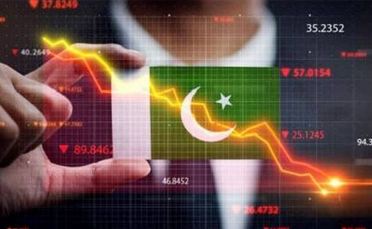
Pakistan’s economic woes continue to deepen, with one of the most pressing challenges being the widening disparity between the US dollar and the Pakistani rupee. As of recent reports, the dollar is fast approaching an alarming rate of Rs. 350, threatening further economic instability and severely impacting sectors reliant on imported goods. This exchange rate crisis has not only hit the business community hard but has also fueled inflation, making life increasingly difficult for the common man.

At the heart of this crisis lies Pakistan’s chronically low export base. Despite having a sizable population, abundant natural resources, and strategic geographic location, Pakistan’s export performance remains dismal. For a country of over 240 million people, a consistent annual export volume hovering around $30 billion is far from adequate. This limited inflow of foreign exchange, combined with large import bills, continues to exert pressure on the rupee.

The depreciation of the rupee has a cascading effect. Businesses that rely on imported raw materials are now being forced to increase prices or shut down operations altogether. Essential goods, including pharmaceuticals, machinery, and fuel, become costlier, thus feeding into the inflation cycle. The burden eventually falls on the end consumer, who is already grappling with high food prices, unemployment, and low purchasing power.

Perhaps most concerning is the government’s seeming helplessness in managing the rupee’s slide. Despite the tall claims of economic revival, ground realities suggest otherwise. Structural issues remain unresolved: energy shortages, political instability, inconsistent policies, and bureaucratic hurdles continue to scare away investors and stifle industrial growth.

A glaring contrast can be seen in the performance of the Afghan currency. Despite Afghanistan having virtually no formal export economy and being politically isolated, its currency has performed more steadily than Pakistan’s. This is largely due to strict currency controls and tight government regulation—something Pakistan has failed to enforce effectively. The comparison is a national embarrassment and should act as a wake-up call for policymakers.

What Pakistan needs is an aggressive and coherent export policy. The government must move beyond short-term fixes and adopt structural reforms to boost export industries such as textiles, agriculture, IT, and pharmaceuticals. There must be focused incentives for exporters, reduced bureaucratic red tape, and guaranteed energy supply at competitive rates. Diversifying export markets and promoting value-added goods rather than raw materials is essential for long-term sustainability.

Moreover, encouraging local manufacturing and import substitution can help reduce dependency on foreign goods. Effective monetary and fiscal policies, coupled with stability and investor confidence, are the only ways forward.

The rupee-dollar disparity is more than just an economic figure—it is a symbol of national performance. If not addressed urgently, it threatens to unravel the economic fabric of the country. Pakistan must act now to break this cycle and chart a path toward financial sovereignty. The time to boost exports is not tomorrow—it is today.

Rainy Nullah overflows in diplomatic enclave

Rainy Nullah overflows in diplomatic enclave

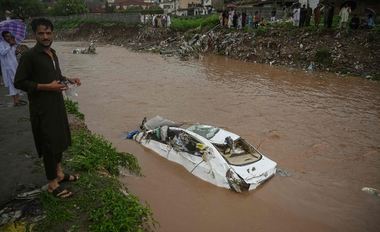
Heavy rainfall in the federal capital led to severe waterlogging in the upscale Diplomatic Enclave after a critical rainy nullah (stormwater drain) overflowed, inundating roads and compounds of several foreign missions. The worst-hit areas included the French Residence, Dutch Embassy, Malaysian and Italian embassies, as well as the Canadian Club. The flooding caused significant disruption, particularly on the eve of France’s National Day celebrations, forcing visitors to take lengthy detours to avoid submerged roads.

The root of the problem traces back to ongoing construction work at Serena Chowk, where overhead and underpasses have been built. Sources reveal that the construction firm mistakenly identified the rainy nullah—a natural waterway originating from the Margalla Hills and passing through the Diplomatic Enclave—as a mere ditch and filled it in. This critical error obstructed the natural flow of rainwater, leading to severe flooding as the downpour intensified.

With no outlet for the water, the nullah overflowed, submerging surrounding areas and leaving several embassies waterlogged. The situation has raised serious concerns among diplomatic staff, who have demanded immediate action to prevent future disruptions.

The flooding caused particular embarrassment on July 11, just before France’s Bastille Day celebrations, as guests struggled to navigate through waterlogged streets to reach the French Residence. Diplomats and visitors were forced to take long alternative routes, with some even wading through ankle-deep water.

“The situation is unacceptable,” said a diplomat from one of the affected missions. “This is a high-security zone, and such negligence in urban planning poses risks not just to convenience but also to safety.”

The Dutch, Malaysian, and Italian embassies also reported water entering their premises, damaging landscaping and causing inconvenience to staff. The Canadian Club, a popular social spot for expatriates, faced similar issues, with its parking area partially submerged.

The Capital Development Authority (CDA) and other relevant departments have come under fire for failing to anticipate the consequences of blocking the natural drainage system. A senior CDA official acknowledged the oversight, stating that the construction firm had not been properly briefed about the significance of the nullah.

However, diplomatic sources indicate that mere assurances are not enough. Several embassies have formally lodged complaints, urging the government to expedite corrective measures. “This isn’t just about today’s inconvenience—it’s about ensuring that such negligence doesn’t recur during the monsoon season,” said another diplomat.

This incident highlights a recurring issue in Islamabad’s urban development—where rapid construction often overlooks natural waterways. Environmental experts have long warned against encroaching on natural drainage paths, as it exacerbates flooding during heavy rains.

“The Margalla Hills feed several streams that pass through the city,” explained an environmental consultant. “When these are blocked, water has nowhere to go, leading to exactly the kind of situation we’re seeing now.”

With monsoon rains expected to continue, the affected diplomatic missions are pushing for urgent intervention. Suggestions include: Restoring the Nullah: Excavating the filled portion to re-establish the natural water flow. Improved Coordination: Ensuring construction firms consult with civic authorities before altering drainage systems. Emergency Drainage Solutions: Installing additional pumps and clearing alternative drainage routes to mitigate immediate risks.

The government has assured diplomats that corrective measures are being prioritized, but whether these promises translate into swift action remains to be seen. For now, the diplomatic community watches warily, hoping that the next downpour does not bring a repeat of this watery ordeal.

Artificial Intelligence: A Tool, Not a Master

Qamar Bashir

By Qamar Bashir

In an age defined by technological marvels, artificial intelligence (AI) has emerged as both a beacon of hope and a source of deep misunderstanding. Enthusiasts hail it as the dawn of a new era—one that will render human labor, creativity, and even consciousness obsolete. But those who use AI seriously—for writing, generating images, compiling data, or creating infographics—know firsthand that AI is still very much a tool, not a master. It is impressive, yes. But intelligent? Not yet.

AI today requires constant correction, direction, and supervision. It can mix up names, fabricate dates, distort historical context, and produce grotesque errors in otherwise simple assignments. For those who depend on accurate output—writers, editors, researchers, policy analysts—AI is not a replacement but an instrument. A sophisticated calculator. A fast but fallible assistant. Without human oversight, its potential collapses into chaos.

We’ve seen this story before. When calculators were invented, they were feared as brain-killers. People thought the mind’s arithmetic capacity would erode. When computers became personal, many predicted the death of memory, of intellect, of critical thinking. Then came smartphones and the Internet—ushering in another wave of dystopian warnings. But in every case, the result wasn’t the death of human intelligence. It was the expansion of human capability. These tools allowed us to do more, faster. AI is no different.

Despite the sophisticated architecture behind GPT, DALL•E, and other AI systems, every output relies on human input. The moment the user lacks subject knowledge, the output derails. The technology is still heavily dependent on patterns—it does not “understand” content the way humans do. As of 2025, AI cannot reliably produce context-aware political analysis, deeply emotional storytelling, or error-free historical synthesis without explicit human intervention.

According to a 2023 MIT study, more than 80% of professional AI users in journalism and design say they need to heavily revise AI-generated drafts. A Stanford research team found that while AI can support faster production, unmonitored use increases factual error rates by over 45%. In other words, AI doesn’t reduce the need for human intellect—it magnifies it.

Another prevailing fear is that AI will trigger mass unemployment. In truth, AI and automation change the nature of work, not its existence. Consider the case of robotic manufacturing. Yes, robots now assemble cars, but this has created demand in software engineering, robotics design, systems maintenance, AI training, cybersecurity, and interface optimization. According to the World Economic Forum (2024), while 85 million jobs may be displaced by automation by 2025, 97 million new roles are expected to emerge—many requiring higher cognitive input.

When the typewriter was replaced by the computer, secretarial roles changed—but they didn’t vanish. When elevators became automated, operators lost jobs, but electrical and mechanical engineers gained them. The same logic applies to AI. It displaces repetitive work but creates a flourishing ecosystem of innovation, control, refinement, and creative oversight.

Despite media portrayals and marketing hype, AI doesn’t think. It doesn’t understand love, betrayal, fear, or sacrifice. It can simulate emotion with text, generate art with prompts, and mimic dialogue, but these are shadows of reality—not reality itself. Like a shovel extends our arm, AI extends our mind. It does not replace it.

Much like computers, smartphones, and the Internet before it, AI is a technological tool. It runs on algorithms, pattern recognition, neural approximations, and code. It does not dream. It does not choose. It does not rebel or reflect. Its logic is built on trillions of tokens from human data—books, conversations, art, articles—but it remains synthetic. Just as a telescope brings faraway stars into focus but doesn’t generate light itself, AI helps us process data, but not understand it in the human sense.

More profoundly, the purpose of human intelligence is not to be overtaken by machines—but to use every tool available to fulfill the divine mission set forth by Allah: to explore, understand, and eventually conquer the universe.

The Qur’an in Surah Ar-Rahman [55:33] declares:

“O company of jinn and mankind, if you are able to pass beyond the regions of the heavens and the earth, then pass. You will not pass except by authority (from Allah).”

This command is not symbolic. It is a clear call for discovery, exploration, and transcendence. Humanity has been given the capability to think, imagine, build, and adapt. The tools we create—from bronze axes to nuclear colliders, from sailboats to spacecraft, from telescopes to AI—are steps on that ladder of cosmic responsibility.

To explore the billions of galaxies, we need sharper instruments, smarter tools, and faster processors. According to NASA, the observable universe is over 93 billion light-years wide. It contains an estimated 2 trillion galaxies. Our solar system is a speck of dust in an immeasurable ocean. Without artificial intelligence, advanced robotics, quantum computing, and nanotechnology, humanity cannot hope to bridge this vastness.

In fact, brain-computer interfaces like Neuralink, real-time language translators, autonomous rovers, and AI-powered telescopes are helping us push the frontiers of what’s knowable. But again—they are tools. They don’t replace the divine role of human beings as “Ashraf al-Makhluqat”—the noblest of creation. They serve that mission.

Much has been made of the prospect of emotionally aware AI. Research into affective computing aims to teach machines how to detect human emotion and respond appropriately. Projects like OpenAI’s GPT-Next, Google’s DeepMind Gemini, and Microsoft’s “EmpathAI” have made progress in simulating empathy and tone recognition. But simulation is not sensation.

The AI can mimic concern. It cannot feel it.

Even if AI develops powerful language modeling with emotion tags, it will still lack free will, intuition, spiritual consciousness, and moral accountability. These are not functions that can be programmed. They are divine gifts, bestowed uniquely upon human beings.

Artificial intelligence is a remarkable achievement—but it is not the end of the road. It is the beginning. Like the calculator, the typewriter, the wheel, and the telescope before it, AI is a mechanism that extends human ability. But it does not, and cannot, substitute human soul, spirit, intellect, and destiny.

The rise of AI is not a threat to humanity. It is a call for maturity. A tool this powerful must not be feared—it must be guided. Shaped. Watched. Developed under ethical frameworks, divine principles, and human conscience. And ultimately, it must be used to pursue the higher mission of our existence: to understand and conquer the universe as a sign of Allah’s magnificence.

The age of AI is here—but the age of human greatness has just begun.

By Qamar Bashir

 Press Secretary to the President (Rtd)

 Former Press Minister, Embassy of Pakistan to France

 Former MD, SRBC | Macomb, Michigan, USA

CJCSC attends PLA Founding Day, praises China’s modernization efforts

CJCSC

RAWALPINDI, JUL 15 /DNA/ – General Sahir Shamshad Mirza, NI (M), Chairman Joint Chiefs of Staff Committee (CJCSC), attended commemoration ceremony of 98th founding day of People’s Liberation Army of People’s Republic of China as a Chief Guest.

The ceremony drew a distinguished gathering of civilian and military officials, media representatives, business leaders and members of civil society, reflecting the broad-based support for this partnership.

Chairman CJCSC extended profound felicitations to the people of China, its military leadership and all ranks of People’s Liberation Army (PLA). He commended PLA’s pivotal role under the visionary leadership of His Excellency President Xi Jinping for China’s remarkable development and rapid modernisation, which has transformed People’s Republic of China into a key pillar of peace, stability and prosperity. CJCSC highlighted China as a stabilizing factor in the regional security dynamics.

In his address, the CJCSC highlighted the enduring and time-tested “Iron-clad brotherhood” between Pakistan and China, with shared resolve to broaden and deepen this unique relationship across all domains. He reiterated Pakistan’s unwavering commitment towards security of Chinese nationals working in Pakistan and advancing collaboration on China-Pakistan Economic Corridor, strengthening defence ties and promoting regional harmony and development.

Pakistan-Uzbekistan to set up joint working group

Uzbekistan

Ambassador Ali Sher Takhtaev stated that Uzbekistan and Pakistan have historic, religious, cultural, and trade relations

ISLAMABAD, Jul 15 (DNA): Federal Minister for Overseas Pakistanis Chaudhry Salik Hussain met with Uzbekistan’s Ambassador to Pakistan, Ali Sher Takhtaev. During the meeting, various proposals regarding employment opportunities for Pakistanis in Uzbekistan were discussed.

In the meeting, an agreement was reached to establish a joint working group to facilitate employment opportunities for Pakistanis in Uzbekistan, said a press release here on Tuesday.

 Ambassador Ali Sher Takhtaev stated that Uzbekistan and Pakistan have historic, religious, cultural, and trade relations. There are extensive opportunities for cooperation between Uzbekistan and Pakistan in the fields of information technology, medicine, agriculture, and labor. Through joint efforts, economic prosperity in the region can be promoted and new employment opportunities can be created for the people of both countries.

Federal Minister Chaudhry Salik Hussain mentioned that Pakistan has initiated pilot projects related to labor supply with South Korea and Japan, which have yielded very positive results. Pakistan is also interested in starting a pilot project with Uzbekistan to provide employment to Pakistanis. Over 12 million Pakistanis are employed abroad, and currently Pakistan is among the top 10 countries worldwide in remittances. During the fiscal year 2025, overseas Pakistanis sent a record $38.8 billion in remittances to Pakistan. The goal is to increase this amount to $50 billion within the next 2 to 3 years.

Successful CDA Plot Auction Held at Jinnah Convention Center

Successful CDA Plot Auction Held at Jinnah Convention Center

By Malik Faisal Munir/ DNA

ISLAMABAD: (July 15, 2025): The historic and successful open commercial auction of CDA’s plots was held at Jinnah Convention Centre today on Tuesday, 15th July 2025, which was the first day of three days of Auction from July 15 to 17 in Islamabad.

Chairman CDA and Chief Commissioner Islamabad, Muhammad Ali Randhawa, personally monitored and supervised the transparent auction process of CDA’s commercial plots. 

On the first day of the open auction, six commercial plots were sold out for Rs. 17.14 billion which is a record achievement in the history of CDA as well as investors confidence upon the policies of Chairman CDA Muhammad Ali Randhawa and Federal Minister Interior Mohsin Naqvi. 

According to details, Plot No. 13 in Blue Area (G-8) was auctioned for approximately Rs. 7.24 billion. Similarly, Plot No. 14 in Blue Area (G-8) was sold for around Rs. 4.16 billion, while Plot No. 12 in Blue Area (G-8) was auctioned for about Rs. 3.60 billion.  

Additionally, Plot No. 3-A in Sector I-14 was auctioned for approximately Rs. 74.932 crore. Likewise, Plot No. 3B in I-14 Markaz was sold for Rs. 70.932 crore, while Plot No. 10A in I-14 Markaz was auctioned for Rs. 66.932 crore.  

The grand open auction of commercial plots in Islamabad and shops in Blue Area’s parking plaza, organized by CDA, will continue on July 16 and 17.  

The overwhelming participation of investors in the open auction is clear proof that investors have shown full confidence in CDA’s transparent auction process by actively purchasing plots. Commercial plots and shops in various categories are being auctioned through open bidding in a transparent manner.  

In the three-day open auction, 46 plots and shops from various commercial centers, including Blue Area, have been offered for open bidding. On the instructions of Chairman CDA Muhammad Ali Randhawa, Member Estate Talat Mahmood, Member Finance Tahir Naeem, Member Engineering Syed Nafasat Raza, Member Planning Dr. Khalid Hafiz and other officers personally supervised the open auction.

 Additionally, a committee headed by Member Finance Tahir Naeem has been formed, which includes DG Resource, DG Building Control, DG Law, and other officers.  

On the direction of Chairman CDA and Chief Commissioner Islamabad Muhammad Ali Randhawa, CDA organized an Investment Expo at the Jinnah Convention Center to raise awareness among investors and the business community. Information booths were set up at the expo by the Environment Wing, Planning & Resource Wing, MCI and the Sports & Culture Directorate. Chairman CDA directed that maximum facilities be provided to investors and the business community.  

On the Chairman’s CDA instructions, investor and business-friendly measures have been taken, including a 5% rebate on lump-sum payments made within one month. Additionally, an extra 5% rebate will be offered for lump-sum payments in US dollars. As per the directions of Chairman, CDA’s facilitation team would guide investors at every step.  

Addressing the investors and business community on this occasion, Chairman CDA and Chief Commissioner Islamabad Muhammad Ali Randhawa said that first of all, we are thankful to all of you, including those listening online. He said that the strong participation of investors in the open auction of commercial plots reflects their trust in CDA’s policies and proves that CDA is conducting the auction process fairly and transparently. He added that for over a year, we have worked day and night with dedication for the betterment of Islamabad and its citizens. Some of our projects are upcoming, while others are in the final stages.

Chairman CDA said that on the first day of the commercial plots auction, a record about Rs. 17 billion was generated, with prices exceeding the reserve value by 33% on the very first day. This demonstrates that the auction process was conducted with complete transparency and on merit.  

He said that the auction process was made transparent by working on merit-based principles. The revenue generated will be used for the beautification and development of Islamabad, as well as providing better facilities to citizens.  

Chairman CDA and Chief Commissioner Islamabad Muhammad Ali Randhawa said that due to the best and transparent measures on the first day of the auction, six commercial plots were sold, including a plot in I-14 that exceeded the reserve value by 13%, and a plot in Blue Area that surpassed the reserve value by 15%, resulting in an overall increase of 33% above the reserve value, with a record Rs. 17 billion generated. He added that new sectors are being launched in the short term to meet the residential needs of Islamabad’s citizens.  

Chairman CDA thanked the business community, Islamabad Chamber of Commerce, Stock Exchange, traders, civil society, and other stakeholders for making the auction a success. He also expressed gratitude to the media and National Press Club journalists for providing real-time coverage of the auction process.  

Chairman CDA said that, in line with Prime Minister Shahbaz Sharif’s vision, strong measures are being taken to promote digital steamers, digital screens, and a paperless and cashless economy across the city.

Stay Connected

64FansLike
60FollowersFollow

Latest Reviews

Exchange Rates

USD - United States Dollar
EUR
1.17
GBP
1.35
AUD
0.72
CAD
0.73