Home Blog Page 570

BankIslami, ZLK host Islamic Finance Summit to promote Riba-Free Banking

BankIslami, ZLK host Islamic Finance Summit to promote Riba-Free Banking

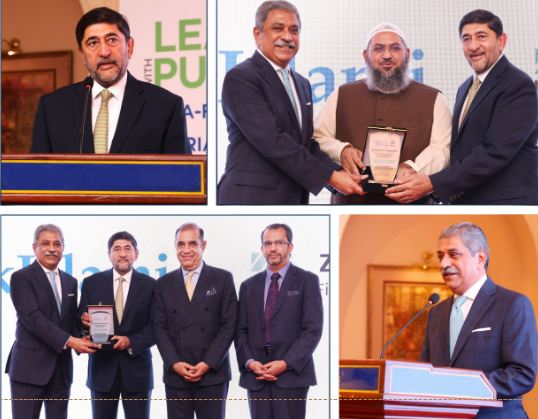
KARACHI, JUL 16 /DNA/ – In a joint effort to promote Riba-free banking in Pakistan, BankIslami and ZLK Islamic Financial Services, Pakistan’s first Shariah-compliant brokerage Firm, hosted a high-impact session on Islamic finance for a diverse group of industry leaders and advocates of ethical banking.

Titled ‘Leading with Purpose,’ the event focused on meaningful conversations around Islamic finance and aimed to help individuals make informed, faith-aligned financial decisions. Held at the Serena Hotel in Islamabad, the session was attended by valued partners and corporate leaders from the business community, along with notable organizations, including Federation of Pakistan Chambers of Commerce & Industry (FPCCI), Islamabad Chamber of Commerce & Industry (ICCI), Rawalpindi Chamber of Commerce & Industry (RCCI), as well as representatives from civil society, the armed forces, government, financial institutions, and religious scholars.

Dr. Mufti Irshad Ahmad Aijaz, former Chairman of the Shariah Advisory Committee of the State Bank of Pakistan and current Chairman of the Shariah Advisory Committee of SECP and Chairperson of the Shariah Board of BankIslami, delivered the keynote address, highlighting the growing global relevance of Islamic finance. He addressed common misconceptions and emphasized the ethical and socially responsible nature of Islamic finance.

“As leaders in Islamic finance in Pakistan, we are committed to fostering meaningful dialogue on Riba-free banking and raising awareness to drive this crucial cause forward,” commented Rizwan Ata, President & CEO of BankIslami. “We are honored to join hands with ZLK Islamic Financial Services to strengthen the position of Islamic banking and collectively work towards realizing our vision of a Riba-free economy,” he added.

Zahid Latif Khan, Chairman of ZLK Islamic Financial Services, commented, “This partnership with BankIslami is rooted in a shared vision to broaden understanding and trust in Shariah-compliant investments. Together, we are laying the foundation for a principled financial ecosystem that serves all segments of society and aligns with the ethical aspirations of our people, regulators, and national direction toward a fully Islamic financial system.”

This session marked a significant step forward in reinforcing the role of Islamic finance in Pakistan’s evolving financial landscape. As the country progresses toward a fully Shariah-compliant system, BankIslami and ZLK Islamic Financial Services remain committed to leading with purpose, engaging stakeholders, and shaping a future centered on ethical, inclusive, and faith-aligned financial solutions.
High-Level delegation of Beijing Police calls on Federal Interior Minister Mohsin Naqvi

High-Level delegation of Beijing Police calls on Federal Interior Minister Mohsin Naqvi

DNA

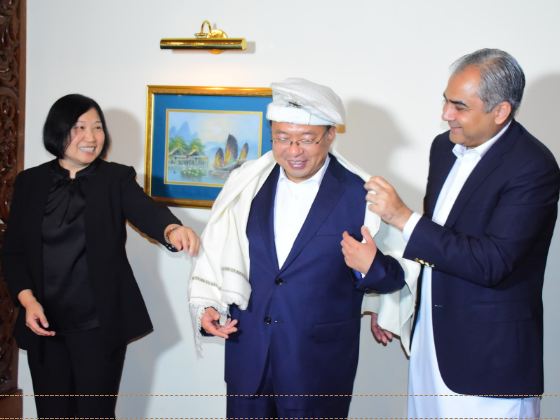
‎Islamabad:Federal Interior Minister Mohsin Naqvi met with a high-level delegation of the Beijing Police Department, led by Deputy Director General Gao Jianxin. During the meeting, enhancing collaboration between Islamabad and Beijing police, training in modern technology, and information sharing were discussed in details.

‎During the meeting, it was decided that officers of Islamabad Police will be sent to Beijing for training in modern policing and advanced technologies. These officers will participate in various training courses conducted by the Beijing Police Department. They will also receive special training in the use of artificial intelligence to further improve the policing system.

‎Mohsin Naqvi emphasized that modern training in Beijing will significantly enhance the capacity of Islamabad Police. He noted that Beijing Police is a highly efficient and technologically advanced force, and Islamabad Police should fully benefit from their experience. He stressed that the use of modern technology for public safety and crime prevention has become essential. He stated that cooperation with Beijing Police in this regard would prove extremely beneficial.

‎Interior Minister welcomed the offer of anti-riot training from Beijing Police for Islamabad Police. He highlighted the importance of timely information sharing to tackle challenges such as terrorism, organized crime, drug trafficking, and human smuggling. He thanked the Beijing Police Department delegation for their commitment to enhancing cooperation with Islamabad Police.

‎The Chinese delegation included Li Yuhang, Deputy Director General of the Ministry of Public Security, and Directors He Xin, Feng Wei, and Hu Jimin from the Beijing Police Department.

‎The meeting was also attended by Minister of State for Interior Tallal Chaudhry, Federal Secretary for Interior, Director General FIA, Commandant of the National Police Academy, Chief Commissioner Islamabad, IG Islamabad Police, and Deputy Commissioner Islamabad.

PM Shehbaz approves 15% EOBI pension increase

Shehbaz Sharif

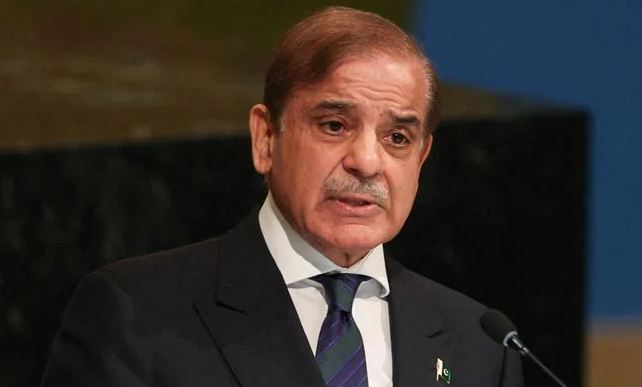
ISLAMABAD, JUL 16: Prime Minister Shehbaz Sharif, chairing the federal cabinet on Wednesday, approved several major decisions, including a 15% increase in the Employees Old Age Benefits Institution (EOBI) pension and the extension of the import of unregistered life-saving drugs for five more years.

According to the official announcement, the EOBI pension will be raised from January 1, 2025, with the increase being funded through the institution’s own financial resources. The PM also directed the formation of a cabinet committee to propose structural reforms in EOBI, with special focus on extending coverage to the unorganized labour sector, including domestic workers and those involved in agriculture.

“Employees who have been overlooked for years will now get their due rights through these reforms,” the cabinet statement emphasized.

In the health sector, the cabinet approved the continued import of unregistered medicines, including drugs for cancer, heart disease, and other life-threatening conditions, strictly for use in hospitals and specialized institutions. The move, approved for the next five years, aims to ensure uninterrupted access to critical treatments.

The cabinet clarified that:

These medicines will not be available in the open market.

First approval from the licensing authority will be mandatory for their import.

On the legislative front, the cabinet also considered the Sea Carriage Shipping Documents Bill and approved the initiation of necessary legal procedures regarding the draft.

During the session, PM Shehbaz Sharif reiterated the government’s commitment to economic development and GDP growth, stressing that performance-based evaluations of ministries are now underway. He announced that Key Performance Indicators (KPIs) would be set for each ministry for two-month periods, and the results would guide decisions on commendations or disciplinary actions.

The PM also addressed concerns about the performance of the Public Sector Development Programme (PSDP) and praised Minister for Planning Ahsan Iqbal for exceeding expectations.

“Questions were being raised about PSDP’s performance this year, but Ahsan Iqbal has pleasantly surprised me,” said the Prime Minister.

“The development budget has now crossed Rs1 trillion. Congratulations to Ahsan Iqbal.”

PM Shehbaz concluded with a strong message on accountability and reform: “We will identify shortcomings and take corrective actions where needed. I won’t hesitate to take disciplinary measures if required. But those who deliver will always have my full support.”

He remarked that everyone was working together to achieve GDP growth and economic development.

EOBI PENSION
EOBI PENSION INCREASE
CAB

FBISE announces 2025 matric results

FBISE announces 2025 matric results

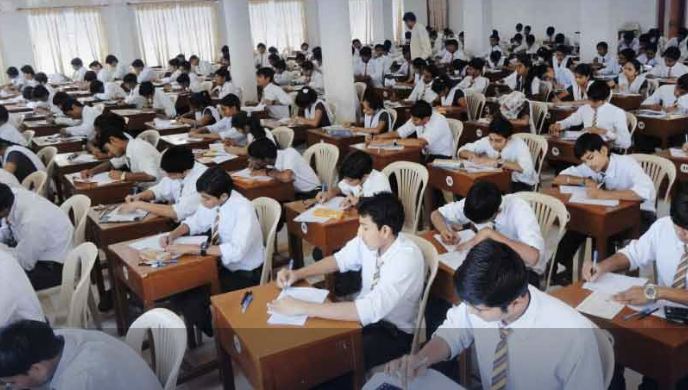
ISLAMABAD, JUL 16: The Federal Board of Intermediate and Secondary Education (FBISE) on Wednesday announced the annual results for the 9th and 10th grades for the academic year 2025, with a remarkable overall pass percentage of 88.51%.

A total of 284,037 students appeared in the matriculation exams this year. Among them, Maryam Nadeem, a student of Army Public School Westridge, stood out by clinching the first position in the Science Group, securing an impressive 1093 marks.

The second position in the Science Group was bagged by Amna Nasir of Lahore Grammar School with 1087 marks. Meanwhile, the third position was shared by Saleha Saqib of Emalah Foundation School Misrial and Hania Iman Waheed of APS Attock, both scoring 1083 marks.

In the Humanities Group, Sana Bibi from Shining Star School secured the top spot with 1045 marks. Abdul Rehman from the Institute of Islamic Studies earned the second position with 1029 marks, followed by Muhammad Sufyan Ahmed, also from the Islamic Studies Institute, who grabbed the third position with 1022 marks.

Notably, no institution under the Federal Directorate of Education (FDE) was able to secure any top positions in either group.

The board appreciated the overall performance of the students and acknowledged the dedication of teachers and schools in maintaining academic standards. However, the absence of FDE institutions among the toppers has raised questions about the quality of public education in the capital.

Follow the link to check out your result with your roll number: https://fbise.edu.pk/

Pakistan Navy command & staff conference concludes

Pakistan Navy command & staff conference concludes

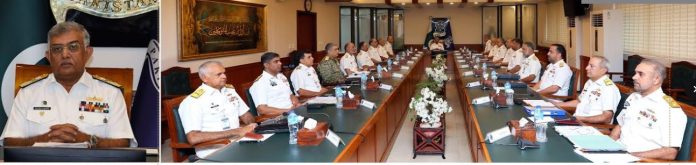
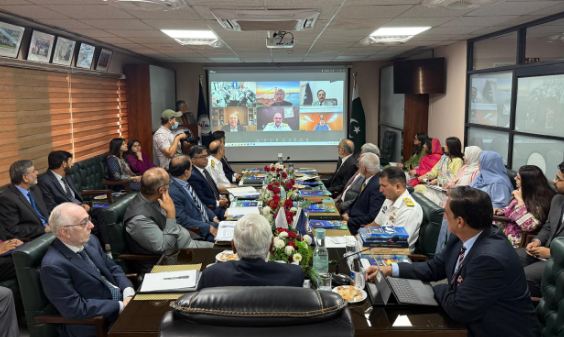
ISLAMABAD, JUL 16 /DNA/ – The Command & Staff Conference of Pakistan Navy concluded at Naval Headquarters, Islamabad. The conference was chaired by Chief of the Naval Staff, Admiral Naveed Ashraf.

During the conference, Chief of the Naval Chief underscored the importance of maintaining perpetual combat readiness to effectively counter both traditional and non-traditional threats in the maritime domain. He specifically appreciated PN’s impregnable deterrence at sea during MARKA-E-HAQ highlighting the successful demonstration of its prowess and robust defence capabilities. Naval Chief commended PN’s proactive measures in ensuring  continuous flow of supplies through Sea Lanes of Communication (SLOCs) and uninterrupted operations at sea ports.

Admiral Naveed Ashraf also emphasized the development of capabilities in unmanned systems, including drones and unmanned surface/underwater vessels, to enhance surveillance and response capabilities.

The Command & Staff Conference is the apex decision-making forum of Pakistan Navy, where the Chief of the Naval Staff, along with all Principal Staff Officers and Field Commanders, review the policies and strategic plans of the service.

Pakistan hockey team unhappy with management; Captain Amad Butt voices concerns

PHF announces squad for Azalan Shah Hockey Cup

As the patron-in-chief of Pakistan hockey, Prime Minister Shehbaz Sharif is being urged to intervene. Many in the sporting community believe that immediate and meaningful action is necessary to save the national game from total ruin

DNA

ISLAMABAD, JUL 16 /DNA/ – Serious cracks have emerged within the Pakistan national hockey team setup as players express growing dissatisfaction with the team management and the Pakistan Hockey Federation (PHF). Sources within the team reveal that the players, including senior members, are unhappy with the unfulfilled promises, inadequate support, and poor financial treatment being meted out to them.

According to reports, an informal conversation between players and team captain Amad Butt was recently leaked, shedding light on the underlying tensions and discontent within the camp. In the audio clip, Captain Amad Butt is heard criticizing the hockey management for not delivering on its commitments. He allegedly told his teammates that the management had failed to provide the promised facilities and financial benefits.

“The players are not getting what was committed to them. Daily allowances are meagre and irregular. We are putting in effort for the country, but the treatment we receive is disheartening,” Amad Butt reportedly said in the leaked discussion. The captain’s remarks reflect a sentiment widely shared among the squad.

The leaked audio has sparked outrage among the hockey fraternity and has highlighted the deepening crisis within the national sport. Once a source of pride for the nation, Pakistan hockey has been plagued by administrative chaos, financial mismanagement, and internal politics for years.

Currently, the Pakistan Hockey Federation is divided into two prominent factions – one led by Tariq Bugti and Rana Mujahid. While these two have temporarily joined hands for the sake of operational control, insiders suggest that the relationship between them remains tense and fragile.

Tariq Bugti, who is also the president of PHF, is believed to be more sympathetic to the players’ concerns. However, he is reportedly unhappy with the performance and role of the federation’s secretary, allegedly accusing him of mismanagement and lack of coordination. The infighting between top officials has only further weakened the structure of the already struggling federation.

The players, caught in the middle of this power struggle, feel abandoned and demotivated. Despite their efforts to raise the flag high on the international stage, they are forced to train and compete under conditions that are far from ideal. With little financial security, poor facilities, and no clear roadmap, many promising players are contemplating early retirement or seeking careers abroad.

The continued decline of hockey in Pakistan has raised alarm bells among fans and former players. The sport, once crowned with Olympic and World Cup glory, now stands on the brink of collapse due to administrative neglect and lack of state support.

As the patron-in-chief of Pakistan hockey, Prime Minister Shehbaz Sharif is being urged to intervene. Many in the sporting community believe that immediate and meaningful action is necessary to save the national game from total ruin. The players, despite all odds, remain hopeful that the highest office in the country will take notice of their plight and restore dignity and support to Pakistan’s national hockey team.

11th Board of Advisors Meeting of NIMA held in Islamabad

11th Board of Advisors Meeting of NIMA held in Islamabad

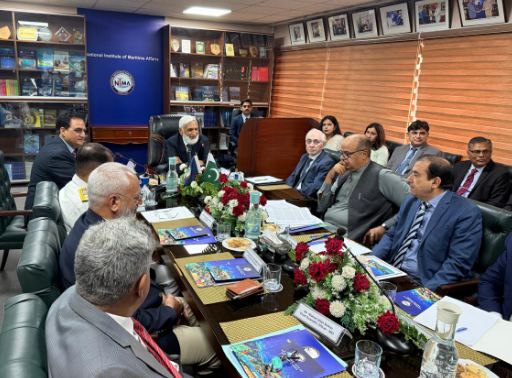
ISLAMABAD, JUL 16 /DNA/ – The 11th meeting of the Board of Advisors (BoA) of the National Institute of Maritime Affairs (NIMA) was convened at NIMA’s Head Office in Islamabad. The session was chaired by Admiral Muhammad Zakaullah, Former Chief of the Naval Staff and Chairman NIMA BoA.

In his opening remarks, Admiral emphasized the importance of aligning maritime research outcomes with industry needs and ensuring they are results-oriented and contribute tangible dividends. He expressed sincere appreciation for the dedicated contributions of the board members and acknowledged NIMA’s evolution into a credible maritime think tank, both nationally and internationally. The Admiral also commended the NIMA team and researchers for their exceptional work and commitment.

Earlier, Vice Admiral Ahmed Saeed, President of NIMA, welcomed the participants and presented an overview of the emerging global trends in geopolitics, the economy, and the strategic maritime environment in 2025. A summary of the institute’s recent research activities was delivered by Commodore Dr. Baber Bilal Haider, Vice President NIMA.

The Board engaged in detailed deliberations on a wide range of agenda items. Key discussions focused on national maritime policy, development of ports and harbors, shipping and ship recycling, maritime tourism, offshore hydrocarbon and mineral exploration, fisheries and aquaculture, climate change, maritime pollution, and the integration of emerging artificial intelligence technologies in the maritime domain.

The Board also reviewed and approved NIMA’s annual calendar of events and plan of events.

Pakistan, China reaffirm commitment to regional cooperation

Pakistan

ISLAMABAD, JUL 16: Pakistan and China have reaffirmed their commitment to strengthening bilateral cooperation in a bid to support regional peace, stability and development.

The resolve came during a meeting between Deputy Prime Minister Ishaq Dar and Chinese Foreign Minister Wang Yi on the sidelines of the Shanghai Cooperation Organisation (SCO) Council of Foreign Ministers meeting in Tianjin.

The two sides held wide-ranging discussions, focusing on key areas including the China-Pakistan Economic Corridor (CPEC) and broader multilateral collaboration.

Both leaders expressed satisfaction with the depth and progress of the strategic partnership.

The two leaders also praised the strength of the Pakistan-China All-Weather Strategic Cooperative Partnership, underlining the close coordination between the two countries across multiple sectors.

Speaking at the SCO Council of Foreign Ministers meeting in Tianjin on Wednesday, Dar said Pakistan remained fully committed to the regional ceasefire and a balanced security environment.

However, he cautioned that peace could not be achieved if coercion and aggression were allowed to become standard tools of statecraft.

“Today, Pakistan remains steadfast in its commitment to the ceasefire and the cultivation of a stable regional equilibrium,” Dar said. “But we cannot accept that the arbitrary use of force is normalised.”

During his address, the foreign minister stressed that all disputes and differences must be resolved through dialogue and diplomacy, rather than conflict and confrontation. “Initiation of a comprehensive and structured dialogue can meaningfully address the full spectrum of issues that have long bedeviled peace and security in South Asia,” he added.

Dar also emphasised the importance of strictly adhering to bilateral agreements as a prerequisite for restoring regional confidence and preventing future escalations.

Referring to recent tensions in South Asia, Dar said Pakistan had adopted a restrained and responsible approach despite provocative rhetoric and “strategic recklessness” from its neighbor.

“The events unfolding since 22 April 2025 also reaffirm a central truth of South Asian geopolitics… the peaceful settlement of the longstanding unresolved disputes is imperative for an enduring peace in the region,” he added.

He urged the SCO to remain a platform for regional stability based on mutual respect and the sovereign equality of states, stating that durable peace requires resolving unresolved disputes through fair and lawful means.

Pakistan, he noted, was ready to work with all regional partners under the SCO framework to advance peace, development, and connectivity through collective cooperation rather than confrontation.

He also addressed the rising terror activities across the globe, saying that terrorism was the common concern of humanity that threatens the global security.

All forms of terrorism including state terrorism are condemnable, he said, adding: “We must shun the use of terrorism for political purposes and combat this menace through a cooperative approach including addressing its root causes.”

Finance Minister chairs meeting on USC Wind-Up

Muhammad Aurangzeb

DNA

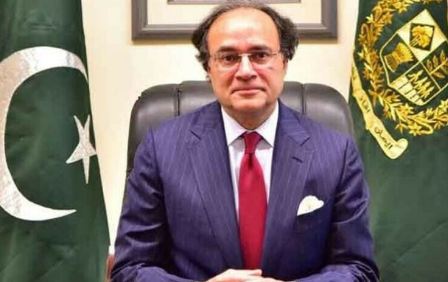
ISLAMABAD: A high-level meeting of the Committee constituted by the Prime Minister to oversee the closure and privatization of the Utility Stores Corporation (USC) was held today at the Finance Division, with Federal Minister for Finance and Revenue, Senator Muhammad Aurangzeb, in the chair.

The Committee has been tasked with ensuring a smooth and transparent closure process, formulating a suitable VSS for USC employees, and recommending a structured timeline for privatization.

Special Assistant to the Prime Minister on Industries & Production, Haroon Akhtar Khan, Secretary Establishment Division, Secretary Finance Division, Secretary Industries & Production Division, Managing Director of USC and senior officers from the Finance and Revenue Division attended the meeting today.

During the meeting, the Committee led by the Finance Minister reviewed the progress made in the light of the tasks assigned to it and held detailed deliberations on the way forward. It was reaffirmed that, in accordance with the government’s directives, all operations of USC will be closed by 31st July 2025. The Committee discussed at length the formulation of a fair and financially viable Voluntary Separation Scheme (VSS) for the USC employees.

During the course of the meeting, the members examined various dimensions of the proposed VSS, including its projected size, potential fiscal impact, and legal and operational implications associated with its structure and rollout. The Committee recommended that the Privatization Commission be consulted regarding the optimal structuring and feasibility of privatization or alternatively asset sales linked with the USC operations.

To facilitate a comprehensive analysis, the Chair constituted a sub-committee headed by the Secretary Establishment Division. The committee will include representatives from the Finance Division and the Industries & Production Division to examine the legal and operational aspects, contours, size, and structure of the proposed VSS and submit its report to the main Committee by the end of the week. This will enable the Committee to consolidate its findings and finalize its report and recommendations to be submitted to the Prime Minister in line with the Terms of Reference.

PIDE Demands Action as Climate Change Reshapes Pakistan’s Landscape

PIDE Demands Action as Climate Change Reshapes Pakistan’s Landscape

·        Pakistan is among the top 10 most climate-vulnerable countries globally

·        Climate change is human-driven and linked to unchecked economic practices

·        Only through collective responsibility and strategic policy measures can Pakistan protect its fragile ecosystems and reimagine its tourism sector as a force for sustainable development

ISLAMABAD, JUL 16 /DNA/ – The Pakistan Institute of Development Economics (PIDE) organized a seminar titled “Climate Change and Responsible Tourism in Pakistan” to highlight the country’s escalating climate crisis and explore how tourism can both contribute to and help mitigate its impacts.

The event featured Mr. Wajahat Malik, a renowned documentary filmmaker, TV presenter, and Managing Director of EyeBex, as the keynote speaker. The session was moderated by Dr. Zulfiqar Ali, Assistant Professor at PIDE.

Pakistan is among the top 10 most climate-vulnerable countries globally, facing severe and accelerating consequences such as melting glaciers, flash floods, unpredictable weather patterns, rising temperatures, and biodiversity loss. These changes pose a direct threat to both lives and livelihoods, particularly in the northern regions where tourism forms a significant part of the local economy. In his talk, Mr. Wajahat Malik emphasized that tourism can either accelerate environmental degradation or become a catalyst for resilience and adaptation. He explained that while mass tourism, when unmanaged, contributes to carbon emissions, deforestation, and excessive strain on natural resources, responsible tourism has the potential to promote sustainability, education, and local empowerment.

The seminar highlighted a range of climate-related impacts already affecting Pakistan’s tourism sector. Flash floods and glacial lake bursts have caused extensive damage to critical infrastructure, including roads, hotels, and trekking routes. Erratic weather patterns are disrupting travel seasons, resulting in decreased tourist footfall. The increased frequency of natural disasters such as landslides and Glacial Lake Outburst Floods (GLOFs) has raised safety concerns for visitors. Additionally, peak-season tourism places overwhelming pressure on limited water supplies and local ecosystems, while the degradation of scenic landscapes and biodiversity diminishes the overall quality of the tourist experience.

During the session, Mr. Malik   discussed key insights into how tourism must evolve in response to these realities. He asserted that climate change is human-driven and linked to unchecked economic practices. Mass tourism, he said, often leaves behind a legacy of waste, emissions, and ecological damage. Therefore, responsible tourism is no longer optional—it is essential. To this end, he outlined several practical steps that tourists and tourism businesses can take: avoiding litter and single-use plastics by using reusable items; respecting natural ecosystems by staying on designated trails and limiting pollution; supporting local communities by choosing locally owned accommodations, guides, and products; opting for low-impact transportation; and engaging with the culture and environment of the region before visiting.

The seminar also stressed the importance of policy reform. Participants agreed on the urgent need for investment in sustainable infrastructure, effective regulation of high-traffic tourist areas, and robust awareness campaigns targeting both tourists and local communities. Such efforts are necessary to ensure that tourism contributes to climate resilience rather than exacerbates environmental vulnerabilities.

“Tourism is not just about leisure—it is deeply political and environmental,” Mr. Malik stated. The seminar concluded with a call to action for all stakeholders—including policymakers, tourism operators, researchers, and citizens—to promote ethical, climate-conscious tourism practices. Only through collective responsibility and strategic policy measures can Pakistan protect its fragile ecosystems and reimagine its tourism sector as a force for sustainable development.

Stay Connected

64FansLike
60FollowersFollow

Latest Reviews

Exchange Rates

USD - United States Dollar
EUR
1.17
GBP
1.35
AUD
0.72
CAD
0.73