Home Blog Page 568

Chairman CDA orders crackdown on illegal housing schemes in Islamabad

Chairman CDA

ISLAMABAD, JUL 18: /DNA/ – The Chairman CDA and Chief Commissioner Islamabad Muhammad Ali Randhawa chaired an important meeting at the Chief Commissioner’s Office, Islamabad which was attended by Talat Mahmood, Member Admin and Estate, Dr. Khalid Hafiz, Member Planning, Syed Mafasat Raza, Member Engineering, CDA, Deputy Commissioner Islamabad Irfan Nawaz Memon, Director General Planning, Director General Building Control and Housing, Director General Law, Director General Special Projects, Chief Officer, MCI, Deputy DG Enforcement and DMA, Registrar Cooperative Housing Societies, ADCG and other senior officers.

During the briefing, Member Planning CDA gave briefing about the legal actions being taken against illegal housing societies in various zones of Islamabad. Chairman CDA and Chief Commissioner Islamabad directed that all illegal and cooperative housing societies be categorized, and a comprehensive database be prepared for all housing and cooperative societies falling within the jurisdiction of CDA and Islamabad Capital Territory (ICT). Complete data on layout plans, NOCs and plot allotments of societies particularly for societies selling more files than the land should be compiled with complete details of names of the housing and cooperative societies as well as their zones.

Chairman CDA and Chief Commissioner Islamabad directed the relevant wings of CDA and ICT to take indiscriminate action against illegal housing societies and cooperative housing societies in accordance with law.

Chairman CDA and Chief Commissioner Islamabad said that a zero-tolerance policy would be adopted against illegal constructions and encroachments in Islamabad to eliminate unauthorized occupations in residential and rural areas while preserving the city’s natural beauty and environment.

The meeting was briefed about the details of legal and illegal housing societies have been made uploaded on CDA’s website which are available for public information, convenience, allowing citizens to verify the legal status of any housing society through CDA’s website or planning wing CDA before making any investments in real estate sector.

The meeting also discussed the legal action taken against all those who are supplying construction and other materials to illegal housing and cooperative societies.

A decision was made that layout plans and NOCs of illegal housing and cooperative societies should be checked and take legal action against all those housing societies and cooperative societies for violating layout plans as well as NOCs who are selling more files than their approved in their layout plans/NOCs.

Chairman CDA and Chief Commissioner Islamabad directed full enforcement CDA and ICT zoning regulations in letter and spirit. Relevant officers were instructed to ensure immediate and effective action against illegal housing and cooperative societies to protect citizens’ interests.

Chairman CDA and Chief Commissioner Islamabad said that CDA’s goal is not only to develop and beautify Islamabad but also to prioritize meeting the housing needs of its residents. Strict action will be taken against all illegal constructions and housing schemes across the board to ensure citizens to have their investments safe and in compliance with the law.

5 ‘bombers’ arrested at Pak-Afghan border

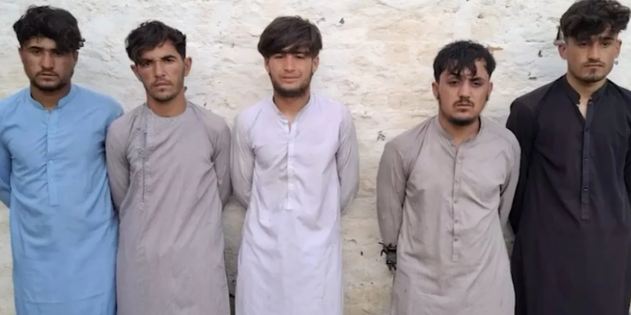
Five 'suicide bombers' arrested during infiltration attempt at Pak-Afghan border

Terrorists took refuge inside mosque and surrendered without any exchange of fire, say security sources

News Desk

ISLAMABAD: Security forces have arrested five suspected suicide bombers who were attempting to infiltrate from Afghanistan into Pakistan on the evening of July 17, according to security sources.

The movement of a large group of terrorists belonging to the Indian-sponsored militant group ‘Fitna Al Khawarij’, also known as Tehreek-e-Taliban Pakistan (TTP), was detected on July 17 at 5:00pm, they added.

At approximately 6:25pm, the security sources said that terrorists crossed into Pakistan and moved toward the areas of Azizkhel and Mandikhel.

Faced with a strong security presence, they took refuge inside a mosque in the village of Besi Khel, said security sources.

Security forces quickly cordoned off the area and surrounded the mosque. “After a brief standoff, the terrorists surrendered without any exchange of fire,” as per the sources.

All five arrested terrorists are Afghan nationals, while three of them were carrying Afghan identity cards, they said.

The suspects, believed to be between 15 and 18 years old, have been moved to an undisclosed location for further investigation, sources added.

Pakistan witnessed a surge in terror activities, particularly in its Khyber Pakhtunkhwa (KP) and Balochistan provinces, since the return of Taliban rulers in Afghanistan in 2021.

In May this year, Pakistan saw a slight uptick in militant attacks even as heightened military tensions with neighbouring India failed to trigger a significant escalation in violence from extremist groups.

Data released by the Islamabad-based Pakistan Institute for Conflict and Security Studies (PICSS) indicates a 5% increase in attacks compared to April, though the overall picture suggests militant groups largely remained contained despite the regional geopolitical climate.

According to the PICSS monthly security assessment, May recorded 85 militant attacks, a marginal rise from 81 in April.

These incidents resulted in 113 fatalities, including 52 security forces personnel, 46 civilians, 11 militants, and four members of peace committees. The month also saw 182 individuals injured, comprising 130 civilians, 47 security personnel, four militants, and one peace committee member.

While the overall number of attacks saw only a modest increase, a deeper dive into the figures reveals some concerning trends.

Deaths among security personnel surged by a significant 73%, underscoring the persistent threat faced by Pakistan’s armed forces.

Civilian injuries also witnessed a dramatic 145% increase, jumping from 53 in April to 130 in May, highlighting the growing impact of militant activities on the general populace. Conversely, injuries among security personnel decreased by 20%, falling from 59 to 47.

In operations initiated by security forces during the month, at least 59 militants were killed, while five security personnel lost their lives.

Combining militant attacks and security operations, the overall casualty toll for May stood at 172 including 57 security personnel, 65 militants, 46 civilians, and four peace committee members.

Five ‘suicide bombers’ arrested during infiltration attempt at Pak-Afghan border

Five 'suicide bombers' arrested during infiltration attempt at Pak-Afghan border

ISLAMABAD, JUL 18: Security forces have arrested five suspected suicide bombers who were attempting to infiltrate from Afghanistan into Pakistan on the evening of July 17, according to security sources.

The movement of a large group of terrorists belonging to the Indian-sponsored militant group ‘Fitna Al Khawarij’, also known as Tehreek-e-Taliban Pakistan (TTP), was detected on July 17 at 5:00pm, they added.

At approximately 6:25pm, the security sources said that terrorists crossed into Pakistan and moved toward the areas of Azizkhel and Mandikhel.

Faced with a strong security presence, they took refuge inside a mosque in the village of Besi Khel, said security sources.

Security forces quickly cordoned off the area and surrounded the mosque. “After a brief standoff, the terrorists surrendered without any exchange of fire,” as per the sources.

All five arrested terrorists are Afghan nationals, while three of them were carrying Afghan identity cards, they said.

The suspects, believed to be between 15 and 18 years old, have been moved to an undisclosed location for further investigation, sources added.

Pakistan witnessed a surge in terror activities, particularly in its Khyber Pakhtunkhwa (KP) and Balochistan provinces, since the return of Taliban rulers in Afghanistan in 2021.

In May this year, Pakistan saw a slight uptick in militant attacks even as heightened military tensions with neighbouring India failed to trigger a significant escalation in violence from extremist groups.

Data released by the Islamabad-based Pakistan Institute for Conflict and Security Studies (PICSS) indicates a 5% increase in attacks compared to April, though the overall picture suggests militant groups largely remained contained despite the regional geopolitical climate.

According to the PICSS monthly security assessment, May recorded 85 militant attacks, a marginal rise from 81 in April.

These incidents resulted in 113 fatalities, including 52 security forces personnel, 46 civilians, 11 militants, and four members of peace committees. The month also saw 182 individuals injured, comprising 130 civilians, 47 security personnel, four militants, and one peace committee member.

While the overall number of attacks saw only a modest increase, a deeper dive into the figures reveals some concerning trends.

Deaths among security personnel surged by a significant 73%, underscoring the persistent threat faced by Pakistan’s armed forces.

Civilian injuries also witnessed a dramatic 145% increase, jumping from 53 in April to 130 in May, highlighting the growing impact of militant activities on the general populace. Conversely, injuries among security personnel decreased by 20%, falling from 59 to 47.

In operations initiated by security forces during the month, at least 59 militants were killed, while five security personnel lost their lives.

Combining militant attacks and security operations, the overall casualty toll for May stood at 172 including 57 security personnel, 65 militants, 46 civilians, and four peace committee members.

Balochistan and KP remained the most affected provinces, accounting for 82 of the 85 attacks nationwide.

Potential of Uzbek-Pak-Afghanistan rail Link

Potential of Uzbek-Pak-Afghanistan rail Link

The recently held trilateral meeting in Kabul between the foreign ministers of Pakistan, Uzbekistan, and Afghanistan on July 17, 2025 has given renewed impetus to the long-envisioned rail link connecting Uzbekistan to Pakistan via Afghanistan. This high-level dialogue has reaffirmed the commitment of all three nations to enhance regional connectivity through sustainable infrastructure. The rail corridor, if realized, would mark a major breakthrough in efforts to link Central and South Asia economically, culturally, and strategically.

The meeting underscored the transformative potential of the Uzbekistan-Afghanistan-Pakistan (UAP) railway project, which promises to unlock new trade corridors and reduce logistical barriers. As reiterated by the foreign ministers, the project is not just about transportation—it is a strategic vision to integrate economies, connect people, and stabilize the region through shared prosperity.

Central Asia, rich in resources but landlocked, has long searched for viable trade routes to global markets. Pakistan, with its strategic geography and access to the Arabian Sea via Gwadar and Karachi ports, offers an ideal gateway. The UAP rail link could drastically cut cargo transit times and costs, making trade routes more competitive and reliable. For Uzbekistan, known for its exports of cotton, textiles, and precious minerals, and Pakistan, with its strengths in agriculture, pharmaceuticals, and manufacturing, this project opens up significant commercial possibilities.

The trilateral meeting also recognized the project’s potential to complement the China-Pakistan Economic Corridor (CPEC) by extending its influence into Central Asia. A functional rail link from Tashkent through Kabul to Peshawar and onward to Karachi would turn this corridor into a major Eurasian trade artery, attracting investment and supporting economic growth across the region.

Beyond economics, the foreign ministers acknowledged the socio-cultural dividends of such connectivity. Improved rail access would enable educational exchanges, religious tourism, and academic cooperation. It would revive historic ties that date back to the Silk Road era, reinforcing bonds between societies that share centuries of cultural and civilizational heritage.

A major focus of the Kabul meeting was ensuring Afghanistan’s role as a cooperative transit partner. While security and political challenges persist, the Taliban-led government’s participation in the trilateral forum signals its willingness to support regional infrastructure initiatives. The ministers emphasized the importance of a stable and secure Afghanistan for the success of this corridor and agreed to maintain diplomatic and technical engagement to resolve logistical and security hurdles.

International support will be crucial. Countries like China and Russia, both with vested interests in regional integration, could play a significant role by offering technical, financial, and political backing. Similarly, organizations such as the Shanghai Cooperation Organization (SCO) and Economic Cooperation Organization (ECO) should be leveraged to provide a multilateral framework for planning, investment, and oversight.

Pakistan and Uzbekistan have already demonstrated intent by launching direct flights between Islamabad and Tashkent, and now, through this high-level trilateral dialogue, they have signaled readiness to move to the next phase—tangible rail infrastructure development.

The UAP railway is more than just steel tracks; it is a vision of shared progress, peace, and partnership. With sustained commitment, regional cooperation, and international support, this corridor could redefine regional trade dynamics, create jobs, and connect distant communities. The political will displayed in Kabul is a promising start. Now, it must be matched by coordinated, timely, and bold action to turn vision into reality—for the benefit of all in Central and South Asia.

Israel opens Syrian front; regional escalation raises alarms

Israel opens Syrian front; regional escalation raises alarms

In a troubling development for the already volatile Middle East, Israel has opened a new front by launching strikes on certain areas in Syria. The Israeli government has accused the Syrian regime of facilitating disturbances within Israel through alleged support for proxy militias and cross-border threats. The latest attacks have targeted what Israel claims are military installations and surveillance facilities used by pro-Iranian forces operating under the umbrella of the Syrian government.

Israeli officials argue that the strikes are a defensive measure, aimed at neutralizing threats to their national security. However, many observers see these actions as part of an increasingly aggressive and unilateral approach by Israel, which appears intoxicated by its military superiority and global backing—particularly from the United States.

The escalation has sparked renewed fears of a broader regional conflict. Syria, already devastated by years of civil war, foreign intervention, and humanitarian crises, now faces additional pressure from Israeli airpower. Damascus has condemned the strikes as violations of international law and sovereignty, warning of “serious consequences” if the aggression continues.

This aggressive posture by Israel, critics argue, reflects a pattern of behavior that disregards international norms and the principle of non-aggression. Israel has, in recent years, targeted Lebanon, Gaza, and Syria with impunity, often citing “preemptive defense” to justify its actions. But for many, this justification wears thin when weighed against the disproportionate force used and the destabilizing effects on regional peace.

Furthermore, Washington’s unwavering support for Israel continues to be a source of concern for global peace advocates. The United States, rather than playing the role of a neutral peacemaker, appears to be emboldening Israel’s hardline approach by providing diplomatic cover and military assistance. This dynamic sends a troubling message to the rest of the world—that certain countries are above international accountability as long as they remain aligned with powerful allies.

The broader implications are deeply worrisome. With tensions already high across multiple Middle Eastern fronts—Gaza, the West Bank, Lebanon, and now Syria—the opening of a new front only serves to heighten the risk of a regional war. Iran, a key ally of the Syrian regime and a long-time adversary of Israel, has warned that it will not remain silent in the face of attacks on its interests in Syria. Hezbollah in Lebanon has also issued veiled threats in support of Syria.

This dangerous game of military provocation and counter-provocation is unsustainable. Rather than pursuing endless cycles of retaliation, what is desperately needed is a renewed international push for dialogue, restraint, and peaceful conflict resolution. Regional peace will remain elusive as long as nations are allowed to attack others under the guise of security without international accountability.

Israel’s decision to open a Syrian front marks a dangerous turning point. It signals not only a broadening of its military ambitions but also a deepening disregard for regional stability. The world must speak up against such reckless behavior—whether it comes from a state like Israel or any other actor. Silence or selective condemnation will only ensure that conflict continues to burn across the Middle East, with innocent civilians paying the ultimate price.

Pak, Libya to expand defence ties

Pak, Libya to expand defence ties

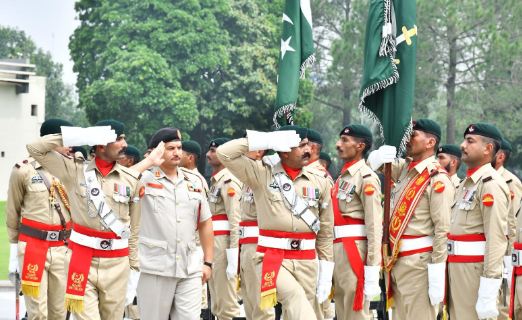
Upon his arrival at GHQ, Lieutenant General Saddam Khalifa Haftar laid a floral wreath at the Yadgar-e-Shuhada to pay homage to the martyrs of Pakistan Army

Ansar M Bhatti

RAWALPINDI, JUL 18 /DNA/ – In a significant development aimed at enhancing bilateral defence cooperation, Lieutenant General Saddam Khalifa Haftar, Commander-in-Chief of the Libyan Armed Forces, called on Pakistan’s Chief of Army Staff, Field Marshal Syed Asim Munir, NI (M), at the General Headquarters (GHQ) in Rawalpindi on Thursday.

The high-profile meeting marks a new chapter in the defence and security relations between Pakistan and Libya, two brotherly nations bound by historical, religious, and cultural ties. According to an official statement issued by the Inter-Services Public Relations (ISPR), the meeting focused on a wide range of issues encompassing mutual interests, regional and global security dynamics, and avenues for enhanced defence collaboration.

During the meeting, the two military leaders discussed contemporary security challenges being faced by both countries, especially in the backdrop of evolving geopolitical realities in the Middle East, North Africa, and South Asia. Field Marshal Asim Munir briefed his Libyan counterpart on Pakistan’s contributions to regional peace, counterterrorism efforts, and the professional excellence of the Pakistan Army in modern warfare and military diplomacy.

Both sides reaffirmed their commitment to strengthening military-to-military ties through structured dialogue and practical cooperation. They agreed to explore opportunities for joint military exercises, capacity-building programs, intelligence sharing, and training exchange programs between the armed forces of the two countries. A key highlight of the discussion was a shared resolve to deepen defence industrial collaboration and facilitate the exchange of technical expertise, particularly in areas related to counterterrorism, border security, and military hardware modernization.

General Saddam Khalifa Haftar appreciated the professionalism, discipline, and global peacekeeping contributions of the Pakistan Army. He also expressed Libya’s interest in benefiting from Pakistan’s advanced training institutions and defence production capabilities. Field Marshal Munir assured him of Pakistan’s full support in strengthening the Libyan Armed Forces through capacity development and training assistance.

Upon his arrival at the General Headquarters, General Haftar was accorded a warm and dignified welcome. A smartly turned-out contingent of the Pakistan Army presented a guard of honour in recognition of the visiting dignitary’s status and the strategic importance of his visit. The Libyan commander laid a floral wreath at the Yadgar-e-Shuhada, the memorial dedicated to the martyrs of the Pakistan Army, paying rich tribute to those who sacrificed their lives for the defence of Pakistan.

The solemn wreath-laying ceremony was followed by a ceremonial inspection of the guard of honour, symbolizing military respect and solidarity. General Haftar expressed admiration for the dedication and sacrifices made by the Pakistan Armed Forces, and acknowledged Pakistan’s long-standing role as a responsible regional power advocating peace, stability, and cooperation.

This visit is seen as part of a broader diplomatic and military engagement by Pakistan to strengthen strategic ties with countries in North Africa and the Arab world. Observers view the development as mutually beneficial, given Libya’s current need for security assistance and Pakistan’s rising profile as a provider of professional military expertise and defence solutions.

The visit by the Libyan military chief follows a series of high-level military and diplomatic engagements by Pakistan with key nations in the region. It also underscores Pakistan’s growing emphasis on expanding its defence diplomacy footprint beyond South Asia, and building new partnerships in line with its strategic objectives.

The Global Revolt Against Israel’s Genocide

Qamar Bashir

By Qamar Bashir

The world’s conscience has shifted. After months of pleading, protesting, and petitioning to persuade the United States to withdraw its unwavering support for Israel’s brutal military campaign in Gaza and the West Bank, the global community has come to a painful realization: neither Israel nor the U.S. possesses the moral ears to hear the cries of the dying, the starving, the orphaned. Deaf to reason, immune to international law, and blind to the genocide unfolding before their eyes, both nations have barricaded themselves behind a wall of impunity.

Israel’s war machine has turned Gaza into a slaughterhouse. With over 20,000 Palestinian children killed, tens of thousands more left orphaned, and entire neighborhoods reduced to rubble, the scale of destruction is incomprehensible. And yet, no amount of international appeals—whether from the United Nations, Doctors Without Borders, world leaders, or human rights organizations—has halted the carnage. Instead, the war intensifies. Churches have been bombed. Mosques flattened. Entire families buried alive. Even Catholic worshippers in prayer were not spared, invoking the fury of the global Christian community. But to Israel, it doesn’t matter. And to the U.S., it still doesn’t matter.

With diplomatic pressure failing, civil society and nations around the globe are embracing a different tactic: direct isolation of Israel and its citizens. It is no longer just a matter of state-to-state diplomacy. The battle has entered the realm of economics, social connectivity, travel, culture, and individual accountability. For the first time since its creation, Israel is witnessing a sweeping boycott that targets not just its policies, but its very access to the world.

An incident that pierced global attention involved a young Israeli couple barred from boarding a Kuwait Airways flight. When asked why, the airline attendant replied simply, “It’s policy. We do not board Israeli passport holders.” While this couple may have had no ties to Prime Minister Netanyahu’s policies, they became symbols of a larger shift. Imagine if airlines worldwide followed suit—if Israeli passport holders were denied travel not out of hatred, but in protest of crimes being committed in their name. This growing sentiment is no longer hypothetical.

In the hospitality sector, platforms like Airbnb and hotel chains are being pressured to deny listings and accommodation to Israeli nationals. Restaurants, taxi services, bus networks—civil institutions are awakening to the power of peaceful resistance. Refusing service to representatives of an apartheid state is no longer seen as controversial, but as necessary.

In commerce, the call is growing louder to halt all imports from Israel and to cease exports into its economy. Hedge funds, pension plans, and national reserves are being lobbied to divest from Israeli bonds and stocks. Foreign banks are increasingly wary of opening accounts for Israeli nationals. The train lines, tourism destinations, and luxury retailers that once catered to Israeli travelers are now under pressure to turn them away.

At the institutional level, the campaign for global disengagement is accelerating. Several arms embargoes are now in effect, and international organizations are rethinking Israel’s participation. United Nations agencies are facing calls to suspend Israeli operatives and diplomats. The International Criminal Court has already begun investigations, and legal scholars argue that accountability should not end with ceasefires or deals—it must follow the perpetrators to the ends of the Earth.

These developments have shattered Israel’s global image. Once hailed for its tech innovation, democratic values, and military discipline, it is now widely seen as a rogue state. According to the Global Peace Index 2024, Israel has experienced the largest single-year deterioration, dropping from 144th to 155th out of 163 nations. On the Media Freedom Index, it now ranks 112th, with Reporters Without Borders citing Gaza as “the most dangerous place for journalists in the world.” Its justice ranking has plummeted due to its disregard for international law, and its soft power—which once helped it build bridges worldwide—has collapsed. Brand Finance ranks its reputation at 121st, down from the top 30 pre-war.

The blow to tourism has been equally severe. Prior to the war, Israel attracted nearly 4 million international tourists annually. In 2024, that number cratered to under 1 million. Airlines cut routes. Hotels emptied. The Holy Land, once a beacon for religious pilgrims and cultural explorers, has become a symbol of state violence.

Economically, the toll is immense. Israel’s GDP contracted sharply in Q1 and Q2 of 2024. Major tech companies have faced divestment. Trade agreements have stalled. The Arab world, already cautious in normalization efforts, is now reversing course, freezing cooperation and severing ties. The Abraham Accords lie in tatters.

But perhaps the most heartbreaking and dangerous consequence is the ripple effect on the Jewish diaspora. As Israel defies international law and moral decency, ordinary Jewish communities around the world are facing backlash. This is not fair—but it is predictable. Zionism’s conflation of Jewish identity with Israeli policy has made every Jew a potential target of boycott or anger. Already, reports are surfacing of Israeli nationals being turned away from hostels, restaurants, and public services across Europe and Latin America. The specter of isolation looms—not just over Israel, but over Jewish individuals who had no hand in these atrocities.

This outcome is not accidental. It is the price of Netanyahu’s madness. His genocidal policy in Gaza—waged with total impunity and unconditional U.S. support—is costing Israel its place in the civilized world. Even when a ceasefire comes, the damage will remain. Justice must not be shelved in the name of diplomacy. Those responsible for the mass killing of civilians—whether military commanders, cabinet ministers, or complicit foreign leaders—must be prosecuted.

Because the death of 20,000 children is not a number. It is a stain on humanity. The infants who died crying for their mothers, the toddlers buried in rubble, the teenagers mutilated by drones—all cry out for justice. Their parents, often killed before their eyes, leave behind a generation scarred beyond healing.

The world cannot pretend this is a misunderstanding or collateral damage. This is genocide, broadcast live, with the world watching and doing too little, too late. But the tide is turning. From airline bans to financial embargoes, from political isolation to international prosecution, the world is beginning to fight back—not with weapons, but with boycotts, sanctions, and justice.

Israel is not winning the war in Gaza. It has failed to eliminate Hamas. It has failed to break Palestinian resolve. And in the process, it is losing the war for its soul, its legitimacy, and its future. It is trading a patch of land for the loss of the world.

This is not diplomacy. It is insanity. And the price is being paid not just by Palestinians, but by the entire Israeli population, and by Jews worldwide. It is time for the global community not only to condemn, but to act—relentlessly, lawfully, and morally—until the killing stops and justice prevails.

By Qamar Bashir

 Press Secretary to the President (Rtd)

 Former Press Minister, Embassy of Pakistan to France

 Former MD, SRBC | Macomb, Michigan, USA

Trump diagnosed with vein issue after leg swelling

Trump diagnosed with vein issue after leg swelling

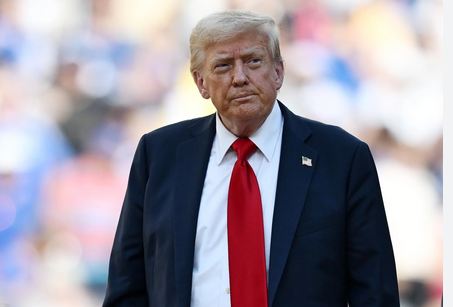
WASHINGTON, JUL 18 (AFP/APP): US President Donald Trump has been diagnosed with a common, benign vein condition, the White House said Thursday, following speculation about his heavily bruised hand and swollen legs.

The 79-year-old, who in January became the oldest person ever to assume the presidency, was found to have “chronic venous insufficiency,” Press Secretary Karoline Leavitt told reporters.

The widely noted discoloration on Trump’s right hand, meanwhile, was “tissue irritation from frequent handshaking” and the use of aspirin as part of a standard cardiovascular treatment, she said.

Presidential physician Sean Barbabella said Trump “remains in excellent health” despite the condition, in a letter released by the White House.

The Republican frequently boasts of his good health and energy levels while the administration recently even posted an image depicting him as Superman.

Trump has alleged that Democrats covered up the mental and physical decline of his predecessor, Joe Biden, who was 82 when he left office in January.

Now Trump, who said after undergoing a routine medical check-up that he was in “very good shape,” has been forced to answer questions about his own health.

Leavitt’s revelations follow widespread online discussions about the president’s visibly swollen ankles, seen in particular at the recent FIFA Club World Cup final in New Jersey, and a bruised hand that often appeared to be covered with make-up.

  “In recent weeks, President Trump noted mild swelling in his lower legs,” Leavitt said, adding that he was examined by White House doctors “out of an abundance of caution.”

Ultrasound tests “revealed chronic venous insufficiency, a benign and common condition, particularly in individuals over the age of 70.”

The condition involves damaged leg veins that fail to keep blood flowing properly.

Leavitt said Trump had asked her to share the diagnosis “in the effort of transparency.”

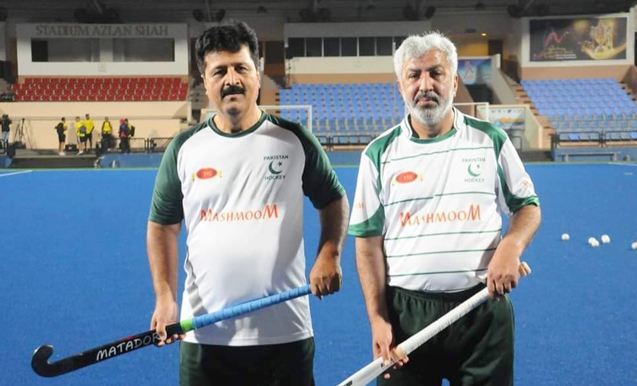
Crisis deepens in Pakistan hockey: major shake-up expected in PHF

Crisis deepens in Pakistan hockey: major shake-up expected in PHF

Despite the ongoing turmoil, there may be a silver lining on the horizon. Sources have indicated that Pakistan could still take part in the Pro League 2026, even if the government fails to release official funds

Ansar M Bhatti

ISLAMABAD: In a major development that has sent ripples through Pakistan’s sports community, Asif Bajwa has resigned from his position as President of the Punjab Hockey Federation (PHF). According to credible sources, Bajwa’s resignation comes amid growing pressure and the likelihood of his arrest over administrative and certain other failures. His departure signals the start of what insiders are calling a “massive shake-up” within the broader Pakistan Hockey Federation (PHF).

Multiple reliable sources have confirmed that both the President of PHF and its Secretary are under serious scrutiny, and at least one of them is expected to be replaced soon. The growing dissatisfaction within the hockey fraternity, particularly among current and former players, has reportedly forced the authorities to consider a reorganization of the federation’s top leadership.

Tariq Bugti, the current PHF President, is said to be politically well-connected and enjoys support from powerful quarters. This backing might secure his position, at least temporarily. However, the same cannot be said for PHF Secretary Rana Mujahid. Insiders claim that Mujahid is likely to be shown the door in the coming weeks, especially given the mounting resentment from players and former officials alike. If that happens then Shehbaz senior will be a strong contender for the post of PHF secretary general.

“The players are extremely unhappy. They have not been paid their dues, their daily allowances are minimal, and they feel completely neglected by the federation,” said a former national player who requested anonymity. “The whole management needs to go.”

The crux of the crisis lies in chronic mismanagement and the federation’s inability to fulfill basic commitments to its players. Over the past few years, numerous complaints have surfaced about delayed or missing payments, poor travel arrangements, and inadequate training facilities. Despite being one of Pakistan’s most storied sports, hockey continues to suffer from dwindling sponsorship, lack of infrastructure, and a leadership accused of incompetence and nepotism.

The growing frustration reached a boiling point recently, with reports of informal discussions among players expressing no confidence in the current leadership. Several players have privately voiced that they feel abandoned, especially when compared to how other countries treat their national athletes.

Adding fuel to the fire is Pakistan’s non-participation in the upcoming Asia Cup being held in India. PHF sources claim that Pakistan made repeated requests to the International Hockey Federation (FIH) to relocate the tournament due to political tensions between Islamabad and New Delhi. However, these efforts proved unsuccessful, as India continues to hold significant sway within the FIH.

“This is a major blow. Pakistan has a rich history in Asian hockey, and our absence from such a key event highlights the dire state of affairs,” said a former coach.

Players and supporters alike have expressed disappointment, pointing out that withdrawing from tournaments due to venue issues further isolates Pakistan from the international hockey community.

Despite the ongoing turmoil, there may be a silver lining on the horizon. Sources have indicated that Pakistan could still take part in the Pro League 2026, even if the government fails to release official funds. Influential figures from the private sector and political corridors have reportedly stepped forward and promised financial backing if Pakistan is invited to the tournament.

“There are a few well-wishers of hockey who have committed support,” a PHF insider confirmed. “They understand that it’s not just about the sport—it’s about national pride.”

While the possibility of participating in the Pro League might offer a temporary morale boost, critics argue that without systemic reform, Pakistan hockey will continue its downward spiral.

Once the pride of Pakistan, hockey has now become a symbol of institutional neglect and misgovernance. The national team, which once dominated world rankings and Olympic podiums, now struggles to qualify for major tournaments. The federation’s leadership has long been accused of misappropriating funds, making political appointments, and ignoring the grassroots development of the game.

With Bajwa’s resignation and the likely exit of key PHF officials, many see this as a turning point. But questions remain: Will the coming changes be cosmetic, or is this the beginning of genuine reform?

Former players, coaches, and hockey lovers across the country are calling on the government, the Pakistan Sports Board, and the FIH to step in and ensure accountability. They stress that unless the leadership is overhauled with competent, transparent individuals focused on merit and development, Pakistan’s national game will remain in the shadows.

The Pakistan Sports Board (PSB), a body mandated to promote and support sports in the country, appears to be at odds with the Pakistan Hockey Federation (PHF). Tensions have reportedly escalated under the new PSB Director General, who notably lacks a background in sports. One major point of contention is the PSB’s recent decision to increase the hockey ground usage fee for clubs by a staggering 300 percent. This move sparked strong criticism from players and the PHF alike. Despite widespread coverage in the national media and formal complaints from clubs, the PSB leadership has remained unyielding on the issue.

As the drama unfolds, one thing is clear: Pakistani hockey stands at a crossroads. The choices made in the next few weeks will determine whether it can rise from its current state or slide further into obscurity.

EU hits Russia with sweeping new sanctions over Ukraine war

EU hits Russia with sweeping new sanctions over Ukraine war

Brussels, Belgium, July 18 (AFP/APP):The EU on Friday adopted a sweeping new package of sanctions on Russia over the Ukraine war, looking to pile more pressure on the Kremlin by lowering a price cap for Moscow’s oil exports.

                  The 18th round of economic measures from Europe against Russia since its 2022 invasion comes as allies hope US President Donald Trump follows through on his threat to punish Moscow for stalling peace efforts.

                  “The EU just approved one of its strongest sanctions packages against Russia to date,” EU foreign policy chief Kaja Kallas said.

                  “The message is clear: Europe will not back down in its support for Ukraine. The EU will keep raising the pressure until Russia ends its war.”

                  Ukrainian President Volodymyr Zelensky hailed the sanctions’ adoption as “essential and timely”.

                  The new measures were approved after Slovakia dropped a weeks-long block following talks with Brussels over separate plans to phase out Russian gas imports.

                  Kremlin-friendly Slovakian leader Robert Fico — whose country remains dependent on Russian energy — dropped his opposition after getting what he called “guarantees” from Brussels over future gas prices.

                  France’s foreign minister Jean-Noel Barrot called the latest moves “unprecedented” and said that “”together with the United States we will force (Russian President) Vladimir Putin into a ceasefire”.

                  As part of the new sanctions designed to sap Russia’s war chest, diplomats said the EU has agreed to lower its price cap on Russian oil exported to third countries around the world, to 15 percent below market value.

                  That comes despite EU allies failing to convince US President Donald Trump to go along with the plan.

                  The cap is a G7 initiative aimed at limiting the amount of money Russia makes by exporting oil to countries across the globe such as China and India.

                  Set at $60 by the G7 in 2022, it is designed to limit the price Moscow can sell oil around the world by banning shipping firms and insurance companies dealing with Russia to export above that amount.

                  The EU has largely already cut off its imports of Russian oil.

                  Under the new EU scheme — which is expected to get the backing of G7 allies like Britain and Canada — the new level will start off at $47.6 and can be adjusted as oil prices change in the future.

                  EU officials admit that the scheme will not be as effective without US involvement.

                  – Tankers, refinery, banks –

                  In addition, officials said the EU is blacklisting over 100 more vessels in the “shadow fleet” of ageing tankers used by Russia to circumvent oil export curbs.

                  There are also measures to stop the defunct Baltic Sea gas pipelines Nord Stream 1 and 2 from being brought back online.

                  Among other targets, sanctions will be placed on a Russian-owned oil refinery in India and two Chinese banks as the EU seeks to curb Moscow’s ties with international partners.

                  There is also an expanded transaction ban on dealings with Russian banks and more restrictions on the export of “dual-use” goods that could be used on the battlefield in Ukraine.

                  The latest round of EU measures comes after Trump on Monday threatened to hit buyers of Russian energy with massive “secondary tariffs” if Russia doesn’t halt the fighting in 50 days.

                  The move from Trump represented a dramatic pivot from his previous effort of rapprochement with the Kremlin, as he said his patience was running out with Putin.

                  The multiple rounds of international sanctions imposed on Moscow in the three-and-a-half years since its invasion have failed so far to cripple the Russian economy or slow its war effort.

                  But Western officials argue that despite Russia’s economy largely weathering the punishment to this point, key economic indicators such as interest rates and inflation are getting worse.

Stay Connected

64FansLike
60FollowersFollow

Latest Reviews

Exchange Rates

USD - United States Dollar
EUR
1.17
GBP
1.35
AUD
0.72
CAD
0.73