Home Blog Page 565

ICCI, ICADRP join hands to promote alternate dispute resolution for business community

ICCI

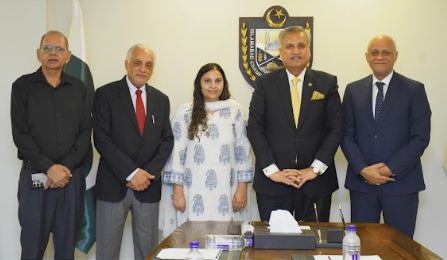
ISLAMABAD, JUL 21 /DNA/ – In a major step toward promoting a culture of mediation and arbitration in Pakistan’s commercial sector, the Islamabad Chamber of Commerce and Industry (ICCI) and the International Center for Appropriate Dispute Resolution and Prevention (ICADRP) have announced a strategic collaboration to advance Alternate Dispute Resolution (ADR) mechanisms for the business community.

A high-level delegation from ICADRP, led by CEO Dr. Nudrat E. Piracha, visited the ICCI and held a constructive meeting with its President Nasir Mansoor Qureshi. The delegation included Managing Director Barrister Farrukh Karim Qureshi and Vice President Strategic Alliances Hamid Sharif. From ICCI, Executive Member Shumaila Siddiqui and Advisor to the ICCI President, Naeem Siddiqui, were also present at the meeting.

Welcoming the guests, President Nasir Mansoor Qureshi underscored ICCI’s commitment to supporting alternative legal frameworks that offer fast, cost-effective, and amicable resolutions for commercial disputes. He highlighted the increasing importance of ADR in the current economic climate and praised ICADRP’s contribution in championing mediation and arbitration practices across Pakistan.

President Qureshi also briefed the delegation on the Mediation Council Office  established at ICCI under the amended Rent Restrictions Act 2023. He stated that the Council has significantly contributed to resolving commercial rent issues and has successfully promoted out-of-court settlements — a welcome shift from time-consuming litigation to more business-friendly solutions.

In response, Dr. Nudrat Piracha, Barrister Farrukh Qureshi, and Hamid Sharif commended ICCI for its proactive vision and shared ICADRP’s ongoing efforts in institutionalizing ADR frameworks nationwide. They emphasized that persistent delays in the conventional legal system underscore the urgent need for efficient alternatives like mediation and arbitration, especially for businesses.

Both institutions agreed to work closely to raise awareness and build capacity around ADR. Under the partnership, ICADRP will conduct specialized training sessions for mediators and organize an exclusive presentation at ICCI to highlight the practical benefits of ADR, particularly in terms of time efficiency, cost savings, and dispute resolution quality.

Advisor to the ICCI President, Naeem Siddiqui, also shared his views, expressing confidence that the collaboration would lead to a more accessible, just, and commercially viable dispute resolution ecosystem. He noted, “This partnership is a timely move to provide the business community with effective alternatives to litigation, strengthening the overall business environment in Pakistan.”

Understanding Social Cognitive Theory: How Learned Behavior Affects Family Dynamics

Understanding Social Cognitive Theory: How Learned Behavior Affects Family Dynamics

By Sabahat Ali

In today’s fast-paced, emotionally strained world, behavioral challenges within families are becoming increasingly visible. One such heartbreaking issue is when adult children become aggressive or even physically abusive toward their mother. To understand the roots of such behavior, psychologists often refer to Social Cognitive Theory — a framework introduced by Albert Bandura, one of the most influential psychologists of the 20th century.

What Is Social Cognitive Theory?

Social Cognitive Theory (SCT) explains how people learn behaviors by observing others, especially in social environments. It emphasizes the importance of observational learning, imitation, and modeling. According to Bandura, our behavior is shaped not just by personal experiences but by what we see happening around us, particularly during childhood.

In other words, a child growing up in a household where anger, shouting, or even violence is normalized may later replicate these behaviors in adulthood, especially under emotional pressure. This is called vicarious learning — when individuals learn by watching others’ actions and the consequences of those actions.

Example: Adults Becoming Aggressive Toward Their Mother

Let’s consider a real-world example: An adult daughter or son becomes hyper-aggressive, even violent, towards their elderly mother. This outburst may seem sudden or irrational, but often it stems from a deeper psychological pattern one that was modeled during their formative years. Perhaps they witnessed a father shouting at or disrespecting their mother. Maybe unresolved trauma, poor emotional regulation, or a household without healthy communication patterns created a breeding ground for future aggression.

According to Dr. Leonard Eron (University of Illinois), “children who witness parental aggression are more likely to become aggressive adults themselves.” This supports Bandura’s concept of modeling — we become what we see.

Psychological Triggers Behind This Behavior

Some common psychological triggers include:

Repressed anger or childhood resentment

Lack of coping mechanisms for handling stress, disappointment, or guilt

Mental health disorders, such as PTSD, anxiety, or undiagnosed mood disorders

Substance abuse, which reduces self-control and increases impulsivity

Lack of empathy, often stemming from emotional neglect

In such moments, the adult may become overwhelmed, “hyper and wild,” unable to regulate their emotions. The outburst may not be about the mother herself but the projection of long-suppressed emotional wounds.

Remedies and Interventions

Healing and change are always possible — but they require effort, self-awareness, and support. Below are some suggested remedies:

1. Therapy and Counseling

Cognitive Behavioral Therapy (CBT) helps individuals understand and rewire negative thought patterns.

Family Therapy can help rebuild trust and improve communication between family members.

2. Modeling Healthy Behavior

Role models within the family or community should demonstrate emotional control, respectful dialogue, and constructive problem-solving.

Schools, religious centers, and media should promote empathy, patience, and kindness.

3. Conflict Resolution Skills

Adults need training in managing anger, active listening, and setting boundaries without aggression.

4. Spiritual and Moral Reflection

Many people benefit from returning to faith-based values, which emphasize respect for parents. Islam, Christianity, and most religions deeply condemn disrespect or harm towards one’s mother.

> “Your mother, your mother, your mother — and then your father.”
— Prophet Muhammad ﷺ, emphasizing the reverence due to mothers.

5. Accountability and Legal Action (if needed)

In extreme cases, abuse must be reported. Protection for elderly parents is a legal and moral obligation in many countries, including Pakistan.

Behavior is not random — it’s learned, shaped, and reinforced over time. By understanding the roots of aggression through Social Cognitive Theory, we can begin to unlearn toxicity and relearn compassion. Healing starts when individuals take responsibility for their behavior and commit to change.

No mother deserves harm from the very children she nurtured. Let us break this cycle of inherited aggression and foster homes filled with respect, peace, and emotional safety.

IHC issues contempt notice to PM, federal cabinet members in Dr Aafia Siddiqui case

IHC issues contempt notice to PM, federal cabinet members in Dr Aafia Siddiqui case

ISLAMABAD: The Islamabad High Court (IHC) has issued a contempt notice to Prime Minister Shehbaz Sharif and other members of the federal cabinet over failure to submit a report in the Dr Aafia Siddiqui case.

“I am issuing a contempt of court notice to every member of the federal cabinet,” Justice Sardar Ejaz Ishaq Khan said during a hearing of the plea filed by Dr Aafia’s sister, Dr Fauzia Siddiqui, regarding the former’s health and repatriation from US prison.

Dictating a short order, Justice Ishaq said that the next hearing of the case will be held on the first working day after the court holidays.

Dr Aafia, a Pakistani neuroscientist, has been incarcerated in US for over 14 years after being handed down an 86-year sentence in 2010 on charges of attempted murder and assault of US personnel in an Afghan jail. She is serving a jail term in Carswell, a high-security prison in Fort Worth, Texas.

In January this year, she sought a presidential pardon, terming her jail term as “a blatant miscarriage of justice”, hours before the power transition in the United States (US). However, the then-US president Joe Biden rejected Dr Aafia Siddiqui’s clemency plea.

During the hearing today, Justice Ishaq said that he had fixed Dr Fauzia’s case for Monday, however, he was informed on Thursday that the cause list would not be issued until it was changed.

“The personal secretary informed about the roster change. I told the personal secretary to write to the chief justice regarding the cause list,” the judge said while highlighting that the roster of judges of the IHC was handled by the CJ’s Office.

“The chief justice did not get even 30 seconds to sign it?” Justice Ejaz remarked, adding that the judges’ roster has been used for decisions in certain cases in the past.

“Once again, administrative power has been used [to exercise] judicial power. I will not let justice face defeat. I will use my judicial powers to maintain the honour of the high court,” the judge remarked.

The court then issued a contempt of court notice to the federal cabinet.

Pakistan-Indonesia relations

Pakistan-Indonesia relations

Dr M Ali Hamza

Mr. Chandra Warsenanto Sukotjo, Indonesia’s newly appointed Ambassador to Pakistan, began his diplomatic tenure by facilitating high-level meetings between officials of the two brotherly nations; a commendable start. The recent visit of Indonesia’s Defence Minister, Lieutenant General (Retd.) Sjafrie Sjamsoeddin, to Pakistan stands as a testament to these efforts.

The reaffirmation of both parties’ commitment to enhancing defence cooperation, particularly in the production of the JF-17 Thunder fighter jet, alongside efforts to explore economic opportunities and strengthen cultural ties, signals a deepening of bilateral relations. During his meeting with the Chief of Army Staff, Field Marshal Asim Munir, at General Headquarters, the Indonesian Defence Minister praised Pakistan’s role in combating terrorism and reiterated Jakarta’s support; a symbolic gesture. As Prime Minister Shehbaz Sharif have already met Indonesian President Prabowo Subianto at the G-8 Summit in Cairo, diplomatic ties between the two nations appear to be growing stronger.

As Lieutenant General (Retd.) Chandra Warsenanto Sukotjo takes on his role as Indonesia’s Ambassador to Pakistan, he steps into a legacy of longstanding diplomatic, economic, and strategic ties between the two nations. His predecessors; Ambassadors Adam Mulawarman Tugio and Iwan Amri, built a solid foundation through active trade diplomacy, cultural exchange, and defence cooperation. However, in the face of shifting geopolitical dynamics and emerging economic challenges, Ambassador Chandra will need to adopt a comprehensive, multifaceted approach to further strengthen and expand this important relationship.

Indonesia and Pakistan, home to the world’s largest and second-largest Muslim populations respectively, share historical bonds dating back to their independence struggles. Pakistan’s founder, Muhammad Ali Jinnah, supported Indonesia’s fight against Dutch colonialism by sending soldiers, while Indonesia reciprocated during the 1965 Indo-Pak war by deploying submarines to Karachi.

Ambassador Chandra has an opportunity to build on this historical context and take the relationship further. So, what should be his focus? One key area is the economic front. Currently, trade between the two countries is heavily imbalanced. Pakistan imports nearly $4 billion worth of goods from Indonesia, while its exports amount to only around $5 million. Addressing this gap by promoting Pakistani exports, such as IT services and halal meat, through targeted trade fairs would be a constructive step. Although palm oil exchange for textiles or Pakistani kinoos dominates current trade, there is a pressing need for sectoral diversification. Potential avenues include fostering collaboration in electric vehicle (EV) manufacturing, where Indonesia’s rich nickel reserves can be leveraged, and strengthening ties in the pharmaceutical sector, where Pakistan holds considerable expertise.

Second front is defence. Indonesia has already shown interest in joint production of JF-17 thunder fighter jet; it should materialize into tangible agreements. The counterterrorism drills can be expanded to combat regional militancy.

Another crucial front is cultural diplomacy; often referred to as soft power. Indonesia already offers approximately 200 scholarships annually to Pakistani students, a commendable initiative that can be further expanded. Mr. Ahsan Iqbal’s proposal to introduce joint scholarships in IT and healthcare could significantly enhance educational ties between the two nations.Additionally, the long-standing aspiration to establish direct flights between Pakistan and Indonesia remains unfulfilled. While feasibility concerns exist, proactive efforts to explore and realize this connection should remain on the agenda.

As people-to-people ties are instrumental in strengthening bilateral relations.This area holds vast untapped potential. Over 64% of Pakistan’s population is under the age of 30, therefore engaging with youth is vital. A well-planned outreach to student communities through seminars and other activities can help build a strong image of Indonesia; highlighting its status as an emerging economic power, its strategic role in regional and global politics, and its rich cultural and geographical diversity.

Moreover, Indonesia’s Ministry of Tourism’s Famtrip initiative is a commendable effort to promote cultural exchange. With slight refinement and better targeting, it can achieve a far greater impact and strengthen mutual understanding between the two countries.

In the regional context, both Indonesia and Pakistan are key players. As Southeast Asia’s largest economy, Indonesia can play a vital role in supporting Pakistan’s integration with ASEAN; potentially advancing its bid for Full Dialogue Partner status. Both countries also face common security challenges, particularly from extremism, making cooperation in intelligence-sharing and counter-radicalization efforts essential. On the global stage, their shared membership in the OIC and Developing-8 highlights a united front in advocating for Muslim-majority nations, especially on critical issues such as Palestine and Islamophobia. Looking ahead, there is hope that Ambassador Chandra will help institutionalize high-level engagements by accelerating the long-awaited visit of President Prabowo to Pakistan, which has been pending since January 2025.

Of course, this is easier said than done. Ambassador Chandra faces several challenges. Bureaucratic inertia often slows progress. Fast-tracking pending agreements, such as the Trade in Goods deal, will require persistent diplomatic effort. There is also a notable perception gap. Many young Pakistanis, including even those born in the 1980s, have limited awareness of Indonesia’s rich culture and global significance. This calls for targeted efforts to break stereotypes through media collaborations, cultural exchanges, and youth engagement programs. Geopolitical complexities add another layer. Balancing relations with both Pakistan and India, managing ties with China and its allies, while maintaining strong connections with the West, is no small feat. In this context, consistent advocacy for a multipolar Asia and a multipolar world becomes not just relevant but essential.

Ambassador Chandra’s unique blend of military and diplomatic expertise positions him well to elevate Indonesia–Pakistan relations into a strategic partnership fit for the 21st century. By building on the legacy of his predecessors and confronting today’s challenges head-on, he can help make this relationship a pillar of Asian solidarity, connecting ASEAN with South Asia and strengthening the collective voice of the Global South. The time for incremental steps has passed; what is needed now is bold, forward-looking diplomacy.

Azerbaijani Ambassador meets FPCCI President to discuss trade expansion

Azerbaijani Ambassador meets FPCCI President to discuss trade expansion

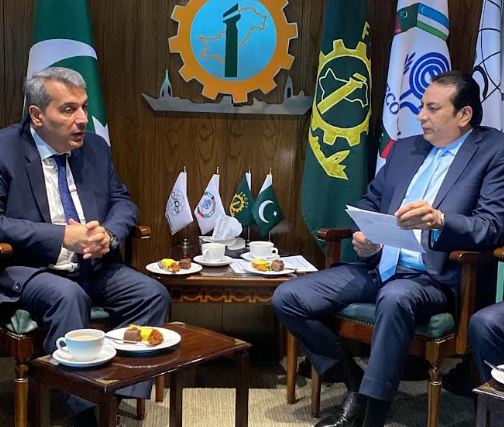
ISLAMABAD, Jul 21 (DNA):  Azerbaijan’s Ambassador to Pakistan, Khazar Farhadov, called on Atif Ikram Sheikh, President of the Federation of Pakistan Chambers of Commerce and Industry (FPCCI), to discuss avenues for strengthening bilateral trade ties between Pakistan and Azerbaijan.

During the meeting, both sides expressed satisfaction over the recent warmth in Pakistan-Azerbaijan relations across political, defense, economic, and social spheres. They agreed on the need to further enhance cooperation in trade and investment.

Atif Ikram Sheikh welcomed Azerbaijan’s decision to invest in Pakistan, terming it a positive sign for long-term economic collaboration. “Pakistan is committed to deepening bilateral relations with Azerbaijan in all sectors,” he stated, emphasizing the importance of mutual partnerships under regional frameworks such as the Economic Cooperation Organization (ECO).

He further appreciated Azerbaijan’s active and effective role on the ECO platform, and noted that increased business-to-business (B2B) engagement could play a significant role in boosting trade between the two brotherly nations.

Ambassador Farhadov, for his part, commended Atif Ikram Sheikh for his dynamic role as the President of the ECO Chamber of Commerce and Industry (ECO-CCI). He said that the business communities of both countries must take a lead role in expanding trade and commercial partnerships.

The meeting also explored opportunities to enhance bilateral trade volumes and foster direct B2B linkages to facilitate joint ventures and new market access.

Both sides reiterated their commitment to a robust economic partnership and agreed to continue working closely to unlock the full potential of bilateral trade relations.

CM Bugti: No one has right to kill another

CM Bugti: No one has right to kill another

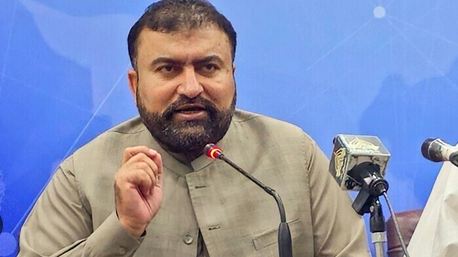
QUETTA, July 21 (DNA): Balochistan Chief Minister Sarfraz Bugti has strongly condemned the recent incident involving the killing of a couple in the province, stating that “no one has the right to take another person’s life.”

Addressing a press conference on Monday, the Chief Minister clarified that the slain couple did not share a valid marital status, based on the official records available. However, he emphasized that this in no way justifies their murder. “Regardless of their relationship status, no individual or group is allowed to act as judge, jury, and executioner,” Bugti said.

He reassured the public that all legal and administrative measures are being taken to bring the perpetrators to justice. “We are committed to upholding the rule of law. Several arrests have already been made and more will follow. No one involved in this heinous act will be spared,” he asserted.

CM Bugti also directed the police and relevant authorities to investigate the matter thoroughly and submit a detailed report at the earliest. He vowed to ensure that justice is served without delay or discrimination.

The Chief Minister appealed to the public to remain calm and allow law enforcement agencies to complete their work. “We must act responsibly and let the legal process take its course. Vigilantism and tribal justice have no place in a civilized society,” he concluded.

The tragic killing has sparked widespread outrage across the country, with civil society and human rights organizations demanding immediate action. The provincial government’s swift response aims to not only punish those responsible but also set a precedent against such crimes.

A Heart-Wrenching Tragedy in Balochistan

A Heart-Wrenching Tragedy in Balochistan

In yet another chilling reminder of the deep-rooted societal rot festering in parts of our country, a young couple in Balochistan was brutally gunned down on July 19, 2025 for committing what some still perversely consider a “crime”: marrying for love. This heartrending tragedy is not just a story of two lives lost—it is an indictment of the collective moral decay, the prevailing culture of violence, and the absolute collapse of law in certain tribal and feudal belts of Pakistan.

The incident, which reportedly took place in the outskirts of Barkhan, saw a man and woman shot dead by family members enraged by their union. Their only fault? Daring to choose each other in a land where love must first pass through the oppressive filters of tribal honour and patriarchal control. The murder of this couple—innocent, consenting adults—is not an isolated episode. It is a pattern repeated in many parts of Balochistan and Sindh, where “honour killings” are still carried out with impunity, often without consequence.

Chief Minister Sarfaraz Bugti swiftly issued a statement, claiming that the culprits had been arrested. But few hold out hope that justice will follow. We’ve seen this playbook before: hollow condemnations, a flurry of media coverage, token arrests, and eventually, silence. The truth is, these acts are not just committed by fringe elements; they are often protected, facilitated, or silently condoned by the very power structures that claim to oppose them. Many of these tribal chieftains and sardars who sit in assemblies and boast of progressiveness harbour the same regressive mindset that fuels these murders.

This is not merely a law-and-order failure—it is a societal illness. The problem lies in the mindset that views women as property, love as rebellion, and honour as something that can be stained by personal choice. How can we expect to move forward as a nation when basic human rights, like choosing one’s life partner, are punishable by death in some parts of the country?

This brings us to the broader, long-standing issue of Balochistan’s marginalization. Despite being Pakistan’s largest province by area and richest in natural resources—home to vast reserves of natural gas, coal, copper, gold, and more—Balochistan remains the most backward province in terms of development, education, health, infrastructure, and rule of law. The poverty is staggering, the literacy rate dismal, and basic services like clean water, electricity, and healthcare remain inaccessible to large swathes of the population.

The question must be asked: why does Balochistan continue to languish in such a state? Is it mere neglect, or is it deliberate?

Many observers believe that the province is kept underdeveloped by design—trapped in a web of tribal politics, local feudalism, and a governance model that benefits a select few while depriving the masses. The tribal chieftains and sardars, who wield enormous influence, often act as both the law and its executioners. These powerbrokers have resisted modern education, development projects, and social reform—because a disempowered, uneducated populace is easier to control. In such an environment, practices like honour killings thrive. It is not just about killing individuals—it is about killing autonomy, modernity, and dissent.

It often feels like Pakistan’s laws stop at the provincial border of Balochistan. Constitutional protections, human rights, and civil liberties that are, at least on paper, available to all Pakistanis seem to vanish in these tribal strongholds. Local jirgas and tribal customs frequently override state laws. Women are routinely denied their rights. Victims are silenced. And perpetrators are shielded by their social standing or tribal affiliations.

It is especially tragic and ironic that such killings are carried out in the name of religion, when Islam, in its true spirit, upholds the right of adult women to choose their spouse. The Quran and Hadith are explicit on the subject: consent is essential for a valid marriage. Yet tribal codes are routinely allowed to override religious teachings and constitutional rights. This fusion of cultural rigidity with religious misinterpretation continues to embolden murderers in the name of so-called honour.

We must say it plainly: there is no honour in honour killings. They are cold-blooded murders, often committed with calculated cruelty. They are an affront to human dignity, a stain on our national conscience, and a violation of both moral and legal codes.

It is high time the government, civil society, religious scholars, and local communities united to uproot this barbaric practice. Laws must not just exist on paper—they must be enforced with zero tolerance. Police officials who turn a blind eye to such killings, or worse, facilitate cover-ups, must face exemplary punishment. Community elders who endorse these crimes should be named, shamed, and prosecuted. And above all, an urgent cultural shift must be engineered through education, media, and religious discourse.

We must also begin a national dialogue to dismantle the toxic code of “ghairat” (honour), which has claimed far too many lives. Let us not let this couple’s death fade into obscurity. Let it serve as a painful reminder of the urgent reform that is needed—legal, cultural, and moral.

The youth of Balochistan deserve the same rights, freedoms, and protections as anyone else in Pakistan. They deserve schools instead of slogans, justice instead of jirgas, and safety instead of subjugation. The state must assert its presence—not through military might, but through justice, equity, and development.

If we cannot protect our people’s right to love and live freely, then we have failed as a society. Let this curse of honour killings end in our generation—before more hearts are stopped simply for daring to beat freely.

Palestinian president urges world leaders to stop starvation in Gaza

Palestinian president urges world leaders to stop starvation in Gaza

RAMALLAH, Jul 21 (DNA): Palestinian President Mahmoud Abbas has launched a major international campaign urging world leaders and organizations to intervene immediately and stop what he described as the “deliberate starvation” of Palestinians in the Gaza Strip.

In letters sent to global leaders and international bodies, President Abbas warned that Israel’s ongoing blockade and military actions in Gaza amount to war crimes, including genocide, destruction and the use of starvation as a weapon against civilians.

“We reach out to you at a critical and painful moment,” Abbas wrote, highlighting that these actions by Israeli forces are undermining peace efforts and crushing hopes for a two-state solution. He accused Israel of tightening pressure on Palestinians and working to prevent the establishment of an independent Palestinian state.

Abbas called for an immediate and lasting ceasefire, the release of all hostages and detainees, and the urgent entry of food and medical aid into Gaza. He demanded the full withdrawal of Israeli forces from the area, and emphasized the need for a political process under international oversight that would lead to a comprehensive peace based on UN resolutions and the Arab Peace Initiative.

“The most urgent matter now is to stop the genocide in Gaza,” Abbas stated. “People are being killed in front of aid centers. Children, women, and the elderly are dying from hunger. This cannot be ignored. We need immediate global pressure on Israel to allow the entry of food and medicine.”

He also raised concerns about the financial crisis facing the Palestinian Authority due to Israel’s withholding of over \$2 billion in Palestinian tax funds. He said the economic blockade is crippling the Authority’s ability to serve its people and called for the urgent release of these funds.

Abbas urged the international community to take strong steps to stop settler violence, protect holy sites in Jerusalem, Hebron, Taybeh, and Gaza, and prevent the annexation of Palestinian land in the West Bank.

“The world must act now to stop this genocide and lift the siege. The situation is grave, and we need urgent help to save lives and restore stability,” he said.

Balochistan CJ steps in amid public anger

Balochistan CJ steps in amid public anger

The viral video showed a group of men leading a couple out of vehicles and into a desert before gunning them down with pistols and shooting the bodies. Political figures and activists said it was an ‘honour’ killing incident

Bureau Report 

QUETTA: At least 11 suspects, including a tribal leader, have been arrested for their alleged involvement in the killing of a man and a woman in Balochistan after a video of the murder went viral on social media, with the case now handed over to the Serious Crimes Investigation Wing (SCIW), police said.

Meanwhile, the Chief Justice of the Balochistan High Court has taken notice of the incident and issued notices to the Chief Secretary, IG Balochistan and other relevant officials.

Superintendent of Police (SP) SCIW Syed Saboor Agha told Dawn.com, “Eleven people have been arrested, including a tribal leader who issued directives to shoot the couple, and all of them will appear before a judicial magistrate today.”

The viral video showed a group of men leading a couple out of vehicles and into a desert before gunning them down with pistols and shooting the bodies. Political figures and activists said it was an ‘honour’ killing incident. On Sunday, Balochistan Chief Minister Sarfraz Bugti announced on X that he had directed the Balochistan Police to take immediate action, following which one suspect was apprehended.

According to a first information report (FIR) — a copy of which is available with Dawn.com — registered by the Station House Officer (SHO) Naveed Akhtar at Quetta’s Hanna-Urak Police Station, he lodged the complaint after receiving the video clip that had gone viral on social media, showing a man and a woman being brutally shot and killed by armed individuals.

SHO Akhtar stated that he, along with his team, reached Balochistan’s Dagari, situated on the outskirts of Quetta and, upon investigation, discovered that the incident occurred three days before Eidul Azha in the area of Sanjidi in Dagari.

“The victims seen in the viral video have been identified as Bano Bibi and Ihsanullah,” the FIR said, naming eight suspects who allegedly shot the couple dead. The FIR also mentioned 15 other unknown suspects involved in the incident.

Speaking to Dawn.com, SHO Naveed Akhtar said, “Owing to the nature of the murder, the case has now been transferred to the Serious Crime Investigation Wing for further investigation.”

Prior to being killed, the victims were allegedly taken to a tribal leader, who declared them guilty of being involved in an ‘immoral relationship’ (locally termed ‘Karo Kari’) and ordered their execution, following which they were taken to the [desert] and shot dead, the FIR said.

“The murder was filmed and uploaded to social media to spread fear and panic among the public,” it added.

According to the FIR, a case was registered against the suspects under Sections 302 (murder), 149 (unlawful assembly), 148 (rioting while armed with a deadly weapon), 147 (rioting) of the Pakistan Penal Code and the Anti-Terrorism Act, 1997.

Chief Justice Balochistan High Court Justice Rozi Khan Barrech took notice of the case and summoned the additional chief secretary and inspector general of police Balochistan to the court in the matter.

In a press release issued by BHC — seen by Dawn.com — it was notified that BHC Chief Justice “has taken notice of the news circulating on electronic, print and social media of the murder of a couple for marrying out of choice at Dagari”. The statement added that, “In this matter, the chief justice has summoned the chief secretary and IG Balochistan to court on July 22, 2025”.

The incident was widely condemned by politicians, civil society activists, and the public, who termed it “barbaric” and urged the government to take swift action against the perpetrators.

PPP Chairman Bilawal Bhutto Zardari called the suspects “beasts”, saying that they deserved no concessions. “I have faith that the criminals involved in this murder will be brought to justice soon,” he said,). “This murder should be a test case for the Balochistan government, as it is gender terrorism.”

Defence Minister Khawaja Asif shared the video in a post on X, with a message for the people of Balochistan. Referring to the growing militancy in the province, he said: “Those who have taken up arms against the state — start by raising your voice against the unjust system that surrounds you.”

He continued that the ones responsible for this “oppression are your own brothers, not the travellers and labourers from other provinces”, pointing out the recent bus attack in Balochistan’s Kalat district, which left three people dead and other similar incidents in the recent past.

Pakistan Sports Board moves to curb age fraud

Pakistan Sports Board moves to curb age fraud

The PSB warned that any player found with fake or suspicious documents would not be allowed to join national training camps and would be barred from receiving any form of monetary incentives or awards. Additional punitive measures may also be taken against violators

Ansar M Bhatti

ISLAMABAD: In a decisive move to ensure fair play and transparency in sports, the Pakistan Sports Board (PSB) has announced strict new measures to prevent age fraud in junior-level competitions. According to a notification issued on Monday, all athletes under the age of 21 must now submit their B-Form, CNIC (or smart card), and undergo mandatory medical testing, including dental examination and radiological tests, to verify their age.

The notification declared that any false or misleading information regarding a player’s age would be considered a violation of the PSB’s Code of Ethics and would lead to disciplinary action, including disqualification from training camps and ineligibility for financial support or cash awards.

Furthermore, federations will be required to submit verified medical reports and relevant documents, attested by their respective presidents and secretary generals, for each participating junior athlete.

The PSB warned that any player found with fake or suspicious documents would not be allowed to join national training camps and would be barred from receiving any form of monetary incentives or awards. Additional punitive measures may also be taken against violators.

“Age fraud at the junior level undermines the integrity of sports and threatens fair competition,” the notification stated, adding that the practice also poses risks to the physical safety of genuine athletes due to uneven physical structures and capabilities among competitors.

The notification also acknowledged concerns that some players have been participating in age-specific categories using forged or inaccurate documents, thereby depriving deserving athletes of opportunities.

The PSB emphasized that only those players who submit authentic and verified documentation will be deemed eligible to compete and benefit from PSB facilities.

Promoting transparency and honesty in sports is essential, the notification reiterated, echoing similar directives issued by the International Olympic Association and other global sports bodies.

According to the PSB spokesperson, these new rules are aimed at fostering a culture of fairness and integrity in the country’s sporting ecosystem.

Stay Connected

64FansLike
60FollowersFollow

Latest Reviews

Exchange Rates

USD - United States Dollar
EUR
1.17
GBP
1.35
AUD
0.72
CAD
0.73