Home Blog Page 561

ASEAN must rise to the moment and defuse Thailand-Cambodia tensions

ASEAN must rise to the moment and defuse Thailand-Cambodia tensions

The recent escalation of tensions between Thailand and Cambodia is a deeply troubling development for the Southeast Asian region and a serious challenge to ASEAN’s credibility as a platform for peace, unity, and regional integration. For two member states of a regional bloc often praised as a model of dialogue and diplomacy to stand at the brink of conflict is not just concerning — it strikes at the very foundation of ASEAN’s vision.

Reports suggest that both countries have now approached the United Nations Security Council (UNSC) to express their concerns, signaling the gravity of the situation. With Pakistan currently holding the rotating presidency of the UNSC, Islamabad has moved swiftly and responsibly to help avert a further deterioration in relations. Pakistani officials held a meeting with representatives of both Thailand and Cambodia in New York and urged both sides to show restraint and settle their differences through peaceful dialogue and diplomatic channels.

This is a moment of reckoning for the Association of Southeast Asian Nations. For years, ASEAN has been hailed globally as a unique model of regional cooperation — a bloc that, despite immense diversity in political systems, cultures, and economic levels, has managed to maintain internal peace and cohesion. It has often been cited as a success story of quiet diplomacy and consensus-building. And yet, today, two of its own members are embroiled in a conflict that could have severe implications for regional stability.

This is not merely a bilateral issue — it is a test of ASEAN’s maturity, responsibility, and unity. If ASEAN fails to act decisively, its moral authority and political relevance may suffer lasting damage. The world is watching to see whether ASEAN lives up to its founding principles of peace, dialogue, and mutual respect.

While territorial disputes or diplomatic misunderstandings are not unusual among neighboring states, the answer must always lie in dialogue and peaceful negotiation. It is unfortunate that the matter had to be escalated to the level of the United Nations before more serious regional mediation mechanisms were activated.

ASEAN must now urgently convene a special consultative meeting, bringing together Thailand and Cambodia under its umbrella to initiate a structured and constructive dialogue. It must offer itself as the principal mediator — not as a passive observer. This is an opportunity for the bloc to reaffirm its centrality in the region and to send a strong message that disputes among ASEAN members will be resolved within the ASEAN family.

Both Thailand and Cambodia, for their part, must rise above national pride and political calculation. As founding and long-standing members of ASEAN, they bear a shared responsibility to uphold the bloc’s values and prevent the region from sliding into confrontation.

The world today is already grappling with multiple crises — from wars to economic shocks to climate emergencies. Southeast Asia, under the ASEAN framework, has the potential to be a beacon of stability and cooperation. But that promise can only be fulfilled if ASEAN itself leads with wisdom, urgency, and moral clarity.

BRICS Unites as the West Fragments

Qamar Bashir

By Qamar Bashir

The BRICS 2025 Summit in Rio de Janeiro was far more than a diplomatic gathering—it was a geopolitical turning point, a moment of collective reckoning for the Global South, and a direct response to America’s unilateralism, Israel’s unchecked militarism, and the unraveling of the Western world order. Timed strategically after Israel’s devastating strikes on Iran and Gaza—and following Trump’s belligerent declaration of a 10% tariff on all nations defying U.S. trade terms—the summit sent a unified message: the world is moving on.

At the heart of this message was the BRICS Declaration, a bold articulation of resistance against militarized foreign policy, economic coercion, and the abuse of reserve currency power. What made this summit unprecedented was not only the clarity with which BRICS condemned the U.S.-Israel axis for its blatant violation of international law, but the practical measures agreed upon to structurally decouple from American economic domination.

The centerpiece of this structural shift was the long-anticipated move to establish a common BRICS trading currency. For the first time, member countries agreed to denominate a growing share of their trade and investment flows in a non-dollar-based, BRICS-aligned digital settlement system. This decision was not symbolic. It came in the wake of China offloading over $100 billion in U.S. Treasury securities over the past five years, and redirecting its reserves into strategic real assets—gold, rare earth minerals, agricultural land, and energy infrastructure across Asia, Africa, and Latin America.

The message is clear: the dollar is no longer sacred.

As BRICS economies deepen their interdependence—through trade agreements, digital fiber-optic corridors, satellite connectivity, and synchronized financial systems—they are preparing for a post-dollar world.

This isn’t simply de-dollarization; it’s sovereign emancipation. When you control the currency, you control the terms of global commerce. The United States used this leverage for decades. Now BRICS is building an alternative.

This redirection is also political. The United States and Israel’s unprovoked bombing of Iran on June 13—which killed 935 Iranians, including key military and scientific leaders—and the follow-up U.S. strikes on June 21 using bunker-buster bombs on Iranian nuclear facilities, were condemned as “a blatant breach of international law” by the BRICS bloc. Iran’s response—precision missile and drone retaliation—was followed by a U.S.-brokered ceasefire. But the BRICS statement didn’t forget. It squarely placed moral and legal blame where it belonged: on Washington and Tel Aviv.

The silence of international institutions was deafening. The United Nations failed to respond decisively. Western media framed the strikes as “pre-emptive” rather than illegal. In contrast, BRICS voiced its unequivocal support for Iranian sovereignty, for Syria’s territorial integrity, and for the universal application of international law.

But nowhere was the moral clarity sharper than in BRICS’ position on Gaza. The 21-month Israeli assault on the enclave—killing over 57,000 Palestinians, 70% of them women and children, and turning Gaza into what human rights experts describe as a “concentration camp”—was denounced in the strongest terms. The BRICS Declaration rejected the weaponization of starvation, the politicization of aid, and the targeting of civilians at food distribution points. It called for full recognition of Palestinian statehood, with East Jerusalem as its capital, and endorsed the work of UNRWA, which has been banned by Israel.

Meanwhile, Trump’s tariff regime continues to destabilize the global economy. Under the guise of “America First,” the U.S. administration has weaponized trade to punish dissent. The new 10% blanket tariff on BRICS-aligned nations—threatened on Trump’s Truth Social account—was met with a chilling counter-move: BRICS pledged to increase internal trade, insulate their economies from the dollar, and systematically bypass the SWIFT system.

This isn’t theory. It’s happening.

Already, BRICS accounts for over 36% of global GDP (PPP-adjusted) and 47% of the world’s population. With the addition of new members like Iran, Indonesia, Egypt, and the UAE, the bloc has transformed into a dynamic political-economic alliance representing the true Global Majority. While G7 economies grow at an average of 1.6%, BRICS is projected to grow at 3.4% in 2025, according to the IMF.

China, India, and Brazil are already among the world’s top 10 largest economies. Collectively, BRICS holds more foreign reserves than the G7, and controls over 60% of critical minerals essential for green technologies. This isn’t a coalition that can be isolated. It’s a rising pole.

What’s even more striking is the shift in reconstruction politics. Traditionally, the U.S. model was destruction followed by controlled reconstruction—destroy Iraq, then rebuild it with Halliburton; bomb Libya, then claim oil concessions. That era is waning. Today, countries like Saudi Arabia are investing in Syria not to exploit, but to stabilize. BRICS nations are financing development without political strings. They are demonstrating that you can rebuild without colonizing.

The declaration also emphasized connectivity—fiber optic corridors, digital bridges, and space-linked infrastructure. This is the technological backbone of BRICS integration. By reducing dependency on U.S.-controlled systems—satellites, networks, and payment rails—BRICS is building a self-sufficient parallel world order.

Yet amid all this, Washington remains curiously sluggish. The American political elite appears insulated, unaware of the tectonic shifts underway. The majority of U.S. foreign-held debt is owned by BRICS countries and their allies. Should they convert their dollar reserves into real assets or non-dollar trade systems, the American financial system—based on printing and demand—will face a reckoning.

Let us be clear: no one wants America to fall. The United States is a land of unmatched creativity, innovation, and potential. Its people deserve prosperity and peace. But if it continues to rely on coercion instead of cooperation, on threats instead of treaties, and on tariffs instead of trust—it will lose not just influence, but respect.

It is still within America’s power to pivot. To abandon the zero-sum mindset. To embrace multilateralism, dignity, and mutual prosperity. But the clock is ticking.

In the current geopolitical realignment, BRICS is now the most populous, the most resource-rich, and arguably the most forward-thinking bloc on Earth. It cannot be sidelined. It must be engaged—seriously, and respectfully.

Trump’s trade war is not just economically reckless—it is strategically self-defeating. By attempting to isolate BRICS, he may be accelerating its consolidation into the very superpower bloc he fears.

The 2025 BRICS Summit was not just another declaration. It was a declaration of independence from the unipolar world. A call for a new equilibrium based on equality, sovereignty, and shared humanity.

The question is: will Washington listen, or will history leave it behind?

By Qamar Bashir

Press Secretary to the President (Rtd)

Former Press Minister, Embassy of Pakistan to France

Former MD, SRBC | Macomb, Michigan, USA

When the Rains Turn Ruthless

When the Rains Turn Ruthless

by Muhammad Mohsin Iqbal

Even before the arrival of the monsoon, various parts of Pakistan were already overwhelmed by destruction. Unseasonal and unrelenting rains descended upon the land, bringing with them torrents that swept away homes, roads, crops, and lives. Rainfall during these months is not an unfamiliar visitor, but the scale of devastation now experienced is a marked departure from the seasonal showers of years past. Floods that once came with warning and a rhythm now descend like a curse, sudden and unforgiving. The nation finds itself asking a dire question; is this destruction the work of shifting weather, human recklessness, or divine displeasure?

There is no doubt that climate change plays a formidable role in this pattern. Pakistan, though one of the least contributors to global carbon emissions, is counted among the most vulnerable countries to the effects of environmental degradation. Erratic weather patterns, prolonged dry spells followed by cloudbursts, melting glaciers in the north, and rising sea levels in the south—all converge to paint a grim reality. However, to lay the blame solely at the feet of nature is to ignore our own hand in this unfolding tragedy.

The carelessness and heedlessness of the people, especially tourists and thrill-seekers, cannot be overlooked. Each year, as warnings are issued by the meteorological departments, many still choose to venture into unsafe zones, pitching camps near rivers or ascending mountain passes vulnerable to landslides. Such negligence has repeatedly cost lives—not just of the risk-takers, but often of the rescue workers who must retrieve them.

But the deeper and more dangerous threat lies not in individual misjudgment, but in systemic failure and unbridled urban greed. In recent decades, the unchecked expansion of housing societies—often operating with influential patronage and with little regard for environmental codes—has encroached upon vast swathes of agricultural land and natural waterways. These societies, in their race for profit and concrete, have blocked or diverted the ancient paths of rivers and stormwater runoffs. The result is that when the rains come, there is no longer a path for the water to escape; instead, it floods residential areas, submerges roads, and tears through anything that obstructs its natural flow.

Agricultural fields, once capable of absorbing rainwater, have been replaced by asphalt and stone. Canals and tributaries have been narrowed or redirected. In some cases, housing developers have built over dried riverbeds, not realizing—or choosing to ignore—that these dry tracts are dormant, not dead. When nature reclaims her space, the consequences are catastrophic. The once fertile belt between Lahore and Sheikhupura, the surroundings of Islamabad, and the outskirts of Karachi all serve as bitter examples of how unregulated development has led to ecological imbalance and human suffering.

Adding to this woe is the criminal negligence in the maintenance of drainage systems. Major cities of Pakistan suffer annually from choked sewer lines and uncleared storm drains. Despite repeated incidents, local administrations seldom initiate timely cleaning drives. Thus, even modest rainfall can inundate entire localities, paralyze urban mobility, and cause irreparable damage to public and private property.

Some look at these events through the lens of spirituality, interpreting them as signs of divine displeasure. In a society marred by injustice, corruption, and widening moral decline, such calamities are viewed as warnings rather than mere accidents of nature. Whether one accepts this view or not, the need for introspection is undeniable. It is not merely the skies that have changed; the ground beneath us—social, ethical, and literal—has shifted too.

According to the National Disaster Management Authority (NDMA), over 180 lives have been lost this year due to rain-induced incidents, while property and infrastructure damage has crossed 60 billion rupees. Thousands of people have been rendered homeless, and entire villages in flood-prone districts have been submerged or cut off. Crops have been swept away just weeks before harvest, inflicting further hardship on an already struggling rural population.

If we are to avert such losses in the future, immediate and long-term measures must be taken. First and foremost, the establishment of a comprehensive, technologically advanced early warning system is imperative. Local governments must be equipped and empowered to act swiftly upon such warnings. Urban planning must include proper drainage and water flow considerations, and illegal constructions on flood plains must be removed without exception. The annual cleaning of storm drains should be conducted with transparency and regular monitoring.

There must be a moratorium on the approval of housing societies on agricultural lands and near natural waterways. The land development authorities must be reformed to prioritize environmental sustainability over short-term revenue. In addition, educational campaigns are needed to sensitize citizens, especially travelers and tourists, about safety protocols during the rainy season. Finally, Pakistan must advocate at international forums for climate justice and seek technology transfers, funding, and partnerships to build resilience.

The challenge before us is immense, but not insurmountable. If we learn from past errors, combine wisdom with science, and align our actions with both reason and righteousness, we may yet find a path to safety. Otherwise, the rains will return next year—and with them, another chapter of sorrow.

Pakistan reaffirms strong ties with ASEAN: Amna

Pakistan reaffirms strong ties with ASEAN

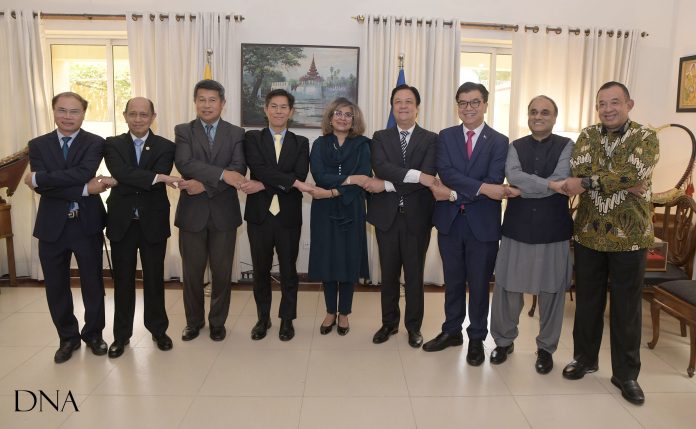
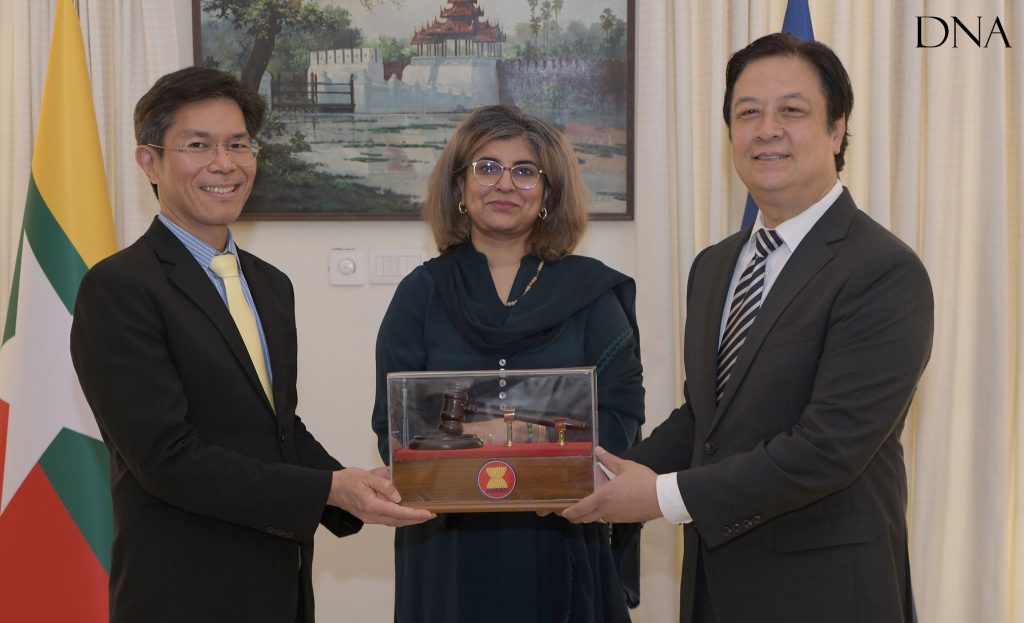
During the handover ceremony, Ambassador Wunna Han of Myanmar formally transferred the chair of ACI to the Ambassador of Thailand, H.E. Rongvudhi Virabutr

Ansar Mahmood Bhatti

ISLAMABAD, JUL 25 /DNA/ — Pakistan’s Foreign Secretary, Amna Baloch, has reiterated Islamabad’s firm commitment to deepening its multifaceted relations with ASEAN member states, highlighting the regional bloc’s critical role in promoting peace, integration, and economic development across Asia.

She made these remarks during the handover ceremony of the ASEAN Committee in Islamabad (ACI) Chair, where Myanmar formally passed the baton to Thailand. The ceremony, held in at the Myanmar residence, was followed by a luncheon hosted by the Ambassador of Myanmar, H.E. Wunna Han, in honor of ASEAN envoys and Pakistani officials.

Foreign Secretary Amna Baloch lauded ASEAN’s contribution to regional cooperation, economic integration, and dialogue-based diplomacy. She praised the bloc for setting a global example in maintaining unity among diverse nations and emphasized that Pakistan views ASEAN as a key partner in its foreign policy framework.

“Pakistan greatly values its longstanding ties with ASEAN countries,” she said. “Our engagement with ASEAN has steadily grown over the years, and we remain committed to further enhancing cooperation across economic, political, and cultural dimensions.”

Underscoring Pakistan’s proactive approach, the Foreign Secretary also shared that preparations are underway to celebrate ASEAN Day in Islamabad in a “befitting and meaningful manner,” reflecting the strength of the relationship and mutual respect shared between Pakistan and ASEAN nations.

The ASEAN Committee in Islamabad (ACI) is composed of the resident missions of ASEAN countries in Pakistan, including Brunei Darussalam, Indonesia, Malaysia, Myanmar, the Philippines, Thailand, and Vietnam. The chairmanship of the committee rotates after every six months among member states.

During the handover ceremony, Ambassador Wunna Han of Myanmar formally transferred the chair of ACI to the Ambassador of Thailand, H.E. Rongvudhi Virabutr. The symbolic passing of the gavel marks a new chapter in ASEAN’s diplomatic presence in Pakistan, with Thailand expected to further energize ASEAN’s collective engagements in Islamabad during its chairmanship.

The event was attended by senior officials of Pakistan’s Ministry of Foreign Affairs, including Additional Secretary Imran Ahmed Siddiqui, as well as the heads of missions of ASEAN member states represented in Islamabad.

Ambassador Wunna Han, in his farewell remarks as outgoing ACI Chair, reflected on the achievements and collaborative efforts undertaken by ASEAN missions in Pakistan during his tenure. He also expressed confidence that Thailand would carry forward the momentum to strengthen ASEAN’s visibility and outreach in Pakistan.

Accepting the chairmanship, Ambassador Rongvudhi Virabutr reaffirmed ASEAN’s commitment to strengthening dialogue and cooperation with Pakistan. He highlighted the mutual opportunities for trade, investment, cultural exchange, and people-to-people ties that lie ahead.

ASEAN — the Association of Southeast Asian Nations — is a regional organization established in 1967 comprising ten countries: Brunei, Cambodia, Indonesia, Laos, Malaysia, Myanmar, the Philippines, Singapore, Thailand, and Vietnam. Its primary aim is to promote political and economic cooperation and regional stability among its members.

Pakistan became a Sectoral Dialogue Partner of ASEAN in 1993 and has since maintained regular interaction with the grouping through high-level visits, participation in forums, and trade engagements.

The Islamabad-based ASEAN Committee plays a vital role in furthering these ties on the ground, not only through diplomacy but also through cultural, educational, and development initiatives.

As ASEAN and Pakistan look ahead to new horizons of cooperation, events such as the ACI chair handover reflect the enduring partnership and shared aspirations for a peaceful, prosperous, and integrated Asia.

Re-tendering of G-14/1 directed, contract expected by Nov 2025

Re-tendering of G-14/1 directed

According to the official reply submitted in response to a question regarding delays in G-14/1 plot possession, the court directed that compensation be released to affectees and all acquired properties vacated and demolished within the stipulated timeframe

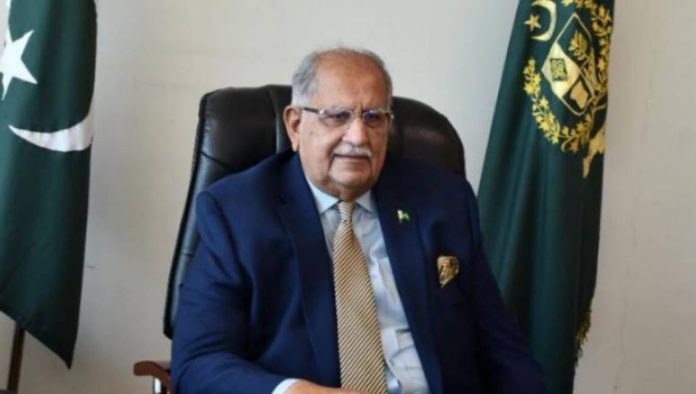
ISLAMABAD, JUL 25 (DNA): Minister for Housing and Works Mian Riaz Hussain Pirzada on Friday stated that re-tendering for the G-14/1 sector had been directed and hoped that the contract would be awarded by November 2025, with ground development expected to begin shortly thereafter and be completed within one year.

Responding to the questions of Senator Masroor Ahsan and others, regarding delay in G-14/1 plots possession, Minister for Housing and Works Mian Riaz Hussain Pirzada confirmed that the Islamabad High Court, in its judgment dated March 13, 2022, had directed Federal Government Employees Housing Authority (FGEHA) to conclude land acquisition and grant possession to allottees within 6 to 8 months, along with ensuring development and provision of amenities.

The Minister also noted that out of 1,718.15 kanals of project land, FGEHA has gained possession of 738.04 kanals and the project will be executed in two phases.

According to the official reply submitted in response to a question regarding delays in G-14/1 plot possession, the court directed that compensation be released to affectees and all acquired properties vacated and demolished within the stipulated timeframe.

FGEHA was instructed to implement the scheme to ensure timely possession of plots to allottees and provision of amenities. It was further informed that the High Court had been updated on the latest developments on June 25, 2025, and that infrastructure development contract details were currently being processed

It was further stated that the High Court was apprised of the latest developments on June 25, 2025 and that details of the infrastructure development contract were under process.

Earlier, Senator Syed Masroor Ahsan voiced concerns in the Upper House over the prolonged delay in handing over possession of plots to allottees in Islamabad’s G-14/1 sub-sector. He questioned the implementation of Islamabad High Court (IHC) orders issued in 2022 and criticized the Federal Government Employees Housing Authority (FGEHA) for its continued inaction despite repeated assurances.

During a supplementary question, Senator Syed Masroor Ahsan sharply criticized the 21-year delay since the original plot allotments in 2004, noting that possession has yet to be handed over despite clear directives from the Islamabad High Court (IHC). He highlighted that while the technical evaluation was completed in November 2024 and financial bids were opened in December, the tender was subsequently cancelled. No fresh bidding has taken place in the seven months since, raising further concerns over administrative inertia.

Senator Syed Masroor Ahsan further questioned when the remaining land—still under illegal occupation—would be retrieved and when rightful allottees would finally be granted possession.

He expressed frustration that, despite the launch of new housing projects, those allotted plots decades ago continue to be deprived of their rightful property.

Several senators joined the debate, highlighting planning flaws, a lack of flood management in nullahs, and absence of accountability for land encroachments and official negligence. They also raised concerns over urban development moving ahead without securing essentials like water supply and proper drainage—especially in light of recent flooding in areas.

The Chair acknowledged the senators’ concerns and urged the Ministry to accelerate the resolution of pending issues, emphasizing that prolonged delays erode public trust in government-managed housing schemes.

Economists debate path to 6% growth under URAAN Pakistan

Economists debate path to 6% growth under URAAN Pakistan

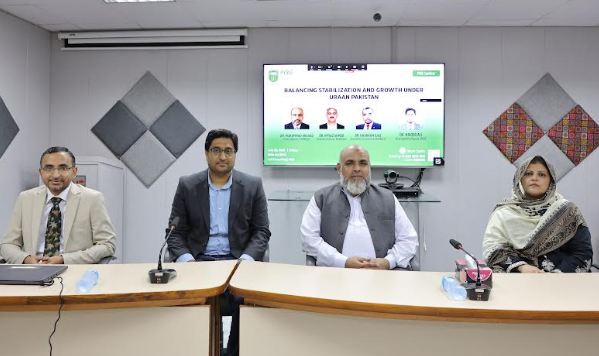
ISLAMABAD, JUL 25 /DNA/ – The Pakistan Institute of Development Economics (PIDE), through its Macro Policy Lab (MPL), organized a seminar titled “Balancing Stabilization and Growth Under URAAN Pakistan”.

The event brought together senior officials from the Ministry of Planning, Development & Special Initiatives (MoPD&SI), researchers, and economists to engage in a rigorous policy discussion. The session was moderated by Dr. Haider Ali, Assistant Professor/Director MPL, and featured a panel comprising Dr. Muhammad Arshad (Chief, Macro), Dr. Khurram Ejaz (Economic Consultant), and Ms. Naila Dar (Deputy Chief), all representing MoPD&SI.

In his opening remarks, Dr. Haider Ali explained that the seminar aimed to deliberate on aligning short-term macroeconomic stabilization efforts with long-term sustainable growth strategies under the URAAN Pakistan framework. URAAN Pakistan is a strategic initiative by the Planning Commission built on the “5Es”: Exports, E-Pakistan (digitalization), Environment, Energy, and Equity. He highlighted that despite low growth, Pakistan’s macroeconomic indicators have shown signs of improvement, such as declining inflation (below 5%) and a recent upgrade in the country’s S&P credit rating from CCC+ to B-. However, he emphasized the need to transition from mere stabilization to robust growth.

Dr. Khurram Ejaz presented a comprehensive overview of the current economic context and proposed strategies to move towards a stable growth path under URAAN Pakistan. He noted that Pakistan’s economy has faced a multitude of external and internal shocks, including post-pandemic disruptions, the Russia-Ukraine conflict, and the devastating 2022 floods. These factors pushed the country toward fiscal and balance-of-payment crises, culminating in the signing of an Extended Fund Facility (EFF) with the IMF in September 2024. The IMF program emphasized restoring macroeconomic stability through fiscal tightening, monetary policy, and external sector stabilization. While it succeeded in curbing inflation and modestly reviving growth (estimated at 2.7%), it limited the fiscal space for development spending (PSDP capped at 2.6% of GDP).

Dr. Ejaz contrasted this with the ambitious targets of URAAN Pakistan, which envisions 6% GDP growth by 2029 with significantly higher employment generation. He acknowledged a critical financing gap between what is possible under the IMF framework and what URAAN Pakistan aspires to achieve. He proposed five initial strategies to bridge this gap: (1) repositioning Development Finance Institutions (DFIs) to fulfill their core mandate rather than investing in low-risk securities, (2) migrating suitable PSDP projects to Public-Private Partnership (PPP) mode to crowd in private capital, (3) issuing diaspora, green, and SDG-linked bonds to unlock innovative financing, (4) devolving social sector expenditures to provinces in a phased manner, and (5) reducing losses from State-Owned Enterprises (SOEs) and monetizing non-strategic public assets like ports under a structured asset recycling program.

The presentation prompted a robust discussion. Dr. Nasir Iqbal questioned the underlying assumption that low growth is due to limited PSDP spending. He argued that productivity, export orientation, and youth engagement are more critical to sustained growth than merely increasing public investment. He recommended establishing village-level economic zones, leveraging idle public infrastructure, and simplifying business registration to boost local entrepreneurship.

Dr. Karim Khan emphasized that IMF programs and growth are not inherently contradictory and that sustainable growth must be private sector-led. He urged leveraging CPEC Phase II and capitalizing on productive investment avenues. Dr. Shujaat Farooq added that governance reform and performance-based budgeting are crucial. He highlighted a disconnect between planning and finance ministries and stressed the need to engage provinces, whose PSDPs now exceed the federal government’s in size.

Dr. Muhammad Zeshan noted the inefficiencies within PSDP allocations and tariff structures that perpetuate rent-seeking and protect low-productivity sectors. He advocated enabling emerging industries such as halal meat exports, seafood, and IT, and preparing for the Fourth Industrial Revolution through digitization, cloud infrastructure, and robotics. Mr. Shaaf Najib questioned the long-term impact of PSDP spending, citing studies that showed limited sustainability. He called for improving PSDP efficiency, prioritizing completed projects, and redirecting funds toward sectors with higher fiscal multipliers.

Dr. Mehmood Khalid appreciated the absence of tax rhetoric in the presentation but criticized the lack of growth diagnostics and the absence of evidence from existing research. He emphasized grounding all strategies within the URAAN Pakistan 5Es and aligning projections with realistic economic modeling. Dr. Iftikhar echoed these sentiments, warning against public investment that crowds out private sector liquidity and highlighting inconsistencies in SEZ policies, HEC funding, and NFC allocations.

Dr. Hafsa Hina and several young scholars raised concerns about the realism of projected inflation and growth targets, advocating for stronger macroeconomic modeling and prioritization of primary education returns over higher education. The session concluded with remarks from Dr. Muhammad Arshad and Ms. Naila Dar, who acknowledged the constructive criticisms and reaffirmed the Planning Commission’s willingness to incorporate suggestions into its strategic planning. He emphasized that the government is focusing PSDP spending on near-completion projects and aligning priorities with the 5Es.

In his final remarks, Dr. Shujaat Farooq reiterated that Pakistan’s growth challenges are less about strategy and more about implementation, coordination, and accountability. He urged integrating line ministries, defining measurable KPIs based on policies and frameworks, and improving budget credibility. He emphasized the importance of including the private sector, reforming public institutions, and preparing the youth with relevant skills to ensure inclusive and resilient growth.

The seminar served as a candid and constructive exchange between policymakers and researchers, marking the beginning of a collaborative effort to refine and operationalize URAAN Pakistan. Participants unanimously agreed on the need for realistic planning, productivity-enhancing reforms, provincial coordination, and evidence-based policymaking to navigate Pakistan toward long-term, inclusive growth under fiscal constraints.

Lahore court summons Imran, issues arrest warrant for Shibli in police attack case

Lahore court summons Imran

LAHORE, JUL 25: A Lahore court on Friday issued a non-bailable arrest warrant for Senate opposition leader Shibli Faraz and issued summon orders for PTI founding chairman Imran Khan in a case linked to an alleged attack on Islamabad police personnel deployed outside the latter’s Zaman Park residence.

The case was registered at Lahore’s Race Course police station in 2023 against the former premier and other party leaders following clashes between the PTI supporters and police.

The deposed prime minister, who was ousted from power via the opposition’s no-confidence motion in April 2022, has been facing a slew of charges ranging from corruption to terrorism since his removal as premier.

Imran Khan has been behind bars since August 2023 after he was sentenced in multiple cases.

During the hearing at Lahore’s Cantt Kutchery today, the court issued a summon order for former prime minister Imran Khan through jail authorities, as he is currently incarcerated in Rawalpindi’s Adiala Jail.

Subsequently, the court adjourned the further proceedings till July 30.

Today’s development follows recent anti-terrorism court rulings that handed down prison sentences of up to 10 years to senior PTI leaders in connection with the May 9, 2023, riots.

An anti-terrorism court (ATC) on Tuesday sentenced several PTI leaders, including Dr Yasmin Rashid and Mian Mehmood ur Rasheed, to 10 years in prison each in connection with the May 9 case.

The court also awarded sentences to former Punjab governor Omar Sarfraz Cheema, PTI Senator Ejaz Chaudhry, and Afzal Azeem Pahat in the same case.

However, the court acquitted former foreign minister Shah Mahmood Qureshi, Hamza Azeem Pahat, Rana Tanveer, and Aizaz Rafiq in the case.

The same day ATC in Sargodha also sentenced Punjab Assembly Opposition Leader Ahmed Khan Bachar, MNA Mohammad Ahmed Chattha and several other PTI workers to 10 years each in prison in a vandalism case related to May 9 riots.

Pakistan-China military talks focus on counterterrorism, modernization

Pakistan-China military talks focus on counterterrorism, modernization

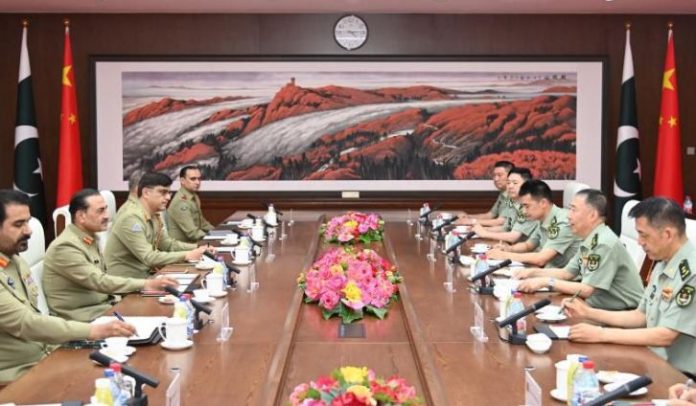
RAWALPINDI, JUL 25 /DNA/ – Field Marshal Syed Asim Munir, NI (M), Chief of Army Staff (COAS) of Pakistan, undertook an official visit to the People’s Republic of China. During the visit, the COAS held a series of high-level meetings in Beijing with senior Chinese political and military leadership, reaffirming the ironclad strategic partnership between Pakistan and China.

The COAS called on His Excellency Han Zheng, Vice President of the People’s Republic of China and His Excellency Wang Yi, Foreign Minister of China. Discussions focused on the evolving regional and global political landscape, connectivity initiatives under the China-Pakistan Economic Corridor (CPEC), and the need for coordinated responses to shared geopolitical challenges. Both sides expressed satisfaction over the depth of bilateral engagement and reiterated their shared commitment to sovereign equality, multilateral cooperation, and long-term regional stability. The Chinese leadership lauded the Pakistan Armed Forces as a cornerstone of resilience and a vital contributor to peace in South Asia.

On the military side, Field Marshal Asim Munir held meetings with General Zhang Youxia, Vice Chairman of the Central Military Commission (CMC), General Chen Hui, Political Commissar of the PLA Army and Lieutenant General Cai Zhai Jun, Chief of Staff of PLA Army. Upon arrival at the PLA Army Headquarters, the COAS was presented with a guard of honour, symbolizing the longstanding camaraderie between the two Armed Forces.

These engagements featured comprehensive exchanges on defence and security cooperation, including counterterrorism collaboration, joint training, defence modernisation, and enhanced institutional linkages. Emphasis was placed on improving operational interoperability and strategic coordination to confront hybrid and transnational threats. The Chinese military leadership reiterated full confidence in the strength of the bilateral defence partnership and acknowledged Pakistan’s pivotal role in promoting regional peace.

Field Marshal Asim Munir appreciated China’s consistent support and reaffirmed Pakistan’s commitment to further expanding military-to-military cooperation across all domains.

The visit reflects the growing depth of politico-military ties between the two brotherly nations and underscores their shared resolve to advance regional security through sustained high-level dialogue and engagements.

Court summons Omar Ayub and others in Oct 4, protest case

Omar Ayub

ISLAMABAD, Jul 23 (DNA):An Anti-Terrorism Court (ATC) on Wednesday summoned the absent accused on next hearing in a case against PTI leaders and workers pertaining to the arrest of October 4.

Judge Tahir Abbas Sapra heard the case regarding the matter. During the hearing, Sardar Muhammad Masroof Khan Advocate, Zahid Bashir Dar and other lawyers appeared in the court on behalf of PTI workers.

Azam Swati filed a petition for exemption from attendance, while Omar Ayub was issued a notice to re-summon him for absence.

The court said that the case will be adjourned until Thursday, the rest of the accused should also appear. The defense lawyer said that all these workers are from Kashmir, Mardan and distant areas and cannot come tomorrow.

They do not have any arrangements to stay overnight in Islamabad either. The judge said that this is the party’s problem, they should make arrangements for their stay.

The court adjourned the hearing of the case until Thursday.

Stay Connected

64FansLike
60FollowersFollow

Latest Reviews

Exchange Rates

USD - United States Dollar
EUR
1.17
GBP
1.35
AUD
0.72
CAD
0.73