Home Blog Page 557

Reputation fundamental asset for any business, institution: Minister

Reputation fundamental asset for any business, institution: Minister

Book on “Reputation Management and Crisis Communication” by Imran Ghaznavi Launched at National Skills University Islamabad

DNA

ISLAMABAD, JUL 29: A prestigious book launch ceremony was held at the National Skills University (NSU) Islamabad to unveil “Reputation Management and Crisis Communication: A Study of the Corporate Sector”, authored by renowned communication strategist and media expert Mr. Imran Ghaznavi.

The groundbreaking publication, which delves into the increasingly vital field of reputation and crisis management in the corporate world, drew a distinguished audience that included senior bureaucrats, ambassadors, corporate leaders, regulators, academics, and media professionals.

The event began with a warm welcome address by Vice Chancellor Prof. Dr. Muhammad Mukhtar, who praised the timeliness and scholarly merit of the book. He emphasized the need for integrating such critical topics into mainstream education to equip future professionals with the tools to navigate today’s communication challenges.

Delivering the book review, prominent economist and public policy analyst Dr. Vaqar Ahmed highlighted the practical relevance of the publication for C-suite executives, board members, and communication professionals. He described the book as a valuable guide for organizations grappling with the fast-paced and often volatile media and digital environment.

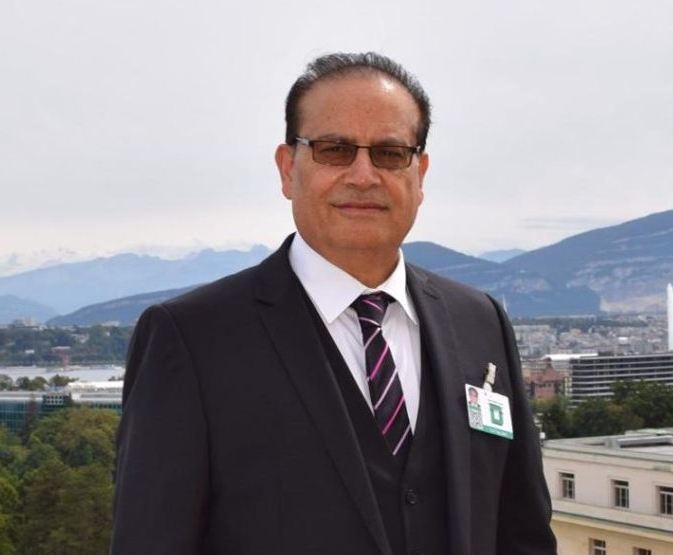
Joining the ceremony via Zoom from the United States, Prof. Dr. Zafar Uddin Ahmed, President of the Academy for Global Business Advancement (AGBA), termed the book a landmark contribution from a Pakistani author to the global discourse on corporate reputation. Similarly, Dr. Javaid Laghari, former Chairman of the Higher Education Commission (HEC) of Pakistan, called it a “must-have” academic resource, particularly relevant for South Asian business schools and communication programs.

Mr. Mohammad Ali, Advisor to the Prime Minister on Privatisation and the chief guest on the occasion, emphasized the strategic significance of reputation in today’s hyper-connected, information-driven world.

“Reputation is a fundamental asset for any business, institution, or individual. It must be nurtured and protected from the top level of leadership,” he remarked. He advocated the creation of board-level committees dedicated to reputational risk and called for leadership training modules specifically focused on crisis communication.

Adding to the discourse, Mr. Shahzad Ahmed Malik, President of the Institute of Cost and Management Accountants of Pakistan (ICMAP), stressed the necessity of incorporating corporate reputation management into board governance frameworks. He strongly recommended including the subject in directors’ training programs to ensure leadership is equipped with the knowledge to anticipate and respond to reputational threats.

Prof. Dr. Syed Hafeez Ahmed of NSU delivered the concluding remarks and offered a heartfelt vote of thanks to the participants and contributors, emphasizing the value of such academic engagements for strengthening Pakistan’s thought leadership on global corporate practices.

In his closing reflections, author Mr. Imran Ghaznavi expressed gratitude to all attendees and contributors. He shared that the book is the culmination of years of professional experience, extensive research, and firsthand engagement in regulatory and corporate communication.

 “In today’s digital era, where a single tweet or misstep can jeopardize the credibility of an organization or even a nation, reputation management is no longer optional—it is strategic,” he asserted.

The ceremony concluded with the official unveiling of the book, followed by a group photograph. The publication is expected to serve as an essential resource for business leaders, regulators, academics, and policy professionals who aim to understand and address the complex dynamics of reputation and crisis communication in the modern age.

ISSI holds Bilateral Dialogue with Iranian think-tank IRAS

ISSI holds Bilateral Dialogue with Iranian think-tank IRAS

ISLAMABAD, JUL 29 /DNA/ – The Institute of Strategic Studies Islamabad (ISSI) held bilateral dialogue with Iran’s Institute for Iran and Eurasia Studies (IRAS) on “Iran-Pakistan Relations in the Context of New Regional Developments.” Moderated by Ms. Amina Khan, Director CAMEA, the dialogue speakers included Ambassador Sohail Mahmood, Director General ISSI; Ambassador Khalid Mahmood, Chairman BoG, ISSI; Dr. Seyyed Rasoul Moosavi, former Director General of Southern Asia, Iran’s Foreign Ministry; Ambassador Riffat Masood, Pakistan’s former Ambassador to Iran; and  Dr. Somaye Morovati, Senior Researcher and Head of South Asian Group, Scientific Research and Middle East Strategic Studies Center (CMESS), Tehran.

DG ISSI Ambassador Sohail Mahmood shared an in-depth assessment of shifting global and regional dynamics and their implications for Pakistan-Iran relations. He highlighted rising global instability, erosion of international legal and humanitarian norms, the urgent need to safeguard multilateralism, and the imperative of peaceful resolution of disputes in a world rife with armed conflicts and increasing resort to the use of force. Ambassador Sohail Mahmood described the shift toward multipolarity as an opportunity for Pakistan and Iran to play a role in building a fair, just, and equitable global order. He noted the impact of Iran-Israel military standoff, the Gaza genocide, and the Russia–Ukraine conflict — highlighting their impact on global stability and an international order based on international law and the UN Charter. Underscoring the importance of strengthening Pakistan-Iran relations, he welcomed the forthcoming visit of the President of Iran to Pakistan as part of the process of solidifying mutual collaboration. He called for enhanced cooperation on bilateral economic cooperation, trade, and energy; stressed closer coordination on Afghanistan, particularly on issues relating to security and connectivity; and emphasized that closer bilateral cooperation remains vital for peace, stability, and regional prosperity.

During the discussion, participants highlighted the salience of Pakistan–Iran relations, rooted in shared history, geography, and convergence on a range of regional and international issues. They emphasized the need for joint endeavours for regional stability, counterterrorism, and intelligence-sharing. The revival of trilateral mechanisms and stronger political will were seen as essential for addressing cross-border threats and evolving regional challenges. Speakers called for continued support for legitimate causes such as Palestine. With the Iranian President’s upcoming visit to Pakistan, the discussion highlighted the importance of strategic dialogue, regional coordination, and renewed commitment to strengthening bilateral ties in a shifting geopolitical landscape.

29 Pak nationals detained by Ethiopian police

29 Pak nationals detained by Ethiopian police

Pakistan secures repatriation of 29 nationals, fines waived in diplomatic breakthrough

Addis Ababa  (Ethiopia) JUL 29 (DNA)- The Embassy of Pakistan in Addis Ababa has successfully facilitated the repatriation of 29 Pakistani nationals who were detained by Addis Ababa Police in March 2025 for violations of immigration regulations and involvement in unauthorized employment activities in Ethiopia.

In an unprecedented and commendable move, the Government of Ethiopia agreed to waive substantial fines, amounting to several thousand U.S. dollars per person, that had been levied on the detainees. This remarkable act of leniency reflects not only the growing goodwill between Pakistan and Ethiopia but also the Ethiopian government’s recognition of humanitarian considerations.

The Embassy actively engaged with Ethiopian authorities at the highest level to resolve the issue. The Ambassador of Pakistan held a series of meetings with senior officials, including Dr. Dema Negwo, Chairperson of the House of People’s Representatives (HoPR) Standing Committee on Foreign Relations and Peace Affairs; the Director General of Consular Affairs at Ethiopia’s Ministry of Foreign Affairs; the Director General of Ethiopian Immigration; and Ms. Abibatou Wane-Fall, Chief of Mission for the International Organization for Migration (IOM) in Ethiopia.

These concerted diplomatic efforts culminated in the waiving of fines and enabled the safe and dignified return of the detained Pakistani nationals.

Of the 29 individuals, 17 departed from Addis Ababa to Karachi on Friday, 25 July 2025, while the remaining 12 followed on Sunday, 27 July 2025. The Embassy of Pakistan extends its sincere appreciation to the Government of Ethiopia for its cooperation in resolving the matter amicably and for supporting the dignified repatriation of Pakistani citizens.

Dar, Abdelatty urge immediate ceasefire in Gaza at conference

Dar, Abdelatty urge immediate ceasefire in Gaza at conference

ISLAMABAD, JUL 28 /DNA/ – Deputy Prime Minister/Foreign Minister of Pakistan, Senator Mohammad Ishaq Dar @MIshaqDar50, met with the Foreign Minister of Egypt, Dr. Badr Abdelatty, on the sidelines of the International Conference on the Two-State Solution today.

Reaffirming the deep-rooted and historic bilateral ties, the two leaders emphasized the importance of enhancing broad-based cooperation across various sectors, including medical, minerals, defense, trade, and investment. They agreed on the need to strengthen connectivity between Pakistan and Egypt to promote economic integration and facilitate greater trade. Both sides also agreed to undertake high-level exchanges in the near future.

Appreciating the continued collaboration at multilateral fora, FM Abdelatty congratulated Pakistan on assuming the Presidency of the UNSC this month.

Reiterating their unwavering support for the Palestinian people and their just cause, the two ministers underscored the urgent need for unimpaired humanitarian access, an immediate cessation of Israeli hostilities, and expressed hope for a meaningful and constructive outcome of the International Conference on the Two-State Solution.

Germany’s Karachi consulate suspends services for non-EU nationals

Germany's Karachi consulate suspends services for non-EU nationals

KARACHI, JUL 28: The Consulate General of the Federal Republic of Germany in Karachi has announced the immediate suspension of all services for non-European Union (EU) citizens until further notice.

In an official statement, the consulate confirmed that this temporary closure applies to all non-EU applicants, including those with confirmed visa appointments.

It clarified that all such appointments have now been cancelled and will not be rescheduled.

Applicants affected by this suspension have been advised to re-register through the consulate’s online appointment system once services resume.

The diplomatic mission said updates will be issued as and when the situation changes. The consulate expressed appreciation for the public’s understanding during this period of disruption.

Earlier this month, the Swedish government announced the resumption of visa services in Islamabad, which will facilitate Pakistanis to visit Sweden for short stays.

Moreover, the US consulates in Karachi and Lahore, in June, issued new instructions requiring applicants for F, M, and J non-immigrant visas to make their social media accounts public.

ECP disqualifies PTI lawmakers Chaudhry, Bhachar and Chattha

ECP

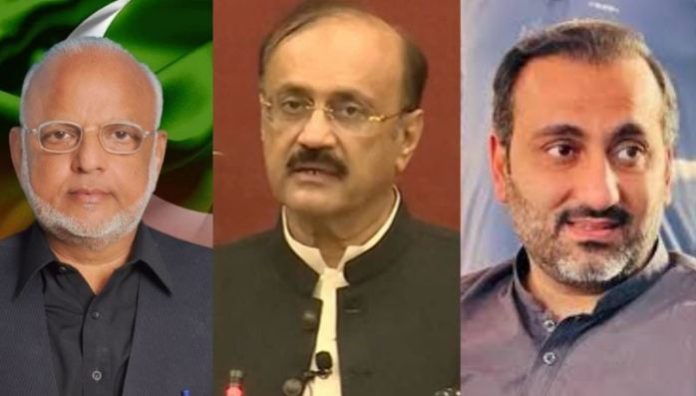
ISLAMABAD, JUL 28: The Election Commission of Pakistan (ECP) Monday declared Senator Ejaz Chaudhry, Ahmad Khan Bhachar and Ahmad Chattha ineligible to hold public office, vacating three Senate seats in a landmark decision.

The commission issued a notification against Senator Ejaz Chaudhry following his 10-year conviction by an anti terrorism court.

Chaudhry was found guilty of offences under the Anti Terrorism Act, prompting the Election Commission to annul his membership.

Separately, Ahmad Chattha of NA 66 Mianwali and Ahmad Khan Bhachar of PP 87 Minawali were disqualified after separate anti terrorism court verdicts. Both members were found to have violated legal provisions related to public office holders.

With these rulings, the Election Commission has declared the three Senate seats vacant. The commission has announced that by elections will be scheduled in accordance with constitutional requirements to fill the vacancies.

Read more: Punjab Assembly opp leader among 32 sentenced to 10-year jail

On July 22, an Anti-Terrorism Court (ATC) in Sargodha sentenced 32 individuals, including prominent political figures of the Pakistan Tehreek-e-Insaf (PTI), to 10 years in prison each in connection with the May 9, 2023 violence cases.

The verdict was delivered by ATC Judge Muhammad Naeem Sheikh.

Among those convicted are Punjab Assembly Opposition Leader Malik Ahmed Khan Bhachar, MNA Rana Bilal, and MNA Ahmed Chattha. The verdict was issued after the court heard nine separate cases related to the incident.

Pakistan Ulema Council welcomes historic conference on Palestine issue at UN

Pakistan Ulema Council welcomes historic conference on Palestine issue at UN

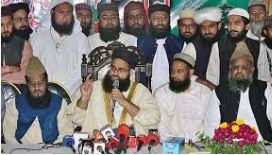
ISLAMABAD, JUL 28 /DNA/ – Pakistan Ulema Council not only welcomes but also fully supports the historic conference on Palestine issue at UN under the chairmanship of Saudi Arabia and France for the establishment of an independent and sovereign Palestinian state.

In a joint statement
Chairman Pakistan Ulema Council and Secretary General International Tahzeem-e-Harmain Al-Sharifain Council Hafiz Muhammad Tahir Mahmood Ashrafi, Maulana Hafiz Maqbool Ahmed, Maulana Muhammad Shafi Qasmi, Allama Tahir-ul-Hassan, Maulana Asadullah Farooq, Maulana Tahir Aqeel Awan, Maulana Aziz Akbar Qasmi, Maulana Muhammad Ashfaq Pitafi, Maulana Muhammad Aslam Siddiqui, Qari Mubashar Rahimi, Maulana Anwar-ul-Haq Mujahid and others have said that we hope that our Foreign Minister and Deputy Prime Minister Ishaq Dar will represent the feelings and emotions of the people of Pakistan in accordance with the vision and thinking of Chief of Army Staff Field Marshal Hafiz Syed Asim Munir and Prime Minister Muhammad Shehbaz Sharif.

This conference is part of the struggle and efforts made by Saudi Crown Prince Muhammed bin Salman for Palestine.

France has announced its recognition of Palestine as a state and we hope that Britain and European countries will also take a step forward in this regard in this conference, and we also hope that the United States will do the same.

The leadership of Pakistan Ulema Council said, “We appeal to US President Donald Trump to move forward and support the vision and thinking of Saudi Crown Prince Mohammed bin Salman, which he has put before the world under the patronage Khadim-e-Harmain Al-Sharifain Shah Salman bin Abdulaziz, to support the Palestinians in their efforts to establish an independent and sovereign Palestinian state with Jerusalem as its capital.”

The Ulemas noted that the Palestinians are victims of Israeli aggression and are being martyred due to scarcity of water and food.

We hooe that God willing, this conference will be successful. Just as Saudi Crown Prince Mohammed bin Salman is trying to make this conference a success, Turkish Prime Minister Tayyip Erdogan, Prime Minister of Pakistan Mian Shehbaz Sharif, Emir of Qatar and other leaders of the Islamic world will play their full role and contributions in it.

God willing, this conference will become a guarantee of an independent and sovereign state for the Palestinians.

CDA orders speedy, quality development in Islamabad sectors

CDA

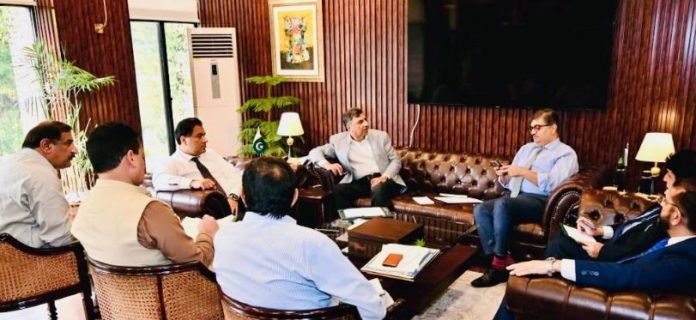
ISLAMABAD, JUL 28 /DNA/ – An important meeting was held at CDA Headquarters under the chairmanship of Chairman CDA and Chief Commissioner Islamabad Muhammad Ali Randhawa. The meeting was attended by CDA Member Administration and Estate Talat Mahmood, Member Engineering Syed Nafasat Raza, Member Planning Dr. Khalid Hafiz, DG Works, DC CDA and other senior officers. The meeting reviewed in detail the progress made so far in the development works of Sectors like sector C-14, sector C-15, sector C-16, sector E-12 and sector I-12.

Chairman CDA directed that development work in all the sectors should not only be expedited but also that no compromise should be made on quality and standards. He directed that relevant CDA directorates, especially DC CDA, along with offices of relevant wings should set up their offices along with their staff in the sectors where development work is ongoing so that public issues can be resolved at their doorstep. Additionally, all public concerns at camp offices should be addressed transparently and in accordance with the principles of law and justice. He further instructed that measures be taken to install modern and aesthetically pleasing lighting and improve road infrastructure in all new sectors.

Chairman CDA also directed the widening of main entry points in various new sectors and the removal of all encroachments and illegal constructions as per law. He instructed speeding up development work in all sectors especially installation of lights at all sectors places have been ensured.

Chairman CDA stressed that all obstacles hindering in the development work in CDA sectors should be removed on a priority basis.

Applauding the historic success of CDA’s commercial plots auction, Chairman CDA Muhammad Ali Randhawa commended the performance of all concerned wings. He directed the Finance Wing to ensure adequate funds are allocated for development projects so that they should complete as soon as possible.

Chairman CDA reiterated that CDA is fully committed to making Islamabad a model city by ensuring high-quality development works and addressing the housing needs of citizens. All resources are being utilized to achieve this goal efficiently and transparently.

US to set up ‘food centres’ in Gaza amid deadly hunger crisis

US to set up 'food centres' in Gaza amid deadly hunger crisis

WASHINGTON, JUL 28: President Donald Trump said Monday the United States will set up “food centres” in Gaza to help avert a deepening hunger crisis in the conflict-ravaged Palestinian territory.

“We’re going to set up food centres where the people can walk in — and no boundaries. We’re not going to have fences,” he told reporters in Scotland, where he was meeting UK Prime Minister Keir Starmer.

At the same press conference, Starmer said he and US President Trump agreed on the need for a ceasefire in Gaza, and they discussed a plan for what happens after aid is delivered.

Trump’s Trade Triumph, Europe’s Strategic Liberation

Qamar Bashir

By Qamar Bashir

Donald Trump may have returned from Scotland declaring a sweeping economic triumph, but it is Europe that came away with something far more valuable: the right to think and act freely. Beneath the glittering headlines of tariff eliminations and multi-billion-dollar commitments, the summit at Turnberry marked the quiet collapse of U.S. geopolitical dominance over its allies. While Trump boasted of $750 billion in energy exports, $600 billion in European investment, and unspecified billions in future military hardware sales, the European Union and the United Kingdom handed him economic satisfaction in exchange for something they had long been denied—independence from American-Israeli coercion.

This shift is not symbolic—it is structural. By agreeing to one-sided economic terms, Europe has secured the room to walk its own path in diplomacy, human rights, and foreign policy. That freedom has already begun to manifest. Several EU states have either recognized or pledged to recognize the State of Palestine. France’s President Emmanuel Macron announced that his government will formally support Palestinian statehood at the United Nations General Assembly, directly contradicting Washington’s position. Europe’s newfound voice is no longer an accident. It is the result of a deliberate decision to exchange financial concessions for moral autonomy.

But to understand this pivot, one must also confront a darker, deeper truth about the state of U.S. leadership. The unwavering support that American presidents, congressmen, and cabinet officials give to Israel—despite its brutal military operations in Gaza and the West Bank—is not merely ideological. It is, increasingly, understood by European circles as coerced compliance. According to well-placed intelligence disclosures and political whispers, Israeli intelligence agencies, including Mossad, have accumulated irrefutable evidence—videos, photographs, and documentation—of sexual misconduct involving underage girls by senior U.S. officials, including Donald Trump himself. These materials, long held in classified archives, serve as a tool of total control.

In this light, the blind repetition of Israeli talking points by American leaders is no longer confusing—it is revealing. When Netanyahu claims that Hamas is responsible for civilian deaths, or that Israel is feeding Palestinians while Hamas steals and starves them, U.S. officials recite the narrative without question, despite overwhelming global evidence to the contrary. Trump’s own declaration that “we’re going to finish the job in Gaza and the West Bank” was not a defense of policy—it was a scripted line passed down from Tel Aviv. The absurdity of the narrative—where a heavily bombed, blockaded civilian population continues to “fool the world” while under total Israeli surveillance—is so farcical it can only persist through fear and blackmail.

European leaders now understand this. And they have drawn a line. Their populations, increasingly educated, conscious, and defiant, no longer tolerate their governments being accomplices to genocide. Informed by alternative media, global witness reports, and humanitarian voices, European societies are demanding truth and accountability. The recognition of Palestine is not just a political gesture—it is a moral revolt against the rotting credibility of American leadership, compromised at its core.

This is why Europe no longer aligns blindly with U.S. foreign policy. The old days—when Washington led and Brussels followed—are over. From Iraq to Libya to Lebanon, Europe has seen what blind obedience to U.S. militarism leads to: collapsed states, radicalized populations, and endless suffering. Now, even as they feed American economic interests through trade and investment, European governments are decoupling from Washington’s destructive geopolitical agenda.

Trump’s trade agreement has made this detachment possible. By eliminating tariffs on key U.S. products and offering a guaranteed market for American energy and weapons, Europe has bought the right to dissent. They gave Trump what he wanted—money, markets, and a photo op—in order to free themselves from decades of ideological and military subjugation. This is the essence of the new transatlantic dynamic: pay to walk away.

And it could not come at a more urgent time. Over 70,000 Palestinians—mostly civilians, including women and children—have died in Gaza. The West Bank is being annexed inch by inch under the fog of war. Snipers, starvation tactics, and displacement policies have become the Israeli tools of ethnic cleansing, while the United States stands not as an observer, but as a partner. Aid convoys are blocked, journalists are silenced, and the world’s conscience is shaken. Yet Trump and the Washington elite cling to the claim that it is Hamas stealing the aid, killing their own people, and using children as human shields. This grotesque inversion of reality is not a miscalculation. It is the price of silence paid by those whose secrets are buried in Israeli vaults.

For Europe, this recognition has become a turning point. The realization that the most powerful nation on Earth is being manipulated by a foreign government through political blackmail has shattered the myth of American moral leadership. The EU and UK now see that siding with the United States means inheriting its shame. Instead, they have chosen to distance themselves—not in anger, but in survival.

Even Britain, once Washington’s closest ally, is showing signs of divergence. Parliamentarians across the spectrum are calling for investigations into Israeli war crimes and for halting arms shipments. What was once unthinkable is now politically inevitable. Across Europe, the tide is turning—from Stockholm to Madrid, from Berlin to Dublin.

This is not just political evolution. It is moral resurrection. Europe has realized that being allied with the United States no longer means standing with freedom, justice, or truth. It means endorsing genocide, shielding war criminals, and being complicit in the slow, deliberate erasure of a people. The trade agreement, as one-sided as it may appear on paper, has become Europe’s ticket to redemption.

Trump will parade the deal as a win for American exporters, energy giants, and defense contractors. And indeed, U.S. goods will now flood European markets. American military hardware will find new buyers in EU defense ministries. Liquefied natural gas will power European homes. But what America has lost in the process—its ability to command respect, to dictate values, to lead with integrity—is far greater than any tariff gain.

Europe has not just exited America’s economic orbit—it has escaped its moral vacuum. And in doing so, it has emerged not weaker, but stronger, not as a junior partner, but as a sovereign collective. This is not the end of the alliance. It is the beginning of a new, equal relationship—one where truth is not blackmailed, where justice is not bartered, and where freedom is no longer for sale.

By Qamar Bashir

Press Secretary to the President (Rtd)

Former Press Minister, Embassy of Pakistan to France

Former MD, SRBC | Macomb, Michigan, USA

Stay Connected

64FansLike
60FollowersFollow

Latest Reviews

Exchange Rates

USD - United States Dollar
EUR
1.17
GBP
1.35
AUD
0.72
CAD
0.73