Home Blog Page 551

AJK ex-PM Sardar Abdul Qayyum Niazi arrested in May 9 case

AJK ex-PM Sardar Abdul Qayyum Niazi arrested in May 9 case

BAGH, AUG 3: Former Azad Jammu and Kashmir prime minister and Pakistan Tehreek-e-Insaf’s AJK President Sardar Abdul Qayyum Niazi was arrested from Samahni, police confirmed on Sunday.

According to officials, arrest warrants had been issued for Niazi in a case related to the riots of May 9, 2023.

Pakistan monsoon death toll nears 300 as more rains likely from tomorrow

Pakistan monsoon death toll nears 300 as more rains likely from tomorrow

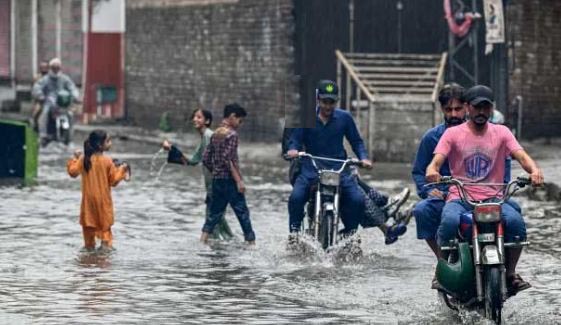
ISLAMABAD, AUG 3: At least 299 people, including 140 children, have lost their lives, and 715 others have been injured in flash floods and torrential rains that have swept through vulnerable areas of the country since June 26, according to the latest statistics issued by the National Disaster Management Authority (NDMA).

The death toll also included 102 men and 57 women, according to the data.

Among 715 injured, 239 were children, 204 were women, and 272 were men who sustained injuries.

Since June 26, flash floods and torrential rains have caused widespread destruction, damaging a total of 1,676 houses across the affected areas.

Of these, 562 homes were completely destroyed, while 1,114 sustained partial damage. The severe weather also led to the loss of 428 livestock, compounding the impact on local communities.

The NDMA has carried out 223 extensive rescue operations, successfully evacuating 2,880 individuals from flood-hit regions.

To support affected communities, the authority has distributed 13,466 relief items in vulnerable areas.

These include 1,999 tents, 61 ration bags, 958 blankets, 569 quilts, 613 mattresses, 1,282 kitchen sets, 1,163 food packs, 350 life jackets, 1,122 Hygiene home kits, 2,170 tarpaulins and 146 de-watering pumps along with other essential supplies.

Authorities have established 71 medical camps, treating 577 people so far.

According to the NDMA, the crisis has affected multiple regions, and joint relief operations are continuing in collaboration with provincial and federal agencies.

Met Office forecasts widespread rains from Aug 4
Widespread heavy rains are forecast to sweep across Pakistan starting tomorrow (Monday), with the country’s weather officials warning of flash floods in low-lying areas as another strong monsoon spell sets in.

The Pakistan Meteorological Department (PMD) said a fresh weather system will bring showers to much of the northern and central regions between August 4 and 7.

Azad Jammu and Kashmir and Gilgit Baltistan are both likely to be hit by this new spell of cloudbursts, the weathermen said.

On the other hand, parts of Khyber Pakhtunkhwa, where strong winds and thunderstorms are also forecast, brace for the impact of this monsoon system.

Punjab, which has so far been worst-hit, and the federal capital, where rains have continued without a let-up, won’t be spared either, as these areas are expected to see torrents through the same spell that is now looming large.

Further south, Sindh and Balochistan could be lashed by rain on August 6, though the activity there may be more scattered.

The Met Office has strongly cautioned that the expected flash floods may lead to overflowing streams, clogged drainage, and flooding in low-lying spots, while local authorities have been asked to prepare accordingly.

So far, the rain-laden systems have largely hit the upper parts of the country, leaving southern Pakistan unusually dry, but that may soon change, according to weather officials.

Starting around August 10, monsoon currents could begin to move southward, with Sindh and surrounding areas possibly seeing more activity by mid-August.

The PMD has also warned that if that pattern holds, the rains may stretch into late September, weeks beyond the season’s typical end in the southern belt.

Due to climate change, weather patterns are shifting, and this year the monsoon may continue until the end of September, instead of mid-September as is typical, as per meteorologists.

Experts noted that monsoon currents have so far had a limited impact on southern Pakistan, where rainfall has been significantly lower than in previous years.

With more rainfall forecast in the coming days, disaster management authorities have strongly advised citizens to take precautions, especially those in flood-prone or low-lying areas.

Monsoon rains are a routine part of South Asia’s climate and are essential for crop irrigation and replenishing water supplies.

However, their adverse impact has worsened in recent years due to rapid urban expansion, poor drainage systems, and more frequent extreme weather events linked to climate change.

Climate Change and the crisis facing Pakistan

Climate Change and the crisis facing Pakistan

Climate change is no longer a distant threat—it is a present and intensifying reality, especially for third world countries like Pakistan. While the global community is grappling with the consequences of rising temperatures, it is the economically weaker nations that bear the heaviest burden. These countries, despite contributing the least to global greenhouse gas emissions, are the most vulnerable to the climate crisis due to inadequate infrastructure, limited resources, and socio-political challenges.

Pakistan exemplifies this disparity. Ranked among the top ten countries most affected by climate change, Pakistan experiences frequent and severe natural disasters, such as floods, droughts, and heatwaves. The catastrophic floods of 2022 submerged one-third of the country, affecting over 33 million people and causing damages worth billions of dollars. Crops were destroyed, homes were swept away, and essential infrastructure was crippled. The agricultural sector, which employs a large portion of Pakistan’s population, is increasingly unpredictable due to changing rainfall patterns and extreme weather, threatening food security and rural livelihoods.

Moreover, rising temperatures and glacial melt in the northern regions are endangering Pakistan’s water supply. The country depends heavily on glacier-fed rivers, and as glaciers retreat, the risk of both floods and future water shortages grows. Urban areas also suffer as prolonged heatwaves, combined with power shortages, impact public health and productivity.

The impacts of climate change are not limited to environmental degradation; they exacerbate existing socio-economic inequalities. The poor, who often live in vulnerable areas and lack the means to recover from climate-related disasters, are pushed deeper into poverty. Children miss school during floods, families are displaced, and healthcare systems are overwhelmed. Climate change, in this context, is not just an environmental issue—it is a humanitarian crisis.

So, how can Pakistan and other third world countries cope with this mounting challenge?

First, there must be a renewed focus on climate-resilient infrastructure and disaster preparedness. Building flood defenses, improving drainage systems, and constructing climate-resilient homes can save lives and reduce economic losses. Investment in early warning systems is essential to give communities time to prepare and evacuate if needed.

Second, international support is critical. Wealthier nations have a moral and historical responsibility to assist the Global South through climate finance, technology transfer, and capacity-building. Initiatives like the Loss and Damage Fund established at COP27 must be implemented swiftly and transparently, with developing countries having a seat at the decision-making table.

Third, at the national level, Pakistan must prioritize sustainable development and environmental protection. Transitioning to renewable energy, reforestation, and public awareness campaigns can play significant roles in reducing vulnerability. Strengthening institutions and enforcing environmental regulations is equally crucial.

In conclusion, climate change is an existential threat to Pakistan and many other third world nations. The time for urgent, collective, and sustained action is now. Both domestic reforms and international solidarity are essential if we are to protect millions of lives and secure a livable future for the generations to come.

Time to Act on the Iran-Pakistan gas pipeline

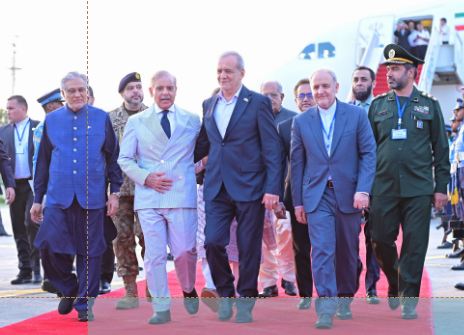
PM Shehbaz Welcomes Iranian President on Official Visit

The recent visit of Iranian President Dr. Masoud Pezeshkian to Pakistan has been marked by warmth, symbolic gestures of friendship, and a renewed resolve to strengthen bilateral ties. Multiple Memoranda of Understanding (MoUs) were signed, and both President Pezeshkian and Prime Minister Shehbaz Sharif expressed firm commitment to working together for peace, regional stability, and the elimination of terrorism. Yet, while these developments are promising, they also reflect a persistent and troubling omission: the Iran-Pakistan gas pipeline — a critical project for Pakistan’s energy security — was neither mentioned in the joint statements nor addressed during the press interaction.

It is no secret that Pakistan is facing a severe energy crisis. Industries are underperforming, domestic consumers are facing load shedding, and the country’s import bill continues to balloon due to reliance on expensive LNG and other energy sources. The Iran-Pakistan gas pipeline — also referred to as the “Peace Pipeline” — could be a game changer. Iran has already completed its portion of the pipeline up to the Pakistani border. The responsibility now lies with Pakistan to complete its section.

Despite the strategic and economic value of this project, successive Pakistani governments have failed to take concrete steps towards its implementation. The silence during the Iranian president’s visit is especially glaring. Not only did Pakistani leadership fail to address this pressing matter, but the media also missed an opportunity to raise pertinent questions during the joint press conference. When a project that could directly address Pakistan’s energy shortages is left out of high-level discussions, it raises concerns about priorities and political will.

One major reason for the inaction has been fear of international sanctions, particularly from the United States. However, the global geopolitical climate is changing. Even U.S. President Donald Trump admitted that war had significantly damaged Iranian infrastructure and that Iran, like any other country, would require foreign investment and support to rebuild. More recently, the U.S. has shown a willingness to explore engagement with Iran under new frameworks. This could offer Pakistan a narrow but critical window of opportunity to negotiate a way forward that aligns with its national interests without violating international norms.

The Iran-Pakistan pipeline is not just an energy project; it is a symbol of regional cooperation and strategic autonomy. For Pakistan, completing this pipeline would reduce dependency on volatile global markets and unreliable LNG suppliers. For Iran, it would provide a much-needed export channel and a gesture of goodwill that goes beyond words and ceremonies.

While peace declarations and MoUs are welcome, the people of Pakistan need action — especially in sectors that directly affect their daily lives. Energy is one of them. The government must now demonstrate seriousness by resuming work on the pipeline, engaging in high-level diplomacy to manage geopolitical concerns, and mobilizing domestic and international resources to complete the long-stalled project.

The Iranian side has delivered. It is now Pakistan’s turn to act — before this opportunity slips away once again.

Political witch-hunting a threat to democracy

Supreme Court verdict on reserved seats: ‘a death knell for democracy’

Opinion

Ansar Mahmood Bhatti

The ongoing political crisis in Pakistan, particularly the systematic marginalization of the Pakistan Tehreek-e-Insaf (PTI), raises serious concerns about the future of democracy in the country. The recent court verdicts sentencing and disqualifying PTI’s top leadership from assemblies, coupled with the Election Commission’s hasty actions, suggest a deliberate attempt to sideline the country’s popular political party. While PTI’s actions on May 9—attacking military installations—were indefensible, the manner in which the party is being dismantled is undemocratic and counterproductive.

This approach does not serve the long-term interests of democracy. Instead, it deepens political instability, fuels public resentment, and sets a dangerous precedent where any political party in power today could face similar treatment tomorrow. The ruling Pakistan Muslim League-Nawaz (PML-N) must realize that political victimization is not a sustainable strategy. History has shown that suppressing popular movements only strengthens them in the long run.

PTI’s leadership, including its chairman Imran Khan, has been sentenced in multiple cases, ranging from corruption allegations to charges related to the May 9 riots. While the legal process must be respected, the speed and timing of these verdicts raise suspicions of political engineering. The Election Commission’s swift moves to disqualify PTI leaders further reinforce the perception of bias.

Legal accountability is essential in a democracy, but when courts are seen as tools for political engineering, public trust erodes. The right to appeal exists, but given the current political environment, many fear that justice may not be impartial.

PTI remains one of the most popular party in Pakistan. However, instead of engaging with it politically, the state has chosen to suppress it through legal and administrative measures. Banning PTI’s electoral symbol, arresting its workers, and forcing leaders to quit the party under pressure are tactics reminiscent of authoritarian regimes, not democratic systems.

If the goal is to establish genuine democracy, political parties must compete on a level playing field. Eliminating the largest opposition party from the electoral process undermined the very essence of democracy.

There is no justification for the attacks on military installations on May 9. Imran Khan’s statement that such a reaction was “natural” if he was arrested was irresponsible and further inflamed tensions. A true statesman would have called for restraint. However, the state’s response—mass arrests, enforced disappearances, and media blackouts—has been disproportionate.

Moreover, the May 9 episode was not solely PTI’s doing. Non-PTI elements exploited the chaos, as often happens in politically charged environments. The state’s failure to investigate all culprits fairly has reinforced the narrative of selective justice.

Defence Minister Khawaja Asif’s repeated statements about Pakistan’s “hybrid system” acknowledge the military’s role in politics. By admitting that both political forces and the establishment are stakeholders, he inadvertently confirms what many have long suspected: that democracy in Pakistan is not fully sovereign.

However, his candor has reportedly angered the military leadership, which prefers to keep its political influence behind the scenes. Some reports suggest pressure on Prime Minister Shehbaz Sharif to remove Asif from his position, indicating the military’s discomfort with public discussions about its role.

The PML-N cannot absolve itself of responsibility for the current political crisis. By aligning with the establishment to suppress PTI, it is setting a precedent that could be used against it in the future. Rana Sanaullah and Khawaja Asif have occasionally expressed concerns, but their voices are drowned out by hardliners within the party.

If the PML-N believes it will remain immune to similar tactics in the future, it is mistaken. Political instability harms all parties, and a weakened democracy benefits none.

Pakistan’s economy is surviving on IMF bailouts and loans from friendly nations—a unsustainable strategy. Without political stability, investor confidence will remain low, and economic growth will stagnate. The current crackdown on PTI is exacerbating polarization, making it harder for any government to implement necessary reforms.

History shows that nations thrive when political inclusivity, rule of law, and democratic norms are upheld. Pakistan’s leadership must recognize that sidelining a major political force like PTI will only lead to greater instability.

The way forward is not through suppression but through dialogue and political reconciliation. The state must ensure fair trials for all, including PTI leaders, and allow them to participate in elections without coercion. The PML-N and other political stakeholders should push for a democratic framework where all parties compete freely.

If PTI is indeed unpopular, let the people decide its fate at the ballot box—not through judicial and administrative maneuvers. Democracy cannot flourish when the largest opposition party is systematically dismantled. The powers that be must realize that while they may erase PTI from the political scene, they cannot erase it from the hearts of the people. And that should worry them more than anything else.

Pakistan’s future depends on stable, inclusive politics—not witch hunts. The choice is clear: continue down the path of confrontation and instability, or embrace true democracy for lasting peace and prosperity.

Swiss community celebrates 734th National Day in Islamabad

Swiss community celebrates 734th National Day in Islamabad

Ambassador Georg Steiner welcomes guests at a vibrant evening of culture and camaraderie

ISLAMABAD, AUG 3 /DNA/ – The Swiss community in Pakistan came together to celebrate the 734th Swiss National Day with enthusiasm and unity at a reception held at the Ambassador’s Residence in Islamabad. The event, hosted by the Swiss Ambassador to Pakistan, H.E. Georg Steiner, brought together Swiss nationals and friends of Switzerland for an evening of celebration, cultural appreciation, and warm hospitality.

Ambassador Steiner warmly welcomed the guests and highlighted the enduring values that define Switzerland—peace, democracy, and unity in diversity. He expressed gratitude to the Swiss community in Pakistan for maintaining strong ties with their homeland while positively contributing to the host country. “This gathering is a reflection of the friendship and connection we share—not just as Swiss citizens living abroad, but as members of a global family committed to peace and progress,” he noted.

The beautifully arranged evening featured traditional Swiss cuisine, music, and cultural elements that transported attendees to the heart of Switzerland. Guests enjoyed Swiss specialties and shared stories in a relaxed and joyful setting. The Swiss flag was prominently displayed

Ambassador Steiner thanked everyone who contributed to making the evening a memorable one, including the embassy staff and members of the Swiss community.

The celebration served as a reminder of the strong people-to-people ties between Switzerland and Pakistan, and underscored the commitment of the Swiss Embassy to continue building bridges of friendship, culture, and cooperation.

As the evening concluded, it left behind cherished memories and a renewed sense of unity among the Swiss living in Pakistan.

A few days ago, the Swiss Ambassador told daily Islamabad POST that, this year, only Swiss nationals residing in Islamabad would be invited to the National Day celebration, as a gesture to recognize and appreciate their contributions toward strengthening bilateral relations.

Pakistan’s Moment in Washington

Qamar Bashir

By Qamar Bashir

In a rare shift of focus from its usual marginal position in American discourse, Pakistan has recently found itself in the headlines in the United States for all the right reasons. Normally overshadowed by stories of political chaos, power tussles, and institutional heavy-handedness against dissent, the narrative has now turned toward Islamabad’s surprising diplomatic maneuvering and its growing importance in Washington’s strategic calculations. While Pakistan’s domestic politics remain fraught—with Imran Khan and his party under relentless state pressure and critics of the “deep state” still facing crackdowns—the country has suddenly carved out space on the global stage. This pivot began in earnest just before the United States carried out precision strikes on Iran’s Fordow and other nuclear sites.

The catalyst was an unprecedented meeting: on June 18, 2025, President Donald Trump hosted Pakistan’s Army Chief, Field Marshal Asim Munir, for a private lunch at the White House, an event widely covered by international media. It was one of the most significant diplomatic engagements of Trump’s second term and the first time a U.S. president hosted Pakistan’s military chief without civilian leadership present. At the press briefing following the meeting, Trump openly acknowledged Munir’s role in averting disaster during the recent five-day India-Pakistan conflict, saying:

“The reason I had him here… I wanted to thank him for not going into the war… ending it. Two very smart people decided not to keep going with that war; that could have been a nuclear war.” (NDTV, June 2025)

This meeting reverberated across South Asia, creating political tremors in India. Rahul Gandhi, leader of the opposition Congress Party, seized the moment in a fiery parliamentary speech, lambasting Prime Minister Modi’s government for failing to secure equivalent U.S. attention. In India’s parliament, even some pro-government lawmakers admitted that New Delhi had been outmaneuvered diplomatically, losing ground to Islamabad in Washington’s halls of power.

The reasons for this shift are not hard to discern. While India has long been touted as America’s counterweight to China, its policy choices have frustrated Washington. New Delhi’s unrelenting purchase of Russian oil—now exceeding 1.5 million barrels a day—and acquisition of Russian arms has provided Moscow with critical liquidity to sustain its war effort against Ukraine. Arms deals alone totaled over $5 billion in 2024, undermining Western sanctions. Trump and senior Republicans like Marco Rubio publicly criticized this stance, framing it as opportunism detrimental to U.S. and NATO interests. In this context, Pakistan’s alignment with U.S. priorities, however cautious, has not gone unnoticed.

On Palestine, Pakistan has walked a fine line. Publicly and diplomatically, Islamabad has been vociferous in condemning Israeli atrocities in Gaza and the West Bank, echoing global outrage at what many now call a “slaughterhouse.” Yet, unlike Iran or other Muslim-majority states, Pakistan has avoided providing material or military support to Palestinian resistance factions, preventing open friction with Washington or Tel Aviv. This careful positioning has kept Pakistan in the good books of the U.S. administration while still satisfying domestic demands for moral solidarity with Palestine.

Another critical factor shaping this newfound goodwill is Pakistan’s willingness to open its mineral-rich landscape to U.S. investment. During his Washington visit, Munir reportedly offered exclusive access to U.S. companies for mining ventures in Balochistan, an area rich in copper, lithium, and rare earth elements vital for high-tech industries, semiconductors, and space exploration. Reuters reported on May 23, 2025, that Pakistan’s Commerce Minister promised concessions for U.S. firms to secure multi-billion-dollar investments and attract alternative financing away from China’s $60 billion CPEC monopoly. The Reko Diq copper-gold project, already partly backed by U.S. funding, could become one of the largest globally, producing up to 800,000 tons of copper and 250,000 ounces of gold annually by 2028.

This economic cooperation moved further ahead on July 30, 2025, when Trump announced via Truth Social:

“We have just concluded a Deal with the Country of Pakistan, whereby Pakistan and the United States will work together on developing their massive Oil Reserves.”

Pakistan’s finance ministry called it a “new era of economic collaboration,” spanning energy, mining, IT, cryptocurrency, and other sectors. Talks included tariff suspensions on Pakistani textile exports to the U.S., which were worth over $3 billion in 2024, protecting a crucial lifeline for Pakistan’s struggling economy. Additionally, Pakistan is set to receive its first shipment of U.S. crude oil in October 2025, marking a strategic shift away from its historic reliance on Gulf and Russian supplies.

Security cooperation has also played a pivotal role. Pakistan’s recent handover of ISIS operatives to U.S. authorities was widely praised in Washington’s counterterrorism circles, reinforcing Pakistan’s image as a partner rather than a spoiler in global security efforts. These moves have coincided with IMF aid being disbursed to Islamabad without the usual political roadblocks, suggesting a Washington-brokered softening of lender attitudes.

Above all, President Trump has been unusually vocal in his praise for Pakistan’s military prowess. Reflecting on the May conflict, he lauded Islamabad’s restraint and ingenuity, noting that Pakistan’s missiles “hit only military targets” and publicly confirming reports that five Indian fighter jets, including three Rafales, were downed during the skirmish. Trump contrasted this with his frustration over India’s tariffs on U.S. goods and its continued Russian entanglements, signaling a sharp departure from Biden-era policies that sought to elevate India as a counterweight to China.

Trump’s Washington now appears willing to reward Pakistan for supporting U.S. strategic interests. Islamabad has also revived its traditional role as a mediator between Washington and Beijing, with Trump himself noting that Pakistan “knows Iran very well, better than most,” using its intelligence networks to help avert broader conflict. Analysts view this as Pakistan stepping back into its Cold War-era niche of a trusted go-between in great power diplomacy.

For the first time in decades, the stars seem aligned for Pakistan in Washington. Favorable optics and warm words must now be translated into tangible benefits: expanded trade, accelerated military modernization, strategic technology transfers, and above all, economic revitalization that lifts millions of Pakistanis out of poverty. Diplomatic goodwill is fleeting, and Pakistan’s history is littered with missed chances and squandered advantages.

This moment is different not because Washington has suddenly discovered new love for Pakistan, but because India has stumbled and Pakistan has—by design or by luck—stepped into the breach. Unless Pakistan’s leadership develops a coherent strategy to lock in this goodwill, institutionalize its gains, and align its domestic governance with global expectations, the window will close as quickly as it opened. Trump’s administration has offered Islamabad a seat at the table; it is now up to Pakistan’s policymakers to decide whether they will merely savor the invitation or use it to shape a future where Pakistan’s role in global affairs is secure, respected, and beneficial to its people.

By Qamar Bashir

Press Secretary to the President (Rtd)

Former Press Minister, Embassy of Pakistan to France

Former MD, SRBC | Macomb, Michigan, USA

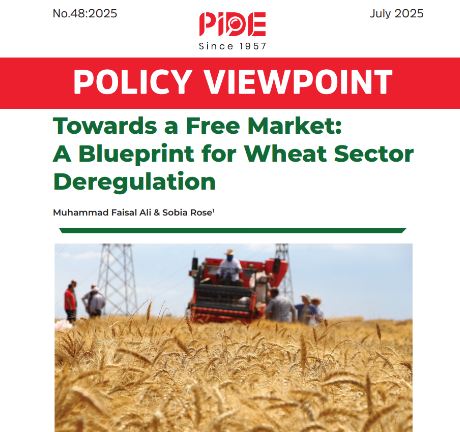
PIDE’s deregulation plan promises billions in farmer benefits

PIDE’s deregulation plan promises billions in farmer benefits

ISLAMABAD, AUG 3 /DNA/ – The Pakistan Institute of Development Economics (PIDE) has released a game-changing policy blueprint titled “Towards a Free Market: A Blueprint for Wheat Sector Deregulation,” authored by Dr. Muhammad Faisal Ali and Dr. Sobia Rose. Published as Policy Viewpoint, the document calls for the full and structured deregulation of Pakistan’s wheat sector, arguing that the long-standing Minimum Support Price (MSP) policy has failed to stabilize markets, protect farmers, or ensure consumer welfare. Instead, it has led to unintended consequences—benefiting large landholders, flour millers, and middlemen—while accumulating a circular debt of PKR 680 billion in Punjab by 2023.

The authors note that the MSP regime distorts incentives, discourages crop diversification, and consumes substantial taxpayer funds annually for procurement and storage. They argue that the government’s abrupt withdrawal from the wheat market in the previous year disrupted market dynamics, allowing millers to form cartels and depress farm-level wheat prices to levels that barely covered production costs. A gradual, transparent transition to a market-driven system was recommended, but it was not followed. However, deregulation has happened, but how could it sustain in these challenging circumstances? It needs a clear policy framework, which is outlined here.

Key proposals include long-term policy consistency (e.g., a clear 5–10 year commitment) to build investor and farmer confidence, removing inter-provincial and cross-border restrictions on wheat movement, limiting the government’s role to maintaining 10–15% of total demand as strategic reserves, and ensuring that procurement for these reserves is exclusively from small farmers, who make up 64% of the farming community. The policy viewpoint also calls for eliminating flour (atta) and bread (roti) price controls, which can distort supply chains in a deregulated environment.

Crucially, PIDE recommends promoting oilseed cultivation—such as rapeseed, mustard, and sunflower—highlighting that these crops are approximately PKR 5,036 more profitable per acre than wheat. Shifting just 10% of wheat cultivation (2.14 million acres) to oilseeds could generate an additional PKR 10.8 billion in farmer income. Furthermore, reducing dependency on imported edible oils (which cost USD 2.2 billion in FY 2024) would conserve foreign exchange and strengthen food security.

The policy also stresses the importance of accurate demand estimation, noting conflicting estimates ranging from 24.6 million to 32.5 million tonnes, which have led to poor planning and unnecessary imports. To address this, the authors propose a Centralized Comprehensive Data Portal (CCDP) under the Ministry of National Food Security & Research, featuring real-time data on stocks, production, demand, pricing, and market trends. They also advocate for yield-based subsidies, input vouchers, and digital platforms to connect farmers directly with buyers.

According to the report, aligning national wheat yields with those of progressive farmers could add PKR 609 billion to the economy. This shift—from support-price dependency to profitability-driven farming—could unlock vast economic potential, encourage innovation, and build long-term resilience in Pakistan’s agri-economy.

PIDE urges federal and provincial governments to commit to a clear, consistent deregulation roadmap, while ensuring market fairness, farmer protection, and food security through robust oversight and data-driven policy.

The Price of Muslim Blood in a Hypocritical World

The Price of Muslim Blood in a Hypocritical World

By Muhammad Mohsin Iqbal

In a world where campaigns to save endangered species and protests against animal cruelty gather global support within hours, the irony grows unbearable when one observes the persistent silence on the merciless slaughter of Muslims—whether in Bosnia in the 1990s or in Gaza today. The same societies that champion animal rights with moral fervour seem numb when Muslim bodies pile up, when their cities are reduced to ashes, or when their women cry out in despair. The hypocrisy is not subtle; it is institutionalised. This double standard has become so entrenched that it no longer stirs conscience or shame.

Human rights activists in Europe and the West mobilise instantly when a whale is beached, a dog is abused, or a circus mistreats its elephants. But when Muslim men are summarily executed, children mutilated by airstrikes, or women subjected to systemic abuse, the outrage evaporates. The guardians of global morality fall curiously silent. It is this selective empathy that exposes the deepest cracks in the edifice of international human rights.

The atrocities committed against the Bosnian Muslims between April 1992 and December 1995 remain among the darkest chapters in post-World War II history. With the collapse of Yugoslavia, Serb nationalist forces embarked on a systematic campaign of “ethnic cleansing” against Bosniak Muslims. Towns like Prijedor, Foča, Zvornik, and above all, Srebrenica, became killing fields. Over 100,000 Bosnians were murdered—most of them Muslims. In the notorious genocide of Srebrenica, more than 8,372 Muslim men and boys were executed in July 1995 while under the so-called protection of United Nations peacekeepers. The Dutch UN forces stationed there, ill-equipped and politically shackled, watched helplessly as the massacre unfolded.

But the horrors were not limited to killings. An estimated 50,000 women, many held in detention camps such as Omarska and Trnopolje, were subjected to rape and sexual slavery as weapons of war. These were not rogue incidents—they were coordinated strategies to destroy a people physically, mentally, and spiritually. And yet, human rights organizations at the time refrained from labeling it genocide until years later, choosing to call it a civil war. The UN passed resolutions, NATO debated intervention, but the bloodshed continued until Bosnia was shattered.

Fast forward to Gaza. The war that began in October 2023 has become the longest and deadliest assault on the Palestinian people in recent memory. According to the United Nations Office for the Coordination of Humanitarian Affairs (UNOCHA), by mid-2025, more than 38,000 Palestinians have been killed—over 70% of them women and children. More than 80,000 have been wounded. The Israeli bombing campaign has targeted not only Hamas infrastructure but also hospitals, schools, UN shelters, and residential towers. The al-Ahli Baptist Hospital bombing alone claimed nearly 500 lives. The Rafah crossing, Gaza’s only lifeline for aid and evacuation, has been bombed multiple times, turning humanitarian relief into a gamble with death.

Entire neighborhoods—Shuja’iyya, Jabalia, Khan Younis—have been flattened. The Israeli Defense Forces (IDF) have admitted to using “bunker-busting” bombs and white phosphorus, whose use in densely populated areas may constitute war crimes under international law. The World Health Organization has reported that Gaza’s health system has collapsed. Over 1.9 million Gazans—85% of the population—have been displaced, many of them multiple times. They now live in makeshift tents, without access to clean water, medicine, or basic food supplies.

And yet, despite this scale of devastation, there has been no credible international intervention. Like Bosnia, the United Nations has condemned, appealed, and failed. The International Criminal Court has opened investigations into potential war crimes, but global power dynamics, particularly the use of the veto in the UN Security Council, have prevented any meaningful pressure or action.

But what is more shameful—and difficult to ignore—is the eerie silence of the Muslim world itself. Despite being home to over fifty nations and vast wealth and political influence, the Muslim world has remained largely passive. This silence stems from internal disunity, dependency on Western economies, fear of diplomatic isolation, and political fragility. Many Muslim governments are either entangled in internal crises or are reluctant to jeopardise ties with Western powers that provide security, aid, and legitimacy to their regimes. Some have even normalised relations with Israel or chosen to remain neutral in exchange for economic benefits. Their silence is not of helplessness, but of compromise—of choosing comfort over conscience.

The Organisation of Islamic Cooperation (OIC), representing nearly two billion Muslims, has issued statements, held conferences, and proposed resolutions—but it has failed to translate these into unified diplomatic or economic pressure. In both Bosnia and Gaza, Muslims suffered not only from external aggression but also from the absence of genuine, courageous solidarity from their own brethren.

The parallels are stark. In both Bosnia and Gaza, the aggressors were given space by the world’s hesitation, by its fear of offending powerful lobbies, or by its deep-seated Islamophobia. In Bosnia, it was Serb nationalism allowed to fester unchecked. In Gaza, it is Zionist expansionism hiding behind the excuse of security. In both cases, Muslim identity itself was marked as a threat—dehumanised, delegitimised, and demonised.

What adds insult to injury is the post-conflict whitewashing. Bosnia, after its devastation, was handed the Dayton Accords, which cemented ethnic divisions and rewarded aggression with territory. The international community sent aid, but not justice. Gaza, too, may someday receive reconstruction funds, but at the price of its political voice. The dead will not rise again. The orphans will not forget. And the world will move on, unchanged and unapologetic.

What are we left with, then? A pattern of global silence when Muslims are massacred. A system of international law that selectively applies justice. A media narrative that calls resistance “terrorism” and calls bombardment “self-defense.” We are left with the bitter truth that the value of a Muslim life, in the eyes of the global order—and shamefully, even among some Muslim leaders—is less than that of an animal in the West.

When we look at the ruins of Gaza and the graves of Bosnia, we are not merely witnessing past and present tragedies—we are witnessing the failure of modern civilisation. It is not the bombs or bullets alone that destroy nations—it is the silence of those who could have stopped them.

Australian envoy Hawkins encourages youth to champion hockey development

Australian envoy Hawkins encourages youth to champion hockey development

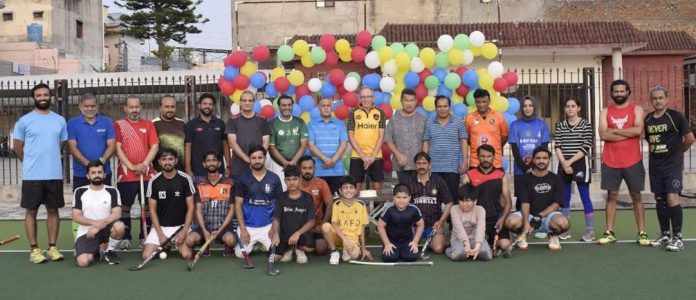
ISLAMABAD, AUG 3 /DNA/ – In a spirited and heartwarming celebration, Rising Stars Hockey Club hosted a special event to mark the birthday of His Excellency Neil Hawkins, the Australian High Commissioner to Pakistan. The event, held during the club’s regular Sunday practice session, turned into a celebration not only of Mr. Hawkins’ special day but also of his dedication to youth development and his support for the sport of hockey in Pakistan.

The gathering drew a diverse crowd of young players, club officials, and distinguished guests, including H.E. Kamal Basha, the High Commissioner of Brunei, who joined in the festivities to honor Mr. Hawkins. The celebration underscored the close ties between sport, diplomacy, and youth engagement.

During his remarks, Mr. Hawkins passionately urged young athletes to continue honing their skills and playing a proactive role in the revival and promotion of hockey at the national level. “Pakistan has a rich hockey legacy. With hard work and commitment, young players can bring back the glory days and even take the game to new heights,” he said, addressing the club’s aspiring talent.

A highlight of the occasion was the symbolic cutting of Mr. Hawkins’ birthday cake, followed by an inspiring gesture — the distribution of hockey sticks to young players. This act was both a gift and a statement of support, as Mr. Hawkins emphasized the importance of providing resources and encouragement to nurture the next generation of players.

In another commendable moment, Mr. Hawkins recognized and appreciated Asad Abbas, a club member, for successfully completing his umpiring course in Malaysia. His acknowledgment of Abbas’ achievement highlighted the value of technical growth alongside athletic training in the development of Pakistan’s hockey ecosystem.

Throughout the event, Mr. Hawkins interacted with both male and female players, taking photos, engaging in conversations, and encouraging them to keep pursuing excellence. His genuine enthusiasm and accessible demeanor made a strong impression on the young athletes and club members alike.

The Rising Stars Hockey Club expressed gratitude to its leadership and organizing team for making the event a success. Special thanks were extended to Chief Patron Asif Masood Bhatti, President Mehmood Ahmed, General Secretary Sohail Akram Janjua, Finance Secretary Muhammad Azeem Jutt, Chief Editor of Islamabad Post Ansar Mehmood Bhatti, and Media Coordinator Syed Khayber Ali for their unwavering support and efforts in promoting hockey at the grassroots level.

The celebration was a vivid reflection of how diplomacy and community sports can intersect to foster talent, unity, and national pride. With committed support from diplomatic figures like Mr. Hawkins, High Commissioner Kamal Ahmed and institutions such as the Rising Stars Hockey Club, Pakistan’s future in hockey looks increasingly promising.

Stay Connected

64FansLike
60FollowersFollow

Latest Reviews

Exchange Rates

USD - United States Dollar
EUR
1.17
GBP
1.35
AUD
0.72
CAD
0.73